分类: politics

  • PNM ‘prepared’ as THA election date announced

    PNM ‘prepared’ as THA election date announced

    With the Tobago House of Assembly officially dissolved and elections scheduled, the People’s National Movement (PNM) has expressed strong confidence in its campaign to regain governance of the autonomous island territory.

    PNM Tobago political leader Ancil Dennis revealed the party’s extensive preparations, noting they anticipated the election window between January 12 and February 12 following the assembly’s dissolution on November 12. Under the THA Act, elections must be called within three months after the four-year term concludes.

    The PNM began candidate screening as early as June and finalized its full slate of candidates across all 15 electoral districts by August. Dennis emphasized that these candidates have been actively engaging with constituents since their selection, positioning the election as a referendum on the current administration’s performance from 2021 to present.

    The party plans to introduce a comprehensive development vision focusing on tourism expansion, agricultural revitalization, renewable energy initiatives, job creation, and housing construction programs designed to restore opportunities for Tobago residents.

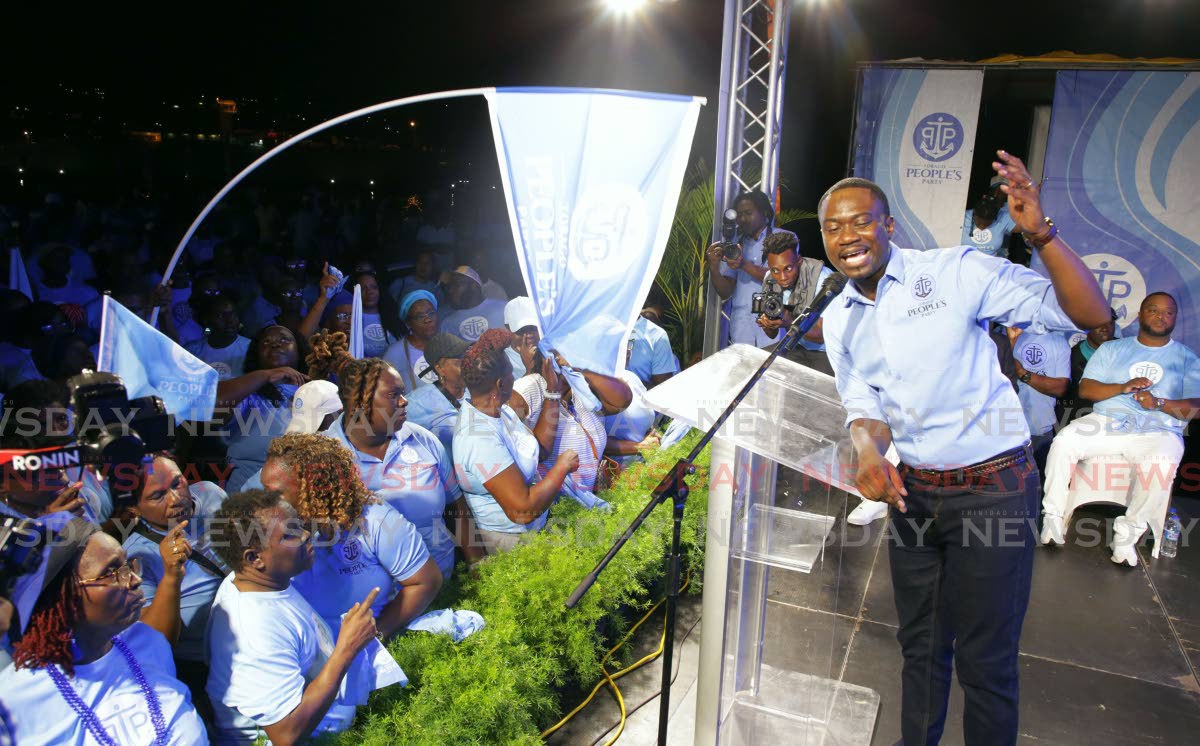
    The election announcement came on December 1 during a Tobago People’s Party (TPP) event where Chief Secretary Farley Augustine presented his candidates, including former PNM Tobago West chairman Keigon Denoon.

    This electoral contest follows the unprecedented 2021 THA election that resulted in a historic 6-6 deadlock between PNM and Progressive Democratic Patriots (PDP), prompting electoral reform that expanded districts from 12 to 15. The subsequent December 2021 election saw PDP secure a landslide 14-1 victory, ending nearly two decades of PNM dominance. However, political realignments saw 13 PDP assemblymen resign in 2022, leading to the formation of Augustine’s TPP, which recently secured both Tobago parliamentary seats in the April general election.

  • Imbert warns of new taxes coming

    Imbert warns of new taxes coming

    Former Finance Minister Colm Imbert has issued a stark warning regarding the government’s intention to implement multiple new taxes through the Finance Bill 2025, scheduled for presentation in the House of Representatives on December 5 at 1:30 PM.

    In a social media post on platform X, Imbert revealed that the United National Congress (UNC) government has circulated a comprehensive 44-page legislative document containing what he describes as “an avalanche of new taxes” that the administration intends to rapidly push through parliament. The proposed measures include a landlord tax, electricity surcharges, a substantial 20 percent increase in National Insurance System (NIS) rates, and heightened penalty fines. These would supplement the previously announced 100 percent hike in alcohol taxes implemented in October.

    The Finance Bill represents standard legislative procedure following budget approval, designed to enact policies outlined during budgetary presentations. Finance Minister Davendranath Tancoo had previously announced revenue-generation measures during his October 13 budget presentation, including immediate customs duty increases on rum, beer, and cigarettes. Additional provisions such as NIS increases, electrical surcharges for commercial and industrial consumers, and levies on commercial banking institutions are projected to take effect from January 1, 2026.

    The current 2025/2026 budget framework projects expenditures of $59.232 billion against revenues of $55.367 billion, resulting in a $3.865 billion deficit. This contrasts with the previous administration’s 2024/2025 budget under the People’s National Movement (PNM) government, which anticipated revenues of $54.224 billion, expenditures of $59.741 billion, and a larger deficit of $5.517 billion.

    Minister Tancoo’s budgetary calculations are based on projected oil and natural gas prices of US$73.25 per barrel and US$4.25 per mmbtu respectively, compared to last year’s benchmark prices of US$77.80 per barrel and US$3.59 per mmbtu under the previous government.

  • Fair Trading Commission director grilled over delays in pharmaceutical probe

    Fair Trading Commission director grilled over delays in pharmaceutical probe

    In a tense parliamentary hearing on December 2, Fair Trading Commission (FTC) Executive Director Bevan Narinesingh faced rigorous interrogation from Public Administration and Appropriations Committee (PAAC) Chairman Jagdeo Singh regarding the commission’s perceived inaction on potential anti-competitive practices within the pharmaceutical industry.

    Speaker Singh, visibly frustrated throughout the proceedings, challenged Narinesingh on what he characterized as the FTC’s ‘lethargic’ response to serious allegations of monopolistic behavior in drug supply and distribution. The confrontation centered on the commission’s failure to utilize its statutory powers under the Fair Trading Act despite receiving formal complaints and documentation since September 2024.

    Singh methodically outlined the FTC’s broad investigative authority, particularly emphasizing Section 9 provisions that empower the commission to act on its own initiative without requiring formal complaints. ‘Anti-competitive behavior in a marketplace is among the highest public-interest concerns needing protection,’ Singh asserted, receiving agreement from Narinesingh before pressing further on the commission’s inaction.

    The hearing revealed that despite a September 6, 2024 letter from a private business association raising competition concerns, the FTC’s response consisted primarily of information requests rather than initiating formal investigations. Singh questioned why the commission hadn’t invoked Section 8 powers to compel document production from suspected entities instead of placing the burden on complainants to obtain sensitive corporate records.

    Narinesingh defended the FTC’s approach, citing ongoing evidence gathering through meetings with Health Ministry officials in December 2024 and consultations with the Pharmacy Board. However, when pressed for documentation of these meetings, he could not immediately produce minutes or formal reports.

    The exchange intensified when Singh referenced the FTC’s December 13, 2024 public statement acknowledging that concerns ‘may require further examination.’ The chairman demanded concrete actions beyond letter-writing and meetings, to which Narinesingh cited public notices inviting input through digital channels.

    A critical moment emerged when Narinesingh revealed the FTC had determined ‘sufficient grounds’ for investigation by June 17, 2025 but claimed inability to proceed due to the commission’s board being dissolved since May. Singh challenged this justification, questioning where the Fair Trading Act circumscribes the executive director’s authority based on board availability.

    The session concluded with Singh issuing comprehensive directives for the FTC to provide all relevant documentation, including internal communications, meeting minutes, and task assignments, before adjourning until January 26 for further review.

  • Emotions run high in SYG senate debate

    Emotions run high in SYG senate debate

    The Trinidad and Tobago Senate witnessed profoundly emotional deliberations on December 2nd during the debate over the controversial Home Invasion (Self-Defence and Defence of Property) Bill, 2025. Government Senator Brian Baig delivered a heart-wrenching testimony detailing his personal experience as a home invasion survivor, visibly trembling as he addressed the chamber.

    Senator Baig recounted how the traumatic event permanently altered his psychological state, revealing he still wakes daily at 3 AM—the hour preceding the incident—haunted by the fear that intruders remain in his home. The senator described implementing extensive security measures including alarms, round-the-clock security personnel, and guard dogs to restore his family’s sense of safety. Baig further shared the devastating story of his aunt who was murdered during another home invasion, with her throat slit ‘from ear to ear’ while his uncle, a heart patient, was bound to a chair.

    Despite the emotional appeal, opposition Senator Faris Al-Rawi expressed reservations about the legislation’s practical effectiveness. While acknowledging the bill was ‘heading in the right direction,’ Al-Rawi questioned whether the proposed law would actually assist victims in real-time crisis situations. He raised significant concerns regarding the exclusion of approximately 230,000 squatters lacking lawful property possession, the treatment of common areas in housing developments, and the application to institutional dwellings like children’s and geriatric homes.

    Independent Senator Dr. Desiree Murray highlighted additional ambiguities, noting the legislation potentially conflates domestic disputes with armed invasions by labeling known acquaintances as ‘home invaders.’ She warned this blurring of distinctions could lead to disproportionate use of lethal force in situations already covered by existing laws. The debate revealed deep divisions between the emotional imperative for enhanced self-defense protections and practical concerns about legal precision and unintended consequences.

  • Haiti moves closer to staging fresh elections

    Haiti moves closer to staging fresh elections

    Haiti’s transitional government has achieved a critical breakthrough by formally adopting a long-awaited electoral law, marking the most substantial progress toward presidential elections since 2016. This legislative move establishes the legal foundation for restoring democratic governance in the Caribbean nation following years of political instability and severe gang violence.

    The Transitional Presidential Council (TPC), established in April 2024 to steer Haiti through its crisis, approved the legislation alongside the council of ministers. Frinel Joseph, one of two non-voting observers on the nine-member council, characterized the development as “a decisive turning point in the transition” through his official social media communication on Monday.

    Despite this procedural advancement, the adoption process revealed significant internal divisions. Three of the council’s seven voting members deliberately absented themselves from the crucial meeting in an apparent attempt to block the legislation’s passage. Their absence failed to prevent adoption, though the law must still be published in Haiti’s official gazette to attain full legal status.

    The TPC faces mounting challenges beyond internal discord. Some members allegedly seek to leverage the electoral timeline to extend their authority beyond the February 2026 transition deadline and remove incumbent Prime Minister Alix Didier Fils-Aimé. Meanwhile, human rights advocates have expressed concerns about the legislation’s insufficient eligibility safeguards, citing criticisms of the draft proposal circulated before Monday’s vote.

    Haiti’s last presidential election occurred in 2016 when Jovenel Moïse achieved victory among 27 candidates. His July 2021 assassination—which injured his wife and involved former Colombian soldiers—remains unresolved in Haitian courts despite ongoing proceedings in the United States.

    Political analysts caution that while the electoral law constitutes necessary progress, Haiti’s path to legitimate elections remains fraught with institutional challenges and security obstacles that could undermine democratic restoration.

  • Other benefits of US/TT alliance

    Other benefits of US/TT alliance

    In a compelling defense of Trinidad and Tobago’s growing partnership with the United States, Dr. Errol N. Benjamin outlines significant strategic benefits emerging from the bilateral cooperation. The commentary, originally published as a letter to Newsday, highlights three pivotal advantages: the removal of tariffs on agricultural inputs like fertilizer, recognition as a key coalition partner in combating narcotics trafficking from Venezuela, and positioning the nation at the forefront of US security concerns in the region.

    The analysis emphasizes how President Donald Trump’s acknowledgment of TT’s role in anti-trafficking operations, combined with historical US investment in the country’s energy sector through companies like Shell, establishes foundation for continued American involvement in developing oil and gas reserves. Additionally, Prime Minister Kamla Persad-Bissessar’s high-profile meeting with General Dan Caine, Chairman of the Joint Chiefs of Staff, signifies elevated security collaboration that places Trinidad and Tobago prominently on Washington’s strategic radar.

    Dr. Benjamin notes the influential role TT plays in regional dynamics, with numerous Latin American nations reportedly following its lead in supporting US counter-narcotics initiatives. This leadership position potentially grants TT preferential status in American foreign policy considerations for the Caribbean.

    Despite these advantages, the author expresses concern over domestic criticism directed at the government’s alliance with the US. Anti-Trump activists and ideologues have disparaged the partnership, with some labeling the nation as a ‘lackey’ and criticizing high-level visits from US officials. Dr. Benjamin characterizes the alliance as fundamentally military in nature, noting that associated developments—including warship port calls in Trinidad, US personnel and aircraft presence in Tobago, and installation of military equipment like radar systems—represent expected components of such cooperation. The commentary concludes by urging critics to adopt a more open-minded perspective toward the strategic benefits of the US partnership, leaving final judgment to readers’ critical assessment.

  • Yes, UNC delivering safety, stability

    Yes, UNC delivering safety, stability

    In a powerful endorsement of current leadership, Trinidad and Tobago citizen David Beckles has drawn stark contrasts between the nation’s previous and current security approaches in an open letter to Newsday. Writing from Arima, Beckles characterizes the former People’s National Movement (PNM) administration as a decade of “chaos, neglect and empty posturing” where crime spiraled uncontrollably while citizens pleaded for effective action.

    The correspondent describes the PNM’s security strategy as fundamentally flawed—prioritizing public relations over substantive solutions, with consistent blame-shifting and chronic mismanagement creating a climate of fear and institutional failure. According to Beckles, this approach left the population vulnerable and stripped the nation of confidence through inadequate investment, strategic delays, and systemic denial of the growing crisis.

    In direct opposition, Beckles portrays Prime Minister Kamla Persad-Bissessar’s United National Congress (UNC) government as implementing transformative changes that prioritize citizen safety through intelligence-driven operations and coordinated enforcement. The current administration has reportedly equipped security agencies with long-deprived tools, technology, and oversight mechanisms while delivering targeted community interventions previously absent under PNM leadership.

    The letter credits Persad-Bissessar with reinstating discipline, accountability, and humane governance to a sector that had descended into operational free fall. Beckles emphasizes that the Prime Minister’s proactive leadership style—rooted in the principle that citizens deserve tangible safety rather than excuses—has set the nation on a renewed path toward stability and competent governance where measurable actions have replaced political theater.

  • JLP communication task force to step up efforts in war on misinformation—Morgan

    JLP communication task force to step up efforts in war on misinformation—Morgan

    KINGSTON, Jamaica—In a forceful declaration against fabricated narratives, Jamaican government officials have launched a comprehensive counteroffensive against politically motivated disinformation. Marlon Morgan, a prominent senator and key member of the Jamaica Labour Party’s (JLP) Communications Taskforce, articulated the party’s uncompromising stance against systematic attempts to undermine democratic institutions through false information campaigns.

    Morgan identified a recent social media fabrication alleging that Maroon community members in Accompong, St. Elizabeth received ‘paint water’ for domestic use as a particularly egregious example of malicious misinformation. He characterized such efforts as deliberate assaults on Jamaica’s international reputation and domestic stability that transcend acceptable political discourse.

    The JLP communications apparatus has committed to intensifying its fact-verification mechanisms, particularly during ongoing recovery operations from Hurricane Melissa’s devastation. Morgan emphasized the critical distinction between robust political debate and coordinated deception campaigns, noting that while the party welcomes ideological competition, it will not tolerate character assassination or public mischief masquerading as free speech.

    This initiative represents a strategic pivot toward ensuring public access to rigorously verified information, with the communications taskforce pledging to amplify factual, constructive narratives throughout Jamaican media ecosystems. The effort underscores growing global concerns about information integrity in democratic processes and institutional credibility.

  • Padarath: Ag CEO’s departure not affecting WASA

    Padarath: Ag CEO’s departure not affecting WASA

    Public Utilities Minister Barry Padarath has affirmed that the resignation of former Water and Sewerage Authority (WASA) acting CEO Jeevan Joseph has not disrupted the state utility’s operational continuity or strategic initiatives. In an official statement, Padarath emphasized that WASA maintains robust leadership under chairman Roshan Babwah and continues to advance numerous short-term and medium-term projects without interruption.

    Contrary to initial media speculation suggesting Joseph was ‘sent on leave’ without explanation, the minister clarified that Joseph voluntarily resigned between November 28-29 citing personal reasons. The ministry respects his decision while maintaining confidence in WASA’s operational framework.

    Padarath highlighted organizational enhancements including the revamping of the ministry’s monitoring and evaluation division to strengthen project oversight. ‘The ministry is taking greater interest in actual operations compared to our predecessors,’ he noted, signaling increased governmental involvement in WASA’s management.

    Dain Maharaj, acting director of corporate services since June, has assumed interim CEO responsibilities until a permanent appointment is finalized. Maharaj’s previous appointment followed the termination of Keithroy Halliday and nine other senior executives shortly after the United National Congress assumed office on May 28.

    Joseph’s tenure included significant contributions as manager of technical services for wastewater systems, where he pioneered development of standard operating procedures, asset management strategies, and technological innovations to improve both operational efficiency and environmental sustainability.

  • Saint Lucians vote in general election

    Saint Lucians vote in general election

    Citizens of Saint Lucia are participating in a decisive democratic exercise today as polls open nationwide for the island’s general elections. This electoral process will establish the Caribbean nation’s political leadership and policy trajectory for the forthcoming five-year term.

    Voting commenced at dawn across all constituencies, with enthusiastic voters forming substantial queues at numerous polling stations even before official opening times. The election sees incumbent Prime Minister Philip J. Pierre, who spearheaded the Saint Lucia Labour Party (SLP) to a commanding 13-4 parliamentary majority in 2021, attempting to secure a renewed mandate from the electorate.

    The primary opposition challenge emerges from the United Workers Party (UWP), directed by former Prime Minister Allen Chastanet. The UWP seeks political redemption after suffering a significant reduction to merely two legislative seats during the previous electoral contest.

    Prime Pierre formally initiated the electoral timeline on November 9, designating December 1 as polling day and November 21 for candidate nominations. The dissolution of Parliament occurred on November 10, facilitating an uninterrupted campaign period.

    This electoral confrontation represents a fundamental choice for Saint Lucian voters between political continuity under the current administration or a return to governance by the previously ruling party. Campaign discourse has centered on critical national concerns including economic development strategies, youth employment initiatives, public security measures, healthcare system improvements, and infrastructure modernization projects.