分类: politics

  • PRM marks 11th anniversary today: a massive show of force in Santiago amid internal friction

    PRM marks 11th anniversary today: a massive show of force in Santiago amid internal friction

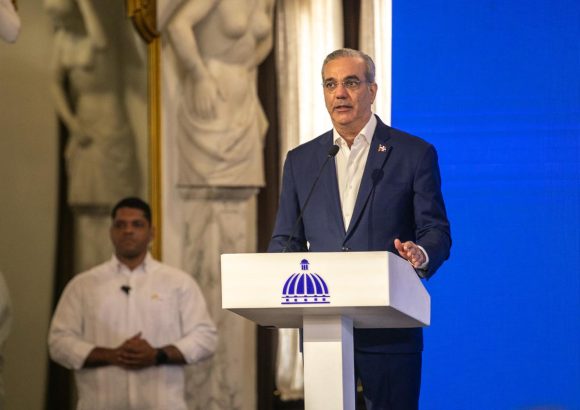
    SANTIAGO, DOMINICAN REPUBLIC – The Modern Revolutionary Party (PRM), the nation’s governing political force, marked its 11th anniversary with a massive demonstration of political strength at the Gran Arena del Cibao on Sunday. President Luis Abinader headlined the capacity event, which served as both a celebration of the party’s decade-long ascent to power and a strategic display of organizational might in the electorally crucial Cibao region.

    The arena reached full capacity as delegations from all 14 provinces of the northern region gathered to hear party leaders including José Ignacio Paliza and Carolina Mejía. The event projected an image of political dominance and continuity while simultaneously functioning as an unofficial launch for the 2028 electoral cycle.

    Strategic Significance and Electoral Positioning

    Today’s gathering represents a critical juncture for the PRM, which has transformed from a 2014 splinter movement into the country’s predominant political institution. The selection of Santiago as the celebration’s epicenter reinforces the party’s stronghold in the North, considered the decisive electoral battleground in Dominican politics.

    With President Abinader constitutionally barred from seeking reelection, political observers closely monitored the rally’s dynamics for clues about potential successors. Party leadership also used the platform to promote what they characterize as a purified, digitized voter registry system, claiming it eliminates historical duplication issues that have compromised electoral integrity.

    Internal Challenges Beneath Unified Surface

    Despite the jubilant atmosphere and sea of party colors, the PRM confronts significant internal tensions as it enters its second decade. While official rhetoric emphasized unity and cohesion, a substantive divide exists between the party’s grassroots foundation and its technocratic administration.

    A central point of contention involves the integration of longtime militants into government positions. Many activists instrumental to the party’s 2020 and 2024 electoral victories express mounting frustration over perceived exclusion from political appointments, creating friction between the party base and bureaucratic leadership that threatens organizational cohesion.

    As the celebration continued, the PRM faced the dual challenge of commemorating its unprecedented political ascent while addressing internal demands for greater inclusion. Simultaneously, opposition forces conducted activities elsewhere in the country, signaling that the next electoral contest has effectively commenced.

  • LISTEN: PM says diplomat’s failure to disclose was the reason behind relieving him of his duties

    LISTEN: PM says diplomat’s failure to disclose was the reason behind relieving him of his duties

    Prime Minister Justin Trudeau has publicly confirmed the dismissal of a Canadian diplomat, citing a critical failure to disclose pertinent information as the central reason for the termination. The announcement, made during a press briefing, underscores the government’s stringent adherence to accountability and transparency protocols within its foreign service operations.

    While the Prime Minister did not reveal the specific nature of the undisclosed information or identify the diplomat, he emphasized that the omission represented a fundamental breach of trust and the established code of conduct expected of all public office holders. The decision to relieve the individual of their duties was characterized as necessary to uphold the integrity of Canada’s diplomatic corps and its international engagements.

    The incident has triggered immediate reviews within Global Affairs Canada to reassess and potentially reinforce disclosure procedures for personnel. Political analysts suggest this move reinforces the Trudeau administration’s hardline stance on operational security and ethical compliance, particularly following recent periods of heightened scrutiny over government transparency. The government’s decisive action aims to preempt any potential diplomatic ramifications and preserve Canada’s credibility on the world stage.

  • Hesse Relieved of Duties After $450,000 Alfa Nero Commission Disclosure

    Hesse Relieved of Duties After $450,000 Alfa Nero Commission Disclosure

    Antigua and Barbuda’s Prime Minister Gaston Browne has confirmed that senior official Johann Hesse was summoned before the Cabinet following revelations of a substantial undisclosed commission payment related to the Alfa Nero superyacht transaction. The development emerged during Browne’s weekly radio program, the Browne and Browne Show, where he addressed growing concerns about the financial arrangements surrounding the vessel’s 2024 sale.

    Court documents recently unveiled in the United Kingdom exposed a US$450,000 introductory commission paid to Rufus Gobat, identified as Hesse’s business associate. Prime Minister Browne emphasized that this substantial payment had not been formally disclosed to government authorities, prompting immediate scrutiny. However, the Prime Minister clarified that preliminary investigations have uncovered no evidence suggesting Hesse engaged in illegal activities regarding this transaction.

    During Wednesday’s Cabinet meeting, Hesse provided comprehensive explanations regarding the controversial payment. He asserted that the commission was exclusively part of a private business arrangement between Gobat and himself, completely separate from any government funds or resources. Hesse further testified that no government officials, Cabinet members, or their relatives derived any financial benefit from this transaction.

    The Alfa Nero superyacht, previously owned by sanctioned Russian billionaire Andrey Guryev, has been at the center of complex international negotiations since its seizure. Antigua’s government has been attempting to sell the luxury vessel through legal channels, making transparency in all financial aspects particularly crucial given the sensitive nature of the asset.

    Prime Minister Browne indicated that additional information regarding this matter is anticipated to emerge as investigations continue. The government maintains its commitment to ensuring all transactions related to state assets undergo proper scrutiny while preserving the integrity of its administrative processes.

  • Dood Navalny veroorzaakt door gif van pijlgifkikkers

    Dood Navalny veroorzaakt door gif van pijlgifkikkers

    Five European nations have jointly declared Russia responsible for the poisoning death of Kremlin critic Alexei Navalny, presenting what they describe as conclusive scientific evidence. The coordinated statement from Britain, France, Germany, Sweden, and Netherlands confirms that analysis of bodily samples from Navalny’s remains definitively identified epibatidine—a potent toxin derived from South American poison dart frogs that does not naturally occur in Russia.

    The announcement comes precisely two years after Navalny’s controversial death in an Arctic penal colony where he was serving sentences on extremism charges that he consistently denied. European officials stated that Moscow possessed “the means, motive, and opportunity” to administer the lethal substance given that Navalny died under state custody.

    British Foreign Secretary Yvette Cooper emphasized that UK scientists collaborated with European partners to uncover the truth, though officials declined to specify how the bodily samples were obtained or where testing occurred. The findings align with previous patterns of Russian chemical weapons use, including the 2018 Novichok attack on former double agent Sergei Skripal in Britain, which a public inquiry concluded was ordered by President Vladimir Putin.

    The revelation emerged during the Munich Security Conference, where Navalny’s widow Yulia Navalnaya addressed attendees virtually, expressing gratitude for the multinational investigation. “I was certain from day one that my husband was poisoned, but now we have evidence,” she stated via social media, calling for accountability from Russian leadership.

    European capitals witnessed memorial gatherings and protests following the announcement, with demonstrators in London, Berlin, Vilnius, and Rome condemning the Kremlin and demanding justice. The joint statement emphasized that Russia’s actions violate both the Chemical Weapons Convention and Biological and Toxin Weapons Convention, underscoring the urgent need for international accountability mechanisms.

  • Opposition MPs Submit Bills Targeting Public Works, Health and Social Security Oversight

    Opposition MPs Submit Bills Targeting Public Works, Health and Social Security Oversight

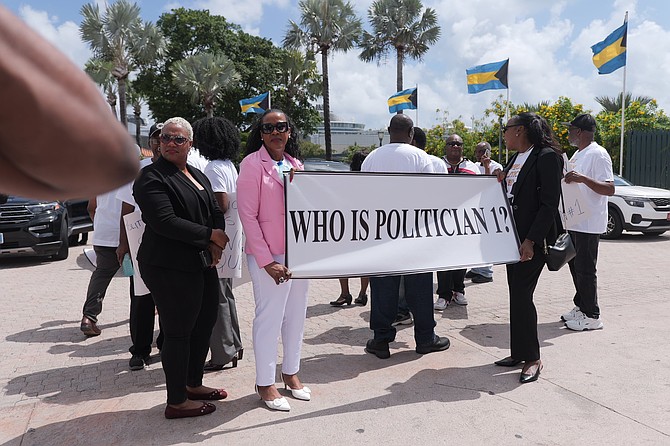
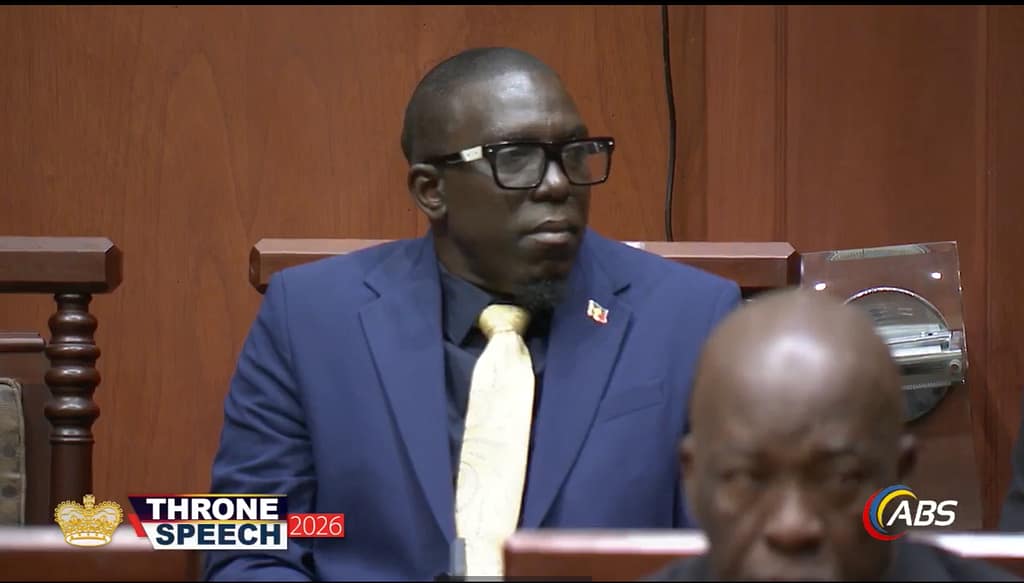
    In a significant parliamentary maneuver, Opposition Leader Jamale Pringle and MP Sherfield Bowen have introduced three Private Members’ Bills, marking a concerted effort to enhance governmental accountability. The submissions represent a direct challenge to the current administration’s oversight mechanisms.

    Pringle, representing All Saints East and St. Luke, put forward two substantive motions. The first advocates for the creation of a Public Works and National Housing Joint Select Committee, while the second calls for establishing a Public Health and Social Transformation Joint Select Committee. These initiatives stem from concerning findings within recent budget estimates, where the Ministry of Public Works reported persistent procurement issues, road rehabilitation challenges, and government building maintenance deficiencies—particularly troubling in the aftermath of the ‘vehicle-gate’ controversy. Simultaneously, the Ministry of Health highlighted critical funding shortfalls, inadequate backup power systems at medical facilities, and insufficient basic medical equipment.

    Pringle emphasized Parliament’s constitutional role in executive oversight, stating, ‘Parliamentarians cannot remain passive while cabinet ministers boast of surplus funds when essential ministries operate in dire conditions. Our proposals aim to address root causes through enhanced transparency and accountability.’

    Concurrently, MP Bowen (St. Phillip South) submitted legislation requiring the Finance Minister to disclose all audited financial statements, actuarial reports, and investment statements for the Social Security Fund—documents Prime Minister Gaston Browne has acknowledged possessing. Bowen cited clear violations of Sections 17 and 18 of the Social Security Act 1972, questioning how informed parliamentary decisions can occur without these critical documents.

    This legislative action follows the recent precedent set by MP Trevor Walker’s Private Member’s Bill regarding the Oath of Allegiance, which was initially rejected by government but later adopted and credited to the Attorney-General. As defined by Standing Order 30(3), these bills enable non-ministerial parliamentarians to propose legislation directly.

    Pringle concluded by affirming the opposition’s commitment to democratic principles: ‘Parliament must transcend debate to actively legislate, oversee, and serve public interest. Further Private Members’ Bills will be forthcoming in subsequent sessions.’

  • Trade Minister Says Steps Taken to ‘Ease the Squeeze’ on Families

    Trade Minister Says Steps Taken to ‘Ease the Squeeze’ on Families

    In a decisive response to mounting economic pressures, the government of Antigua and Barbuda has launched a comprehensive initiative to alleviate the burden of rising living costs on its citizens. The strategy, detailed during a recent town hall meeting in St John’s Rural West, hinges on a threefold approach: significant tax reforms, substantial agricultural investment, and the expansion of state-backed retail infrastructure.

    Central to the fiscal measures is the complete elimination of the Common External Tariff (CET) on a wide array of imported goods. This move, announced by Information Minister M.P. Chet Greene, is designed to directly reduce retail prices for consumers by lowering the cost of imports. Minister Greene explicitly acknowledged the nation’s vulnerability to global inflationary trends in food and shipping, stating that while the administration cannot control international supply chains, it is leveraging its authority over domestic taxation to provide relief. The Antigua and Barbuda Sales Tax (ABST) was highlighted as a key policy tool in this effort.

    Complementing the tax cuts is a major investment in national food security. The administration disclosed the acquisition of the former Kennedy’s building at Cassada Gardens for approximately $9 million EC. This facility is slated to be transformed into an enlarged distribution hub for the Central Marketing Corporation (CMC), featuring enhanced cold storage capabilities and modernized intake systems for domestic agricultural produce. This infrastructure upgrade is intended to better support local farmers and streamline the supply chain from field to market.

    Furthermore, the government has allocated over $5 million EC for the procurement of advanced agricultural equipment. This investment aims to bolster local food production, thereby reducing the nation’s dependency on volatile international food imports and creating a more resilient domestic economy.

    Officials framed these actions as a necessary intervention to shield citizens from external price shocks. The overarching mission, as stated by Minister Greene, is to actively ‘ease the squeeze’ on households by ensuring the affordability of essential goods through strategic government action where possible.

  • Obama deplores lack of shame after Trump racist monkey clip

    Obama deplores lack of shame after Trump racist monkey clip

    In a significant public address, former U.S. President Barack Obama has delivered a powerful critique of the nation’s deteriorating political climate, specifically addressing the erosion of basic decorum and the emergence of authoritarian-style enforcement tactics. His comments came during a comprehensive podcast dialogue with political commentator Brian Tyler Cohen, released on Saturday.

    The interview marked Obama’s first public response to a controversial video shared on Donald Trump’s Truth Social account on February 5th, which depicted the Obamas—the nation’s first Black presidential couple—with their faces superimposed on primate bodies. The offensive imagery appeared briefly within a longer video promoting baseless conspiracy theories about the 2020 election outcome.

    Obama identified a troubling absence of shame among political actors who previously maintained respect for governmental institutions. ‘There’s this sort of clown show happening in social media and television,’ he observed, ‘and what is true is that there doesn’t seem to be any shame about this among people who used to feel like you had to have some sort of decorum and sense of propriety.’

    The former president further escalated his criticism by drawing direct parallels between Trump’s immigration enforcement operations in Minnesota and tactics employed by authoritarian regimes. He specifically referenced federal officers’ conduct during weeks-long operations that included two fatal shootings, describing their behavior as reminiscent of actions ‘we’ve seen in authoritarian countries and dictatorships.’

    Despite his grave concerns, Obama expressed optimism about democratic resilience, praising Minnesota communities that organized peaceful protests against the immigration crackdown. ‘That kind of heroic, sustained behavior in subzero weather by ordinary people is what should give us hope,’ he remarked, emphasizing citizens’ efforts to document and resist operations they deemed un-American.

    The political context surrounding these remarks remains charged, with the Department of Homeland Security experiencing a partial government shutdown as lawmakers debate funding allocations. Democratic legislators continue to oppose funding without substantial operational reforms to Immigration and Customs Enforcement (ICE) practices.

  • Merz waarschuwt: ‘De regels van de wereldorde bestaan niet meer’

    Merz waarschuwt: ‘De regels van de wereldorde bestaan niet meer’

    German Chancellor Friedrich Merz delivered a stark assessment of the international order during his address at the 62nd Munich Security Conference, declaring that the rules-based global system that has underpinned international cooperation since the Cold War “no longer exists in its previous form.”

    Speaking before approximately fifty world leaders, Merz highlighted the “profound divide” emerging between Europe and the United States, emphasizing that European freedoms cannot be taken for granted in this new era of great power politics. “We must be prepared to make sacrifices,” the Chancellor stated during his keynote speech.

    The conference convened amidst escalating tensions within the trans-Atlantic alliance, particularly following controversial statements by President Donald Trump regarding the potential annexation of Greenland, a territory of the Kingdom of Denmark. Trump’s assertion that “Greenland wants us… We’re currently negotiating for Greenland” has significantly strained diplomatic relations between European nations and their traditional American allies.

    Further complicating matters, the United States has imposed new tariffs on European countries, which Merz characterized as fundamentally incompatible with Europe’s commitment to free trade principles. The Chancellor noted that the cultural conflict inherent in the “Make America Great Again” movement contradicts core European values regarding freedom of expression and human rights.

    Despite these mounting challenges, Merz advocated for rebuilding trans-Atlantic trust while revealing ongoing confidential discussions with French President Emmanuel Macron about developing a joint European nuclear deterrent. This proposal marks a potential seismic shift in European defense policy, which has historically relied on American nuclear protection through NATO frameworks.

    President Macron reinforced this strategic pivot by urging Europe to transform into a genuine geopolitical power. He called for accelerated military development and enhanced continental cooperation, particularly in response to the Ukraine conflict, which he described as an “existential challenge” for Europe.

    U.S. Secretary of State Marco Rubio addressed the conference by acknowledging a “new era in geopolitics” characterized by rapid global transformation. Rubio confirmed that the United States is prepared to reassess its role and relationships with European partners.

    The ongoing tensions between the U.S. and Denmark intensified following Trump’s unsubstantiated claims about Russian and Chinese military presence around Greenland. Danish Prime Minister Mette Frederiksen indicated her intention to discuss the American “threat” regarding Greenland, a fellow NATO member, with Secretary Rubio.

    This year’s Munich Security Conference focused primarily on European defense capabilities, trans-Atlantic relations, and the geopolitical ramifications of conflicts in Ukraine and rising West-China tensions. These developments collectively signal a fundamental restructuring of global power dynamics and the urgent need to redefine international cooperation within an increasingly fragmented geopolitical landscape.

  • DEA office supervisor arrested in Dominican Republic

    DEA office supervisor arrested in Dominican Republic

    In a significant development in U.S. anti-narcotics operations, federal authorities have arrested a DEA supervisor stationed in the Dominican Republic as part of an investigation into alleged misuse of confidential informant visa programs. The arrest coincides with the abrupt closure of the U.S. anti-narcotics office in Santo Domingo, a move described by the Trump administration as addressing a “disgusting and dishonorable breach of public trust.”

    Melitón Cordero, a supervisory agent at the Drug Enforcement Administration’s Caribbean office, was taken into custody Thursday following an investigation led by the U.S. Department of Homeland Security. The arrest was confirmed by multiple sources speaking anonymously to The Associated Press due to the ongoing nature of the investigation.

    The closure of the DEA office and subsequent arrest stem from concerns about potential corruption within the program. U.S. Ambassador to the Dominican Republic Leah Campos emphasized that the temporary shutdown would facilitate an internal embassy investigation, stating unequivocally that she “will not tolerate corruption” among officials who might exploit their positions for personal gain.

    Despite the office closure, U.S. officials maintain that bilateral cooperation against drug trafficking remains unaffected. The embassy issued a statement affirming that the Dominican Republic continues to be a “key partner” in regional counter-narcotics efforts, with operations continuing “at the same robust pace” during the investigation.

    Dominican officials have sought to distance themselves from the controversy. Foreign Minister Roberto Álvarez confirmed after speaking with Ambassador Campos that the investigation was strictly an internal U.S. matter with “no relation whatsoever to the Dominican government or official.”

    The case has been referred to the United States Attorney’s Office for the District of Columbia in Washington, which now holds primary jurisdiction over the investigation. Public Diplomacy Counselor Chelsia Hetrick of the U.S. Embassy indicated that no further details would be released beyond the ambassador’s initial statements, directing all inquiries to the Washington-based prosecutors.

    As of Thursday evening, neither DHS nor DEA officials had responded to formal requests for comment, and attempts to reach Cordero on his personal cell phone were unsuccessful. The development represents one of the most significant integrity challenges to U.S. narcotics enforcement operations in the Caribbean region in recent years.

  • Govt assisting Guyanese students in fuel-starved Cuba

    Govt assisting Guyanese students in fuel-starved Cuba

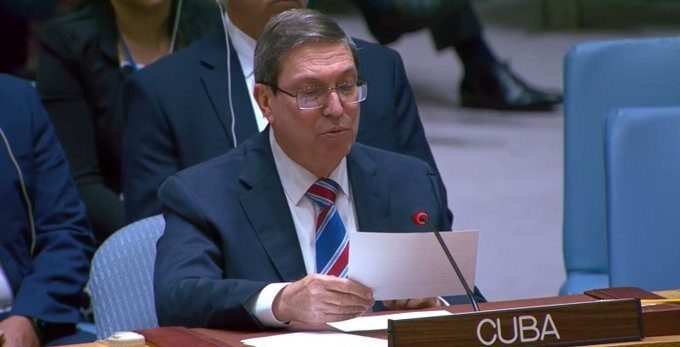
    The Guyanese government has initiated a comprehensive support program for its citizens studying in Cuba as the Caribbean nation grapples with a severe fuel shortage exacerbated by tightened international sanctions. Public Service Minister Zulfikar Ally confirmed the assistance measures during a Friday night session of the National Assembly’s Committee of Supply.

    Minister Ally revealed that Guyana’s Ambassador to Cuba, Halim Majeed, has been actively providing supplies and emergency support to the 45 registered Guyanese students across the island nation. The ambassador has established a direct communication channel, encouraging students to contact the embassy immediately for any urgent requirements.

    The government’s response comes amid growing concerns about deteriorating conditions in Cuba, where basic services including water distribution and transportation have been significantly impacted. The crisis intensified following Venezuela’s cessation of fuel exports to Cuba after the capture of socialist President Nicolas Maduro by United States authorities in early January.

    Minister Ally announced that a high-level delegation including himself, the Permanent Secretary, and ministry officials will convene with affected students this coming Monday to assess their situation firsthand. ‘The welfare and well-being of all our students remain our utmost priority,’ the minister emphasized during the parliamentary session.

    The current fuel shortage has reached critical levels, with multiple international airlines suspending flights to Cuba due to unavailability of aircraft refueling capabilities. Concurrently, the United States has issued warnings about imposing substantial tariffs on nations that attempt to provide fuel to the communist-led government.

    This development occurs against the backdrop of Guyana’s historical relationship with Cuba, which has spanned multiple administrations despite shifting political alliances. The South American nation maintained support for Cuba during previous embargo periods, providing essential commodities including rice during the 1960s.