分类: politics

  • Dominican government invests over RD$800 million in San Isidro Air Base upgrades

    Dominican government invests over RD$800 million in San Isidro Air Base upgrades

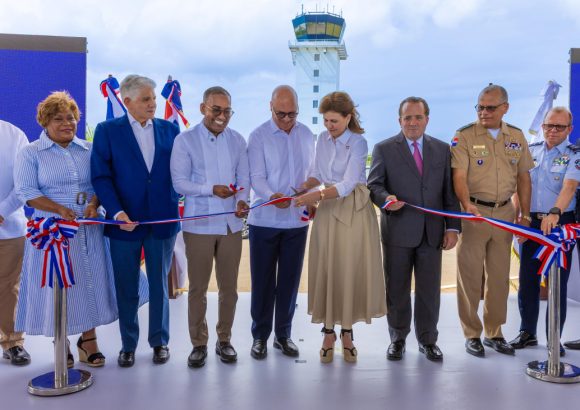
    In a formal ceremony held in Santo Domingo, Vice President Raquel Peña led the inauguration of a sweeping infrastructure modernization project at San Isidro Air Base, joined by senior representatives from three key national bodies: the Dominican Institute of Civil Aviation (IDAC), the national Airport Department, and the Dominican Republic Air Force. The multi-million peso upgrade delivers three core new assets to the base: a cutting-edge air traffic control tower, a completely overhauled runway lighting network, and updated horizontal runway markings, addressing decades of outdated infrastructure to lift national aeronautical safety and capabilities. A core strategic objective of the project is to establish San Isidro Air Base as a certified alternate diversion runway for Las Américas International Airport José Francisco Peña Gómez, the country’s busiest international gateway, during unforeseen emergencies or service disruptions at the main facility.

    Total public investment in the modernization effort tops RD$819 million, equal to roughly $15.4 million U.S. dollars, split between two leading government agencies. The national civil aviation authority contributed more than RD$600 million to deliver the project’s high-tech core components, including a modernized control cabin, upgraded digital communication networks, new DVOR/DME navigation equipment, and a redundant energy backup system to ensure uninterrupted operations during power outages. The Airport Department allocated an additional RD$219 million to supply and install the runway beacons and horizontal signaling systems, with all work completed to align with strict global safety standards set by the International Civil Aviation Organization (ICAO) and the U.S. Federal Aviation Administration (FAA). Senior project leads emphasized that the previous lighting and navigation infrastructure had been in continuous operation for more than 60 years, and the modernization will boost the runway’s operational capacity and reliability for decades to come.

    Speaking during the inauguration event, IDAC Director Igor Rodríguez Durán noted that the infrastructure upgrades at San Isidro are just one part of a broader national strategy to strengthen the Dominican Republic’s aviation ecosystem, which drives critical sectors of the national economy including connectivity, tourism, and trade. He outlined a pipeline of additional ongoing aeronautical improvement projects across the country, including the deployment of new advanced radar systems at Cibao International Airport, the replacement of aging out-of-date radar hardware at Gregorio Luperón International Airport, and the installation of new Instrument Landing System (ILS) technology at both Punta Cana International Airport and Las Américas International Airport. Rodríguez also confirmed that active construction and upgrades are ongoing at Cabo Rojo International Airport, a development positioned as a strategic economic and tourism hub that will unlock new investment and growth in the Dominican Republic’s southern region. To underscore the sector’s growing momentum, officials shared that the Dominican aeronautics industry recorded 79,693 total air operations across all facilities during the first four months of the current year, signaling steady recovery and expansion of the country’s air travel market.
  • Halkitis denies Gardiner hired him

    Halkitis denies Gardiner hired him

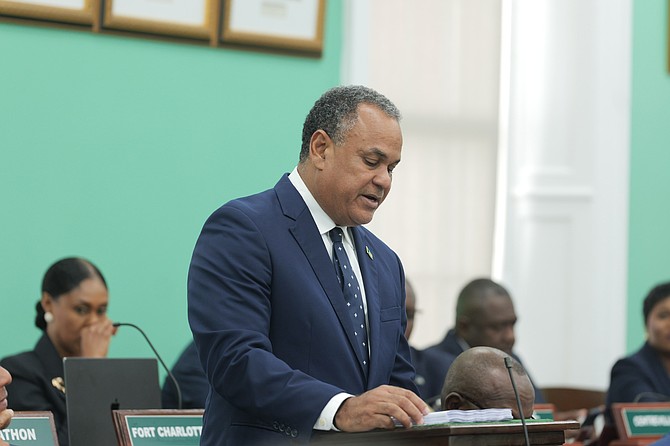
    Bahamas’ top finance official is facing growing political pressure to step down after reversing his earlier denial and confirming he once held a directorship at a construction firm tied to a drug trafficking suspect linked to a fatal Election Day plane crash off Florida’s coast.

    Finance Minister Michael Halkitis made the admission during an official press briefing hosted by the Office of the Prime Minister, just one day after he told local newspaper The Tribune he had never been involved with Top Notch Builders. The scandal unfolds against a backdrop of sustained public and political silence surrounding new details of the May 2017 plane crash, as well as intensifying scrutiny over claims laid out in a U.S. Drug Enforcement Administration affidavit that connect sitting Bahamian government officials to individuals facing drug trafficking charges.

    Public records from the Bahamas’ official corporate registry tie Top Notch Builders to Eric Gardiner, the crash victim who has since been arrested and formally charged with drug offenses by U.S. law enforcement. As of Thursday evening, two major political opposition groups — the Free National Movement (FNM) and the Coalition of Independents — have both publicly called for Halkitis’ immediate resignation following his confession.

    Halkitis pushed back against accusations of wrongdoing during the briefing, framing his past involvement with the firm as routine professional work. “As a private citizen I was involved in financial consulting and corporate services consulting,” he explained. “I was approached to provide consulting and directorship services to Top Notch Builders, in particular setting up proper corporate governance procedures and structures.”

    The finance minister clarified that he was not recruited to the role by Gardiner directly, but was instead approached by a third-party legal representative. He told reporters his association with the company began in mid-2019, and operations were suspended by April 2020 as global COVID-19 pandemic restrictions shut down construction projects across the country. “I resigned as director of that company and all the other directorships that I held in 2021,” he added, noting that full corporate records held by the Registrar General’s Department would confirm his account of the firm’s ownership and leadership structure.

    “Anybody who’s interested in the complete story can get the complete set of documents which not only show who the directors are but who the shareholders are, who the owners of the company were at the time, and they would see that it’s not who some people say it was,” Halkitis said.

    Halkitis’ political career stretches back more than a decade: he served as Minister of State for Finance under the previous Christie administration from 2012 to 2017, and was sworn in as Finance Minister and Leader of Government Business in the Senate following the Progressive Liberal Party’s 2021 general election victory.

    Top Notch Builders first gained public attention in 2017, when it secured a lucrative $35 million government contract to build the Eight Mile Rock administrative complex just one day before that year’s general election. Corporate filings further show the firm owns Complete Construction, the developer behind the government’s high-profile Carmichael Village affordable housing project, a flagship initiative launched during the last parliamentary term.

    In a 2017 sworn statement, Gardiner testified that he held no ownership stake in Top Notch Builders despite serving as the firm’s president and director. He claimed the company is 100 percent owned by Paradise Productions Inc, an entity fully controlled by Samson Hield, who has previously been named as the lead contractor for the Eight Mile Rock public-private partnership project in local business reporting. At this time, no wrongdoing has been alleged against any other current or former officer or director of Top Notch Builders or Complete Construction, and no evidence has been presented linking the firms to Gardiner’s alleged drug trafficking activities.

    When The Tribune first questioned Halkitis about his ties to the company on the floor of the House of Assembly Wednesday, he denied any formal involvement. “Never a president of the company, and I think he (Eric Gardiner) was the president of the company or someone else was the president of the company. I was never employed by the company,” he told reporters at the time. When pressed about how Gardiner, a convicted drug trafficker, was able to secure large-scale government contracts, Halkitis declined to comment, saying “I don’t want to comment on that.”

    Opposition leader Michael Pintard, head of the FNM, has accused Halkitis of intentionally misleading the Bahamian public about the depth of his involvement with Top Notch Builders. Pintard argued that Halkitis did not serve as a minor consultant or outsider director, but actually held the role of company president — a position that would have put him at the center of the firm’s daily operations and corporate decision-making.

    Pintard further raised conflict of interest concerns, noting that Complete Construction secured tens of millions of dollars in government housing contracts after Halkitis joined the national Cabinet, and that Halkitis never publicly disclosed his past leadership role with the parent company or recused himself from related discussions. “This immediately places him in a direct conflict of interest position, especially in light of the fact that as a sitting Minister and then Senator, he never made the public aware of his role in that company and the steps he took to recuse himself from any consideration,” Pintard said. Closing his statement, the opposition leader reiterated the demand for Halkitis to step down: “Halkitis must go!”

  • Veteran journalist Opal Roach replaces Clint Watson at ZNS

    Veteran journalist Opal Roach replaces Clint Watson at ZNS

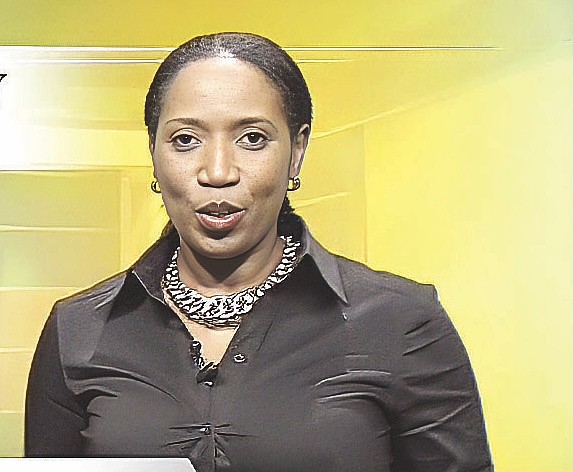
    Long-serving Bahamian broadcast journalist Opal Roach has stepped into the role of acting general manager at the Broadcasting Corporation of The Bahamas (BCB), the operator of state-owned ZNS Broadcasting, following the departure of former chief Clint Watson who moved into frontline politics. The official announcement of Roach’s appointment was made public on Wednesday, marking a promotion for an executive who has spent decades in senior leadership and news roles within the public broadcaster.

    Roach’s career at BCB has covered multiple high-level positions, including a prior stint as assistant general manager for the news division, and most recently, deputy general manager of the entire corporation. Her ascent to the top role comes after Watson, who led the taxpayer-funded media outlet for almost three years, was sworn in as a government senator earlier this month, triggering his exit from the broadcaster.

    Watson first joined ZNS as general manager in 2023, leaving his position as press secretary in the Office of the Prime Minister to take the media role. Almost immediately after he began exploring a political candidacy, controversy erupted over his dual holding of political ambition and leadership of the state broadcaster. Last August, Free National Movement (FNM) Chairman Dr. Duane Sands publicly called for Watson to resign from his ZNS post, arguing that it was impossible for the head of the national public broadcaster to seek a governing party nomination without eroding public trust in ZNS’s editorial and operational impartiality.

    In response to the criticism, Watson stated that he would step down from his role at ZNS if he was selected as the Progressive Liberal Party (PLP) candidate for a constituency. Ultimately, however, the PLP chose Obie Roberts as its candidate for the Southern Shores seat, leaving Watson unsuccessful in his nomination bid. But the debate over his right to remain as ZNS general manager did not fade after the nomination process.

    Tensions boiled over in April, when two sitting BCB board members resigned in protest over what they called overt political interference in the corporation’s governance. The board had previously issued a directive barring Watson from returning to work at ZNS until after the general election scheduled for May 12, a decision that was later overturned by external political pressure. The board’s original decision extended Watson’s administrative leave until May 18, or a further date determined by the board’s leadership, following his failed nomination attempt. In a formal letter from BCB Executive Chairman Picewell Forbes, the board explained the leave was ordered to protect transparency and uphold public confidence in the corporation’s operations and impartial leadership.

    However, internal correspondence obtained by The Tribune shows that Prime Minister Philip “Brave” Davis directly instructed that Watson be allowed to return to his general manager role immediately, overriding the independent board’s formal decision. That interference prompted the two resignations and set in motion the final process that led to Watson’s swearing in as a senator and departure from ZNS, clearing the way for Roach’s appointment to the top post.

  • Second Shipment of Construction Materials Arrives for Distribution to Vulnerable Families

    Second Shipment of Construction Materials Arrives for Distribution to Vulnerable Families

    Antigua and Barbuda has taken another key step forward in its government-backed housing support initiative, with a second batch of critical construction materials successfully arriving at its shores, according to government spokesperson Maurice Merchant. Merchant, the nation’s Director General of Communications, made the announcement during an official post-Cabinet media briefing held Thursday, addressing lingering public uncertainty over whether the post-general election supplementary shipment had reached the country.

    Public questions had been circulating for days about the status of the additional materials, which were promised ahead of the recent general election. In clear, direct response to those queries, Merchant confirmed that the shipment is now on-island and ready for deployment.

    Cabinet members were updated this week that a formal distribution timeline is currently being finalized by government officials, with the explicit goal of ensuring the building supplies reach the communities and individuals that need them most. “The honourable minister reported to Cabinet yesterday that he is putting the final touches on a delivery schedule that will get these materials directly to vulnerable and low-income households across both islands,” Merchant told reporters.

    This distribution effort is a core component of a national housing assistance program launched by the current Gaston Browne-led administration, designed to directly support households that lack the resources to access necessary construction and home repair materials on their own. Merchant also emphasized that senior government leadership is actively engaged in the on-the-ground execution of the initiative, singling out Rawdon Turner, Minister of Urban and Social Transformation, for his hands-on involvement.

    Merchant told the briefing that Turner has personally joined distribution teams to deliver materials to qualifying residents on weekends, demonstrating the administration’s commitment to moving the program forward at pace. “Even on Saturdays and Sundays, Minister Turner is out in communities personally overseeing the delivery of materials to families that need them, to keep this administration’s promise alive,” Merchant said.

    To date, government officials have not released details on the total volume of construction materials included in this second shipment, nor have they publicly identified which priority communities will receive supplies first once the distribution schedule is announced.

  • Government Developing Major Agricultural Dam in Bethesda, The Table Hill dam nearing completion

    Government Developing Major Agricultural Dam in Bethesda, The Table Hill dam nearing completion

    The government of Antigua and Barbuda has advanced a national agricultural infrastructure overhaul with the approval of a major new dam project in Bethesda, a development crafted to address longstanding water access gaps for local farmers and strengthen the country’s food sovereignty. The approval was formally announced at a post-Cabinet press briefing on Thursday by Maurice Merchant, the nation’s Director General of Communications, who confirmed that the body signed off on the broad agricultural and water infrastructure initiative after a detailed presentation from Agriculture Minister Anthony Smith.

    Per Merchant’s briefing, the Bethesda Dam has been selected as a flagship pilot project for the Ministry of Agriculture for strategic geographic reasons: the site sits at the heart of a 50+ acre agricultural zone with untapped high production potential, making it an ideal test case for scaling similar projects across the country in the future. In addition to the new Bethesda development, Merchant shared that construction of a second dam at Table Hill in the Gordon district is already in its final stages, and once operational, it will dramatically expand water access for farming operations in that surrounding area.

    Both projects are core components of the government’s broader national strategy to modernize the country’s aging agricultural backbone, enhance the sector’s ability to withstand climate volatility, and ease the persistent challenges farmers face during periods of drought and unpredictable rainfall patterns. Key projected outcomes of the initiative include expanded national water storage and irrigation capacity, higher overall agricultural productivity, and the conversion of currently unused arable land into active productive farming plots.

    Beyond infrastructure upgrades, the initiative is designed to cut Antigua and Barbuda’s reliance on imported food by ramping up domestic output of staple and high-demand crops. Merchant confirmed the projects will create the water infrastructure needed to expand cultivation of a range of profitable, high-consumption crops including pineapples, fresh vegetables, and fruit trees. The Bethesda Dam will also integrate closely with the Ministry of Agriculture’s growing tissue culture programme, offering dedicated space for crop demonstration trials, propagation of high-quality planting material, hands-on farmer training, and the adoption of climate-smart agricultural practices across the sector.

    According to government officials, the entire multi-project initiative is structured to deliver long-term, sustained support to Antigua and Barbuda’s farming community, while advancing the dual national priorities of improved food security and long-term agricultural sustainability.

  • Antigua and Barbuda Cabinet Announces Official Funeral for Sir Aziz Hadeed, Pays Tribute

    Antigua and Barbuda Cabinet Announces Official Funeral for Sir Aziz Hadeed, Pays Tribute

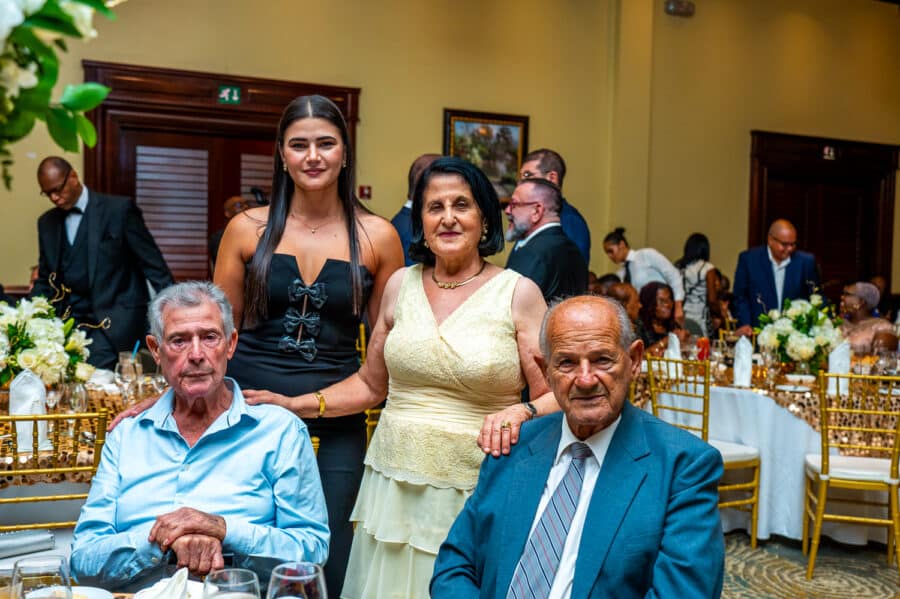
    The twin-island nation of Antigua and Barbuda is preparing to honor one of its most influential citizens with a full state official funeral, following the unexpected death of celebrated businessman, public servant and philanthropist Sir Aziz Hadeed. The country’s Cabinet has memorialized Sir Aziz as a towering national leader whose decades of contributions left an indelible mark on the trajectory of Antigua and Barbuda’s social and economic development.

    The official announcement of the funeral honor was delivered this Thursday by Maurice Merchant, Director General of Communications, during a press briefing held after the weekly Cabinet meeting. Alongside confirming the formal tribute, Merchant shared that the full Cabinet has extended its deepest condolences to Sir Aziz’s entire family, including his wife Lady Maasen Hadeed, brothers Radwan and Joseph, sister Leila, nephews Francis and Andrew, as well as extended relatives, friends, and communities across Antigua and Barbuda and the broader Caribbean region, all of whom are grieving the loss of a beloved public figure.

    In remarks to reporters, Merchant emphasized that Sir Aziz’s departure represents a profound, irreplaceable loss for the entire nation. Merchant characterized Sir Aziz as a transformative presence in Antigua and Barbuda’s business ecosystem, noting that his legacy was built not only on remarkable entrepreneurial success, but also on a lifelong, unshakable commitment to public service, charitable giving, and the advancement of the nation he called home.

    Beyond his work in the private sector, Sir Aziz built a distinguished career in public service, serving both as an independent senator and a Cabinet minister. He was most widely recognized as the head of the Hadeed Group of Companies, a regional business conglomerate that grew from its Antiguan roots to expand operations across seven markets, including Trinidad and Tobago, Barbados, Jamaica, Guyana, and the United States.

    Merchant shared that Cabinet highlighted the unique value Sir Aziz brought to national governance, bringing a rare combination of wisdom, uncompromising integrity, long-term strategic vision, and hands-on business expertise to every role he held. His contributions to national progress spanned multiple political administrations, earning him respect across party lines.

    One of Sir Aziz’s most impactful contributions to public life came in the education sector, where he served as chairman of the University of the West Indies Five Islands Campus Council. Merchant noted that his steady stewardship guided the young institution through its critical formative years, laying the groundwork for the campus’s sustained growth and expansion. Beyond his institutional leadership, Sir Aziz personally funded dozens of scholarships and made direct financial contributions to opening access to higher education, creating opportunities for hundreds of talented students who would have otherwise been unable to pursue tertiary study.

    Sir Aziz’s commitment to supporting the most vulnerable members of Antiguan society extended to the height of the COVID-19 pandemic, when the country faced unprecedented economic disruption. Cabinet’s statement highlighted his critical voluntary support during the crisis: Sir Aziz spearheaded and funded food distribution programs and utility bill assistance initiatives that provided life-saving support to thousands of struggling households when public support systems were strained.

    His giving also extended across multiple other sectors, including public healthcare, youth empowerment initiatives, sports development, and the promotion of local arts and culture. Merchant emphasized that much of Sir Aziz’s philanthropic work was done privately, with no desire for public fanfare or recognition.

    Earlier this year, Sir Aziz received one of the Commonwealth’s highest honors when he was conferred with the Most Distinguished Order of St. Michael and St. George during a ceremony at Windsor Castle. Cabinet noted that the award was a formal international recognition of his decades of contributions to national development, philanthropy, and community service.

    “In recognition of his exceptional service and enduring contributions to Antigua and Barbuda, Cabinet has agreed to accord Sir Aziz Hadeed an official funeral,” Merchant confirmed.

    In closing, the government released a statement calling on all citizens of Antigua and Barbuda to unite in mourning and tribute, describing Sir Aziz as a remarkable patriot whose entire life embodied the values of generosity, humility, entrepreneurial drive, and selfless service to humanity.

  • BREAKING: Former Ministers Samantha Marshall and Joanne Massiah Appointed Ambassadors-at-Large

    BREAKING: Former Ministers Samantha Marshall and Joanne Massiah Appointed Ambassadors-at-Large

    In a breaking official announcement from the government of Antigua and Barbuda, two veteran former cabinet ministers, Samantha Marshall and Joanne Massiah, have been tapped to fill the prestigious roles of ambassadors-at-large for the nation.

    Both appointees bring decades of high-level governance experience to their new diplomatic positions: Marshall previously held key cabinet portfolios focused on domestic social development and economic planning, while Massiah built a public career centered on national legal affairs and community advocacy, and has long been recognized for her work advancing regional cooperation across the Caribbean.

    The role of ambassador-at-large grants the pair broad authority to represent Antigua and Barbuda in international diplomatic engagements, trade negotiations, and global advocacy initiatives, marking a strategic move by the current administration to leverage seasoned political expertise to strengthen the nation’s global standing. Official sources confirm the appointments took effect immediately following the formal public announcement, with the first set of diplomatic assignments for Marshall and Massiah set to be unveiled in the coming weeks.

    Local political analysts note that the selection of two experienced former officeholders reflects the government’s priority of advancing foreign policy and economic outreach goals at a time of shifting regional and global dynamics, with expectations that the pair will advance key national priorities including tourism promotion, foreign direct investment attraction, and climate advocacy for small island developing states.

  • Letter from the Heart: Dear UPP

    Letter from the Heart: Dear UPP

    Every political organization exists with one core goal: to win elections and seize power. But right now, Antigua and Barbuda’s United Progressive Party (UPP) is failing spectacularly at this fundamental mission, and it will never achieve victory as long as Jahmale Pringle retains the party leadership. That is the blunt assessment of an opinion commentator writing under the pen name Trident, who argues Pringle lacks the leadership qualities needed to unseat the entrenched incumbent government.

  • Alarm over PM’s statement in response to protest

    Alarm over PM’s statement in response to protest

    A wave of controversy has swept across Trinidad and Tobago following the arrest of three peaceful demonstrators outside the Office of the Director of Public Prosecutions (DPP) in Port of Spain on Wednesday, with Opposition Leader Pennelope Beckles decrying the actions as a direct threat to constitutional democratic freedoms.

    The protest was organized by family members and supporters of Kaia Sealy, who faces charges connected to the January death of her common-law husband Joshua Samaroo during a police-involved shooting. Demonstrators were demanding greater transparency into the legal proceedings against Sealy, challenging the narrative that has led to her prosecution.

    Among those taken into custody was Alyssa Phillip, a protester whose final words before detention opened Beckles’ official statement. Echoing Phillip’s own declaration, Beckles quoted: “‘The only weapon we have are our voices. And that is the weapon that they are afraid of the most.’ These were the words of Alyssa Phillip moments before she was arrested yesterday near the office of the Director of Public Prosecutions.”

    Also arrested was prominent blogger and influencer Jason De Silva, who was detained after publicly questioning police conduct and accusing law enforcement of “weaponising the State against citizens.” Video footage of the incident captured De Silva dropping to his knees, raising his hands above his head and repeatedly chanting “hands up, don’t shoot!” before officers led him away. Camille Caresquero, Phillip’s mother, was also placed into a police vehicle alongside her daughter; authorities have yet to confirm whether she was formally detained or accompanied officers voluntarily.

    As the crowd swelled to approximately 50 attendees, police deployed multiple units and additional vehicles to the site on Richmond Street, with Deputy Commissioner of Police Suzette Martin observed coordinating with senior officers on location. Beckles emphasized that even though the Trinidad and Tobago Police Service (TTPS) had issued a prior warning against demonstrations outside the DPP office, official TTPS guidance published as recently as May 24, 2026 explicitly states that protests are not outright banned under the ongoing State of Emergency (SOE), only requiring compliance with emergency regulations and mandating that police respond with “appropriate and proportionate action.”

    In her full statement, Beckles warned that the arrests mark a dangerous turning point for democratic governance in the nation, arguing “Trinidad and Tobago should never, ever find itself on the brink of becoming a policing state.” She called on Prime Minister Kamla Persad-Bissessar to end what she describes as a failed SOE and restore unfettered democratic rights guaranteed by the national constitution, allowing citizens to exercise their right to peaceful protest.

    Beckles also criticized the Prime Minister’s response to the incident, noting that Persad-Bissessar released a statement via WhatsApp condemning the protest as “publicity farming” designed to secure arrests and claim victim status, while failing to address the core concerns of demonstrators over Sealy’s case. She further accused the Prime Minister of double standards, pointing out that the government has remained silent on similar-sized protests held in Siparia against an Alderman who defected from the ruling People’s National Movement (UNC).

    As a Senior Counsel, Persad-Bissessar’s public comments prejudging Sealy’s guilt are particularly problematic, Beckles argued, as they create harmful pre-trial publicity that can compromise the fairness of upcoming court proceedings. She also refuted the Prime Minister’s claim that there were no anti-murder protests during the previous 10-year administration, noting that public records show dozens of protests with active UNC participation.

    The Opposition Leader went on to criticize broader government actions, highlighting reports that UNC-aligned influencers hired by the Water and Sewerage Authority (WASA) earn higher salaries than frontline healthcare workers, and that so-called “TikTok Junior Ministers” receive monthly stipends of $73,000 despite no visible public service contribution. She warned that the government’s push to establish Zones of Special Operations (ZOSO) would grant the Prime Minister unchecked power to suspend civil liberties, a risk that grows as the administration increasingly suppresses dissenting voices.

    “Peaceful assembly is a fundamental freedom enshrined in our constitution, and today’s gathering was orderly and peaceful,” Beckles said. “No country can survive when peaceful citizens are treated like enemies of the State. After nearly a year under a failing SOE, the Trinidad and Tobago people deserve better than intimidation and forced silence.”

    As of late Wednesday evening, police sources had not confirmed whether any formal charges had been filed against the detained protesters. The incident has already deepened existing public anxiety over trust in law enforcement and the national justice system, with opposition figures warning that the government’s heavy-handed response risks eroding democratic norms further.

  • OPINION: Ceremony, Constitution and Controversy: The Oath Debate in Antigua and Barbuda’s Parliament

    OPINION: Ceremony, Constitution and Controversy: The Oath Debate in Antigua and Barbuda’s Parliament

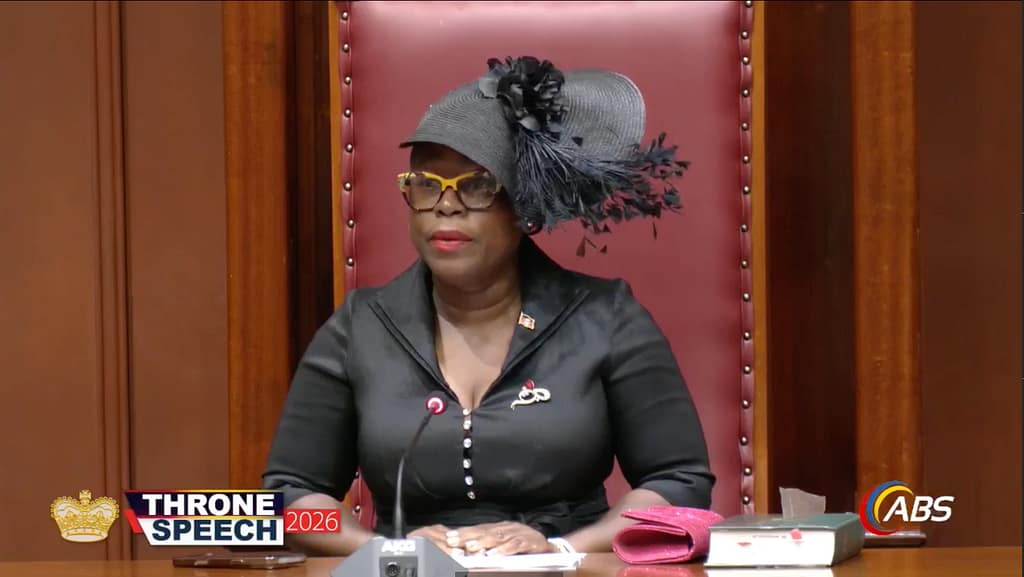
    A recent high-stakes incident in the Parliament of Antigua and Barbuda has pulled a long-simmering question of Westminster constitutional convention into the national spotlight, sparking fierce debate over whether an unsworn Member of Parliament may attend a ceremonial sitting like the Governor General’s Throne Speech.

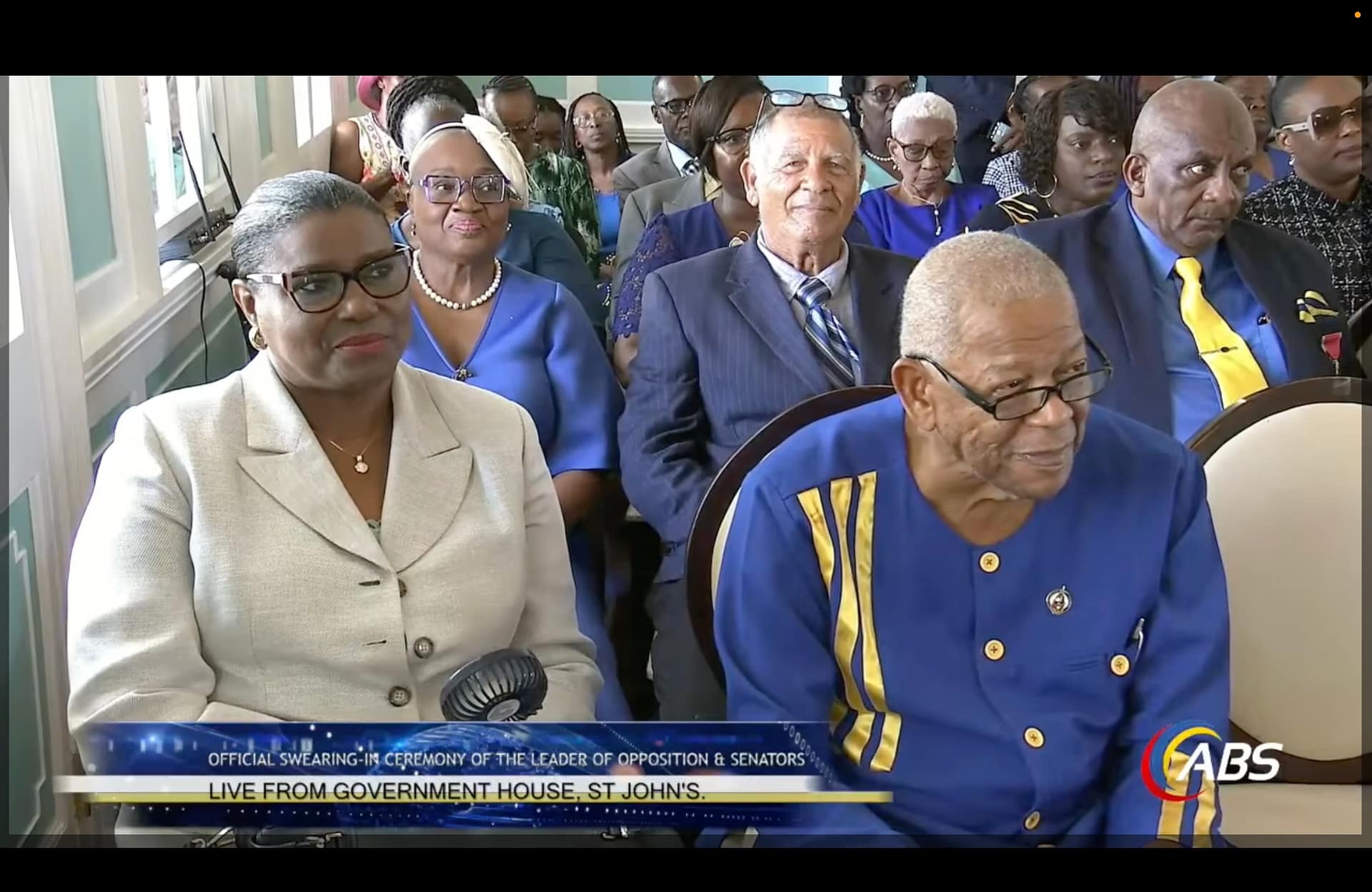
    The controversy was triggered after the Senate President ordered the Opposition Leader to exit the parliamentary chamber, on the grounds that he had not completed the required oath of allegiance ahead of the ceremonial Throne Speech sitting. What began as a seemingly minor procedural incident quickly ballooned into a national conversation touching on constitutional norms, parliamentary procedure, and the limits of presiding officers’ authority during formal ceremonial sessions.

    At the heart of the dispute lies a nuanced distinction that often goes unrecognized in Westminster-style democracies: the line between simply attending the ceremonial opening of Parliament and holding the constitutional right to sit and vote as an active, fully empowered parliamentarian. Under the Westminster system inherited from the United Kingdom, elected representatives are uniformly barred from engaging in substantive parliamentary business until they complete the mandatory oath of allegiance. This restriction covers core parliamentary functions, from speaking in plenary debate and voting on motions to tabling new legislation and exercising the formal powers of elected office.

    Yet long-standing Westminster precedent also holds that ceremonial attendance at the State Opening of Parliament regularly takes place before new members complete the swearing-in process. In the UK itself, newly elected Members of Parliament conventionally attend the State Opening and hear the King’s Speech before the formal oath-taking process concludes. Swearing-in is typically staggered over the several days following the opening ceremony, after which regular legislative work gets underway.

    This long-held practice embodies a core constitutional distinction deeply embedded in parliamentary convention. A person may be formally confirmed as elected or appointed to Parliament, but they do not gain full authority to exercise the functional powers of office until the oath is administered. The Antigua and Barbuda Constitution, like other Commonwealth constitutions modeled on the Westminster system, explicitly requires parliamentarians to take the oath before taking their seat and participating in full parliamentary proceedings. But constitutional scholars across the Commonwealth have long interpreted this requirement as applying exclusively to the exercise of formal parliamentary powers, not simple symbolic attendance at ceremonial events.

    The core legal and conventional question at hand, therefore, is whether attending a Throne Speech counts as substantive participation in parliamentary business, or whether it remains a primarily ceremonial and symbolic act. Critics of the Senate President’s decision to remove the Opposition Leader argue the order represented an unnecessarily rigid reading of constitutional procedure that breaks from long-held broader Westminster custom. They emphasize that the Throne Speech is fundamentally a ceremonial state occasion that marks the formal opening of a new parliamentary term, rather than an ordinary legislative sitting that includes debate, voting or substantive lawmaking.

    On the opposite side of the debate, supporters of the action insist that once Parliament is formally convened, only properly sworn members should be allowed to be present in the chamber in an official capacity. They argue that constitutional formalities and institutional order must be upheld from the very start of a new parliamentary term to maintain the integrity of the legislature.

    Beyond the question of oaths and ceremonial attendance, the incident has also renewed long-running discussion about the scope of authority held by presiding officers in Westminster parliamentary chambers. In this system, Speakers and Senate Presidents hold broad procedural power to maintain order and interpret standing rules, but that authority is not unlimited. It is constrained by constitutional convention, historical precedent, and public political scrutiny.

    A defining feature of Westminster governance that this controversy has underscored is the central role of unwritten constitutional convention. Unlike systems where all governing rules are strictly codified in a written constitution, many core parliamentary practices in Westminster democracies rely not just on written law, but on inherited tradition, widely accepted convention, and historical precedent.

    It is this feature that has allowed the controversy to gain such traction across Antigua and Barbuda and the wider Caribbean. This is not simply a disagreement over seating arrangements or procedural niceties; it raises fundamental broader questions about constitutional interpretation, democratic legitimacy, and the balance between explicit written rules and long-established unwritten practice.

    Across the Commonwealth Caribbean, nations including Jamaica, Barbados, and Trinidad and Tobago operate under near-identical constitutional frameworks. In most of these jurisdictions, parliamentary ceremonial openings have historically allowed unsworn members to attend ahead of formal swearing-in, so long as they do not participate in any substantive legislative business.

    It remains unclear whether this incident in Antigua and Barbuda will set a precedent for stricter interpretations of parliamentary procedure going forward. What is unambiguous, however, is that the episode has opened a vital national conversation about the constitutional norms that underpin Antigua and Barbuda’s democratic system.

    In Westminster democracies, major constitutional disputes rarely emerge purely from disagreements over what is written in law. Far more often, they arise from conflicting interpretations of convention, precedent, and unwritten practice. Antigua and Barbuda’s latest parliamentary controversy fits squarely within this tradition, offering a defining test of how the nation’s constitutional order balances written rules and long-held custom.