分类: politics

  • Port of Spain MPs upset over reduced garbage disposal budget

    Port of Spain MPs upset over reduced garbage disposal budget

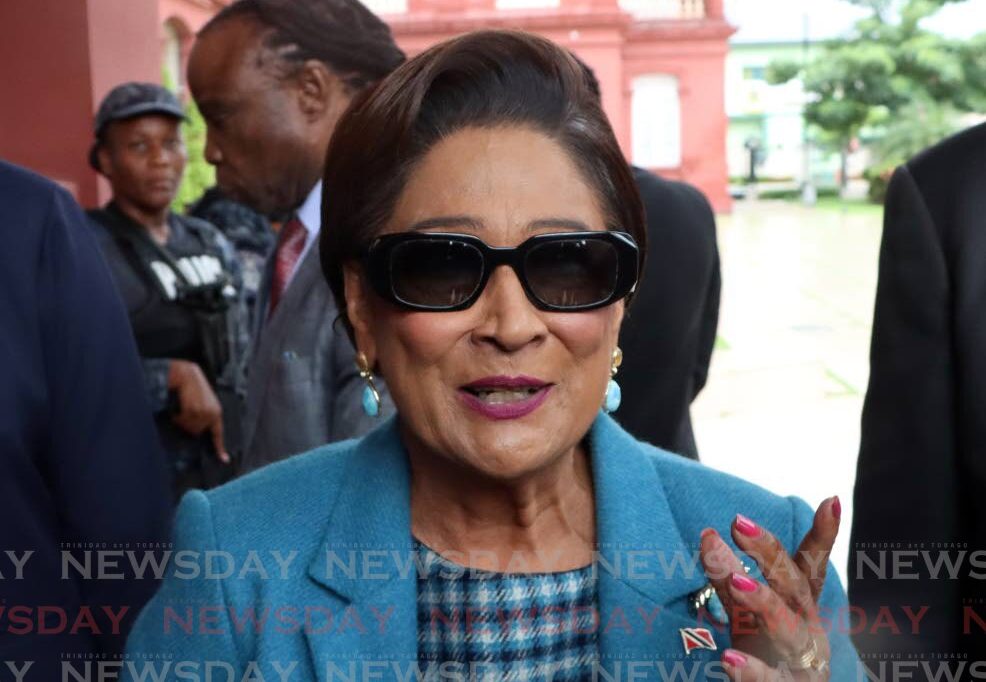
    Tensions flared during a recent session of the Standing Finance Committee of the House of Representatives as opposition MPs raised concerns over an $8 million reduction in the budget allocation for garbage collection and other services in Port of Spain. The debate, which took place on October 21, saw Port-of-Spain North/St Ann’s West MP Stuart Young leading the charge, asserting that the cuts would significantly hamper the capital city’s ability to manage waste effectively. Minister of Local Government Khadijah Ameen countered these claims, stating that the allocation was sufficient and could be supplemented if necessary. She accused the opposition of creating unnecessary panic and seeking headlines rather than focusing on the facts. Ameen emphasized that the line item in question covered multiple services, not solely garbage collection. However, Young and other MPs, including Port of Spain South MP Keith Scotland and Diego Martin North East MP Colm Imbert, remained unconvinced, pointing to broader reductions in the Port of Spain City Corporation’s budget for goods and services, which had decreased by $20 million over the past year. St Ann’s East MP Dr. Nyan Gadsby-Dolly and Arouca/Lopinot MP Marvin Gonzales also pressed Ameen for clarity on where additional funding might come from, to which she reiterated her earlier responses. The session highlighted growing concerns over the financial management of essential services in the capital.

  • New Chief Justice Ronnie Boodoosingh

    New Chief Justice Ronnie Boodoosingh

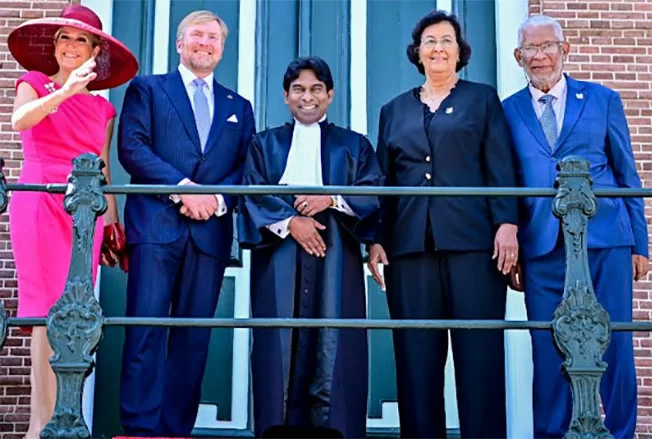
    In a significant development for Trinidad and Tobago’s judiciary, Justice Ronnie Boodoosingh has been officially appointed as the new Chief Justice. The ceremony took place on October 22 at the Office of the President, where acting President Wade Mark presented Boodoosingh with his instrument of appointment. This appointment follows the retirement of former Chief Justice Ivor Archie, who served in the role for 17 years. Boodoosingh, a seasoned legal professional, brings a wealth of experience to the position. He was first appointed as a Justice of Appeal in 2020 and has a distinguished career spanning over three decades. His journey began in 1992 when he was admitted to practice as an attorney, after which he worked as an advocate at JD Sellier and Company. He later joined the Office of the Director of Public Prosecutions, where he served for seven years at various jurisdictional levels. In 2001, Boodoosingh transitioned to academia, becoming a lecturer at the Hugh Wooding Law School. There, he directed the trial advocacy programme and taught ethics, while also establishing the Human Rights Law Clinic. Beyond his academic contributions, Boodoosingh has conducted extensive training programmes for legal professionals, law enforcement personnel, and educators. He holds a Master of Laws degree specializing in International Dispute Resolution from the University of London and is certified in adult education, advocacy, and judicial training by prestigious institutions. Additionally, he is the author of four books, including a textbook on trial advocacy, and continues to tutor at the UWI Law Faculty. His expertise in settlement conferencing and mediation further underscores his qualifications for the role of Chief Justice.

  • 55 vie for TPP candidacy for THA elections

    55 vie for TPP candidacy for THA elections

    The Tobago People’s Party (TPP) has announced that 55 individuals have submitted their nominations to stand as candidates in the upcoming Tobago House of Assembly (THA) elections. TPP leader Farley Augustine revealed this during a press briefing at Shaw Park on October 21. Augustine confirmed that the nomination process has concluded, and a committee is now rigorously vetting the nominees to ensure they meet the party’s membership and eligibility criteria.

  • Dowlath: School book grant under review

    Dowlath: School book grant under review

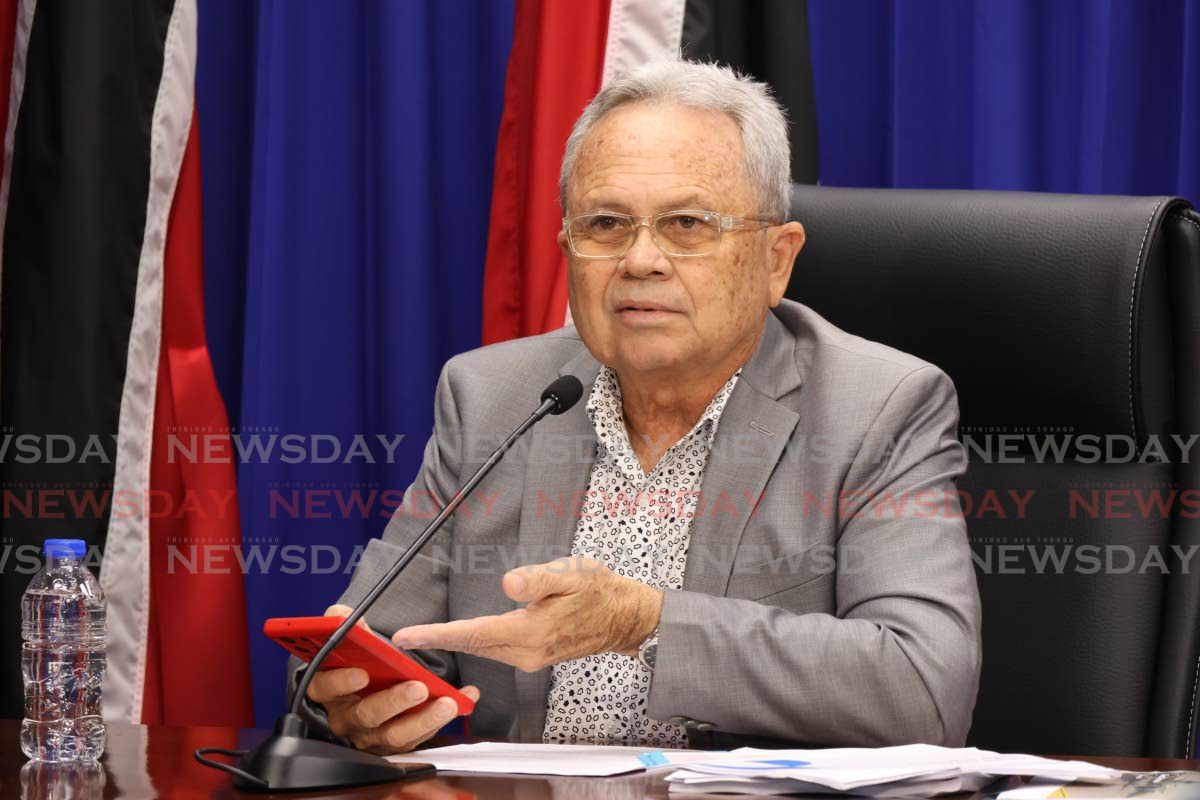
    Education Minister Dr. Michael Dowlath has announced that the school supplies and book grant is currently under review, responding to inquiries from his predecessor, St. Ann’s East MP Dr. Nyan Gadsby-Dolly, during the Standing Finance Committee meeting on October 21. The draft estimates for the 2026 budget reveal no allocation for this grant, contrasting sharply with the $20 million spent in 2024. Although last year’s budget (fiscal 2025) initially omitted this item, $20 million was eventually allocated in the revised estimates. Gadsby-Dolly sought clarity on the apparent omission for fiscal 2026, questioning whether the mid-term review would determine the grant’s continuation or the amount allocated. Dowlath reiterated that the grant remains under review, prompting Gadsby-Dolly to press for a definitive answer. Speaker Jagdeo Singh intervened, emphasizing that the minister had provided a clear response. Gadsby-Dolly expressed concern, interpreting the minister’s statement as uncertainty. The discussion also highlighted significant shortfalls in the Infrastructure Development Fund (IDF) for school repairs and upgrades. Despite allocations of $50 million for primary school improvements this year, only $1.5 million was spent last year. Dowlath acknowledged $34 million in arrears, promising funding through the mid-year review or alternative financing. Similar issues were noted for secondary schools, with $46 million in arrears and minimal spending from previous allocations. Gadsby-Dolly questioned whether the IDF was consistently underfunded, to which Dowlath did not directly respond. The committee ultimately approved the ministry’s total budget allocation of $5.266 billion.

  • ‘Anarchy’ and the AG

    ‘Anarchy’ and the AG

    In a powerful address to law students at the University of the West Indies, St Augustine, Attorney General John Jeremie, SC, issued a stark warning about the state of law and order in the country. Speaking at a Faculty of Law awards ceremony on October 17, Jeremie described the current situation as a state of anarchy, driven by persistently high homicide rates. He urged the students to find their calling and prioritize public service over personal economic gain, emphasizing the importance of their education in contributing to societal well-being. Jeremie’s speech also resonated with seasoned attorneys, challenging them to uphold moral and legal principles in their practice. His remarks come during a particularly violent period, with recent statistics indicating the bloodiest week of 2025. Despite claims from police officials about reducing crime rates, Jeremie’s candid assessment of the country’s lawlessness sets him apart from typical political narratives. His unwavering commitment to due process, fundamental rights, and the rule of law further distinguishes him within the Kamla Persad-Bissessar cabinet. As Jeremie navigates the tension between politics and professionalism, his tenure as Attorney General may redefine his relationship with the legal profession and the justice system.

  • US says two dead in strike on alleged drug-smuggling boat in Pacific

    US says two dead in strike on alleged drug-smuggling boat in Pacific

    In a significant escalation of its anti-drug operations, the United States conducted a military strike on an alleged drug-smuggling vessel in the eastern Pacific, resulting in the deaths of two individuals. Defense Secretary Pete Hegseth confirmed the operation on Wednesday, marking the first such attack on a boat in the Pacific Ocean. The strike, which was carried out in international waters, brings the total number of similar operations to at least eight, with a death toll of at least 34. Hegseth described the targets as ‘narco-terrorists’ and emphasized that no US forces were harmed during the mission. The Trump administration has framed these actions as part of an ‘armed conflict’ with Latin American drug cartels, which it has designated as terrorist organizations. However, critics argue that the US has not provided concrete evidence to substantiate its claims, and legal experts contend that such summary killings are unlawful. The campaign has heightened tensions with regional allies, particularly Venezuela and Colombia, where US military presence has raised concerns about broader geopolitical motives. Colombia recently recalled its ambassador to the US following a public feud between President Gustavo Petro and Donald Trump over the latter’s aggressive anti-drug strategies. Despite these tensions, both nations have reaffirmed their commitment to combating drug trafficking.

  • A headache for Divali

    A headache for Divali

    In a recent letter to the editor, concerns were raised about the United National Congress (UNC) government’s handling of fireworks regulations during the Divali celebrations. Despite their election slogan, ‘When UNC wins, everybody wins,’ the government has been criticized for its apparent inaction on the indiscriminate sale and use of fireworks, mirroring the previous administration’s approach. Phillip Alexander, a prominent supporter of the UNC, has been vocal in defending the government and criticizing the past administration’s shortcomings. However, the lack of effective enforcement of fireworks bans during the Independence holiday and Divali night has sparked public outrage. The letter highlights the adverse effects of the loud explosions on vulnerable populations, including the elderly, infants, autistic individuals, and those with noise sensitivities. The writer questions whether the UNC is truly different from the People’s National Movement (PNM) or merely a repackaged version of the same policies. The letter concludes by emphasizing the need for legislative reforms to promote responsible fireworks use, similar to practices in other Caribbean nations like Barbados.

  • Mohit: UNC working for the people

    Mohit: UNC working for the people

    In a recent address to the Standing Finance Committee of the House of Representatives on October 21, Minister of the People, Social Development and Family Services Vandana Mohit emphasized the government’s unwavering commitment to prioritizing the welfare of the nation’s most vulnerable populations. Mohit underscored that every policy, program, and financial allocation is meticulously designed to empower and transform lives, particularly those of the poor, elderly, disabled, women, children, and families in crisis. Despite facing significant fiscal constraints, the ministry has remained steadfast in its focus on impactful expenditure rather than mere cost-cutting. In the previous fiscal year, the government invested over $4.5 billion in senior citizens’ grants, $267 million in public assistance, $79 million in disability grants, and $10 million in relief through the National Social Development Programme. Mohit highlighted that these efforts ensure no citizen is overlooked or unsupported. Looking ahead, the government plans to strengthen the social protection ecosystem by reviewing the standard means test to promote fairness and inclusion, modernizing delivery systems for greater efficiency, and enhancing collaboration with agencies like the Children’s Authority. The committee subsequently approved a budgetary allocation of $6,012,215,208 for the ministry. During the session, Mohit faced scrutiny from PNM MPs regarding the continuation of certain projects initiated under the previous administration. She assured that the government is actively considering these issues, while also addressing concerns about funding discrepancies for NGOs and the allocation of resources for women and children.

  • PM: Cabinet to Review All Major Payments Weekly

    PM: Cabinet to Review All Major Payments Weekly

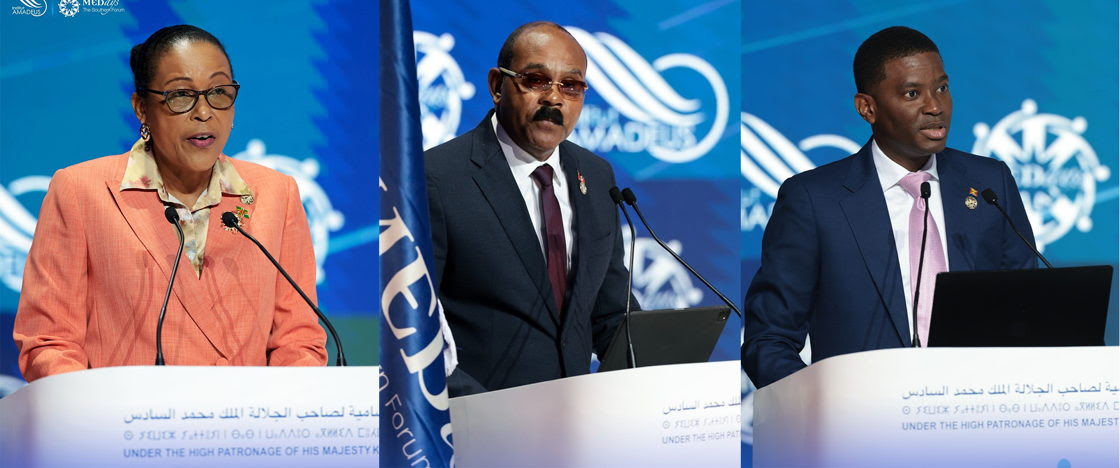
    Prime Minister Gaston Browne of Antigua and Barbuda has unveiled a significant reform to enhance financial oversight within the government. The new Cabinet oversight mechanism mandates that all major government payments undergo Cabinet review before authorization. This initiative aims to tighten financial controls and prevent unauthorized expenditures, addressing concerns over misuse of public funds.

    During his weekly ‘Browne and Browne Show,’ the Prime Minister revealed that the reform was prompted by evidence of Treasury officers and private sector partners circumventing existing safeguards to expedite large payments. Browne emphasized that Cabinet will now directly scrutinize all high-value disbursements to ensure transparency and accountability.

    The Prime Minister highlighted instances where influential business players allegedly cultivated ‘captured public servants’ within the Treasury, prioritizing their payments over smaller local suppliers. ‘Sometimes a little man can’t get paid for the bread he supplies to the prison,’ Browne remarked. ‘But the big players go every week and collect their checks.’ He explained that the system allowed a select few to exploit oversight gaps, bypassing necessary approvals.

    To address this, Browne announced that all significant Treasury payments will require clearance from both the Ministry of Finance and Cabinet. ‘I called the Accountant General and said, ‘You have no authority to make any large payments. They will now come to Cabinet before you make any payments,’’ he stated. ‘We’re putting down our foot.’

    This reform is part of a broader anti-corruption campaign within the government, particularly following the vehicle procurement controversy that exposed weaknesses in oversight. Browne emphasized that the new process will prioritize payments to smaller local businesses that have historically struggled to receive timely payments. ‘The little man that I refused to pay for years—pay them,’ he declared.

    While analysts suggest the reform could slow routine financial operations, Browne insists the added scrutiny is essential to restore public trust. ‘We’re not here to make anyone uncomfortable,’ he said. ‘We’re here to make sure every dollar of the people’s money is properly spent.’

    The initiative complements other measures announced by Browne, including the rotation of key public officers and the hiring of external validation officers to conduct random audits of Customs and procurement transactions. Together, these steps form part of what he calls a ‘national reset’—a comprehensive effort to rebuild transparency and confidence in public administration.

  • PM Defends Wife’s Integrity, Dismisses Corruption Rumors

    PM Defends Wife’s Integrity, Dismisses Corruption Rumors

    Prime Minister Gaston Browne has vehemently defended his wife, Maria Browne, the Housing and Works Minister, against opposition allegations connecting her to a recent vehicle procurement scandal. Speaking on his radio program, the Browne and Browne Show, he dismissed the claims as politically motivated and aimed at diverting attention from other influential figures. ‘Just imagine the person who is helping to solve these problems—the person being vindicated—is the one they’re trying to frame,’ Browne stated. ‘What they’re doing to her is totally inappropriate.’

    Browne highlighted Maria Browne’s pivotal role in reforming the government’s vehicle procurement process. Over two years ago, she identified inefficiencies in the system and advocated for centralizing vehicle purchases under Cabinet oversight. Her recommendations led to the establishment of a procurement committee at Public Works, chaired by the Financial Secretary, to ensure transparency and exclude ministerial involvement. ‘It is Minister Browne who strengthened the governance framework within Public Works to ensure that there would not be any such violation,’ the Prime Minister emphasized.

    Describing his wife as composed yet resilient, Browne praised her ability to withstand political attacks. ‘She appears very soft on the outside, but she has this inner strength in which she’s been able to hold it together,’ he remarked. ‘She has my full support.’

    By intertwining his personal defense with the government’s anti-corruption narrative, Browne framed the controversy as both a political smear and a testament to Maria Browne’s integrity. He argued that her advocacy for centralization exemplifies her commitment to good governance. ‘She sits in the Cabinet, she knows the process, and she has worked to strengthen it,’ Browne said. ‘So when people try to smear her name, they’re really attacking the very reforms that protect public accountability.’