分类: politics

  • Xi Jinping congrats Ugandan president on his re-election

    Xi Jinping congrats Ugandan president on his re-election

    In a significant diplomatic communication, Chinese President Xi Jinping has reinforced the strategic partnership between China and Uganda through a personal letter to Ugandan President Yoweri Museveni. The message highlights the deepening bilateral relationship that has evolved substantially since the two nations first established diplomatic relations in 1962.

    President Xi emphasized the historical foundation of Sino-Ugandan relations, noting that both countries have consistently demonstrated mutual support regarding matters of core national interests and critical concerns in recent years. This reciprocal backing has created a robust framework for cooperation that extends across multiple domains.

    The Chinese leader specifically acknowledged President Museveni’s longstanding commitment to strengthening ties between the nations, referring to him as an ‘old friend of the Chinese people’—a designation reflecting the Ugandan leader’s persistent efforts in fostering bilateral relations over many years.

    Practical cooperation between Beijing and Kampala has yielded substantial results across various sectors, including infrastructure development, trade, and investment. Additionally, the two countries have maintained effective coordination on international and regional matters, demonstrating aligned perspectives on global governance issues.

    President Xi expressed his commitment to working closely with President Museveni to further enhance political trust and perpetuate the historic friendship between their nations. This includes comprehensive implementation of agreements established during the Beijing Summit of the Forum on China-Africa Cooperation (FOCAC), which serves as a crucial framework for Sino-African relations.

    The relationship between China and Uganda was elevated to a comprehensive strategic partnership in 2024, marking a significant milestone in their diplomatic engagement. This development occurs within the broader context of expanding South-South cooperation, representing a model of collaborative partnership between developing nations.

  • US military intercepts illicit oil vessels in Caribbean

    US military intercepts illicit oil vessels in Caribbean

    In a significant maritime security initiative, United States military forces are actively intercepting vessels illicitly transporting oil through the Caribbean Sea. This strategic operation, dubbed ‘Operation Southern Spear,’ is being conducted under the authority of US Southern Command (SOUTHCOM) with the stated objective of safeguarding national security and reinforcing regional stability.

    The primary targets are vessels identified as belonging to a ‘dark fleet’—a term for ships that deliberately disable their tracking systems and operate covertly to circumvent international sanctions and regulations. US officials assert that these clandestine maritime activities generate substantial revenue for malign state actors and their proxies, thereby financing operations deemed threatening to US interests and those of allied nations in the hemisphere.

    This comprehensive effort exemplifies a whole-of-government approach, featuring coordinated actions between the Department of Defense, the Department of Homeland Security, the US Coast Guard, and multiple federal law enforcement agencies. The operation is framed as a direct implementation of the presidential directive to strengthen homeland security and dismantle transnational criminal organizations that exploit maritime routes for illicit gain.

    While specific operational details, including the precise number of vessels interdicted or any arrests made, remain classified due to ongoing tactical considerations, the Caribbean has been formally designated by US security analysts as a critical juncture for unauthorized commodity shipments and widespread maritime smuggling.

  • Nicaragua and South Africa boost bilateral cooperation

    Nicaragua and South Africa boost bilateral cooperation

    In a significant diplomatic development, high-level officials from Nicaragua and South Africa have convened to establish a comprehensive framework for enhanced bilateral cooperation. The meeting featured Presidential Advisor for Investment Promotion, Trade and International Cooperation Laureano Ortega alongside representatives from Nicaragua’s Ministry of Development, Industry and Trade (MIFIC).

    Ortega extended formal greetings on behalf of Nicaraguan leadership, conveying warm sentiments from Co-Presidents Daniel Ortega and Rosario Murillo to South African President Cyril Ramaphosa, Foreign Minister Ronald Lamola, and the South African people. The diplomatic exchange highlighted the shared characteristics between both nations, particularly their multicultural and multiethnic compositions, which present substantial opportunities for strengthened partnership.

    South African Deputy Minister Botes reciprocated the positive diplomatic overtures, emphasizing his nation’s profound respect for Nicaragua and expressing Pretoria’s keen interest in deepening relations not only bilaterally but throughout the Central American region. The dialogue resulted in the identification of six priority sectors for concentrated cooperation: agricultural development and agribusiness, mining operations, mineral processing and transformation, industrial advancement, service industries, and textile manufacturing.

    The newly established joint agenda represents a strategic alignment between the two governments, creating pathways for mutual economic growth and international collaboration across both bilateral and multilateral platforms. This diplomatic engagement signals a new chapter in South-South cooperation, with both nations seeking to leverage their complementary strengths for sustainable development.

  • Vietnam: CPV Congress resolution raises demands on Parliament

    Vietnam: CPV Congress resolution raises demands on Parliament

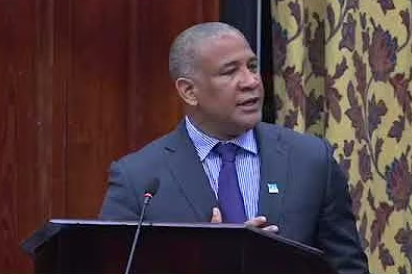
    In a significant address outlining Vietnam’s legislative priorities, National Assembly representative Thanh Man articulated comprehensive demands for parliamentary strengthening. The Vietnamese legislator emphasized the critical need to develop Parliament into a genuinely supreme state authority that authentically represents popular will while advancing both democratic principles and socialist rule of law.

    The parliamentary leader characterized the recent party forum as a political milestone of exceptional strategic importance, marking the commencement of a new developmental phase for the nation. This gathering, described as both successful and historic, established ambitious objectives for achieving rapid yet sustainable national progress.

    A central focus of the address involved the systematic transformation of party guidelines into a coherent, comprehensive, and stable legal framework. The National Assembly has explicitly designated the quality and timeliness of institutionalizing the Resolution from the 14th National Congress as the paramount benchmark for evaluating its operational effectiveness throughout the upcoming period.

    Furthermore, the parliamentarian stressed the necessity of conducting meticulous preparations across all dimensions to ensure the successful organization of elections for the 16th National Assembly lawmakers and representatives to People’s Councils at various levels for the 2026-2031 term. This electoral process represents a crucial mechanism for implementing the nation’s developmental vision through democratic representation.

  • Venezuela’s acting President congratulates To Lam on re-election

    Venezuela’s acting President congratulates To Lam on re-election

    Venezuelan leadership has formally extended congratulations to Tô Lâm following his unanimous re-election by the Central Committee of the Communist Party of Vietnam (CPV). The message, delivered via Venezuelan Vice President Delcy Rodríguez’s official Telegram channel, characterized the decision as a profound demonstration of confidence from both the Party and the Vietnamese citizenry in President Lâm’s leadership.

    Rodríguez, acting on behalf of the Venezuelan government and its people, utilized the diplomatic communication to reiterate a strong commitment to strengthening the existing relationship between the two nations. She explicitly expressed a desire to ‘continue deepening the bonds of friendship, solidarity, and cooperation with the Socialist Republic of Vietnam.’

    The statement further framed the bilateral partnership within a broader geopolitical context, emphasizing a shared vision for international relations. Rodríguez affirmed that the two countries stand ‘united in the defense of sovereignty, the self-determination of peoples, and the construction of a multicentric and multipolar international order.’ This endorsement occurred in conjunction with the closing proceedings of the CPV’s 14th National Congress, where the leadership transition was formally ratified.

  • Brazil sets up Committee for the Freedom of Maduro and Cilia Flores

    Brazil sets up Committee for the Freedom of Maduro and Cilia Flores

    In response to the January 3rd airstrike on Caracas and surrounding Venezuelan territories—an operation authorized by U.S. President Donald Trump—a significant political coalition has emerged in Brazil. The initiative, originating from Caracas as part of a worldwide movement, has led to the establishment of a unified committee dedicated to advocating for the release of President Nicolás Maduro and First Combatant Cilia Flores, who were reportedly apprehended during the military action.

    The newly formed committee represents a broad alliance of political and social organizations, including journalists, members of Brazil’s Workers’ Party (PT), the Communist Party of Brazil, the Antifascist International, and the Brigade for Peace in Latin America and the Caribbean. Despite varying political perspectives among its founding members, the group has committed to a common objective: amplifying the Venezuelan narrative within Brazil and reinforcing international solidarity.

    According to reports from Prensa Latina, the committee’s primary mission extends beyond immediate diplomatic efforts. It seeks to foster stronger people-to-people connections and ensure the Venezuelan situation receives comprehensive and effective media coverage in Brazil. Prominent figures within the movement, such as Pedro Batista and Flavia Rodrigues, have emphasized the critical need for organizational unity. They highlighted several preliminary actions already undertaken to support the release of the detained officials and stressed that consolidating this diverse coalition is paramount to achieving their humanitarian and political goals.

  • Chile: Peace rally gathers political, labor, and social leaders

    Chile: Peace rally gathers political, labor, and social leaders

    A coalition of Chilean left-wing organizations has issued a forceful condemnation of what they characterize as the unlawful detention of Venezuelan President Nicolás Maduro and First Lady Cilia Flores. The gathering, which brought together diverse progressive factions, framed the action as a flagrant violation of international legal standards.

    At the heart of the assembly was a detailed legal analysis presented by José Peralta, a member of the Workers’ Party of Chile. He systematically deconstructed the recent executive order by U.S. President Donald Trump, arguing it constituted an impermissible extraterritorial overreach that undermines fundamental principles of national sovereignty.

    The emotional core of the event featured a tribute by the Association of Cuban Residents in Chile, who honored 32 internationalist combatants who lost their lives protecting Venezuelan sovereignty. Tania Telleria, president of the Raices Cubanas Cultural Association, formally read a declaration demanding the immediate release of the Venezuelan leaders, labeling their detention as political kidnapping.

    Paloma Griffero, representing the Network in Defense of Humanity, struck a unifying tone by emphasizing the critical need for strengthened solidarity among global progressive movements. She called for creating sustained dialogue platforms and collective action toward building a more equitable international order.

    The participation of major Chilean institutions—including the Communist Party of Chile (PCCh) and the Unitary Workers’ Union (CUT)—demonstrated broad-based consensus on the issue, with all speakers identifying peace and leftist unity as essential countermeasures to interventionist policies.

  • Former Grenadian PM Dr Keith Mitchell retires from active politics

    Former Grenadian PM Dr Keith Mitchell retires from active politics

    Grenada’s political landscape witnessed a historic transition as former Prime Minister Keith Mitchell, the Caribbean nation’s most enduring leader, formally announced his retirement from active politics. The 79-year-old statesman made his declaration during an emotional address in St. George North West, the constituency he has represented without interruption since 1984.

    Mitchell, reflecting on his extraordinary tenure spanning more than forty years in parliament and twenty-three years as prime minister, posed a rhetorical question to his supporters: ‘What more can any human being ask?’ His decision fulfills a longstanding commitment to eventually step aside from frontline politics.

    As the founding leader of the New National Party (NNP), Mitchell engineered unprecedented electoral successes, including complete sweeps of all parliamentary seats in both the 2013 and 2018 general elections. However, his party’s dominance concluded with the June 2022 polls, where the National Democratic Congress secured a 9-6 victory.

    The political transition plan introduces Dr. Adrian Joseph, currently serving as Acting Clerk of Parliament, as Mitchell’s designated successor. Party officials characterize Joseph—an experienced diplomat and senior public administrator—as representing both continuity and renewal for the NNP.

    Mitchell’s departure marks the conclusion of a definitive era in Grenadian politics, characterized by extended electoral supremacy and profound influence in shaping the nation’s contemporary governance structures. His legacy remains embedded in the island’s political consciousness as new leadership prepares to guide the party forward.

  • Hervorming rechtspleging vraagt meer dan losse wetswijzigingen

    Hervorming rechtspleging vraagt meer dan losse wetswijzigingen

    A comprehensive overhaul of Suriname’s judicial system has drawn sharp criticism from prominent legal scholar Hugo Fernandes Mendes, who argues that current reform proposals lack coherence and clear justification. During a Friday evening lecture before the Surinamese Jurists Association (SJV), Fernandes Mendes identified two fundamental issues: the position of the Attorney General and the establishment of a third judicial instance as central to meaningful judicial reform.

    The legal expert expressed particular concern about the proposed College of Attorneys-General, noting that the explanatory memorandum fails to clearly identify which specific problem this new institution would solve. “Is the Attorney General’s portfolio too extensive? Does this address operational management or policy direction? Without clear objectives, a constitutional amendment on this point becomes difficult to justify,” Fernandes Mendes contended. He suggested that strengthening the Public Prosecutor’s Office could be achieved more effectively through expanding the number of advocate-generals and chief officers rather than creating additional administrative layers.

    Fernandes Mendes emphasized that the judiciary serves as the primary check on the Public Prosecutor’s Office, referencing recent cases where courts had reprimanded prosecutors. He simultaneously highlighted the concerning absence of systematic oversight mechanisms for both the judiciary and the Public Prosecutor’s Office—a deficiency requiring thorough examination.

    The legal scholar made a compelling case for introducing cassation court proceedings as Suriname remains the only CARICOM nation without a third judicial instance, despite three-tier judicial systems being the international standard. Such reform would contribute to legal development, legal certainty, and public trust in the rule of law while enhancing confidence among international investors.

    Fernandes Mendes outlined three potential models: a Supreme Court of Suriname, affiliation with the Supreme Court of the Netherlands, or recognition of the Caribbean Court of Justice’s (CCJ) appellate jurisdiction. Each option presents distinct advantages and challenges. A national Supreme Court would only achieve credibility with international composition to prevent political influence and ensure continuity.

    The CCJ emerged as a serious contender, though Fernandes Mendes stipulated strict preconditions: guaranteed application of Surinamese law, Dutch procedural language, and a separate chamber for Surinamese cases staffed by judges from the Dutch-Caribbean-Surinamese legal family holding sessions in Suriname.

    Fernandes Mendes warned that current reforms focus too narrowly on the judiciary while neglecting constitutional relationships between the courts, parliament, and government. He advocated for comprehensive constitutional revision and establishment of a State Commission on Constitutional Governance. The scholar also expressed concerns about the weak position of the Constitutional Court, describing it as inconsistent with both the Constitution and the Constitutional Court Act, necessitating strengthened independence to restore constitutional balance.

    Finally, Fernandes Mendes urged legislators to amend the Constitution to enable organic laws that facilitate deliberate choices regarding the third instance with clear criteria. Without a coherent vision regarding the roles of the Attorney General, Public Prosecutor’s Office, and judiciary, he cautioned, Suriname risks further institutional fragmentation.

  • Public sector workers, pensioners to get bonus next week

    Public sector workers, pensioners to get bonus next week

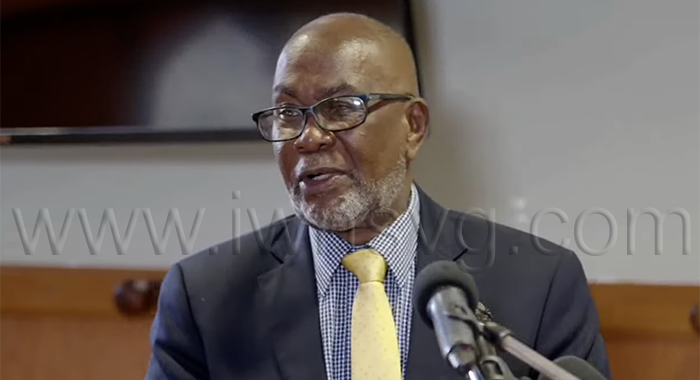
    In a significant move fulfilling its key election commitment, the newly elected New Democratic Party (NDP) administration in St. Vincent and the Grenadines has announced the distribution of substantial tax-free bonus payments to public sector workers. Prime Minister Godwin Friday confirmed at a Friday press conference in Kingstown that the Treasury has been instructed to process these payments by January 30.

    The comprehensive economic relief package, totaling approximately EC$22 million, will benefit an estimated 12,000 individuals across various employment categories. Contrary to initial expectations, the government has expanded eligibility to include daily-paid workers, part-time employees, and pensioners – groups that were not originally contemplated in the campaign promise.

    Payment structure demonstrates a progressive approach with lower-income workers receiving proportionally greater benefits. Permanent and non-established public servants will each receive EC$2,000, while pensioners are allocated EC$1,500. Daily-paid workers earning between EC$500 and EC$1,000 monthly will receive EC$1,000 bonuses – effectively representing 100-200% of their regular monthly income.

    Prime Minister Friday emphasized that this initiative directly addresses the “crushing cost-of-living pressures” exacerbated by the COVID-19 crisis. The administration characterizes the payout not as a government expense but as an economic stimulus measure that will put “money back in people’s pockets in a big way” to stimulate additional spending.

    The Prime Minister acknowledged that while some critics, including Opposition Leader Ralph Gonsalves, have accused the NDP of voter deception regarding the bonus promise, his administration remains focused on delivering tangible support to the most vulnerable populations. Further measures addressing employment, training, and assistance for indigent persons are expected to be announced in the upcoming budget.