分类: politics

  • Column: De beste vriend van wantrouwen

    Column: De beste vriend van wantrouwen

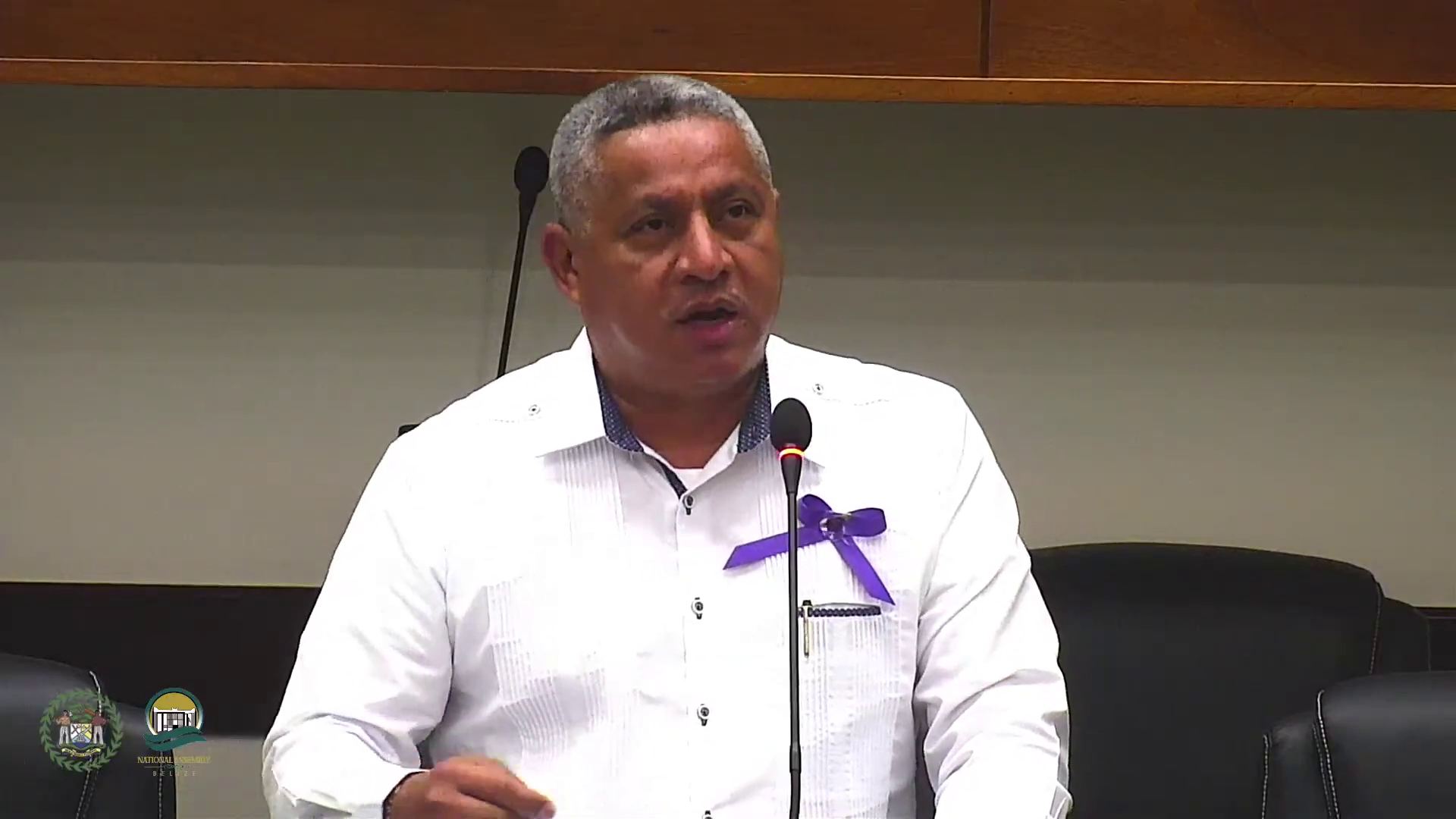
    Sometimes, it is not formal legislation, policy documents or official government procedures that reveal the deepest flaws of a country’s political culture, but small, unorthodox, and controversial incidents. The public uproar surrounding Jean “Saya” Mixon, an entrepreneur linked to Suriname’s Minister of Justice and Police Harish Monorath, is a striking case in point.

    Monorath confirmed to local outlet Sign-in TV that Mixon, who accompanied him during an official visit to the Geyersvlijt police station, was one of his four personal advisors. He clarified that the role is unpaid and that Mixon does not have an official office at the ministry, adding that he holds the authority to appoint advisors to his team as he sees fit.

    The revelation immediately ignited fierce backlash across social media and political circles. When Minister of Internal Affairs Marinus Bee told parliament on Thursday that Mixon could not hold an advisory position under the government’s formal appointment rules, many hoped Monorath’s misstep would be corrected transparently and properly. Instead, the parliamentary debate ended with the controversy more unresolved than when it began.

    Despite sharp criticisms and widespread demands that Monorath acknowledge and fix his error, the minister avoided meaningful accountability. He only conceded that Mixon does not hold an advisory position in a legal, formal sense — a semantic dodge that he treated as a full resolution to the controversy, as if clever wording could erase the reality of Mixon’s public role alongside a top cabinet official. To compound the confusion, Monorath added that Mixon is part of his “intelligence network.”

    This vague statement leaves a host of critical questions unanswered. Is this an official government role? An informal private network? A personal trust position? An information source? Who provides oversight for this position, what official powers come with it, and why was a person in this vague role openly accompanying the minister on an official visit to a police facility?

    Across all modern governments, the term “intelligence” is never casual. It relates directly to information gathering, national security, risk assessment, and confidentiality — core functions of state that demand clear protocols, strict oversight, and no room for ad-hoc political improvisation. When a cabinet minister treats this area lightly, it creates dangerous uncertainty about where the line between formal state authority and private political networks is drawn.

    Without issuing a public condemnation of Mixon as an individual, it is impossible to ignore that he is widely known as a controversial figure in Suriname. While legal status — whether convicted or acquitted of past charges — matters, good governance demands more than just adherence to the letter of the law. It requires political wisdom, moral judgment, and an acute awareness of public trust and institutional reputation. For a Minister of Justice and Police, the question of what signal an appointment sends to the public is non-negotiable.

    When a minister responsible for law enforcement openly appears alongside a controversial entrepreneur with an undefined official status, it fuels public doubt. That doubt spreads beyond ordinary citizens to police officers, international diplomatic partners, and foreign investors. No one argues that ministers should cut themselves off from informal contacts outside formal government structures; governance naturally draws insight from all layers of society. But those relationships should be managed discreetly, carefully, and with full awareness of associated risks, not paraded openly on official stages as if there is nothing out of the ordinary about the arrangement.

    The argument that Mixon does not draw a government salary is also no reassurance. Influence does not always come with a formal paycheck. Proximity to political power is often far more valuable than a regular wage. Access to top officials, informal status, expanded personal networks, and future political favors can deliver far more influence than a formal employment contract.

    Beyond the immediate controversy, this incident exposes a deeper pattern in Suriname’s governance culture: the normalization of informal advisors, personal confidants, and associates of top political leaders who operate entirely outside formal regulatory and oversight structures. No one knows exactly what these figures do, but their presence is an open secret across the political system.

    Suriname is a small, vulnerable nation that faces intense international scrutiny over its management of border control, anti-money laundering efforts, drug trafficking, counter-terrorism financing, and institutional resilience. Any hint of unclear informal power structures weakens the country’s standing on these critical global issues.

    Parliament also deserves criticism for its handling of the controversy. While both coalition and opposition lawmakers raised legitimate questions, the body ultimately accepted Monorath’s semantic dodge about Mixon’s formal legal status. When the country’s highest oversight body settles for wordplay instead of accountability, it robs itself of its purpose and becomes nothing more than a toothless tiger.

    It is fair to question whether the current government understands how fragile public and international trust in Suriname’s institutions really is. In an era of transnational organized crime and costly reputational damage, Suriname cannot afford to allow shadowy power centers to exist alongside formal state authority. Monorath had a clear opportunity to bring clarity to the situation, and instead he delivered confusion — the oldest and most reliable ally of public distrust.

  • Gaston Browne Secures Historic Fourth Term, ABLP Wins General Election in grand style

    Gaston Browne Secures Historic Fourth Term, ABLP Wins General Election in grand style

    On Thursday, Antigua and Barbuda wrapped up its national general election, delivering a groundbreaking political milestone as Prime Minister Gaston Browne’s ruling Antigua and Barbuda Labour Party (ABLP) secured a fourth consecutive term in office — a feat never before achieved in the nation’s modern democratic history.

    Voting unfolded across the archipelago in a calm, organized fashion, with election officials expanding the number of polling stations to accommodate voters. Early turnout was robust, and independent monitors confirmed the entire electoral process met international standards for freedom and fairness. Vote counting stretched overnight into Friday morning, and as precinct results trickled in, ABLP’s consistent lead across key constituencies became increasingly clear. By the end of counting, the party had secured the required supermajority of more than 9 seats needed to form a new government, outperforming the main opposition United Progressive Party (UPP) led by Jamale Pringle, as well as all participating independent candidates.

    The landslide victory extends Browne’s tenure as Prime Minister past the 10-year mark, cementing ABLP’s longstanding hold on the country’s executive branch. Throughout the election campaign, Browne centered his platform on continuity of progress, highlighting his administration’s track record of robust economic growth, transformative public infrastructure projects, and a people-centered development agenda. He framed his leadership as a proven source of stability for the nation, urging voters to stick with a tested government that delivered tangible results.

    In contrast, the UPP ran on a platform of political change, arguing that more than a decade of continuous ABLP rule had left pressing public issues unaddressed. The opposition focused its messaging on voters’ growing concerns around the cost of living, called for improved governance standards, and pledged to upgrade underperforming public services. Despite these campaign challenges to the incumbent government, the electorate chose to renew their trust in ABLP, handing Browne the historic fourth mandate.

    Now that the results are finalized, all eyes have shifted to the incoming administration’s next steps. The new government is expected to be formally formed in the coming days, with political observers and citizens alike waiting for announcements of Cabinet appointments and clarification of the ABLP’s policy priorities for its unprecedented new term.

  • BREAKING: Dwayne George Defeats Simon to win St. Mary’s South

    BREAKING: Dwayne George Defeats Simon to win St. Mary’s South

    A tight electoral contest is unfolding as vote counting continues for a local electoral race, with 88% of all ballots already processed. According to the latest official figures released from counting stations, a total of 2,816 voters were officially registered to cast their ballots in this election.

    With most votes now tallied, Dwayne George, the candidate representing the Antigua Barbuda Labour Party (ABLP), has secured 899 votes so far, putting him ahead of his main competitor. Kelvin Simon, running on the ticket for the United Progressive Party (UPP), has accumulated 797 votes to date, trailing George by a margin of 97 votes with the remaining 12% of ballots still to be counted.

    Electoral officials have also confirmed that 10 ballots have been formally rejected, most commonly due to issues such as mismarked voting papers, signature irregularities, or other violations of electoral rules that disqualify the submission from being counted toward either candidate’s total.

    As counting teams prepare to process the outstanding ballots, the final outcome of the close race remains uncertain, with neither candidate yet able to claim a confirmed victory. Political observers note that the slim current margin means the outstanding ballots could still shift the final result if the remaining votes break heavily in favor of Simon. Electoral authorities have not yet announced an exact timeline for when full vote counting will be completed and the official final result declared.

  • Sir Steadroy continues ABLP dominance in St. John City South with emphatic victory

    Sir Steadroy continues ABLP dominance in St. John City South with emphatic victory

    In a decisive display of enduring voter confidence during Antigua and Barbuda’s general election held on Thursday, incumbent candidate Sir Steadroy “Cutie” Benjamin of the Antigua and Barbuda Labour Party (ABLP) successfully retained his seat for the St John’s City South constituency, securing a commanding majority of the vote against his challenger from the main opposition United Progressive Party (UPP).

    With 88% of all ballots counted as of the latest official update, election officials have recorded 854 votes in favor of Sir Steadroy, compared to just 337 votes cast for UPP challenger Adrian Williams. A total of 43 ballots were rejected during the counting process for failing to meet election validity requirements. Calculations based on the released figures show that Sir Steadroy captured 72.6% of valid votes, a margin that reflects the deep-rooted, long-term support he has built among constituents over his tenure in office.

    Thursday’s general election, which saw voters across the nation cast ballots to select their parliamentary representatives, delivered a clear mandate for Sir Steadroy in his constituency. The landslide result not only cements his political standing in St John’s City South but also signals that his track record of representation has resonated strongly with local residents, who turned out to reaffirm their support for the ABLP incumbent.

  • Fernandez Easily Keep St. John Rural North for the ABLP

    Fernandez Easily Keep St. John Rural North for the ABLP

    Antigua and Barbuda’s general election held on Thursday delivered a decisive victory for the incumbent candidate Charles ‘Max’ Fernandez, who successfully retained the St John’s Rural North parliamentary seat for the Antigua and Barbuda Labour Party (ABLP). Fernandez defeated his main challenger, Malaka Parker, who contested the constituency on behalf of the United Progressive Party (UPP).

    Early vote counting confirmed a strong, steady lead for the sitting representative from the opening stages of the tabulation process. His comfortable margin of victory underscores the enduring political popularity and organizational strength of the ABLP within the St John’s Rural North region.

    When all valid ballots were counted, Fernandez secured a total of 1,301 votes, while Parker finished the contest with 833 votes in her favor. Election officials also confirmed that 20 ballots were rejected during the counting process due to irregularities that rendered them invalid per national electoral rules.

  • Coalitie en oppositie keren zich tegen Monorath om ‘Saya-affaire’

    Coalitie en oppositie keren zich tegen Monorath om ‘Saya-affaire’

    A major political firestorm has erupted in Suriname after Justice and Police Minister Harish Monorath confirmed controversial entrepreneur Jean ‘Saya’ Mixon would serve as one of his four official policy advisers – drawing sharp criticism from both ruling coalition and opposition lawmakers in the National Assembly on Thursday. The controversy has ignited fierce debate over government integrity, transparency, and the authority of Suriname’s law enforcement leadership, with senior ruling party officials publicly distancing themselves from the minister’s remarks.

    The scrutiny of Monorath’s announcement gained additional urgency due to Mixon’s well-documented public history of legal trouble. The entrepreneur was previously at the center of a high-profile national criminal case involving charges of money laundering, forgery, and fraud. While a Surinamese court acquitted Mixon of money laundering charges in November 2024, prosecutors were ruled inadmissible on the remaining counts. Following the verdict, Mixon publicly stated he would remain a supporter of the ruling VHP party.

    Coalition lawmaker Raymond Sapoen of the NDP, one of the ruling coalition partners, openly expressed “deep concern and disappointment” over Monorath’s public confirmation of Mixon’s role as policy adviser. Sapoen emphasized that the minister’s unvetted announcement has severely eroded public trust in the Ministry of Justice and Police.

    VHP party legislator Krishna Mathoera also issued a clear rebuke of the situation, noting that a minister leading the country’s justice and policing portfolio has a special obligation to exercise extreme care when making public statements. Mathoera argued that demonstrating true leadership would require Monorath to simply admit he made a misstep, and pressed the minister to clarify whether Mixon has been granted access to classified information or any special privileges within the ministry.

    Opposition NPS lawmaker Poetini Atompai pushed back aggressively against attempts to frame the relationship as a casual informal information-sharing arrangement. “When we are talking about sensitive intelligence, nobody talks about it publicly,” Atompai stated, arguing that officials cannot hide behind informal relationship excuses after publicly naming Mixon as an official adviser. He warned that Suriname could suffer lasting international reputational damage from this kind of unregulated appointment, particularly at the ministry responsible for upholding the rule of law.

    NPS parliamentary leader Jerrel Pawiroredjo echoed the call for clarity, demanding a straightforward answer from the minister. “Parliament only wants one clear answer: Is he your adviser, yes or no?” Pawiroredjo said, rejecting attempts to muddy the issue with semantic debates or technical fine print.

    Only ABOP lawmaker Edgar Sampie came to Monorath’s defense, arguing that it is common practice for ministers to seek informal input from private citizens, business owners, and subject-matter experts without formal government appointments. Sampie claimed the entire controversy has been unnecessarily blown out of proportion, noting that Mixon’s campaign propaganda work for the VHP during recent elections did not raise objections at the time.

    After facing sustained criticism from assembly members and an initial round of unsatisfactory answers from Monorath, Interior Minister Marinus Bee – speaking after consultations with Vice President Gregory Rusland – requested a parliamentary recess to resolve the confusion. Bee publicly corrected Monorath’s earlier remarks, stating that Mixon has never received an official appointment as an adviser, no official executive order was ever issued, and no formal appointment process was completed.

    Following the recess, Monorath walked back his original statement, acknowledging that Mixon “is not an adviser under the formal definition of the law.” The minister clarified that he regularly consults with a wide range of private citizens and receives input from across Surinamese society, but Mixon has never been given a formal paid position or access to government facilities for an advisory role.

    Despite the minister’s attempts to clarify and defuse the situation, the heated parliamentary debate made clear that public and cross-party trust in Monorath has already sustained significant damage. The most notable development of the confrontation was that sharp criticism and public distancing came not only from opposition lawmakers, but from senior members of the ruling coalition itself.

  • Premier Brantley welcomes Argentine Ambassador for diplomatic engagement in Nevis

    Premier Brantley welcomes Argentine Ambassador for diplomatic engagement in Nevis

    CHARLESTOWN, Nevis – A new milestone in diplomatic relations between Argentina and the Federation of Saint Christopher and Nevis has taken shape this week, as Nevis Premier Hon. Mark Brantley hosted Argentina’s non-resident Ambassador to St. Kitts and Nevis, Ciro Luciano Ciliberto, for an official courtesy call and bilateral talks at his Charleston office on April 29, 2026.

    The meeting marked Ciliberto’s first official visit to Nevis in his current diplomatic capacity, which also covers accreditation to Barbados and the Organization of Eastern Caribbean States (OECS). Though the ambassador had previously visited Nevis both as a tourist and for St. Kitts and Nevis’ 2025 Independence celebrations, this encounter marked the first formal, high-level diplomatic engagement between the two sides on Nevis soil during his tenure.

    Opening the meeting, Brantley extended a warm welcome to the ambassador, highlighting existing cultural connections between the two regions that lay a strong foundation for deeper collaboration. Brantley noted that Nevis residents already hold deep admiration for key Argentine cultural exports, from world-renowned Malbec wine to elite Argentine football, creating natural common ground for partnership. He emphasized the value of the in-person diplomatic meeting, expressing clear optimism about expanding the scope of cooperation between Argentina and the Federation in the coming years.

    “I’m so delighted that he’s been able to come over to Nevis. I know he has been here in Nevis before, but this is my first opportunity to meet him officially in my role as Premier of Nevis. So, Excellency, welcome to Nevis,” Brantley said during opening remarks. “Here in Nevis, we love Argentinian wine, we love Argentinian football; there are many things about your country that we admire. I look forward to having some good discussions with you as to how we can do more together, our country and your country.”

    For his part, Ciliberto expressed gratitude for the warm reception and noted that the trip was designed specifically to create an opportunity for in-person dialogue with Nevis’ leadership. While based in Barbados in his primary posting, Ciliberto’s credentials include serving as non-resident ambassador to St. Kitts and Nevis, a role he says comes with a commitment to nurturing the long-standing ties between the two nations. Diplomatic relations between Argentina and St. Kitts and Nevis were established mere months after St. Kitts and Nevis gained independence, a historical foundation that both sides reaffirmed during the meeting.

    “I am posted in Barbados, but I am the non-resident ambassador to St. Kitts and Nevis, and I am honoured to be in Nevis today,” Ciliberto said. “In this trip that I’m making to St. Kitts and Nevis, I wanted especially to be here and make a courtesy call to you to be able to know you in person and discuss about the relations between our two countries. Argentina and St. Kitts and Nevis established relations almost a few months after [SKN] independence, and since then we have been friends, and I hope that we can continue the good relation between our government and also between our people.”

    Following the opening remarks, the two officials exchanged symbolic gifts to commemorate the diplomatic engagement: Brantley presented Ciliberto with a curated gift bag featuring a selection of artisanal goods produced locally in Nevis, while Ciliberto reciprocated with a bottle of premium Argentine Malbec, echoing the cultural ties Brantley had highlighted earlier in the meeting.

    The official engagement concluded with substantive bilateral discussions focused on exploring new avenues to deepen cooperation and strengthen people-to-people and government-to-government ties between the two nations, with both sides leaving the meeting committed to advancing mutually beneficial collaboration going forward.

    This report is based on an official press release from the Nevis Island Administration (NIA) first shared via regional media outlet SKNVibes.com.

  • BREAKING: Kiz Johnson captures St. Phillip South seat for the ABLP

    BREAKING: Kiz Johnson captures St. Phillip South seat for the ABLP

    In a pivotal upset that has reshaped the landscape of Thursday’s general election, Antigua and Barbuda Labour Party (ABLP) candidate Kiz Johnson has claimed victory in the hotly contested St. Philip’s South constituency. Johnson defeated incumbent-aligned challenger Sherfield Bowen, running for the United Progressive Party (UPP), flipping the historically competitive seat to the governing party.

    Early vote tallies from polling stations across the constituency showed a steady lead for Johnson that held through the final count, confirming a strong closing performance that exceeded many pre-election projections. The win is already being framed as a critical strategic gain for the ABLP, boosting the party’s majority standing in the national legislature as incoming results continue to be finalized across the country. Political analysts note that the flipped constituency signals shifting voter sentiment in the region, adding momentum to the governing party’s election night push.

  • BDF deputy urges drill instructors to uphold discipline, standards

    BDF deputy urges drill instructors to uphold discipline, standards

    At a recent graduation ceremony hosted at the Barbados Coast Guard headquarters, a senior military leader has challenged a fresh cohort of specialized drill instructors to leverage their newly completed advanced training to embed stronger discipline and leadership across all uniformed services in the Caribbean region.

    The eight-week All Arms Advanced Drill and Ceremonial Course One wrapped up with a formal parade, drawing approximately 30 participants from both Barbados and neighboring regional territories. Addressing the assembled graduates and officials, Mark Peterson, Deputy Chief of Staff of the Barbados Defence Force, opened his remarks by congratulating the trainees on successfully completing the rigorous program, emphasizing that the course was never just about perfecting synchronized movements on the parade square.

    Peterson reinforced that military drill has long served as a foundational pillar of professional development for uniformed services, going far beyond shaping external bearing and physical presentation to forge core character traits and build cohesive team dynamics. “The aim of drill is to produce a soldier who’s proud, alert, and obedient and to form the basis of teamwork,” Peterson told the gathered attendees. Reflecting on the visible transformation of participants over the course of the intensive program, he noted: “Look at yourselves now…that individual is no longer an ideal to chase; that individual is a person staring back at you from your own reflection, standing proud, shoulders back, eyes two inches above your own body height, spirit intact.”

    Beyond its foundational role in character building, Peterson stressed that drill delivers tangible practical benefits for military leadership. It enables commanders to maneuver units in an orderly, disciplined fashion, while also cultivating quick responsiveness and authoritative command presence among all service members. “The purpose of drill is to enable a leader to move a unit in an orderly manner, to instil precision, responsiveness, and to develop all members in the practice of command,” he said. “You have not only practised it, you have not only commanded it – you’ve become it.”

    During the ceremony, Peterson also presented an award to Most Outstanding Student SGT Baggio Harewood, recognizing the top performer’s exceptional effort and progress throughout the program. The event included a formal inspection of the graduating cohort by Peterson, followed by a demonstration drill executed by the newly qualified instructors.

    However, the Deputy Chief of Staff issued a critical reminder for the newly minted instructors about the serious responsibility that comes with their new role: drill must never be misused as a form of punishment. “To our newly graduated drill instructors, always remember that drill must never be used as a punishment. It is about raising standards and forging unique cohesion,” Peterson said. He added that effective, professional drill relies on three core pillars: consistent discipline, deliberate practice, and constructive correction of errors.

    After completing the course, graduates will return to their respective posts across a range of regional uniformed institutions, including the Barbados Defence Force, national police units, prison services, fire departments, and the Youth Advance Corps. Peterson urged the graduates to serve as role models of excellence in every aspect of their professional lives, from their dress and personal conduct to their daily work ethic. “You are now the subject matter expert,” Peterson told the cohort. “You are responsible for maintaining and in some cases, raising the organisational standards. That responsibility begins now.”

  • Rawdon Turner Returns St. Peter to the ABLP

    Rawdon Turner Returns St. Peter to the ABLP

    Antigua and Barbuda’s general election delivered a definitive outcome for the St Peter constituency on Thursday, solidifying the constituency’s longstanding alignment with the Antigua and Barbuda Labour Party (ABLP). Incumbent candidate Rawdon Turner not only retained his seat but achieved a resounding win, capturing over 70 percent of the total votes cast in the race.

    From the earliest stages of the vote counting process, Turner established a clear gap over his main challenger, George Wehner, who ran on behalf of the United Progressive Party (UPP). As election officials continued to tally ballots across the constituency, Turner’s advantage only grew, turning what was already a solid lead into an unassailable margin by the final count.

    This decisive victory does more than secure Turner’s return to office: it underscores the ABLP’s enduring popular support within the St Peter district, reinforcing the party’s firm grip on the constituency that has been a consistent stronghold for the party. Beyond the local result, the win also contributes to a stronger overall national performance for the ABLP across the country in this general election cycle.