分类: politics

  • Brazil’s Lula says he will seek a fourth term in 2026 elections

    Brazil’s Lula says he will seek a fourth term in 2026 elections

    JAKARTA, Indonesia — Brazilian President Luiz Inacio Lula da Silva, who will celebrate his 80th birthday next week, has officially announced his intention to run for a fourth term in the 2026 presidential elections. The declaration came during a joint press conference with Indonesian President Prabowo Subianto in Jakarta, where Lula is on a state visit aimed at strengthening bilateral ties between the two nations.

    ‘I’m about to turn 80, but I assure you, I have the same vigor I had at 30. I will run for a fourth term in Brazil,’ Lula stated confidently. He emphasized the importance of Indonesia as a strategic partner, describing it as a fellow emerging economic power with shared global perspectives. ‘We’ll see each other many times in the future,’ he told Subianto, hinting at continued collaboration.

    Lula’s announcement follows months of speculation about his political ambitions. Despite undergoing emergency surgery in December 2023 to address a brain hemorrhage caused by a fall, the veteran leader appears undeterred. His political journey has been marked by dramatic highs and lows: after serving two terms from 2003 to 2010, he was imprisoned in 2018 on corruption charges, which were later overturned. In 2022, he staged a remarkable comeback, narrowly defeating right-wing incumbent Jair Bolsonaro in a deeply polarizing election.

    Bolsonaro’s subsequent political downfall has left Brazil’s conservative electorate without a clear leader for the 2026 race. Recently sentenced to 27 years in prison for a failed coup attempt following his election loss, Bolsonaro remains under house arrest, with his legal team racing to appeal the verdict. As Brazil navigates this turbulent political landscape, Lula’s candidacy signals a continuation of his enduring influence on the nation’s politics.

  • 10 former Caricom heads urge end to military action in region

    10 former Caricom heads urge end to military action in region

    A coalition of ten former Caribbean Community (Caricom) leaders has voiced deep concerns over the escalating military presence, including nuclear vessels and aircraft, in the Caribbean. They argue that this buildup threatens the safety, stability, and livelihoods of the region’s inhabitants. In a joint statement issued on Thursday, the leaders called for a de-escalation to prevent the Caribbean from being drawn into external conflicts and to uphold its longstanding status as a ‘zone of peace,’ a principle established over 50 years ago.

  • Colombia calls for US to stop deadly boat attacks

    Colombia calls for US to stop deadly boat attacks

    BOGOTA, Colombia—The Colombian government has formally requested the United States to cease its maritime strikes in the Pacific and Caribbean, which Washington claims are part of an anti-drug smuggling operation. The appeal follows a recent announcement by US Secretary of Defense Pete Hegseth regarding attacks on two alleged drug-running vessels in the Pacific, resulting in five fatalities. According to US figures, these strikes bring the total number of such operations to at least nine, with 37 casualties reported. Colombia’s foreign ministry issued a statement on Wednesday evening, urging the US to halt these actions and adhere to international law. The statement emphasized the government’s rejection of the destruction of a vessel allegedly linked to drug trafficking in the Pacific Ocean. The diplomatic tension escalated further as Colombian President Gustavo Petro and former US President Donald Trump exchanged heated remarks. Trump labeled Petro a ‘thug’ and accused him of leading Colombia to ruin, while Petro vowed to defend himself legally with American lawyers. The US also announced the suspension of military aid to Colombia, with Secretary of State Marco Rubio calling Petro a ‘lunatic.’ Colombia reiterated its call for diplomatic dialogue to continue the joint fight against drug trafficking in the region, a collaboration that has spanned decades.

  • PNP calls on JLP to clarify reported US$201,500 payment from Cemex

    PNP calls on JLP to clarify reported US$201,500 payment from Cemex

    The People’s National Party (PNP) has urged the Jamaica Labour Party (JLP) to provide immediate clarification regarding a reported payment of US$201,538 from Cemex, a Mexico-based company and parent of Caribbean Cement Company Limited (CCC). The payment, initially disclosed in Cemex’s filing with the U.S. Securities and Exchange Commission (SEC), was later omitted in an amended filing, raising questions about its nature and purpose.

  • LATT: CJ appointment consultation process not followed

    LATT: CJ appointment consultation process not followed

    The Law Association of Trinidad and Tobago (LATT) has raised concerns over the appointment of Justice Ronnie Boodoosingh as the new Chief Justice, questioning whether proper constitutional procedures were followed. In a statement issued on October 23, LATT congratulated Boodoosingh on his new role but highlighted the “hastened and truncated process” that led to his appointment. The association emphasized that Section 102 of the Constitution mandates the President to consult with the Prime Minister and the Leader of the Opposition before making such a significant judicial appointment. According to LATT, the consultation process should involve informing the consultees about the proposed candidate(s) and the rationale behind the choice, allowing adequate time for consideration and response. However, LATT expressed doubts that these principles were adhered to, given the unusually short timeframe of the consultation. The association stressed the importance of transparency and constitutional compliance in appointing the highest judicial officer. Despite these concerns, LATT expressed confidence in Boodoosingh’s capabilities and extended its best wishes for his tenure. The association also acknowledged his significant contributions to Trinidad and Tobago’s jurisprudence and his role as a lecturer at the Hugh Wooding Law School. Additionally, LATT thanked outgoing Chief Justice Ivor Archie for his service and wished him well in his future endeavors.

  • Golden Isles by-election set for November 24

    Golden Isles by-election set for November 24

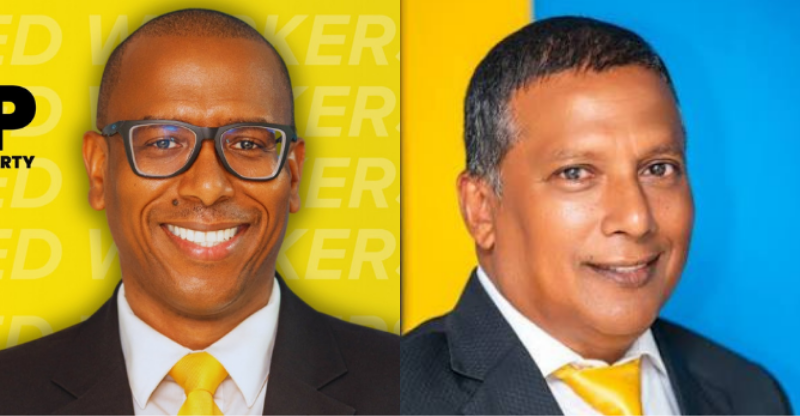
    A pivotal by-election in the Golden Isles constituency is scheduled for November 24, following the passing of former representative Vaughn Miller. The Progressive Liberal Party (PLP) has announced Darron Pickstock as its candidate, while the Free National Movement (FNM) has put forward Brian Brown for the upcoming general election. Although the FNM has yet to confirm its participation in the by-election, Brown remains their designated candidate if they choose to compete. Additionally, the Coalition of Independents has selected Brian Rolle as its representative. Wayne Munroe, the Minister overseeing the Parliamentary Registration Department, confirmed the election notice during a recent House of Assembly session. Parliamentary Commissioner Harrison Thompson stated that the electoral process is now in motion following the Governor-General’s issuance of the writ, in line with constitutional procedures. Nomination day is set for October 31, with registrations and transfers for the constituency now closed. Golden Isles, a significant swing seat and one of the nation’s largest constituencies, will serve as a critical barometer for the Davis administration’s popularity as its term approaches its conclusion.

  • Works Minister upbeat on infrastructure progress

    Works Minister upbeat on infrastructure progress

    Works and Infrastructure Minister Jearlean John brought her characteristic enthusiasm and poise to Parliament on October 23, addressing key national projects, budget priorities, and the state of the country’s infrastructure. During a media briefing, John emphasized the ongoing progress of the Sir Solomon Hochoy Highway Widening Project, which received a $2.15 billion allocation from her ministry. She assured that no projects had been halted by the ministry, attributing any delays to contractors rather than government directives. According to a September 9 update on the ministry’s website, the Chaguanas to Chase Village segment of the project is now 83% complete, aimed at enhancing safety and efficiency for daily commuters. John hinted at major infrastructure projects to be announced by Prime Minister Kamla Persad-Bissessar next week, describing them as transformative initiatives that will drive national progress. Currently, her focus remains on remedial works, including road repairs, drain clearing, and improving road conditions. She stressed the importance of addressing issues like potholes and unmarked roads to restore order and organization. Additionally, John highlighted efforts to build connector roads for rural communities, ensuring they receive adequate attention. With 94 active projects under her ministry, 70% of which are overdue by up to six years, John acknowledged the challenges of delays and rising costs, vowing to bring projects to completion. When questioned about political opposition, she dismissed concerns, criticizing the opposition’s lack of strategy and imbalanced focus during parliamentary sessions.

  • Colombian president accuses US of ‘executions’ in Caribbean, Pacific

    Colombian president accuses US of ‘executions’ in Caribbean, Pacific

    In a sharp escalation of diplomatic tensions, Colombia’s leftist President Gustavo Petro on Thursday intensified his criticism of former U.S. President Donald Trump’s military strikes in the Caribbean and Pacific, while dismissing threats to cut millions in U.S. aid. Petro accused Trump of engaging in “extrajudicial executions” that violate international law, referring to the U.S. strikes on alleged drug-trafficking boats. According to U.S. reports, these operations have destroyed nine vessels and claimed at least 37 lives, including a Colombian fisherman who Petro suggested may have turned to trafficking “intermittently” due to poverty. Trump retaliated by labeling Petro a “thug” and drug trafficker, announcing cuts to U.S. aid and threatening tariffs on Colombian goods. These measures, if implemented, could end decades of security cooperation aimed at curbing cocaine flow from Colombia, the world’s largest producer, to the U.S., its biggest consumer. Petro downplayed the impact of aid cuts, arguing that the funds primarily support U.S. NGOs and arms purchases. He also rejected Trump’s decision to blacklist Colombia as an “insult,” asserting that Colombia has been effective in combating cartels despite record cocaine production. Petro accused Trump of being misled by Colombia’s “far right” opponents, who he claimed aim to influence the 2026 presidential election and undermine Colombian progressivism. The rift has deepened with Colombia recalling its ambassador from Washington and calling for dialogue, while U.S. Secretary of State Marco Rubio branded Petro a “lunatic.”

  • Spencer Recommends Staff Rotation to Strengthen Oversight and Prevent Corruption

    Spencer Recommends Staff Rotation to Strengthen Oversight and Prevent Corruption

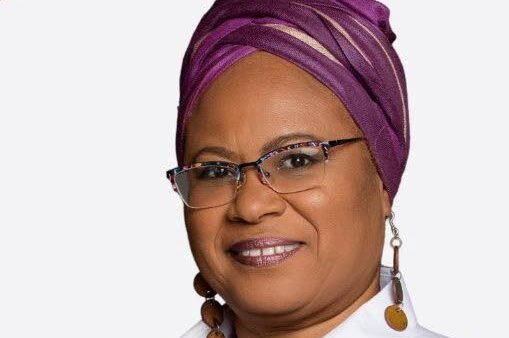
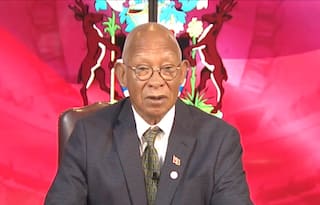
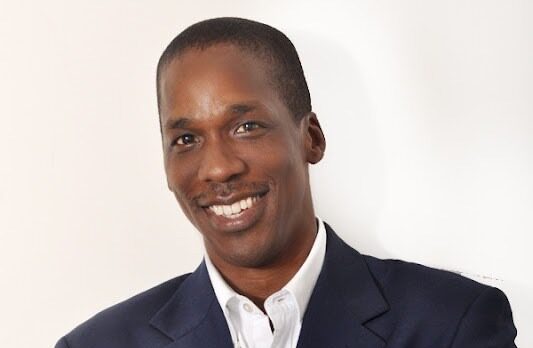
    Hazel Spencer, a former Cabinet Secretary, has proposed that rotating staff across government departments could significantly enhance accountability and curb corruption. Drawing from his extensive experience as a customs officer, Spencer highlighted the benefits of regular reassignment, a practice that was standard during his tenure in the Customs Department. He shared these insights during the question-and-answer segment of the Vehicle Gate town hall meeting, emphasizing the detrimental effects of allowing employees to remain in the same position for extended periods. According to Spencer, such stagnation fosters familiarity, complacency, and, in some cases, collusion. “In my days in the Customs Department, we were rotated,” Spencer recalled. “Sometimes you end up down at the distillery, sometimes at the airport, sometimes you board a ship — all different functions in customs. You could not get too comfortable in one place.” Spencer suggested that reintroducing this practice across various departments, especially those managing public finances and procurement, could strengthen oversight and prevent scandals like the alleged EC $17 million vehicle procurement controversy currently under investigation. He stressed that internal safeguards, such as staff rotation, complement broader financial controls mandated by law. Earlier in the session, Spencer outlined the critical roles of Cabinet approval, Finance Ministry verification, and Treasury oversight in maintaining accountability. He warned that corruption thrives when any link in this chain fails. “People talk about systems failing,” he said. “But systems only fail when people stop doing what they are supposed to do. Rotation helps remind everyone that public office is about service, not comfort.” Spencer’s remarks align with a broader call from panelists at the town hall for institutional reform, transparency, and stricter enforcement of financial regulations. He underscored that good governance is not merely about rules on paper but also about the daily discipline of those tasked with enforcing them.

  • Former Cabinet Secretary says vehicle controversy could have been avoided with proper checks and balances

    Former Cabinet Secretary says vehicle controversy could have been avoided with proper checks and balances

    Former Cabinet Secretary Hazel Spencer has asserted that the alleged $17 million government vehicle scandal in Antigua and Barbuda could have been prevented had the nation’s financial oversight mechanisms operated as intended. Speaking at the ‘Vehicle Gate’ town hall meeting, Spencer meticulously outlined the standard procedures for capital expenditure, emphasizing the critical role of Cabinet approval, Treasury verification, and ministerial oversight in ensuring fiscal accountability. She expressed astonishment that such a substantial sum could be allocated for vehicle purchases without raising red flags within the Ministry of Finance or Treasury, labeling the oversight as ‘scandalous.’

    Spencer detailed the step-by-step process that should govern capital projects: initial Cabinet approval, inclusion in national estimates, parliamentary budget approval, and the preparation of a general warrant by ministries. This warrant must then be scrutinized and signed by the Minister of Finance before funds are disbursed. ‘The Treasury must verify that all is in order before releasing any payments,’ she stressed, highlighting that these safeguards are designed to prevent unauthorized spending.

    She further emphasized the ethical responsibilities of public servants and government ministers, urging them to remain vigilant, honest, and committed to upholding integrity. ‘When officials bypass rules or coerce civil servants into approving dubious transactions, the entire governance structure crumbles,’ Spencer warned. She also reminded attendees that civil servants are legally protected from arbitrary dismissal, empowering them to resist improper directives without fear of reprisal.

    Spencer’s insights were part of a broader panel discussion examining how lapses in oversight, political interference, and weak enforcement enabled the alleged vehicle purchases. Her analysis provided an insider’s perspective on how adherence to procedural safeguards could have averted what she and other panelists described as a ‘catastrophic failure of accountability.’