分类: politics

  • African Union again signs resolution against US-Cuba blockade

    African Union again signs resolution against US-Cuba blockade

    For the seventeenth consecutive year, the African Union (AU) has delivered a powerful diplomatic rebuke to the United States by formally condemning its protracted economic, commercial, and financial embargo against Cuba. The recently approved resolution, detailed in an official release from the Cuban Embassy in Ethiopia, characterizes the six-decade-long policy as a severe impediment to Cuban development and a profound burden on its citizenry.

    A central and recurring demand within the resolution is the urgent call for Washington to remove Cuba from its State Sponsors of Terrorism list. The AU describes this designation as both arbitrary and unjustified, framing it as a political instrument that provides a foundation for maintaining the stringent embargo. The document further emphasizes the moral and legal obligation to revoke this classification.

    The resolution articulates deep concern regarding the intensifying negative impacts of the U.S. sanctions, which have been exacerbated by global economic pressures following the COVID-19 pandemic. A significant point of condemnation is the extraterritorial application of U.S. law, specifically through Title III of the Helms-Burton Act. This provision, which allows U.S. nationals to sue entities engaging in business with Cuban assets nationalized after the 1959 revolution, effectively internationalizes the blockade and cripples Cuba’s capacity to participate in global trade and finance.

    Beyond the critique, the resolution serves to reaffirm the deep-seated historical and political bonds between African nations and Cuba, rooted in decades of solidarity and mutual support. It stands as a clear manifestation of Africa’s collective stance against a policy it deems to be in violation of international law and the fundamental principles of national sovereignty.

  • Seven Independent Senators sworn in

    Seven Independent Senators sworn in

    In a significant political development at Barbados’ State House, seven newly appointed independent senators formally assumed their legislative roles in a swearing-in ceremony presided over by President Jeffrey Bostic. The diverse group of appointees represents various professional sectors including religious leadership, healthcare, and social advocacy.

    The newly inaugurated senators comprise Jamal Slocombe, Reverend Canon Dr. John Rogers, Mary-Anne Redman, Andrew Niles, Andrew Mallalieu, Ryan Forde, and Dr. Kenneth Connell. Their installation marks a strategic expansion of the island nation’s parliamentary framework, enhancing the chamber’s independent voice in governance matters.

    This constitutional procedure demonstrates Barbados’ continued commitment to balanced political representation following its transition to a republic. The independent senators are expected to provide non-partisan perspectives on national legislation, serving as crucial voices between government policy and civil society interests. Their appointments reflect President Bostic’s deliberate approach to incorporating diverse expertise into the nation’s highest deliberative body.

  • STATEMENTS: Dominica Bar Association on voter registration and confirmation – ensuring the Integrity and inclusivity of the electoral process

    STATEMENTS: Dominica Bar Association on voter registration and confirmation – ensuring the Integrity and inclusivity of the electoral process

    The Dominica Bar Association has released a comprehensive statement emphasizing the fundamental importance of voter registration verification and its proper administration by authorities to protect the democratic rights of all citizens. The legal body has received numerous expressions of concern regarding electoral processes through both written and verbal communications.

    In an unprecedented appeal transcending political affiliations, the Association urgently calls upon every registered voter to verify their registration status to ensure participation in forthcoming electoral events, whether local or national. This represents an inclusive initiative directed at all Dominican citizens regardless of political orientation or background.

    The constitutional significance of voting rights receives particular emphasis, with reference to paragraph (c) of Dominica’s Constitution Preamble which asserts the people’s belief in a democratic society where all persons may participate in national institutions according to their capacity, thereby fostering respect for lawfully constituted authority.

    While acknowledging ongoing legal challenges to recently amended electoral legislation and concerns about the current framework, the Association stresses the necessity for eligible voters to comply with existing regulations until any formal modifications occur. This approach is presented as the most effective method to safeguard both individual voting rights and the nation’s democratic principles.

    Addressing specific concerns about identification requirements for registration confirmation, the Bar Association proposes that the Electoral Commission conduct a thorough, data-informed analysis to evaluate how ID mandates affect voter participation rates. Such statistical examination would determine whether adjustments to identification requirements are necessary to balance electoral list integrity against potential voter disenfranchisement.

    Given current legal stipulations requiring identification, the Association questions what measures the government is implementing to assist citizens lacking proper documentation or financial means to obtain it. The legal body recommends implementing non-partisan initiatives, such as temporarily suspending new passport application fees to facilitate passport acquisition as valid identification.

    To enhance the confirmation process, the Association advocates for intensified public awareness campaigns by the Electoral Office and political parties, suggesting election-level promotion efforts. Additionally, the proposal includes employers—both public and private sectors—facilitating the process through designated ‘confirmation days’ where employees receive paid time off to verify registrations, provided they submit proof of completion.

    Regarding new voter registrations, the Association notes that the Electoral Office’s temporary suspension caused significant uncertainty and disappointment across political and private sectors. With the announcement that registration will resume by March 10, 2026, the legal body anticipates this will rectify what may have constituted a breach of statutory continuous registration duties, encouraging all unregistered eligible citizens to enroll promptly.

    The statement concludes with a strong recommendation against calling elections before completing the confirmation period, warning that premature electoral proceedings could disenfranchise voters and compromise result legitimacy at national and international levels. The Association clarifies it possesses no knowledge of imminent election plans but addresses a legally permissible scenario that could undermine electoral integrity.

    Finally, the Dominica Bar Association commits to collaborating with all stakeholders—voters, state institutions, the Electoral Commission, and private sector entities—to protect the democratic rights of every citizen through enhanced confirmation processes and inclusive electoral measures.

  • Trevor Walker Says He Forgives Sir Robin For Brown Paper Bag Joke

    Trevor Walker Says He Forgives Sir Robin For Brown Paper Bag Joke

    In a parliamentary session marked by both solemn tribute and candid reflection, legislator Trevor Walker delivered a powerful address honoring Sir Robin Yearwood’s unprecedented half-century of legislative service while issuing a stark warning about the deteriorating state of political discourse.

    Walker characterized the celebration of Sir Robin’s 50-year tenure as a historic milestone unlikely to be repeated, emphasizing that this extraordinary achievement transcended partisan boundaries and deserved universal recognition. The event created a rare moment of unity within the chamber, with members setting aside political differences to acknowledge sustained public service.

    During his address, Walker articulated concerns about increasing political polarization, noting that the escalating hostility in parliamentary exchanges could deter future generations from pursuing public office. He emphasized that effective governance requires significant emotional maturity, describing politics as an arena ‘not for the faint-hearted’ where resilience against personal attacks is essential.

    In a notable demonstration of political reconciliation, Walker referenced a previously contentious incident involving Sir Robin’s allegation about a ‘brown paper bag containing cash.’ The humorous acknowledgment of past conflicts served to illustrate Walker’s central thesis: that political disagreements should remain confined to the chamber without evolving into lasting personal animosities.

    Walker underscored the importance of compartmentalizing heated parliamentary debates, urging colleagues to prevent professional disagreements from damaging interpersonal relationships outside the legislature. He shared his personal philosophy of consistently engaging with political opponents despite receiving ‘blows’ during legislative sessions.

    The address concluded with a call for aspiring politicians to develop the emotional fortitude necessary for public service, distinguishing between vigorous debate and personal hostility. Walker framed Sir Robin’s landmark career as both an inspiration and a cautionary tale about the evolving nature of political engagement.

  • Seven Government Senators sworn in

    Seven Government Senators sworn in

    Barbados has formally established its new parliamentary structure following the February 11 general election with the ceremonial swearing-in of seven Government Senators at State House on Thursday morning. The proceedings marked the final phase of assembling the nation’s legislative body after Members of Parliament were inaugurated earlier this week.

    The ceremony witnessed the appointment of The Most Honourable Reginald Farley, F.B., J.P., as President of the Senate, while The Most Honourable Elizabeth Thompson, F.B., assumed the role of Deputy President of the Senate. Both officials took their oaths during the dignified state event, signaling the commencement of the Upper House’s responsibilities for the new parliamentary term.

    Five additional senators were sworn into office, comprising John King, Roshanna Trim, Ramon Alleyne, Kamisha Benjamin, and Janeil Odle. These appointments complete the government’s representation in the Senate, which serves as the revising chamber within Barbados’ parliamentary system.

    The Senate’s constitutional mandate involves thorough scrutiny and deliberation of legislation approved by the House of Assembly. This critical function ensures proposed laws receive comprehensive examination before implementation. With all members now formally installed, the Senate can immediately begin its legislative duties, contributing to the democratic governance of Barbados through careful review processes and informed debate on matters of national importance.

  • Sir Molwyn Urges End to Divisive Politics During Tribute to Sir Robin

    Sir Molwyn Urges End to Divisive Politics During Tribute to Sir Robin

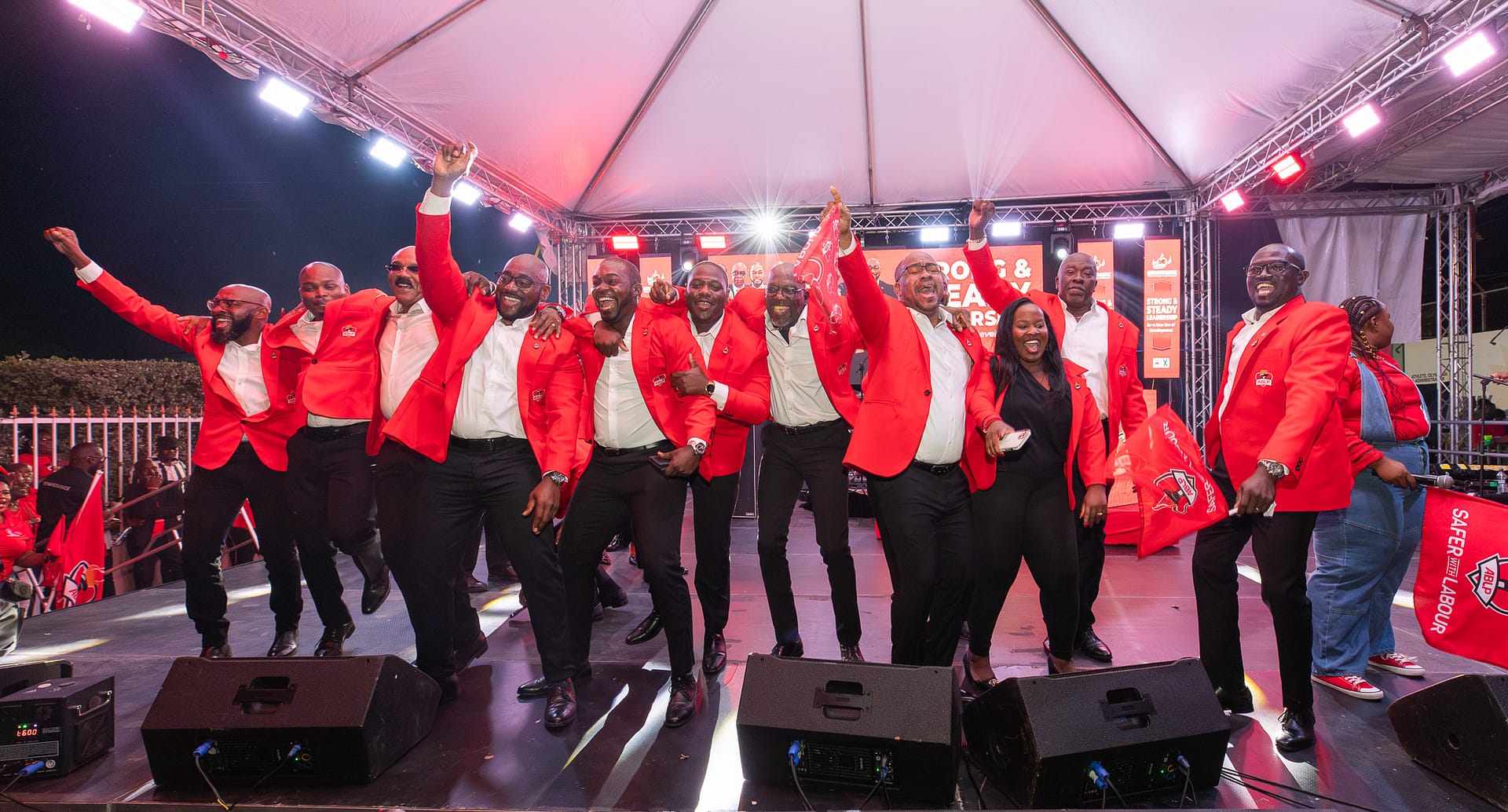
    During a special parliamentary session honoring Sir Robin Yearwood’s half-century of legislative service, Health Minister Sir Molwyn Joseph issued a compelling appeal for political transformation in Antigua and Barbuda. The veteran lawmaker utilized the ceremonial occasion to challenge opposition members to collaborate in halting what he characterized as damaging misinformation campaigns that are eroding the nation’s reputation.

    Joseph positioned his call for renewed political discourse against the backdrop of Sir Robin’s remarkable 50-year tenure, during which he secured eleven consecutive electoral victories in St. Philip’s North constituency. This extraordinary longevity, Joseph emphasized, demonstrates the democratic will of the electorate and should not be taken for granted.

    The minister contextualized Sir Robin’s service within the broader historical narrative of the Antigua and Barbuda Labour Party, noting its governance since 1976. He credited the founding generation of politicians—the ’76ers’—with establishing political stability and democratic frameworks that promoted national unity and peaceful coexistence.

    Momentarily lightening the tone, Joseph shared an anecdote about an unfulfilled promise involving one of Sir Robin’s goats, which elicited laughter from assembled lawmakers. However, he swiftly returned to sober reflections on contemporary challenges, noting that the nation faces particularly difficult times as a small island state navigating complex global pressures.

    Joseph concluded by framing the occasion as a pivotal moment for national renewal, urging legislators to leverage this milestone to elevate political discourse and advance the country’s strategic interests through unified action.

  • CTUSAB demands urgent census after election list errors

    CTUSAB demands urgent census after election list errors

    The Congress of Trade Unions and Staff Associations of Barbados (CTUSAB) issued a forceful demand on Wednesday for an immediate national population census to rectify critical flaws in the electoral system. This urgent call follows widespread reports of voter disenfranchisement during last week’s general election, where numerous citizens discovered their names either missing from voter rolls or incorrectly assigned to different constituencies.

    CTUSAB General Secretary Dennis De Peiza delivered a blistering assessment of the electoral process during a press conference at the organization’s headquarters, characterizing the situation as “nothing short of a national disgrace.” He emphasized that while errors occurred, it remained imperative to implement corrective measures immediately to prevent future occurrences.

    The proposed national census, traditionally conducted at the beginning of each decade with the next scheduled for 2030, would enable authorities to thoroughly verify and update the current voter registry. De Peiza provided personal testimony regarding the system’s deficiencies, revealing that his deceased son had received official correspondence urging him to vote. This incident highlighted the registry’s failure to account for deceased individuals while simultaneously excluding eligible voters.

    Further complications emerged regarding overseas Barbadians who remained on voter lists but faced practical barriers to participation. De Peiza warned that persistent electoral irregularities could significantly damage Barbados’ international democratic standing, stating that ignoring blatant flaws would send negative signals to the global community.

    The labor leader additionally addressed concerning suggestions that citizens should vote strategically merely to ensure parliamentary opposition presence. He affirmed CTUSAB’s recognition of the opposition’s crucial role in ensuring effective legislation and providing policy alternatives, while cautioning against the dangers of unilateral decision-making in its absence.

  • Former Prince Andrew Arrested Over Ties to Epstein

    Former Prince Andrew Arrested Over Ties to Epstein

    In a dramatic development shaking the British monarchy, Andrew Mountbatten-Windsor, the younger sibling of King Charles III, was formally apprehended by authorities on Thursday. The arrest centers on allegations of misconduct during his tenure in public office, marking a significant escalation in the long-running scandal connected to financier Jeffrey Epstein.

    Thames Valley Police confirmed detaining a man in his sixties from Norfolk, with coordinated searches executed at multiple properties including Royal Lodge in Windsor and Wood Farm on the Sandringham estate. While specific charges remain undisclosed, investigative sources indicate the inquiry examines whether the former prince improperly shared confidential government information during his service as Britain’s trade envoy, potentially benefiting Epstein’s criminal network.

    The monarch responded through an official statement expressing ‘profound concern’ while emphasizing that judicial proceedings must proceed without interference. This careful wording reflects the palace’s delicate balancing act between familial loyalty and constitutional propriety.

    Mountbatten-Windsor has consistently denied all accusations, maintaining through representatives that he neither observed nor suspected Epstein’s illicit activities during their association. No immediate public comment addressed the latest allegations regarding breach of official trust.

    British legal protocols permit detention for up to 24 hours before requiring formal charges or release, though extensions are possible for complex investigations. The arrest represents the most serious legal confrontation yet for the royal family regarding the Epstein entanglement, potentially carrying implications for institutional credibility and future royal duties.

  • White House Considers Iran Strike as Tensions Escalate

    White House Considers Iran Strike as Tensions Escalate

    The United States military has positioned itself to execute strikes against Iran as early as this weekend, though President Donald Trump remains undecided on authorizing such action amid escalating regional tensions. Senior administration officials confirm that American forces have achieved operational readiness following a substantial buildup of air and naval assets across the Middle East theater.

    White House deliberations intensified Wednesday as top national security officials convened in the Situation Room to assess developments concerning Iran. The president received additional briefings from special envoy Steve Witkoff and senior advisor Jared Kushner regarding indirect negotiations with Iranian representatives that occurred Tuesday in Geneva. These talks, lasting approximately three and a half hours, yielded preliminary agreements on fundamental principles but left substantial details unresolved according to US officials.

    The military buildup includes the imminent deployment of the USS Gerald Ford carrier strike group to the Middle East, complemented by the strategic repositioning of US Air Force refueling tankers and fighter aircraft from United Kingdom bases toward the region. Satellite imagery analysis from the Institute for Science and International Security indicates Iran has responded by reinforcing several nuclear facilities with additional concrete and soil fortifications.

    Multiple geopolitical factors could influence the timing of potential military action, including the conclusion of the Winter Olympics on Sunday and the ongoing observance of Ramadan. Middle Eastern allies have cautioned that operations during the Islamic holy month could provoke significant regional destabilization. President Trump’s scheduled State of the Union address on Tuesday adds another strategic consideration to the complex decision-making calculus.

  • Supreme Court strikes down Trump’s sweeping tariffs

    Supreme Court strikes down Trump’s sweeping tariffs

    In a landmark constitutional ruling with profound implications for presidential power, the U.S. Supreme Court delivered a decisive 6-3 judgment striking down former President Donald Trump’s sweeping global tariff regime. The court determined these tariffs, enacted under emergency powers legislation, constituted an unconstitutional overreach of executive authority into Congress’s exclusive taxation powers.

    The ruling specifically invalidates the “reciprocal” tariffs Trump imposed on nearly all trading nations in April 2025, which he justified by declaring trade deficits a national emergency. Chief Justice John Roberts, writing for the majority, emphatically stated that “The Framers did not vest any part of the taxing power in the Executive Branch,” reinforcing fundamental separation of powers principles.

    Reacting with visible frustration, Trump announced intentions to implement an alternative global 10% tariff under different statutory authority lasting 150 days. He denounced the decision as “a disgrace” and expressed particular disappointment with the conservative justices whose appointments he engineered, yet who joined the majority opinion.

    The financial stakes are enormous—federal data indicates over $133 billion has been collected through these tariffs, with projected decade-long impacts approaching $3 trillion. The ruling opens complex legal pathways for businesses to seek refunds, though Justice Brett Kavanaugh’s dissenting opinion noted the refund process could become administratively “messy.

    Legal scholars hailed the decision as a victory for constitutional governance. Neal Katyal, representing challenging small businesses, characterized it as “a reaffirmation of our deepest constitutional values and the idea that Congress, not any one man, controls the power to tax.” The ruling employs the “major questions doctrine,” previously invoked against President Biden’s student loan forgiveness program, requiring clear congressional authorization for economically significant executive actions.

    International trading partners, including the European Union, are monitoring developments closely while advocating for continued tariff reduction. Despite this setback, Trump retains authority to impose duties through other legislative mechanisms, though with more constraints on scope and duration.

    The decision represents a rare judicial check on Trump’s expansive use of executive power, even as it leaves unanswered questions about ongoing trade negotiations and the mechanics of potential tariff refunds for affected businesses.