
In a move aimed at strengthening public transparency and keeping communities updated on ongoing voter registration processes, the official Electoral Office has unveiled its latest roll of confirmed electors, covering the period through April. According to the office’s official announcement, this proactive publication is part of a planned schedule of regular updates, with a second revised list set to be released to the public in June. To make the information as accessible as possible for all residents, the confirmed voter list is hosted on multiple public platforms, including the Electoral Office’s main official website and all of its official social media channels. Members of the public can navigate directly to the document through the link provided alongside the announcement. This initiative is designed to help voters verify their registration status ahead of upcoming electoral events, reducing administrative hurdles on voting day and ensuring the overall electoral process runs smoothly for all participants.
分类: politics
-
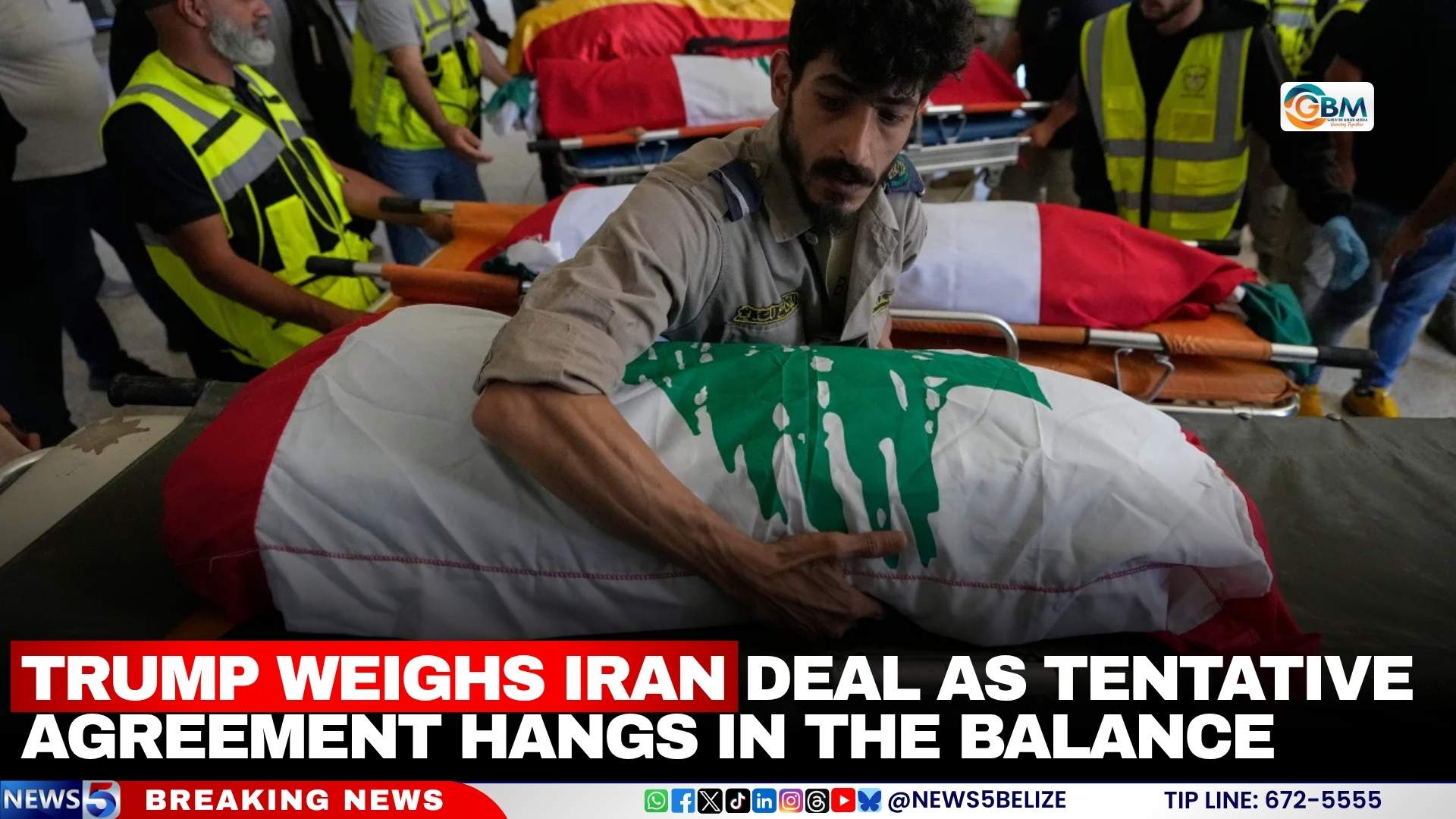
Trump Weighs Iran Deal as Tentative Agreement Hangs in the Balance
On May 29, 2026, a high-stakes decision over a potential landmark agreement between the United States and Iran hangs in the balance, as President Donald Trump convenes senior White House advisors in the Situation Room to weigh what he describes as a “final determination” on the deal that could end months of open military conflict and unclog one of the world’s most vital global shipping chokepoints.
Negotiators from both nations have already struck a tentative framework this week that lays out two core commitments: the full reopening of the Strait of Hormuz, through which roughly 20% of the world’s daily oil supplies pass, and the launch of formal negotiations over Iran’s nuclear program. But the deal remains far from finalized: Trump has not yet given his official approval, and Iranian government representatives have so far declined to issue any public statement on the draft terms.
Details of the draft memorandum of understanding, shared by anonymous U.S. officials, outline a phased mutual drawdown over a 60-day timeline. Under the proposal, Iran would step by step relax its restrictions on shipping movement through the strait, while the United States would simultaneously wind down its naval blockade of Iranian ports and waterways.
Iran’s chief negotiator Mohammad Bagher Ghalibaf has offered a cautious, skeptical reaction to the emerging agreement, reflecting longstanding distrust between the two nations. “In negotiations with the United States, we have no trust in guarantees or words — only actions are the measure,” Ghalibaf warned, underscoring Tehran’s insistence on tangible, verifiable steps from Washington before it commits to any deal.
The push for a final agreement unfolds against an increasingly volatile security backdrop, with fresh clashes breaking out just hours before Trump’s deliberations. Both sides have traded accusations of ceasefire violations in overnight engagements: U.S. forces based in Kuwait were reported to be the target of an Iranian missile strike, while Tehran confirmed it had launched the attack against a U.S. military installation it accuses of carrying out earlier strikes on Bandar Abbas, Iran’s key port city located adjacent to the Strait of Hormuz.
The current cycle of full-scale military conflict between the two nations traces back to February 28, when the United States and Israel launched a coordinated series of massive joint strikes targeting Iranian military installations, government facilities, and critical national infrastructure, igniting months of sustained fighting that has disrupted global energy markets and raised fears of a broader regional war.
-
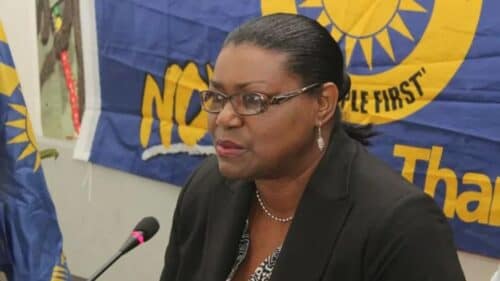
Former House Speaker Criticizes Handling of Pringle Removal From Joint Sitting of Parliament
A prominent former parliamentary leader in Antigua has launched a scathing rebuke of how parliamentary officials managed a controversy involving Opposition Leader Jamale Pringle during a May 26 joint sitting of the national legislature, laying out her critique in an opinion column published by Real News Antigua.
D. Gisele Isaac, who previously held the post of Speaker of the House of Representatives and currently chairs the United Progressive Party, lays out a detailed timeline of missteps that led to the unnecessary public confrontation. According to Isaac, Pringle only appeared at the ceremonial joint sitting after receiving two formal communications: an initial invitation dated May 14, extended to him in his capacity as an elected member of parliament, and a subsequent official summons after he initially declined to attend.
Isaac emphasizes that parliamentary leadership was fully aware well before May 26 that Pringle had not participated in the May 18 Oath of Allegiance ceremony, and his reasons for skipping the swearing-in had already been communicated publicly to the body. No move was made to rescind the original invitation in the lead-up to the joint sitting, Isaac says, leaving Pringle with the clear expectation that he was permitted to attend as instructed.
Once Pringle arrived, the situation unraveled quickly: he was summoned to a private meeting with Senate President Alincia Williams-Grant, where he was told he could not stay in the parliamentary chamber because he had not yet completed the oath requirement. Rather than accept a private resolution, Pringle asked that the issue be brought before the full chamber for public handling—an outcome that ultimately led to him being ordered out of the building in full view of the sitting.
In her commentary, Isaac argues that the entire conflict was an avoidable administrative blunder that officials allowed to escalate for partisan reasons. She questions why parliamentary leadership, which holds the authority to manage its own internal procedures, did not simply arrange for Pringle to take the oath immediately before the sitting got underway to resolve the issue.
Isaac also takes aim at the debate that followed the incident, specifically calling out comments made by Prime Minister Gaston Browne during the sitting. She objects to the derogatory language Browne used to describe opposition lawmakers who walked out of the chamber in protest of Pringle’s treatment, defending the walkout as a principled stand against what she frames as a blatant display of partisan power that undermined parliamentary norms.
The incident has broader implications for the health of Antigua and Barbuda’s parliamentary democracy, Isaac warns. She says the missteps surrounding both the May 18 swearing-in and the May 26 Throne Speech joint sitting have eroded the core dignity of the legislative institution.
For its part, the governing administration has stood by its handling of the situation, reiterating that constitutional rules require all elected representatives to complete the Oath of Allegiance before they can take part in any parliamentary proceedings.
-
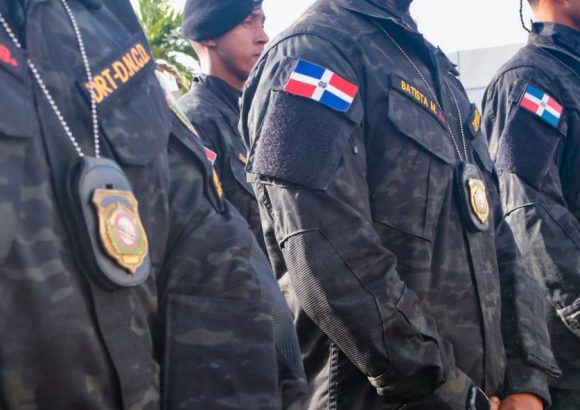
Decree 301-23 Government increases anti-narcotics agents by more than 600: find out in which categories
In a landmark move marking a new chapter for the Dominican Republic’s anti-narcotics efforts, President Luis Abinader has signed off on the promotion of 634 personnel from the National Drug Control Directorate (DNCD), fulfilling the provisions of Decree 301-23 that formalizes the agency’s official career framework for frontline staff. This initiative stands as an unprecedented milestone in the DNCD’s 38-year history: it is the first time since the organization’s founding that its civilian agents have received formal, structured hierarchical promotions.
The promotions span all civilian rank levels within the agency, ranging from entry-level first, second and special agents, up through first and second officers, special officer, to senior first and second inspector postings. By formalizing these advancement pathways, the move locks in a permanent, transparent career structure that the institution has lacked until now.
Notably, this executive order directly benefits all non-military, non-police civilian operational and support staff who make up a core part of the DNCD’s daily counter-narcotics work. Beyond administrative restructuring, the Dominican government’s decision formalizes the agency’s hierarchical scale, strengthens internal institutional governance, and formally recognizes the dignity of the dangerous work carried out by DNCD’s male and female agents who combat transnational drug trafficking.
Speaking during the anniversary celebrations, President Abinader offered his congratulations to all DNCD personnel, noting, “On this new anniversary, I wish to congratulate all the agents of the DNCD, who with courage and bravery risk their lives daily to combat drug trafficking and related crimes.”
Officials across the board have emphasized that this step represents a critical investment in improving working conditions for agents who put their lives on the line every day to disrupt drug trafficking networks and transnational organized criminal operations.
DNCD leader Vice Admiral José M. Cabrera Ulloa extended a formal note of gratitude to President Abinader for his consistent backing of the agency. Beyond the career reforms, the president’s administration has also provided the DNCD with critical new resources and upgraded equipment to expand its interdiction operations and dismantle transnational criminal networks operating in the country.
The promotion announcement coincided with the DNCD’s 38th founding anniversary, which the agency celebrated this Friday with a full slate of commemorative events. The day kicked off with a formal Mass held at the Cathedral of Santo Domingo, officiated by Coadjutor Bishop Carlos Tomás Morel Diplán, followed by a floral tribute to fallen agents and other ceremonial activities. Vice Admiral Cabrera Ulloa was joined at the Mass by his family, including wife Carmen Encarnación de Cabrera and their children.
The anniversary event drew a wide range of senior domestic and international stakeholders, demonstrating broad coordinated support for the Dominican Republic’s counter-narcotics work. Attendees included Dominican Minister of Sports Kelvin Cruz, Deputy Defense Ministers Vice Admiral Agustín A. Morillo Rodríguez and Major General Carlos R. Febrillet, Armed Forces Inspector Major General Delio B. Colón Rosario, and Migration Director Vice Admiral Luis Rafael Lee Ballester.
Also in attendance were senior international partners: Rebeca Marquez, director of the U.S. Bureau of International Narcotics and Law Enforcement Affairs (INL), and a high-level delegation from the Drug Enforcement Administration (DEA) Southern Command (JIATFS). Domestic partners including National Department of Investigations (DNI) Director Luis Soto, representatives of the Public Prosecutor’s Office, heads of other Dominican specialized security agencies, former DNCD directors, and leaders of local prevention and human rights organizations also participated in the commemorations.
-
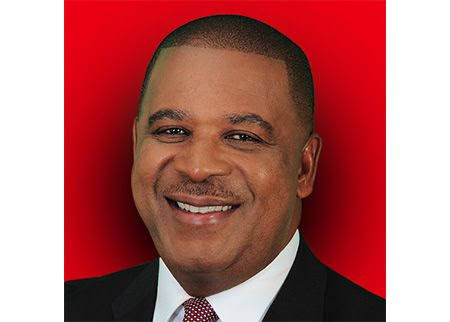
Former Turks and Caicos Premier jailed for corruption
On Friday, 29 May 2026, a historic corruption prosecution in the Turks and Caicos Islands reached its conclusion when former premier Michael Misick received an effective custodial sentence of four years and 26 days, closing a years-long legal process that has reshaped public expectations of political accountability in the territory.
Misick’s conviction dates back to 4 February 2026, when Supreme Court Justice Rajendra Narine found him guilty on three separate counts of bribery tied to fraudulent government land and development deals. The sentencing hearing was held in a packed Supreme Court courtroom, drawing widespread public attention as the most high-profile political corruption case in the territory’s history.
In his remarks from the bench, Justice Narine emphasized that corrupt conduct by elected public officials constitutes a profound violation of the public trust granted by citizens. He ruled that the public interest demands custodial sentences to both hold wrongdoers accountable and send a clear deterrent message to other public officials who might consider similar illegal activity. The justice rejected repeated arguments from Misick’s defense team that the former premier should receive a suspended sentence, noting that even the defense had implicitly acknowledged the severity of the offenses crossed the threshold requiring jail time.
Narine classified Misick’s crimes as falling into the highest category of corruption severity, citing three core aggravating factors: the massive illegal financial gains tied to the schemes, the deliberate abuse of the highest public office in the territory, and the sophisticated, carefully constructed systems the defendants used to execute and hide their criminal activity. He initially set an eight-year prison term for each of the three bribery convictions before reviewing both aggravating and mitigating circumstances presented during the sentencing phase.
The court ultimately reduced the combined sentence by five years after accounting for a series of mitigating factors. These included the multi-year delay in bringing the case to trial, a violation of Misick’s constitutional right to a trial within a reasonable timeframe, the 339 days he already spent in pre-extradition custody in Brazil, and personal circumstances submitted by the defense. Narine also factored in Misick’s lack of prior criminal convictions, his decades of prior public service to the territory, his family situation, and medical evidence submitted during the hearing.
After adjustments, the court handed down three-year sentences for counts one and three, and a five-year sentence for count two. Further credit was granted for the pre-trial custody Misick served in Brazil during extradition proceedings, reducing those sentences to two years and 16 days for counts one and three, and four years and 26 days for count two. All sentences will run concurrently, resulting in the final effective term of four years and 26 days.
Misick was not the only defendant convicted in the case: former Cabinet minister McAllister Hanchell was found guilty on two bribery counts, and local attorney Thomas “Chal” Misick was convicted on four counts of money laundering connected to the same scheme. Prosecutors allege the illegal land and development deals generated millions of dollars in unlawful, off-the-books payments for the co-conspirators.
In his February ruling upholding the conviction, Narine reiterated a core principle of democratic governance, stating that public office “is not a licence for personal enrichment.” He found that Misick had repeatedly violated the baseline standards of honesty and integrity that the public is entitled to expect from all elected officials.
-
June start for $5m faith-based fund
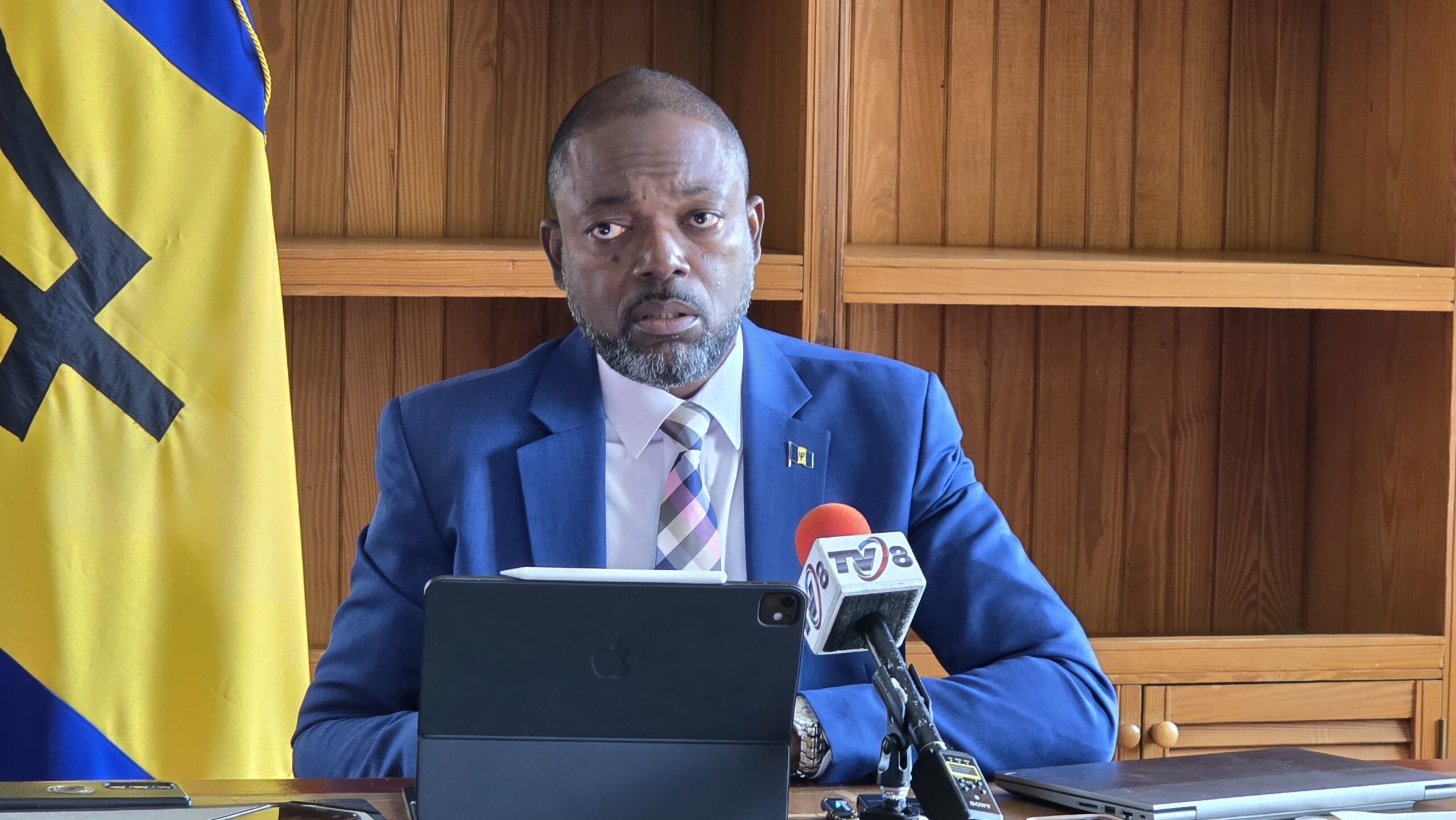
A new $5 million government grant initiative tailored for faith-based organizations is set to open its first application round in early June, Third Sector Minister Colin Jordan has confirmed, following formal approval from the Barbadian Cabinet. First pledged as part of the Barbados Labour Party’s election manifesto, the program centers on empowering faith-based groups to launch youth-focused projects that drive inclusive social development and deeper community engagement across the island.
Jordan laid out the program’s broad priorities during a post-Cabinet media briefing, noting that supported projects will span a range of critical areas affecting young Barbadians. These include public health and wellness outreach, youth crime prevention, targeted youth engagement activities, life skills training, and expanded access to employment, poverty reduction support, educational opportunities, anti-discrimination initiatives, disability integration, food security, and environmental action. All funded projects are designed to boost young people’s active participation in national social and economic life, with faith-based groups recognized as key long-standing partners in youth development across Barbados.
To ensure transparency and accountability for public funds, the program has clear eligibility requirements outlined by Jordan. Only registered faith-based organizations and their affiliated institutions – including churches, mosques, synagogues, temples, and faith-linked charities – are eligible to apply. Organizations must be registered as charities, not-for-profit companies, or third-sector entities with the Ministry of Labour, Social Security and the Third Sector, maintain a permanent physical presence in Barbados, and have a minimum three years of formal registration history to demonstrate operational longevity. Jordan added that the framework is intentionally flexible, however: a dedicated oversight committee will have the authority to grant exceptions to the three-year rule for promising emerging groups.
All funded activities must be based in Barbados and serve the island’s youth, in line with the program’s public funding mandate. For joint applications submitted by multiple collaborating organizations, a formal memorandum of understanding is required to clearly outline each group’s roles and responsibilities, a measure put in place to uphold strict accountability standards.
Eligible project types include structured training sessions, skills workshops, academic seminars, stakeholder conferences, and broader institutional capacity-building initiatives. Individual scholarships, private sponsorships, and standalone one-off public events do not qualify for funding. A key requirement for all approved projects is non-discrimination: programs must be open to all young participants regardless of religious identity, though targeted programming for specific demographic groups (such as initiatives focused exclusively on young men or young women) is permitted when justified by project goals.
The government plans to roll out four open funding calls annually, with the first call for proposals scheduled to launch at the start of June. Jordan emphasized that the rapid rollout of the program reflects its priority status for the new administration, which took office in February. Administrative structures are already in place, and the government will soon launch public advertising to invite applications, with dedicated support available to help less experienced organizations draft strong formal proposals, as many small community groups lack prior experience with competitive grant applications.
A seven-member evaluation and monitoring committee will oversee the entire application, assessment, and post-funding monitoring process. Chaired by the Permanent Secretary for Religious Affairs, the committee includes representatives from community development, social work, youth advocacy, and the faith-based sector itself. Applications will be evaluated based on six core criteria: the applicant’s operational capacity, project relevance to national youth needs, expected effectiveness, long-term sustainability, potential for scaling impact, and budget realism. Following approval, funded organizations will be required to submit both mid-term and final progress reports, with the committee overseeing all reporting and payment scheduling.
Jordan concluded that beyond supporting direct youth development, the program is designed to strengthen the institutional capacity of faith-based organizations, helping these trusted community groups expand the impactful local work they have carried out for decades.
-

STATEMENT: Electoral Office on ongoing Voter Confirmation Process
Dominica’s Electoral Office has released an updated progress report on the ongoing national Voter Confirmation Process, detailing steady advances in application processing and sharing new data on completed verifications. As of the latest official update from late May 2026, roughly 17,000 registered electors have already submitted their confirmation applications to the office. Of these submissions, more than 11,000 have successfully cleared the agency’s rigorous multi-step vetting process and received formal approval. The remaining applications are currently moving through different stages of background verification and administrative review, office officials confirmed.
The Electoral Office has outlined that the stringent verification process occasionally requires applicants to take additional steps before their submissions can be approved. In some cases, electors are asked to resubmit incomplete supporting documentation, retake low-quality identification photos, or provide additional clarification on discrepancies in their application information. Officials also noted that a small share of applications may ultimately be rejected if they fail to meet the process’s mandatory eligibility and documentation requirements.
Despite initial concerns from both the Electoral Office itself and members of the public about slow approval speeds earlier in the rollout, the agency reports that processing efficiency has improved dramatically in recent weeks. A series of targeted operational adjustments were rolled out to address bottlenecks in the workflow, and these changes have already delivered substantial gains in the rate of verified and approved applications. The steady upward trend in completed approvals has left the office encouraged by the process’s current trajectory.
In the official statement, the Electoral Office emphasized that the Voter Confirmation Process is a foundational initiative for modernizing the country’s democratic infrastructure and upholding greater transparency in electoral administration. Because of this critical role, every application receives thorough, careful review across all processing stages to ensure maximum accuracy and attention to detail, officials said. A recorded audio update from Chief Elections Officer Anthea Joseph, which includes more detailed breakdown of the latest confirmation figures and ongoing process improvements, has been made publicly available alongside the written statement.
-

Clement Antonio to Take Up China Diplomatic Posting in June
A long-awaited update on Antigua and Barbuda’s diplomatic reshuffling has confirmed that former Senator Clement Antonio will officially take up his role as the country’s resident ambassador to China in mid-June, according to senior government official Maurice Merchant. Merchant, who serves as Director General of Communications, shared the timeline during a post-Cabinet press briefing held Thursday, when he addressed public questions over the delayed departure of Antonio, whose initial appointment was announced months earlier. Merchant clarified that the appointment of a resident ambassador is far from a straightforward administrative procedure, as it requires cross-institutional coordination spanning multiple sovereign governments and diplomatic offices. The process, he explained, extends well beyond Antigua and Barbuda’s domestic governance structures. It must go through reviews and approvals from Antigua and Barbuda’s Government House, the UK Palace, China’s central government, multiple diplomatic missions, and Antigua and Barbuda’s London-based diplomatic office, leading to inevitable waiting periods. When addressing the timing gap that coincided with the country’s recent general election, Merchant noted that the electoral cycle did not derail the process, but only extended the procedural timeline. “The elections came and the elections went,” Merchant told reporters, “Senator Antonio is due to arrive in China to take up his posting next month, June.” As of this week, all required formalities for Antonio’s appointment have been fully completed. “All has been concluded where His Excellency Clement Antonio is concerned, and he will take up his posting in China during the month of June, I think around the middle of June,” Merchant confirmed. Antonio’s appointment marks the first key personnel change in a broader overhaul of Antigua and Barbuda’s diplomatic service, launched after the country’s general election concluded on April 30. The Cabinet has revealed that ongoing reviews of the diplomatic sector will lead to more new appointments and reassignment announcements in the coming weeks, as the new administration works to align the country’s diplomatic corps with its policy priorities. This appointment also comes as Antigua and Barbuda continues to deepen its bilateral engagement with China, highlighting the country’s commitment to advancing diplomatic ties between the two nations.
-

iWN founder presents credentials as SVG’s envoy in Taiwan
On Thursday, a landmark diplomatic moment unfolded in Taipei, as Kenton X. Chance, founder and former executive editor of Caribbean outlet iWitness News, formally presented his letter of credence to President Lai Ching-te at the Taiwan Presidential Office, officially taking up his post as St. Vincent and the Grenadines’ (SVG) new ambassador to Taiwan. The credential ceremony came two days after Chance presented a copy of his credentials to Taiwan’s Foreign Minister Lin Chia-Lung, marking the final step in his transition from a decades-long career in journalism to leading SVG’s diplomatic mission in Taipei.
Chance’s appointment to the ambassadorial role, which took effect on March 1, closes a nearly 20-year full-circle journey for the Taiwan-educated diplomat. He first arrived in Taiwan as a graduate student in 2006 on a five-year full scholarship from the Taiwan Ministry of Foreign Affairs, just six months shy of 20 years to the day of his return as ambassador-designate on March 2 this year. Over his six years of study, Chance earned both a bachelor’s degree in Journalism and Mass Communication and a master’s degree in International Affairs from Taiwanese institutions. Before stepping into his diplomatic role, Chance built a 20-plus-year career in journalism, including 18 years as a correspondent for the Barbados-based Caribbean Media Corporation, and filed reports for many of the world’s leading international news outlets. In recognition of his professional achievements and ties to Taiwan, the Taiwan Ministry of Education named Chance a Distinguished Taiwan Alumnus in 2022, an honor he says reflects the lasting value of the education he received on the island, which served him through assignments across the globe.
A particularly meaningful layer to Chance’s appointment is the timing: this coming August, SVG and Taiwan will mark 45 years of uninterrupted formal diplomatic relations, and Chance shares the exact same age as the bilateral partnership. “Therefore, I consider it a special honour to be representing St. Vincent and the Grenadines in Taiwan at this time,” Chance said in his remarks during Thursday’s ceremony, where he conveyed warm greetings from King Charles III, SVG’s Governor General Sir Stanley John, Prime Minister Godwin Friday, Foreign Minister Dwight Fitzgerald Bramble, and the entire government and people of SVG to President Lai and the people of Taiwan.
Chance also paid tribute to Andrea Bowman, SVG’s first envoy to Taipei, who also served as his high school teacher early in his life. “She laid a solid foundation during her tour of duty. I intend to build on that foundation, erecting pillars in support of a broader, expanded relationship,” he said, reaffirming SVG’s longstanding commitment to the bilateral partnership. “St. Vincent and the Grenadines values its relationship with the Republic of China (Taiwan); our government stands ready to deepen and expand that relationship for the continued benefit of both our peoples and our countries.”
President Lai welcomed Chance’s appointment, noting that the new ambassador’s deep personal and professional ties to Taiwan position him to drive new progress in bilateral cooperation at this significant milestone for the relationship. Lai expressed hope that Chance’s tenure would see expanded collaboration between the two nations in key sectors including agriculture, infrastructure, and information and communications technology, building on existing partnerships in smart agriculture and smart medicine to diversify cooperation and deliver shared prosperity. “Chance’s appointment at such a significant moment will allow us to witness new milestones in our relations,” Lai said. “We continue to cherish this longstanding partnership as we embrace the future together … Going forward, I believe we will build on existing cooperation … helping us realise our goal of mutual benefit and prosperity.”
Lai also extended deep gratitude to SVG for its consistent, longstanding public support for Taiwan’s participation in international forums, including the United Nations General Assembly, World Health Assembly, International Civil Aviation Organization, and Interpol. “Such actions embody the priceless spirit of true friendship and mutual support,” Lai said. “Moving ahead, we look forward to St. Vincent and the Grenadines continuing to support Taiwan’s international participation. This will allow Taiwan to use its expertise to make contributions to the international community and work with like-minded nations to enhance global well-being.”
As part of the formal diplomatic ceremonies, Chance presented two custom-commissioned artworks by Vincentian artists to Taiwanese officials. During his initial meeting with Foreign Minister Lin on Tuesday, he gifted the piece *All Ah Dat Is Mas* (“That, Too, Is Mas”) by Sharleen Branch, a Vincentian artist set to graduate from a master’s program at National Dong Hwa University this June. For Thursday’s ceremony with President Lai, he presented a painting of three horses by Donnie Collins, a Vincentian artist and radio personality. The horse holds special symbolic meaning in 2026, the Year of the Horse in the Chinese zodiac, where the animal represents speed, success, vitality, and determined resilience.
Chance’s appointment was first announced by SVG’s Foreign Minister Dwight Fitzgerald Bramble in Kingstown on January 22, as part of a broader wave of new senior diplomatic appointments from the Caribbean nation. Earlier this month, Bramble also announced the appointment of Laverne Phillips, another Taiwan-educated Vincentian who earned an international business degree in Taiwan between 2006 and 2011, as SVG’s new deputy consul general in Toronto, Canada.
-
The new PSC must strength impartiality
In a national address delivered on Wednesday, May 27, 2026, St. Vincent and the Grenadines Prime Minister Dr. Godwin Friday laid out a clear policy direction for public sector governance: the country will formalize a merit-based management system for public service appointments, prioritizing recruitment of the most qualified candidates over well-connected political and personal associates.
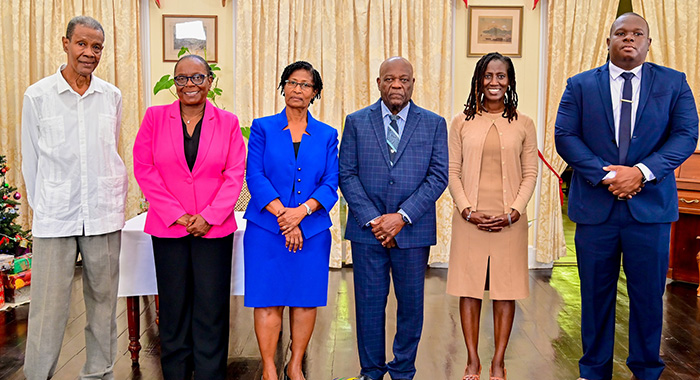
This opinion piece, written by a self-identified concerned but hopeful civil servant and published by iWitness News, expands on the Prime Minister’s remarks to examine ongoing challenges in the island nation’s public service appointment process. At the center of the current reform effort is the newly convened Public Service Commission (PSC), which inherited a deeply flawed and widely discredited system from its ineffective predecessor.
As the author notes, the overall effectiveness of any public civil service hinges entirely on two core functions carried out by a competent PSC: fair, evidence-based hiring decisions and consistent, lawful disciplinary oversight. For a PSC to function as intended, it must embed four core values into every part of its work: consistency, impartiality, thorough working knowledge of governing regulations and orders, and radical transparency.
Since taking office, members of the new commission have made consistent efforts to rebuild public trust by positioning themselves as a competent, impartial and hardworking governing body. Across multiple stakeholder observations and open dialogues, the new PSC has already demonstrated tangible improvement over previous commissions. That said, significant gaps remain, particularly in the processes for candidate nomination and final appointment to public service roles.
The most persistent issue identified by the author centers on department heads, who often prioritize candidates with close personal or professional connections over applicants with stronger qualifications and more relevant on-the-job experience. When nepotistic appointments go through, the ripple effects are far-reaching: overall workforce morale plummets, workplace culture erodes, and the quality of public service delivered to citizens declines sharply.
When appointments appear arbitrary or driven by favoritism, public confidence in department heads, the chief personnel officer (CPO), and the PSC itself quickly erodes. In a well-functioning system, a capable CPO working under the guidance of a skilled PSC would move quickly to correct these irregularities. Today, the new PSC stands as the strongest remaining check and balance in the public service appointment process.
Even with this improved institutional safeguard, concerns about cronyism persist. Reports continue to emerge of appointments where well-connected candidates are prioritized over colleagues with longer institutional tenure and proven job performance. In some documented cases, appointments have moved forward without adequate review of core criteria: formal qualifications, accumulated seniority, technical expertise, or operational continuity within the affected department.
The author closes with a call to action and a measured note of optimism, urging the PSC to continue strengthening impartiality, transparency, and public trust in the appointment process. The PSC, the author emphasizes, must remain the final, independent authority governing all public service appointments. There is genuine potential for this new commission to act as a catalyst for meaningful positive change and long-overdue institutional reform. Ultimately, only time will tell if this moment marks a true renewal of public service in St. Vincent and the Grenadines, or simply a continuation of the broken practices of the past.
Disclaimer: The opinions expressed in this piece are solely those of the author and do not represent the official editorial position of iWitness News. Opinion contributions can be submitted to [email protected]. Readers can subscribe to the iWitness News WhatsApp Channel for ongoing coverage.