分类: politics

  • PM Says Sir Robin’s 50-Year Parliamentary Record Will Stand the Test of Time

    PM Says Sir Robin’s 50-Year Parliamentary Record Will Stand the Test of Time

    In an extraordinary parliamentary session, Antigua and Barbuda’s Prime Minister Gaston Browne celebrated Sir Robin Yearwood’s unparalleled half-century of legislative service, declaring it a historic achievement unmatched throughout the Caribbean and Commonwealth nations. The landmark recognition occurred during a special sitting of Parliament dedicated to honoring the nation’s longest-serving parliamentarian.

    Browne detailed how Sir Robin, representing St Philip’s North constituency, has profoundly influenced national development through eleven consecutive electoral victories since first securing his seat on February 18, 1976. The Prime Minister emphasized that Yearwood’s legacy extends beyond parliamentary records, manifesting in strengthened communities, transformative policies, and reinforced democratic institutions that have benefited generations of constituents.

    “Our nation’s foundational strength owes much to Sir Robin’s dedicated service,” Browne stated, noting the parliamentarian’s unconventional approach to constituency representation. Rather than maintaining formal offices, Yearwood kept his personal residence permanently accessible to citizens throughout his five-decade tenure.

    Cross-party recognition came from Opposition MP Richard Lewis, who acknowledged Yearwood’s unique political standing. Lewis described the veteran legislator as occupying a singular position in Antiguan politics, suggesting his consistent electoral success provides a masterclass in political representation worthy of study by aspiring politicians.

    The celebration highlighted not just individual achievement but the evolution of Antigua and Barbuda’s democratic journey, with Yearwood’s career mirroring the nation’s transition to independence and beyond. His service spans multiple political eras, maintaining relevance and connection with constituents across demographic changes and political shifts.

  • Op-Ed by Chargé d’Affaires Karin Sullivan Of The U.S. Embassy on the Cuba Medical Workers

    Op-Ed by Chargé d’Affaires Karin Sullivan Of The U.S. Embassy on the Cuba Medical Workers

    In a stark diplomatic condemnation, Chargé d’Affaires Karin Sullivan of the U.S. Embassy to Barbados, the Eastern Caribbean, and the OECS has characterized Cuba’s international medical missions as a systematic forced labor operation rather than humanitarian assistance. The detailed critique reveals how Havana’s program generates approximately $5 billion annually in foreign currency—representing the regime’s largest revenue stream—while subjecting medical professionals to coercive conditions.

    According to the analysis, Cuban medical workers face severe restrictions including confiscated credentials and passports, drastically limited wages, and punitive measures such as eight-year exile for non-compliance. While these medical brigades are publicly marketed as symbols of global solidarity, the U.S. official asserts they primarily serve to fund a corrupt regime while creating medical shortages within Cuba itself.

    The Trump Administration has responded with concrete measures, implementing visa restrictions against individuals facilitating Cuba’s labor export program and engaging with over 50 host countries to address systemic flaws. This policy approach frames the issue not as opposition to healthcare delivery but as a fundamental labor and human rights concern. The administration emphasizes that ethical medical cooperation cannot coexist with forced labor practices that exploit professionals and divert earnings from workers to the regime.

    Regional partnerships involving Cuban medical personnel are often rationalized as addressing staffing shortages rather than indicating political alignment. However, the U.S. position maintains that addressing healthcare gaps cannot justify participation in exploitative systems that raise serious ethical and legal questions. The administration advocates for building sustainable healthcare systems through transparent, equitable arrangements that respect workers’ rights while meeting medical needs.

    The fundamental contention positions human dignity and opposition to forced labor as prerequisites rather than obstacles to genuine international health cooperation, urging accountability for governments and individuals enabling exploitation while advocating for reformed practices that would benefit both Cuban medical professionals and Cuba’s domestic healthcare system.

  • President Diaz-Canel highlights meeting with Argentine party leader

    President Diaz-Canel highlights meeting with Argentine party leader

    In a significant diplomatic engagement at Havana’s Palace of the Revolution, Cuban President Miguel Díaz-Canel welcomed Argentine political figure Juan Grabois, leader of the Patria Grande movement. The meeting, extensively covered by official Cuban media outlets Granma and Juventud Rebelde, highlighted the strategic importance of international solidarity during Cuba’s current socioeconomic challenges.

    President Díaz-Canel characterized the visit as a demonstration of “committed solidarity” during complex global circumstances, noting the particular significance of international visits amid Cuba’s ongoing difficulties. The Cuban leader emphasized the mutual desire to enhance bilateral cooperation through increased exchanges and shared experiences throughout the coming year.

    The discussions focused on continental unity, with both leaders stressing the concept of collective responsibility. Grabois, a prominent intellectual and social movement leader, emphasized the critical need to coordinate progressive social movements across international boundaries during what he described as a pivotal historical moment.

    The Argentine leader invoked the principle that true friendship is demonstrated during difficult times rather than periods of prosperity. He further expressed appreciation for the hospitality extended during his Cuban visit while delivering sharp critiques of contemporary global power structures.

    Grabois presented a philosophical framework analyzing current global tensions as a choice between “dehumanization or rehumanization,” directly criticizing what he termed “imperial hegemony” for its alleged disregard for international law. His remarks specifically referenced the plight of vulnerable populations including migrants, economically disadvantaged communities, and Palestinian children caught in conflict zones.

  • ABEC Hires 18 Staff to Boost Electoral Operations

    ABEC Hires 18 Staff to Boost Electoral Operations

    In a strategic move to fortify its electoral infrastructure, the Antigua and Barbuda Electoral Commission (ABEC) has announced the onboarding of eighteen new personnel across critical operational divisions. This staffing augmentation targets key areas including Voter Registration and Administrative Support, representing a deliberate investment in institutional capability ahead of future electoral cycles.

    Election Supervisor Ian S. Hughes characterized the expansion as a proactive measure to modernize electoral systems and reinforce administrative integrity. “This enhancement of our human capital is fundamental to maintaining transparent, efficient, and professional operations,” Hughes stated. “As electoral demands evolve, building a resilient team becomes imperative to fulfilling our constitutional mandate.”

    Commission Chairman Arthur Thomas formally welcomed the new appointees while emphasizing the non-negotiable requirements of professionalism, data confidentiality, and ethical conduct. Thomas specifically encouraged continuous skill development and appropriate public engagement, noting that staff conduct directly reflects the Commission’s credibility.

    The personnel expansion forms part of ABEC’s broader initiative to elevate service standards and operational readiness. By strengthening its organizational capacity, the Commission aims to enhance stakeholder confidence and ensure the delivery of verifiable electoral outcomes that reflect democratic principles. This development occurs within the context of increasing technological and administrative complexities in modern electoral management.

  • HAPPENING NOW: Sir Robin Yearwood Marks 50 Years in Parliament

    HAPPENING NOW: Sir Robin Yearwood Marks 50 Years in Parliament

    In an extraordinary display of political longevity, Sir Robin Yearwood attended a special parliamentary session today honoring his five decades of continuous service as an elected official. The landmark ceremony recognized his unprecedented tenure that began on February 18, 1976, when he first secured his parliamentary seat representing the Antigua and Barbuda Labour Party.

  • Minister ‘skin the cat’ as opposition snarls at $200m local loans

    Minister ‘skin the cat’ as opposition snarls at $200m local loans

    A contentious debate unfolded in St. Vincent and the Grenadines’ Parliament as Prime Minister Godwin Friday’s administration secured approval for the Public Sector Investment Loan (2026) Amendment Bill, authorizing EC$200 million in domestic borrowing. The legislative move faced vigorous opposition from senators aligned with former Prime Minister Ralph Gonsalves’ Unity Labour Party (ULP).

    Prime Minister Friday, whose New Democratic Party (NDP) achieved a landslide 14-1 victory in last November’s elections, presented the bill as essential for financing the government’s public investment initiatives. He emphasized that the raised capital would directly support development programs outlined in recent budget debates, with these obligations constituting a formal charge against the Consolidated Fund under the Finance Minister’s oversight.

    Opposition Senator Carlos James challenged the administration’s characterization of the borrowing as “routine,” noting the substantial increase to EC$200 million represented a significant departure from established norms. James referenced the previous government’s emergency borrowing following Hurricane Beryl, which he justified as necessary for national recovery efforts. The opposition senator expressed particular concern about shifting from concessionary external loans (typically 1-3% interest) to commercial domestic rates ranging from 6-12%, potentially burdening Vincentians with heavier debt obligations.

    Agriculture Minister Israel Bruce delivered a sharp rebuttal, labeling James’ arguments as “disingenuous” and mathematically inconsistent. Bruce produced budgetary documents showing the ULP administration had itself increased local borrowing by EC$84 million in 2025 while adding EC$54 million to external debt. The minister questioned the opposition’s sudden concern about domestic interest rates given their own borrowing practices, emphasizing that “numbers don’t lie” in assessing fiscal responsibility.

    The bill ultimately passed through all legislative stages, marking the Friday administration’s continued implementation of its economic agenda despite parliamentary resistance.

  • Sinckler begins tenure at Foreign Affairs

    Sinckler begins tenure at Foreign Affairs

    In his inaugural engagement as Barbados’ newly appointed Minister of Foreign Affairs and Foreign Trade, Senator Chris Sinckler commenced his tenure with a familiarization meeting at the ministry’s headquarters. The minister conducted introductory sessions with departmental staff members, setting a collaborative tone for his administration. During his address, Minister Sinckler recognized the substantial responsibilities awaiting his office while emphasizing the critical necessity of fortifying Barbados’ diplomatic relations and international trade alliances. He explicitly acknowledged the strategic importance of enhancing the nation’s global standing through strengthened bilateral and multilateral cooperation. The minister concluded his remarks by extending formal gratitude to Prime Minister Mia Mottley for entrusting him with this significant portfolio, characterizing the appointment as both an honor and a substantial responsibility toward the nation’s foreign policy objectives.

  • Special House Sitting Today to Honour Sir Robin Yearwood’s 50 Years in Parliament

    Special House Sitting Today to Honour Sir Robin Yearwood’s 50 Years in Parliament

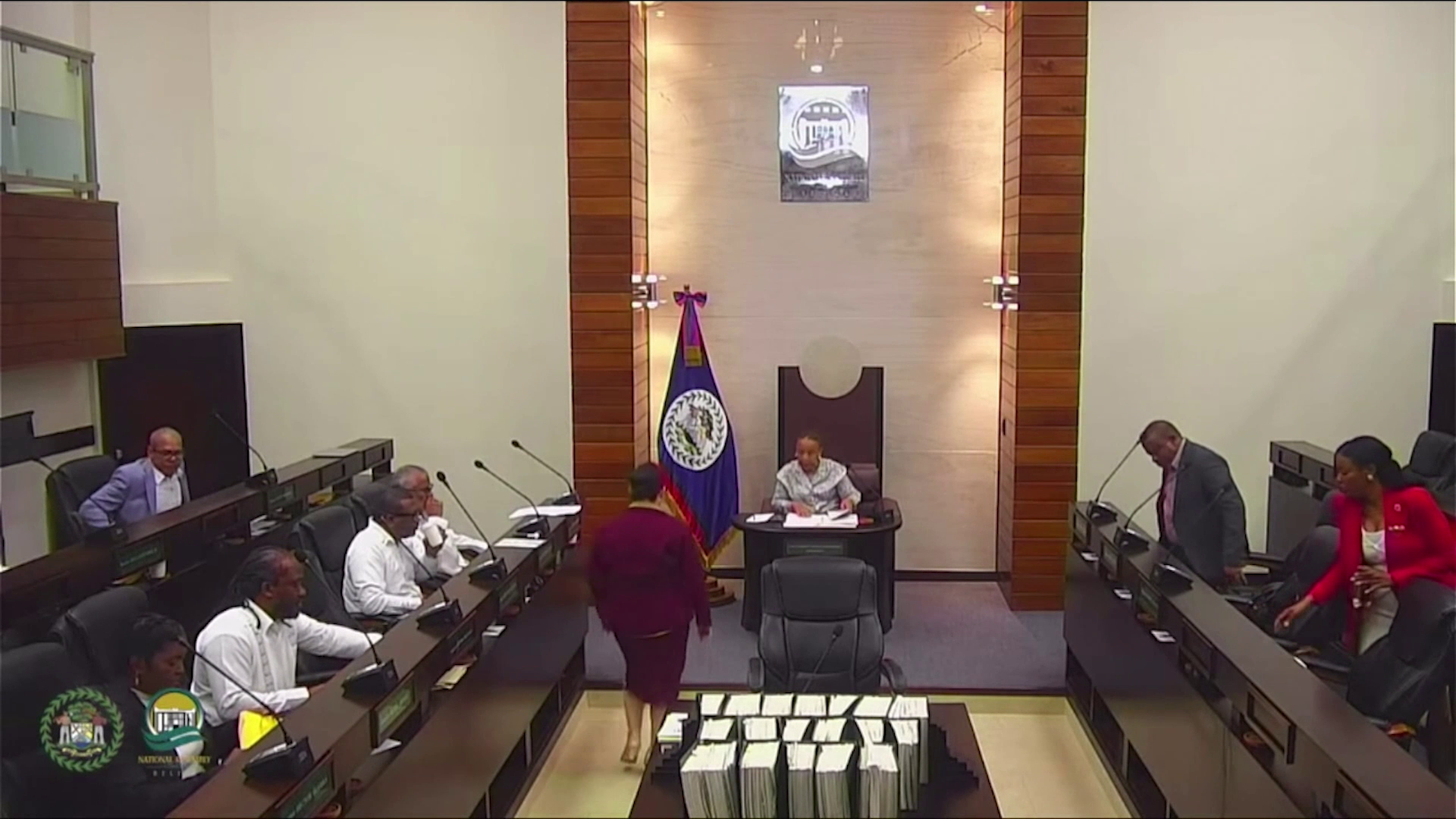
    The House of Representatives of Antigua and Barbuda will convene a special ceremonial session this Wednesday to mark a historic parliamentary milestone—the 50th anniversary of Sir Robin Yearwood’s legislative service. The distinguished statesman first secured his parliamentary seat on February 18, 1976, representing the Antigua and Barbuda Labour Party during the leadership era of Premier Vere Cornwall Bird.

    The commemorative proceedings will include formal tributes from sitting lawmakers honoring Sir Robin’s half-century of public service. The event will be attended by Governor General Sir Rodney Williams, who is scheduled to deliver special remarks recognizing the parliamentarian’s enduring contributions to national development.

    According to parliamentary procedures, the session will commence with the Speaker’s formal entry followed by traditional prayers. Legislators will then consider a motion to amend the Order Paper in compliance with Standing Orders, creating the framework for this exceptional tribute sitting. The ceremony represents one of the longest legislative service recognitions in the Caribbean nation’s political history.

  • Senior Civil Servant Placed on Leave Amid Legal Affairs Probe

    Senior Civil Servant Placed on Leave Amid Legal Affairs Probe

    A high-ranking official at the Ministry of Legal Affairs has been suspended from duty following directives from the Public Service Commission, as confirmed by state media reports on Tuesday. The suspension comes amid an ongoing independent investigation into the senior bureaucrat’s conduct regarding alleged improprieties involving a junior ministry staff member.

    The Public Service Commission recommended administrative leave for the official after raising serious concerns about their handling of the sensitive matter. Authorities have established a special committee to conduct a comprehensive inquiry into multiple allegations, including dereliction of duty, inadequate oversight, and failure to maintain expected standards of conduct for senior government officials.

    In a related development, the Commission has additionally recommended the immediate removal of another senior civil servant within the same ministry from her position. This suggests broader accountability measures are being implemented within the ministry’s leadership structure.

    The investigation represents a significant development in government accountability protocols, demonstrating the Public Service Commission’s active role in enforcing ethical standards within the civil service. The case has drawn attention to oversight mechanisms within ministerial operations and the consequences for officials who allegedly fail to meet established professional standards.

    Both matters remain under review as the investigative committee pursues its inquiry, with outcomes expected to influence future accountability procedures within the public service sector.

  • RO  wil via liba krutu vaart brengen in grenswet Suriname–Frans-Guyana

    RO wil via liba krutu vaart brengen in grenswet Suriname–Frans-Guyana

    The Ministry of Regional Development has committed to facilitating the resolution of the long-standing border demarcation issue between Suriname and French Guiana. This initiative aims to reinvigorate the stalled border legislation process that was temporarily suspended following protests in November 2025.

    During high-level consultations between the National Border Commission and Minister Miquella Huur alongside her executive team, Commission Chairman Harold Kolader emphasized the critical urgency of finalizing border determinations to enable eventual adoption of the border law. The previous suspension occurred after the Aucaan community submitted a formal petition raising specific concerns about the legislative proposal.

    The resolution strategy centers on implementing liba krutu – traditional community assemblies where the Ministry can directly engage with indigenous and tribal authorities along the Marowijne and Lawa rivers. These dialogues will be supplemented with informational videos to enhance outreach to remote villages. The Ministry assumes responsibility for organizing these consultations and managing all community communications.

    Kolader further stressed the necessity of a targeted public awareness campaign to clarify both the content and significance of the border legislation. He noted that French Guiana has expressed willingness to collaboratively establish the definitive border alignment in accordance with mutual agreements. Through these renewed consultation efforts and educational initiatives, Suriname anticipates revitalizing progress toward finalizing this crucial international boundary legislation.