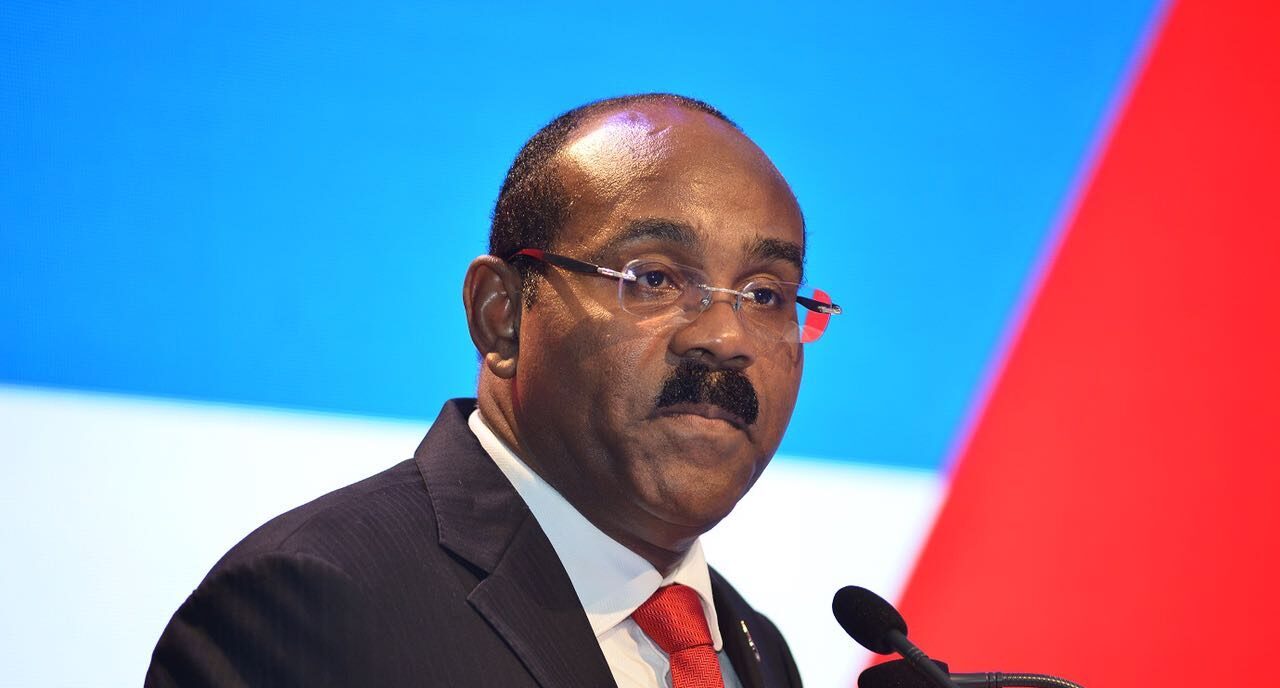
In a historic outcome that has reshaped the political landscape of the Eastern Caribbean, Prime Minister Gaston Browne has secured an unprecedented fourth consecutive term in office, after leading the Antigua and Barbuda Labour Party (ABLP) to a dominant landslide win in the country’s snap general election.
Preliminary official results confirm the scale of the ABLP’s triumph: the incumbent party captured 15 out of the 17 available seats in the national parliament, a dramatic expansion of its existing legislative majority that solidifies its long-standing control of the national government. The main opposition bloc, the United Progressive Party (UPP), was left with only a single seat, while the Barbuda People’s Movement held onto its traditional constituency seat representing the island of Barbuda.
Browne, who has held the office of prime minister since first leading the ABLP to victory in 2014, built his 2025 campaign around a platform focused on delivering sustained economic stability, accelerating post-pandemic tourism recovery, expanding critical national infrastructure, and driving inclusive growth through targeted foreign investment. Within hours of the preliminary results being announced, the ABLP released an official statement expressing gratitude to voters across both islands for placing their continued trust in the party’s leadership and its long-term development agenda.
The election itself was called nearly two years ahead of its constitutionally required schedule, a move Browne justified by arguing that Antigua and Barbuda needed a fresh popular mandate to effectively address mounting international and domestic economic headwinds. One of the most contentious central issues of the campaign was the diplomatic and economic fallout from the United States’ decision to suspend non-immigrant visa processing for Antiguan and Barbudan nationals earlier this year. U.S. officials raised national security concerns over the country’s popular Citizenship by Investment Programme (CIP), claiming the initiative contained unaddressed vulnerabilities that could be exploited by bad actors.
In response to those criticisms, Browne’s administration pushed back aggressively, noting that senior officials had already implemented sweeping reforms to the CIP to boost transparency, strengthen background screening processes, and align the program with international security standards. Browne also emphasized that his government has maintained open, constructive dialogue with U.S. authorities to resolve the dispute, even as he framed the issue as a test of Antigua and Barbuda’s national sovereignty.
Beyond the visa controversy, the campaign centered heavily on the government’s recent economic track record and its plans to boost the country’s climate resilience. Browne repeatedly highlighted the nation’s strong post-COVID-19 tourism rebound, which has seen visitor numbers surpass pre-pandemic levels, as well as a pipeline of major ongoing infrastructure projects as proof of his government’s effective governance amid a period of unprecedented global economic volatility. The prime minister also positioned his administration as the only party capable of delivering the investment needed to protect low-lying coastal communities from the growing impacts of climate change, a top priority for voters across the twin-island nation.
International observer delegations were present across the country to monitor election day proceedings, and a formal second count of ballots is scheduled to take place in the coming days to officially confirm the final election results. Even before the formal confirmation, the outcome has already cemented Browne’s status as one of the longest-serving sitting heads of government in the Caribbean, and makes clear the ABLP’s unchallenged dominance over Antigua and Barbuda’s modern political system.