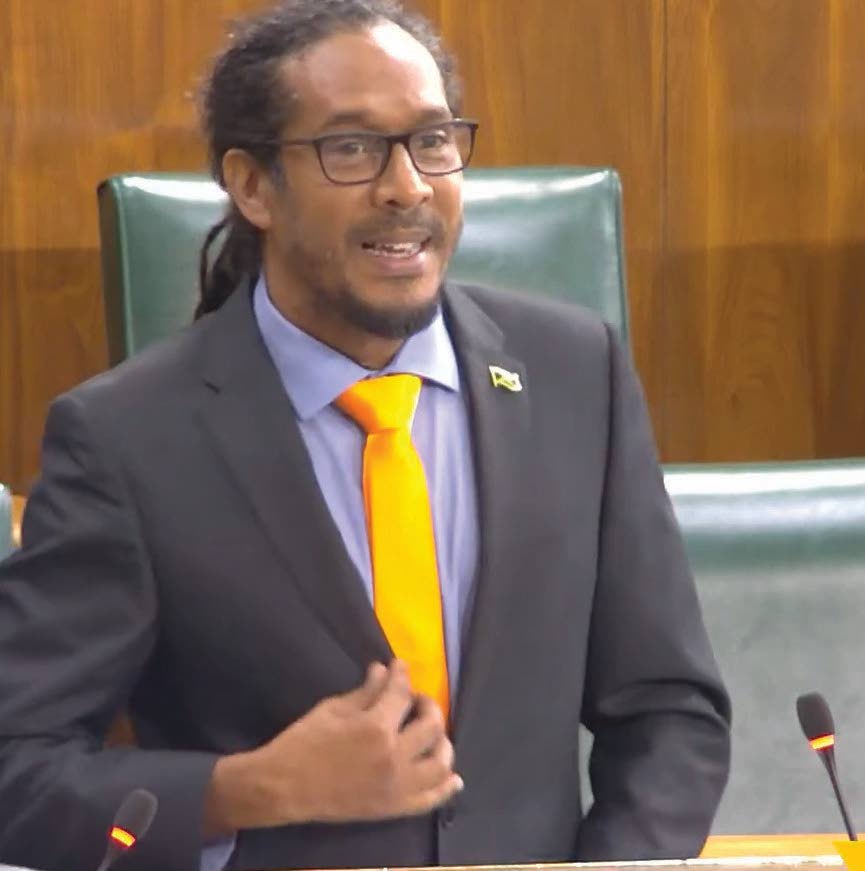
During Friday’s upper house Senate debate over amendments to Jamaica’s 2026 Cybercrimes Bill, opposition Senator Allan Bernard ignited a heated debate by calling for the creation of a national digital accountability framework that would mandate a statutory body-worn camera policy for the Jamaica Constabulary Force (JCF).
Bernard tabled his proposal against a troubling backdrop: a sharp year-over-year surge in fatal police shootings across the island that has already spurred widespread demands from civil society organizations for mandatory camera use during high-risk specialized police operations. Data released by the Independent Commission of Investigations (Indecom) underscores the scale of the trend: 115 people have been killed by Jamaican security forces in reported confrontations since the start of 2026, a 32% jump from the 87 fatalities recorded during the same period in 2025.
While confirming the Opposition would support the updated Cybercrimes Bill, Bernard argued that any meaningful approach to national security must be rooted in constitutional protections. “Public safety must be rights-based safety, and digital accountability must apply not only to the governed but also to those who govern,” he told the chamber, pointing to the systemic lack of transparency around police actions including searches, seizures, arrests and the repeated extrajudicial killings that have plagued Jamaica’s security landscape.
His proposal directly pushes back against recent comments from National Security and Peace Minister Dr. Horace Chang, who dismissed civil society calls for body-worn cameras as a “crazy idea” during an April 22 post-Cabinet media briefing. Chang has claimed that equipping officers with visible cameras during high-risk confrontations with armed criminals would unnecessarily put police at greater risk of being targeted. Bernard rejected this reasoning outright, calling out a fundamental contradiction at the heart of the government’s position.
“The government comes to Parliament asking for more digital tools, stronger investigative powers, expanded criminal offenses, harsher penalties, and clearer search and seizure procedures under the Cybercrimes Act, yet it refuses to adopt one of the most basic digital accountability tools of modern policing: body-worn cameras,” Bernard argued. “The government wants cameras, court records, search powers, and electronic evidence when it pursues citizens, but when citizens ask for cameras to protect life, liberty and truth during police operations, we are told it is a crazy idea.”
Bernard further highlighted the inconsistency by pointing to remarks from Science, Technology and Special Projects Minister Dr. Andrew Wheatley, who shepherded the bill through the House of Representatives. Wheatley emphasized that Clause 9 of the legislation requires the JCF Commissioner to develop a formal code of standard procedures for handling digital evidence to ensure effectiveness and integrity. Yet, Bernard noted, when it comes to evidence surrounding fatal police shootings, that same principle of integrity is treated as optional. “This contradiction borders on hypocrisy,” he said. “The government cannot say Jamaica needs a trusted digital society while resisting the very technologies that would help citizens trust the state.”
Bernard extended his argument to align the push for body cameras with the core goals of the Cybercrimes Bill itself. “If the law criminalizes the nonconsensual publication of an intimate image because dignity matters, then surely the law can require recording of state encounters where life may be taken, because life matters even more,” he said. “If the law can impose up to 20 years in prison for cybercrimes against children, then surely the state must answer when minors are among those killed in police operations.”
Before he could conclude his remarks, Senate President Tom Tavares-Finson interrupted Bernard, ordering him to stay on topic and adhere to the debate’s focus on the Cybercrimes Bill. Tavares-Finson noted that despite Bernard’s skillful framing of the issue, the debate was not the appropriate venue to advance policy on police body cameras. Undeterred, Bernard pushed back, noting that the core question of selective accountability is inherently tied to the legislation. After Bernard reiterated his call for a formal digital accountability framework and statutory body camera policy, Tavares-Finson again intervened, criticizing the senator for straying from the bill’s text despite acknowledging the strength of his presentation.
Opposition Senator Lambert Brown stepped in to defend Bernard, noting that government senators had ample opportunity to respond to the arguments, but Tavares-Finson dismissed Brown’s intervention, citing Senate standing orders that require all contributions to remain relevant to the matter under debate. The Cybercrimes Act amendments were originally approved by the House of Representatives on February 3, and the ongoing upper house debate has evolved into a broader discussion of state accountability beyond cybercrime policy.