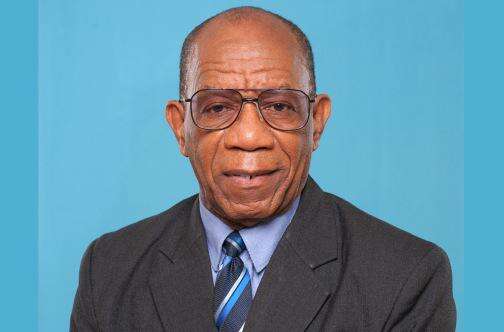
Amidst ongoing struggles to address social, political, and economic issues, the UNC government faces yet another high-profile controversy with the rapid appointment of Justice Ronnie Boodoosingh as the new Chief Justice. This follows the unexpected retirement of former Chief Justice Ivor Archie, raising questions about the haste and transparency of the process. Acting President Wade Mark defended the appointment, citing constitutional adherence, while the judiciary lauded Boodoosingh’s distinguished career and commitment to fairness. However, concerns linger over the lack of extensive consultation, particularly with Opposition Leader Pennelope Beckles and substantive President Christine Kangaloo, who is currently on leave. Boodoosingh’s installation speech emphasized hard work, humility, and dedication to public trust, values that resonate deeply in a nation grappling with systemic inefficiencies. His appointment comes at a critical juncture, as the judiciary faces challenges such as case backlogs, ethical reforms, and public accessibility. Boodoosingh’s leadership will be pivotal in driving meaningful judicial reforms, from tightening night courts to addressing systemic injustices. As the dust settles, the focus must shift to restoring public confidence in the judiciary, ensuring it serves not just legal professionals but the broader public interest.
分类: politics
-

US warship docks in Trinidad amid fears of military aggression in the Caribbean
The arrival of the USS Gravely, a United States warship, in Trinidad and Tobago has reignited debates over military aggression and regional stability in the Caribbean. While Trinidadian Prime Minister Kamla Persad-Bissessar emphasized the necessity of US collaboration in combating drug trafficking and crime, Barbados Prime Minister Mia Mottley voiced concerns over the militarization of the region, urging dialogue to preserve peace. Mottley, addressing her party’s annual conference, highlighted the Caribbean’s vulnerability to external threats, including the presence of US military vessels and the impending Hurricane Melissa. She called for adherence to the Caribbean Community’s (Caricom) founding principle of maintaining the region as a ‘zone of peace.’
This development follows the Trump administration’s announcement of intensified military operations in the Caribbean, including the deployment of the USS Gerald R Ford, the world’s largest aircraft carrier, as part of a counter-drug initiative. Critics argue that these actions could serve as a pretext for a potential land invasion of Venezuela. Recent US military strikes in international waters, which resulted in the deaths of Trinidad and Tobago nationals, have further fueled tensions. The US has yet to provide evidence supporting its claims of drug trafficking.
Prime Minister Persad-Bissessar defended the US presence, citing Trinidad and Tobago’s severe crime and drug-related challenges. She emphasized the benefits of joint training exercises and infrastructure upgrades facilitated by the US military. However, former Caricom leaders, including PJ Patterson and Bruce Golding, have called for a reduction in military buildup to avoid destabilizing the region.
Mottley, a staunch advocate for the rule of law, condemned extrajudicial killings and unilateral military actions, urging disputes to be resolved through the United Nations. She stressed the importance of negotiation and peaceful conflict resolution, warning against conflating law enforcement with military intervention. As the Caribbean grapples with these complex issues, the region’s leaders remain divided on the best path forward to ensure safety and stability.
-

Dominica Prime Minister reiterates call for Caribbean to be zone of peace
In a powerful address at the 86th annual conference of the Barbados Labour Party (BLP), Dominica’s Prime Minister Roosevelt Skerrit emphasized the Caribbean’s commitment to maintaining itself as a zone of peace. He warned that any military escalation in the region would have dire consequences for all Caribbean nations. Skerrit’s remarks echoed those of Barbados Prime Minister Mia Mottley, who earlier called for an end to the United States’ military build-up off Venezuela’s coast, ostensibly aimed at combating drug trafficking. Both leaders stressed the importance of resolving conflicts through dialogue and diplomacy rather than force. Skerrit highlighted the region’s historical struggles for freedom and independence, urging Caribbean nations to stand firm on these principles. He shared excerpts of Mottley’s speech on the Caribbean Community (Caricom) leaders’ social media page, underscoring the need to speak truth to power. Mottley, in her opening address, described the current situation in the southern Caribbean as ‘extremely dangerous and untenable,’ emphasizing the region’s tragic history of being subjected to external powers’ violence. She called for unity in upholding the Caribbean as a zone of peace, a principle enshrined since Caricom’s inception. Mottley also rejected the notion of extrajudicial killings and the conflation of law enforcement with military action, advocating for the rule of law. The recent deployment of the USS Gerald Ford and over 10,000 U.S. troops to the Caribbean has raised concerns among regional leaders, who view it as a potential precursor to an invasion of Venezuela. The U.S. claims these actions are part of a counter-drug initiative, but critics argue they lack transparency and justification.
-

Regional security challenges discussed in Saint Lucia
The Regional Security System (RSS) remains a cornerstone in safeguarding the eastern Caribbean, particularly as regional tensions escalate due to the increased presence of US military forces. This sentiment was echoed by Saint Lucia’s Prime Minister, Philip J. Pierre, and Commissioner of Police, Verne Garde, during the recently concluded RSS Biannual Security Chiefs Meeting in Saint Lucia. Pierre, who also chairs the RSS, emphasized the organization’s critical role in addressing pressing challenges such as cybersecurity threats, organized crime, climate-induced instability, and gang violence. He underscored the importance of maintaining the Caribbean as a ‘Zone of Peace’ and highlighted the RSS’s indispensable contribution to regional safety, stability, and prosperity. Pierre reaffirmed Saint Lucia’s commitment to the RSS and advocated for enhanced collaboration with international partners, including the United Kingdom, Canada, the European Union, and the United States. He also expressed support for expanding the RSS’s reach within CARICOM to bolster regional resilience. Garde, meanwhile, emphasized the RSS’s role as a vital platform for coordination, resource sharing, and mutual support, particularly in tackling transnational crime, illegal trafficking, cyber threats, maritime vulnerabilities, and natural disasters. Brigadier Omar Khan, Chief of Defence Staff of the Guyana Defence Force, reiterated the importance of regional collaboration in ensuring Caribbean stability and security. The three-day meeting, which marked the RSS’s 43rd anniversary, brought together law enforcement and defense personnel from the eight RSS member states—Saint Lucia, Antigua and Barbuda, Barbados, Dominica, Grenada, Saint Kitts and Nevis, St. Vincent and the Grenadines, and Guyana—along with regional and international partners. Although not formally on the agenda, the meeting followed a recent CARICOM statement expressing concerns over the increased security buildup in the Caribbean and its potential impacts. CARICOM leaders reaffirmed their commitment to combating narco-trafficking and the illegal trade in small arms, while supporting the sovereignty and territorial integrity of regional nations.
-

Trump overweegt militair ingrijpen tegen cocaïne-infrastructuur in Venezuela
The Trump administration is reportedly considering targeted military strikes on cocaine production facilities in Venezuela, according to sources within the U.S. government. This move is part of a broader strategy to intensify efforts against transnational drug trafficking, with Venezuela long viewed by Washington as a key hub for such activities. The proposed strikes would be unilateral and preventive, meaning they would occur without the consent of the Venezuelan government or an international coalition. This approach has raised significant political and diplomatic concerns, particularly given the ongoing tensions between the U.S. and Venezuelan President Nicolás Maduro. The potential for regional instability is high, as such actions could be perceived as acts of war in Latin America. Internal divisions within the U.S. government have also emerged, with hawks advocating for immediate action to dismantle Maduro’s cocaine economy, while others caution against military intervention that could escalate into broader conflict. No final decision has been made as of yet.
-

VHP-hoofdbestuurslid Moertabat keert de partij de rug toe
Sidik Moertabat, a prominent leader of the Progressive Reform Party (VHP) in Suriname, has resigned from his executive position and parted ways with the party. Moertabat announced his decision through the party’s internal communication platform, emphasizing that his departure stems from dissatisfaction with his treatment as a senior executive rather than any negative sentiment toward the VHP. He revealed that widespread discontent exists within the party’s leadership and among members, particularly regarding the management style and decision-making processes. This dissatisfaction intensified following the party’s defeat in the May 25, 2025 elections, which Moertabat attributes to poor internal communication and the concentration of power among a small group of leaders. Moertabat expressed frustration over his exclusion from election preparations and the candidate selection process for the National Assembly, though he clarified that his omission from the candidate list was not the primary reason for his resignation. Reflecting on his 13-year tenure, he highlighted the party’s achievements, including securing 20 parliamentary seats in 2020, but lamented the subsequent decline due to ineffective communication and the marginalization of key members, including the so-called ‘Triple-M’ group. Since announcing his resignation on October 17, Moertabat noted a lack of response from the party, with only Deputy Chairman Glenn Oehler reaching out. Firm in his decision, he stated that he will not return to the VHP and plans to focus on his family in retirement. While he bids farewell to active politics, Moertabat remains open to contributing to other parties, reaffirming his commitment to serving the nation and its people. He concluded by expressing pride in his parliamentary service, particularly his role as chair of the Defense Committee from 2020 to 2025.
-

Security : PNH meeting with a high-level Canadian delegation
This week, a high-level Canadian delegation, including Bob Rae, Canada’s Permanent Representative to the UN, and François André Giroux, Canada’s Ambassador to Haiti, met with Vladimir Paraison, Acting Director General of the Haitian National Police (PNH), and senior PNH officials. The discussions centered on Haiti’s ongoing security challenges and the progress of joint operations with the Kenyan-led Multinational Mission. Paraison emphasized the strides made through improved coordination but underscored the complexities of urban operations. Key challenges were identified, including chronic understaffing of the PNH, with fewer than one officer per 1,000 residents, the adaptability of gangs in densely populated areas, and the exploitation of poverty and deportees by criminal groups. The PNH also outlined its urgent needs, such as protective equipment, armored vehicles, and specialized training in counterinsurgency and crisis management. The Canadian delegation reaffirmed its steadfast support and expressed willingness to provide tailored assistance. Both parties agreed on the necessity of a robust operational partnership, international backing, and a comprehensive strategy that balances immediate security measures with long-term stabilization. Paraison expressed satisfaction with the dialogue and reiterated the PNH’s commitment to combating gangs despite resource constraints, emphasizing the dedication of Haitian police officers as citizens determined to protect their nation.
-

Auditor General Faces JPAC in Open Session
In a landmark public hearing on October 24, 2025, Belize’s National Assembly convened the Joint Public Accounts Committee (JPAC) for its first session of the year. Chaired by Lee Mark Chang, a prominent member of the Opposition, the committee comprises representatives from both the House of Representatives and the Senate. Its primary mandate is to oversee the efficient, transparent, and accountable use of public funds in the interest of Belizean citizens. The focal point of the session was the Auditor General’s Report for the fiscal years 2015/2016, with Auditor General Maria Rodriquez providing testimony. Rodriquez highlighted challenges in hiring and training junior audit clerks, noting that many recruits lack accounting backgrounds, which prolongs training periods. She also addressed concerns about pay scales for mid-level and technical roles, emphasizing the need for experienced personnel despite regulatory constraints on salaries. The hearing underscored ongoing efforts to strengthen public financial management in Belize.