分类: politics

  • Dominica Medical Council established with passing of new Bill

    Dominica Medical Council established with passing of new Bill

    The Commonwealth of Dominica has taken a significant step toward modernizing its healthcare regulatory framework with the parliamentary passage of the Medical Profession Bill 2026. This landmark legislation establishes the Dominica Medical Council, a comprehensive regulatory body designed to oversee the nation’s medical profession with enhanced authority and independence.

    Health Minister Cassanni Laville presented the bill before Parliament, emphasizing its critical role in transforming healthcare governance. “This legislation creates a contemporary, autonomous regulatory entity tasked with supervising registration, licensing, professional standards, and disciplinary procedures,” Minister Laville declared during his parliamentary address.

    The newly formed council will supersede the existing medical board, implementing a governance structure that aligns with current healthcare demands and international standards. Its mandate encompasses several key functions: ensuring proper credentialing of medical practitioners, monitoring professional conduct, establishing clear disciplinary protocols, and maintaining elevated qualification standards through continuous education requirements.

    Minister Laville highlighted the council’s sophisticated organizational design, which includes appointed positions such as a registrar and auditor, along with specialized committees focused on education, training, and disciplinary matters. “This architectural framework guarantees institutional robustness, ethical integrity, and operational independence,” Laville explained. “These safeguards benefit patients, protect medical professionals, and preserve the healthcare system’s overall credibility.”

    The legislation also introduces strengthened legal protections for medical practitioners operating within Dominica, providing enhanced professional security while ensuring accountability. This balanced approach aims to elevate healthcare quality while addressing both practitioner needs and patient safety concerns.

    The establishment of the Dominica Medical Council represents the most substantial overhaul of medical regulation in recent history, positioning the nation’s healthcare system for improved standards, greater transparency, and enhanced public trust.

  • Motie over SZF en RZW unaniem aangenomen met 31 stemmen

    Motie over SZF en RZW unaniem aangenomen met 31 stemmen

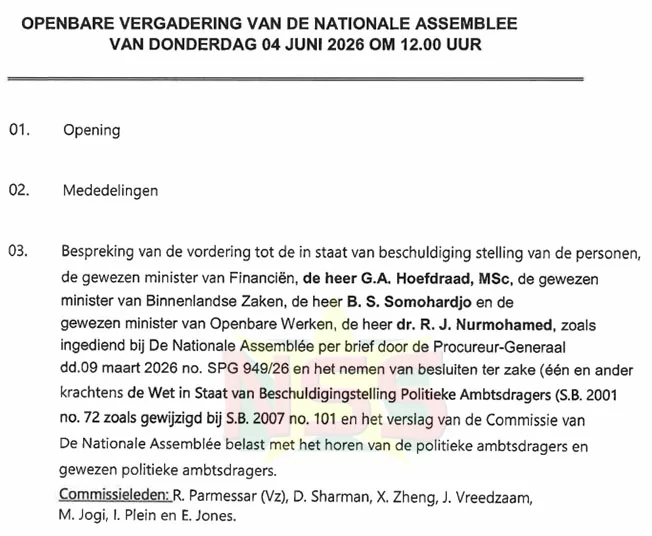
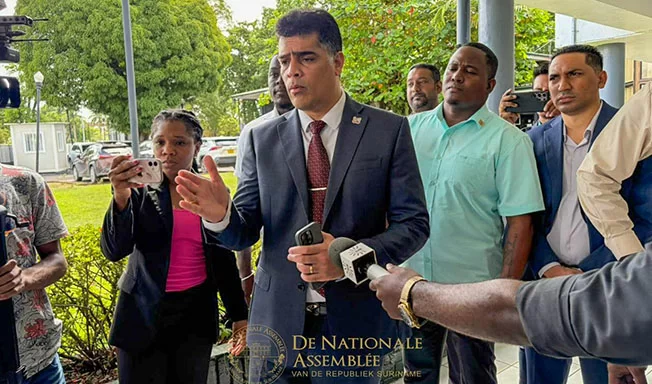
    In a rare display of political unity, Suriname’s National Assembly has unanimously approved a comprehensive motion addressing systemic governance issues within the country’s healthcare sector. All 31 parliament members present voted in favor of the measure, which was jointly submitted by every political faction in the legislative body.

    The motion emerged from a government interrogation session initiated by Assembly members Rossellie Cotino and Silvana Afoensoewa, both representing the National Democratic Party. During the parliamentary proceedings, Minister of Health, Labor, and Welfare André Misiekaba provided extensive responses to lawmakers’ probing questions while submitting numerous documentation from both the State Health Fund and the Wanica Regional Hospital.

    Central to the parliamentary motion is the government’s constitutional obligation to ensure transparent, efficient, and lawful management of public resources within the healthcare system. The Assembly emphasized that healthcare protection, continuity, and affordability constitute fundamental citizen rights that must be safeguarded.

    The resolution identifies persistent financial shortfalls within the healthcare sector as requiring immediate governance improvements and expenditure transparency. Parliament specifically condemned the practice of improperly withholding citizen premiums from the health fund, mandating their prompt restitution.

    In its decisive action, the National Assembly has issued a formal demand for the government to:

    • Implement robust internal control mechanisms and supervisory structures within state enterprises to ensure proper utilization of public funds
    • Submit within 30 days a comprehensive written report to parliament detailing:
    – The State Health Fund’s financial position, including liquidity, debts, receivables, and current obligations
    – Governance frameworks, internal control systems, and compliance with statutes and board regulations
    • Restore stability and operational normalcy at the Paramaribo Milk Center
    • Engage judicial authorities whenever financial misconduct is suspected
    • Recover unlawfully obtained public resources
    • Initiate legislative discussions establishing governance codes for parastatal institutions

    This unanimous parliamentary decision delivers a powerful message that financial transparency, accountability, and sound governance must become immediate priorities within Suriname’s healthcare administration.

  • U.S. Secretary of State Marco Rubio Calls for Deeper Security, Energy and Strategic Partnership with the Caribbean

    U.S. Secretary of State Marco Rubio Calls for Deeper Security, Energy and Strategic Partnership with the Caribbean

    In a landmark address marking a strategic shift in foreign policy, U.S. Secretary of State Marco Rubio articulated a renewed American commitment to Caribbean nations during the 50th CARICOM Heads of Government Conference on February 25th. The plenary session became a platform for announcing Washington’s intent to re-center hemispheric relations after what Rubio characterized as a prolonged period of neglect.

    Secretary Rubio presented a comprehensive framework for enhanced cooperation, identifying transnational crime as an immediate priority. He delivered a significant acknowledgment of U.S. responsibility in the regional weapons trade, stating that American-sourced firearms are fueling violence throughout Caribbean communities. “We recognize that many of these groups are buying weaponry from the United States,” Rubio told assembled leaders, “and we are committed and continue to work very hard with our law enforcement agencies to shut that down.”

    The Secretary outlined a multi-faceted approach to security collaboration that extends beyond arms trafficking to include coordinated actions against international drug cartels. He emphasized intelligence-sharing mechanisms and sustained law enforcement partnerships as critical components for disrupting criminal networks operating across maritime borders.

    Beyond security concerns, Rubio’s address encompassed broader economic and energy partnerships. He pledged to work with CARICOM members on energy security initiatives and economic development programs, framing this cooperation as part of rebuilding a new dynamic throughout the Western Hemisphere. This economic dimension complements the security partnership, addressing both immediate threats and long-term stability.

    CARICOM Chairman and Prime Minister Hon. Dr. Terrance Drew responded positively to the American overtures while emphasizing Caribbean sovereignty. He welcomed the frank dialogue but underscored that any strengthened cooperation must be founded on mutual respect and must ultimately serve the safety, sovereignty, and sustainable development of Caribbean citizens. Prime Drew highlighted CARICOM’s collective strength as its unified voice in international affairs, suggesting partnerships would be evaluated through this lens of regional benefit.

  • Cuba Says Armed Group on U.S.-Registered Speedboat Planned ‘Terrorist Infiltration’

    Cuba Says Armed Group on U.S.-Registered Speedboat Planned ‘Terrorist Infiltration’

    A significant maritime incident has intensified diplomatic strains between the United States and Cuba, following Havana’s announcement that its border forces intercepted and engaged an armed vessel registered in Florida. Cuban authorities reported four fatalities and six injuries during the confrontation that occurred Wednesday in territorial waters near Cayo Falcones.

    According to Cuba’s Interior Ministry, the high-speed boat entered Cuban maritime territory approximately one nautical mile offshore before being intercepted. Officials claim the occupants initiated gunfire, wounding one Cuban officer and triggering an exchange of fire. The ministry identified the ten individuals aboard as Cuban expatriates residing in the United States, alleging they were executing “a terrorist infiltration mission.”

    Weapons confiscated from the vessel reportedly included assault rifles, handguns, improvised explosive devices, and specialized tactical equipment. Cuban officials stated that an additional suspect has been apprehended and has provided confessions regarding the alleged plot.

    President Miguel Díaz-Canel, currently attending regional meetings in St. Kitts and Nevis, declared Cuba’s resolve to “defend with determination and firmness against any terrorist and mercenary aggression targeting national sovereignty and stability.”

    The incident occurs amidst already heightened tensions between the neighboring nations. Recent weeks have seen U.S. forces capture Venezuelan leader Nicolás Maduro—a crucial Cuban ally—and implement oil shipment blockades from Venezuela to Cuba, exacerbating the island’s severe fuel crisis.

    U.S. Secretary of State Marco Rubio, speaking from the Caribbean meetings, characterized the event as “highly unusual” and committed to conducting an independent investigation rather than relying solely on Havana’s account. Rubio confirmed the vessel carried no U.S. government personnel and emphasized Washington’s intention to determine the purpose of the boat’s presence in Cuban waters.

    The Cuban-American diplomat, whose parents emigrated from Cuba, reiterated his criticism of Havana’s communist government, stating that “Cuba’s status quo is unacceptable” and demanding “dramatic reforms” toward economic and political liberalization.

    In a contrasting development, the U.S. Treasury Department announced limited easing of restrictions on certain private-sector transactions, including some oil sales, aimed at supporting Cuban citizens for commercial and humanitarian purposes, signaling the complex nature of bilateral relations.

  • Rubio Defends U.S. Removal of Maduro at CARICOM Summit

    Rubio Defends U.S. Removal of Maduro at CARICOM Summit

    U.S. Secretary of State Marco Rubio delivered a robust defense of America’s military operation to depose Venezuelan leader Nicolás Maduro during a high-stakes meeting with Caribbean leaders on Wednesday. Addressing the Caribbean Community (CARICOM) summit in St. Kitts and Nevis, Rubio asserted that both Venezuela and the broader region had significantly benefited from the controversial intervention.

    In closed-door discussions with the 15-member bloc, Rubio acknowledged potential disagreements while maintaining an uncompromising position. “Irrespective of how some of you may have individually felt about our operations and our policy toward Venezuela,” he stated according to an official transcript, “Venezuela is better off today than it was eight weeks ago.”

    The Secretary’s comments came amid lingering concerns from several Caribbean governments regarding the legality of Maduro’s capture and implications for regional sovereignty. Rubio dismissed these apprehensions, pointing to what he characterized as ‘substantial progress’ under interim authorities following the U.S. takeover of Venezuela’s oil sector.

    The diplomatic encounter revealed divergent regional perspectives. Trinidad and Tobago’s Prime Minister Kamla Persad-Bissessar publicly endorsed U.S. military operations in the southern Caribbean, confirming discussions had extended to Haiti and Cuba alongside Venezuela. When questioned about potential extrajudicial killings during counter-narcotics operations, she cited legal advice clearing the actions.

    Contrasting views emerged from CARICOM leadership, with Chairman and St. Kitts Prime Minister Terrance Drew warning of a ‘decisive hour’ for the region amid global realignments. Jamaica’s Prime Minister Andrew Holness separately highlighted concerns about Cuba’s deteriorating humanitarian situation, noting potential ramifications for regional migration patterns and economic stability.

    The exchange occurs against the backdrop of President Trump’s recent celebration of the Venezuela operation as ‘an absolutely colossal victory’ for U.S. security during his State of the Union address.

  • Trump acknowledges US campaign has damaged fishing industry

    Trump acknowledges US campaign has damaged fishing industry

    President Donald Trump’s declaration during his State of the Union address has revealed unintended consequences of U.S. maritime security operations, acknowledging significant damage to Caribbean fishing industries while touting successes in drug interdiction. The president credited his administration’s military campaign with virtually eliminating aquatic drug trafficking routes into the United States, but simultaneously noted the collateral impact on regional fishing activities.

    The remarks arrive during a period of heightened anxiety among Caribbean fishing communities, particularly in Saint Lucia where recent drone strike incidents have resulted in fatalities including two Saint Lucian nationals. Local fishermen now operate under increased apprehension, with many reconsidering their traditional livelihood due to safety concerns.

    Caribbean fishing practices—which frequently involve pre-dawn operations and multiple engines for safety—are being misinterpreted by security authorities as suspicious behavior, creating dangerous ambiguities for legitimate workers. Generations of maritime tradition now face unprecedented pressure as enforcement tactics designed for criminal networks increasingly affect ordinary fishermen.

    While the administration frames these operations as essential for combating drug cartels, terrorism, and foreign interference in the Western Hemisphere, the practical implementation raises serious humanitarian questions. The designation of cartels as terrorist organizations and characterization of fentanyl as a weapon of mass destruction have justified intensified surveillance, but potentially at the cost of civilian welfare.

    The situation has prompted calls for Caribbean governments to seek clarified operational protocols and assurances from Washington regarding the protection of innocent maritime workers. The central concern remains whether security measures adequately distinguish between illegal trafficking and legitimate economic activities that sustain coastal communities.

  • This is a pivotal moment for CARICOM, says Chairman Drew

    This is a pivotal moment for CARICOM, says Chairman Drew

    Prime Minister of Saint Kitts and Nevis Dr. Terrance Drew, serving as Chair of the Caribbean Community (CARICOM), has declared the region stands at a critical juncture amid escalating global challenges. Addressing fellow leaders at the 50th Regular Meeting of the Conference of Heads of Government on February 24, Dr. Drew outlined a precarious international landscape defined by geopolitical strife, volatile energy markets, supply chain disruptions, climate-induced disasters, and economic instability.

    The CARICOM Chairman issued a stark warning that small island developing states face unprecedented risks of marginalization and fragmentation in this turbulent environment. He articulated a central philosophy guiding the regional body: “In such a world, fragmentation breeds vulnerability. By contrast, togetherness generates resilience.” This principle formed the foundational theme for high-level discussions throughout the week-long summit.

    Dr. Drew emphasized that Caribbean resilience cannot be achieved through isolated national efforts but requires disciplined cooperation and unified determination. He highlighted that CARICOM’s core tenets—collaboration, functional integration, economic coordination, and collective self-reliance—were specifically designed to shield smaller nations from global shocks.

    With persistent supply chain uncertainties and mounting external pressures, the Prime Minister asserted that deeper regional integration has evolved from desirable to absolutely vital. He called for deliberate collective action to enhance food and energy security, strengthen regional security partnerships, and coordinate economic strategies.

    Drawing on historical precedent, Dr. Drew reminded attendees that the Caribbean has previously confronted and overcome adversity by leveraging shared institutions and maintaining a unified voice in international affairs. The 50th Regular Meeting served as a working session focused on substantive coordination, collective problem-solving, and reinforcing CARICOM’s structures for the benefit of all Caribbean citizens.

  • CARICOM LEADERS ENTER CRUCIAL CAUCUS AT 50TH HEADS MEETING IN ST. KITTS

    CARICOM LEADERS ENTER CRUCIAL CAUCUS AT 50TH HEADS MEETING IN ST. KITTS

    BASSETERRE, St. Kitts and Nevis – February 26, 2026 – Caribbean Community leaders have entered a pivotal closed-door caucus session during the 50th Regular Meeting of the Conference of Heads of Government, marking a decisive moment for regional integration efforts. The high-stakes deliberations in Basseterre are addressing sensitive policy matters that could significantly shape the future trajectory of the 15-member regional bloc.

    As the landmark golden anniversary summit continues, heads of government are grappling with potentially contentious agenda items that require delicate diplomatic navigation. The closed caucus format allows for frank discussions on issues central to strengthening CARICOM’s multilateral framework and advancing collective interests.

    The outcomes of these confidential deliberations are anticipated to influence regional policies across multiple sectors, including trade, security, and economic cooperation. This strategic gathering represents one of the most significant political conferences in the Caribbean this year, bringing together leaders from across the region to address shared challenges and opportunities.

    The 50th anniversary summit serves as both a celebration of CARICOM’s five decades of regional cooperation and a critical forum for determining the organization’s path forward in an increasingly complex global landscape. Decisions made during these sessions could have far-reaching implications for Caribbean integration and the bloc’s international positioning.

  • Antigua and Barbuda to debate immigration amnesty bill within weeks

    Antigua and Barbuda to debate immigration amnesty bill within weeks

    The Caribbean nation of Antigua and Barbuda is poised to implement a groundbreaking immigration amnesty initiative following parliamentary approval of legislative amendments. Prime Minister Gaston Browne’s administration has confirmed that Parliament will convene within the forthcoming fortnight to deliberate on substantial revisions to the Immigration and Passport Act of 2014.

    Cabinet members will initially examine the proposed legal modifications before presenting them to the legislative body. This strategic overhaul aims to establish a robust juridical foundation for normalizing the status of specific undocumented immigrants who have maintained prolonged residence in the country. The program specifically targets individuals who entered through legal channels but have resided without regularized status for a minimum of four years.

    The regularization window will remain open for ninety days, spanning from April 1 to June 30, 2026, during which qualifying persons may submit applications. Additionally, the legislation incorporates provisions addressing those who marginally missed citizenship eligibility due to brief interruptions in lawful residency.

    Government spokespersons emphasize that the amnesty constitutes a meticulously regulated process rather than an indiscriminate pardon. Explicit exclusions apply to individuals deemed threats to national security or public safety, applicants furnishing fraudulent information, and those under active deportation orders or international arrest warrants.

    The administration characterizes this measure as a structured endeavor to enhance compliance with immigration statutes while reinforcing national security protocols. Officials project that upon legislative endorsement, the regularization process will commence promptly, potentially affecting thousands of long-term residents seeking legal conformity.

  • Bill Clinton denies wrongdoing at grilling on Epstein ties

    Bill Clinton denies wrongdoing at grilling on Epstein ties

    Former President Bill Clinton appeared before a congressional committee investigating Jeffrey Epstein connections on Friday, firmly denying any knowledge of the financier’s criminal activities while Democrats intensified calls for similar scrutiny of Donald Trump’s Epstein ties.

    In his opening statement shared publicly, Clinton asserted he severed all connections with Epstein well before the financier’s 2008 conviction for sex offenses. “I saw nothing, and I did nothing wrong,” Clinton declared to the House committee conducting the deposition behind closed doors in Chappaqua, New York.

    The proceedings revealed sharp political divisions, with Republican committee chair James Comer vowing to ask “lots of questions” about Clinton’s documented associations with Epstein, including 27 flights on Epstein’s private plane and 17 White House visits during Clinton’s presidency. Republican representative Anna Paulina Luna noted Clinton’s cooperative demeanor during questioning.

    Democrats countered that the investigation unfairly targeted political opponents rather than pursuing legitimate oversight. Committee member Suhas Subramanyam stated, “Let’s be real, we are talking to the wrong president,” emphasizing that Clinton answered all questions while Trump should face similar scrutiny.

    Clinton indirectly referenced Trump in his statement, noting that “no person is above the law, even presidents — especially presidents.” Trump responded with sympathy for Clinton, telling reporters he disliked seeing him deposed while maintaining skepticism about the investigation’s validity.

    The deposition followed Hillary Clinton’s testimony on Thursday, where the former secretary of state challenged lawmakers to question Trump “directly under oath about the tens of thousands of times he shows up in the Epstein files.” Both Clintons had initially resisted subpoenas but complied after Republicans threatened contempt of Congress charges.

    Notably, Bill Clinton acknowledged extensive interactions with Epstein through Clinton Foundation humanitarian work but denied visiting Epstein’s Caribbean island or having any awareness of his criminal activities. “Not only would I not have flown on his plane if I had any inkling of what he was doing — I would have turned him in,” Clinton stated.

    The proceedings occurred amid heightened security in Chappaqua, with dozens of journalists and Secret Service personnel surrounding the Clinton residence. Both Clintons criticized the closed-door format, with Bill Clinton comparing it to a “kangaroo court” and advocating for televised sessions.

    Epstein died in a New York jail cell in 2019 while awaiting trial on sex trafficking charges, with his death officially ruled a suicide though surrounded by persistent conspiracy theories.