分类: politics

  • KPB 2.0’ stands her ground

    KPB 2.0’ stands her ground

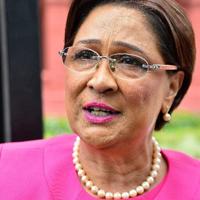
    On the eve of the first anniversary of her United National Congress (UNC) administration taking office, Prime Minister Kamla Persad-Bissessar delivered a blunt, unapologetic warning to her political opponents and critics during an exclusive interview with local outlet the Express: “If you come for my eye, I will take your whole head.”

    April 28, 2026 marks exactly 12 months since the UNC secured victory in the 2025 general election, ending a decade-long tenure of the previous People’s National Movement (PNM) government that left the Caribbean nation with soaring crime and economic stagnation. Referred to by the UNC as “KPB 2.0”, this iteration of Persad-Bissessar’s leadership marks a sharp departure from the more conciliatory approach she adopted during her earlier time in office.

    In a wide-ranging 19-question interview, the 74-year-old prime minister outlined a new, hard-nosed governing philosophy rooted in data-driven decision-making and uncompromising action for law-abiding citizens. “My disposition is more stoic, hard-nosed and focused on helping those who help themselves,” she explained, rejecting calls for the passive “turn the other cheek” approach she embraced in past tenures. “I have no intention of trying to please everyone. My aim is to please the law-abiding people who go out every day and make an honest day’s work to positively contribute to society. It is either peace or total war, no in-between.”

    Addressing widespread criticism that her confrontational tone is unbefitting of a head of government and undermines national unity, Persad-Bissessar pushed back forcefully, arguing that repeated concessions to bad-faith critics only embolden hostility. She dismissed most criticism as the product of personal bias, political allegiance and irrational hatred, noting that she only accepts input from qualified, fair-minded analysts. She rejected the idea of unifying with opposition factions that she accuses of pushing exploitative policies that would steal from hardworking workers to reward their political base.

    Responding to questions about ongoing labor protests and fears of growing civil unrest amid worker dissatisfaction, the prime minister emphasized that legal protest is a protected right, but it will not shift her government’s policy priorities, which are rooted in what is best for the country as a whole. She pointed to her administration’s fulfillment of a key campaign promise: a 10% wage increase that has already been rolled out to more than 51,000 workers across the public service, national energy, and education sectors.

    On the international and regional front, Persad-Bissessar has upended long-standing Trinidad and Tobago diplomatic norms by openly breaking with traditional neutrality to align closely with the administration of U.S. President Donald Trump, while taking an unusually firm stance against long-standing operating procedures within the Caribbean Community (Caricom). When asked about the diplomatic shift, she explained that the U.S. administration’s conservative, pro-capitalist policy framework aligns with her own, and that she expects the alignment to deliver tangible benefits: increased foreign direct investment, accelerated economic growth, and improved regional security against transnational criminal networks. She pushed back against claims of regional isolation, confirming Trinidad and Tobago has no plans to leave Caricom, but declined to publicly outline future negotiating strategies for regional reform.

    Crime, long the most urgent domestic issue facing Trinidad and Tobago, has been a core focus of the Persad-Bissessar administration. The prime Minister expressed full confidence in her national security ministers Roger Alexander and Wayne Sturge, highlighting significant early gains: murders are down 42%, serious crimes have dropped 30%, and violent crime has fallen 32% from the previous administration’s highs. She defended the decision to implement two states of emergency, noting that while the measure is not a permanent solution to the country’s crime crisis, it is a valuable tactical tool. Persad-Bissessar also criticized the previous PNM government for delaying the measure until just before the 2025 election, using it as a political gimmick after more than 5,000 murders and 8,000 sexual assaults occurred on their watch. She declined to detail full future crime-fighting strategies, arguing that tipping off criminal organizations would undermine operational success.

    When asked to rate her government’s performance after one year, Persad-Bissessar said that judgment should be left to the voting public, but acknowledged that the administration has made significant progress cleaning up the mess left by 10 years of PNM rule. “We have been there for 12 [months] and the fixes cannot be made overnight,” she said. “I do think we are off to a good start: We employed 15,000 people and got murders down by 42%, stabilised the economy with growth in 2027 projected at 3%.” She pointed to progress on the legislative agenda, financial management and national security as the administration’s biggest early wins, and confirmed she has not received any corruption complaints against her cabinet, which she described as corruption-free.

    On questions of internal party governance, Persad-Bissessar said there is currently no leadership vacancy, and argued that political power must be earned rather than handed over. She added that the UNC membership will select the next party leader when the time comes, closing with another sharp warning to potential challengers: “if you come for my head, make sure you don’t miss!” She expressed full confidence that the UNC will win re-election in the 2030 general election.

    Addressing criticism that some UNC ministers engage in unprofessional, distasteful outbursts on social media, the prime minister said she does not micromanage ministers’ personal expression, and that freedom of speech is protected within the bounds of the law. She noted that voters will ultimately hold ministers accountable for their behavior at the ballot box.

    Looking ahead to the administration’s second year in office, Persad-Bissessar promised continued progress on job creation and economic expansion, alongside a ruthless crackdown on criminal networks and their associates that refuse to comply with the law. When asked about personal reflections on her 74th birthday, held earlier in April, she shared a quiet personal note: she mourns her late parents and loved ones, and urged all citizens to cherish their close family members. Closing with a sharp quip about persistent unsubstantiated rumors about her health circulating among opposition supporters, she joked that PNM fans seem to know more about her health than she does.

  • WIN FOR SHAMFA

    WIN FOR SHAMFA

    In a decisive internal election held Sunday, Shamfa Cudjoe-Lewis has claimed victory in a head-to-head contest for the leadership of the People’s National Movement (PNM) Tobago Council, defeating rival candidate Kelvon Morris. The former Member of Parliament for Tobago West made history as the fourth woman to hold a top national political leadership position in Trinidad and Tobago, following in the footsteps of President Christine Kangaloo, Prime Minister Kamla Persad-Bissessar, and Opposition Leader Pennelope Beckles.

    Speaking to reporters Monday outside the PNM Tobago headquarters in Scarborough, Cudjoe-Lewis called for unified action to rebuild the party’s standing in Tobago, noting that internal elections often create rifts that need mending. “My first priority will be reaching out to my challenger and every candidate who stepped forward to serve,” she said. “That work is critical to rebuilding our party, strengthening our connections, and repairing any damage done over the course of the campaign. We are one family, so we need to have those difficult conversations to move forward—we need every hand on deck to rebuild the PNM.”

    Cudjoe-Lewis expressed that she feels both grateful and humbled by the outpouring of support from party members, saying she is fully prepared to take on the challenges of the new role. “I’m pleased, and I’m humbled that so many people placed their confidence and trust in me for this enormous task,” she shared. “I know this will not be easy. It will take serious commitment and discipline, but I am ready to get to work.”

    With unofficial results showing she secured 63% of the vote—1,228 votes compared to Morris’ 730, ahead of the official release of full results—Cudjoe-Lewis emphasized that her victory is a win for the party’s grassroots base. She ran a people-focused, grassroots campaign centered on listening to rank-and-file members about their priorities for the PNM, a strategy rooted in her past experience as a youth leader and sitting legislator. “This campaign was about knocking on doors, calling members, and having the intimate conversations I’ve always had with our supporters,” she explained. “We connected, we listened, we engaged, and we showed up for the people of Tobago.”

    Looking ahead to her first term as leader, Cudjoe-Lewis outlined an early policy priority: cleaning up and verifying the PNM Tobago Council’s membership roll to ensure more smooth internal elections in future cycles.

    For his part, defeated candidate Kelvon Morris—who had earned the backing of high-profile PNM figures including former Chief Secretary Kelvin Charles and former political leader Tracy Davidson-Celestine—has extended a hand of cooperation to the new leader, saying he will fully support Cudjoe-Lewis moving forward. Morris framed unity as the top priority for the party after the election, noting that the democratic process had spoken clearly. “First and foremost, I want to extend my sincere congratulations to Mrs. Shamfa Cudjoe-Lewis,” Morris said. “This is what democracy is all about: the membership has made their choice, and she has my full support, now and going forward.”

    Morris pushed back against any suggestion that his association with senior party figures hurt his electoral performance, noting both candidates ran on a platform of party unity. “Mr. Charles and Mrs. Davidson-Celestine are valuable assets to the PNM, and I don’t believe my connection to them had any bearing on this result,” he said. “Nothing went wrong in this campaign. This was simply a case of members having two good options, and on this occasion they chose Shamfa Cudjoe-Lewis as their preferred leader. People make their choices based on their own priorities, and I am proud of the campaign we ran.”

    Morris closed by reaffirming his unwavering commitment to both the PNM and the people of Tobago. “As we move ahead, my commitment to the party remains unchanged, and Tobago will always be my top priority,” he said. “I will play my part in holding the current leadership accountable, while continuing to contribute meaningfully to the development of both our party and our island. My commitment to the people of Tobago does not end today—it continues with purpose, responsibility, and resolve.”

  • President en luchtverkeersleiders maken afspraken om rust te herstellen

    President en luchtverkeersleiders maken afspraken om rust te herstellen

    On Monday, Suriname President Jennifer Simons convened a high-stakes meeting at her cabinet with leadership of the Suriname Air Traffic Controllers Association (SATCA) to address escalating recent disruptions and long-running frictions in the country’s aviation sector. The dialogue produced preliminary agreements covering two of the most contentious issues: air traffic controllers’ pay framework and the uninterrupted delivery of critical air navigation services.

    According to official statements from the Communication Service of Suriname, Raymond Landveld, Minister of Transport, Communication and Tourism, described the closed-door talks as candid, solution-focused, and aimed at restoring stability to the country’s civil aviation authority after days of operational disruption.

    During the meeting, President Simons made clear her dissatisfaction with the industrial action taken by air traffic controllers to press their demands. She emphasized that the group should have flagged the persistent challenges to the national government much earlier, which would have allowed policymakers enough time to develop targeted, collaborative solutions before service was interrupted. In a turn that de-escalated tensions, SATCA representatives acknowledged that the action strategy they chose was not the appropriate way to resolve their grievances.

    The core sticking point in the dispute remains the existing pay structure for air traffic controllers. SATCA has argued that there is an unfair pay gap between its members and other technical staff at the civil aviation authority, who earn higher compensation for comparable roles. To move negotiations forward, both sides have agreed to reconvene within two to three weeks to refine and finalize a mutually acceptable proposal that addresses the union’s concerns.

    Minister Landveld additionally confirmed that the ongoing training program for new air traffic controllers will continue as scheduled, and will be accelerated wherever possible to address the chronic staff shortages that have exacerbated the current crisis.

    In recent days, the existing personnel shortfalls and industrial action have created widespread disruptions for Surinamese communities and travelers. Passengers have missed connecting and outbound flights, and a medical air ambulance service was even forced to divert to neighboring Guyana to land during the peak of the disruption. Suriname’s national government is now pinning its hopes on the agreed resumption of normal work to head off further chaos and restore reliable aviation services across the country.

  • Spain launches regularization process to recognize rights of Dominicans

    Spain launches regularization process to recognize rights of Dominicans

    In a high-profile diplomatic meeting held in Santo Domingo, Spanish Foreign Minister José Manuel Albares has announced a landmark new regularization scheme that will grant formal legal status to Dominican residents living in Spain, marking a significant step forward in recognizing the rights of one of the country’s largest migrant communities from the Caribbean.

    Following extensive talks with his Dominican counterpart, Roberto Álvarez, Albares publicly acknowledged the far-reaching contributions the Dominican diaspora has made to Spain’s economic dynamism and social diversity over decades. The minister confirmed that the program will expand in the coming weeks, allowing a growing number of undocumented Dominican residents to formalize their status and access full legal protections.

    Beyond migration policy, the two top diplomats used the meeting to align on a range of shared regional priorities, most notably coordinated action to promote long-term stabilization in neighboring Haiti, which has grappled with years of political collapse and humanitarian crisis. Albares underlined Spain’s long-standing commitment to nurturing close strategic collaboration with the Dominican Republic, emphasizing that both nations view their bilateral partnership as a cornerstone of their foreign policy in the Latin American and Caribbean region.

    Albares also reaffirmed Spain’s consistent support for inclusive development initiatives across the Dominican Republic, highlighting the shared Spanish language as a foundational cultural and political bridge that fosters constructive dialogue and peaceful cooperation amid an increasingly fragmented global order. Looking ahead, the Spanish foreign chief drew particular attention to the upcoming Ibero-American Summit, set to take place in Madrid on November 4 and 5, framing the gathering as a critical multilateral platform for advancing regional integration and addressing pressing geopolitical challenges facing Spanish-speaking nations worldwide.

  • Dominican Army strengthens border oversight through regional tour

    Dominican Army strengthens border oversight through regional tour

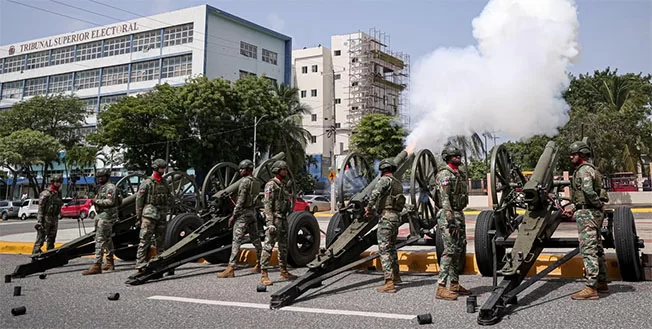
    SANTO DOMINGO – In a proactive move to shore up national border defenses, Dominican Army Commander Jorge Iván Camino Pérez has completed a multi-day inspection tour of high-priority border zones across three northern provinces: Independencia, Elías Piña, and Dajabón. The operational review was designed to strengthen on-ground oversight of border activities and reinforce the country’s territorial security protocols.

    The inspection kicked off in Jimaní, where the commander first stopped at El Rodeo Fortress, the central command base for the 14th Infantry Battalion. During his stop, he held briefings with battalion leadership to review current operational protocols and address any emerging challenges facing on-duty troops. Following the fortress visit, Camino Pérez traveled to several frontline military posts and official border checkpoints to assess day-to-day operations firsthand, speaking with deployed soldiers to understand working conditions and security gaps.

    From Jimaní, the commander moved to Pedro Santana, a municipality in Elías Piña province, to inspect security arrangements at the Artibonito River bridge. This crossing is a critical infrastructure link on the main international highway connecting the Dominican Republic and neighboring Haiti, making it a high-priority site for border monitoring and security management.

    The tour then proceeded to military facilities across the municipalities of Restauración and Dajabón, with stops at the Libón River bridge, the Villa Anacaona military detachment, and dozens of remote border outposts positioned along the dividing line. Many of these outposts are located in isolated terrain, making regular oversight critical to ensuring consistent security enforcement.

    Camino Pérez wrapped up his inspection at Beller Fortress, the main military installation in Dajabón, where he addressed assembled troops. In his remarks, he emphasized the strategic importance of the Dominican border and urged all service members to maintain constant, heightened vigilance to counter unauthorized activity and uphold the country’s territorial integrity.

    Army spokesperson later clarified that the series of inspections is not an ad-hoc measure, but part of a sustained, ongoing monitoring program rolled out by the Dominican armed forces. The program has two core objectives: first, to safeguard the country’s national territory from incursions and cross-border illicit activity, and second, to improve security conditions that support and protect communities living along the border line.

  • Two Bills to receive first reading in the National Assembly on Thursday, April 30, 2026

    Two Bills to receive first reading in the National Assembly on Thursday, April 30, 2026

    BASSETERRE, Saint Kitts – On April 28, 2026, the St. Kitts and Nevis Information Service (SKNIS) released official notice confirming that a regular sitting of the country’s National Assembly has been scheduled for 10:30 a.m. local time on April 30, 2026. The sitting will take place at the National Assembly Chambers inside Government Headquarters in Basseterre, and the official Order Paper for the meeting has already been finalized and distributed.

    At the upcoming sitting, the legislative body will mark the next step in the current administration’s push for strengthened good governance across the country, with two amendment bills scheduled to receive their first reading. The government has repeatedly framed this legislative agenda as a core commitment to embedding greater transparency, public accountability, and adherence to the rule of law in national governance.

    Leading off the introduction of new legislation, Prime Minister Dr. Terrance Drew – who also holds cabinet portfolios for Finance, National Security, Citizenship and Immigration, Health, and Social Security – will request parliamentary leave to introduce the Banking (Amendment) Bill 2026 for its first reading before the chamber. Following the prime minister’s introduction, Attorney-General Garth Wilkin, the cabinet minister responsible for Justice and Legal Affairs, will move to introduce the Evidence (Amendment) Bill 2026 for its first reading.

    To ensure full public access to the proceedings, multiple broadcast and streaming options have been arranged for residents across St. Kitts and Nevis. The full sitting will be carried live via ZIZ Radio 96 FM and a network of participating local radio stations. Television viewers can watch the session live on Channel 5 in St. Kitts and Channel 98 in Nevis. For digital audiences, the St. Kitts and Nevis Information Service will stream the entire sitting live to its official Facebook and YouTube platforms. Once the text of the two bills is finalized for public distribution, full digital copies will be posted to the SKNIS official website in the dedicated ‘Bills’ content section for public review.

    This announcement comes as part of the administration’s ongoing effort to advance institutional reform through targeted legislative updates, aligned with its stated commitments to open governance.

  • Netanyahu’s rivalen bundelen de krachten; zullen zij het veiligheidsbeleid van Israël veranderen?

    Netanyahu’s rivalen bundelen de krachten; zullen zij het veiligheidsbeleid van Israël veranderen?

    Israeli Prime Minister Benjamin Netanyahu faces a new coordinated challenge ahead of upcoming national elections, as two of his most prominent political rivals have announced a merger to form a new opposition party dedicated to ousting his far-right coalition government.

    The new alliance, led by former right-wing lawmaker Naftali Bennett and centrist opposition leader Yair Lapid, has branded itself “BeYachad” — Hebrew for “Together” — and has centered its early policy messaging on domestic priorities, most notably reforming military conscription requirements to include ultra-Orthodox Jewish communities. On major regional security issues that dominate Israeli political discourse, however, analysts widely expect the new party to maintain a policy stance largely aligned with that of Netanyahu’s administration, the most right-wing government in Israel’s history. If the alliance takes power, that continuity means Israeli foreign and security policy would see little substantive shift across core regional fronts.

    As of yet, BeYachad has not released a full formal policy platform. Below is a breakdown of the party’s known positions on key regional issues, drawn from recent public statements from its leaders and insider sources.

    ### Position on Iran
    Bennett, 54, and Lapid, 62, have issued unwavering public support for Netanyahu’s decision to join the United States in carrying out military strikes against Iran, a stance that aligns with broad public backing for the military campaign across Israeli society. Shortly after Israeli airstrikes on Iran commenced, Lapid described the operation as a “just war against evil” in an interview with Reuters.

    Despite this initial backing, both leaders have since criticized Netanyahu for failing to achieve what they frame as Israel’s core strategic objectives in the campaign — chief among them the overthrow of Iran’s clerical-led government. Even so, neither Bennett nor Lapid has called for a resumption of hostilities after an April 8 ceasefire halted exchanges of fire between Israel, the U.S., and Iran following the joint strikes.

    A source close to the new party, speaking on condition of anonymity, described the two leaders as “hawkish” and “uncompromising on Iran” while also noting they bring pragmatic approach to the issue. “They understand that diplomatic agreements and post-conflict statecraft are just as necessary to achieve long-term strategic goals as military force,” the source added.

    ### Position on Lebanon
    Bennett and Lapid also support Israeli military operations in Lebanon, and both have openly criticized the April 17 ceasefire that was intended to end fighting between the Israel Defense Forces and Iran-backed Hezbollah militant group, arguing the agreement has failed to eliminate the persistent threat Hezbollah poses to northern Israel.

    Shortly before the IDF launched its ground incursion into southern Lebanon in March, Lapid stated Israel must take all necessary measures to protect its civilian population along the northern border. After the ceasefire was announced, Lapid emphasized that the only viable long-term solution is the permanent removal of all Hezbollah threats to northern Israeli territory.

    Bennett has been even more scathing in his assessment of the truce. In an April 17 post to Facebook, he wrote: “We can already count down to the next round of fighting. Hezbollah started rebuilding its presence in southern Lebanon this morning, and it is rearming with more rockets to prepare for the next confrontation.”

    ### Position on Gaza
    On the ongoing conflict in Gaza, where Israeli forces have continued to carry out deadly strikes despite an October ceasefire, both Bennett and Lapid have attacked Netanyahu for failing to fully dismantle Hamas following the group’s October 7, 2023 cross-border attack. The two leaders argue Netanyahu’s approach has left Hamas’ governing and military capacity intact.

    In January, Lapid told audiences that Netanyahu’s government had secured the “worst possible outcome” in Gaza, noting Hamas still retains tens of thousands of active fighters and maintains control over a small stretch of coastal Gaza territory under the terms of the current ceasefire.

    Earlier this month, Bennett echoed that criticism in a Facebook post, arguing that Netanyahu’s policy — which included allowing limited humanitarian aid into Gaza after a three-month total blockade in 2025 — has directly helped Hamas reconsolidate its control. “This is being done with the help of hundreds of aid trucks that Netanyahu’s government delivers to them every single day,” Bennett wrote.

    Netanyahu, for his part, has framed the devastating military campaign in Gaza — which has destroyed most of the enclave’s infrastructure and killed more than 72,000 Palestinians according to local health officials — as a strategic success. He has left open the option of a full resumption of large-scale combat if Hamas refuses to disarm under a U.S.-brokered negotiation process, a requirement Hamas has rejected to date.

    ### Position on Palestinian Statehood
    Public opinion polling shows a majority of Israeli voters oppose the creation of an independent Palestinian state in the occupied West Bank, Gaza, and East Jerusalem, and a BeYachad-led government would be unlikely to enact major policy changes on this issue regardless of its leaders’ past nuanced positions.

    Netanyahu has long been a staunch opponent of Palestinian statehood, and his administration has accelerated Israeli settlement construction in the West Bank, a move cabinet ministers have openly acknowledged is intended to permanently undermine any future prospects for Palestinian independence.

    Lapid, who aligns with many centrist and left-leaning Israeli figures, has previously stated support for a two-state solution as the correct path forward, a position he laid out in 2022. Bennett, by contrast, has rejected the two-state framework. When asked by U.S. broadcaster ABC why he opposed the solution in a 2024 interview, Bennett argued any Palestinian state would inevitably become a base for terrorist violence against Israelis.

    “What we have learned over the past 30 years is that every time we handed the Palestinians a piece of land, they did not build it into a peaceful, prosperous Singapore. They turned it into a terror state, and began killing Israelis,” Bennett said at the time.

    Across the West Bank file, all three political leaders — Netanyahu, Bennett, and Lapid — have publicly condemned violence carried out by Israeli settlers against Palestinian communities. Settler attacks have surged in frequency and severity under Netanyahu’s tenure, and critics accuse the prime minister of tacitly tolerating attacks that see settlers burn Palestinian villages and assault local residents. Netanyahu’s office has repeatedly denied these accusations.

  • A peace signature against the blockade

    A peace signature against the blockade

    Across Cuba right now, a quiet but powerful wave of civic action is sweeping the island nation. The growing “My Signature for the Homeland” movement is far more than a symbolic gesture or empty political slogan — it is a deliberate, conscious act of collective resistance against the long-standing international blockade that has shaped daily life for generations of Cubans.

    History has a way of elevating small, intentional acts into defining markers of national identity. A single stroke of ink on a petition sheet carries more moral weight than any weapon of aggression. Today, Cuba is uniting around this movement: millions of hands reach for paper, and every name added becomes a line of defense, a moral bulwark against the collective punishment that has sought to break the Cuban people’s resolve.

    As the movement’s organizers emphasize, this initiative is first and foremost a profound act of civic duty. The siege Cuba endures is not merely a physical barrier that blocks oil tankers from reaching its ports, cutting off critical supply chains. It is a deliberate attempt to erode the nation’s collective soul, to wear down public commitment to Cuban sovereignty through systemic economic and social hardship.

    The U.S.-led blockade operates as a cruel, indiscriminate machinery of punishment that spares no segment of the Cuban population. It does not differentiate between children, elderly people, rural farmers, or urban workers. Its impact is felt in every shortage of staple bread, every gap in access to life-saving medicine, every scarcity of fuel that grinds daily activity to a halt, and every separated family kept from the embrace they have waited years to share. There are few more fundamentally inhumane acts than coercing an entire population to surrender its inherent dignity by inflicting widespread suffering on ordinary families.

    Yet on this island shaped by decades of struggle, the Cuban people have chosen a response far more powerful than resentment: radical national unity. Adding one’s signature to the movement is no passive symbolic act. It is a public message to the entire world: Cubans choose to build cross-border solidarity rather than succumb to fear and division. It is an act of guarding the concept of “the Homeland” — the intangible, shared territory of the national heart that holds the legacy of José Martí, the revered Cuban independence leader, and the quiet sacrifice of thousands of anonymous Cubans who sustained the nation through years of hardship.

    Martí, often called the Apostle of Cuban independence, once taught that “Homeland is humanity.” Today, as every new signature links to the last, forging an unbroken chain of principled resistance, Cubans are defending peace as their first and most foundational line of defense. Cuba has never sought war, but it will not accept the slow, gradual death imposed by the ongoing blockade. Cubans do not crave revenge; they crave the ability to breathe freely, to build their nation without the constant shadow of punitive legislation that punishes them simply for existing as a sovereign people.

    This civic movement carries a unique beauty: it turns a collective act of national resistance into an intimate, personal choice. When a Cuban signs their name, they are not just adding a name to a list — they are standing with the mother waiting for a life-saving shipment of medicine, the engineer waiting for access to critical raw materials to build the nation’s future, and the child who deserves to grow up without the weight of external hatred. Participants do not sign out of bitterness; they sign with the clear certainty that the blockade can only be overcome through the power of truth and active, principled peace.

    Every signature added is a small piece of the Cuban Homeland that refuses to return to colonial status. Every full sheet of signatures is a verse of quiet, unyielding civil resistance. So long as there are Cuban hands willing to write their name and affirm their commitment to national sovereignty, the blockade — this unjust collective punishment — will never hold legal or moral force in the hearts of the Cuban people.

    Because Cuba is not signing a document of surrender. It is signing for life, for peace, and for the inherent dignity of a people that has never accepted existence on its knees. That signature, that commitment, is as deeply, inherently Cuban as the palm trees that line the nation’s coasts.

  • Fidel and unconventional warfare: An early warning about the assault on consciousness

    Fidel and unconventional warfare: An early warning about the assault on consciousness

    Decades before modern phrases like “fake news” and “cognitive warfare” entered everyday public discourse, Fidel Castro Ruz, the iconic founding leader of the Cuban Revolution, had already mapped out the hidden mechanisms of power that major world powers would unleash through digital information and communication technologies.

    Crucially, Castro’s perspective was never rooted in opposition to technological progress itself. A close look at his legacy reveals a consistent commitment to expanding digital access and technical expertise across Cuba: he championed the development of the island’s first domestic computer, established the country’s preeminent University of Information Sciences, and launched the nationwide Joven Club de Computación (Youth Computer Club) initiative to bring digital literacy to generations of young Cubans.

    Instead, his words represented a prescient, far-sighted warning: he accurately foresaw that cyberspace would evolve into the central battlefield of a quiet, unconventional war designed to colonize the minds of people across the Global South. Castro framed the internet as inherently contested terrain. He never rejected its transformative potential for marginalized nations, noting in a 2012 address at the launch of the book *Guerrillero del Tiempo*: “The internet is a revolutionary tool that allows us to receive and transmit ideas in both directions—something we must know how to use.”

    Yet as early as 2006, when the U.S. government formally announced the creation of its Air Force Cyberspace Special Command, Castro sounded an urgent alarm that rings even louder in today’s hyper-connected world. “The internet can be used with the worst intentions in the world, as envisioned by the CIA and the Pentagon,” he warned at the time. This core duality defined his entire framework on digital power: the network itself is not the enemy; the danger lies in how U.S. imperialism and its allied powers would weaponize it for geopolitical gain.

    At the heart of Castro’s analysis was a sharp critique of mass psychological manipulation. In a landmark November 2005 address delivered at the University of Havana’s Aula Magna, he laid out a critical distinction that explains the effectiveness of 21st century unconventional conflict. “When they first emerged, the mass media took hold of people’s minds and ruled not only on the basis of lies, but also of conditioned reflexes,” he explained. “A lie is not the same as a conditioned reflex. A lie affects knowledge; a conditioned reflex affects the ability to think.”

    This core thesis exposes that the goal of this digital warfare is not merely to spread false information—it is to erase a population’s capacity for critical thought. Through endless repetition of ideological slogans that seep into the collective subconscious, adversaries can reshape public opinion without overt military intervention. Castro illustrated this dynamic with a stark, direct example: “Because they have already created reflexes in you: ‘This is bad, this is bad; socialism is bad, socialism is bad,’ and all the ignorant, all the poor, and all the exploited saying: ‘Socialism is bad.’ ‘Communism is bad,’ and all the poor, all the exploited, and all the illiterate repeating: ‘Communism is bad.’”

    Today, that dynamic has been amplified exponentially by algorithmic curation and viral social media platforms, turning this repetitive messaging into a constant, pervasive assault on independent consciousness.

    Castro’s analysis expanded further to connect digital psychological warfare to the global military-industrial complex. In an August 2009 reflection titled *The Empire and the Robots*, he denounced the stark global inequality that drives weapons development: while more than one billion people across the planet faced chronic hunger, the United States accounted for 42% of total global military spending, pouring vast resources into developing “technologies for killing.”

    The question he posed nearly 20 years ago remains as urgent as ever: “If robots in the hands of transnational corporations can replace imperial soldiers in wars of conquest, who will stop the transnational corporations in their search for markets for their devices?” This shift toward the dehumanization of war—replacing on-the-ground soldiers with drones, algorithms, and autonomous weapons—works hand in hand with psychological warfare: it turns mass destruction into a distant, abstract spectacle, making it far easier to manipulate public perception to justify military aggression. Recent examples, such as Project Maven, the partnership between the Pentagon, tech firms Palantir, Anthropic and its AI Claude, in strikes targeting Venezuela and Iran, confirm Castro’s early insight.

    All of Castro’s interconnected warnings about unconventional warfare coalesce into a overarching diagnosis he labeled “knowledge imperialism.” Repeatedly across his speeches, he framed this as the “main battlefront of the imperialist war,” with an ultimate goal of breaking the sovereign will of independent nations without firing a single shot. Instead of overt military invasion, imperial powers rely on cultural subversion and systematic information manipulation to achieve their geopolitical aims.

    In 2017, Cuban President Raúl Castro Ruz formally reaffirmed this framework before the country’s National Assembly, emphasizing that massive U.S. investments in digital and cultural tools were designed to “refine the tools of the so-called ‘unconventional war’” to provoke political destabilization and restore capitalist rule on the island.

    In the decades since Fidel Castro first issued these warnings, his early analysis has become a core part of Cuban state doctrine, and an essential lens for interpreting 21st century geopolitical conflict. In an era where social media amplifies manufactured conditioned reflexes, algorithms target and segment users to spread tailored misinformation, and autonomous weapons replace frontline soldiers, Castro’s words carry the weight of a fulfilled prophecy—one that is ultimately a call to defend popular sovereignty through critical knowledge and commitment to truth.

  • Na vertrek Colli barst strijd los om macht en geld bij VKI

    Na vertrek Colli barst strijd los om macht en geld bij VKI

    A high-profile leadership shakeup at Suriname’s leading fisheries inspection body has ignited a bitter public dispute over governance, institutional independence and ministerial authority, with the outgoing director stepping down early to avoid formal removal amid claims of sustained pressure and intimidation. After more than two decades at the helm of the Viskeuringsinstituut (VKI), Juliette Colli-Wongsoredjo announced her resignation before her planned removal from office, prompting immediate intervention from Suriname’s Minister of Agriculture, Livestock and Fisheries Mike Noersalim. The minister quickly appointed Arisha Sital-Sewbaran as acting director and named Rashley Resida, current secretary of the VKI Supervisory Board, as second co-signatory for institutional financial transactions, granting him authority to co-approve all transactions worth more than 10,000 Surinamese dollars. As of the time of the dispute, the VKI holds a bank balance of more than $600,000 in its operating account, and unlike many state entities, the institution is entirely funded by the domestic fishing industry rather than government tax revenue. The unfolding conflict came to public light during a widely attended press conference held at the Banquet Hall of Torarica, where representatives of major industry groups including the Federation of Suriname Farmers (FSA), the Suriname Seafood Association, small-scale artisanal fishing communities, along with members of the VKI Supervisory Board and their legal counsel outlined their deep concerns about recent developments at the inspection body. All speakers at the event stressed the critical importance of preserving VKI’s operational independence, a core requirement for its international accreditation and market access. Amid the leadership chaos, VKI’s full staff has issued a formal statement calling for calm, continuity and institutional stability. In an open letter addressed to the Supervisory Board, staff members confirmed that all core daily operations of the VKI remain fully functional, including import and export processing, routine product inspections, mandatory certification workflows, laboratory testing, and administrative support services, all of which are operating on schedule and to required standards. The staff also expressed their full backing for the Supervisory Board’s ongoing agenda focused on increasing institutional transparency, strengthening governance frameworks, and rebuilding public and sector trust in the body. They called on all involved stakeholders to respect the need for calm and allow space for a thorough, objective fact-finding process, arguing this approach is in the best interest of Suriname’s entire fishing sector and the country’s international reputation. Speakers at the press conference highlighted the transformative growth VKI achieved under Colli’s 20-plus years of leadership, describing her as a transformative figure comparable to iconic Surinamese leader Eddy Jharap for the institution. Under her direction, VKI upgraded its operational standards to fully align with European Union regulations, a position it maintains today, giving the institution a unique, respected standing across the Caribbean region. Speakers also pushed back against recent claims that the VKI has failed to complete required financial reporting. FSA chair Tania Lieuw-A-Sjoe clarified that all annual financial reports have been completed and filed on schedule, and the institution only received an extension to 2026 to adapt its reporting formats to the new international IFRS accounting standards. All annual financial statements have consistently been audited by independent accountants in line with global regulatory requirements, and the national audit body CLAD served as the external auditor through 2020. Press conference organizers also noted that they only learned of Minister Noersalim’s formal letter to the Supervisory Board – copied to President Jennifer Simons – appointing the new acting director and co-signatory during the event itself. Industry representatives have formally challenged the minister’s legal authority to unilaterally appoint a second co-signatory, arguing the move directly violates VKI’s official founding statutes. Under existing institutional rules, the director holds sole signing authority for transactions under 10,000 Surinamese dollars, while larger transactions require co-signature from either the Supervisory Board chair or a second co-signatory. By statute, this second co-signatory must be nominated by the sitting director and approved by the full Supervisory Board. Industry representatives also noted that by long-standing convention, the co-signatory is always a representative of the fishing sector, since all operating funds are contributed directly by sector participants. The previous co-signatory was Udo Karg, who now sits as a member of the VKI Supervisory Board. According to industry accounts, Colli refused to approve Resida’s appointment as co-signatory on the grounds that he lacks broad support within the fishing sector. Questions have also been raised about Resida’s conduct during a recent meeting with President Jennifer Simons, particularly around adherence to requirements for confidentiality and data privacy. After these concerns emerged, the FSA formally requested a public accounting from the Supervisory Board, but Lieuw-A-Sjoe said the body failed to provide satisfactory answers, leading to a further erosion of trust. Colli had previously nominated Supervisory Board member Mark Lall for the co-signatory position, but the group never responded to that nomination. “We have no clarity on what the underlying agenda here is, but it is surprising that they have been able to push their changes through despite our objections,” Lieuw-A-Sjoe said. “We are now waiting to see what the next steps will be.” Beyond the immediate leadership dispute, the sector has expressed serious anxiety about an upcoming regulatory audit by the European Union, a critical check that VKI has passed without incident for many consecutive years. Lieuw-A-Sjoe confirmed that Colli stepped down because she felt systematically intimidated and pressured by members of the Supervisory Board and a special “quick scan” review team, including unfounded accusations of money laundering tied to the institution’s financial management. Colli has issued a formal ultimatum to Minister Noersalim and the Supervisory Board, threatening legal action if the accusations of financial misconduct and mismanagement are not backed up by concrete evidence. That ultimatum was set to expire on April 28.