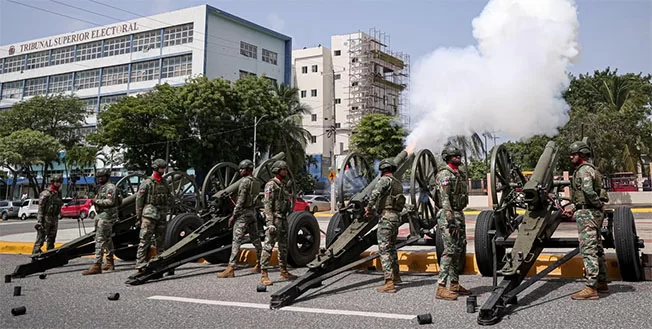
On June 3, during an extraordinary session of the Dominican Republic’s National Congress, Suriname’s President Jennifer Simons delivered a landmark address pushing for expanded strategic partnerships between the two Caribbean nations, outlining a multi-sector roadmap for collaboration that spans trade, governance, climate action, and sustainable development.
Simons’ address to the Dominican legislative body came as part of an official working visit to the country, marking a key moment in diplomatic engagement between the two small developing states. In her remarks, the Surinamese head of state emphasized that the bilateral relationship goes far beyond formal diplomatic ties: both Suriname and the Dominican Republic are democratic nations bound by shared core values, with a collective responsibility to advance inclusive growth across the entire Caribbean region.
A central pillar of Simons’ speech was a targeted call to strengthen inter-parliamentary cooperation between the two countries. She argued that regular exchanges between elected lawmakers and specialized parliamentary committees would create tangible benefits, including improved domestic governance, greater institutional transparency, and more robust democratic foundations in both nations.
Beyond parliamentary collaboration, Simons underlined the urgent need for closer alignment between both public sector institutions and private business communities. She noted that the recently signed bilateral cooperation agreements between the two countries are set to unlock new flows of trade and cross-border investment, while also creating opportunities for joint work in high-priority sectors including education, tourism, agriculture, energy, and climate resilience.
Acknowledging that both nations face shared structural challenges as small developing states, Simons drew specific attention to the disproportionate impacts of climate change that threaten Caribbean communities. To address this and other pressing transnational issues including public safety and sustainable development, she advocated for coordinated regional and international collective action, highlighting that shared challenges require unified response strategies.
In closing, Simons stressed that deepened bilateral cooperation carries enormous mutual upside: stronger ties will allow both countries to fully leverage their untapped economic potential, driving growth and opportunity across key sectors ranging from tourism and professional services to small and medium enterprise development.