分类: politics

  • Oversight or overreach?

    Oversight or overreach?

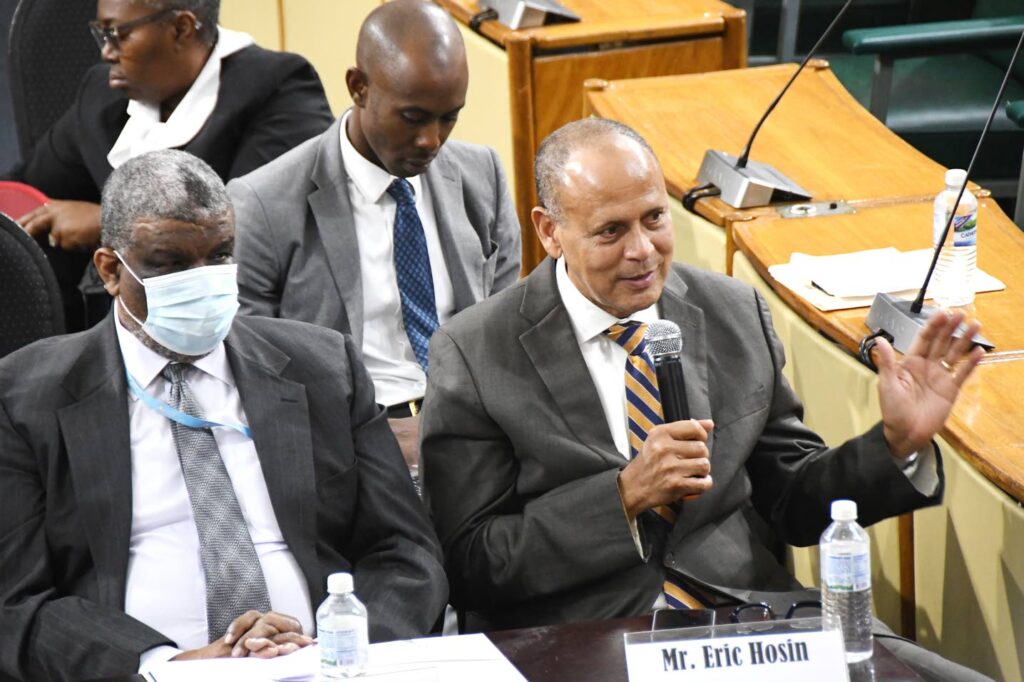
    A contentious dispute over procedural boundaries and parliamentary decorum disrupted Wednesday’s session of Jamaica’s Public Administration and Appropriations Committee (PAAC), exposing deep divisions regarding the committee’s oversight authority. The confrontation emerged when Opposition members confronted Government MP Heroy Clarke of St James Central over his persistent interruptions during questioning of state entity representatives. The committee had convened specifically to review the National Water Commission’s recovery operations following Hurricane Melissa, but proceedings quickly devolved into a heated debate about the very nature of the PAAC’s constitutional role. Opposition parliamentarians accused Clarke of systematically undermining their legitimate oversight function by repeatedly challenging questions he deemed outside the committee’s purview. Clarke defended his interventions as necessary to maintain discipline and fairness, arguing that extended questioning by individual members could marginalize others and that infrastructure discussions properly belonged to other committees. The debate revealed fundamental disagreements about interpretation of the PAAC’s mandate, with St Mary Central MP Omar Newell citing specific constitutional provisions that authorize broad examination of government efficiency and administration. Newell called for a reset in committee conduct, emphasizing that “we can’t just bully and shout out to get our own way” and that disagreements should be resolved through proper points of order rather than loud interruptions. St James Southern MP Nekeisha Burchell countered Clarke’s position by asserting that public assets and performance—including infrastructure—fall squarely within the PAAC’s responsibility to ensure value for public expenditure. Committee Chairman Peter Bunting intervened to remind members of their shared objective to serve Jamaican citizens regardless of political affiliation, while subtly referencing Clarke’s former role as Deputy Speaker to underscore expectations of decorum. The exchange highlighted ongoing tensions between government and opposition members regarding parliamentary oversight mechanisms and the appropriate boundaries of committee authority in examining state administration.

  • Regional countries to send humanitarian aid to Cuba

    Regional countries to send humanitarian aid to Cuba

    BASSETERRE, St Kitts – Concluding their four-day annual gathering, leaders of the Caribbean Community (CARICOM) have unanimously agreed to dispatch humanitarian assistance to Cuba while establishing a specialized committee to redefine diplomatic relations with the United States.

    The summit, chaired by St Kitts and Nevis Prime Minister Dr. Terrance Drew, addressed multiple regional challenges including Cuba’s escalating humanitarian crisis. While specific details of the aid package remain undetermined, Dr. Drew confirmed the collective commitment to support the Cuban people while maintaining regional stability. The Caribbean leaders acknowledged their unique position as historical partners to both Cuba and the United States.

    In a significant diplomatic move, CARICOM will form a three-member committee to develop a new Cooperation Framework with the United States. This initiative follows discussions with US Secretary of State Marco Rubio, who emphasized the Biden administration’s objective to strengthen traditional relationships within the Western Hemisphere.

    The Haiti crisis received substantial attention with the endorsement of Kenya’s leadership role in the UN-authorized Gang Suppression Force (GSF). The Eminent Persons Group, chaired by former St Lucian Prime Minister Dr. Kenny Anthony, presented comprehensive assessments of Haiti’s security and humanitarian situation.

    Additional summit outcomes included:
    – Advancements in the CARICOM Single Market and Economy (CSME) with expanded free movement provisions for aviation personnel
    – Establishment of a prime ministerial committee to review governance and financing structures within CARICOM
    – Reinforcement of support for Belize’s territorial integrity in ongoing border disputes with Guatemala and Honduras
    – Strong endorsement of the judicial process regarding the Guyana-Venezuela border controversy at the International Court of Justice
    – Mandate for the Reparations Committee to refine the CARICOM Ten-Point Plan for upcoming Commonwealth meetings

    Dr. Drew characterized the summit as ‘a conference of action’ that produced tangible outcomes addressing the most critical issues affecting the Caribbean community.

  • Bill Clinton denies wrongdoing at grilling on Epstein ties

    Bill Clinton denies wrongdoing at grilling on Epstein ties

    Former President Bill Clinton appeared before a congressional committee investigating Jeffrey Epstein connections on Friday, firmly denying any knowledge of the financier’s criminal activities while Democrats intensified calls for similar scrutiny of Donald Trump’s Epstein ties.

    In his opening statement shared publicly, Clinton asserted he severed all connections with Epstein well before the financier’s 2008 conviction for sex offenses. “I saw nothing, and I did nothing wrong,” Clinton declared to the House committee conducting the deposition behind closed doors in Chappaqua, New York.

    The proceedings revealed sharp political divisions, with Republican committee chair James Comer vowing to ask “lots of questions” about Clinton’s documented associations with Epstein, including 27 flights on Epstein’s private plane and 17 White House visits during Clinton’s presidency. Republican representative Anna Paulina Luna noted Clinton’s cooperative demeanor during questioning.

    Democrats countered that the investigation unfairly targeted political opponents rather than pursuing legitimate oversight. Committee member Suhas Subramanyam stated, “Let’s be real, we are talking to the wrong president,” emphasizing that Clinton answered all questions while Trump should face similar scrutiny.

    Clinton indirectly referenced Trump in his statement, noting that “no person is above the law, even presidents — especially presidents.” Trump responded with sympathy for Clinton, telling reporters he disliked seeing him deposed while maintaining skepticism about the investigation’s validity.

    The deposition followed Hillary Clinton’s testimony on Thursday, where the former secretary of state challenged lawmakers to question Trump “directly under oath about the tens of thousands of times he shows up in the Epstein files.” Both Clintons had initially resisted subpoenas but complied after Republicans threatened contempt of Congress charges.

    Notably, Bill Clinton acknowledged extensive interactions with Epstein through Clinton Foundation humanitarian work but denied visiting Epstein’s Caribbean island or having any awareness of his criminal activities. “Not only would I not have flown on his plane if I had any inkling of what he was doing — I would have turned him in,” Clinton stated.

    The proceedings occurred amid heightened security in Chappaqua, with dozens of journalists and Secret Service personnel surrounding the Clinton residence. Both Clintons criticized the closed-door format, with Bill Clinton comparing it to a “kangaroo court” and advocating for televised sessions.

    Epstein died in a New York jail cell in 2019 while awaiting trial on sex trafficking charges, with his death officially ruled a suicide though surrounded by persistent conspiracy theories.

  • Assembleevoorzitter: Hof bereid te kijken naar rationalisering geldelijke voorzieningen rechterlijke macht

    Assembleevoorzitter: Hof bereid te kijken naar rationalisering geldelijke voorzieningen rechterlijke macht

    In a significant development for Suriname’s governance structure, National Assembly Chairman Ashwin Adhin has confirmed ongoing consultations with the Judiciary regarding financial provisions within the judicial system. The dialogue marks a cooperative effort between two crucial branches of government to address compensation structures for judicial officials.

    Chairman Adhin disclosed to Starnieuws that he conducted formal discussions in his official capacity with the Court of Justice, particularly engaging with Court President Iwan Rasoelbaks. This diplomatic exchange has subsequently been followed by written correspondence from the judiciary, solidifying the commitment to mutual understanding.

    The constitutional framework allows every Assembly member to initiate proposals within this context, though Adhin emphasized his role as presiding officer to conduct more focused negotiations with the judicial branch. These smaller-scale discussions aim to meticulously examine proposals, insights, and factual information before reaching any determinations.

    Adhin reassured the public that the matter is being treated with appropriate seriousness between state powers, operating under the fundamental principle that financial provisions for the judiciary must be governed by statutory regulations. This approach ensures constitutional compliance while maintaining the dignity of judicial institutions.

    The Assembly leadership has deliberately separated two parallel processes to avoid procedural conflicts: the ongoing modernization of judicial infrastructure through parliamentary bills, and the separate consideration of financial provisions including judicial remuneration and emoluments. This sequential treatment allows each initiative to receive dedicated preparation and attention.

    Furthermore, Adhin highlighted that the 2026 national budget remains on the parliamentary agenda, confirming that authorities are maintaining a rigorous yet orderly schedule for these complementary governance initiatives.

  • Trinidad & Tobago’s Prime Minister says country is ‘vested’ in CARICOM

    Trinidad & Tobago’s Prime Minister says country is ‘vested’ in CARICOM

    At the landmark 50th Conference of Heads of Government of the Caribbean Community (CARICOM), Trinidad and Tobago’s Prime Minister Kamla Persad-Bissessar delivered a powerful reaffirmation of her nation’s foundational role and enduring commitment to the regional bloc. The summit, convened in St. Kitts and Nevis on February 24, 2025, served as a platform for the Prime Minister to articulate a vision of steadfast partnership and regional solidarity.

    Addressing the assembled leaders, Persad-Bissessar emphatically stated, “We will work with CARICOM; we are vested in CARICOM, we’ve been there from day one, and we are going to be there.” She further underscored the critical importance of the organization by declaring, “CARICOM is very vital,” positioning it as an indispensable institution for regional cooperation and development.

    Beyond rhetorical support, the Prime Minister outlined concrete diplomatic priorities, notably reiterating Trinidad and Tobago’s dedication to supporting stabilization and peace efforts in Haiti. This commitment aligns with broader CARICOM initiatives aimed at addressing the political and humanitarian challenges within the member territory. Her address emphasized that Port of Spain’s foreign policy is intrinsically linked to the strength and collective action of the Caribbean Community, highlighting a deep-seated investment in the bloc’s success from its inception to its future trajectory.

  • Cross-Examination Raises Serious Questions About Selective Discipline Within the ABDF

    Cross-Examination Raises Serious Questions About Selective Discipline Within the ABDF

    A recent military tribunal hearing has cast a harsh spotlight on the disciplinary protocols of the Antigua and Barbuda Defence Force (ABDF), with intense cross-examination revealing what observers are calling significant inconsistencies in the application of military justice. The proceedings, which have garnered considerable attention, centered on the treatment of specific personnel, raising fundamental questions about equity, procedural fairness, and command accountability within the nation’s armed forces.

    Legal counsel for the defense engaged in a rigorous line of questioning, systematically challenging the rationale behind certain disciplinary actions. The cross-examination reportedly highlighted apparent discrepancies in how similar infractions were addressed across different units and ranks, suggesting a pattern of selective discipline rather than a uniform adherence to established military codes. This line of inquiry pointed toward potential biases, whether perceived or actual, that could undermine the integrity and morale of the entire force.

    The courtroom revelations have triggered a broader discourse on transparency and governance within the ABDF’s command structure. Analysts suggest that the case transcends the individual(s) involved, evolving into a critical examination of institutional culture. The outcome of this tribunal is now widely anticipated, as it is expected to set a consequential precedent for future disciplinary matters and could potentially catalyze calls for a comprehensive review of the ABDF’s justice framework to ensure impartiality and restore confidence among serving members.

  • US wants Caribbean to be part of a new dynamic in the Western Hemisphere

    US wants Caribbean to be part of a new dynamic in the Western Hemisphere

    In a significant address to Caribbean Community (CARICOM) leaders during their 50th regular summit, United States Secretary of State Marco Rubio outlined Washington’s vision for a revitalized partnership with the Western Hemisphere. The closed-door meeting served as a platform for Rubio to emphasize shared security concerns and economic opportunities while addressing recent developments in Venezuela.

    Rubio identified transnational criminal organizations as the region’s most pressing security threat, noting their funding and power often rival that of nation-states. He described an “interlocked challenge” fueled primarily by narcotrafficking and other illicit activities that ultimately endanger both transit countries and U.S. national security. The Secretary expressed particular alarm at the advanced weaponry these groups possess, much of which originates from the United States, and pledged intensified law enforcement cooperation to disrupt these arms flows.

    Beyond security concerns, Rubio highlighted “extraordinary opportunities for economic advancement,” specifically emphasizing energy collaboration. He acknowledged the Caribbean’s energy resources and expressed America’s desire to partner in their responsible development to generate regional prosperity.

    Addressing Venezuela’s political situation, Rubio defended U.S. policy despite potential regional disagreements, stating unequivocally that “Venezuela is better off today than it was 8 weeks ago.” He cited the release of political prisoners, closure of the notorious Helicoide prison, and renewed oil revenue distribution for public benefit as evidence of progress under interim authorities led by Delcy Rodríguez. While acknowledging the need for eventual legitimate democratic elections, Rubio framed current U.S. efforts as focused on preventing instability, mass migration, and spillover violence.

    The Secretary positioned a potentially “prosperous, free Venezuela” as a future asset for regional energy needs and stability. He conceptualized the Caribbean Basin—including the southern United States—as an integrated zone that should attract inbound investment, with American businesses participating in the region’s economic diversification efforts.

    Rubio concluded by framing U.S. and Caribbean security and prosperity as fundamentally interconnected, stating: “We view our security, our prosperity, our stability to be intricately tied to yours.” His personal presence at the summit signaled Washington’s commitment to reinvigorating relationships rather than resetting them, emphasizing longstanding bilateral and multilateral ties. Rubio pledged to make Caribbean engagement a personal priority throughout his tenure, aiming to establish a strong foundation for his successor.

  • Werk Melkcentrale hervat na overleg met minister Noersalim

    Werk Melkcentrale hervat na overleg met minister Noersalim

    Operations at Suriname’s Milk Central have returned to normal following successful mediation efforts by Agriculture, Livestock, and Fisheries Minister Mike Noersalim. The resolution comes after partial work stoppages occurred yesterday when staff expressed dissatisfaction with the sudden departure of Director Monché Atompai.

    Minister Noersalim personally engaged with management and employees to address the concerns, emphasizing that the situation did not constitute an industrial conflict. “This is not about an industrial dispute. Not working jeopardizes the company’s stability,” Noersalim stated in comments to Starnieuws. He warned that continued work stoppages would create significant financial losses for the state-owned enterprise.

    The ministerial intervention included the presence of Ebu Jones, Chairman of the National Assembly’s permanent committee on LVV matters, demonstrating the government’s commitment to resolving the matter. Operational leadership has been temporarily assumed by Deputy Director Larissa Barden during this transition period.

    The personnel unrest stemmed from President Jennifer Simons’ recent decision to terminate the contracts of both Director Atompai and Deputy Director Ritshik Adelaar. These dismissals are reportedly connected to developments regarding contracts signed with the State Health Insurance Fund (SZF).

    Minister Noersalim confirmed that stability has been restored, noting: “Everything is calm now. People are working normally.” The resolution prevents further disruption to Suriname’s dairy supply chain while the government addresses underlying administrative concerns.

  • Bolivia herstelt anti-drugsalliantie met VS na bijna 18 jaar

    Bolivia herstelt anti-drugsalliantie met VS na bijna 18 jaar

    In a significant foreign policy reversal, Bolivia has officially reopened its doors to the U.S. Drug Enforcement Administration (DEA), ending a 17-year hiatus in bilateral narcotics cooperation. The administration of President Rodrigo Paz, who took office in November 2025, has not only moved to restore diplomatic relations with the United States but has also initiated operational collaboration with the DEA to combat drug trafficking.

    Bolivian Interior Minister Marco Oviedo confirmed this week that DEA agents are already active within the country, marking a dramatic departure from the policies of former leftist president Evo Morales. “The DEA is in Bolivia,” Oviedo stated to local media. “Alongside this cooperation, we are also working with European intelligence and police organizations.”

    The initial focus of these joint efforts will be on enhancing border surveillance and dismantling powerful drug cartels. Oviedo emphasized that this represents just the beginning of Bolivia’s expanded international campaign, noting plans to involve anti-narcotics agencies from neighboring countries as well.

    This policy shift nullifies a 2008 decree by Morales, who expelled DEA agents while accusing the United States of using drug enforcement as a tool to pressure Latin American nations into aligning with its political and economic agendas. Morales, who led the Movement Toward Socialism (MAS) party, enjoyed strong support from rural coca-growing regions where the crop represents a vital economic lifeline.

    The political landscape shifted dramatically in October 2025 when two right-leaning candidates advanced to a runoff election—center-right candidate Rodrigo Paz of the Christian Democratic Party and former conservative president Jorge Quiroga. Both made repairing relations with the U.S. a cornerstone of their campaigns, viewing it as essential to resolving Bolivia’s severe economic crisis.

    Paz, ultimately victorious with 54.9% of the vote, moved swiftly after his November inauguration to normalize diplomatic ties. The U.S. State Department has characterized Paz’s presidency as a “transformative opportunity” for the region, with both countries agreeing to exchange ambassadors for the first time in nearly 18 years.

    However, significant uncertainties remain regarding the extent of DEA operations in Bolivia. Leftist leaders like Morales retain substantial support, particularly in highland and rural areas. Bolivian Foreign Minister Fernando Aramayo indicated that negotiations are ongoing to define the specific terms and operational boundaries of DEA activities, with a comprehensive agreement expected within coming months.

    This development occurs against the backdrop of intensified U.S. anti-drug campaigns in Latin America under the Trump administration, which has designated multiple major cartels as “foreign terrorist organizations” and employed economic sanctions and military threats to pressure governments in the region. Critics argue these policies have blurred lines between law enforcement and military actions, raising concerns about human rights violations and extrajudicial executions.

  • Commonwealth Secretary-General Meets PM Browne to Review CHOGM 2026 Preparations

    Commonwealth Secretary-General Meets PM Browne to Review CHOGM 2026 Preparations

    Commonwealth Secretary-General Shirley Botchwey has held pivotal discussions with Antigua and Barbuda’s Prime Minister Gaston Browne to coordinate preparations for the forthcoming 2026 Commonwealth Heads of Government Meeting (CHOGM). The high-level consultation occurred during the sidelines of the ongoing CARICOM Heads Summit in St. Kitts and Nevis.

    Ms. Botchwey characterized the dialogue as “highly productive,” emphasizing the comprehensive review of logistical and strategic frameworks for the international gathering. The summit is scheduled for November 2026 in Antigua and Barbuda’s capital, St. John’s, where Prime Minister Browne is poised to assume the prestigious role of Commonwealth Chair-in-Office during the event.

    The preparatory meeting concentrated on operational readiness to host dignitaries and government leaders from across the Commonwealth’s 56 member nations. Agenda development for addressing collective priorities and pressing global challenges formed a significant component of the discussions.

    Secretary-General Botchwey expressed confident anticipation for the event, stating publicly, “We look forward to a truly consequential #CHOGM2026.” The meeting underscores the continuing collaboration between Commonwealth leadership and host nation authorities to ensure the summit’s diplomatic significance and organizational success.