分类: politics

  • Territorial Council of St Martin meets with OECS Commission to discuss strengthening regional integration

    Territorial Council of St Martin meets with OECS Commission to discuss strengthening regional integration

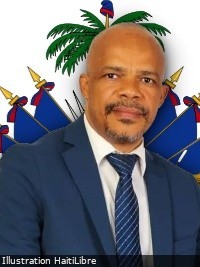
    As Saint Martin prepares to mark one year as an Associate Member of the Organisation of Eastern Caribbean States (OECS), the territory’s leadership has reaffirmed its dedication to regional integration during high-level discussions with OECS Commission directors. The meeting, held on February 25, 2026, featured President Louis Mussington of the Saint Martin Territorial Council and Commissioner Cyrielle Cuirassier engaging in substantive dialogue about ongoing collaboration efforts.

    The bilateral talks highlighted strategic priorities including agricultural development and educational transformation, with particular emphasis on the OECS’s digital education initiatives. The organization showcased its comprehensive Digital OECS Primary Schools Curriculum and the ongoing Student Census project, which has already gathered feedback from more than 65,000 students across kindergarten to Form 5 levels. This data collection initiative aims to directly inform future educational policies throughout member states.

    Beyond education, the discussions addressed pressing regional challenges including climate change adaptation, water resource management, and agricultural sustainability. Both parties explored mechanisms for enhancing trade relations and improving transportation infrastructure, recognizing the critical importance of connectivity for small island economies.

    The OECS leadership welcomed Saint Martin’s continued engagement and expressed appreciation for the territory’s proactive approach to regional cooperation since its formal accession on March 19, 2025. Against the backdrop of evolving global geopolitical dynamics, the organization reiterated its commitment to unity and regional resilience as fundamental principles guiding the partnership.

    President Mussington’s ongoing engagement reflects a shared sense of responsibility and collective dedication to sustainable development across Caribbean small island states as the anniversary of this strategic regional integration approaches.

  • Belize Attends Counter Cartel Conference in Florida

    Belize Attends Counter Cartel Conference in Florida

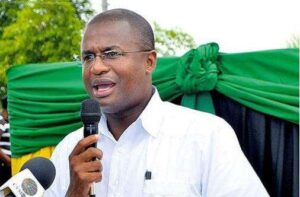
    MIAMI – Belize’s Minister of National Defence and Border Security, Florencio Marin, took center stage at the inaugural Americas Counter Cartel Conference in Miami on March 5, 2026, delivering a pivotal address before high-ranking U.S. officials and international delegates. Minister Marin addressed an audience that included U.S. Secretary of War Pete Hegseth and General Donovan, articulating a compelling case for hemispheric unity against organized crime.

    In his keynote speech, Minister Marin extended formal gratitude to the United States for orchestrating the critical summit. “On behalf of both the government and citizens of Belize, I convey our profound appreciation to the United States for initiating this exceptionally timely and vital conference,” Minister Marin stated. He specifically acknowledged the Department of War’s leadership in uniting nations under a common objective: fortifying a collective Western Hemisphere response to cartel operations and transnational criminal enterprises.

    The Minister painted a stark picture of the operational methods employed by these criminal networks, highlighting their exploitation of major maritime channels and terrestrial routes for narcotics trafficking, illegal arms dealing, and human smuggling. He warned that these activities directly fuel systemic corruption while simultaneously degrading public safety and undermining citizen trust. “Cartels and transnational criminal organizations operate with blatant disregard for national sovereignty and borders,” Marin asserted. “Consequently, our defensive strategy must be equally dynamic, thoroughly coordinated, and unwavering in its resolve.”

    Detailing Belize’s multifaceted national security approach, Minister Marin outlined a framework built upon robust border surveillance, enhanced maritime domain awareness, intelligence-driven tactical operations, seamless interagency cooperation, and the ongoing professionalization of the nation’s defense and security apparatus. He further emphasized the indispensable role of solid legal structures, bolstered regional alliances, and deepened multilateral engagement in crafting an effective countermeasure.

    A central theme of the address was the imperative for international collaboration. “The notion that any single nation can unilaterally neutralize this pervasive threat is untenable,” Marin contended. “Our Western Hemisphere is intrinsically linked through intricate trade networks, constant human mobility, and a foundation of shared democratic principles. The destabilization inflicted by criminal organizations on one nation inevitably generates destabilizing ripple effects across the entire region.”

  • BDF Says Troops Ready if Trouble Spills Over From Mexico

    BDF Says Troops Ready if Trouble Spills Over From Mexico

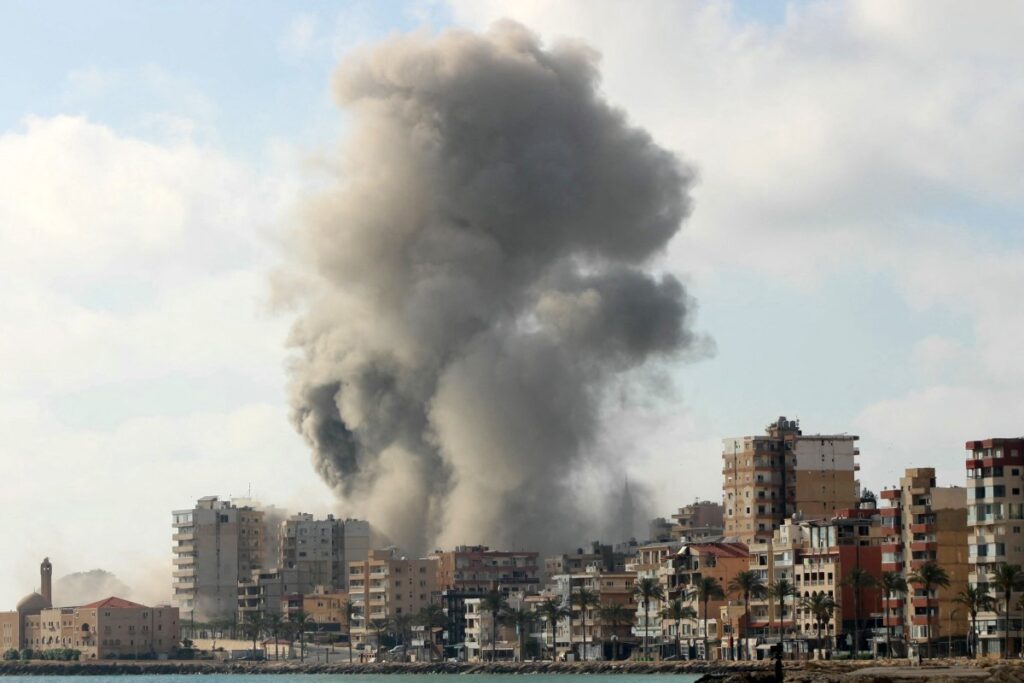
    The Belize Defence Force (BDF) has initiated significant military reinforcements along its northern frontier in response to escalating cartel-related violence in neighboring Mexico. This strategic mobilization follows the recent assassination of Mexican cartel leader Nemesio ‘El Mencho’ Cervantes and subsequent executions in Quintana Roo, developments that have raised concerns about potential regional spillover effects.

    Prime Minister John Briceño has formally requested United States assistance in combating heightened cartel operations near Belize’s borders. The government’s proactive stance reflects growing apprehension about transnational criminal organizations potentially extending their operations beyond Mexican territory.

    Brigadier General Anthony Velasquez, Commander of the BDF, confirmed the implementation of ‘Operation Northern Fortress,’ involving deployed additional troops, enhanced vehicular assets including ATVs, and establishment of a strategic operational building within the Corozal Free Zone. “Our approach is multi-layered and intelligence-driven,” General Velasquez stated. “We maintain continuous communication with Mexican counterparts, ensuring immediate awareness of border developments.”

    While acknowledging the tangible nature of the threat, authorities emphasize that current intelligence indicates no increased cartel activity within Belize itself. The military preparedness includes contingency plans for rapid northern reinforcement should significant incidents occur. “We possess sufficient troop strength to address emerging situations,” General Velasquez assured, “with capacity to deploy additional soldiers if required for major developments.”

    The BDF’s heightened surveillance and patrol operations represent Belize’s commitment to maintaining national security while monitoring the volatile security situation across its northern border.

  • BDF Calls Allegations of Vehicle Misuse “Mischief”

    BDF Calls Allegations of Vehicle Misuse “Mischief”

    The Belize Defence Force (BDF) has formally rejected allegations regarding the improper personal use of military vehicles by a high-ranking officer stationed in Toledo. Brigadier General Anthony Velasquez, Commander of the BDF, issued a definitive response, characterizing the accusations as baseless ‘mischief’ and affirming that the officer’s use of the assigned vehicle is fully authorized and operationally necessary.

    General Velasquez provided detailed justification, explaining that commanding officers are allocated vehicles to ensure rapid response capabilities essential to national security. ‘The operational demands placed upon our commanding officers necessitate immediate mobility,’ Velasquez stated. ‘This particular officer commands 400 personnel across the Toledo district and must be prepared to respond to emergencies and coordinate operations at any hour, day or night. His 24/7 access to the vehicle is not a privilege but a fundamental requirement of his duties.’

    Further scrutiny emerged regarding the officer’s voluntary position on the board of an educational institution, with critics suggesting a potential conflict of interest. The BDF Commander swiftly dismissed these concerns, emphasizing the organization’s longstanding tradition of community engagement. Velasquez clarified that the officer receives no financial compensation for this voluntary service, aligning with the BDF’s commitment to national development beyond purely military functions. The BDF maintains that all resources are deployed appropriately and that the allegations constitute unfounded speculation without evidence of procedural violation.

  • Langzamere groei centraal op Chinees Volkscongres

    Langzamere groei centraal op Chinees Volkscongres

    Beijing witnessed the commencement of the 14th National People’s Congress (NPC) on March 5, 2026, with President Xi Jinping and senior Chinese leadership presiding over the pivotal political gathering. The annual session unveiled China’s economic blueprint for the coming year, featuring a notably conservative GDP growth target of 4.5-5%—marking the first instance of sub-5% targeting in the nation’s recent economic history.

    This calibrated growth projection reflects China’s strategic response to persistent economic headwinds, predominantly driven by the collapse of its real estate sector which previously constituted 25-30% of GDP. Economic analyst Tianchen Xu from the Economist Intelligence Unit interprets this adjustment as signaling a fundamental policy shift: moving from quantitative expansion metrics toward qualitative growth indicators emphasizing household income elevation and enhanced public service accessibility.

    Concurrent with economic recalibration, China announced a 7% defense budget increase—the smallest increment in five years yet remaining regionally competitive. The nation continues its technological pivot with sustained state subsidies for strategic sectors including integrated circuits, aerospace, biomedicine, and drone application ecosystems termed the ‘low-altitude economy’.

    Social governance priorities featured prominently in congressional deliberations, with policies addressing demographic challenges through enhanced childcare support systems and elderly care services for China’s aging population. Environmental commitments reaffirmed the 2030 carbon emissions peak target while accelerating transition timelines toward renewable energy adoption.

    The parallel convening of the Chinese People’s Political Consultative Conference (CPPCC) complements NPC proceedings, collectively forming the ‘Two Sessions’ that shape China’s policy trajectory. A seminal outcome emerges through the presentation of the 15th Five-Year Plan (2026-2030), outlining medium-term development objectives targeting doubled per-capita GDP by 2035 relative to 2020 benchmarks.

  • VIDEO: Lawyers comment on election petitions case

    VIDEO: Lawyers comment on election petitions case

    The political stability of St. Vincent and the Grenadines faced a significant judicial test on Thursday, March 5, 2026, as the High Court convened for a landmark hearing. The Unity Labour Party (ULP), the nation’s primary opposition force, has initiated formal legal proceedings contesting the electoral victories of Prime Minister Godwin Friday and his Foreign Affairs Minister, Dwight Fitzgerald Bramble.

    The inaugural court session, a pivotal moment in what is anticipated to be a protracted legal confrontation, concluded with legal representatives from both the governing New Democratic Party (NDP) and the petitioner ULP addressing a gathered press corps. While specific arguments presented before the judiciary remain confidential at this preliminary stage, the public statements highlighted a profound divergence in legal interpretation and a firm resolve from both sides to pursue their claims.

    This litigation strikes at the heart of the nation’s democratic processes, questioning the official results from recent general elections that saw the NDP retain power. The case’s outcome holds the potential to necessitate by-elections in the contested constituencies, thereby possibly altering the parliamentary balance and the composition of the current cabinet. Legal experts are closely monitoring the proceedings, which are expected to set significant precedents for electoral law and constitutional governance within the Eastern Caribbean region.

  • PM appears carefree after court case challenging his election

    PM appears carefree after court case challenging his election

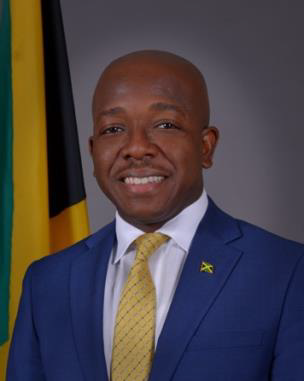
    Prime Minister Godwin Friday displayed unwavering confidence as he departed the High Court in Kingstown following a crucial case management hearing on Thursday. The legal proceedings center on constitutional challenges brought by the opposition Unity Labour Party (ULP) questioning the eligibility of both Friday and his Foreign Affairs Minister Dwight Fitzgerald Bramble to hold parliamentary seats due to their Canadian citizenship status.

    When pressed by journalists for commentary, Friday responded with notable composure: “Yeah. It’s a beautiful day.” Gesturing toward the sunny skies, he added, “It is a wonderful day. Look at the sunshine,” before deferring to his lead counsel, Anand Ramlogan S.C. of Trinidad and Tobago.

    The constitutional dispute emerges despite Friday’s National Democratic Party (NDP) achieving a landmark electoral victory in November 2025, securing 14 of 15 parliamentary seats with a substantial margin of 10,055 votes over the ULP. This represents the most decisive electoral mandate since the NDP’s complete sweep in 1989.

    Ramlogan characterized the hearing as “an interesting, if not amusing experience,” suggesting the petitions represent an attempt to subvert democratic processes rather than honor the electorate’s clear decision. He confirmed the court has established an accelerated timeline, with evidence submissions due before a scheduled trial from July 28-30.

    Representing the ULP, former Trinidad and Tobago Prime Minister Stuart Young emphasized the case’s profound constitutional significance for Vincentian governance. “What is being determined by the court really is an interpretation of your constitutional provisions and the qualification, or the disqualification to stand as a candidate for elections,” Young stated, noting that while other Caribbean jurisprudence might inform proceedings, St. Vincent’s constitutional framework contains unique provisions.

    The litigation specifically challenges the nomination acceptance processes undertaken by returning officers and the Supervisor of Elections. Both cases name the Attorney General as respondent, with representation teams comprising multiple Caribbean legal experts including non-national attorneys from Trinidad and England.

  • De triasleer: Scheiding of spreiding der machten?

    De triasleer: Scheiding of spreiding der machten?

    A significant constitutional debate has emerged within Suriname’s National Assembly (DNA) regarding the fundamental relationship between legislative, executive, and judicial powers. This discussion gains particular relevance amid pending legislative proposals addressing the structure and compensation of judicial authorities, prompting a thorough reexamination of the traditional separation of powers doctrine.

    The current parliamentary deliberations focus substantially on the judicial branch’s position, including constitutional amendment proposals that would establish a third instance within the judicial organization. These developments have revitalized academic interest in the philosophical foundations of power distribution systems, particularly the theories of French jurist Montesquieu (1689-1755), traditionally credited with formulating the Trias Politica concept.

    Constitutional scholars increasingly emphasize that Montesquieu’s original vision centered not on absolute separation but rather on a system of checks and balances—a mechanism where “power checks power” to prevent despotism. Inspired by English philosopher John Locke, Montesquieu’s seminal work “De l’esprit des lois” (The Spirit of Laws) presented a normative framework for power equilibrium aimed at safeguarding civil liberties through preventing concentration of authority.

    Suriname’s constitutional reality, as articulated in Article 70, demonstrates the practical application of this principle: legislative power is jointly exercised by the National Assembly and the Government, indicating inherent interdependence rather than strict separation. The legislative process typically initiates with the executive branch, progresses through parliamentary deliberation and adoption, and culminates in presidential ratification—illustrating how governmental branches functionally complement and constrain one another.

    The judicial function has evolved significantly beyond Montesquieu’s characterization of judges as merely “la bouche de la loi” (the mouth of the law). As noted by former Court of Justice President John von Niesewand (2008), the judiciary has transformed into a guardian of constitutional integrity, exercising oversight over political organs even when they invoke political legitimacy. This evolution has prompted some observers to describe a transition from a “rechtsstaat” (rule of law state) toward a “rechtersstaat” (judges’ state), though this characterization remains debated.

    Contemporary constitutional scholars suggest that the terminology of “power distribution” or “power balance” more accurately reflects modern governance realities than “separation of powers.” The constitutional system operates not as hermetically sealed power blocks but as a dynamic equilibrium where governmental branches mutually influence, control, and delimit each other’s authority. This intricate balance constitutes the essential foundation of democratic constitutional governance.

  • UK introduces visa requirement for Saint Lucians

    UK introduces visa requirement for Saint Lucians

    The United Kingdom has implemented significant travel restrictions for citizens of Saint Lucia, eliminating visa-free entry privileges that previously allowed streamlined access to British territory. Effective March 5, 2026, at 11:00 AM Eastern Caribbean time, Saint Lucian nationals must now obtain formal visas for all travel purposes including transit through UK airports.

    This policy shift removes Saint Lucia and Nicaragua from the Electronic Travel Authorisation (ETA) eligibility list. UK authorities have established a six-week transitional period extending until April 16, 2026, during which Saint Lucian travelers possessing previously issued ETAs with confirmed bookings made before the policy announcement may still enter without visas provided they arrive before the deadline.

    Official communications from the British government cite two primary rationales for this diplomatic move: a substantial increase in asylum applications from Saint Lucian citizens and security concerns regarding Saint Lucia’s Citizenship by Investment (CBI) program. Statistics reveal that between January 2022 and December 2025, UK border authorities recorded 360 asylum claims from Saint Lucian nationals, with 128 submissions occurring at ports of entry—a figure considered disproportionately high relative to Saint Lucia’s population of approximately 180,000 residents.

    Further data indicates that 222 Saint Lucian nationals were receiving asylum support as of December 2025, with 213 individuals accommodated through Home Office provisions. UK officials emphasized that these asylum claims create operational burdens on border management systems and migration infrastructure.

    The UK government has additionally classified Saint Lucia’s CBI program as ‘high risk,’ noting dramatic increases in passport applications during 2023-2024. Official statistics show approximately 5,642 applications representing 423% annual growth, which British authorities assert has directly correlated with increased detection of Saint Lucian passport holders attempting to enter the UK for asylum claims or unauthorized employment.

    In response to these developments, the Saint Lucian government has initiated diplomatic discussions with UK counterparts. Officials have pledged to provide updated guidance on visa application procedures while continuing bilateral engagement to address concerns and potentially restore modified mobility arrangements between the two nations.

  • Hayward: I’m not a paper Bahamian

    Hayward: I’m not a paper Bahamian

    A longstanding administrative dispute between the Bahamian government and the Grand Bahama Port Authority (GBPA) has evolved into a deeply personal exchange regarding national identity and corporate governance. The conflict reached new intensity when GBPA Co-Chairman Rupert Hayward published an open letter to Prime Minister Philip Davis defending his family’s Bahamian heritage after feeling mischaracterized in parliamentary comments.

    Prime Minister Davis had previously characterized a recent arbitration ruling as a turning point in government-port relations, criticizing what he described as excessive private control over Freeport’s governance. His statement that “Freeport is not the private estate of any family” and that he “cannot live with an arrangement in which two families decide the fate of tens of thousands of Bahamians” prompted Hayward’s emotional response.

    In his detailed rebuttal, Hayward presented documentary evidence of his multigenerational Bahamian roots, including his father’s pre-independence birth certificate and his own hospital birth records from Princess Margaret Hospital. He described how his daughter became distraught upon hearing the characterization of their family, emphasizing that his commitment to The Bahamas spans generations despite approaching elections potentially encouraging populist rhetoric.

    While acknowledging natural disagreements in a democracy, Hayward stressed the shared objective of both entities: advancing the welfare of the Bahamian people. He advocated for essential cooperation between the government and GBPA, noting that both institutions would continue to coexist and must collaborate for Freeport’s development.

    Prime Minister Davis responded by clarifying that nationality was never his central concern, but rather the Port Authority’s asserted position in Freeport’s governance structure. He detailed how the GBPA had allegedly claimed extraordinary authority exceeding elected government powers in areas including licensing, immigration, customs, and environmental regulation while resisting financial obligations to the public purse.

    The arbitration proceedings, which rejected the government’s $357 million claim for 2018-2022 administrative costs, nonetheless established the Port’s ongoing payment obligations until 2054 and affirmed government authority in core areas where the Port had sought special protections. Davis framed the outcome as affirming Bahamian sovereignty over Freeport while acknowledging the historical context of the Hawksbill Creek Agreement that granted the Port unusual authority during Freeport’s development under industrialist Sir Jack Hayward, Rupert’s father.

    The exchange highlights fundamental tensions between historic private development agreements and modern democratic governance in The Bahamas, with both parties asserting their commitment to Bahamian interests while disagreeing profoundly on how those interests are best served.