分类: politics

  • JTUM to join peace vigil over regional US military action

    JTUM to join peace vigil over regional US military action

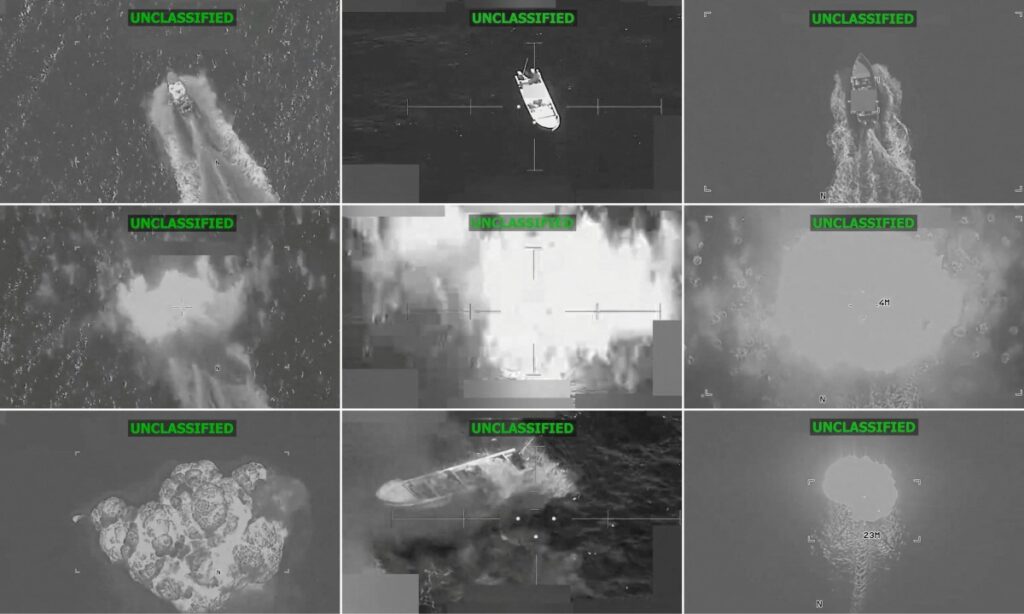
    The Joint Trade Union Movement (JTUM), a prominent ally of Trinidad and Tobago’s UNC government, has thrown its weight behind a peace vigil advocating for the Caribbean to remain a zone of peace. Organized by eight local civil society groups, the event is set to take place at Woodford Square in Port of Spain on November 9, from 5 to 7 pm. This initiative comes amid escalating tensions in the region, fueled by increased US military activity targeting narco-trafficking operations. Since September 2, US strikes have reportedly killed 70 individuals suspected of drug trafficking in the Caribbean Sea and the Pacific Ocean. JTUM, in a November 7 media release, expressed grave concerns over the potential consequences of military escalation, warning that Trinidad and Tobago could find itself ‘on the frontline’ of a conflict. The union emphasized that war benefits no one and stressed the necessity of peace for regional stability and economic progress. The UNC government, led by Kamla Persad-Bissessar, has aligned with the Trump administration’s regional security initiatives, which include deploying destroyers, a nuclear submarine, amphibious craft, and an aircraft carrier, along with over 10,000 troops. Critics, including JTUM and vigil organizers, argue that this growing military presence near Venezuelan waters threatens regional peace and stability. The vigil’s organizers, such as the Emancipation Support Committee and Movement for Social Justice, describe the event as a non-partisan effort to raise awareness about the humanitarian and economic risks of potential conflict. They warn that any military escalation in Venezuela could lead to mass migration to Trinidad and Tobago, disrupt trade, and damage investor confidence. JTUM’s endorsement of the vigil highlights a growing consensus within the country for the Caribbean to remain a peaceful region.

  • U.S. Shutdown Could Impact Caribbean Travel as FAA Cuts Flights

    U.S. Shutdown Could Impact Caribbean Travel as FAA Cuts Flights

    The ongoing U.S. government shutdown is now casting a shadow over the aviation industry, with significant implications for Caribbean tourism. The Federal Aviation Administration (FAA) has mandated a reduction in operations at 40 major airports, including critical hubs like Miami, Atlanta, and New York. These airports serve as vital gateways for travelers heading to popular Caribbean destinations such as Antigua and Barbuda, Jamaica, and Barbados. Air traffic controllers, who are currently working without pay, are bearing the brunt of the shutdown. Airlines have begun cutting short-haul domestic routes that facilitate connections to international flights. The FAA has announced plans to gradually decrease flight capacity by up to 10 percent over the coming week. According to aviation data firm Cirium, approximately 780 flights—3 percent of the 25,000 scheduled departures on Friday—were canceled. However, most affected passengers were rebooked on alternative flights. This disruption underscores the broader economic and operational challenges posed by the government shutdown, particularly for sectors reliant on seamless air travel.

  • Grenadian MP endorses Stewart for Southern Grenadines

    Grenadian MP endorses Stewart for Southern Grenadines

    Chevonne Stewart, the Southern Grenadines candidate for the ruling Unity Labour Party (ULP) in St. Vincent and the Grenadines, has received a significant endorsement from Tevin Andrews, the Grenadian MP representing Carriacou and Petite Martinique. Andrews, who has deep roots in the region, publicly supported Stewart during ULP campaign events on Mayreau and Union Island. Stewart, a chief radiologist recently transferred to the Ministry of Health, is making her first bid for the Southern Grenadines seat, which has been held by the opposition New Democratic Party (NDP) since its creation in 1989. Andrews praised Stewart’s dedication, approachability, and hard work, emphasizing her commitment to the region’s recovery from Hurricane Beryl’s devastation in July 2024. He highlighted her active role in restoration efforts and urged constituents to consider her leadership qualities in the upcoming election. Stewart is challenging NDP’s Terrance Ollivierre, who has represented the Southern Grenadines since 2001. Andrews also commended Prime Minister Ralph Gonsalves’ leadership in navigating multiple disasters, reinforcing the ULP’s message of resilience and progress.

  • Election integrity questioned as Saint Lucia prepares for the polls

    Election integrity questioned as Saint Lucia prepares for the polls

    As Saint Lucia approaches its upcoming general election, allegations of voter list manipulation have reignited concerns over the island’s electoral integrity. The controversy emerged after United Workers Party candidate Elisha Norbert claimed that names of living party supporters were erroneously listed among the deceased. The Electoral Department, led by Chief Elections Officer Herman St Helen, has refuted these allegations, emphasizing their verification process involving funeral homes and obituaries. However, the dispute has intensified scrutiny on the nation’s voter verification system. House Speaker Claudius Francis has called for stricter checks, sharing his personal experience of mistaken identity due to shared names and lifestyle details. Francis, a former Electoral Commissioner, acknowledged the complexity of implementing a foolproof verification system and highlighted the need for election observers, a concern he raised as early as 2001. Saint Lucia’s legislation clearly defines election procedures and criminalizes voter fraud, including bribery, treating, undue influence, and personation. Penalties for such offenses include losing voting rights for seven years, disqualification from parliamentary candidacy, and fines up to $1,000 or a year in prison for ballot tampering. Despite these measures, recent anonymous blog accusations of voter payments and unanswered interview requests to St Helen have fueled public skepticism. With the next general election imminent, the debate over electoral transparency and accountability continues to dominate the political landscape.

  • Immigration overhaul to end automatic deportation for minor offences

    Immigration overhaul to end automatic deportation for minor offences

    The Mia Mottley administration in Barbados is spearheading a significant shift in immigration policy, moving away from the automatic deportation of individuals for minor infractions such as overstaying their visit. Minister of Home Affairs Wilfred Abrahams announced on Friday that the government is implementing sweeping reforms to modernize the country’s migration framework and rectify past injustices.

  • Policymakers and Academics call for Strategic Unity on Free Movement and Regional Integration at UWI Vice-Chancellor’s Forum

    Policymakers and Academics call for Strategic Unity on Free Movement and Regional Integration at UWI Vice-Chancellor’s Forum

    At the recent Vice-Chancellor’s Forum hosted by The University of the West Indies (UWI), regional policymakers and academics convened to discuss critical issues surrounding Free Movement, the CARICOM Single Market and Economy (CSME), and the Caribbean Regionalisation Project. Held on October 21, the forum highlighted the urgent need for strategic unity among CARICOM member states to address shared demographic and economic challenges.

    Prime Minister of St. Vincent and the Grenadines, Dr. Ralph Gonsalves, a UWI alumnus, emphasized the importance of fully implementing freedom of movement across the Caribbean. He warned that hesitations or delays by member states could jeopardize long-term regional development. Dr. Gonsalves outlined several pressing challenges, including declining fertility rates, ageing populations, trade impediments due to currency exchange issues, and disparities in energy costs. He also stressed the need for increased funding for the CARICOM Development Fund, improved airspace management, and a more unified approach to foreign policy coordination.

    UWI Vice-Chancellor Professor Sir Hilary Beckles framed the push for deeper integration as both a moral and historical imperative, rooted in the shared destiny of Caribbean people. He acknowledged progress but highlighted persistent internal and external forces that hinder unity. Professor Canute Thompson, Pro Vice-Chancellor for Undergraduate Studies, chaired the forum and questioned whether the promises of the 50-year-old integration treaty had been fulfilled.

    Other notable speakers included Dr. Justice Anthony Gafoor, Dr. Indira Rampersad, Ambassador Anthony Hylton, and Dr. Delroy Beckford, who provided insights on legal frameworks, data-driven mobility analysis, and the need for aligning domestic laws with treaty obligations. Dr. Rampersad revealed gaps in regional data collection, while Ambassador Hylton urged greater use of the Caribbean Court of Justice to enforce CSME provisions.

    The forum underscored the Caribbean’s ongoing struggle for deeper integration and the critical role of UWI in fostering regional development. With its rich history and global recognition, UWI continues to be a cornerstone of Caribbean progress, addressing both regional and global challenges.

  • Fledgling NNP backs Citizenship Bill’s intent, warns against ministerial overreach

    Fledgling NNP backs Citizenship Bill’s intent, warns against ministerial overreach

    Kemar Stuart, leader of the New National Party, expressed significant reservations about the proposed Barbados Citizenship Bill during a Joint Select Committee hearing on Friday. While acknowledging the necessity of the legislation, Stuart highlighted critical flaws that could lead to potential misuse of power. He emphasized that the bill grants excessive discretionary authority to a single minister, particularly concerning the revocation of citizenship, without adequate checks and balances. Stuart argued that such provisions could open the door to arbitrary or politically motivated actions, drawing parallels to international examples where citizenship revocation has been used discriminatorily. He specifically criticized Clause 9(1)(c), which allows the minister to revoke citizenship based on vague criteria such as “speech or acts” deemed disloyal to Barbados. Stuart called for more precise language and stronger judicial oversight to prevent abuse. In response, committee chair Marsha Caddle clarified that the clause would not apply to citizens by birth, but Stuart insisted that clearer safeguards are needed for all individuals. Additionally, he cautioned against lowering citizenship standards in pursuit of population growth, stressing the importance of protecting the global prestige of Barbados’ passport.

  • Politic : The OAS and CEAL join forces to support Haiti

    Politic : The OAS and CEAL join forces to support Haiti

    In a landmark move to bolster economic and social progress in the Americas, the Organization of American States (OAS) and the Latin American Business Council (CEAL) have forged a strategic partnership. The collaboration, formalized through a Memorandum of Understanding signed during the XXXVI CEAL Plenary Assembly in Washington, DC, aims to enhance public-private sector cooperation with a particular focus on Haiti. The initiative underscores a shared commitment to addressing critical areas such as education, financial inclusion, employment, and food security. CEAL President Roberto J. Zamora emphasized the significance of this alliance, stating, ‘This agreement marks a pivotal moment for a new era of collaboration. Politicians and business leaders must unite to tackle economic challenges and drive development. Haiti will be our first test case.’ OAS Secretary General Albert R. Ramdin echoed this sentiment, describing the partnership as a milestone and expressing optimism about its potential to foster long-term relationships across the region. CEAL, a coalition of private sector leaders from 19 Latin American countries, Puerto Rico, Miami, and the Iberian Peninsula, is dedicated to promoting a ‘borderless America’ through investment, entrepreneurship, and knowledge exchange. This joint effort signals a renewed commitment to Haiti’s development amid ongoing challenges.

  • PNCR, VPAC leaders concerned that CCJ President raised appointment of Chancellor of the Judiciary with politician

    PNCR, VPAC leaders concerned that CCJ President raised appointment of Chancellor of the Judiciary with politician

    Leaders from the People’s National Congress Reform (PNCR) and the Vigilant Political Action Committee (VPAC) have expressed deep concerns over the Caribbean Court of Justice (CCJ) President Justice Winston Anderson’s involvement in discussions regarding the appointment of Guyana’s Chancellor of the Judiciary. The controversy emerged after Justice Anderson reportedly engaged with then-Opposition Leader Aubrey Norton on the matter, raising questions about the CCJ’s impartiality and independence. Norton revealed that Justice Anderson sought his views on the stalemate surrounding the appointment, though he declined to disclose specific details of their conversation. Norton emphasized that he opposed any supersession of Acting Chancellor Yonette Cummings, who later opted for early retirement. President Irfaan Ali subsequently announced that Acting Chief Justice Roxane George would continue as Chancellor, with Justice Navindra Singh acting as Chief Justice. Meanwhile, VPAC Chairman Dorwain Bess has called for an inquiry into alleged interactions between the CCJ and the Guyanese government, citing potential conflicts of interest and threats to the court’s credibility. The Regional Judicial and Legal Services Commission (RJLSC) has acknowledged Bess’s request, but the Guyana Bar Association has yet to respond. The unfolding situation has sparked debates about the CCJ’s role in Guyana’s judicial processes and its adherence to principles of impartiality and transparency.

  • At UWI free movement forum, alumnus PM Ralph Gonsalves says delays in solidifying regional integration may undermine the whole

    At UWI free movement forum, alumnus PM Ralph Gonsalves says delays in solidifying regional integration may undermine the whole

    Regional leaders and scholars recently gathered at The University of the West Indies (UWI) Vice-Chancellor’s Forum to address pivotal issues surrounding the CARICOM Single Market and Economy (CSME), free movement, and the broader Caribbean Regionalisation Project. Held on October 21, the event aimed to strengthen unity among Caribbean nations amidst ongoing challenges, according to a press release.

    St. Vincent and the Grenadines’ Prime Minister, Dr. Ralph Gonsalves, a UWI alumnus, emphasized the urgency of deeper regional integration. He highlighted the critical need for implementing free movement policies, warning that delays or hesitations by member states could hinder collective progress. Gonsalves urged proactive planning to address demographic and economic challenges, stressing that tackling shared issues is essential for sustainable growth.

    Gonsalves identified several pressing concerns threatening regional cohesion, including declining fertility rates, aging populations, and the need for flexible free movement policies tailored to individual island nations. He also raised issues such as trade barriers caused by currency exchange disparities, varying energy costs, and insufficient funding for the CARICOM Development Fund. Additionally, he called for improved airspace management, unified foreign policy strategies, and effective navigation of geopolitical concerns.

    The forum, themed “Promises, Passports, and Possibilities: Free Movement, the CSME, and Caribbean Regionalisation,” featured a diverse panel of experts, including diplomats, academics, and policymakers. UWI Vice-Chancellor Professor Sir Hilary Beckles opened the event, framing regional integration as a moral and historical necessity rooted in the shared destiny of Caribbean peoples. He acknowledged progress but noted persistent internal and external challenges that continue to divide the region.

    Professor Canute Thompson, Pro Vice-Chancellor for Undergraduate Studies, chaired the forum and reflected on the 50th anniversary of the Treaty of Chaguaramas, questioning whether its promises had been realized. Presentations from key figures such as Dr. Indira Rampersad, Ambassador Anthony Hylton, and Dr. Delroy Beckford evaluated the current state of regional integration, identified obstacles, and explored future steps.

    Dr. Rampersad highlighted deficiencies in regional data collection, which hinder effective policymaking. Ambassador Hylton emphasized the need for enforcing legal frameworks through the Caribbean Court of Justice (CCJ), referencing the landmark Shanique Myrie case. Dr. Beckford advocated for aligning national laws with regional treaty obligations, cautioning against superficial integration efforts.

    The event, broadcast live on UWItv, reignited discussions on CARICOM’s integration efforts over five decades since the Treaty of Chaguaramas.