分类: politics

  • Trump’s name removed from Kennedy Center arts venue

    Trump’s name removed from Kennedy Center arts venue

    WASHINGTON, D.C. – In a landmark legal rebuke of former president Donald Trump’s unprecedented efforts to brand iconic federal public spaces with his personal name, construction crews completed the removal of Trump’s name from the facade of the Kennedy Center for the Performing Arts on Saturday, bringing a months-long political and legal battle to a close.

    The saga began shortly after Trump returned to the White House in January 2025, when the newly inaugurated Republican president moved to install himself as chairman of the prestigious performing arts venue and stacked the center’s governing board with hand-picked loyalists. In December of the previous year, the reshaped board voted to rebrand the institution as “The Donald J. Trump and John F. Kennedy Memorial Center for the Performing Arts,” adding large metal lettering of Trump’s name directly above the original dedication to assassinated president John F. Kennedy on the building’s riverfront facade.

    The renaming sparked immediate public backlash. Dozens of scheduled performances were canceled by artists protesting the move, and ticket sales for remaining events plummeted as audiences boycotted the venue. Legal challenges were quickly filed, arguing that the unilateral name change violated federal law, as only Congress holds the authority to alter the official name of federally owned cultural institutions.

    Last month, U.S. District Judge Christopher Cooper sided with challengers, ordering that all branding bearing Trump’s name be removed from the Kennedy Center’s building and grounds by the end of Friday, January 31. In a last-ditch effort to halt the work, center leadership (still dominated by Trump appointees at the time) filed an emergency appeal, arguing that the institution would face “irreparable harm” from the removal process. That appeal was rejected by both the district court and a higher appellate court on Friday, clearing the way for construction to begin.

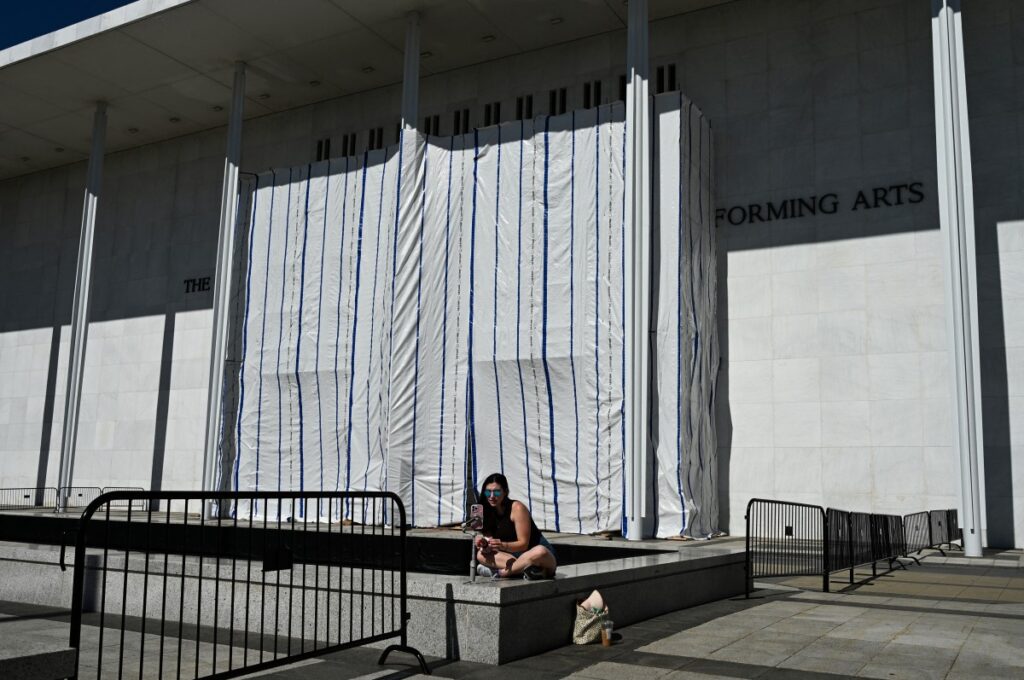
    Hundreds of anti-Trump activists and local residents gathered at the Kennedy Center on Friday to watch crews erect scaffolding, with dozens staying on site into the evening until severe overnight thunderstorms forced workers to pause construction out of safety concerns. The center’s executive director Matt Floca requested and received a 12-hour extension to the court-ordered deadline, allowing work to resume at dawn Saturday. By midday Saturday, Floca confirmed in a legal filing that all physical signage containing Trump’s name on both the building and surrounding grounds had been fully removed, and the Kennedy Center had already scrubbed all references to Trump’s name from its official website earlier that week. A white protective tarp remained stretched over the facade Saturday afternoon while crews finished touch-up work, drawing curious onlookers including morning joggers who paused to observe the scene.

    Cooper also issued a temporary injunction blocking Trump’s planned two-year closure of the Kennedy Center for renovations, which was scheduled to begin this coming July.

    Local residents who gathered to watch the removal welcomed the outcome as a major victory against Trump’s efforts to reshape Washington’s public landscape. Forty-two-year-old Washington local Elise Serbaroli called the removal “a big win,” noting that she had been heartbroken when Trump’s name was first added to the building she has long counted as one of her favorite local destinations. Sixty-five-year-old Dawn Martin echoed that sentiment, emphasizing that the Kennedy Center’s original name honors a legacy that cannot be displaced for political gain. “Some people may think this is a menial sort of sign. But the truth is, we cannot take away the honor that the Congress bestowed on this beautiful building for John F. Kennedy, a president who deserves this honor and whose name should be protected,” Martin said. Tens of thousands of people also followed the removal process in real time via online livestream, reflecting the national attention the conflict has drawn.

    The Kennedy Center controversy is not an isolated case. Since taking office in 2025, Trump has moved to rename multiple federal institutions across Washington, rebranding the now-defunct U.S. Institute of Peace in his own name and installing massive banners bearing his likeness outside the Department of Justice and Department of Agriculture headquarters.

    The name removal comes as Trump prepares to mark his 80th birthday Sunday with a high-profile $60 million celebrity cage fight event hosted on the White House grounds. The event is also being billed as the kickoff for national celebrations of the 250th anniversary of U.S. independence from Britain, which the Trump administration is marking with a new commemorative $250 bill featuring the president’s image. Trump responded to the court ruling last week by saying he would abandon all oversight and control of the Kennedy Center, in a fit of anger over the decision.

  • Six months and $84 million to get Bogue lands ready for sale

    Six months and $84 million to get Bogue lands ready for sale

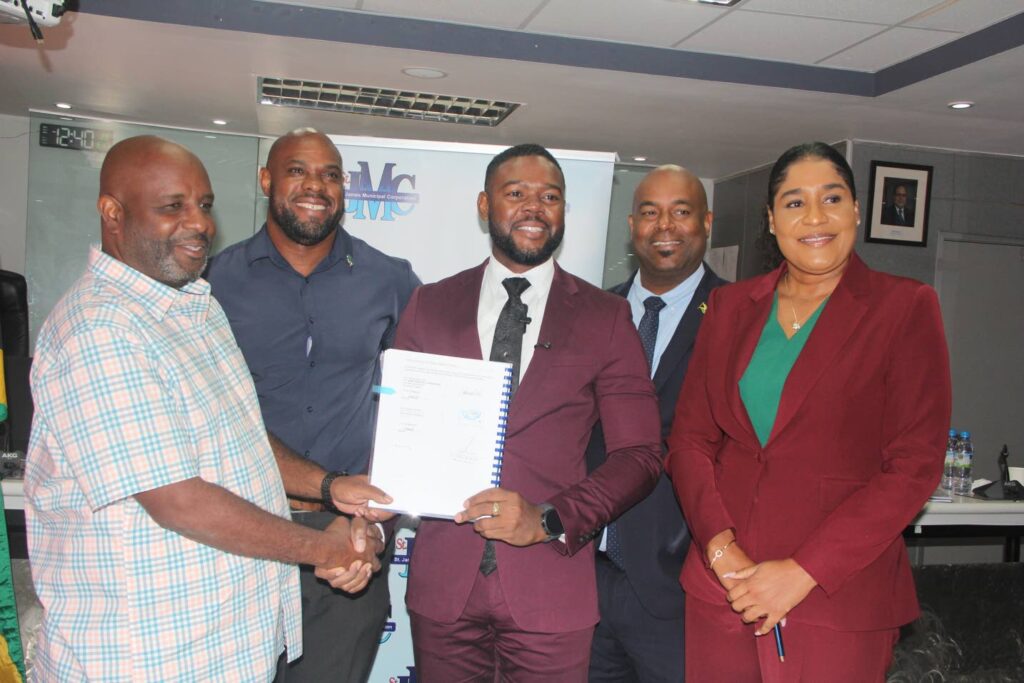
    MONTEGO BAY, St James — After nearly two decades of tangled negotiations and political tension over land tenure, a major step forward has been reached to resolve the long-running standoff at Bogue Industrial Estate, one of Montego Bay’s most hotly contested commercial parcels. On Thursday, the St James Municipal Corporation formalized an $84-million construction agreement with local firm Odelallen Construction, clearing the way for long-awaited infrastructure upgrades that will pave the path to regularizing land ownership for the site’s current occupants.

    Scheduled to kick off on July 2, the six-month construction project will lay critical public utilities across the 5-hectare property, which has been occupied by 26 separate commercial operators since roughly 2003. Speaking at the official contract signing ceremony, Montego Bay Mayor Richard Vernon laid out the full scope of the upcoming works, noting that the upgrades align with all regulatory standards for a formal commercial subdivision.

    “We have to deliver all the required core infrastructure, including potable water, electrical service, fire hydrants and other basic utilities, before the development can earn a compliance certificate and move forward,” Vernon explained. He recounted that years of preliminary discussions with the current land occupants had already laid the groundwork for this milestone: when local officials first proposed an amicable settlement for the property claims almost a decade ago, the operators made a clear demand that infrastructure be installed before they would sign any formal sale agreement.

    The site, commonly referred to locally as Bogue Lands, has been a source of political friction spanning multiple Jamaican national administrations. Unlike informal squatters, the current commercial operators have long maintained legitimate claims to the land, arguing that they have poured substantial private investment into developing their businesses on the site over the past 20 years. The St James Municipal Corporation has worked for years to regularize the operators’ status, granting them the first right of refusal to purchase the lots they currently occupy once the site is formally subdivided.

    For Mayor Vernon, Thursday’s contract signing marks an unprecedented turning point for the community. “Today I’m glad that we have not only secured the funding, but also selected a qualified contractor to deliver the full infrastructural upgrade for the entire Bogue Industrial Estate,” he said. “As soon as the upgrades are complete, we will begin finalizing the sale agreements with the current occupiers.” He called the moment a historic milestone for Montego Bay, closing a chapter of uncertainty that has held back development of the site for years.

    Once the upgrade work wraps up, municipal authorities will conduct a new market valuation of the individual lots ahead of sale. Proceeds from the land sales will boost the St James Municipal Corporation’s capital budget, supporting a range of critical local infrastructure projects including the long-planned repairs to the Old Shoe Arcade, a popular local commercial hub in need of renovation.

    Officials have already secured sign-off from Jamaica’s Integrity Commission, the successor body to the former Contractor General’s office, approving the sale of the land at fair market value. While Vernon and municipal leaders do not expect major pushback to the formal sale process, they have emphasized that every step has been carried out in full compliance with Jamaican law to guard against potential legal challenges.

    “We don’t anticipate significant opposition, but we acknowledge it remains a possibility,” Vernon noted. “Our priority has been to follow every legal requirement to the letter, so that if any challenge does arise, we are fully prepared to defend our process in a court of law.”

  • Government advances Passenger Information and Passenger Name Record Bill, 2026

    Government advances Passenger Information and Passenger Name Record Bill, 2026

    According to Grenada’s Ministry of Legal Affairs, the 2026 Advance Passenger Information and Passenger Name Record Bill marks a critical milestone for the country, strengthening border management protocols, expanding national security capabilities, deepening regional security cooperation, and ensuring that all passenger personal data is handled in line with globally recognized data protection principles and international best practices.

  • ‘Take any evidence against me to the police’

    ‘Take any evidence against me to the police’

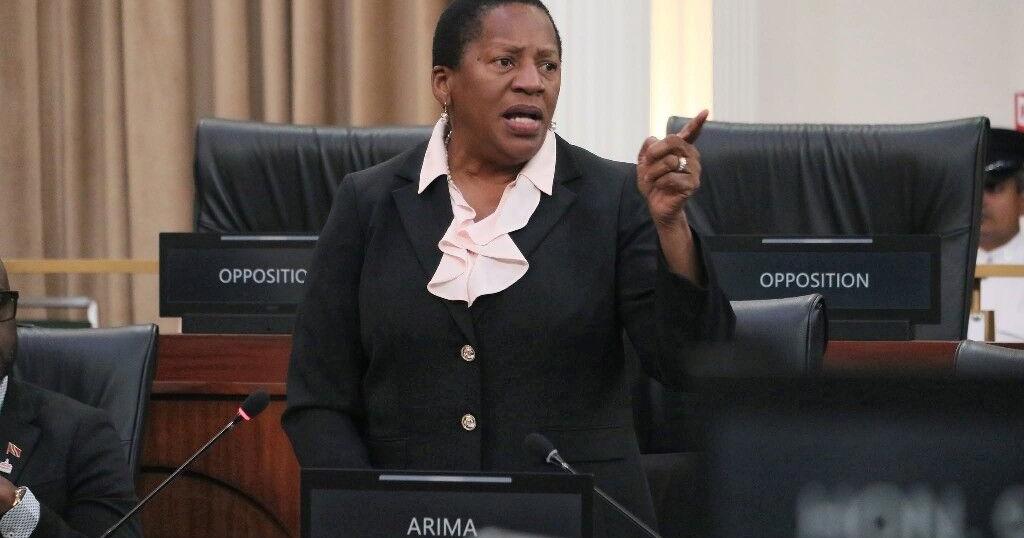
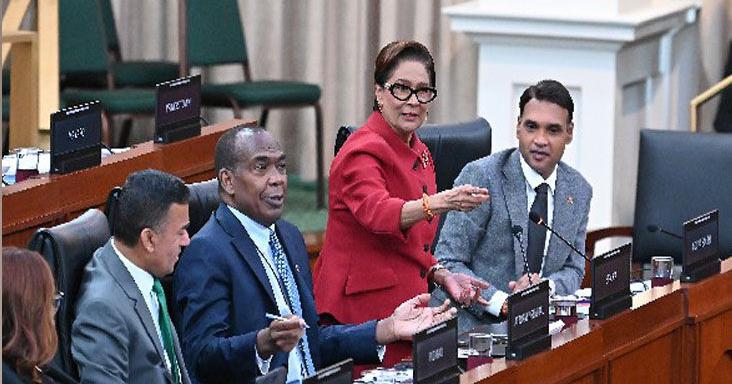
    A sharp political confrontation has erupted in Trinidad and Tobago’s Parliament over unsubstantiated claims of illegal activity linked to the opposition People’s National Movement, after Attorney General John Jeremie dropped a bombshell announcement during a Wednesday debate focused on extending a national state of emergency. Jeremie told the legislative body that the United States government had revoked visas belonging to a group of figures labeled the “1%”, a comment widely interpreted to hint at connections between opposition figures and criminal activity. Now, opposition leader Pennelope Beckles is pushing back forcefully, challenging the ruling government to act on its claims rather than hiding behind parliamentary immunity.

    In a fiery address to government lawmakers, Beckles argued that the governing administration has abused the legal protection of parliamentary privilege to smear the PNM and its members without offering any concrete proof of wrongdoing. “It is one thing to stand on this floor and level accusations against the opposition, but if you actually hold evidence, take it to the police,” Beckles stated, doubling down on her demand that officials stop making unproven claims behind the protection of parliamentary immunity. “Do not hide behind this privilege to spread baseless accusations when you know you lack the evidence to back them up. If you have proof tying me to any illegal activity, take it directly to law enforcement.”

    Beckles went on to accuse the ruling party of being fixated on targeting the so-called “1%” for political gain, rejecting any implication that she or any fellow opposition parliamentarian are involved in unlawful activity. She issued an open challenge to the government to release any formal reports that name opposition members or tie the PNM to criminal networks, stating that the public has a right to see the evidence if it actually exists.

    Noting the context of the debate around the state of emergency, which is tied to public safety and gang violence, Beckles acknowledged the government’s attempt to link its accusations to broader national security concerns. She insisted, however, that if authorities have credible evidence of wrongdoing, they must follow formal legal processes instead of using parliamentary privilege to make unchallenged claims that cannot be legally answered outside the chamber. “If you have the information, act on it properly,” she said. “You cannot keep coming into Parliament to level these smears, when you refuse to repeat them outside these walls where you can be held accountable – and everyone knows why that is.”

  • US hits Cuba with more sanctions, hints at military action again

    US hits Cuba with more sanctions, hints at military action again

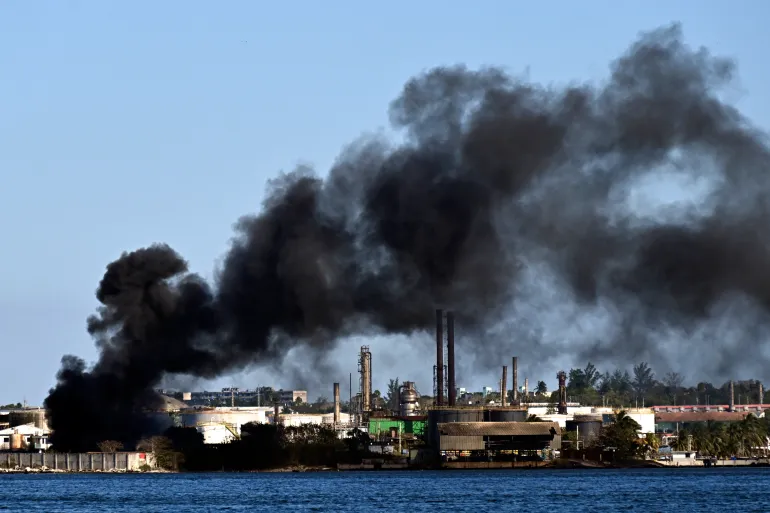
    On Thursday, the United States government unveiled a fresh round of economic restrictions targeting Cuba, with the island nation’s state-owned oil and gas conglomerate, Cuba Petróleo (Cupet), bearing the brunt of the new measures. U.S. Secretary of State Marco Rubio made the announcement, claiming the company controls assets that were illegally seized from U.S. property owners decades ago.

    Beyond the sanctions designation, Rubio placed full responsibility for Cuba’s ongoing national energy crisis squarely on the country’s ruling leadership. He argued that while ordinary Cuban citizens have endured crippling fuel shortages and widespread power outages driven by years of underinvestment in critical energy infrastructure, the island’s communist leadership has siphoned off energy resources for personal gain.

    “Cuban officials resell thousands of barrels of this already scarce fuel on unregulated secondary markets, hoard the majority of available energy supplies for the country’s military, intelligence services and repressive state apparatus, and deliberately ration access to power as a tool to enforce social control over the population,” Rubio alleged during the announcement.

    This latest action comes as Cuba continues to grapple with the cumulative economic pressure of a more than 60-year U.S. trade embargo that has gutted the country’s ability to import essential goods, including fuel. Washington has long maintained pressure on Havana to overhaul its existing economic and political systems, and the new sanctions mark a further escalation of that long-running campaign.

    The penalties also arrive alongside a sharp uptick in aggressive military rhetoric from U.S. officials. Just one day before the sanctions announcement, U.S. Secretary of Defence Pete Hegseth conducted an official visit to the U.S. Naval Base at Guantanamo Bay, a facility that has remained a point of contention between the two nations for decades. During his tour of the base, Hegseth did not rule out the possibility of direct U.S. military action against Cuba, issuing a stark warning to Havana against making what he called a “wrong decision” that would create a threat the U.S. would be forced to respond to militarily.

  • Skerrit urges patience as geothermal plant commissioning continues amid power outages

    Skerrit urges patience as geothermal plant commissioning continues amid power outages

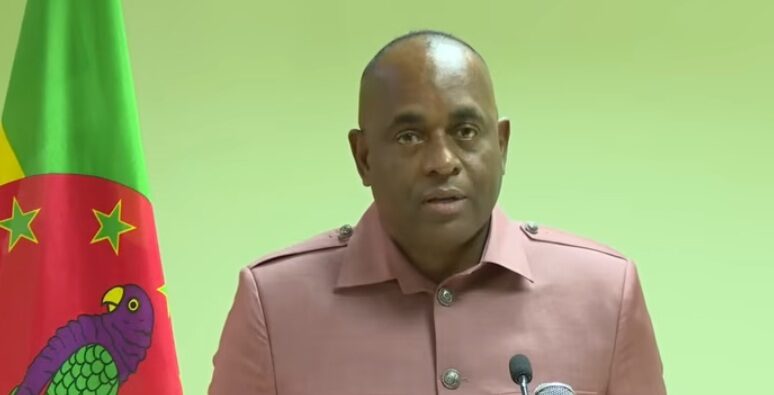
    Dominica’s Prime Minister Roosevelt Skerrit has issued a public call for patience from customers of Dominica Electricity Services (DOMLEC), following widespread recent power disruptions tied to the ongoing commissioning of the country’s landmark geothermal power plant.

    Addressing reporters during a Wednesday press conference, Skerrit highlighted that Dominica has made history as the first country in the Caribbean region to integrate geothermal energy into its national power grid. As a trailblazer in this regional energy transition, he emphasized, the nation is navigating uncharted technical and logistical territory that comes with being the first mover.

    “The geothermal facility is still in its commissioning phase, which involves extensive testing, fine-tuning of equipment, and full system integration before it can launch into full commercial operations,” Skerrit explained. “I am not downplaying the disruption and inconvenience these rolling outages have caused for households and businesses across the country. But these growing pains of recent weeks are the necessary price we pay for pioneering a new energy future for our nation.”

    Once all commissioning work is finalized, Skerrit outlined the transformative long-term benefits the project will deliver for Dominica. Consumers will see reduced electricity rates, the national power supply will gain far greater reliability, and the country will cut its heavy dependence on costly imported fossil fuels that have long left its energy market vulnerable to global price volatility.

    Since the plant began initial power generation in March, Skerrit confirmed that temporary service interruptions have stemmed from technical challenges inherent to testing and integrating brand-new energy infrastructure into the existing national grid. Crucially, he added, every issue that has emerged during the testing process has already been identified, targeted, and fully resolved as part of standard commissioning protocols.

    Beyond the main geothermal generation facility, commissioning work is also progressing on a suite of associated critical infrastructure: a new 33-KV underground transmission line, the Fond Cole substation, and an on-site battery energy storage system. All these components must work in perfect synchronization to form a fully functional, integrated national power system, Skerrit noted.

    The Dominican government remains fully confident in the geothermal project and its ability to deliver sustained, long-term benefits to the country, the prime minister reaffirmed. “While we recognize the frustration caused by recent outages, rolling out a project of this scale requires rigorous, meticulous testing to guarantee that when it enters full commercial service, it operates safely, reliably, and efficiently for decades to come,” he said. Skerrit closed by thanking the Dominican public for their ongoing understanding and patience as the project nears completion.

  • PM Browne Rejects DPP’s ‘I Owe the Public No Explanation’ Position

    PM Browne Rejects DPP’s ‘I Owe the Public No Explanation’ Position

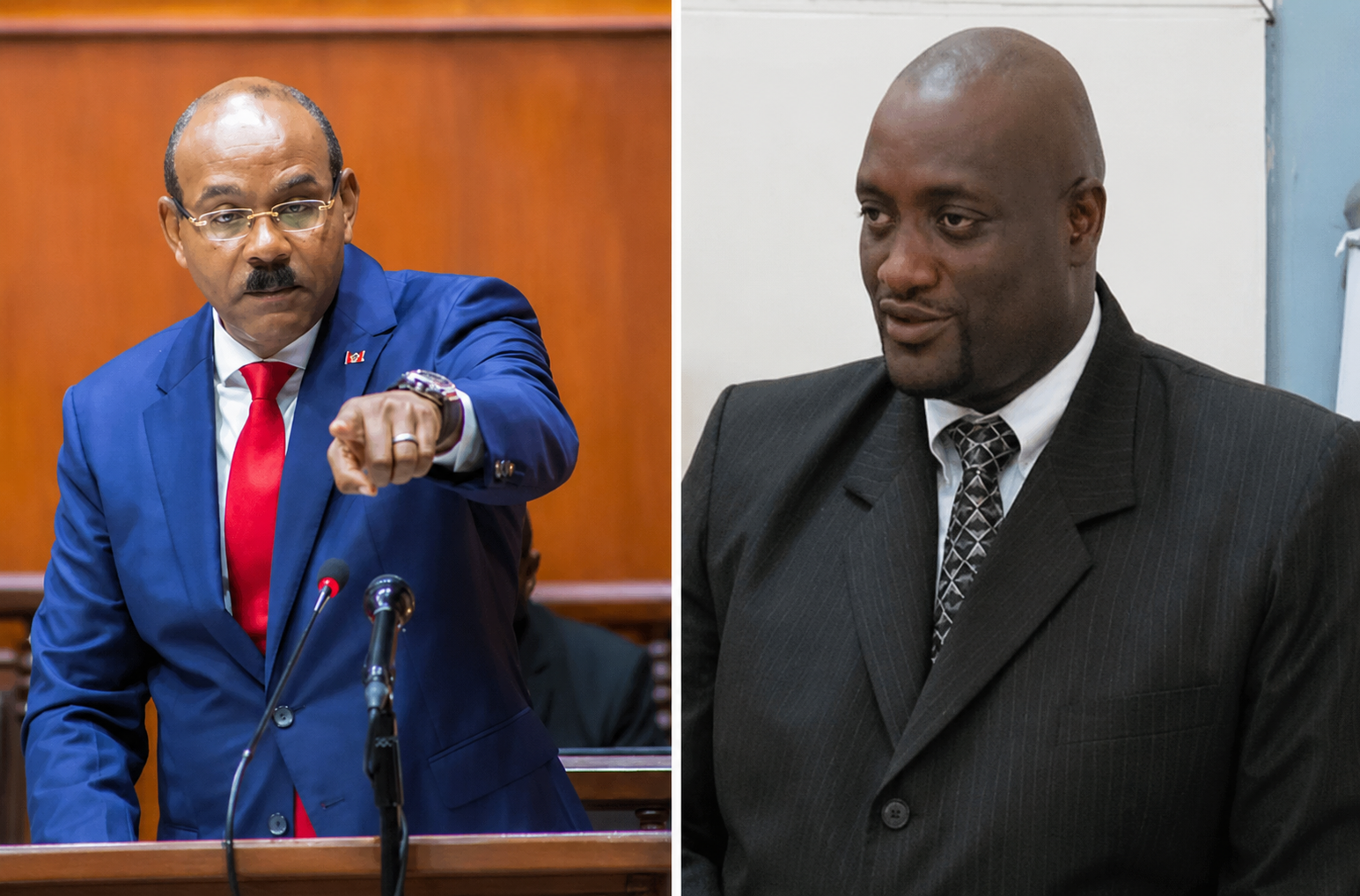
    A high-profile public dispute has erupted between Antigua and Barbuda’s Prime Minister Gaston Browne and Director of Public Prosecutions (DPP) Clement Joseph, centered on a fundamental question: are top prosecutorial officials obligated to explain their case decisions to the general public?

    The conflict was sparked after Joseph recently made public comments arguing that the country’s Constitution grants his office broad prosecutorial independence, and does not require him to justify individual case rulings to the public. His remarks came amid mounting public criticism following his office’s dismissal of two high-profile recent criminal cases.

    In a sharp public rebuke, Browne pushed back directly against Joseph’s stance, warning that the DPP’s position could erode public trust in the nation’s entire justice system. In a scathing public post, Browne questioned: “Really Mr DPP? You are El supremo – Beyond reproach? As a public servant, you are not accountable to the public who pays your bill and at whose ultimate discretion and pleasure you serve?”

    The Prime Minister added that he holds out hope Joseph’s controversial comments were the result of misquotation, framing the claim that the DPP owes no public explanation as a reckless statement that risks damaging public confidence in the prosecutorial office. “For any avoidance of doubt, no one is above the law and no one is beyond reproach,” Browne emphasized.

    For his part, Joseph has stood by his original position, while acknowledging that judicial oversight provides a check on his authority. He clarified that parties aggrieved by his decisions are permitted to challenge rulings in court if they are deemed unreasonable or amount to an abuse of power. The DPP also noted that while he supports transparency as a core principle, some prosecutorial matters must remain confidential, only disclosed on a strict need-to-know basis. He rejected calls to break confidentiality for political gain or to appease public criticism, adding that his office already publishes annual updates on broad prosecutorial trends at the opening of each law term, and the constitutional framework does not mandate explanations for individual case outcomes.

    The debate has drawn perspectives from other legal experts in the country, with Wendell Alexander, an attorney-at-law and former Police Commissioner, aligning with the Prime Minister’s position. Alexander argued that proactive transparency around high-interest cases strengthens, rather than weakens, public confidence in the justice system. “In the interest of transparency, I would say that the public has a right to know because the Office of the Director of Public Prosecutions is a public office,” he explained.

    Alexander added that when a prosecutorial decision sparks widespread public concern, offering a clear public explanation benefits the entire administration of justice. He also echoed Joseph’s note that the DPP’s constitutional powers are not unlimited, noting that all decisions remain open to judicial review by the High Court if found to be unreasonable or abusive.

    The public clash has now reignited a broader national debate over the delicate balance between three core principles of Antigua and Barbuda’s justice system: prosecutorial independence, the need for case confidentiality, and the public’s right to government accountability.

  • New Sexual Offences, Mental Health and Workplace Safety Bills Head to Parliament Next Week

    New Sexual Offences, Mental Health and Workplace Safety Bills Head to Parliament Next Week

    The Cabinet of Antigua and Barbuda has formally thrown its support behind a sweeping package of legislative reforms set to move forward in the country’s House of Representatives when the chamber convenes on Monday, June 16, 2026. Senior government officials have framed the full slate of proposed bills as transformative milestones that will update the nation’s legal architecture, boost public safety, bring governance practices into the 21st century, upgrade public health systems, and deepen collaborative ties with global partners.

    Among the key measures scheduled for their first parliamentary reading are nine priority bills spanning multiple policy areas. These include an update to the nation’s popular Citizenship by Investment programme, a completely restructured Sexual Offences Act, a revised Theft Bill, new frameworks for voluntary indictments and court-approved plea negotiations, amendments to existing cannabis regulations, groundbreaking legislation to prevent workplace violence and harassment, a modern overhaul of the country’s mental health laws, and new regulatory standards for medical laboratories across the twin-island nation.

    Government leaders emphasized that each of these proposals forms a core part of a years-long ongoing effort to modernize Antigua and Barbuda’s national legal system. The reform agenda is explicitly designed to update judicial processes, expand safeguards for workers, strengthen oversight of the healthcare sector, and ensure that domestic laws keep pace with the rapidly evolving social, economic and public health challenges facing the country in the modern era.

    Beyond the new bills introduced for first reading, a number of additional measures are already advancing through later stages of the parliamentary approval process, with second and third readings scheduled in the coming session. These include the Fatal Accidents Bill, amendments to the Magistrates Code of Procedure, updates to the Electronic Crimes Act, and the same voluntary indictment and plea negotiation bills that will also complete their final legislative steps during this sitting. Officials project that these targeted adjustments will streamline court operations, expand legal protections for ordinary citizens, and eliminate bureaucratic bottlenecks that have slowed the delivery of justice in recent years.

    In the critical domain of border security and immigration management, Cabinet highlighted steady progress on two key bills: the Immigration and Passport (Amendment) Bill and the Advanced Passenger Information and Passenger Name Record Bill. Once enacted, these pieces of legislation will equip national authorities with more robust tools to regulate migration flows, reduce security risks at ports of entry, and bring Antigua and Barbuda’s border management systems in line with the latest international standards adopted by peer nations across the globe.

    The legislative package also includes a series of proposed resolutions to ratify a host of new bilateral and multilateral international agreements. Most notably, these cover mutual visa exemption arrangements that streamline travel for diplomatic and official passport holders between Antigua and Barbuda and five nations: Kenya, Benin, Ghana, Rwanda, and the United Arab Emirates. Cabinet officials noted that these travel agreements will strengthen diplomatic ties, open new doors for cross-border business collaboration and tourism growth, and advance the country’s core strategic foreign policy goals in the Caribbean and beyond.

    Additional ratifications on the agenda include an amendment to the Constitution of the International Labour Organization (ILO), a step that reaffirms Antigua and Barbuda’s longstanding commitment to upholding globally recognized labour standards and participating in multilateral cooperation on workers’ rights. The government also plans to ratify updates to the Convention on International Civil Aviation, a move that will deepen the nation’s active engagement with the global aviation community, a critical sector for Antigua and Barbuda’s tourism-driven economy.

    Closing out its announcement, Cabinet reaffirmed its unwavering commitment to advancing a forward-looking legislative agenda that prioritizes inclusive economic growth, social equity, enhanced public safety, expanded international cooperation, and sustainable national development for all residents of Antigua and Barbuda.

  • St. Kitts and Nevis invests over EC$60M to achieve 24/7 water access – WIC News

    St. Kitts and Nevis invests over EC$60M to achieve 24/7 water access – WIC News

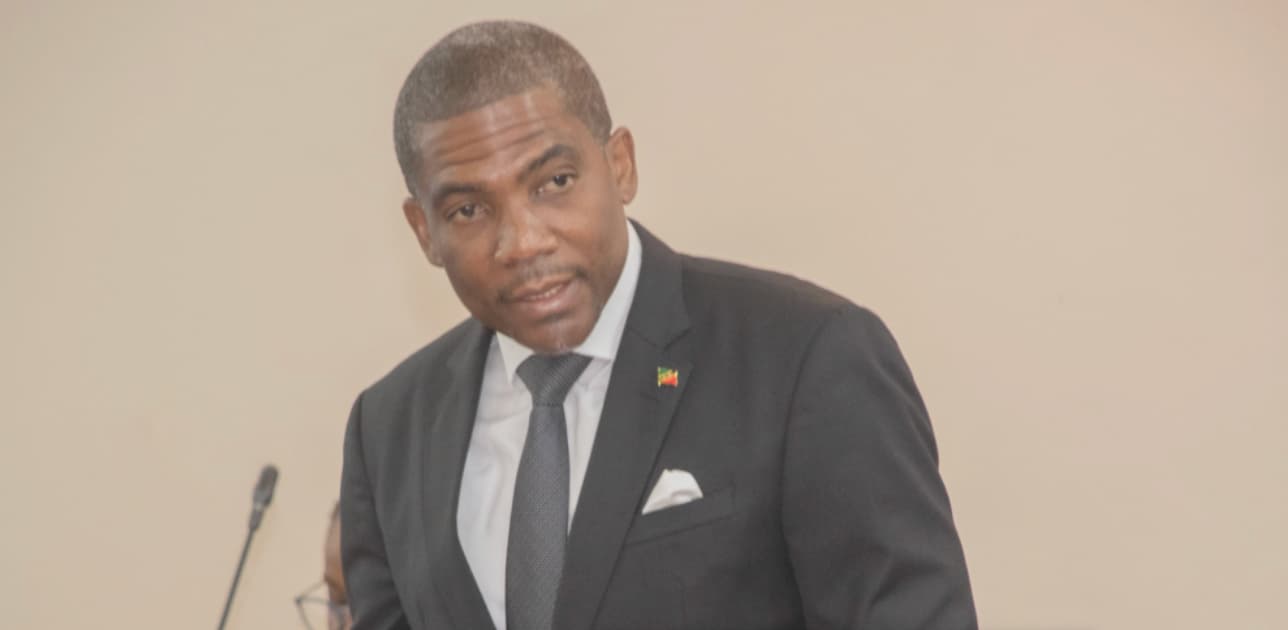
    Amid ongoing severe drought conditions that have strained water resources across the islands, the government of St. Kitts and Nevis is pouring more than EC$60 million into a historic overhaul of the nation’s water infrastructure to deliver reliable round-the-clock water access for all residents.Prime Minister Dr. Terrance Drew laid out the scope of the ambitious initiative during an address to the National Assembly on June 11, framing universal 24/7 water access as a core political promise and a top national priority tied to the administration’s long-term national development strategy.“Everyone will have access to 24/7 water, which is our political objective,” Drew confirmed to lawmakers. He stressed that the multi-million-dollar investments are far more than short-term emergency fixes: they are designed as long-term, system-changing upgrades that will build national climate resilience and guarantee water security for generations to come.The six-figure investment pool – the largest single investment in water infrastructure in the country’s history – is allocated across a range of critical projects: new well drilling operations, construction of a new desalination plant, upgrades to aging existing infrastructure, expansion of distribution networks, and procurement of new pumps, motors and other essential equipment to boost system reliability.Drew highlighted early progress already visible in communities like Cayon, where a newly completed well has dramatically boosted water availability even amid ongoing drought. “We invested hundreds of thousands of dollars to secure a well in Cayon, and today Cayon is one of those communities where 90 plus percent of the members of that community have access to 24/7 water, even under the drought situation at this time,” he said.Work is already underway on additional infrastructure improvements, including new transmission connections that link untapped water sources to the community of St. Peter’s and surrounding neighborhoods. Installation of new high-capacity pumps is on track to improve distribution efficiency across the region in the coming weeks.The prime minister acknowledged that persistent drought conditions continue to create hardships for some residents, and that the full rollout of universal access will take time, particularly given the outdated state of water infrastructure inherited by the current administration when it took office in 2022.“While some citizens continue to experience difficulties because of the severity of the drought, we want the nation to know that we are working every day to provide both immediate relief and permanent solutions,” Drew said. Despite the challenges, he offered confident reassurance that the ongoing infrastructure investments will continue to deliver measurable, steady improvements to water access across the country.The initiative underscores the government’s commitment to delivering tangible quality-of-life improvements while building the Federation’s capacity to withstand growing climate-related pressures, including more frequent and intense drought events linked to global climate shifts.

  • PM: No one is above the law

    PM: No one is above the law

    A political firestorm has erupted in Trinidad and Tobago after Attorney General John Jeremie made explosive parliamentary claims about a self-identified elite group called the “1%”, prompting Prime Minister Kamla Persad-Bissessar to publicly back her cabinet minister while standing firm on the government’s commitment to equal application of the law across all citizens.

    Jeremie first sparked controversy during Wednesday’s parliamentary session, when he confirmed that the United States government has revoked visas for multiple members of the “1%”, citing U.S. security intelligence assessments of the group’s activities. The Attorney General went on to describe the 1% as a loosely organized criminal-linked group that has accumulated outsized influence over the nation’s economy, alleging it flourished unchecked during the previous administration of the People’s National Movement (PNM). He claimed the group controls major economic sectors, has unfettered access to hundreds of thousands of dollars in monthly foreign exchange through revolving credit arrangements—even as ordinary citizens struggle to secure just $200 in foreign currency for personal travel—and directly funded, infiltrated, and influenced the opposition PNM, which he claimed acts as the group’s willing political proxy.

    Jeremie also told parliament his investigation into the matter was triggered after a journalist from Guardian Media Ltd, which he claimed is owned by the 1% group, first questioned him about the revoked visas. Though he initially ignored the inquiry, he said multiple members of the group later visited his office to confirm their U.S. travel privileges had been revoked. He noted that U.S. intelligence agencies have advanced surveillance and analysis capabilities, and the visa action followed the U.S. government’s determination that the individuals’ activities made them ineligible for entry to the country.

    Addressing questions from the *Express* newspaper one day after Jeremie’s remarks, the Prime Minister pushed back against growing criticism and defended the Attorney General’s statements, stressing that her administration’s core commitment to equal justice leaves no room for exceptions for wealthy or well-connected groups. “Pursuant to the maxim ‘Justice is blind’ the law applies equally to every citizen, regardless of their financial status, social standing, political connections, or influence,” Persad-Bissessar stated.

    She clarified that Jeremie’s core message was a simple reaffirmation that no individual or collective group stands above Trinidad and Tobago’s laws. “Whether criminal elements identify themselves as the ‘Sixx’, the ‘Seven’, the ‘1%’, or by any other name, they are all subject to the laws of Trinidad and Tobago and will be treated accordingly by the justice system,” the Prime Minister added. Persad-Bissessar emphasized there would be no special treatment or immunity for any person, no matter their wealth, social status, or political ties.

    The Prime Minister also made clear that the Trinidad and Tobago government plays no role in the U.S. visa application or revocation process, noting that local law enforcement’s only responsibility is to ensure national laws are applied evenly to all people living in the country. She pushed back on premature speculation about the scope of the case, saying “We will review the data at time to make appropriate decisions. It’s too early to speculate. All law-abiding citizens have nothing to fear.”

    In a pushback against claims that the 1% is defined by a single ethnic identity, Persad-Bissessar confirmed the group includes members from multiple ethnic communities across the nation. She also revealed a major breakthrough in the long-running fight against transnational crime and money laundering: the state has secured foreign assistance to trace billions of U.S. dollars that were illegally moved out of Trinidad and Tobago over the past two decades.

    The Prime Minister detailed the breadth of the alleged illegal activity, saying “Some current and former high-ranking officials of local banks facilitated the sale of massive amounts of foreign currency to local businesses which was then transferred to foreign accounts linked to cartels and also used to purchase real estate holdings and businesses in collaboration with cartels.” She added that billions of dollars worth of illegal narcotics have transited Trinidad and Tobago over the past 25 years, with no clear accounting for how these drug shipments were paid for. “The State is finally getting assistance to deal with drug trafficking and money laundering and we will let the chips fall where they may,” Persad-Bissessar said, signaling the government’s willingness to pursue all individuals involved regardless of their standing.