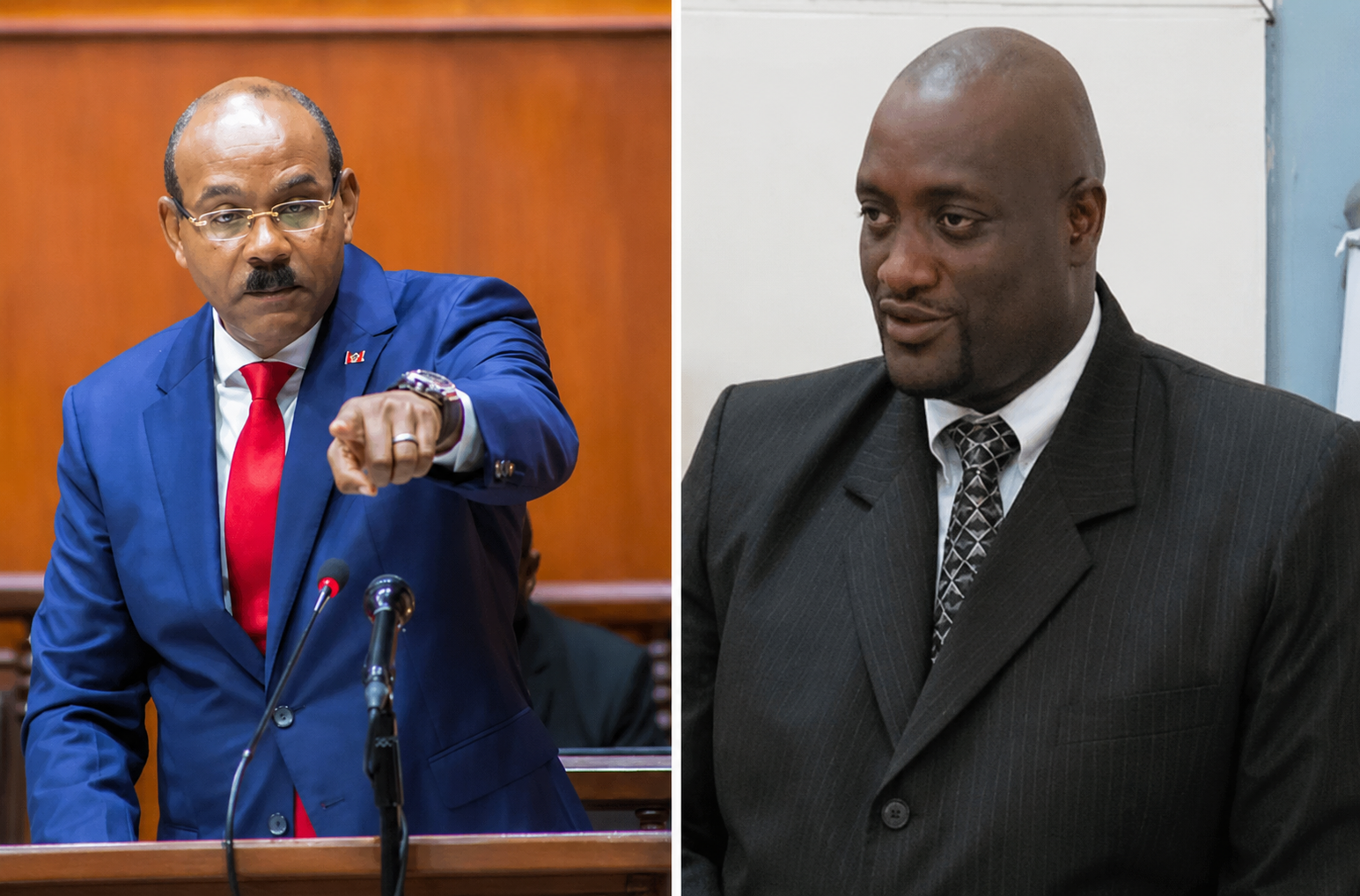
A high-profile public dispute has erupted between Antigua and Barbuda’s Prime Minister Gaston Browne and Director of Public Prosecutions (DPP) Clement Joseph, centered on a fundamental question: are top prosecutorial officials obligated to explain their case decisions to the general public?
The conflict was sparked after Joseph recently made public comments arguing that the country’s Constitution grants his office broad prosecutorial independence, and does not require him to justify individual case rulings to the public. His remarks came amid mounting public criticism following his office’s dismissal of two high-profile recent criminal cases.
In a sharp public rebuke, Browne pushed back directly against Joseph’s stance, warning that the DPP’s position could erode public trust in the nation’s entire justice system. In a scathing public post, Browne questioned: “Really Mr DPP? You are El supremo – Beyond reproach? As a public servant, you are not accountable to the public who pays your bill and at whose ultimate discretion and pleasure you serve?”
The Prime Minister added that he holds out hope Joseph’s controversial comments were the result of misquotation, framing the claim that the DPP owes no public explanation as a reckless statement that risks damaging public confidence in the prosecutorial office. “For any avoidance of doubt, no one is above the law and no one is beyond reproach,” Browne emphasized.
For his part, Joseph has stood by his original position, while acknowledging that judicial oversight provides a check on his authority. He clarified that parties aggrieved by his decisions are permitted to challenge rulings in court if they are deemed unreasonable or amount to an abuse of power. The DPP also noted that while he supports transparency as a core principle, some prosecutorial matters must remain confidential, only disclosed on a strict need-to-know basis. He rejected calls to break confidentiality for political gain or to appease public criticism, adding that his office already publishes annual updates on broad prosecutorial trends at the opening of each law term, and the constitutional framework does not mandate explanations for individual case outcomes.
The debate has drawn perspectives from other legal experts in the country, with Wendell Alexander, an attorney-at-law and former Police Commissioner, aligning with the Prime Minister’s position. Alexander argued that proactive transparency around high-interest cases strengthens, rather than weakens, public confidence in the justice system. “In the interest of transparency, I would say that the public has a right to know because the Office of the Director of Public Prosecutions is a public office,” he explained.
Alexander added that when a prosecutorial decision sparks widespread public concern, offering a clear public explanation benefits the entire administration of justice. He also echoed Joseph’s note that the DPP’s constitutional powers are not unlimited, noting that all decisions remain open to judicial review by the High Court if found to be unreasonable or abusive.
The public clash has now reignited a broader national debate over the delicate balance between three core principles of Antigua and Barbuda’s justice system: prosecutorial independence, the need for case confidentiality, and the public’s right to government accountability.