分类: politics

  • PM on petitions: ‘Grinch will not steal this Christmas from the people’  (+video)

    PM on petitions: ‘Grinch will not steal this Christmas from the people’  (+video)

    Prime Minister Godwin Friday has responded with dismissive humor to legal petitions filed by opposition candidates challenging both his election and that of Foreign Minister Fitz Bramble. The Unity Labour Party (ULP) claimants, Carlos Williams and Luke Browne, submitted their petitions on Thursday, arguing that the officials’ Canadian citizenship rendered them constitutionally ineligible for nomination in the November 27 general elections.

    Both Friday and Bramble were born in St. Vincent and the Grenadines but acquired Canadian citizenship as adults. The ULP contends this represents an acknowledgment of allegiance to a foreign power, violating the nation’s constitution. However, the elected officials counter that constitutional provisions specifically accommodate Commonwealth citizens, permitting their electoral participation regardless of Vincentian citizenship status.

    Prime Minister Friday, serving as Northern Grenadines representative since 2001, brushed off the challenges during the country’s inaugural VAT-free shopping day. ‘This is the Christmas season,’ he remarked to iWitness News. ‘The people gave us an overwhelming mandate, even after they campaigned about all the things that they wanted to raise.’ He added metaphorically: ‘The Grinch will not steal this Christmas from the people.’

    The political context underscores the significance of these petitions: the New Democratic Party secured a historic victory in the November elections, winning all 15 parliamentary seats and ending the ULP’s 24-year governance. The VAT-free shopping initiative itself fulfilled an NDP campaign promise addressing the nation’s cost-of-living crisis, marking the first such tax relief since VAT implementation in 2007.
  • EU keurt lening van $ 106 miljard goed voor Oekraïne

    EU keurt lening van $ 106 miljard goed voor Oekraïne

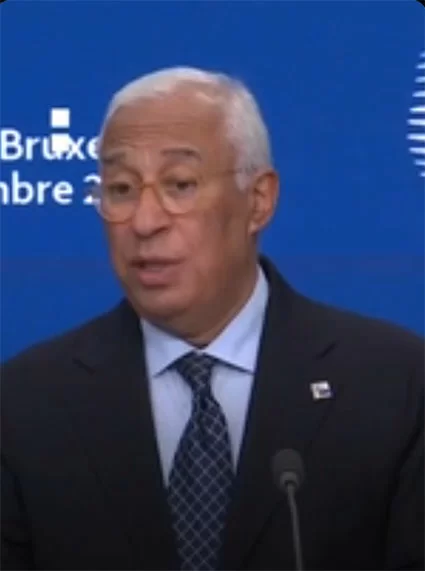
    European Union leaders reached a landmark agreement Friday to provide Ukraine with a massive €90 billion ($106 billion) interest-free loan to address the country’s military and economic needs through 2027. The decision came after marathon negotiations that exposed deep divisions within the bloc regarding the use of frozen Russian assets.

    The agreement, announced by EU Council President António Costa via social media, represents a critical financial lifeline for Ukraine as it approaches potential bankruptcy by spring 2025. The International Monetary Fund estimates Ukraine will require €137 billion ($161 billion) during 2026-2027 to sustain its defense efforts and maintain government operations.

    Originally, EU officials had contemplated utilizing approximately €210 billion ($246 billion) in Russian central bank assets frozen primarily in Belgium. However, this proposal encountered staunch opposition from Belgian Prime Minister Bart De Wever, who characterized the plan as legally precarious and potentially damaging to Euroclear, the Brussels-based financial clearinghouse holding €193 billion ($226 billion) in frozen Russian funds.

    The negotiations stretched late into Thursday night as leaders attempted to reassure Belgium about protection from Russian retaliation. When talks reached an impasse, the EU ultimately opted to raise the funds through capital markets rather than risk setting what De Wever described as a “dangerous global precedent for legal certainty.”

    Hungary, Slovakia, and Czech Republic opposed the aid package but ultimately agreed not to block it in exchange for financial protection guarantees. Hungarian Prime Minister Viktor Orbán, who maintains close ties with Russian President Vladimir Putin, declared that “giving money means war” and dismissed the rejected asset-seizure plan as a “dead end.”

    French President Emmanuel Macron praised the agreement as a “significant step forward,” while German Chancellor Friedrich Merz confirmed that the frozen Russian assets would remain blocked until Russia pays war reparations to Ukraine—estimated by President Volodymyr Zelenskyy at over €600 billion ($700 billion). Merz emphasized that the EU reserves the right to utilize immobilized Russian funds for loan repayment if Russia fails to provide compensation.

    The decision came amid intense protests by European farmers angry about a proposed trade deal with South American nations, creating a tumultuous backdrop for the Brussels summit that Ukrainian President Zelenskyy attended to personally advocate for urgent financial support.

  • Dominica PM pleased with suspension of proclamation baring nationals from traveling to United States

    Dominica PM pleased with suspension of proclamation baring nationals from traveling to United States

    In a significant diplomatic development, the United States has suspended its recently announced travel restrictions targeting nationals from Dominica and Antigua & Barbuda. The decision comes after high-level discussions between Caribbean leaders and U.S. officials, effectively halting a proclamation that would have barred citizens of these nations from entering American territory starting January 1, 2026.

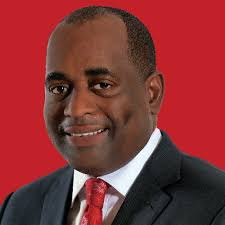
    Dominican Prime Minister Roosevelt Skerrit expressed appreciation for the suspension during a national address on state-owned DBS Radio. He confirmed that following productive negotiations with both the U.S. Embassy in Barbados and officials at the State Department in Washington, an agreement was reached to temporarily set aside the controversial immigration policy announced by President Donald Trump on December 16, 2025.

    The original proclamation specifically targeted countries offering Citizenship by Investment (CBI) programs without residency requirements, which U.S. authorities claimed presented significant challenges for security screening and vetting procedures. Both Dominica and Antigua & Barbuda operate such programs, granting citizenship to foreign investors who make substantial contributions to their socio-economic development.

    President Trump’s executive order had argued that these CBI programs could enable individuals from restricted countries to obtain citizenship from Caribbean nations and subsequently apply for U.S. visas, potentially circumventing existing travel bans. The document further expressed concerns about identity concealment and asset hiding through these investment citizenship schemes.

    Prime Minister Skerrit assured Dominican citizens that all current visa holders remain eligible to travel to the United States beyond the January 1 deadline. He emphasized his administration’s commitment to continuing collaborative relations with Washington, stating, “We are prepared to continue working with the U.S. on whatever issues they may have, moving forward together as partners.”

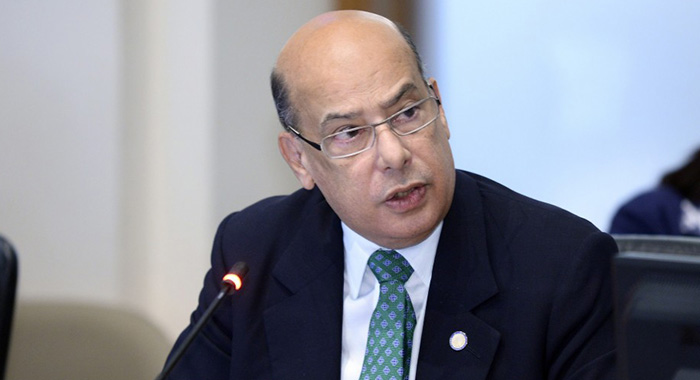
    Simultaneously, Antigua and Barbuda confirmed receiving similar suspension terms through their Ambassador to the United States, Sir Ronald Sanders. The agreement ensures no revocation of existing visas issued before December 31, 2025, and covers all categories including tourist, business, student, and other nonimmigrant visas. Both nations are now engaged in ongoing discussions with U.S. authorities to establish new biometric data collection systems that will ensure compatibility with American security requirements for future visa applications.

  • Antigua, US reach agreement on visa issue

    Antigua, US reach agreement on visa issue

    ST. JOHN’S, Antigua – The government of Antigua and Barbuda has successfully negotiated a significant agreement with the United States that protects visa privileges for its citizens despite recent immigration restrictions imposed by the Trump administration. The breakthrough came after high-level diplomatic discussions between Antiguan officials and U.S. State Department representatives.

    Under the terms confirmed by Antigua and Barbuda’s Ambassador to the United States, Sir Ronald Sanders, all currently valid U.S. visas held by Antiguan nationals will remain honored for entry into the United States. This protection extends across all visa categories including tourist (B-1/B-2), student (F, M), and exchange visitor (J) visas. Additionally, the agreement guarantees that no existing visas issued to Antiguan citizens will be revoked before December 31, 2025.

    The diplomatic resolution follows President Trump’s recent executive order that had targeted several Caribbean nations offering Citizenship by Investment (CBI) programs. The proclamation, issued on December 16, specifically identified Antigua and Barbuda and Dominica for suspension of certain immigration categories due to security concerns regarding their residency-free citizenship programs.

    The U.S. administration expressed apprehension that CBI programs could potentially allow individuals from restricted countries to obtain citizenship from Caribbean nations and subsequently bypass U.S. travel restrictions. Officials cited historical vulnerabilities in such programs that might enable concealment of identity or assets.

    Looking beyond 2025, both governments are developing new arrangements that will include enhanced biometric data collection systems for Antiguan passport holders. Ambassador Sanders emphasized that the technological upgrades would apply uniformly to all citizens regardless of how they obtained citizenship—whether by birth, descent, naturalization, or investment.

    The diplomat expressed appreciation for the constructive engagement from U.S. officials and reaffirmed Antigua and Barbuda’s commitment to cooperating on security measures while preserving legitimate travel opportunities for its citizens.

  • Chief Elections Officer: 700 voters have been confirmed out of 9000 applicants

    Chief Elections Officer: 700 voters have been confirmed out of 9000 applicants

    The Electoral Office of Dominica has reported significant progress in its ongoing national voter confirmation initiative, with official figures indicating robust public participation. According to a recent press release, electoral authorities have received more than 9,000 applications for voter verification since the program’s inception.

    Chief Elections Officer Anthea Joseph provided detailed insights into the verification mechanics, explaining that each application undergoes multiple layers of scrutiny before official voter confirmation is granted. This meticulous process has already resulted in the confirmation of over 700 applicants, with thousands more currently in various stages of review.

    Addressing circulating concerns about procedural delays, Ms. Joseph categorically denied any significant setbacks, emphasizing the institution’s commitment to both transparency and electoral integrity. “The verification process is proceeding according to established timelines,” she stated, dismissing rumors of operational deficiencies.

    The Electoral Office also announced the imminent distribution of Voter Identification cards, marking the next phase in strengthening Dominica’s electoral infrastructure. This development represents a critical step toward enhancing the credibility and security of the nation’s democratic processes.

    Officials confirmed that regular updates will be provided as the verification initiative continues to evolve, ensuring ongoing public awareness regarding this fundamental aspect of electoral preparation.

  • OP-ED: Are we in a new cold war?  A CARICOM perspective

    OP-ED: Are we in a new cold war? A CARICOM perspective

    The recent expansion of the US travel ban to include Antigua and Barbuda along with Dominica has sent ripples through the Caribbean community, representing more than mere policy changes but a fundamental shift in regional relations. This development coincides with substantial American military mobilization in the region, featuring the deployment of the USS Gerald R. Ford near Venezuela’s coastline and over 15,000 personnel conducting operations that have reportedly resulted in numerous casualties.

    For Caribbean citizens, the United States has historically represented familial connections rather than diplomatic challenges—the destination for summer visits, family weddings, educational opportunities, and cultural exchange. This deep interconnection now faces unprecedented complications as geopolitical tensions escalate.

    The current generation, raised during three decades of regional peace and extensive American cultural influence, lacks the framework to comprehend superpower dynamics that their Cold War-era grandparents understood instinctively. The Caribbean has transformed into what scholars describe as a de facto Zone of Peace—not merely diplomatic rhetoric but lived reality where military conflict remains alien to daily existence.

    Caribbean nations demonstrate inherent anti-militarism not as ideological pacifism but as practical reality. With defense forces that could assemble in small auditoriums, these nations perceive warfare as distant phenomena occurring in failed states rather than policy instruments. Thus, American discussions of “military options” and visible aircraft carriers generate cultural dissonance within the region.

    Caribbean leaders now face impossible choices without cost-free solutions. Trinidad’s Prime Minister faced Venezuelan accusations of warmongering for permitting US military access, while Antigua’s refusal to host American radar installations coincided with its inclusion on the travel ban list. Grenada currently weighs similar decisions under intense pressure. Each choice carries consequences affecting visa applications, trade relationships, economic stability, and development opportunities.

    The present crisis represents the most significant Western Hemisphere military deployment since the Cuban Missile Crisis, complete with Venezuelan oil blockades and Caracas turning to China, Russia, and Iran for support. CARICOM responses have involved improvised individual calculations rather than coordinated strategy.

    Navigating this new reality requires rediscovering what Professor C. Justin Robinson terms “Caribbean dance moves”—the diplomatic skill of maintaining balance amid shifting power dynamics, preserving relationships despite changing circumstances, and exercising sovereignty while acknowledging geopolitical realities. This demands sophisticated diplomacy that balances deep American connections against sovereign decision-making rights.

    For a generation raised in peace and cultural interconnection with America, the sudden need to comprehend superpower politics represents both challenge and necessity. The music has restarted, and the Caribbean must dance with the giants once more.

  • ‘Most public servants’ to get 1 month’s salary as bonus in January — PM

    ‘Most public servants’ to get 1 month’s salary as bonus in January — PM

    Prime Minister Godwin Friday has confirmed that the majority of public servants in St. Vincent and the Grenadines will receive a bonus equivalent to one month’s salary in January. The announcement came during a kerbside interview in Kingstown, where the Prime Minister addressed the implementation of his administration’s pre-election commitments.

    The bonus payment, part of the New Democratic Party’s (NDP) 60-day pledge following their landslide victory in the November 27 general election, will be structured to provide greater benefits to lower-income civil servants. “The salary bonus will come. We are working out the mechanics of it,” Friday stated, emphasizing that the government remains committed to fulfilling its campaign promise within the stipulated timeframe.

    The Prime Minister’s announcement comes amid public debate regarding discrepancies in campaign pledge cards circulated before the election. While one version promised a double salary within one month of taking office, another referenced a “bonus salary” within 60 days. The NDP’s decisive victory, winning 14 of 15 parliamentary seats, ended 24 years of Unity Labour Party governance.

    Opposition Leader Ralph Gonsalves has characterized the bonus promise as a “big deception,” reflecting the political tensions surrounding the implementation of campaign pledges. The government has also delivered on another election commitment by implementing the country’s first VAT-free shopping day, demonstrating its ongoing efforts to fulfill campaign promises.

  • Trump Orders Marijuana Reclassification

    Trump Orders Marijuana Reclassification

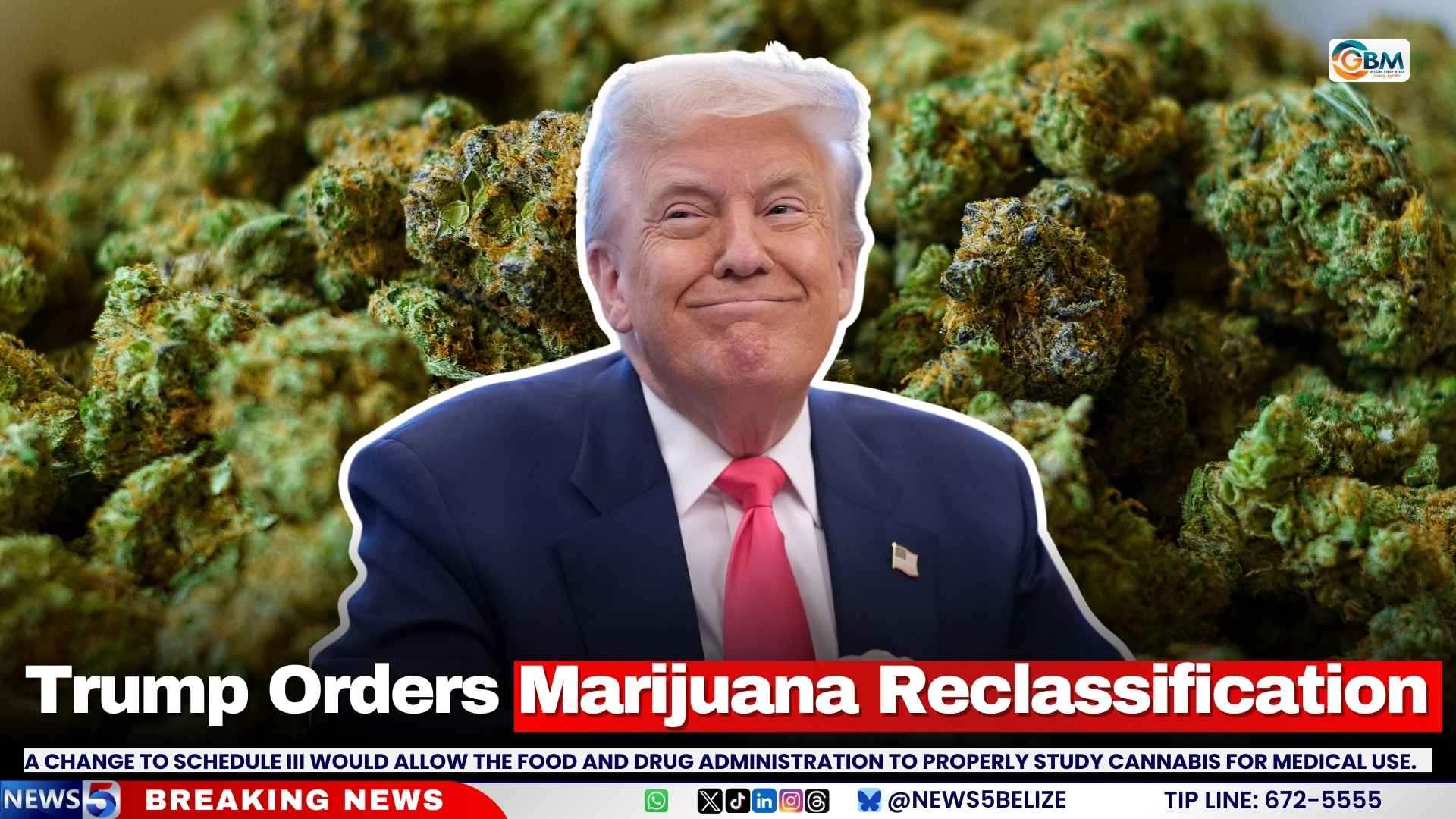
    In a landmark move on December 19, 2025, President Donald Trump enacted a significant shift in U.S. drug policy by signing an executive order to accelerate the reclassification of marijuana at the federal level. The directive mandates the removal of cannabis from its current status as a Schedule I substance—a category reserved for drugs deemed to have no medical value and high abuse potential, such as heroin and LSD—and transitions it to Schedule III.

    Schedule III classification acknowledges recognized medical applications and a lower potential for dependency than Schedules I and II. This category includes pharmaceuticals like ketamine and Tylenol with codeine. From the Oval Office, President Trump framed the decision as a matter of “common sense,” emphasizing its aim to aid individuals suffering from chronic pain while explicitly ruling out the legalization of recreational use.

    “This action in no way legalizes marijuana in any form,” Trump stated. “My position is clear: unless a medical professional recommends it for a legitimate health reason, you should not use it.”

    The executive order specifically tasks Attorney General Pam Bondi with overseeing the completion of the rescheduling process and issuing a final ruling. This administrative change would empower the Food and Drug Administration (FDA) to conduct comprehensive research into the medicinal properties and potential applications of cannabis, a process heavily restricted under the previous classification.

    The policy shift aligns with evolving public opinion. A recent Gallup poll from November, cited by NBC News, indicates that 64% of Americans now support the full legalization of marijuana, highlighting a significant cultural and political trend that the administration’s action appears to partially address.

  • U.S Visa Update From Sir Ronald Sanders Ambassador of Antigua and Barbuda to the United States

    U.S Visa Update From Sir Ronald Sanders Ambassador of Antigua and Barbuda to the United States

    In a significant diplomatic development, Antigua and Barbuda has secured crucial assurances from the United States regarding visa arrangements following Washington’s recent security proclamation. Ambassador Sir Ronald Sanders, acting under direct instructions from Prime Minister Gaston Browne, held high-level discussions with U.S. State Department officials to address concerns arising from the December 16, 2025 proclamation restricting foreign national entry.

    The negotiations yielded three key agreements that provide substantial protection for Antiguan and Barbudan citizens. First, all currently valid U.S. visas held by passport holders will remain fully recognized and accepted for entry without exception. This comprehensive protection covers all visa categories including tourist (B-1/B-2), exchange visitor (J), and student (M) visas.

    Second, U.S. authorities confirmed there will be no revocation of any visas issued to nationals prior to December 31, 2025. This guarantee provides stability for existing visa holders amid changing security protocols.

    Third, for new visa applications submitted after December 31, 2025, both governments will develop mutually agreeable arrangements focusing specifically on biometric information collection. The enhanced system will ensure full compatibility with U.S. biometric standards while applying equally to all citizens regardless of acquisition method—whether by birth, descent, naturalization, or investment.

    Ambassador Sanders expressed appreciation for the constructive engagement from U.S. officials, acknowledging America’s security concerns while emphasizing Antigua and Barbuda’s commitment to cooperative security measures. The agreement represents a balanced approach that protects U.S. national security interests while preserving legitimate travel and people-to-people exchanges between the two nations.

  • PM Briceño Says Conservation Can Protect Fishers’ Livelihoods

    PM Briceño Says Conservation Can Protect Fishers’ Livelihoods

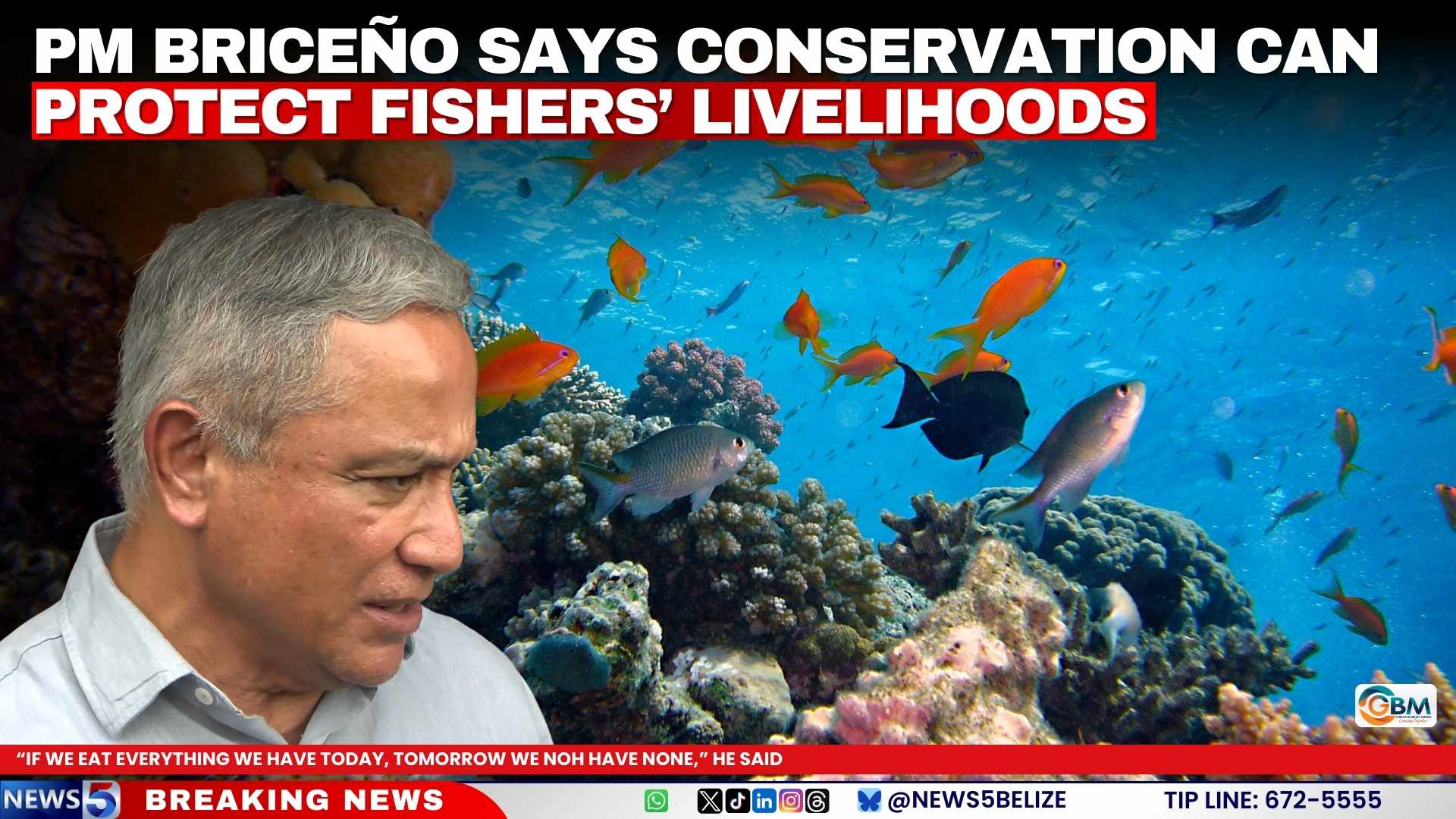
    Amid mounting apprehensions within Belize’s fishing sector regarding proposed marine conservation measures linked to the Blue Bond agreement, Prime Minister John Briceño has emphatically countered assertions that environmental protections endanger economic livelihoods. Speaking on December 19, 2025, Briceño articulated a compelling vision where ecological preservation and fishing industry prosperity coexist harmoniously.

    The fishing and tourism industries have expressed concerns that expanding marine protected areas would restrict access to prime lobster and conch harvesting grounds, potentially jeopardizing employment opportunities and coastal community economies. However, Prime Minister Briceño presented a contrasting perspective, asserting that strategic conservation efforts ultimately fortify fishing sustainability.

    Employing vivid imagery, Briceño stated, “If we consume all available resources today, we face emptiness tomorrow,” emphasizing how protected zones enable fish population recovery that benefits fishermen through increased future yields. The Prime Minister referenced established marine reserves as tangible evidence of successful coexistence between conservation and commercial fishing activities.

    Briceño specifically highlighted the Port of Honduras Marine Reserve, where initial skepticism transformed into widespread acceptance as fishermen witnessed stock regeneration. “The fish mature within protected boundaries before migrating to adjacent fishable areas, resulting in larger catches and recognized benefits for all stakeholders,” he explained.

    Furthermore, the Prime Minister cited Glover’s Reef as another success story, where local guides and fishermen actively participate in reserve protection. During a recent visit, Briceño recounted conversations with community members who vigilantly monitor protected waters and promptly report unauthorized vessels to coast guard authorities. This collaborative approach has yielded significantly larger conch, lobster, and fish populations, demonstrating the practical advantages of science-based conservation partnerships.

    Briceño concluded by emphasizing the necessity of transparent dialogue, stating, “We must engage in constructive discussions and present the scientific rationale underlying these conservation decisions” to ensure all stakeholders understand the long-term benefits of sustainable marine resource management.