分类: politics

  • Dominican Republic renews U.S. access to Las Américas Airport and San Isidro Air Base

    Dominican Republic renews U.S. access to Las Américas Airport and San Isidro Air Base

    Santo Domingo, Dominican Republic – The Caribbean nation has reauthorized temporary access for United States aircraft and military personnel to two key air facilities, Las Américas International Airport and San Isidro Air Base, as a core component of bilateral security cooperation under the multilateral Shield of the Americas initiative.

    Under the terms of the renewed authorization, U.S. aircraft are permitted to conduct overflights, land, and park at the two sites, with all activity operating under the direct supervision of Dominican national authorities. Local security officials have emphasized that the agreement is designed to bolster cross-border and regional security capacity, boosting joint efforts including aerial surveillance operations, real-time intelligence sharing, specialized training programs for Dominican personnel, and targeted technical assistance.

    These collaborative measures are focused on addressing persistent threats to the Dominican Republic and the broader Caribbean region, including illicit drug trafficking, transnational organized criminal networks, and other evolving cross-border security risks.

    As an addendum to the broader bilateral security framework, the Dominican government also signed a non-binding memorandum of understanding that creates a pathway for the temporary, exceptional entry of a small group of third-country nationals. The provision only applies to transiting travelers with no prior criminal records, and places strict limits on the number of individuals eligible for this arrangement.

    In a parallel move to strengthen national security infrastructure, the Dominican government is currently rolling out modernization upgrades to airport and border security systems. The upgrades integrate cutting-edge biometric identification technologies and new digital verification tools, which officials say will not only enhance domestic and regional security but also lay the groundwork for improved air connectivity and growth in the country’s critical tourism sector in the long term.

  • Abinader named keynote speaker at World Free Zones Congress in Panama

    Abinader named keynote speaker at World Free Zones Congress in Panama

    On Tuesday, Dominican Republic President Luis Abinader will embark on an official trip to Panama, where he is set to take center stage at the 2024 World Free Zones Congress. Scheduled to run across May 12 and 13, the global gathering will feature Abinader as the event’s keynote speaker, with a core mission to position the Caribbean nation as a premier investment hub for global companies eyeing expansion in free zone operations, advanced logistics, and high-value manufacturing.

    Beyond his keynote address, Abinader has planned a full schedule of targeted engagements with top international corporate executives and leading figures from Panama’s local business community. These one-on-one and group meetings are designed to highlight the Dominican Republic’s competitive advantages in specialized free trade zone sectors, from favorable regulatory frameworks to strategic geographic positioning, and drum up new foreign capital commitments for the country.

    This investment outreach forms a central plank of the Abinader administration’s broader economic strategy, which aims to steadily boost foreign direct investment inflows and cement the Dominican Republic’s standing as one of the most dynamic and fast-growing economies in Latin America.

    Abinader will also hold a formal bilateral meeting with his Panamanian counterpart, President José Raúl Mulino, to discuss bilateral relations and potential cross-border economic cooperation between the two nations. He will be joined on the trip by a high-level official delegation including Eduardo Sanz Lovatón, Dominican Minister of Industry, Commerce and MSMEs, Biviana Riveiro, and Dominican Ambassador to Panama Roberto Salcedo.

  • Employers in Dominican Republic face fines for hiring illegal foreign labor

    Employers in Dominican Republic face fines for hiring illegal foreign labor

    SANTO DOMINGO — Dominican Republic’s top immigration agency has launched a renewed enforcement push targeting businesses and individuals that hire foreign workers without valid immigration status, threatening steep financial penalties for non-compliant employers. The General Directorate of Migration (DGM) director general, Luis Rafael Lee Ballester, confirmed the enforcement action applies across all major labor sectors, from formal commercial enterprises to private domestic employers and agricultural operations that rely on foreign labor.

    As of the latest update from the agency, 112 companies have already been issued sanctions for violating the country’s immigration employment rules. Penalties are structured based on the severity of each violation, with fines falling between 15 and 20 times the national minimum wage. To operate legally when hiring foreign workers, employers are required to secure the Temporary Worker Permit (TT-1), a process that mandates verification that every foreign employee entered the Dominican Republic through legal channels with a valid, appropriate visa. Once verified, employers must also register their foreign staff with two key government bodies: the Ministry of Labor and the Social Security Treasury (TSS). This registration ensures foreign workers gain access to mandatory health insurance and occupational risk coverage, bringing them into compliance with the country’s labor and social protection regulations.

    Beyond the hiring process, employers also bear an ongoing legal responsibility to notify DGM any time a foreign worker is dismissed from their role. This notification allows immigration authorities to review the worker’s current immigration status and take appropriate follow-up action if needed. To streamline enforcement and expand access to legitimate permit services across the country, Lee Ballester noted that DGM is currently working to strengthen and decentralize its operations. The agency has expanded service locations to major population and tourism hubs including Santo Domingo, Punta Cana, Puerto Plata, and Santiago, with the goal of boosting operational efficiency and rolling out consistent regulatory support to all regions of the Dominican Republic.

  • Leonel Fernández meets Turkish ambassador to discuss bilateral collaboration

    Leonel Fernández meets Turkish ambassador to discuss bilateral collaboration

    A high-level diplomatic meeting held at the headquarters of the Global Democracy and Development Foundation (FUNGLODE) in Santo Domingo has opened new doors for expanded cross-border collaboration between the Dominican Republic and Türkiye. The gathering brought together Leonel Fernández, former Dominican president and current head of FUNGLODE, and Emriye Bağdagül Ormancı, Türkiye’s appointed ambassador to the Caribbean nation, to map out new partnership pathways across academic, cultural and institutional sectors.

    Against a backdrop of growing global interest in deepening south-south and inter-regional cooperation, the two sides centered their discussions on concrete initiatives spanning education, joint academic research, cross-cultural dialogue and shared action on sustainable development. Both parties made clear their shared enthusiasm for broadening people-to-people exchanges and launching collaborative projects that deliver mutual benefits to both nations.

    During the meeting, Fernández reiterated FUNGLODE’s long-standing dedication to fostering international connectivity and open knowledge exchange across borders. He underscored that the foundation’s mission aligns closely with efforts to strengthen formal diplomatic ties between the Dominican Republic and Türkiye. For her part, Ambassador Ormancı stressed Türkiye’s continued commitment to deepening bilateral relations with the Dominican Republic, noting untapped potential for growth across the areas highlighted in the discussion.

    The meeting was also attended by two other participating officials: Cansu Onur, third secretary of the Turkish Embassy in the Dominican Republic, and Guacayarima Sosa Machado, marking a formal delegation-level engagement to advance the new cooperation agenda.

  • Decision Day: Bahamians head to polls to choose next govt

    Decision Day: Bahamians head to polls to choose next govt

    Bahamian voters are heading to polling stations across the archipelago on Thursday to decide one of the most consequential political contests in the nation’s modern history: whether to grant incumbent Prime Minister Philip “Brave” Davis a rare second consecutive term, or to oust his Progressive Liberal Party (PLP) and return the Free National Movement (FNM) to power. The outcome will either break or perpetuate the decades-long pattern of alternating rule between the country’s two dominant political parties that has defined Bahamian electoral politics since independence.

    The snap election, called three months earlier than constitutionally required, caps a tense, condensed campaign season that laid bare deep public anxiety over core domestic issues: soaring cost of living, unaddressed immigration challenges, questions of election integrity, and a persistent lack of government accountability. More than 209,000 registered Bahamian voters are eligible to cast ballots across 40 newly expanded constituencies, which added St James in western New Providence, and Bimini and the Berry Islands ahead of this vote. This total marks a record high for voter registration, driven by a late surge in sign-ups after Davis dissolved Parliament on April 8 to call the early contest.

    Davis, who led the PLP to a decisive victory over the FNM in the 2021 general election, gambled on an early vote to capitalize on strengthening macroeconomic indicators that have emerged during his first term. The Bahamas has seen improved sovereign credit ratings, a robust tourism-driven recovery from the economic collapse triggered by the COVID-19 pandemic, and a wave of new foreign direct investment. The incumbent party has campaigned on this track record of economic stabilization, framing itself as the only force capable of continuing the nation’s post-pandemic progress.

    Against this backdrop of top-line growth, however, ordinary voters continue to grapple with persistent daily financial pressures: skyrocketing grocery costs, soaring rent and utility bills, and strained access to affordable healthcare. To address these concerns, the PLP’s “Blueprint for Progress” campaign manifesto pledges a slate of new policy initiatives: expanded worker protections, stricter immigration enforcement, a new migrant health insurance scheme, targeted investment in artificial intelligence infrastructure, expanded job training programs, and expanded housing assistance, all aligned with Davis’ campaign slogan of helping Bahamians “learn, earn and own.” Throughout the final stretch of the campaign, Davis framed the contest as a stark choice between continued progress and a return to failed past policies, dismissing the FNM as unfit to govern, arguing the opposition lacks both the ideological vision and temperament to lead the nation.

    The FNM, led by party leader Michael Pintard, has sought to flip Davis’ framing, positioning itself as a transparent, accountable alternative to the scandal-plagued incumbent administration. Pintard has repeatedly pushed back on Davis’ attacks, arguing that the Davis administration has failed to deliver on its 2021 promises of reform, has done little to ease cost of living pressures for working families, and has consistently fallen short on transparency commitments.

    The FNM’s manifesto puts forward a series of populist policy pledges designed to resonate with struggling voters: eliminating value-added tax (VAT) on essential groceries, medical supplies and educational materials; launching a new national lottery to generate revenue for social programs; constructing at least 5,000 new affordable homes; hiring 100 additional doctors and 200 new nurses to expand public healthcare capacity; strengthening immigration enforcement; and rolling out the long-delayed Freedom of Information Act (FOIA) within the first 90 days of taking office.

    The FOIA pledge has proven particularly potent for the opposition, as transparency has emerged as one of the PLP’s biggest vulnerabilities. When Davis took office in 2021, he campaigned on sweeping accountability reforms, but many long-discussed anti-corruption and open government measures remain stalled or unimplemented. While Davis has defended his record, framing transparency as a matter of personal character and trust, the opposition has seized on these delays to argue the incumbent administration has no interest in being held accountable to public scrutiny.

    Beyond policy disputes, the campaign has been overshadowed by persistent concerns about the integrity of the voter roll and electoral administration. Over the past several months, multiple court cases have been filed involving foreign nationals accused of possessing fraudulent voter identification cards and other official government documents. While Parliamentary Commissioner Harrison Thompson has repeatedly defended the accuracy and integrity of the voter register, opposition leaders and independent civil society activists have continued to raise red flags about systemic vulnerabilities. Those concerns escalated after early voting was marred by long lines and widespread administrative failures. PLP chairman Fred Mitchell denied claims of systemic chaos but acknowledged that the long wait times voters faced were unacceptable, admitting that election officials failed to properly calculate the number of polling booths, voting spaces and staff needed to accommodate early voters.

    Multiple controversies have also hounded the incumbent PLP in the final weeks of the campaign. The Bahamian Tribune reported that more than $200,000 in Hurricane Dorian relief gift certificates distributed to Abaco residents in the names of PLP candidates and party officials were funded through the Ministry of Finance, according to testimony from Premier Importers CEO Chris Lleida. Shortly after that controversy broke, reports emerged that outstanding electricity bills for residents of Grand Cay and Moore’s Island were cleared to zero just two weeks before the election, shortly after Davis visited the islands and promised debt relief. Government officials defended the move, saying it was meant to resolve long-standing billing discrepancies that dated back to Hurricane Dorian and the COVID-19 pandemic. But critics have called the timing suspicious, with former Prime Minister Hubert Ingraham publicly accusing the PLP of attempting to buy votes ahead of polling day.

    The contest has also exposed deep internal rifts within both of the Bahamas’ major parties. Former FNM Prime Minister Dr. Hubert Minnis is running as an independent candidate in the Killarney constituency after being denied the party’s nomination for his seat. Meanwhile, Ingraham, another former FNM prime minister, made a rare return to the campaign trail to stump for the party, leveling sharp criticism against PLP Fort Charlotte candidate Sebas Bastian, warning of the risks of Bastian rising to a leadership role within the PLP.

    A third force, the Coalition of Independents led by Lincoln Bain, has positioned itself as a radical break from the decades-old PLP-FNM cycle of alternating power, framing itself as a new option for voters fed up with both major parties. To date, however, no third party has ever won enough seats to form a government in the Bahamas’ post-independence history. International electoral observers are on the ground across the country to monitor Thursday’s voting process, closely watching for any signs of irregularity as the nation waits for results.

  • Land titling to be modernised under $1.42 billion Korea-Jamaica partnership

    Land titling to be modernised under $1.42 billion Korea-Jamaica partnership

    KINGSTON, Jamaica – In a landmark step toward strengthening property rights and driving inclusive national development, the Government of Jamaica has formalized a new partnership with the Korea International Cooperation Agency (KOICA) to launch a $1.42 billion initiative focused on transforming the country’s outdated land administration framework.

    The cross-border collaboration between Seoul and Kingston is designed to deliver three core long-term benefits: formally secured land rights for more Jamaican homeowners, more robust governing institutions for land management, and accelerated sustainable development by making land ownership verification and transfers more accessible and transparent to the public.

    Addressing attendees at the official signing ceremony, Jamaican Prime Minister Dr. Andrew Holness emphasized the far-reaching socioeconomic impact of the project beyond administrative reform. “A land title is more than a document, it is a platform for opportunity. This project is about building that platform at scale,” he said, noting that formalized land ownership unlocks access to loans, home improvement investments, and economic mobility for millions of Jamaican households.

    Scheduled for full implementation through 2030, the initiative centers on two key strategic upgrades to Jamaica’s land governance ecosystem. First, it will equip the National Land Agency (NLA), the country’s lead land management body, with cutting-edge digital infrastructure to cut processing times and reduce bureaucratic red tape. Second, it will establish a dedicated Land Administration Innovation Centre (LAIC) based at 84 Hanover Street in downtown Kingston, which will roll out targeted upskilling programs for local workers in geospatial planning and modern land management techniques.

    Construction and operational setup of the LAIC will be carried out gradually across the full implementation period of the project, according to official project outlines.

    Minister of Land Titling and Settlements Robert Montague shared context on the urgent need for reform, noting that Jamaica currently has roughly 900,000 distinct land parcels nationwide. As of today, only around 500,000 – just 55 percent of the total – have been formally titled, leaving nearly half of all land holdings undocumented and leaving owners without legal protections for their property.

    Sook Jin Byun, Country Director of KOICA based in the Dominican Republic, expressed confidence in the project’s success during the ceremony. “With the strong leadership and cooperation of the National Land Agency of Jamaica and together with the expertise of our Korean team, I believe that this project will make a very meaningful contribution to the modernisation of Jamaica’s land administration system,” Byun said.

    The initiative marks one of the largest bilateral development projects focused on land governance in Jamaica’s recent history, with expectations that it will lay the groundwork for years of more equitable economic growth.

  • Pintard promises change at final FNM rally

    Pintard promises change at final FNM rally

    On the eve of The Bahamas’ hotly contested general election, Free National Movement (FNM) leader Michael Pintard brought his party’s campaign to a close Saturday night with a sweeping call for national change, positioning the opposition as a transformative alternative to the incumbent Davis administration that has left thousands of Bahamians struggling economically.

    Speaking to a fired-up crowd of supporters at a rally held near the former Queen Elizabeth Sports Centre, Pintard framed the FNM’s core mission as restoring public trust in national governance, promising Bahamians a new administration rooted in honesty, transparency, and tangible improvements to everyday quality of life.

    “Tonight, we’ve come to make the case that things can in fact be different,” Pintard told the audience. “We are asking you once again to invest your trust in a team that promises to serve you in humility, to be honest in the conduct of public affairs, and to be open and transparent with you about how every decision is made.”

    Pintard opened his critique of the ruling Progressive Liberal Party (PLP) by questioning the impact of billions in value-added tax revenue collected by the Davis administration, asking supporters what tangible improvements Bahamians have actually seen in critical areas of daily life. “They’ve earned a tremendous amount of money and we are left to ask: What have they done with the money? What can we touch and feel that has made a difference in the most fundamental areas of our lives?” he said.

    The FNM leader cast the upcoming election as a defining battle for expanded economic opportunity, particularly for marginalized groups including young Bahamians, frontline healthcare workers, small business entrepreneurs, and working families struggling to make ends meet.

    Opening up about his personal background, Pintard reflected on his upbringing in a single-parent public-school household, crediting his mother with building the character and determination that led him to the final campaign rally of a national election. “I had no idea that one night I’d be on a stage at the last rally before a poll in one of the greatest countries on this side of glory,” he said.

    Pintard emphasized that the national government holds a fundamental “duty of care” to help children and young people build a more prosperous future than the current generation inherited, while warning against the rise of a system where personal and professional success depends exclusively on political connections rather than merit.

    He laid out the FNM’s key policy pledges ahead of the vote: the construction of 5,000 new affordable homes over a five-year term, the expansion of public healthcare staffing with 100 additional doctors and more than 200 new nursing positions, targeted grants and low-interest loans to grow small and medium entrepreneurship, and intentional economic diversification to reduce The Bahamas’ longstanding reliance on tourism and financial services. Pintard also highlighted the party’s priorities around strengthening national food security, protecting domestic fisheries, expanding technology infrastructure, and unlocking new economic opportunities in the blue and green economies. “We believe this country can grow on more than just tourism and financial services,” he added.

    On governance reform, Pintard pledged to implement long-delayed national Freedom of Information legislation to enforce greater government accountability and transparency, telling supporters he has no fear of open records because the FNM has no corrupt activity to hide. “I’m not scared of freedom of information because we ain’t going to be doing no crookedness,” he said.

    The opposition leader also spoke forcefully about strengthening border protection and upholding national sovereignty, promising to prioritize Bahamian workers for all available jobs and economic opportunities across the country. “We will never displace Bahamians who should have first option — first dibs — on all things in our country,” he said. Pintard closed his remarks by urging supporters to turn out in force to vote, framing the election as a once-in-a-generation defining moment that will shape the nation’s trajectory for years to come.

    Before Pintard took the stage, former Prime Minister Hubert Ingraham, a towering figure within the FNM, addressed the crowd to ramp up pressure on the incumbent administration, urging Bahamians to vote the PLP out of office to allow a new government to audit the nation’s public finances and citizenship records.

    Ingraham accused the Davis administration of failing to address a laundry list of public concerns, ranging from weak governance oversight and reckless public spending to fraudulent Bahamian passports, strained public healthcare services, and uncompetitive no-bid government contracts. He directly asked the crowd whether the PLP had earned a second term in office, delivering a sharp rebuke: “They haven’t earned it, don’t give it to them. They have failed to properly address multiple allegations against their governance, fraudulent Bahamian passports, excessive unexplained public expenditure, healthcare system in crisis, inadequate and inefficient public services.”

    The former prime minister added that the administration’s consistent inability to pay its public obligations and the award of “large numbers of no bid contracts for suspiciously exorbitant sums of money to a favored few are all good reasons” to deny the PLP another term. “It’s time for someone else to check our books,” Ingraham stressed. “Someone needs to check the books, the treasury, and somebody needs to check our citizenship record. If for no other reason, you vote tomorrow, vote for somebody else to have a look at the books.”

    Ingraham also defended Pintard against recent PLP criticism that the FNM leader lacks sufficient executive experience to serve as prime minister, noting that every first-time prime minister takes office without prior experience in the nation’s top job. He added that Pintard is already a tested leader, having served in two different cabinet positions during a previous FNM administration. “I hear some of them talking about experience, and how critical it is for a prime minister to have experience,” Ingraham said. “Well, the first thing is, nobody who gets elected for the first time has any experience as prime minister.”

  • St Mary Central MP questions delays and budgeting under SPARK programme

    St Mary Central MP questions delays and budgeting under SPARK programme

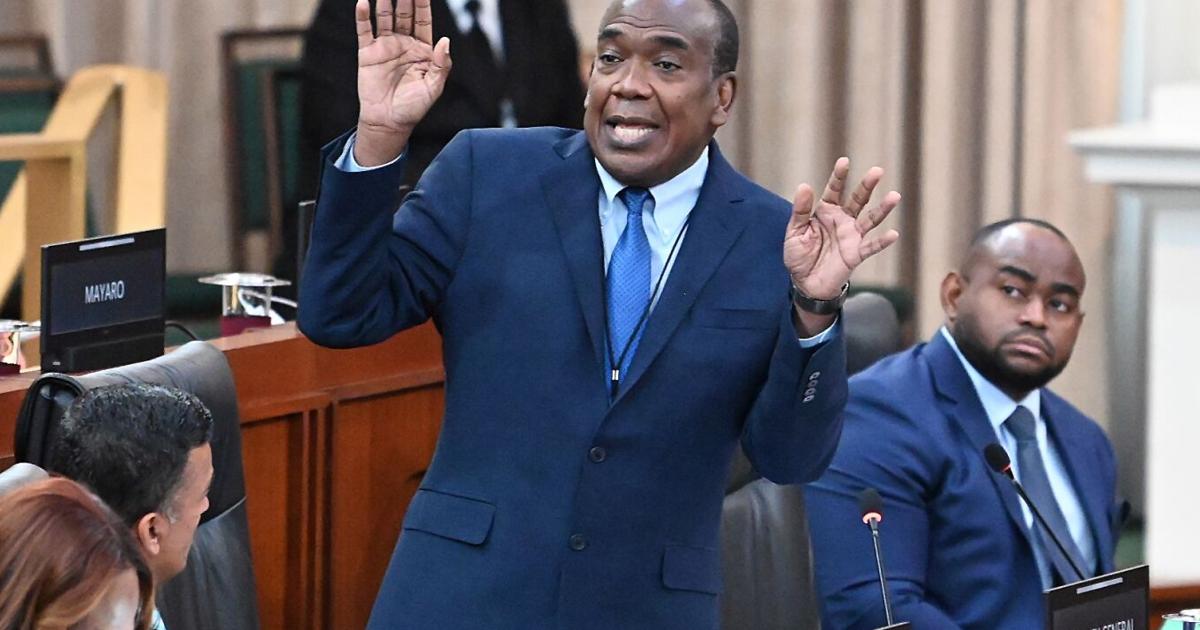
    KINGSTON, Jamaica — A sitting Jamaican lawmaker has launched sharp criticism of the national government’s flagship SPARK infrastructure initiative, flagging systemic problems ranging from delayed timelines and mismatched budgeting to flawed road selection that have left key communities stranded in unsafe, unnavigable conditions. Omar Newell, the Member of Parliament representing the St Mary Central constituency, laid out his grievances in a dedicated press briefing held Tuesday, branded “Uncovering the Facts on the SPARK Road Programme”, where he detailed years of broken promises that have eroded public confidence in the government’s development commitments.

    Designed to upgrade Jamaica’s crumbling road network and align with the administration’s broader economic growth and social development targets, the SPARK programme is structured into four large-scale construction packages focused on expanding and rehabilitating transportation infrastructure across the island. But for St Mary Central, Newell argues, the initiative has failed to deliver on even its most basic pledges, leaving multiple long-suffering communities stuck with deteriorating roadways that cripple daily life.

    Among the hardest-hit areas are Islington, Marlborough, Essex and Tremolesworth, where unsafe road conditions have brought everyday activity to a near standstill. “These communities are dying. Islington has a high school, one of two high schools in the constituency, and three primary schools. There is no safe way in and no safe way out,” Newell told reporters.

    The lawmaker recounted the timeline of unmet promises stretching back more than two years. During a public SPARK consultation held in May 2024, local residents were told that 10 roads across the constituency would be selected for rehabilitation under the programme. Newell left that meeting expecting key corridors including Thompson Town Road, Esher Avenue and Albion Mountain to be upgraded alongside several other critical routes.

    After Newell was confirmed as the St Mary Central parliamentary candidate, he was invited to name liaison officers for two prioritized road projects. Construction work on those projects kicked off in March 2025, with heavy excavation equipment and work teams mobilizing to begin overhauls.

    But the progress quickly ground to a halt over unresolved infrastructure issues, Newell claims. In April 2025, the liaison officer for the Kilancholly corridor flagged that contractors were preparing to lay asphalt without addressing long-standing leaking water pipe problems that had damaged the road foundation for years. Fed up with repeated complaints that went unanswered by officials, local residents grew increasingly frustrated and threatened to reach out to independent media to highlight the issue.

    According to Newell, when media did begin to inquire about the problems, Robert Morgan, the minister responsible for public works, told reporters in May 2025 that piping upgrades had always been part of the Kilancholly project scope, and the issue would be resolved. More than a year later, however, residents still face major disruptions and unsafe conditions.

    “We are now in May 2026, and up to last week, people were still driving into Kilancholly and into Tremolesworth experiencing significant delays because of a ridiculous amount of mud on the road,” Newell said. It was only after the MP issued a public press release last week that a work team was dispatched to the community on the following Saturday, he added. Even that intervention did little to repair public trust, Newell noted, as residents have become accustomed to repeated starts and stops on the project with no sustained progress.

    Newell pushed back against attempts by the works minister to claim credit for SPARK’s successes across other parts of the country, arguing that Morgan must also take accountability for the failures in St Mary Central. Beyond the execution delays, the MP also raised serious questions about the programme’s budgeting for the constituency. When he took office, Newell said, he learned that the estimated total cost to rehabilitate the 10 promised roads exceeded 800 million Jamaican dollars — yet the total SPARK budget allocated to St Mary Central sits at just 272 million dollars.

    The gap between promises and available funding has led Newell to question whether the initial commitments were made for political gain rather than genuine development. He warned that the mishandling of the programme is doing lasting damage to public confidence in government. “If you can’t trust the word of your Government, you can’t trust anything,” he said.

  • DCP Quashie Attends ACCP 40th Annual General Meeting & Conference In Suriname

    DCP Quashie Attends ACCP 40th Annual General Meeting & Conference In Suriname

    Paramaribo, Suriname – Top law enforcement leaders from across the Caribbean have gathered in the Suriname capital this week for the 40th Annual General Meeting and Conference of the Association of Caribbean Commissioners of Police (ACCP), an event focused on tackling growing cross-border security challenges that threaten regional progress.

    Deputy Commissioner of Police Louisa Benjamin-Quashie is representing the Royal Police Force of Antigua and Barbuda at the five-day event, which runs from May 11 to 15, 2026. This gathering marks Quashie’s first attendance at the high-profile regional conference since assuming the role of Deputy Commissioner, bringing Antigua and Barbuda’s perspective to collective security conversations.

    The official opening ceremony kicked off on May 11 at Paramaribo’s Royal Torarica Resort, drawing commissioners of police, senior law enforcement command staff, national government representatives, and heads of local security agencies from across the Caribbean and Suriname. Attendees are convening to address a wide range of pressing security threats under this year’s central theme: “Organized Crime: Implications for Regional Development”.

    Over the course of the conference, participants will take part in a full schedule of plenary addresses, interactive panel discussions, and closed-door strategic working sessions. Key topics on the agenda include countering transnational organized criminal networks, curbing the illicit flow of firearms across regional borders, addressing the evolving threat of cybercrime, expanding the use of intelligence-led policing frameworks, deepening cross-border security cooperation, and exploring the responsible integration of artificial intelligence into modern law enforcement operations.

    For decades, the annual ACCP conference has functioned as a critical regional platform for forging stronger ties between Caribbean law enforcement bodies, aligning collaborative practices, and developing coordinated, collective strategies to counter emerging security risks that no single nation can address alone.

    In line with this shared mission, the Royal Police Force of Antigua and Barbuda reaffirmed its longstanding commitment to building robust regional and international law enforcement partnerships. These partnerships, the force noted, are core to advancing public safety outcomes, boosting operational effectiveness across agencies, and upholding high professional policing standards across the entire Caribbean region.

  • Trump en Xi Jinping bereiden gesprekken voor over Iran, nucleaire wapens, handel en AI

    Trump en Xi Jinping bereiden gesprekken voor over Iran, nucleaire wapens, handel en AI

    On the eve of a landmark bilateral meeting that could reshape the trajectory of U.S.-China relations, U.S. President Donald Trump and Chinese President Xi Jinping are preparing to sit down for their first in-person talks in more than half a year. The two-day summit, scheduled to kick off Thursday in Beijing, will tackle a sprawling agenda spanning everything from geopolitical hotspots like Iran and Taiwan to emerging global competition in artificial intelligence and global nuclear non-proliferation, according to senior U.S. officials. A top item on the agenda includes a potential extension of a critical trade agreement governing rare earth mineral exports that has kept bilateral trade tensions in check for months.

    Trump is set to arrive in the Chinese capital Wednesday, marking his first visit to the country as U.S. president since 2017. The overarching goal of the summit is to stabilize bilateral relations, which have been pushed to their breaking point in recent months by escalating trade disputes, growing friction over the U.S.-Israel conflict with Iran, and a wide range of other lingering policy disagreements.

    Diplomatic observers widely expect the two world powers to reach agreement on establishing new bilateral forums designed to boost cross-border trade and direct investment. Chinese officials are also preparing to announce new purchases of U.S. Boeing aircraft, American agricultural goods, and U.S. energy exports, according to sources familiar with the meeting’s planning. Formal unveiling of plans for a dedicated Trade Council and Investment Council is on the table, though the finer details of the new bodies will still require further negotiation after the summit concludes.

    One of the most consequential pending issues is the potential extension of the existing rare earth export truce between Beijing and Washington. While a final deal may not be locked in during this week’s talks, U.S. officials have expressed cautious confidence that the current agreement, reached last fall, will be extended to avoid new disruptions to global supply chains that rely on Chinese rare earth exports, a critical input for everything from electric vehicle batteries to defense technology.

    Beyond trade and economic cooperation, the summit will dive deep into a series of long-simmering sensitive geopolitical issues that have fueled decades of tension between the two global powers. Iran remains a core point of disagreement: China maintains deep economic and diplomatic ties to Tehran, and is one of the largest importers of Iranian crude oil. The U.S. is pushing China to use its considerable influence to pressure Iran into entering a peace agreement with Washington to end the ongoing conflict that reignited in February following U.S. and Israeli military strikes on Iranian targets.

    U.S. concerns over China’s deepening strategic partnership with Russia will also be raised during the talks. U.S. officials have repeatedly raised alarms over reported Chinese shipments to Russia, including dual-use goods that can be repurposed for military applications, and have suggested the possibility of lethal weapons transfers as well.

    Taiwan remains one of the most intractable sticking points in the bilateral relationship. Beijing claims the self-governing, democratically ruled island as an inalienable part of its sovereign territory, and has significantly expanded military patrols and exercises in the Taiwan Strait in recent years. The U.S., meanwhile, remains Taiwan’s primary security partner and arms supplier, and U.S. officials confirm that longstanding U.S. policy toward the island will not change during the summit.

    Trump’s national security advisors have also raised growing alarms over the rapid development of cutting-edge artificial intelligence systems in China, and are pushing to open a formal bilateral dialogue on AI governance during the summit. The goal of these talks would be to establish clear communication channels to prevent misunderstandings or unintended conflicts stemming from the unregulated development and deployment of advanced AI.

    On the issue of nuclear arms control, Beijing has maintained a notably cautious stance. According to a senior U.S. official, the Chinese government has made clear it has no current interest in opening formal nuclear disarmament negotiations with the U.S.

    The last in-person meeting between Trump and Xi took place last October on the sidelines of the APEC (Asia-Pacific Economic Cooperation) summit in Busan, South Korea. At that meeting, the two leaders agreed to a temporary pause in the escalating bilateral trade conflict that had roiled global markets. That conflict had seen the U.S. impose sweeping new tariffs on Chinese imports, and sparked Chinese threats to restrict global exports of rare earth minerals, a move that would have caused massive disruption to manufacturing and tech sectors worldwide.

    In a separate development earlier this year, the U.S. Supreme Court ruled in February that Trump exceeded his legal authority when imposing many of his global import tariffs. Despite that ruling, Trump has pledged to reimpose many of the tariffs through alternative legal pathways in the coming months.