分类: politics

  • VS breidt $15.000-visumborgstellingsprogramma uit

    VS breidt $15.000-visumborgstellingsprogramma uit

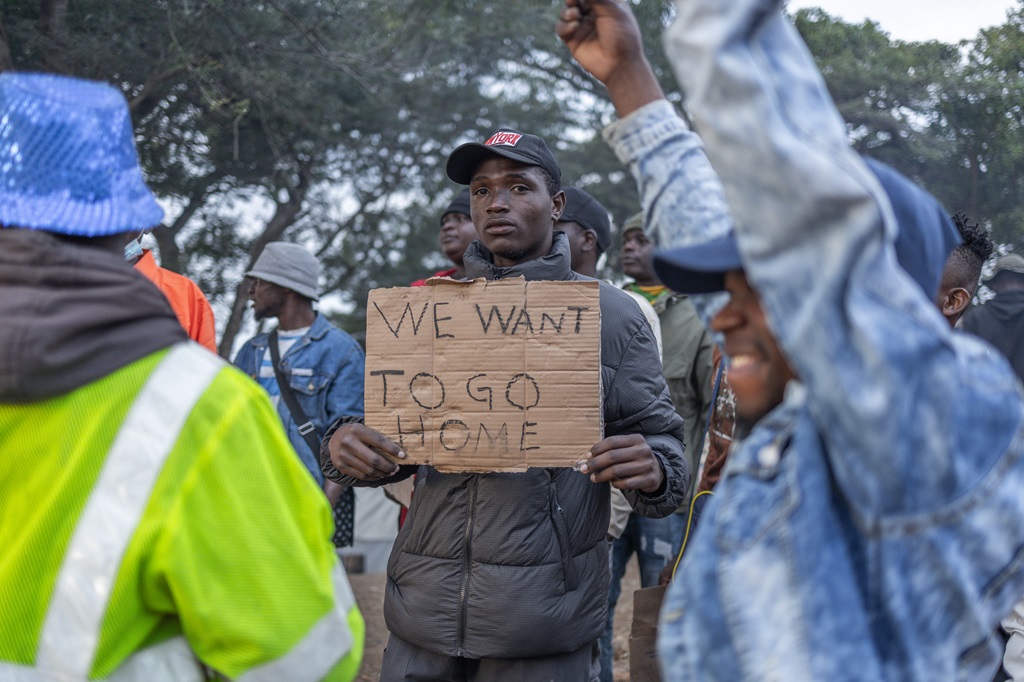
    The Trump administration has announced a significant expansion of its visa bond program, adding twelve new countries to the existing list of nations whose citizens must pay a $15,000 security deposit when applying for U.S. business or tourism visas. The policy change, confirmed by a State Department official on Wednesday, will take effect April 2nd.

    The newly added countries include Cambodia, Ethiopia, Georgia, Grenada, Lesotho, Mauritius, Mongolia, Mozambique, Nicaragua, Papua New Guinea, Seychelles, and Tunisia. These nations join 38 previously designated countries, primarily across Africa, bringing the total to 50 countries subject to the financial requirement for B1/B2 visa applications.

    According to an anonymous official, the program aims to reduce visa overstays by creating a substantial financial incentive for compliance. Travelers who adhere to their visa conditions and depart the United States on schedule will receive their full deposit refund. The administration claims the bond system has already contributed to a measurable decrease in visa violations since its implementation.

    This expansion represents the latest development in President Trump’s stringent immigration agenda, which has included enhanced deportations, visa revocations, social media screenings, and the controversial travel ban affecting citizens from 19 predominantly Muslim-majority countries implemented in June 2017.

    While human rights organizations have criticized these measures as restrictive to due process and potentially discriminatory, administration officials maintain they are essential for national security. The visa bond program specifically targets nations with historically high rates of visa overstays, seeking to improve compliance while reducing immigration enforcement costs.

    The complete list of previously designated countries includes Algeria, Bangladesh, Cuba, Nigeria, and Venezuela, among others. The program’s expansion continues the administration’s pattern of implementing increasingly rigorous immigration controls since President Trump took office in January 2017.

  • City folk mixed on Budget

    City folk mixed on Budget

    The Barbadian capital witnessed a spectrum of public sentiment following Monday’s parliamentary Budget presentation, revealing both approval and palpable disconnect among citizens. Barbados TODAY conducted street-level interviews throughout Bridgetown on Tuesday, capturing diverse perspectives on the government’s fiscal plan. While agricultural incentives garnered praise, concerns emerged regarding civic engagement and perceived accountability gaps. Hal Jordan expressed particular optimism about proposed support for agricultural sectors, specifically highlighting honey production as a welcome innovation. “I’m very pleased about that,” Jordan remarked, though acknowledging he hadn’t consumed the full budgetary presentation. Contrasting views surfaced from elderly residents, with one individual identified only as David asserting, “In my opinion, the Budget ain’t for the man,” underscoring a perceived detachment from everyday citizen needs. Margaret St Hill offered spiritual critique, suggesting divine involvement remained the government’s sole oversight. Returning resident Gerald Small, recently back from Canada, addressed broader governance dynamics, noting how electoral representation often culminates in unilateral government blame when expectations remain unfulfilled. Notably, multiple respondents—especially senior citizens—confirmed limited awareness of the Budget speech itself, highlighting communication challenges. As parliamentary debate continues, the implementation and societal impact of these fiscal measures will face intensified public scrutiny.

  • Govt to launch digital academy for public service

    Govt to launch digital academy for public service

    The Barbadian government has unveiled plans to establish a groundbreaking Digital Academy specifically designed for public servants, marking a strategic move to address critical competency gaps within the nation’s workforce. This initiative, a cornerstone of the recently announced national budget, aims to bolster digital capacity and modernize governmental operations.

    Kay McConney, Minister of the Public Service and Talent Development, articulated the pressing need for this intervention during a parliamentary debate. She revealed that a comprehensive digital readiness survey identified a significant shortfall not in technical recruitment, but within existing management and supervisory echelons across both public and private sectors. “The problem was not the people being hired… the problem was the people already within government,” Minister McConney stated, pinpointing the core issue hindering digital transformation.

    The academy, to be operationalized with support from the National Transformation Initiative, will develop tailored training programs for various ministries. Its primary objective is to cultivate a new breed of digitally fluent leaders capable of driving efficiency and ensuring public sector systems are “fit for purpose” in the modern era.

    Minister McConney framed this effort as part of a broader modernization agenda, noting parallel budgetary provisions to assist private businesses in digitizing their operations. However, she issued a stark warning: even the most well-crafted policies are doomed to fail without a fundamental shift in organizational culture and execution. The success of high-profile budget measures, including a new beneficial ownership registry and justice system reforms, is presented as being entirely contingent on the effective implementation by a newly skilled public service.

    Ultimately, the minister positioned the budget’s overall efficacy as a shared national responsibility. While outlining opportunities for homeowners, farmers, and community organizations, she emphasized that its success hinges on active engagement from every sector of society, requiring a workforce that is “equipped, accountable, and ready to deliver.”

  • Browne urges Africa and Caribbean to rebuild ‘extractive’ economies

    Browne urges Africa and Caribbean to rebuild ‘extractive’ economies

    In a powerful address to Nigerian dignitaries, Antigua and Barbuda Prime Minister Gaston Browne issued a compelling call for radical economic transformation across African and Caribbean nations. Speaking during an official reception for a delegation from Nigeria’s Abagana Kingdom led by Regent Nwachukwu Anakwenze, Browne emphasized the urgent need to break from colonial economic legacies that continue to hinder regional development.

    The Prime Minister presented a critical analysis of how historical forces shaped both regions into ‘extractive economies’ designed to export wealth rather than nurture local prosperity. ‘Our natural resources and agricultural capacities built fortunes abroad while leaving our own populations underdeveloped,’ Browne stated, highlighting the persistent economic disparities stemming from colonial practices.

    Browne pointed to concrete policy actions his administration has taken, notably preventing Canadian financial institutions from selling local banking operations to foreign entities. Instead, his government mandated their transfer to domestic ownership—a controversial decision that has subsequently strengthened Antigua and Barbuda’s financial sector despite initial criticism.

    Emphasizing the necessity of courageous leadership, Browne declared, ‘This is the moment for resolute action. We must prioritize our populations’ interests above external pressures and entrenched established interests.’ He advocated for transitioning toward ‘productive economies’ where wealth circulates within local ecosystems through reinvestment and domestic ownership.

    The Prime Minister also celebrated strengthening ties between Caribbean and African leaders, expressing his anticipation for an upcoming visit to the Abagana Kingdom to further solidify cross-continental cooperation aimed at economic self-determination.

  • OPINION: My Assessment of the By-Elections of St. Phillip’s North on March 16, 2026

    OPINION: My Assessment of the By-Elections of St. Phillip’s North on March 16, 2026

    In the eight months since his primary victory, Randy Baltimore has demonstrated remarkable political connectivity that transcends traditional partisan boundaries. His deep community engagement has fostered exceptional levels of public trust, with even committed opposition supporters indicating they would cross party lines to support him based solely on his demonstrated character and integrity.

    Baltimore’s extensive mentorship under the late Sir Robin Yearword, Sr.—a legendary figure known for his unparalleled accessibility and constituent advocacy—has provided him with unique political advantages. While contemporary challenges differ significantly from those faced during Sir Robin’s fifty-year tenure, the foundational principles of hands-on representation remain profoundly relevant to today’s electorate.

    Recent electoral analysis suggests that the previous general election outcome reflected more anti-administration sentiment than genuine opposition support. The opposition’s campaign strategy, which included unsubstantiated claims about imported African voters, alleged foreign campaign financing, and fabricated allegations against political leaders, ultimately backfired as voters prioritized the government’s concrete efforts to address national issues within budgetary constraints.

    The political landscape continues to evolve, but Baltimore’s combination of community credibility, mentorship under a beloved political figure, and demonstrated commitment to practical governance positions him as a formidable candidate capable of bridging political divides and building upon established legacies of public service.

  • RADAR HEADS OUT

    RADAR HEADS OUT

    A United States Marine Corps KC-130J aircraft executed a covert operation in Tobago yesterday, reportedly extracting the sophisticated AN-TPS-80 Ground/Air Task Oriented Radar (G/ATOR) system that had been stationed at the ANR Robinson International Airport. Intelligence sources confirm the aircraft originated from Roosevelt Roads in Puerto Rico, completing a round-trip mission to retrieve the mobile defense apparatus.

    The radar’s disappearance marks a dramatic development in a four-month geopolitical saga that began when the US military installed the system last year. The Trinidad and Tobago government had consistently characterized the radar’s presence as part of counter-narcotics operations, authorized at the personal request of Prime Minister Kamla Persad-Bissessar.

    However, former military commander Lieutenant Norman Dindial, who previously headed the National Coastal Surveillance Radar Centre, contends the system’s removal exposes its true purpose. “It shows that it was not supposed to be used for drug interdiction,” Dindial stated. “This $50 million piece of equipment was in our territory doing nothing for our stated needs. I believe its mission was to support the incursion in Venezuela.”

    The timeline reveals strategic patterns: The radar first appeared in late November following high-level discussions between Prime Minister Persad-Bissessar and General Dan Caine, Chairman of the US Joint Chiefs of Staff. This installation preceded Operation Absolute Resolve and coincided with increased US military activity in Caribbean waters.

    Current geopolitical context suggests the radar may be redeployed to address Middle Eastern conflicts. The New York Times recently documented Iranian strikes damaging US communication and radar systems across seven military sites. Dindial theorizes the Tobago radar is being repositioned to strengthen US assets in the Persian Gulf: “There is a gap in the sensory aspect over there, and the US military is repositioning its assets.”

    The government’s narrative has faced previous challenges. In December, the Trinidad and Tobago Police Service claimed the radar generated intelligence leading to a $171 million marijuana seizure, though manufacturer Northrop Grumman subsequently clarified the system wasn’t designed to track maritime or ground targets. Defense Minister Wayne Sturge had recently asserted the radar would remain for the “foreseeable future” to compensate for limited coast guard capabilities.

  • Rowley denies PNM drug link

    Rowley denies PNM drug link

    In a fiery response to parliamentary accusations, former Trinidad and Tobago Prime Minister Dr. Keith Rowley has publicly condemned current Prime Minister Kamla Persad-Bissessar for what he characterizes as baseless criminal allegations against his political party. The confrontation emerged following Persad-Bissessar’s statements in Parliament on Friday, where she insinuated that the People’s National Movement (PNM) had constructed its headquarters using narco-trafficking proceeds and maintained connections to pedophile networks.

    Rowley, addressing journalists at his Glencoe residence during a press conference, delivered a scathing rebuttal to these claims. He emphasized his long-standing tenure with the PNM since 1974, including fifteen years of leadership, and challenged the Prime Minister to produce substantiating evidence for her serious allegations. Employing the culturally charged term ‘jamette’—a local derogatory expression implying promiscuity and lack of integrity—Rowley asserted that only someone with such characteristics would level grave accusations without proof.

    The former Prime Minister referenced historical contexts, including the murder of businessman Danny Guerra in Sangre Grande, suggesting possible connections to previous states of emergency and political tensions. Additionally, Rowley revived allegations concerning human trafficking within the United National Congress (UNC), claiming that Persad-Bissessar had prior knowledge of such activities yet appointed the accused individual to a ministerial position.

    Rowley further cautioned about the international ramifications of unsubstantiated claims, arguing that they tarnish the nation’s reputation globally. He criticized the Prime Minister for allegedly prioritizing political maneuvering over evidential accountability and called for thorough police investigations into the matters he raised.

  • Alexander: Police on high alert

    Alexander: Police on high alert

    Trinidad and Tobago’s national security apparatus has been activated to high alert status following the repatriation of hundreds of citizens from the United Kingdom who face serious criminal allegations. Homeland Security Minister Roger Alexander confirmed that law enforcement agencies have received intelligence from the Ministry of Foreign and Caricom Affairs regarding individuals returning with histories of alleged murder and firearms trafficking.

    The development comes after the UK government implemented visa requirements for Trinidad and Tobago nationals in March 2025, responding to a significant surge in asylum applications. Foreign Minister Sean Sobers revealed that approximately 700 citizens who had sought asylum in Britain have been returned to Trinidad and Tobago in recent months, representing between 90-97% of all applicants.

    Minister Alexander expressed particular concern about returning individuals who allegedly continued criminal operations from abroad. “Some were operating via phone and other means to direct activities here,” Alexander stated, emphasizing that investigations into these individuals continued despite their overseas presence.

    The Homeland Security Minister condemned what he characterized as systematic abuse of the UK’s asylum process, noting that some returnees had falsely claimed persecution based on sexual orientation—assertions he described as “far from the truth.” Alexander framed the repatriations as part of a broader international trend where nations are taking stronger stances against foreign nationals who engage in criminal behavior within their borders.

    In a related development, authorities reported the successful implementation of a new digital arrival and departure platform that commenced operations without significant technical issues. The minister noted that immigration officials remain on standby to address any potential complications, though initial passenger compliance has resulted in positive operational feedback.

  • Duartian Institute urges caution on Haiti crisis

    Duartian Institute urges caution on Haiti crisis

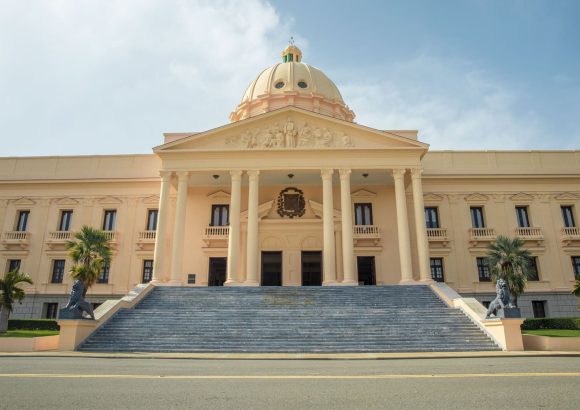
    SANTO DOMINGO – A prominent Dominican intellectual institution has issued a strong recommendation for national authorities to maintain a prudent approach toward neighboring Haiti’s escalating security crisis, explicitly opposing any form of direct military engagement against armed factions.

    The Duartian Institute, through its president Gómez Ramírez, articulated that primary responsibility for resolving Haiti’s gang violence rests with global and regional bodies including the United Nations and the Organization of American States. Ramírez emphasized that the Dominican Republic has historically adhered to a foreign policy grounded in sovereignty and non-intervention in other states’ domestic affairs.

    In a significant critique of current diplomatic maneuvers, the institute openly questioned Foreign Minister Roberto Álvarez’s involvement in international dialogues concerning Haiti. The organization reaffirmed that the Dominican constitution explicitly prioritizes national sovereignty and cautions that any departure from this principle could jeopardize the nation’s institutional integrity and stability. The statement serves as both a policy recommendation and a constitutional reminder to government officials.

  • U.S. to require US$15,000 visa bond for 12 countries

    U.S. to require US$15,000 visa bond for 12 countries

    In a significant expansion of immigration policy, the U.S. State Department has unveiled plans to implement a $15,000 bond requirement for B1/B2 visa applicants from twelve additional countries effective April 2. The newly designated nations include Nicaragua, Cambodia, Ethiopia, Georgia, and Tunisia, joining an existing list of countries subject to the financial guarantee program originally initiated during the Trump administration.

    The controversial measure functions as a refundable security deposit, with the full amount returned to travelers who adhere to all visa conditions and depart the United States within their authorized period. However, applicants who overstay their visas will forfeit the bond, with the funds being allocated toward covering deportation expenses.

    According to official estimates from U.S. immigration authorities, the average cost of deporting an individual exceeds $18,000. The administration projects that this expanded bond requirement could generate approximately $800 million in annual savings for taxpayers while simultaneously creating a stronger financial disincentive against visa violations. The policy represents the latest effort by U.S. officials to address chronic issues of visa overstays through economic mechanisms rather than solely relying on enforcement actions.