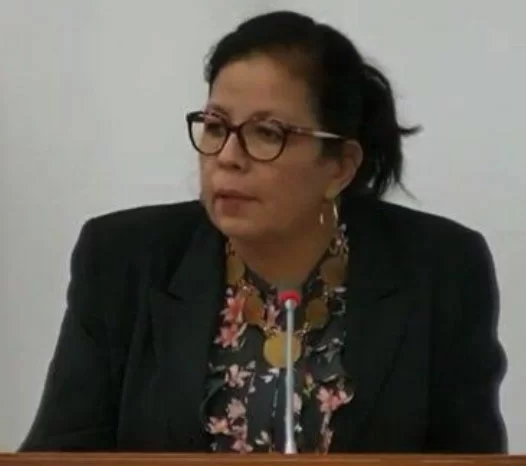
As the Caribbean island nation of Grenada gears up for its upcoming general election, long-simmering concerns over the integrity of the country’s electoral management framework have come to a head, laid out in a detailed public statement by longtime civil society observer Sandra Ferguson, writing in her personal capacity.
Ferguson’s critique grows out of years of engagement between a local civil society organization (CSO) collective and Grenada’s Parliamentary Elections Office (PEO) and Supervisor of Elections between the 2018 and 2022 general elections, during which the group repeatedly raised red flags and pushed for public information that was never fully provided.
One of the core points of contention is the undisclosed awarding of an IT support contract for the PEO’s national voter registration system to local Grenadian firm AZITS Solutions (A-Z Info Tech Solutions), registered in Pearls, St. Andrew. The CSO collective only learned of the contract in January 2020 during a PEO press conference addressing expired voter registration cards, revealing the firm had been providing services to the electoral office since 2015–2016. The arrangement was never disclosed during pre-referendum stakeholder consultations in 2016, when the CSO collective received briefings on the system’s security and anti-duplication features.
Prior to AZITS’s appointment, the voter registration system had been designed, installed, and maintained for five years by 3M Canada, a contract awarded through a fully transparent, stakeholder-inclusive process following a 2010 consultation where 3M representatives presented the system’s advanced security features to participants. Following the 2020 revelation, the CSO collective sent a formal letter to the PEO requesting details on the tender process, company ownership, and scope of services provided by AZITS, but never received a response. Independent public research found AZITS’s founder was a former Deputy Permanent Secretary in Grenada’s Ministry of Finance between April 2018 and July 2020, raising unanswered questions about potential conflicts of interest, as well as whether the firm had any ties to the country’s citizenship-by-investment program.
Additional inconsistencies emerged around conflicting official voter registration guidance across PEO-managed digital platforms. In late 2020, the CSO collective discovered a national e-voter registration portal hosted on the main government website that invited citizens to complete registration online, upload supporting documents including digital fingerprints, passport photos, and identification, and listed the Prime Minister’s Office as the point of contact. This directly contradicted guidance on the official PEO portal, which explicitly stated voter registration could only be completed in-person at constituency offices, matching the requirements laid out in Grenada’s Representation of the People Act.
Further irregularity was found in the fact that the PEO’s own official standalone website had not been updated since the appointment of an acting Supervisor of Elections in March 2019, with all digital electoral content instead managed centrally by the ICT team under the Ministry of National Security. Ferguson also notes that a local licensed citizenship-by-investment escrow agent, Infinity (Grenada) Inc., published voter registration guidance on its website matching the unlawful online registration process posted to the government portal, raising additional unaddressed questions about the involvement of non-electoral entities in the registration process.
After the CSO collective formally raised these concerns to the Supervisor of Elections in November 2020, a response finally came 8 months later in July 2021. The PEO responded that it was not responsible for content published on third-party digital platforms, maintained that all registration follows the requirements of the Representation of the People Act, and dismissed allegations of improper online registration as inconsistent with official processes. Ferguson argues this response deliberately evaded all critical questions, deflected attention from the fact that the unauthorized online registration portal was hosted on the official government website, and directly threatened the integrity of the entire voter registration process.
The CSO collective followed up with a second letter in November 2021 reiterating its concerns, and a third letter summarizing all outstanding issues was sent to the PEO and shared with the Organization of American States (OAS) Election Observer Mission (EOM) ahead of the June 2022 general election. No resolution was ever provided.
Ferguson’s own personal experience on election day, June 23, 2022, underscored her concerns. Despite her lack of confidence in the system, she chose to cast a deliberate spoiled ballot to protest shortcomings in electoral management, only to discover when the PEO published full official results months later that her polling station (K09, South-east St George, where she has voted in four consecutive elections) recorded zero rejected and zero spoiled ballots out of 216 total votes cast, with a minor unexplained discrepancy in the overall vote breakdown. Ferguson sent a formal letter to the PEO in November 2022 asking for an explanation of the missing spoiled ballot, but never received even an acknowledgment of her correspondence.
At two post-2022 election stakeholder meetings convened by the PEO – one in July 2023 and a second in April 2024 attended primarily by election officials – Ferguson raised the unaddressed issue of her missing spoiled ballot. She said she was shocked to hear senior PEO officials state that their policy is to minimize spoiled votes by reallocating questionable ballots to candidate vote tallies rather than categorizing them as rejected or spoiled, a revelation that directly contradicts standard electoral counting rules. This aligns with an observation in the preliminary statement from the CARICOM Election Observer Mission, which noted that while different counting approaches were observed across polling stations, all were deemed compliant with overarching electoral guidelines – leaving unanswered questions about what standards govern the classification of spoiled ballots.
Both the OAS and CARICOM deployed observer missions to monitor the 2022 Grenada general election, but to date, the final reports of both missions have never been published publicly, even though preliminary reports were released shortly after the vote. At the July 2023 stakeholder meeting, PEO officials framed planned reforms to the voter registration system around recommendations from the CARICOM EOM, with the Supervisor of Elections noting that recommendations to overhaul the legislative framework and create an independent electoral commission require full constitutional and electoral reform. A senior PEO official also told attendees the current 12-year-old voter registration system is outdated, that the original designer retains full control over the system, that critical security certificates have expired with no internal documentation to address the issue, and that a new system is needed to integrate voter data with other government departments, enable advanced data disaggregation and analysis, and generate data to support national economic development.
Stakeholders at the meeting raised a host of unanswered questions about the proposed new system, including its total cost, funding sources, whether the PEO intends to generate revenue by selling voter data, whether the office has the legal mandate to engage in such activity, and whether individual voter privacy would be compromised under the expanded data use framework, even with the country’s new Data Protection Act in place. Stakeholders also called for broad national public consultation ahead of any reform, but the PEO has yet to deliver on a commitment made at the meeting to share the full CARICOM EOM report with attendees – no copy was provided to the five civil society representatives present, and the report has never been posted online.
These long-running issues are reinforced by findings from the OAS EOM’s 2022 preliminary report, which noted the existing voter ID system had operated for over a decade without substantial upgrades, most hardware is obsolete, and the system lacks national-level tools to prevent cross-constituency duplicate registrations. The OAS recommended a full system redesign to add national identity verification, eliminate duplicate registrations, and add voter photos to the official voters list to improve transparency and identity verification. The OAS also committed to releasing a full final report to the OAS Permanent Council and sharing it with Grenadian stakeholders, but the document has never been made public, leading Ferguson to question whether the current administration has blocked publication of the report for unstated reasons.
Notably, the original 2010 contract with 3M Canada for the current digital system was awarded following repeated OAS observer recommendation for reform dating back to 2003 and 2008. The 3M system was specifically designed with anti-duplication fingerprinting, advanced security features to prevent counterfeiting, and activity tracking for all changes to voter data – all features the OAS now says are missing from the current system, raising questions about why required system upgrades and maintenance were never carried out over the past 15 years.
In May 2024, the PEO announced a national series of public consultations to educate voters on the proposed new voter registration system, planned for installation before the 2027 constitutionally mandated general election. Shortly after consultations launched, a new Supervisor of Elections was appointed, and the consultations were suspended and never resumed. Earlier in 2025, the PEO issued a brief public statement announcing a major server failure that disrupted voter registration had been resolved, but provided no additional context about the status of the planned new system or broader reform efforts. Ferguson notes that a lack of accessible, transparent information has become the norm for the PEO.
In closing, Ferguson emphasizes that voters are the core stakeholders in any democratic electoral process, and that full integrity, transparency, and accountability from election management bodies is non-negotiable. “We the people deserve integrity, transparency and accountability of our electoral system!! We must demand integrity, transparency and accountability of the parliamentary elections office!!” she writes.