分类: politics

  • Jonathan Wehner Says ‘A Village Really Did Raise This Young Man’ After Appointment as UPP Senator

    Jonathan Wehner Says ‘A Village Really Did Raise This Young Man’ After Appointment as UPP Senator

    Following his selection as an opposition senator by United Progressive Party (UPP) Opposition Leader Jamale Pringle, 28-year-old political figure Jonathan Wehner has opened up about the widespread support that brought him to this new role, emphasizing that his success is the product of an entire community’s investment in his growth.

    In a public statement released this past Sunday, shortly before his formal swearing-in, Wehner framed his appointment to the Antigua & Barbuda Senate as a profound honor, one that carries the responsibility of representing the nation’s young people and the UPP’s opposition bloc in the legislative body. Wehner’s selection comes in the wake of the UPP’s electoral defeat in the April 30 general election, where the incumbent Antigua Barbuda Labour Party (ABLP) secured a fourth consecutive term in government, leaving the UPP to form the official opposition.

    Wehner began his message by extending gratitude to a broad network of supporters who shaped his personal and political development. First, he thanked God, his parents, and extended family, who he described as “ever present and faithful” through every stage of his upbringing and early career. He next acknowledged the ECBM church circuit for nurturing his spiritual growth, and the educators who guided him through his academic journey, offering consistent encouragement and direction at every step.

    The senator-designate saved special recognition for members of the UPP, who he compared to a close-knit family that stood by him through both triumph and adversity. “My brothers and sisters of the UPP have always watched over me as their own blood relative,” he said in his statement. Wehner also extended thanks to his childhood friends and colleagues from the National Youth Parliament Association of Antigua and Barbuda, adding a lighthearted plea that they refrain from sharing embarrassing old anecdotes or childhood nicknames about him on social media.

    In the closing lines of his reflection, Wehner summed up the cumulative support he received over the years with a well-known proverb adapted to his own experience: “A village really did raise this young man.”

    Wehner was formally sworn into office alongside other newly appointed opposition senators during an official ceremony held at Government House on Monday, marking the official start of his tenure in the Senate.

  • Jamale Pringle Appointed Leader of the Opposition

    Jamale Pringle Appointed Leader of the Opposition

    In a formal ceremony held at Government House on Monday, Governor General Sir Rodney Williams of Antigua and Barbuda formally installed Jamale Pringle, political leader of the United Progressive Party (UPP), as the country’s new Leader of the Opposition. During the official proceedings, Pringle completed the required constitutional formalities, swearing the Oath of Allegiance, Oath of Office, and Oath of Secrecy before officially taking up the constitutionally mandated position.

    In his remarks at the ceremony, Sir Rodney framed the Office of the Leader of the Opposition as far more than a partisan political role, emphasizing its deep roots in the country’s constitutional order. He described the institution as an irreplaceable pillar of Antigua and Barbuda’s parliamentary democracy, noting that a functional opposition delivers core public benefits: it holds the governing administration accountable, exercises robust scrutiny of government policy, fosters constructive legislative debate, and ensures a healthy balance of power in national governance.

    “Our democracy is strengthened not only by elections, but by the continued functioning of strong institutions, constitutional order and respectful engagement among those entrusted with public office,” Sir Rodney told attendees.

    Pringle’s appointment comes in the wake of Antigua and Barbuda’s general election held on April 30, which produced an unusual parliamentary landscape: only two lawmakers not affiliated with the governing party won seats in the House of Representatives. Those two opposition lawmakers are Pringle, representing the UPP, and Trevor Walker, leader of the Barbuda People’s Movement (BPM).

    Sir Rodney explained that the appointment followed the guidelines laid out in Section 79(2) of Antigua and Barbuda’s Constitution, which outlines the process for the Governor General to select the opposition leader. The constitutional text requires appointment of the member who is “most likely to command the support of the majority of members who do not support the government.” When no such majority exists, the document allows for appointment of the member who leads the “largest single group” opposing the governing administration.

    “After careful consideration of the constitutional provisions and the circumstances arising from the general election, I have appointed the Honourable Jamale Pringle as the Leader of the Opposition,” Sir Rodney confirmed.

    The Governor General added that his decision reflected two key factors: the UPP’s established national political footprint across Antigua and Barbuda, and Pringle’s individual electoral support. “Mr Pringle leads the United Progressive Party, which is a national political organisation with representation and support across multiple constituencies within Antigua and Barbuda,” he said. He also noted that Pringle received “substantially more votes within his constituency than the other opposition member elected to the House.”

    “The appointment therefore reflects the constitutional principles relating to support, representation and the wider national democratic framework envisioned within our Constitution,” Sir Rodney added.

    In a nod to inclusivity, Sir Rodney also formally acknowledged Trevor Walker and the BPM’s role in national politics, recognizing Walker’s ongoing representation of Barbuda and the party’s continued contribution to Antigua and Barbuda’s democratic system.

  • Pringle Says UPP Senate Appointments “Well Received” by Public

    Pringle Says UPP Senate Appointments “Well Received” by Public

    At a formal swearing-in ceremony hosted at Government House this Monday, Antigua and Barbuda’s Opposition Leader Jamale Pringle highlighted widespread public endorsement of the United Progressive Party (UPP) Senate picks, and voiced unshakable confidence that the new appointees will fulfill their duties to the dual-island nation with excellence and integrity.

    Pringle opened his remarks at the event confirming that UPP’s selections for the Upper House have already earned robust reception from citizens across the country. “Widespread popular backing for our senators is already a given,” Pringle stated, emphasizing that both the party leadership and he personally hold full faith in the new senators’ capabilities and dedication to advancing national governance.

    The opposition leader extended formal congratulations to the three newly sworn-in legislators—Chester Hughes, Jonathan Wehner and Ashworth Azille—while breaking down the unique skills, professional backgrounds and core strengths each individual brings to the Senate chamber.

    Of the first appointee, Chester Hughes, Pringle painted a portrait of a long-trusted political leader with deep roots in public service. He called Hughes a veteran political operative, a practiced parliamentarian, and a steadfast trade unionist who has spent decades championing the rights of working-class people across Antigua and Barbuda. Pringle further noted that Hughes is also a trained legal scholar, pointing to his decades-long track record of public engagement and labor advocacy as proof of his readiness for the role.

    Next, Pringle turned to Jonathan Wehner, the youngest of the three newly seated senators. He described Wehner as a young professional with uncommon maturity and wisdom, lauding him as a naturally talented communicator. “Wehner stands as a role model for young people across our nation,” Pringle said, adding that he is a leader that the country’s youth demographic can point to with genuine pride.

    Ashworth Azille, the third appointee, also earned high praise from the UPP leader. Pringle shared that Azille has often been compared to civil rights icon Martin Luther King, framing him as another dedicated advocate for working people, and a long-serving educator with profound loyalty to his adopted home of Antigua and Barbuda.

    Pringle also addressed one notable absence at the ceremony: Malaka Parker, the opposition’s final senate nominee. He explained that Parker was required to travel out of the country for urgent family matters, and will complete her oath of office at a scheduled future event. Pringle added that Parker is currently in the final stages of completing a law degree, and boasts cross-sector experience spanning government administration, the trade union movement, and the private sector. Echoing his praise for the other nominees, Pringle noted that “Parker will continue to serve as a benchmark of achievement for women and girls across our country.”

    Closing out his address at the swearing-in, Pringle urged all incoming UPP senators to carry the responsibility of their legislative roles with honor and dedication. “Our great democratic institution counts on you to uphold its legacy proudly and well,” he said, reminding the appointees that the future of the nation’s democracy rests in their hands.

  • Hughes, Wehner, and Azille Sworn In as Opposition Senators

    Hughes, Wehner, and Azille Sworn In as Opposition Senators

    A key moment in Antigua and Barbuda’s post-election parliamentary landscape unfolded Monday afternoon, as three United Progressive Party (UPP) senators took their oaths of office during an official ceremony hosted at Government House. The event drew senior dignitaries, including Governor General Sir Rodney Williams and his wife Lady Sandra Williams, marking the first formal step in assembling the opposition bloc following the April 30 general election.

    Alongside the induction of senators Ashworth Azille, Jonathan Wehner, and Chester Hughes, the ceremony also formalized Jamale Pringle’s appointment as Leader of the Opposition. Notably absent from the swearing-in was Malaka Parker, the fourth opposition senator-designate. In a prior public statement, Parker explained that unforeseen extenuating circumstances forced her to travel, making attendance impossible. She has committed to announcing a new swearing-in date once alternate logistics are finalized.

    In his keynote address to the newly inducted senators, Sir Rodney Williams emphasized the central role the Senate holds in Antigua and Barbuda’s system of parliamentary democracy. He urged all members of the Upper House to approach their legislative duties with intentionality, grounding their work in “maturity, wisdom, integrity and respect for our democratic institutions.”

    Sir Rodney stressed that the public of Antigua and Barbuda holds clear expectations for their elected representatives: robust, purpose-driven debate, accountable representation, and laws that prioritize equal justice, expanded opportunity, fair governance, and sustained national progress. Outlining the core functions of the Senate, he noted that the body serves a critical purpose in reviewing legislation passed by the lower house, drawing on the professional and lived expertise of its members to ensure every proposed law is scrutinized through the lens of the national public good.

    “A strong Senate is one defined by thoughtful deliberation, mutual respect across partisan lines, rigorous intellectual engagement, and an unwavering commitment to serving all people of Antigua and Barbuda,” Sir Rodney told the gathering.

    The Governor General also highlighted the enduring importance of the Opposition Leader’s role, framing it as a foundational institution within the country’s democratic framework. He added that a credible opposition is essential to upholding government accountability, providing robust scrutiny of executive action, and sustaining the constructive debate that keeps democratic governance responsive to public needs.

  • Governor General Says Constitution Guided Appointment of Jamale Pringle as Opposition Leader

    Governor General Says Constitution Guided Appointment of Jamale Pringle as Opposition Leader

    In an official ceremony held at Government House this Monday, Governor General Sir Rodney Williams publicly defended his recent decision to name United Progressive Party (UPP) leader Jamale Pringle as Antigua and Barbuda’s new Leader of the Opposition, emphasizing that the appointment was rooted firmly in constitutional mandates, legislative representation data, and verified electoral support from recent polls.

    The appointment follows the closely watched general election held on April 30, which resulted in just two non-governing party candidates winning seats in the national House of Representatives: Pringle of the UPP, and Trevor Walker, head of the Barbuda People’s Movement (BPM). This split of opposition seats left the Governor General to clarify the constitutional framework that guided his final selection.

    Sir Rodney drew specific attention to Section 79(2) of Antigua and Barbuda’s Constitution, which lays out clear criteria for selecting the opposition leader. The statute first requires the Governor General to appoint the non-government member who is most likely to hold the support of a majority of opposition lawmakers. When no such majority exists, as was the case in the post-election 17th Parliament, the Constitution allows for appointment of the member who leads the largest single opposition bloc in the chamber.

    The Governor General further explained that the constitutional text also permits consideration of additional relevant factors, including parliamentary seniority and the total popular vote received by each opposition candidate in the general election. After a thorough review of all constitutional requirements and the unique post-election circumstances, he confirmed Pringle as the rightful appointee.

    In explaining the rationale, Sir Rodney highlighted that the UPP is a national-level political organization with established electoral support and grassroots organization across multiple constituencies spanning both Antigua and Barbuda. He also noted that Pringle outperformed the other elected opposition MP by a substantial margin in his own constituency, further justifying the selection.

    “This appointment aligns fully with the constitutional principles of voter support, democratic representation, and the inclusive national democratic framework that our founding document established,” Sir Rodney added. He also took the opportunity to recognize Trevor Walker and the BPM for their ongoing work representing the interests of the Barbuda region and their continued contribution to the country’s multi-party democratic system, affirming their important role in the legislative process moving forward.

  • RvC moet koers Telesur verder versterken

    RvC moet koers Telesur verder versterken

    Suriname’s leading state-owned telecommunications provider, Telesur (Het Telecommunicatiebedrijf Suriname), has formally installed a new Board of Commissioners (Raad van Commissarissen, RvC) in a ceremony held Monday at the President’s Cabinet during the company’s annual General Shareholders’ Meeting.

    Nagish Algoe has been appointed to lead the new governing body as president-commissioner, joining fellow board members Ludciano Wijdenbosch, Frans Eersteling, Alexander Deel and Andre Daal. The inauguration ceremony was led by Raymond Landveld, Minister of Transport, Communication and Tourism (TCT), who was authorized to act on behalf of Suriname President Jennifer Simons. Simons was unable to attend the event due to unstated circumstances.

    Speaking through the Communication Service of Suriname, Minister Landveld expressed full confidence in the experience and capabilities of the newly assembled board. He emphasized that the government expects the commissioners to oversee steady, accelerated growth and modernization of the state-owned enterprise, which plays a critical role in Suriname’s digital and economic infrastructure.

    In his first public remarks following his appointment, president-commissioner Algoe noted that no concrete policy agreements had been finalized at the time of the inaugural meeting. However, he confirmed that attendees held productive discussions on the current operational progress of Telesur and the growing challenges facing the global and regional telecommunications sector, which is undergoing rapid technological transformation.

    Algoe outlined the new board’s core priorities moving forward, stating that the body will focus heavily on advancing technological innovation across the company and upgrading the quality of customer service delivered to Surinamese communities. “We will conduct a deep dive into the internal challenges facing the company and explore actionable strategies to lift Telesur to new heights of performance,” Algoe said.

  • Emrick John Claims Barbuda Council Is Victimising Him Over His Support for the ABLP

    Emrick John Claims Barbuda Council Is Victimising Him Over His Support for the ABLP

    Fresh political tensions have erupted on the Caribbean island of Barbuda in the wake of recent national and local elections, after unsubstantiated claims of political retaliation against a public sector employee surfaced on social media. Multiple posts shared across digital platforms have pushed the narrative that the Barbuda Council orchestrated a punitive job transfer against a local worker solely because of her public political support for the opposition Antigua and Barbuda Labour Party (ABLP).

    One of the viral posts openly declared “Victimization done start,” a call to action that encouraged other public workers who faced similar alleged retaliation to share their own transfer notices and hold officials accountable. A second post attached official documentation: a formal transfer letter from the Barbuda Council, dated May 7, 2026, notifying Kerry Warren that she would be reassigned to the position of cleaner at the cafeteria of Sir McChesney George Secondary School, effective just one day after the letter was issued, on May 8. Signed by the Barbuda Council’s Secretary and Chief Executive Officer, the correspondence lays out Warren’s new scheduled work hours and directs her to report to an on-site supervisor at the secondary school. John, an individual sharing the allegations, has publicly linked the reassignment directly to Warren’s open campaigning for the ABLP during the lead-up to the April 30 general election.

    Notably, the social media posts making the claims have not produced any concrete evidence that directly ties Warren’s job change to her political affiliation, linking the decision to partisan retribution. To date, the Barbuda Council, which maintains local governance authority over the island, has not issued any public statement addressing or responding to the allegations made against it. The recent election cycle delivered clear results across both national and local levels: the Barbuda People’s Movement (BPM) retained its long-held political control over the local Barbuda Council, while the ABLP secured a historic fourth consecutive term in national office, winning a landslide 15-2 majority in the country’s legislature.

  • Government turns to regional bodies for electoral reform assistance

    Government turns to regional bodies for electoral reform assistance

    As the Caribbean nation of Dominica works to overhaul its national electoral system, slow progress in key phases of the reform initiative has pushed the government to reach out to multiple leading regional and global bodies for specialized technical and expert support.

    In an official statement released by the Office of the Prime Minister of Dominica (OPM), the government has submitted formal requests for guidance to four prominent institutions: the Commonwealth Secretariat, the Organization of American States, the Organisation of Eastern Caribbean States, and the Caribbean Community. The appeal for outside support comes after growing public and administrative concerns over the sluggish pace and suboptimal execution of two core election modernization processes.

    Speaking to journalists during a press briefing on Wednesday, Prime Minister Roosevelt Skerrit outlined the core goals of the ongoing reform project: to modernize Dominica’s entire voting framework by updating voter registration verification protocols and rolling out a unified national voter identification card system. Skerrit emphasized that these changes are crafted to boost the accuracy and reliability of the country’s electoral roll, while adding robust new protections to prevent voter fraud and preserve the integrity of future elections.

    Breaking down the current progress of the voter confirmation process, established under the updated Registration of Electors Act, Skerrit shared official data covering the period from October 15, 2025, through April 30, 2026. Over this six-and-a-half-month window, the Electoral Office received a total of 16,573 voter confirmation applications. More than 79% of these applications – 13,146 in total – were submitted within the first six weeks of the 12-month confirmation period, which runs from October 2025 to October 2026. Despite this early flood of submissions, by the end of April 2026, only 6,592 applications, equal to just 40% of the total received, had been fully processed and approved. That leaves nearly 10,000 applicants (9,981) still waiting for their registration confirmation, Skerrit confirmed.

    Compounding the delay, no voters who have already secured confirmation have received their new national voter ID cards. Skerrit noted that the Electoral Office has announced it will not even begin issuing the new ID cards for another six to eight weeks, pushing the rollout of the core reform component further behind schedule.

    The prime minister explained that the decision to solicit external expertise is not a sign of withdrawal from the reform process, but rather a recognition of the enormous scale and complex technical requirements of updating the electoral system. Building a fully accurate, secure voter register and a dependable national ID infrastructure demands specialized knowledge that the government is eager to source from established international electoral bodies.

    The OPM further clarified the specific areas where the government is requesting assistance. First, external experts are asked to conduct a full, detailed review of the current voter confirmation process and identify bottlenecks slowing application processing. Second, the government is seeking actionable recommendations for the secure operation of the voter ID program, including guidance on integrating the new card system with Dominica’s existing electoral database, and ensuring the cards remain easily accessible to all eligible voters across the country.

    Beyond process and technical fixes, Dominica’s authorities are also looking for guidance aligned with globally recognized electoral standards to improve three key pillars of the reform: overall transparency, public voter participation, and administrative efficiency. The broader support package will also include targeted training for electoral officials working on the ground, and expanded public awareness campaigns designed to build public trust in the new systems and encourage more eligible voters to complete the confirmation process.

    Skerrit closed by reaffirming the government’s full commitment to seeing the reforms through, noting that the administration is ready to coordinate closely with all partnering institutions and provide any resources or access required to facilitate joint assessments and on-the-ground technical missions focused on getting the reform initiative back on track.

  • SPARK programme falling short in St Ann South East, says Opposition MP

    SPARK programme falling short in St Ann South East, says Opposition MP

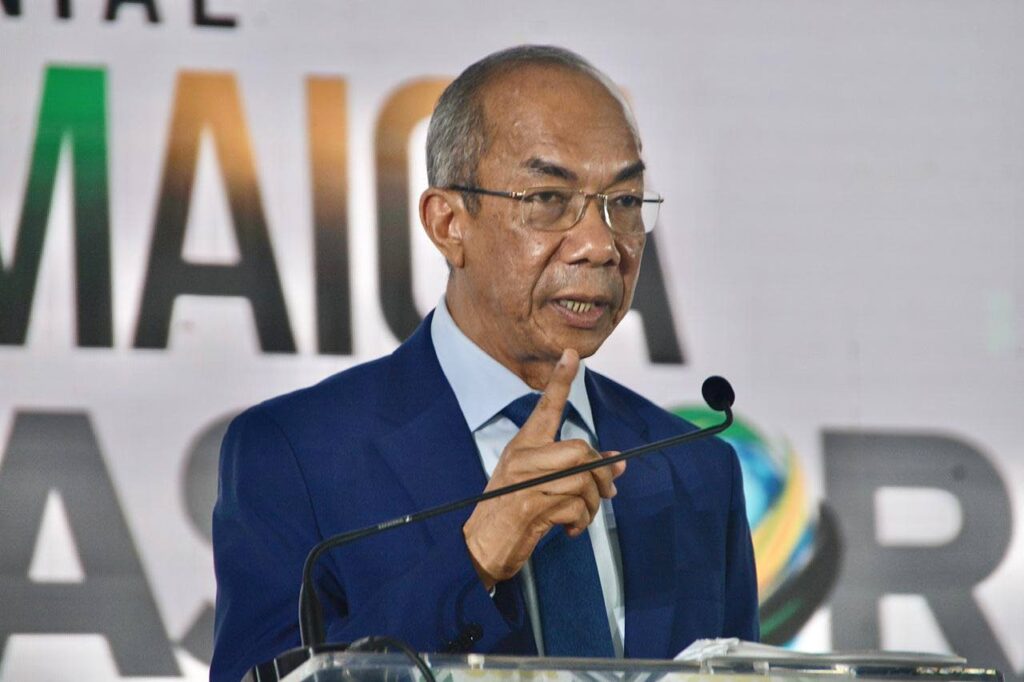
    KINGSTON, Jamaica — A sitting Jamaican member of parliament has launched a scathing rebuke of the national government’s flagship road improvement initiative, accusing the administration of failing to deliver critical infrastructure upgrades to his coastal constituency, leaving thousands of residents trapped in a cycle of unsafe and impassable road conditions.

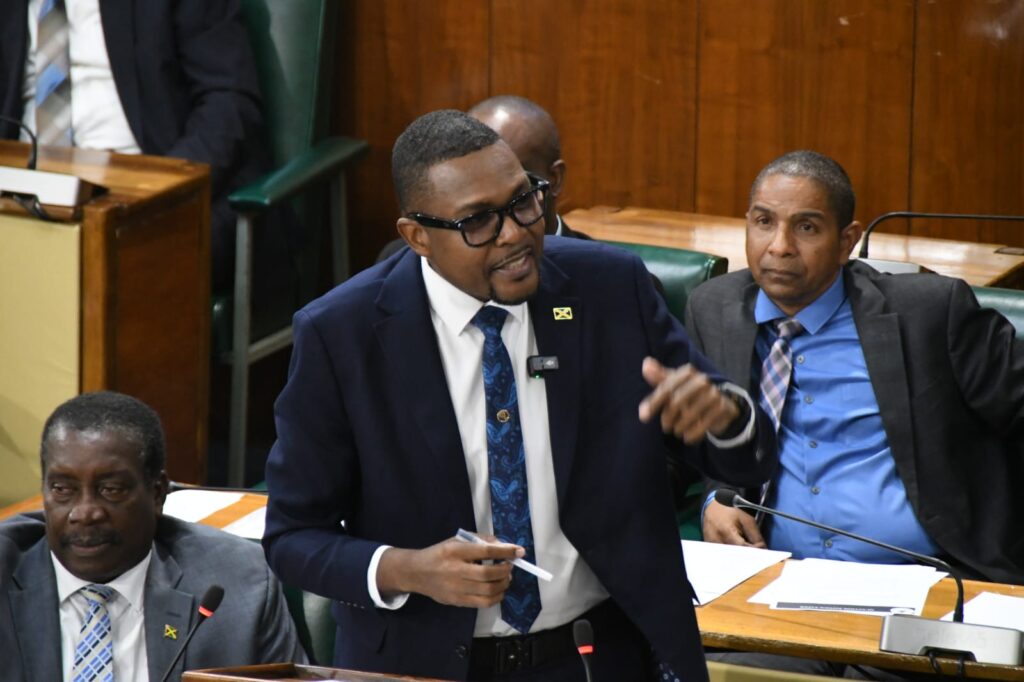
    Kenneth Russell, who represents St Ann South East, laid out his damning indictment of the Shared Prosperity Through Accelerated Improvement to Our Road Network (SPARK) Programme during a dedicated press briefing Tuesday, branded “Uncovering the Facts on the SPARK Road Programme”. The event was organized to draw public and government attention to what Russell calls systemic failure and disrespect for local communities.

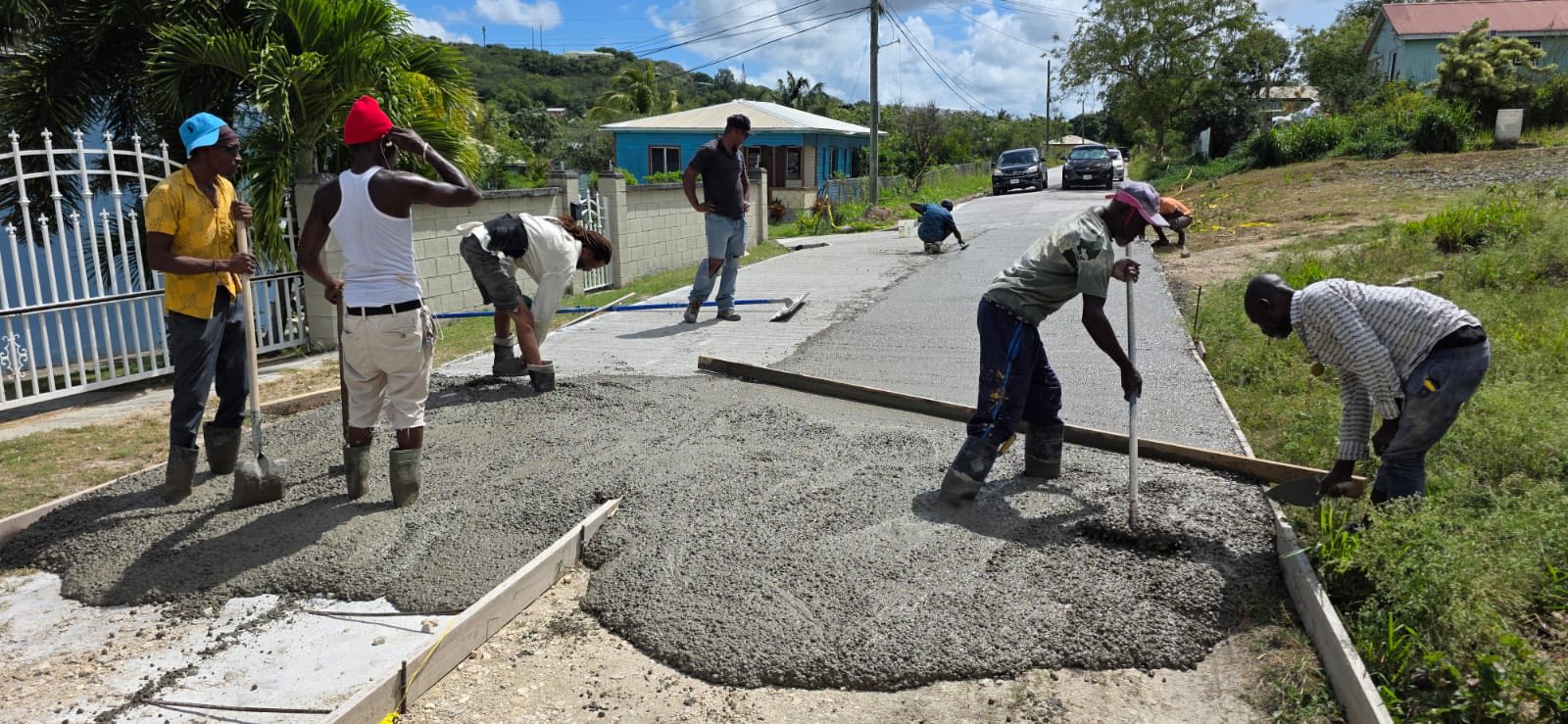
    First launched to align with the Jamaican government’s broader economic growth and inclusive social development targets, SPARK organizes national infrastructure upgrades into four large-scale construction packages designed to overhaul the island’s aging road network. For St Ann South East, nine roads were formally added to the SPARK project roster with a total projected investment of $2.3 billion. But according to Russell, only $315 million – less than 15% of the required funding – has been allocated to date, with just three of the nine roads marked for any work. Shockingly, only one of those three projects has broken ground, while the remaining two have been given at least six separate announced start dates that have all come and gone with no construction activity whatsoever.

    The constituency faces uniquely pressing infrastructure needs: Russell reports St Ann South East has roughly 225 kilometers of roads managed by Jamaica’s National Works Agency, more than any other parliamentary constituency in the country, with 80% of that network assessed as needing full rehabilitation. Decades of underinvestment have left almost no stretch of road in the area free of damaging potholes, according to the MP, and many communities face daily life-threatening hazards that disrupt access to work, school, and emergency services.

    Russell pointed to Johnny Spring Road in Higgin Town as a prime example of the government’s broken promises. “There was a promise sold to the country that under SPARK, this road would be rehabilitated. They were given dates before the hurricane and since the hurricane, we have had not just one or two, not three…[but] at least six start dates,” he said, noting that every deadline has passed without any official explanation for the delays to local residents.

    This pattern of unmet commitments has left local communities increasingly frustrated, a sentiment Russell says amounts to “the height of disrespect” for constituents who rely on functional roads for their daily livelihoods. Poor conditions affect communities across the constituency, including Dunnsville, White Hall, and Nine Mile, where residents report major difficulties entering and exiting their neighborhoods. Russell also highlighted the road adjacent to Golden Grove Primary School, calling it one of the most dangerous stretches in the area: “When it rains, it’s treacherous,” he said.

    Beyond potholes and surface damage, Russell warned that several sections of road in White Hall and Nine Mile are at risk of complete breakaway, and that urgent intervention is required to prevent fatal accidents. “I would hate if it would have to come to someone losing their lives for action to be taken,” he emphasized.

    Even if the government completes all nine SPARK projects currently allocated for St Ann South East, Russell added, the upgrades would only address less than 40% of the constituency’s NWA-managed road network, leaving the majority of the area’s infrastructure still in dire need of repair. The criticism puts renewed pressure on the Jamaican government to address funding gaps and delivery delays in its signature infrastructure programme, as opposition from local representatives grows over unfulfilled campaign and policy commitments.

  • Jamaican attorney Tamar Hamilton announces bid for Florida judge post

    Jamaican attorney Tamar Hamilton announces bid for Florida judge post

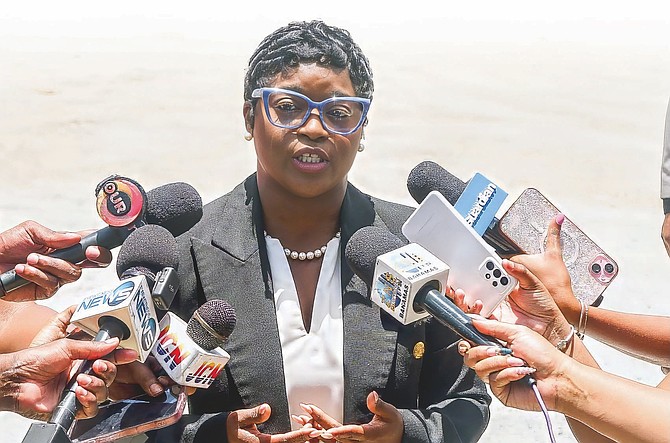
    A long-time South Florida resident with Jamaican roots, attorney Tamar N Hamilton has officially thrown her hat in the ring for the Broward County Circuit Court Judge seat in Group 52. Her announcement comes on the heels of the recent retirement of Michael G. Kaplan, who held the position for 24 years, leaving the vacancy that three candidates now seek to fill.

    The upcoming election, scheduled for August 18, is a statewide judicial contest in Florida that will see voters select 20 new Circuit Court judges across the state. Originally hailing from Kingston, Jamaica, Hamilton has built her life and career in Florida over the past 25 years, establishing deep roots in the local legal and community landscape. Currently serving as a special magistrate, she maintains dual office locations in Cutler Ridge and Lauderhill, and previously held the role of president of the Jamaican American Bar Association. Interestingly, a run for the judicial seat was already on her agenda six years ago, when she first considered challenging the incumbent Kaplan.

    Hamilton shared her motivations for entering the race in an interview with Observer Online, noting that her first serious consideration of a judicial run came in 2020, when she observed a growing gap in community engagement and public understanding of the U.S. legal system. “Through my work educating and supporting residents across Broward County, I developed a deep passion for serving from the bench, where I can ensure that every person who enters the courtroom is heard, respected and treated fairly,” she explained. Hamilton pointed to her multi-faceted professional background — spanning work as a special magistrate, adjunct law professor, practicing attorney, and community advocate — as comprehensive preparation for the demands of the judgeship.

    Her academic journey began at Jamaica’s St. Andrew Technical High School, before she pursued higher education in Florida. She earned a Bachelor of Arts degree in interdisciplinary arts and humanities from Florida Atlantic University in Boca Raton, followed by a Juris Doctorate degree with honors from St. Thomas University School of Law in Miami Gardens, where she still teaches as an adjunct professor today.

    In Florida, Circuit Court judges are elected to six-year terms, with no term limits imposed on this non-partisan public office. These judicial positions carry broad responsibility, as judges preside over a wide range of legal matters including criminal proceedings, civil disputes, and family law cases. Hamilton emphasized that her decades of legal work have given her direct experience across all these core practice areas.

    Outlining what she believes makes an effective judicial leader, Hamilton noted: “An effective Circuit Court judge is experienced, fair and committed to listening. It requires a strong understanding of the law, sound judgment, patience, and the ability to remain impartial in every case. Equally important is the ability to ensure that all parties feel heard and that decisions are made thoughtfully and respectfully, in accordance with the law.” As election day approaches, Hamilton will join the two other candidates in vying for voter support to claim the open Group 52 seat.