分类: politics

  • A signature for the Homeland, sovereignty, and peace

    A signature for the Homeland, sovereignty, and peace

    On Wednesday, civil society delegates from multiple Cuban provinces presented formal documentation confirming broad popular backing for the ‘My Signature for the Homeland’ initiative to top Communist Party and government leaders across regional jurisdictions. This mass signature-gathering effort stands as a powerful collective demonstration of Cuban unity in opposition to the escalating U.S. economic blockade and global aggression, cementing the island nation’s commitment to forging an independent future in peace.

    The formal handover of bound signature volumes followed brief political-cultural ceremonies in each participating province, with regional authorities accepting the documents that reflect the overwhelming will of the Cuban public. In Sancti Spíritus, young art instructor Yadira Bernal Nazco, speaking for local civil society groups, called on citizens to reject what she framed as relentless, extraterritorial aggression from a global power that seeks to break the Cuban people through economic deprivation and manufactured despair. She emphasized that defending national historical memory, distinct Cuban cultural identity, and full national sovereignty remains a non-negotiable priority for all residents of the island.

    In the eastern province of Guantánamo, local representative Yairis Fernández Castellanos highlighted that more than 290,000 Guantanamo residents across all age groups, religious backgrounds and civil society sectors had added their names to the initiative. Fernández called the mass participation a deliberate act of moral conscience, noting that every signature carries the Cuban people’s shared commitment to justice, unshakable commitment to independence, and deep understanding that all critical national battles are won through popular unity.

    Speaking for a cross-sector coalition of workers, smallholder farmers, intellectuals, athletes, students and faith-based organizations in Las Tunas province, Gustavo López Ramírez reaffirmed that Cubans will always stand ready to defend the hard-won independence secured by generations of national heroes and martyrs.

    Across the entire island, final counts confirm that more than 6.2 million Cubans have added their signatures to the ‘My Signature for the Homeland’ movement. Organizers and authorities frame this unprecedented level of popular participation as a clear, unequivocal message to the international community: the Cuban people remain united in rejecting the escalating economic pressure imposed by the U.S. government that aims to choke the island’s economy and force political change.

  • Cuban President denounces the impact of the blockade on the worsening energy situation in the country

    Cuban President denounces the impact of the blockade on the worsening energy situation in the country

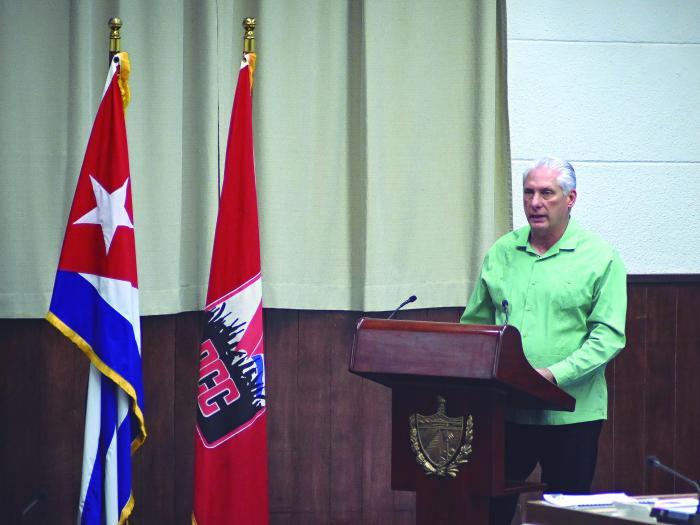
    On Wednesday, May 14, 2026, Cuban President Miguel Díaz-Canel Bermúdez, who also serves as First Secretary of the Central Committee of the Communist Party of Cuba, took to his official social media accounts to address the rapidly escalating crisis facing the island nation’s national power grid. In his public statement, he painted a stark picture of the current energy situation, confirming that peak-hour power deficits are projected to exceed 2,000 megawatts on the day of his announcement.

    Díaz-Canel left no ambiguity about the root cause of the crisis, attributing the dramatic deterioration of Cuba’s energy security entirely to longstanding U.S. trade restrictions. He labeled the restrictions a “genocidal energy blockade” that Washington imposes on Cuba, noting that the U.S. actively threatens third-party nations that supply Cuban fuel imports with harsh, unjustified tariffs. As a concrete example of the blockade’s immediate impact, the president revealed that fuel shortages directly caused by American restrictions cut 1,100 megawatts of available generation capacity from Cuba’s grid on that same Wednesday alone.

    To further back his claim, Díaz-Canel pointed to a marked improvement in power services across the island back in April. He explained that the arrival of just one additional fuel cargo vessel — out of the minimum eight vessels Cuba requires each month to meet domestic energy demand — was enough to cut power deficits and reduce widespread blackouts. While outages did not disappear entirely during that period, their frequency and severity were significantly mitigated, offering clear proof of how fuel access directly shapes Cuba’s energy outlook.

    The president also addressed recent commentary from U.S. media outlets aligned with Washington’s aggressive policy agenda toward Cuba. He noted that even these outlets, which have long backed American pressure on the island, have been forced to acknowledge the remarkable resilience of the Cuban people in the face of systemic economic pressure. Despite sweeping measures designed to cripple Cuba’s economy and energy sector, the nation has not collapsed, and remains far from what the U.S. has attempted to frame as a failed state. This forced admission, Díaz-Canel argued, indirectly confirms that Cuba’s ongoing crisis is the product of deliberate American economic warfare and targeted energy persecution, not domestic policy failure.

    Díaz-Canel went on to reframe the narrative pushed by U.S. government spokespeople, who often attribute Cuban hardship to mismanagement by Havana. In reality, he explained, the crisis stems from a deliberate, perverse strategy designed to push everyday Cuban citizens to breaking point, amplifying scarcity and hardship to stoke unrest against the country’s government. He recalled that more than 60 years of economic blockade, plus 243 additional restrictive measures implemented during the Trump administration, failed to break the Cuban Revolution. This failure led the U.S. to ramp up pressure, implementing new executive orders designed to cut off all fuel supplies to the island, and penalize any third-party entity that engages in trade or investment with Cuba. The core goal of this scheme, he emphasized, is to inflict collective suffering on the Cuban people, holding them hostage to force political change.

    Looking back at a brief period of eased restrictions several years ago, the Cuban president noted that this short window offered unambiguous proof of how both Cuban and American people, and bilateral trade relations, would benefit from ending the long-running draconian blockade. That potential improvement, he added, is exactly what a small clique of far-right U.S. extremists who control American policy toward Cuba fear. These actors deliberately spread misinformation about conditions on the island, and continuously push for harsher restrictions and greater threats against the Cuban people.

    Closing his statement, Díaz-Canel reaffirmed Cuba’s longstanding position: the nation remains open to equal, mutually respectful dialogue with the United States, but will continue to resist external pressure and build domestic prosperity regardless. “We are increasingly convinced that we must overcome these enormous difficulties through our own collective efforts, united as a single nation, and resolute in the face of even the toughest challenges,” he said.

  • Cuban Foreign Minister denounces the repercussions of a military aggression against the island

    Cuban Foreign Minister denounces the repercussions of a military aggression against the island

    In a public warning posted to his social media channels on Tuesday, Bruno Rodríguez Parrilla, Cuba’s Minister of Foreign Affairs and a member of the country’s Political Bureau, has strongly condemned the risk of potential military aggression against his nation by the United States government, laying bare the devastating ripple effects such an attack would unleash across the Caribbean and beyond.

    Rodríguez Parrilla emphasized that a U.S. military strike would not just be an act of war against a sovereign state—it would trigger a full-scale humanitarian catastrophe and an unprecedented bloodbath on Cuban soil. He pointed out that the human cost would extend beyond Cuban borders, with both Cuban and American civilians and service members losing their lives in the conflict. Critically, he noted that this high-stakes gamble is only being entertained by U.S. political leaders who do not face the personal consequence of sending their own children or family members to fight in such a war.

    The foreign minister went on to stress that there is no justification, not even a flimsy pretext, that could legitimize a military attack by the global superpower against Cuba. The small island nation, he argued, poses no measurable security threat to the United States, meaning any incursion would be rooted solely in the desire of a small faction of U.S. policymakers to force a change to Cuba’s existing political system and governing structure.

    Beyond the immediate human toll, Rodríguez Parrilla reiterated that any U.S. military aggression against Cuba would constitute a severe, direct threat to peace and stability across the entire Latin American and Caribbean region. He closed by reaffirming Cuba’s unwavering commitment to defending its national sovereignty against any attempt by external powers to impose their will on the Cuban people.

  • Embezzlement Probe and Lost Certificates Inside Immigration Dept.

    Embezzlement Probe and Lost Certificates Inside Immigration Dept.

    As of May 13, 2026, the Belizean Ministry of Immigration is facing growing public scrutiny over major administrative and financial mismanagement incidents at two of its key facilities. The agency has confirmed that it has opened an internal investigation into allegations of suspected embezzlement of public funds at its Belize City regional office.

    Senior ministry officials confirmed that the inquiry remains in its preliminary phase, but have made clear that any confirmed proof of illegal activity will prompt a full, agency-wide financial audit and an immediate referral to national law enforcement for criminal prosecution. The embezzlement claim is not the only serious issue to emerge in recent days: two official nationality certificates stored at the department’s Belmopan headquarters have been unaccounted for, leading authorities to file a formal police report. Investigators are currently working to establish whether the documents were accidentally misplaced during administrative processes or deliberately stolen for illicit use.

    In response to these dual troubling developments, the Ministry of Immigration has highlighted ongoing institutional reforms designed to close gaps in oversight and accountability. A national digitization project, already in active implementation across all department facilities, is intended to strengthen financial controls, reduce systemic vulnerabilities that allow for administrative lapses, and prevent similar incidents from occurring in the future.

    At present, the ministry has declined to release additional details about the ongoing investigations to protect the integrity of the process, but has issued a formal public vow that it will fully uncover the facts behind both the embezzlement allegations and the missing documents, and hold any individual found responsible fully accountable under the law.

  • Towards strengthening cooperation between Haiti and Trinidad and Tobago

    Towards strengthening cooperation between Haiti and Trinidad and Tobago

    In a high-stakes diplomatic mission aimed at addressing deep-seated labor market challenges, a multi-stakeholder Haitian delegation traveled to Port of Spain, the capital of Trinidad and Tobago, on May 13, 2026, to hold a landmark working meeting with Trinidadian officials, International Labour Organization (ILO) representatives, labor union leaders and private sector stakeholders. The delegation was led by Marc-Elie Nelson, Haiti’s Minister of Social Affairs and Labor, and included top figures from Haiti’s key industry and labor groups: Radia Mauluk, President of the Association of Industries of Haiti (ADIH), Yvel Admettre, Secretary General of the Confederation of Public Sector Workers (CTSP), and Fignolé St-Cyr, Secretary General of the Autonomous Central of Haitian Workers (CATH).

    During the meeting, Minister Nelson delivered a candid, comprehensive overview of Haiti’s current labor landscape, outlining the severe structural obstacles that have crippled the sector’s ability to function effectively. Key challenges he highlighted include the oversized informal economy that leaves millions of workers without basic protections, growing precarity in the limited formal employment sector, rising social unrest, outdated social dialogue frameworks, persistent gaps in labor inspection enforcement, and widespread institutional weaknesses in labor regulation and social safety net provision. Despite these significant headwinds, Nelson also outlined the concrete steps the Haitian government has already taken to improve conditions for workers and stabilize the market, including a recent minimum wage hike, expanded social assistance programs targeting the most vulnerable populations, and the creation of a new advisory council to set transparent pricing for petroleum products.

    Nelson emphasized that Trinidad and Tobago’s decades of experience in building effective social dialogue systems and robust labor regulatory frameworks would be an invaluable resource for strengthening his ministry’s institutional capacity, allowing it to deliver more impactful outcomes for Haitian workers and businesses. In response, Leroy Baptiste, Trinidad and Tobago’s Minister of Labor and Small and Micro Enterprise Development, framed inclusive social dialogue as a non-negotiable foundation for sustained economic and social stability, outlining his administration’s core strategic priorities to build a more efficient, inclusive labor market for Trinidad and Tobago. Baptiste and his senior ministry team addressed every question and concern raised by the Haitian delegation, and formally confirmed the Trinidadian government’s commitment to supporting Haiti’s efforts to upgrade its labor sector institutions.

    Joni Musabayana, the ILO’s Regional Representative, also participated in the talks, expressing solidarity with the Haitian people amid the country’s ongoing multifaceted crisis. He noted that Haiti holds the distinction of being one of the ILO’s founding member states, praised the cross-regional exchange between the two Caribbean nations as a model for collaborative problem-solving, and called for increased international attention and support for Caribbean countries grappling with uncommonly severe, unprecedented challenges.

    By the conclusion of the meeting, both sides had mapped out clear, actionable areas for future bilateral cooperation. Key priority areas identified include capacity building for inclusive social dialogue, development of professional mediation frameworks, support for labor legislative reform, upgrades to labor inspection systems, improvement of labor market data collection and statistics, and broad institutional strengthening for Haiti’s labor and social affairs agencies.

  • Towards improved infrastructure partnerships in Haiti

    Towards improved infrastructure partnerships in Haiti

    On May 13, 2026, senior Haitian government officials and representatives of the United Nations Office for Project Services (UNOPS) held a pivotal working meeting focused on rebooting the Caribbean nation’s stalled infrastructure development agenda. Hosting the talks was Engineer Joseph Almathe Pierre Louis, Haiti’s Minister of Public Works, Transport and Communications (MTPTC), alongside UNOPS Haiti Representative Ms. Dabagai Dabagai. The discussion has been framed as a landmark breakthrough in growing collaboration between the Haitian government and the global UN agency, opening new pathways to tackle the country’s long-running infrastructure shortfalls.

    From the opening of the session, UNOPS moved to reaffirm its steadfast commitment to supporting Haiti’s public works priorities. The entire meeting centered on refining the implementation framework for the country’s largest ongoing infrastructure projects, with special strategic focus allocated to the underdeveloped North and West departments, two regions that have faced disproportionate gaps in basic public infrastructure for decades.

    Minister Pierre Louis brought a grounded, pragmatic assessment of on-the-ground challenges to the dialogue, laying out the dual crises facing the national infrastructure sector. He stressed that the country is currently squeezed between crippling, rigid budget limitations that have sidelined dozens of projects and a worsening nationwide infrastructure crisis that has left critical roads, public facilities and utilities in a state of disrepair. Even with constrained public funding, the minister made clear that accelerating both new construction and routine maintenance work is a non-negotiable national priority to support economic recovery and public welfare.

    A separate urgent request was also raised by the minister: targeted support to resolve the complicated management situation of displaced persons currently encamped on the site of Haiti’s National Laboratory for Building and Public Works. The occupation of this critical government facility has delayed critical testing and planning work for new infrastructure projects across the country, creating an additional bottleneck for the sector.

    In response to the multiple barriers outlined by the Haitian government, Ms. Dabagai pledged that UNOPS would step into a direct facilitation role to unlock progress. The agency plans to immediately open structured discussions with potential international donor partners, many of which have already signaled strong interest in targeted infrastructure investment across Haiti’s priority regions. The core goal of this outreach is to mobilize the flexible financial and technical resources needed to keep essential projects on schedule and speed up delivery across the country.

    This high-level dialogue has already done much to strengthen existing synergies between MTPTC and UNOPS, clearing the way for faster resource mobilization and the rollout of tangible, on-the-ground solutions to the infrastructure sector’s most pressing challenges. The renewed partnership between the two institutions highlights the Haitian government’s strategy of leveraging the technical expertise and institutional rigor of established international bodies to tackle pressing national emergencies and lay the groundwork for long-term development.

  • Election Season Heats Up, But Who’s Funding the Campaigns?

    Election Season Heats Up, But Who’s Funding the Campaigns?

    As Belize enters the early stretch of its 2026 municipal election cycle, a high-profile populist policy proposal has reignited long-simmering public anger over the lack of transparency in political campaign funding, shining a harsh light on years of unfulfilled government promises to overhaul the nation’s loose campaign finance rules.

    The controversy erupted after Edward Broaster, a caretaker candidate for the United Democratic Party (UDP) in the Belize Rural Central constituency, announced a temporary $2 per-gallon gas subsidy for local voters. The move, designed to capitalize on widespread public frustration over soaring global fuel prices, quickly sparked suspicion: with no official disclosure requirements for political donations, voters have no way to trace where the funds for the handout are coming from. The incident has pulled back the curtain on a broader problem that successive Belizean administrations have failed to address – the complete lack of regulated oversight over who bankrolls political parties and candidate campaigns ahead of elections, now less than 10 months away.

    The push for reform is not a new conversation. Back in 2020, when current Prime Minister John Briceño led the People’s United Party (PUP) as opposition leader, he made comprehensive campaign finance regulation a core campaign pledge. Briceño outlined four foundational pillars for the proposed legislation at the time: formal legal classification of political parties, clear standards for organizational governance, a defined structure for acceptable donations (whether private, public, or a mixed model), and binding caps on donation sizes to prevent wealthy interests from exerting outsize influence.

    After the PUP won the 2020 general election and formed government, Briceño doubled down on the promise, announcing in May 2021 that the bill would be finalized and passed by the end of the year, developed in collaboration with the nation’s leading business and labor groups. The Belize Chamber of Commerce and Industry (BCCI) stepped forward to draft a full legislative proposal, which included mandatory public disclosure of all donations over a set threshold, regular reporting requirements for campaign spending, and strict penalties for non-compliance.

    Marcelo Blake, BCCI’s president, reaffirmed the business community’s support for the reform in a 2023 address, noting that the draft legislation had been shared with the government and that stakeholders were ready to work with lawmakers to get the bill passed. The National Trade Union Congress of Belize (NTUCB), the nation’s largest labor federation, also backed the reform effort, warning that unregulated political financing creates a direct pipeline for corruption and quid pro quo policy-making.

    Ella Waight, NTUCB’s current president, emphasized the stakes for the small Caribbean nation in a recent statement, arguing that Belize’s limited public resources are too precious to be misallocated to repay wealthy donors who bankroll winning campaigns. “We cannot allow that we have business or large entities or large people with great finances sponsoring parties when it comes to election time, and then they have to reimburse these favors,” Waight said.

    Yet despite years of negotiations, stakeholder input, and public pledges, no binding campaign finance reform legislation has made it to a vote in Belize’s National Assembly, even as the next municipal election approaches rapidly. Critics point out that both of Belize’s major political parties – the ruling PUP and opposition UDP – benefit from the current opaque system, which requires almost no public disclosure of donations, imposes almost no limits on who can give, and carries zero meaningful consequences for violating the few existing weak rules. Public pressure for reform has waned in recent years, and with it the government’s sense of urgency to act.

    The Broaster gas subsidy incident has dragged the unfulfilled promise back into the public eye, leaving many voters asking the same question that has lingered for half a decade: when will Belize finally deliver on the transparent, accountable campaign finance system that politicians have promised for so long?

  • Fonseca Recovering, PM Steps In, But Why Not Osmond Martinez?

    Fonseca Recovering, PM Steps In, But Why Not Osmond Martinez?

    In Belize, a sudden shift in cabinet responsibility has triggered public and press speculation following a senior minister’s urgent medical procedure. Long-serving Foreign Affairs Minister Francis Fonseca is currently recuperating after undergoing triple bypass heart surgery, prompting Prime Minister John Briceño to step in and take temporary control of the critical foreign affairs portfolio.

    While the handover was made to accommodate Fonseca’s recovery period, political observers and local reporters have quickly turned their attention to a lingering question: why was Dr. Osmond Martinez, the country’s Minister of Economic Transformation, not selected to serve as the interim replacement for Fonseca?

    When pressed by reporters on the matter during a recent public appearance, Martinez deflected decision-making responsibility directly to the prime minister. He argued that a separate temporary appointment is unnecessary in this case, noting that Briceño’s decision to hold the portfolio himself is entirely appropriate. “I do not think anyone can replace Minister Fonseca,” Martinez stated, emphasizing his respect for the incumbent foreign affairs chief. Beyond professional ties, Martinez shared that Fonseca is not just a colleague to him, but also a close personal friend and a valued professional mentor, and he extended his sincere wishes for a speedy and full recovery, noting that the entire cabinet has been praying for Fonseca’s successful recuperation.

    Addressing speculation around other potential interim appointments, Martinez clarified that he has no knowledge of any planned promotion for Marconi Leal, who currently handles foreign trade duties within the foreign affairs structure. He also drew a clear line between his own role and the foreign affairs brief, noting that his Economic Transformation Ministry falls under the Prime Minister’s Office portfolio, and he is not involved in the day-to-day work of foreign affairs or foreign trade.

    Fonseca remains a central figure in shaping Belize’s international diplomatic relationships, and for the immediate term, both the full foreign affairs portfolio and the separate foreign trade sub-portfolio remain under the direct control of Prime Minister Briceño. This development leaves open ongoing questions about the long-term interim arrangement as Fonseca continues his recovery process.

    This report is adapted from a transcribed evening television news broadcast from Belize.

  • Years Later, Maya Land Fight Far from Over

    Years Later, Maya Land Fight Far from Over

    It has now been more than a decade since the Caribbean Court of Justice (CCJ) delivered its landmark 2015 ruling recognizing collective land rights for the Maya people of Belize, yet the bitter, long-running conflict over land ownership, compensation for overlapping land claims and formal title resolution in southern Belize is still far from over.

    The latest chapter of the dispute ignited when the Alcalde of the Indian Creek Maya community made national headlines by issuing new informal land certificates to community members. Government officials quickly moved to publicly discredit the documents, dismissing them as legally invalid. In the wake of the controversy, the Alcalde made a serious allegation: he had been kidnapped amid the escalating tensions over the land certificates.

    Speaking on the current state of the conflict, Dr. Osmond Martinez, Belize’s Minister of Economic Transformation, has defended the administration of Prime Minister Johnny Briceño, asserting that the government has prioritized collaborative dialogue with Maya community leaders to build mutual trust and de-escalate long-running frictions. Martinez emphasized that trust-building is a non-negotiable foundation for any lasting resolution, noting that no legal or policy agreement can hold without genuine buy-in from all sides of the dispute.

    Martinez outlined the two distinct, complex scenarios the government is working to untangle in the wake of the 2015 CCJ ruling. The first involves land titles granted to third-party private owners after 2015, which Martinez says were issued in violation of the court’s ruling. In these cases, Martinez confirms the government accepts its legal responsibility to provide compensation to resolve duplicate title claims. The second, far more complicated scenario involves titles granted to third parties decades before the 2015 ruling, a situation that requires careful negotiation to balance the rights of long-time land holders with the Maya communities’ court-recognized collective rights.

    To demonstrate the government’s commitment to avoiding new conflict while a final resolution is negotiated, Martinez revealed that the Briceño administration has paused collection of property taxes from all parcels located within the mapped boundaries of Maya land rights areas, even as the title dispute remains unresolved. “Without that foundation of trust, no legal resolution will hold,” Martinez explained, adding that the current impasse also represents a historic opportunity to finally close a chapter of injustice that has stretched on for generations for Belize’s Maya community.

    This report is adapted from a transcribed evening television news broadcast published online.

  • PM of Haiti visited the base of the Gang Supression Force

    PM of Haiti visited the base of the Gang Supression Force

    Amid a nationwide push to curb rampant gang-related insecurity plaguing Haiti, Prime Minister Alix Didier Fils-Aimé traveled to the Gang Suppression Force (GSF) base located in the Tabarre district on May 14, 2026. The visit marked a high-profile check-in on progress of the coordinated international and local operation aimed at disarming violent armed groups that have destabilized large swathes of the country.

    During his time at the base, Fils-Aimé held strategic talks with two key senior officials: Jack Christofidies, Special Representative of the GSF, and Daniela Kroslak, Under-Secretary-General and Head of the United Nations Integrated Office in Haiti (BINUH). The core agenda of the closed-door discussions centered on streamlining the deployment of newly formed operational units and speeding up ongoing offensive operations designed to neutralize dangerous gang factions that have controlled neighborhoods, disrupted basic services and terrorized civilian populations for years.

    Accompanying the Prime Minister on the inspection tour was Vladimir Paraison, Director General of the Haitian National Police (known locally as ONH). Together, the pair reviewed the technical equipment and purpose-built infrastructure that will support incoming contingents. These new forces are tasked with bolstering joint operations carried out by the Haitian National Police and the Armed Forces of Haiti (FAd’H), as the country works to fully reassert government control over territory held by armed gangs.

    In remarks delivered to multinational troops deployed at the base – including service members from Chad, El Salvador, and Guatemala – Prime Minister Fils-Aimé delivered a straightforward message underscoring the stakes of the mission. “The Haitian people expect only one thing from you: concrete results for the lasting restoration of security,” he told the assembled forces. The visit comes as Haiti ramps up its long-awaited crackdown on gang violence, with international support, to create the conditions for long-promised political and electoral stability across the country.