分类: politics

  • Barbados opens first resident embassy in Ireland

    Barbados opens first resident embassy in Ireland

    On a landmark day for bilateral relations between two island nations, Barbados has officially opened its first resident embassy in Dublin, Ireland, a strategic step designed to expand collaboration across trade, tourism, political and cultural spheres. The inauguration comes as both Caribbean and European island republics celebrate 25 years of formal diplomatic relations, ahead of Barbados’ 60th anniversary of independence from British rule and five years as a sovereign republic.

    Addressing the opening ceremony on Monday, Barbadian Prime Minister Mia Mottley emphasized that the new physical diplomatic presence marks a deliberate choice to formalize and deepen the longstanding connection between the two countries. Beyond diplomatic protocol, Mottley highlighted deep shared historical roots that bind the two nations together, drawing parallels between the experiences of Irish indentured workers transported to Barbados in the 1600s and the enslavement of African people brought to the island to build its colonial economy. Today, a large portion of white Barbadians can trace their lineage directly to those 17th-century Irish indentured servants.

    “That early linkage, with your people coming as indentured servants and our people coming as slaves, meant that we understood together what it was to be pawns in the hands of those who had ambitions that simply did not see us, did not hear us and did not feel us as human beings who could be valued and allowed to build something of worth,” Mottley told attendees. She added that both countries forged a shared culture of resilience through their separate paths to full independence from British colonial rule, a trait she says is more critical today than ever before.

    “It is not a coincidence that we share so much in common: our values, our aspirations, our ambitions, but equally our journey. And that journey has taught us one characteristic that perhaps is needed now more than ever: resilience. The Irish know about resilience, and Bajans know about resilience,” she said.

    Helming the new Dublin mission is Cleviston Haynes, Barbados’ first resident ambassador to Ireland. Haynes outlined the core priorities for the embassy, which include expanding cooperation in trade, tourism, foreign direct investment, higher education, climate resilience, and cross-cultural exchange. He noted that Irish firms are already active contributors to key Barbadian economic sectors, including tourism, telecommunications, and public healthcare, while ongoing partnership with Ireland’s Marine Institute is supporting Barbados’ goal to develop its sustainable blue economy.

    Haynes also pointed to new growth opportunities on the horizon, particularly with the launch of trial direct Aer Lingus flights between Dublin and Bridgetown, which he said will open the door to far higher tourism volumes and easier business travel between the two countries.

    The ceremony brought together a broad group of stakeholders, including senior Barbadian Minister of Foreign Affairs and Foreign Trade Christopher Sinckler, senior Irish diplomatic and political figures, members of the Barbadian diaspora based in Ireland, and local supporters of the bilateral relationship. Seán Ó Fearghaíl, former Speaker of Ireland’s lower house of parliament Dáil Éireann, welcomed the new embassy and noted that Ireland sees Barbados as an increasingly attractive destination for Irish overseas investment, thanks to its reputation for political stability and strong governance.

    “We have shared visions. We have shared values,” Ó Fearghaíl said. “Irish people are looking for places to go to invest; they are looking for stability and they are looking for good governance. When they look to Barbados, that is exactly what they see.”

    Looking ahead, Mottley called for the bilateral relationship to evolve into a “living partnership” that advances shared global priorities, from climate justice and global peace to economic equity, and amplifies the collective voice of small island developing states on the international stage.

  • US having “private conversations” about security following Venezuela’s stance on ICJ

    US having “private conversations” about security following Venezuela’s stance on ICJ

    As tensions escalate over the decades-long territorial dispute between Venezuela and Guyana over the resource-rich Essequibo Region, a senior U.S. diplomat has confirmed that Washington is holding closed-door diplomatic negotiations to de-escalate the crisis, after Venezuela’s leader rejected any binding ruling from the International Court of Justice (ICJ) on the conflict.

    U.S. Under Secretary of State for Economic Affairs Jacob Helberg made the announcement Wednesday during a press briefing at the U.S. Embassy in Georgetown, Guyana, at the conclusion of a one-day official visit to the South American nation. Helberg emphasized that the U.S. is keeping close watch over ongoing proceedings at the ICJ, and agrees that regional security is a foundational requirement for economic growth and prosperity across the hemisphere.

    “Ultimately a lot of those conversations right now will be private, and we believe that we can make progress through private conversations,” Helberg told reporters, declining to disclose which parties are participating in the backchannel discussions. The comment came in response to a question from Demerara Waves Online News, which asked whether the U.S. was prepared to step in as a mediator to preserve hemispheric stability and energy security, should Venezuela maintain its hardline stance against the ICJ’s authority.

    The territorial dispute carries major energy stakes: ExxonMobil and multiple other U.S. oil firms hold offshore exploration concessions in the Essequibo Region, and have tied their long-term development plans to a binding ICJ ruling on the conflict, which is expected to be issued either by the end of 2026 or in the first quarter of 2027.

    The standoff reached a new flashpoint earlier this week, following dramatic developments from both Caracas and Washington. On Monday, Venezuelan Interim President Delcy Rodriguez told the ICJ that her government would refuse to abide by any court decision that upholds the 1899 Arbitral Tribunal Award, the agreement Guyana recognizes as the final settlement of its shared border with Venezuela. Rodriguez reaffirmed Venezuela’s long-held position that the dispute can only be resolved through bilateral negotiations, based on Caracas’s interpretation of the 1966 Geneva Agreement signed between Venezuela and the United Kingdom, which was Guyana’s colonial ruler at the time. Notably, Venezuela omits reference to a key clause in the 1966 deal that permitted the U.N. Secretary General to refer the unresolved conflict to an adjudicatory body like the ICJ; the U.N. took that step, clearing the way for Guyana to file its formal case with the court.

    During her ICJ appearance, Rodriguez repeated her longstanding accusations that Guyana has colluded with ExxonMobil, the U.S. government and U.S. Southern Command to carry out what she frames as an imperialist plot to seize the Essequibo Region from Venezuela.

    A day before Helberg’s visit to Guyana, U.S. President Donald Trump drew global attention to the dispute with a post on his Truth Social account, shared to X (formerly Twitter). The post included a map of Venezuela that omitted the entire Essequibo Region, alongside a fully recognized map of Guyana that includes the contested territory shaded within the U.S.-shaded map of Venezuela.

    The decades-old dispute has flared in recent years following the discovery of massive oil reserves offshore Essequibo, turning a long-simmering territorial conflict into a high-stakes issue for global energy markets and regional security in South America.

  • BREAKING: “Possible Embezzlement” at Immigration Offices

    BREAKING: “Possible Embezzlement” at Immigration Offices

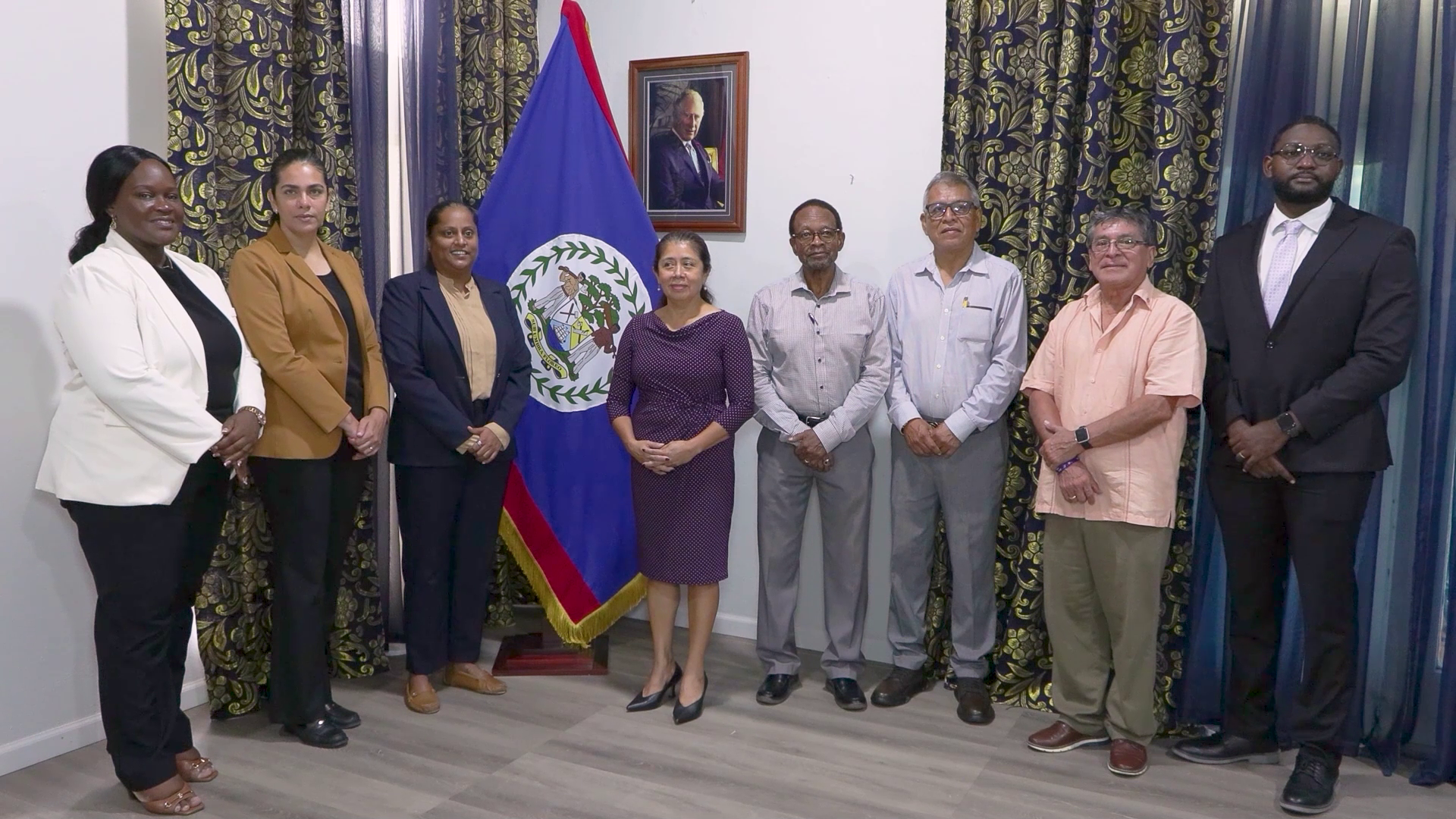
    In a developing breaking story dated May 13, 2026, Belize’s Ministry of Immigration has opened two separate internal investigations into serious misconduct allegations at two of its key regional offices, putting the government’s public accountability commitments to an early test amid ongoing system modernization efforts.

    The first investigation centers on reported financial irregularities at the Belize City Immigration Department office, with claims of potential embezzlement of public funds prompting the internal review. Ministry officials confirmed that preliminary inquiries are already underway to map out exactly what misconduct may have occurred and how far it extends. In an official statement, the agency emphasized that any issue touching on public fund management, institutional accountability and professional integrity is being handled with the highest possible priority, noting that investigations remain in their early active stages with no final conclusions drawn yet.

    Per the Ministry’s public guidance, if preliminary findings uncover concrete evidence of criminal activity related to the embezzlement claims, the next steps will include a comprehensive independent financial audit, followed by a formal referral of the entire case to the Belize Police Department for a full criminal investigation.

    Alongside the financial probe, a separate internal review at the Belmopan Immigration Office has identified two missing Nationality Certificates. The Ministry has already compiled internal documentation related to the missing documents, and confirmed it will submit an official incident report to the Belize Police Department this week to launch a formal criminal probe. Investigators have not yet reached a conclusion on the cause of the missing certificates, with three potential scenarios still on the table: administrative error from misprinting, accidental loss, or intentional theft.

    These two investigations come at a time when the Ministry is actively working to overhaul and modernize the country’s nationality application process. Earlier in 2026, the agency launched a consultancy project focused on full digitization of the nationality processing workflow. The stated goals of the digital upgrade are explicitly to boost transparency and accountability, strengthen internal monitoring frameworks, and close procedural gaps that leave the system vulnerable to issues like missing documentation and unauthorized financial activity.

    Amid the active preliminary probes, the Ministry has announced it will not release any further details on the investigations to avoid compromising ongoing work, leaving the public waiting for updates as the inquiries progress.

  • Trump Lands in Beijing While Iran War Still on the Table

    Trump Lands in Beijing While Iran War Still on the Table

    On May 13, 2026, U.S. President Donald Trump touched down in Beijing, kicking off a long-awaited bilateral summit with Chinese President Xi Jinping – his first visit to the country since 2017. The high-profile diplomatic trip was originally postponed earlier this year, after Trump pushed back the travel schedule betting that the ongoing armed conflict between the U.S. and Iran would reach a resolution within a matter of weeks. To date, however, no permanent peace agreement has been finalized between the two sides, leaving the threat of sustained conflict hanging over the summit.

    The welcoming ceremony for Trump’s delegation followed longstanding diplomatic protocol, featuring full ceremonial pomp and public crowds gathered to wave both the flags of the United States and China. Joining Trump on the trip are multiple senior White House and cabinet officials, alongside more than a dozen top American business leaders – including Apple CEO Tim Cook and Tesla CEO Elon Musk, highlighting the strong economic and commercial components of the summit’s agenda.

    While trade cooperation and technological collaboration are core topics on the meeting schedule, the unresolved U.S.-Iran standoff is poised to take center stage during bilateral discussions. The U.S. has maintained a strict naval blockade around the Strait of Hormuz, a critical global maritime chokepoint that handles roughly a fifth of the world’s daily oil trade. For China, the world’s largest importer of Iranian crude, the ongoing closure and heightened military activity in the strait has created significant energy security and economic risks.

    According to reporting from CNN, the Trump administration is expected to push China to leverage its longstanding economic and diplomatic influence with Tehran to help de-escalate tensions. Trump has publicly framed the current fragile lull in hostilities as being on “massive life support”, making clear he aims to secure Chinese backing to reopen the strait to commercial shipping and reach a permanent ceasefire between the U.S. and Iran. Official working meetings between Trump and President Xi are scheduled to unfold over the coming two days, with global markets and diplomatic observers closely watching for outcomes that could reshape regional security and international trade flows.

  • Guyana, US to hold technical talks on bauxite, other investment opportunities

    Guyana, US to hold technical talks on bauxite, other investment opportunities

    On Wednesday, May 13, 2026, a high-stakes bilateral meeting between Guyanese President Dr. Irfaan Ali and visiting U.S. Under Secretary of State for Economic Affairs Jacob Helberg opened a new chapter in bilateral economic cooperation, with plans for deepened engagement on targeted investments spanning multiple key industries. The diplomatic gathering, held at Guyana’s State House, included senior delegations from both sides: Helberg was accompanied by U.S. Ambassador to Guyana Nicole Theriot, while President Ali was joined by cabinet ministers Dr. Ashni Singh, Hugh Todd, Vickram Bharrat and Zulfikar Ally, alongside Foreign Secretary Robert Persaud and National Intelligence and Security Agency Director Colonel Sheldon Howell.

    Shortly after the closed-door talks, during a press briefing at the U.S. Embassy ahead of wrapping up his one-day official visit to the South American nation, Helberg outlined the tangible outcomes of the discussions, revealing that detailed technical working-level talks will follow the high-level dialogue, with a potential permanent bilateral working group under consideration to maintain consistent progress and accountability on cooperation commitments.

    A core focus of the talks was expanding private investment in Guyana’s already established bauxite mining sector. Currently, two operators—China’s BOSAI Minerals and U.S.-owned First Bauxite—run active production operations in the country, while Russian firm RUSAL is on track to restart its Guyanese activities later this year, after suspending operations in 2018 amid a major labor dispute. Helberg noted that discussions centered on expanding bauxite output and market access, with new U.S. investment targeting two key enablers: critical transportation infrastructure, particularly road networks, and cutting-edge autonomous trucking technology. These upgrades, he explained, would act as a catalyst to move more Guyanese bauxite to global markets faster and more efficiently.

    Beyond the bauxite sector, Helberg highlighted a wide range of untapped investment opportunities for U.S. firms in Guyana. Pointing to the $55 trillion in liquid assets held by the U.S. private sector—what he called the world’s largest single pool of investment capital that would deliver mutual benefits to both Guyana and the United States—he identified promising sectors including data center development, tourism expansion, agricultural and food technology, and broader digital innovation. A key highlighted area of potential cooperation is partnership between Guyana and Silicon Valley, the global epicenter of high-tech innovation. Helberg noted that Guyana offers unique advantages for Silicon Valley firms, from testing new emerging technologies to establishing permanent local operations. He also outlined a transformative potential for artificial intelligence integration: AI-powered logistics infrastructure could position Guyana as a key regional hub that cuts transit times for northern Brazilian goods accessing Caribbean markets.

    Closing his remarks, Helberg offered strong praise for the Guyanese government’s approach to economic growth, noting that he left the meeting confident in President Ali’s decisive leadership. “I can confidently say after this trip that President Ali does bring a level of decisiveness that really avails an opportunity to be transformative for the country of Guyana,” he said.

  • Belize Earns a Seat in Regional Tax Body CIAT

    Belize Earns a Seat in Regional Tax Body CIAT

    In a milestone for Belize’s regional engagement and domestic tax modernization, the Central American nation has been elected to the Executive Council of the Inter-American Center of Tax Administrations (CIAT) for the 2026-2027 term. The announcement follows the vote held during CIAT’s 60th General Assembly, which concluded May 11 in Punta Cana, Dominican Republic.

    Michelle Longsworth, Director General of the Belize Tax Service Department, will serve as Belize’s representative on the council. She will join fellow decision-makers from eight other member jurisdictions: Brazil, Canada, Chile, Colombia, Curaçao, the Netherlands and Panama, positioning Belize to help shape regional tax policy alongside major hemispheric economies.

    The win comes at a particularly pivotal moment for Belize, as the country advances one of the most sweeping overhauls of its tax system in recent decades. At the core of this reform agenda is the full rollout of mandatory electronic invoicing for all goods and services tax (GST)-registered businesses. The framework was enabled by amending the national GST Act, which entered into force on January 1, 2025, with the Ministry of Finance confirming full implementation plans back in March 2026. Non-compliant businesses will face formal penalties under the updated legislation.

    Policy makers designed the new e-invoicing system to advance two key goals: closing gaps that enable tax evasion by creating fully transparent, traceable digital records of all commercial transactions, and cutting red tape for compliant businesses by streamlining GST reporting processes.

    Beyond digital invoicing, Belize’s CIAT Executive Council seat aligns with its broader national tax reform strategy. The government is also working to strengthen its cross-border international tax cooperation frameworks and advance a transition to a Semi-Autonomous Revenue Authority (SARA), a shift designed to improve administrative efficiency and compliance outcomes.

    Regional tax bodies like CIAT play a critical role in coordinating tax policy across the Americas, supporting member states in combating cross-border tax evasion, modernizing revenue administration, and aligning domestic rules with global tax standards. Belize’s new seat on the governing council gives the country a direct voice in setting the body’s priorities for the coming two-year term as it advances its own domestic reform goals.

  • PM Skerrit lauds Bahamian leader Phillip Davis’s historic re-election

    PM Skerrit lauds Bahamian leader Phillip Davis’s historic re-election

    In a post-election message released across social media platforms, Dominica’s Prime Minister Roosevelt Skerrit has officially extended warm congratulations to Prime Minister Philip Davis of the Bahamas following Davis’ decisive victory in Tuesday’s general election.

    Speaking on behalf of both the Dominican government and the Caribbean island nation’s general public, Skerrit offered his sincerest well wishes for ongoing advancement and shared prosperity for all Bahamian people. He emphasized that Davis’ successful re-election arrives at a critical juncture for the entire Caribbean region, noting close regional ties and shared priorities that unite the two nations.

    Looking ahead to the next five-year term, Skerrit shared that he eagerly anticipates deepening ongoing collaboration and dialogue between Dominica and the Bahamas. This continued partnership, he noted, will focus on advancing collective regional priorities and driving forward inclusive, sustainable development that improves outcomes for citizens of both nations.

    Local Bahamian political reporting from bahamaspress.com highlights that Davis’ election win is more than a routine democratic outcome — it marks a historic milestone for the Bahamas. Davis is set to become the first Bahamian head of government to secure back-to-back full terms in office, a feat not achieved by any sitting prime minister in nearly 30 years.

    For decades, Bahamian electoral politics have followed a consistent pattern: voters have regularly chosen to oust incumbent governments at the end of every five-year legislative cycle. Davis’ re-election breaks this long-standing tradition, signaling a measurable shift in voter sentiment toward the ruling Progressive Liberal Party (PLP).

    Davis’ path to re-election was shaped by a bold strategic move earlier this year. On April 8, the prime minister called an early snap election, moving to dissolve the national parliament months before its scheduled end of term. According to analysis from bahamaspress.com, this proactive political gambit reflects a broader transformation in the Bahamas’ modern political landscape. The outcome of the early vote suggests that the PLP successfully reconnected with the electorate and effectively communicated its first-term policy achievements to win over voters for a second consecutive term.

  • BREAKING: Joel Rayne to Be Sworn In as Junior Minister,  Tiffany Strann-Peters Joins Senate

    BREAKING: Joel Rayne to Be Sworn In as Junior Minister, Tiffany Strann-Peters Joins Senate

    In a last-minute political development that reshapes the country’s current legislative and executive landscape, two public figures have secured key positions in the nation’s government, multiple official sources confirmed early Thursday. Joel Rayne, a veteran policy advisor with more than 15 years of experience in public service, is set to be formally sworn in as the nation’s newest Junior Minister in the coming days. Meanwhile, Tiffany Strann-Peters, a former community organizer and local government leader, will take up an open seat in the national Senate.

    The open Senate seat was vacated earlier this month following the unexpected retirement of long-serving Senator Michael Hale, who stepped down citing long-term personal health concerns that have kept him from participating in key legislative votes over the past three months. Strann-Peters was selected by the ruling party’s internal nominating committee to fill the remaining 18 months of Hale’s term, after a week of closed-door deliberations that drew input from regional party leaders across the country. A formal swearing-in ceremony for both new office holders is scheduled to take place at the country’s capitol building next Monday, according to an official statement released by the Prime Minister’s office Wednesday evening.

    Political analysts note that Rayne’s appointment fills a months-long vacancy in the Junior Minister post at the Department of Housing and Urban Development, which has been operating without a permanent second-in-command since the previous office holder resigned to take a private sector role in March. Rayne, who has previously led multiple working groups on affordable housing policy, is expected to push forward the ruling administration’s signature plan to build 100,000 new affordable housing units across the country by 2027. For Strann-Peters, her appointment gives the ruling party an additional vote in the evenly divided Senate, where control has been split 50-50 between the ruling and opposition blocs for the past two years. That shift gives the ruling party a narrow functional majority to advance their legislative agenda, including a planned infrastructure investment bill and changes to national healthcare policy that have been stalled since last year.

    Opposition leaders have already issued brief statements acknowledging the new appointments, with the opposition Senate leader noting that they look forward to working with both Strann-Peters and Rayne on bipartisan issues that impact all constituents, while also signaling that they will challenge any policy proposals that conflict with the opposition’s core priorities. Public reaction to the announcement has been mixed, with ruling party supporters praising both picks as experienced, committed public servants, while independent observers have noted that the shift in Senate balance will likely lead to more partisan friction in the coming months as national elections approach in 2025.

  • PM congratulates Hon. Philip Davis on his re-election as prime minister

    PM congratulates Hon. Philip Davis on his re-election as prime minister

    Following the conclusion of The Bahamas’ recent general election, Grenada’s Prime Minister Dickon Mitchell has officially extended his warm congratulations to Philip Davis on his successful re-election as Prime Minister of the Commonwealth of The Bahamas.

    Mitchell emphasized that Davis’ victory is far more than a personal political win — it represents a fresh vote of confidence from the Bahamian public, both in Davis’ leadership and in the country’s foundational democratic governance system.

    As fellow member states of the Caribbean Community (Caricom), Grenada and The Bahamas have built a long-standing track record of collaborative work focused on advancing three core regional goals: deepening Caribbean unity, accelerating regional integration, and driving inclusive sustainable development across the bloc. Mitchell noted that this bilateral partnership remains an essential pillar of Caricom’s collective progress, particularly as the region works to tackle interconnected pressing challenges: building national economic resilience, delivering ambitious climate action, guaranteeing food and water security, and expanding equitable social development.

    Both nations fall into the group of Small Island Developing States (SIDS), a classification that binds them through shared core commitments and parallel unique challenges. As SIDS, both face disproportionate vulnerability to the accelerating impacts of climate change, heightened exposure to volatile external economic shocks, and an ongoing need to deliver growth that is both inclusive and sustainable. United by solidarity and shared purpose, the two countries remain unwavering in their coordinated efforts to advocate for Caribbean priorities and interests in global multilateral forums, leveraging regional coordination to amplify their collective voice.

    Looking ahead, the Government of Grenada has made clear it is eager to continue its productive collaborative work with the Government of The Bahamas. The two sides will work to strengthen bilateral ties and advance shared priorities at both the regional and global levels, all rooted in the enduring spirit of Caribbean unity, mutual partnership, and cross-national solidarity.

    This statement was released by the Office of the Prime Minister of Grenada. NOW Grenada notes that it holds no responsibility for opinions, statements, or third-party contributor content, and invites users to report any alleged abuse through official designated channels.

  • Belize Makes 52 Years in CARICOM; ‘It’s About People and Opportunity’

    Belize Makes 52 Years in CARICOM; ‘It’s About People and Opportunity’

    As Belize enters its 53rd year as a member state of the Caribbean Community (CARICOM) in 2026, the country is turning its attention to bridging the knowledge gap around regional integration for younger generations, marking five decades of membership with a youth-centered public event.

    On Tuesday, a targeted panel discussion brought together high school and university students, early-career young professionals, and education leaders in Belmopan, the nation’s capital. The gathering was organized to unpack what CARICOM membership actually delivers for ordinary Belizeans, moving beyond the dense policy documents and administrative formalities that often overshadow the tangible benefits of regional cooperation.

    The event was hosted by Belize’s Ministry of Foreign Affairs and Foreign Trade, and formed a core part of the national 2026 CARICOM Week celebrations. This year’s regional campaign carries the unifying theme “Your Future, Your Region”, which was designed to center young people’s stake in Caribbean integration.

    In his opening welcome address, Minister of State for Foreign Trade Marconi Leal Jr. highlighted Belize’s longstanding commitment to the CARICOM bloc, which the country first joined in 1974. A formal statement released by the government following the event emphasized that Leal stressed Belize’s engagement with CARICOM extends far beyond trade agreements and intergovernmental policy negotiations. For Belize, he said, regional cooperation is fundamentally “about people and the opportunities created through collective regional development.”

    Over the course of the discussion, participating panelists drew on their own personal career trajectories to illustrate the practical advantages of CARICOM integration. Conversations focused on opening accessible pathways for cross-regional collaboration in key areas that matter most to young Belizeans: cross-border higher education opportunities, support for regional youth entrepreneurship, targeted cross-Caribbean skills development programs, and expanded professional mobility that allows young workers to pursue opportunities across CARICOM member states.

    The event comes as CARICOM as a whole works to increase public awareness of its work among younger demographics across all 15 member states, aiming to build long-term public support for ongoing regional integration efforts. For Belize, the 52nd anniversary celebration serves as both a milestone to reflect on past progress and a call to action to ensure the next generation understands the benefits of regional cooperation for their own futures.