分类: politics

  • Johnny Kasdjo toegelaten tot DNA: focus op verantwoordelijkheid en daadkracht

    Johnny Kasdjo toegelaten tot DNA: focus op verantwoordelijkheid en daadkracht

    On May 14, Suriname’s National Assembly confirmed its return to full membership following the formal swearing-in of Johnny Kasdjo, a member of the VHP party. Kasdjo fills the vacant seat left by the passing of former parliamentarian Chan Santokhi on March 30, closing a six-week gap in the legislature’s representation.

    After completing the required oath of office and passing the mandatory credentials review, Kasdjo received welcomes and congratulations from lawmakers across every parliamentary faction. Speakers across party lines acknowledged the unusual circumstances of his appointment, noting the weight of responsibility he carried stepping into the role mid-term. Lawmakers emphasized that parliamentary service is far from a simple honor, requiring consistent time, immense energy, and significant personal sacrifice. Many also centered their remarks on the shared value of cross-party collaboration and the core mandate of all elected officials: serving the people of Suriname. Leaders of the VHP faction expressed particular relief at restoring the party to full legislative strength, and voiced unanimous confidence in Kasdjo’s ability to deliver for constituents.

    The centerpiece of the day’s proceedings was Kasdjo’s maiden address to the assembly, and the new lawmaker immediately set himself apart from standard political convention. Rejecting the flowery, empty rhetoric that defines many first speeches, Kasdjo opened with a stark, unflinching commitment: he would not come to the legislature with grand, unfulfillable promises that do nothing for ordinary people. “I do not come here with big promises I cannot keep. Suriname has already had enough of that,” he stated, laying out a clear marker for his policy approach and governing style from day one.

    Kasdjo went on to outline the harsh daily realities that millions of Surinamese residents navigate, issues he argues have been ignored by the political establishment for too long. He called attention to the growing exodus of young people, who now feel forced to build their futures outside of Suriname due to limited opportunity at home. He also highlighted the struggles of elderly Surinamese, who after decades of hard work still cannot make ends meet on their retirement benefits. Finally, he spoke of local small business owners, who are constantly stymied by bureaucratic red tape and pervasive economic uncertainty that makes long-term planning impossible. None of these crises, Kasdjo stressed, can continue to be pushed aside for political convenience.

    The new parliamentarian argued that the Surinamese public has grown tired of political posturing and is now counting on elected leaders to deliver tangible, measurable results. To that end, he summarized his governing approach in three core pillars: listen to the people, act decisively on critical issues, and accept full accountability for outcomes. Rejecting the traditional model of lawmaking that happens exclusively behind closed committee room doors, Kasdjo pledged to remain rooted in community life. “I am the man who will go out into the streets. I will go into the neighborhoods. I will listen to the people who do not sit in these meeting rooms, but who feel the consequences of every decision we make here,” he said.

    Kasdjo emphasized that effective policy cannot only exist on printed government documents—it must improve daily life for all Surinamese, a standard he will hold for every proposal that comes to the floor. He added that Suriname urgently needs leaders willing to make difficult, unpopular choices when they serve the public good, even when those choices make political life more complicated. Closing his address, Kasdjo reiterated his core motivation: he did not seek a seat in the National Assembly for prestige or personal power, but out of a deep sense of responsibility to the constituents who placed their trust in him.

  • Tiffany Strann-Peters Sworn In as Senator as Female Representation Grows

    Tiffany Strann-Peters Sworn In as Senator as Female Representation Grows

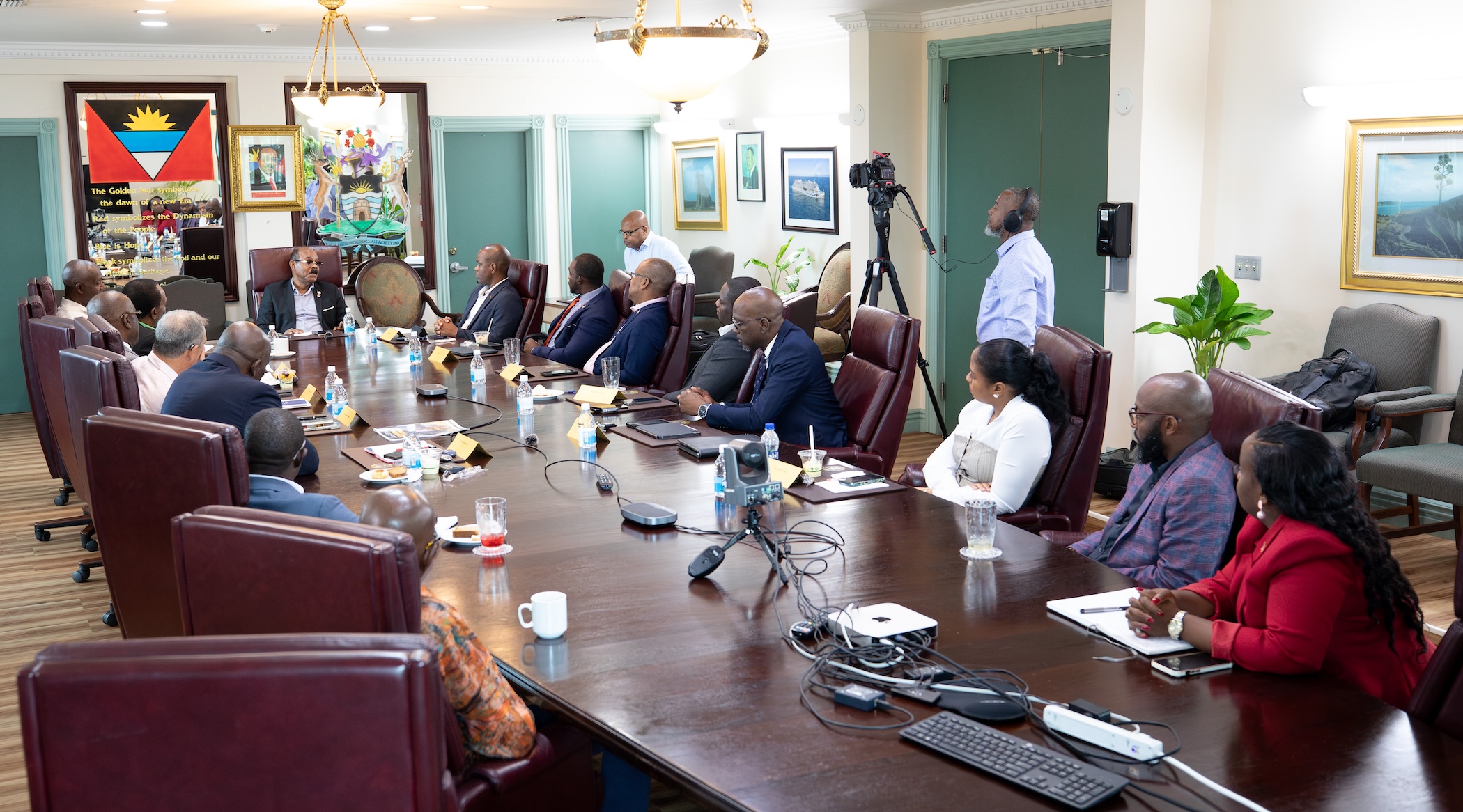
    In a formal ceremonial event held at Government House on Wednesday, Tiffany Anthea Lauren Strann-Peters officially took office as a new Government Senator, a milestone that senior national officials have framed as a transformative step forward for gender parity in Antigua and Barbuda’s legislative branch.

    Governor General Sir Rodney Williams, the country’s highest ceremonial official, emphasized that Strann-Peters’ appointment carries far broader national weight than a single individual’s career advancement. With her swearing-in complete, the count of women serving in the nation’s Senate has climbed to six, marking a notable jump in female representation in the upper parliamentary chamber.

    When combined with the two women already holding seats in the Lower House, women now occupy eight of the 3 total seats in Antigua and Barbuda’s national Parliament — one of the highest shares of female legislative representation the country has ever seen in its modern history.

    Sir Rodney characterized this growing gender balance as both a meaningful milestone and an encouraging sign for the country’s democratic development. He stressed that expanding women’s participation in public governance does more than just improve representation — it also strengthens institutional effectiveness and brings a wider range of lived experiences and perspectives to critical national policy decisions.

    Beyond legislative impacts, Sir Rodney noted that the milestone sends a resounding message to young women and girls across Antigua and Barbuda: positions of leadership, public service, and national influence are accessible to anyone willing to serve with unwavering integrity and a commitment to excellence.

    During the ceremony, Strann-Peters completed three updated constitutional oaths: the Oath of Allegiance, the Oath of Office, and the Oath of Secrecy. Senior officials explained that the inclusion of these updated oaths underscores Antigua and Barbuda’s longstanding commitment to its constitutional independence and the core principle of accountability for all public office holders.

  • Senator Joel Rayne Sworn In as Parliamentary Secretary

    Senator Joel Rayne Sworn In as Parliamentary Secretary

    In a rapid progression of political responsibility that has drawn attention across Antigua and Barbuda, newly minted Senator Joel Anderson Rayne took the oath of office as Parliamentary Secretary for the Ministry of Finance, Corporate Governance and Public Private Partnerships on Wednesday. The formal swearing-in ceremony was hosted at Government House, just days after Rayne’s initial appointment to the country’s upper legislative chamber, marking an expanded mandate for public service.

    Governor General Sir Rodney Williams led the ceremony and emphasized that the early promotion of Rayne to this junior ministerial post signals the administration’s strong trust in the new appointee’s ability and dedication to delivering for Antigua and Barbuda’s citizens. Barely one week after his Senate appointment on May 8, Rayne now takes on a broad portfolio of responsibilities, ranging from supporting core ministerial administrative work to coordinating parliamentary engagement and streamlining day-to-day government operations.

    Addressing gathered attendees, which included sitting cabinet ministers, fellow senators, senior public officials, and members of Rayne’s family, Sir Rodney laid out the high expectations for the role, noting that it demands consistent discipline, unwavering dedication, and a consistent commitment to diligent public service. “Before even taking his seat for the first official sitting of the Senate, he has already been entrusted with this additional critical duty and a broader scope of service to the people of our nation,” the Governor General stated.

    A notable constitutional shift accompanied Wednesday’s ceremony, one that officials have framed as a meaningful step toward aligning oaths of office with national sovereignty. The updated constitutional oath administered to Rayne now requires allegiance to the Constitution and laws of Antigua and Barbuda, replacing the longstanding requirement to pledge allegiance to the British monarchy. This adjustment marks a quiet but significant milestone in the country’s constitutional evolution, underscoring the ceremony’s broader significance beyond a single political appointment.

  • Belize’s Campaign Finance Reform Is Still MIA and Election Season Is Already Here

    Belize’s Campaign Finance Reform Is Still MIA and Election Season Is Already Here

    As Belize enters the final stretch of preparation for upcoming municipal elections, a long-deferred and contentious policy issue has returned to the national spotlight, sparked by a small, targeted campaign gesture from a local opposition politician. In early May 2026, United Democratic Party (UDP) caretaker Edward Broaster rolled out a $2 gas subsidy for local constituents, a move that appeared routine on its surface but quickly reignited long-simmering public debate over a gaping hole in Belize’s election regulation framework: the complete lack of mandatory campaign finance disclosure rules.

    With less than 10 months remaining before voters head to the polls, the status of campaign finance transparency in Belize remains identical to what it was ahead of the 2020 general election: there is no legal requirement for political candidates or parties to disclose who is funding their campaigns, leaving voters with no insight into the financial backers shaping election outcomes.

    The promise of sweeping campaign finance reform is not a new talking point for the current ruling People’s United Party (PUP). Long before the PUP won control of government, when current Prime Minister John Briceño served as opposition leader, he laid out a clear four-part framework for what the promised reform legislation would include. Briceño outlined that the bill would first establish formal legal definitions and universal operational standards for registered political parties. Second, it would settle the core question of what funding model is allowed for election campaigns, with three frameworks — strictly private funding, strictly public funding, and a mixed public-private model — all under consideration, alongside new rules to restrict the types of donations that parties can accept.

    When the PUP took power, reform advocates initially saw tangible momentum toward turning that promise into law. By May 2021, Briceño publicly pledged that the full reform legislation would be passed before the end of the year, with formal support already secured from two of the country’s most influential non-governmental bodies: the Belize Chamber of Commerce and Industry (BCCI) and the National Trade Union Congress (NTUC). The BCCI even took the extraordinary step of drafting its own full proposed bill and presented the text to the public, in a push to pressure the government to move forward. Then-BCCI President Marcelo Blake explained at the time that the group’s goal was to outline the key components of meaningful reform for media and the public, then collaborate with the Briceño administration to turn the draft into enforceable law.

    The NTUC, the country’s leading union federation, also threw its full institutional weight behind the reform push, with its leadership making clear the high stakes of closing the campaign finance transparency gap. NTUC President Ella Waight argued that the current anonymous system opens the door to persistent corruption, a particularly unacceptable outcome in a small country with limited public resources. Waight warned that without donation limits and disclosure rules, wealthy individuals, large corporations and powerful business interests can fund major parties during election cycles, then expect favorable policies and favors in return after candidates take office, leaving public resources misallocated to reward donors rather than serve the broader public.

    Five years after that high-profile push, that clear warning has not resulted any tangible policy change. Years of public consultations, multiple draft proposals, and repeated public promises from political leaders have failed to produce a single enforceable campaign finance reform law on the books. Political critics across the spectrum argue that the lack of progress is no accident: both of Belize’s major ruling parties benefit from the current opaque system, which allows them to keep their donors hidden and their campaign spending unaccountable to voters, giving them little incentive to alter the status quo ahead of the 2026 vote.

  • ‘Love SVG’ targets 100 projects to upgrade tourism product by November

    ‘Love SVG’ targets 100 projects to upgrade tourism product by November

    On May 14, 2026, St. Vincent and the Grenadines’ Minister of Tourism, Civil Aviation and Sustainable Development Kishore Shallow made a key policy announcement during a press briefing held in Villa: the island nation is rolling out a six-month nationwide tourism enhancement initiative dubbed “Love St. Vincent and the Grenadines” (Love SVG), with the ambitious goal of delivering at least 100 priority infrastructure and service improvement projects ahead of the 2026/27 tourism season kicking off this November.

    Unlike fragmented, agency-specific tourism upgrades that the country has rolled out in the past, this new campaign is built on a cross-sector collaboration model that brings together government departments, statutory bodies, private industry stakeholders and local communities. Shallow emphasized that the six-month timeline was deliberately scheduled to align with the tourism off-season, allowing the country to complete upgrades without disrupting visitor experiences, and wrapping up all work just as the high season gets underway.

    At its core, the initiative aims to upgrade tourism-related facilities and services across both the main island of St. Vincent and the smaller Grenadines islands. Shallow shared that the tourism ministry and its partner agencies have already shortlisted more than 120 candidate projects, which will be narrowed down to a final, achievable list of exactly 100 projects that will run from the announcement date through the end of October 2026. Shallow noted that the targeted number of 100 was chosen intentionally to keep the initiative focused and deliverable, rather than overextending on unfeasible commitments.

    Projects cover a wide spectrum of scales and needs, ranging from small, high-impact basic amenity upgrades to large-scale infrastructure overhauls. To address common visitor complaints, the campaign will prioritize adding waste disposal bins at popular tourist sites, increasing on-site staffing for public facilities, and delivering customer service training for frontline tourism workers. Long-stalled high-profile projects will also be prioritized for completion, including the long-overdue renovation of Fort Charlotte — a major heritage attraction that has been closed to the public since 2023. Additional planned upgrades include improvements to the Dark View Falls recreational area and the little-known Pavement waterfall site on the windward coast, with a number of new projects also earmarked for popular tourism destinations across the Grenadines.

    Permanent Secretary Tamira Browne framed the Love SVG campaign as a pivotal shift from long-term development vision to tangible on-the-ground action. She described the initiative not as a standalone marketing slogan, but as an integrated component of the country’s broader national development strategy, calling for a “whole-of-government and whole-of-society” commitment to the campaign’s success.

    To ensure broad participation, a structured project submission and reporting framework has been created for all participating sectors. Starting May 15, 2026, all line ministries and state agencies will receive a simplified project submission form, which will also be distributed to private sector businesses and community organizations through local media outlets. Browne explained that projects of all sizes are eligible: from micro-projects such as installing new public recycling bins across the islands to large-scale engineering works focused on beautifying public spaces.

    All participating sectors are being given clear participation targets: every government ministry and statutory body is expected to deliver a minimum of five projects aligned with the campaign’s core goals of boosting sustainable recycling, cutting litter, improving nationwide cleanliness, beautifying public spaces, and preparing the country for the upcoming high tourist season. Private sector entities are also invited to meet similar targets, or opt to adopt and upgrade specific tourist sites under the programme.

    The campaign organizes all proposed projects into five core priority categories: natural attractions and eco-tourism sites, heritage and cultural landmarks, transport and access infrastructure, hospitality service quality upgrades, and community-focused and community-led tourism initiatives.

    Shallow outlined the phased timeline for the initiative: between May and June 2026, the project management team will finalize the 100 selected projects and secure all required funding and resources to deliver the work. The second phase will consist of full-scale execution of all projects simultaneously. Shallow highlighted a secondary, equally important benefit of the large-scale programme: widespread job creation. With hundreds of upgrade projects running across the country, hundreds of local workers will be hired to support the work, injecting immediate economic stimulus into local communities. Shallow confirmed that the overall investment in the campaign will total millions of dollars, with all final work wrapping up in October 2026 to leave the country fully prepared to welcome visitors for the new 2026/27 tourism season.

  • Election observers call for independent voting authority

    Election observers call for independent voting authority

    The Commonwealth Observer Group, which has monitored Bahamian electoral processes since 2017, has issued a stark call for comprehensive, long-overdue reform of The Bahamas’ election infrastructure, a day after releasing its preliminary findings from the most recent national vote. Though the current Davis administration has taken incremental steps to modernize the country’s electoral system, the international monitoring team argues far deeper changes are needed across three critical areas: election management frameworks, digital voting technology, and national media coverage rules.

    Leading the observer mission is former Jamaican Prime Minister Bruce Golding, who emphasized that many key reform recommendations put forward after previous observation missions have sat unaddressed for years. Golding pushed for the creation of a permanent domestic oversight body tasked with systematically reviewing findings from international observer groups and implementing actionable changes, a core recommendation the Commonwealth has put forward for decades.

    One of the most high-priority proposals the group has reintroduced is the establishment of an independent national election management body. Golding noted that 24 years have passed since the last national referendum on the issue, a timeline that he says makes it long past time to revisit the question for Bahamian voters. This call comes on the heels of weeks of formal complaints from Bahamian opposition parties, which have raised widespread concerns about the Parliamentary Registration Department’s management of the recent electoral process, including doubts over the accuracy and integrity of the national voter register and inadequate pre-election consultation and preparation.

    While Golding praised multiple elements of the recent election — including the peaceful conduct of voting on election day, the professionalism of political party agents, and robust security arrangements across polling sites — the mission documented a series of persistent operational failures. These included widespread reports of voters being incorrectly assigned to constituencies, omitted entirely from voter rolls, and significant logistical breakdowns during last month’s advance polling period.

    Golding outlined a series of immediate adjustments for the Parliamentary Registration Department, urging officials to apply lessons learned from the advance poll to all future electoral events. Key fixes include revising the number of voters assigned to individual polling stations, improving crowd control protocols, adjusting staffing deployment, adding clearer directional signage, accelerating the distribution of certified voter lists to political parties and returning officers, and strengthening proactive communication with both the public and political stakeholders about operational changes.

    When asked about the potential for fixed election dates to resolve some scheduling and planning challenges, Golding noted the mission had not thoroughly evaluated the policy, but explained that the reform carries both benefits and drawbacks. “A situation may arise in a country which demands a return to the electorate and it may not necessarily be a good thing for that necessity to be imprisoned by the fact that the election date is fixed,” he said, “At the same time, a fixed election date does provide some predictability so that people can plan.”

    Additional procedural reforms recommended by the group include publishing preliminary voter lists online to enable public verification and correction of errors, and moving from optional to mandatory biometric voter identification cards for the next national election. Golding commended the Davis administration’s rollout of optional biometric cards as a positive step toward modernization, but said full mandatory adoption is needed to eliminate roll inaccuracies.

    One of the most concerning trends the mission identified is a persistent drop in voter turnout, a shift from The Bahamas’ historical record of high voter participation before the dual shocks of Hurricane Dorian and the COVID-19 pandemic. “This time around, there’s no COVID. We don’t have a hurricane and based on the preliminaries of the turnout, it seem to be somewhere in the region of 56 percent. That worries me,” Golding said. He noted that declining turnout is a regional trend across the Caribbean, and urged Bahamian political parties to investigate the root causes of growing voter alienation. To reverse the decline, Golding proposed launching a robust cross-platform public information campaign that uses both traditional and social media months ahead of the next election to boost voter awareness and engagement.

    On media issues, the group acknowledged that press freedom is generally respected across The Bahamas, but documented significant public unease over the governing administration’s arrangements at the state-owned Broadcasting Corporation of The Bahamas (BCB) in the lead-up to the election. The Commonwealth restated its long-standing recommendation that ZNS, the national public broadcaster, provide equal access and balanced, impartial coverage to all registered political parties and candidates, regardless of incumbency.

    The mission also received multiple reports of close, overlapping ties between private media outlet owners and the country’s major political parties, raising concerns about widespread implicit and explicit biased coverage. To address this, the group recommended that private media organizations collaborate to create an independent self-regulating media association for industry professionals, alongside a formal code of ethical conduct to guide political coverage.

    Golding also flagged issues around the recent redistricting process that created two new parliamentary constituencies, arguing that the final boundary map was drawn to benefit the incumbent Davis administration. “The delimitation of constituencies under this arrangement has the potential to confer an unfair advantage in election outcomes,” he said.

    Closing his presentation of preliminary findings, Golding congratulated re-elected Prime Minister Philip Davis on his victory, and commended all Bahamian voters for turning out and casting their ballots in a peaceful, orderly manner. A full, detailed final report from the Commonwealth observer mission will be published at a later date.

  • Golding criticises lack of campaign finance laws

    Golding criticises lack of campaign finance laws

    Unaddressed gaps in campaign finance regulation have left Bahamian elections persistently vulnerable to undue monetary influence, according to Bruce Golding, former Jamaican Prime Minister and head of the Commonwealth Observer Group. In a public press conference held at the British Colonial Hotel, where the group released its preliminary evaluation of the upcoming 2026 Bahamian general election, Golding issued sharp criticism of successive Bahamian governments’ failure to advance long-promised reform despite repeated warnings from international observer missions.

    Golding noted that the need for updated campaign finance rules has been flagged by international monitoring teams for years, with no meaningful legislative action ever following these repeated calls. During his remarks, he joked that even if global monitoring bodies continued sending observer delegations to the Bahamas for another 100 years, the same unheeded recommendations would be repeated year after year. He emphasized that international bodies alone lack the leverage to force the necessary changes. “The people of The Bahamas need to make this their business. It is their democracy. It is their future,” Golding said. “Politicians can afford not to listen to the Commonwealth Secretariat, but they cannot refuse to listen to their own constituents. That is why real progress depends on the level of civic activism Bahamian citizens choose to exercise.”

    The push for campaign finance reform is not a new conversation in Bahamian politics: major parties from across the ideological spectrum have repeatedly promised to advance the policy when campaigning, but have never followed through on those pledges once in power. Most recently, current Prime Minister Philip “Brave” Davis confirmed in 2024 that campaign finance reform was not a priority for his administration, despite earlier commitments to move the legislation forward. Golding observed that this pattern—opposition parties embracing reform with great urgency, only to abandon the issue once they win power—is a common trend across many Commonwealth nations.

    This election cycle has brought the absence of regulation into sharp relief, as reports have emerged of widespread candidate distribution of gifts and vouchers to voters, a practice critics widely characterize as explicit vote buying. Off the record, sources from the opposition Free National Movement (FNM) have alleged that the ruling Progressive Liberal Party (PLP) poured massive amounts of unregulated campaign funding into outreach across the country.

    Golding warned that small jurisdictions like the Bahamas, which have relatively small voter rolls per constituency, are particularly susceptible to this kind of monetary influence and illicit vote buying. Wealthy candidates or well-funded parties can easily calculate the exact number of votes they need to secure a win, then deploy unrestricted financial resources to buy that support directly, he explained. “This is something that worries us,” Golding added.

    To address these systemic gaps, Golding outlined a series of key policy recommendations. First, he called for mandatory registration of all political parties, arguing that these organizations wield enormous public influence and cannot be allowed to operate with anonymous backing. He also proposed legally mandated caps on individual and corporate political donations, binding limits on overall campaign spending for both parties and individual candidates, and significant enforceable sanctions for any violations of these rules. Additionally, Golding recommended adopting a formal code of conduct for all political parties and candidates to regulate campaign behavior, particularly to curb the spread of personal attacks against opponents that have become increasingly common on social media platforms.

  • Cuba power grid back online after huge blackout

    Cuba power grid back online after huge blackout

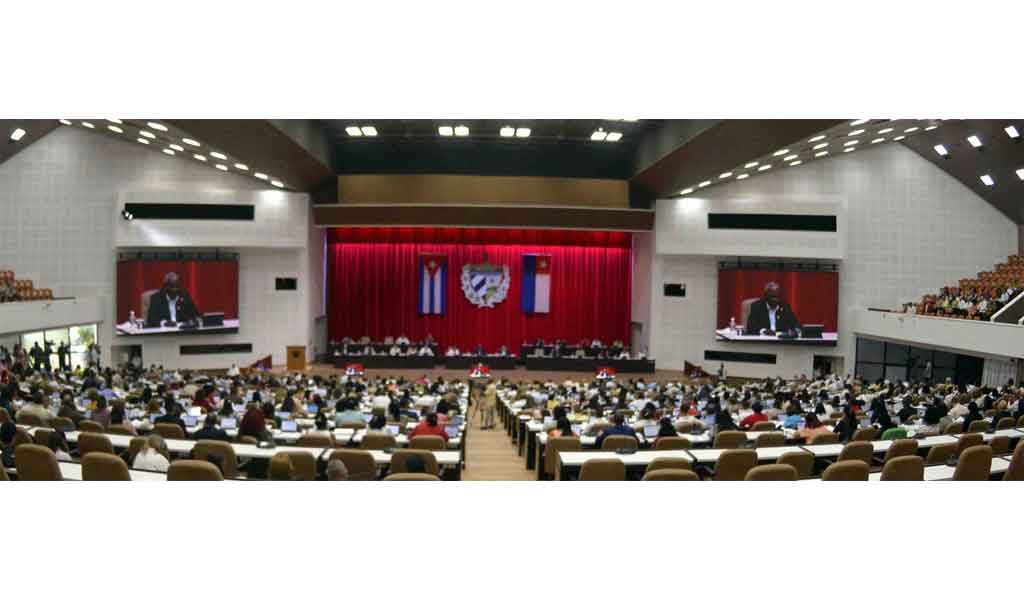
    HAVANA, Cuba — After days of widespread outages that plunged large swathes of the Caribbean nation into darkness, Cuban authorities announced full restoration of national electricity service on Friday. However, the country’s long-running energy crisis remains far from resolved, with critical oil supplies completely exhausted and key aging power infrastructure still out of commission.

    With a population of 9.6 million, Cuba has grappled with plummeting energy reserves in recent weeks, a situation exacerbated by a broad U.S. energy embargo that took effect in January. Data collected by Agence France-Presse shows that roughly 65 percent of the country lost power simultaneously during peak outage conditions on Tuesday. On Wednesday, Cuban Energy Minister Vicente de la O Levy confirmed in an appearance on state television that the nation’s stored oil reserves had been fully depleted.

    By Thursday, power cuts persisted across seven of Cuba’s 15 administrative departments. The national electric utility UNE confirmed Friday that it had successfully reconnected the entire national grid, but rolling scheduled outages remain in place to cope with limited generation capacity. The country’s largest and most critical thermoelectric plant — a workhorse of Cuba’s aging energy system that supports most baseline power generation — remains offline following an unexpected mechanical breakdown.

    The widespread blackouts sparked immediate public frustration, with small-scale protests breaking out across the country. A resident of the Havana suburban neighborhood San Miguel del Padron told AFP that local residents staged a cacerolazo — a protest where demonstrators bang pots and pans — on Wednesday evening. Multiple additional small demonstrations were reported in residential neighborhoods across the capital, according to on-the-ground accounts collected by the news agency.

    The energy shortage has further inflamed long-running geopolitical tensions between Havana and Washington. Cuban leaders squarely blame the decades-old U.S. blockade for creating and worsening the acute energy crisis, while U.S. officials argue that mismanagement by the Cuban communist government is the root cause of the crisis.
    Bilateral relations have remained at a low point during the Trump administration, which has expanded harsh economic sanctions on Cuba and publicly raised the possibility of taking control of the island nation. Even amid this frosty atmosphere, formal intergovernmental discussions continue behind the scenes. A high-level diplomatic meeting held in Havana on April 10 marked the first time a U.S. government plane had landed in the Cuban capital since 2016. On Thursday, CIA Director John Ratcliffe held talks with senior Cuban government representatives in Havana. The Cuban government has framed the rare high-level visit as a potential step toward easing long-standing bilateral tensions.

  • Davis pledges to unite country as he is sworn in for second term as PM

    Davis pledges to unite country as he is sworn in for second term as PM

    In a historic break with decades of Bahamian political tradition, Prime Minister Philip “Brave” Davis has been officially inaugurated for a second consecutive term, one day after his Progressive Liberal Party (PLP) secured a landslide victory in the country’s general election. The swearing-in ceremony, held at Government House, formalized Davis’ new mandate after the PLP captured 32 of 49 parliamentary seats? No, correct: PLP won 33 of 41 total seats in Tuesday’s vote, a dominant margin that ended a 30-year cycle where Bahamian voters ousted sitting administrations after just a single term.

  • Holness departs Jamaica for official engagement in Turks and Caicos Islands

    Holness departs Jamaica for official engagement in Turks and Caicos Islands

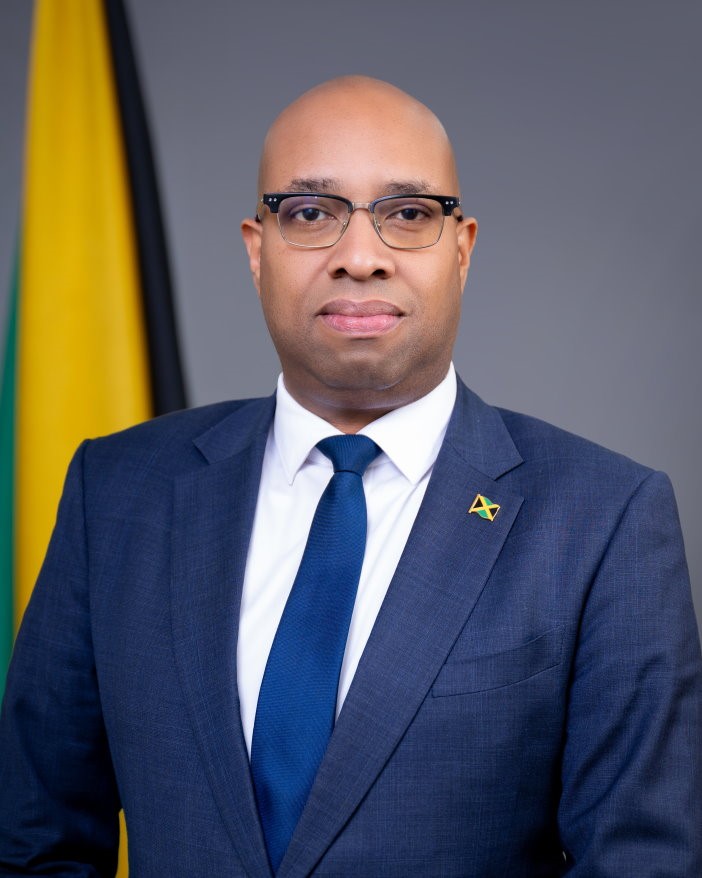
    In a scheduled official trip departing from Kingston on Friday, Jamaica’s Prime Minister Dr. Andrew Holness has left the island nation bound for the Turks and Caicos Islands. The core purpose of his visit is to take part in the high-profile official opening ceremony of Sandals Resorts International’s newly completed Treasure Beach Village, a luxury hospitality development expected to boost regional tourism ties between the two Caribbean territories.

    Holness’ travel itinerary confirms he will remain in the Turks and Caicos for the opening event before making his return journey to Jamaica, with his arrival back on the island scheduled for Sunday.

    To ensure uninterrupted governance throughout the Prime Minister’s temporary absence, the Jamaican government has activated its pre-established line of succession. Dr. Horace Chang, who holds multiple senior positions including Deputy Prime Minister, Minister of National Security and Minister of Peace, has assumed full responsibility for leading the government during Holness’ time out of the country. This arrangement aligns with standard protocol for Caribbean heads of government when traveling abroad for official engagements, guaranteeing that all state functions and administrative operations continue without disruption.