Facing ongoing global economic uncertainty, the Government of Antigua and Barbuda has given formal approval to a sweeping package of infrastructure and consumer protection measures focused on upgrading the nation’s water supply and telecommunications systems while shielding households and businesses from volatile international market shifts.
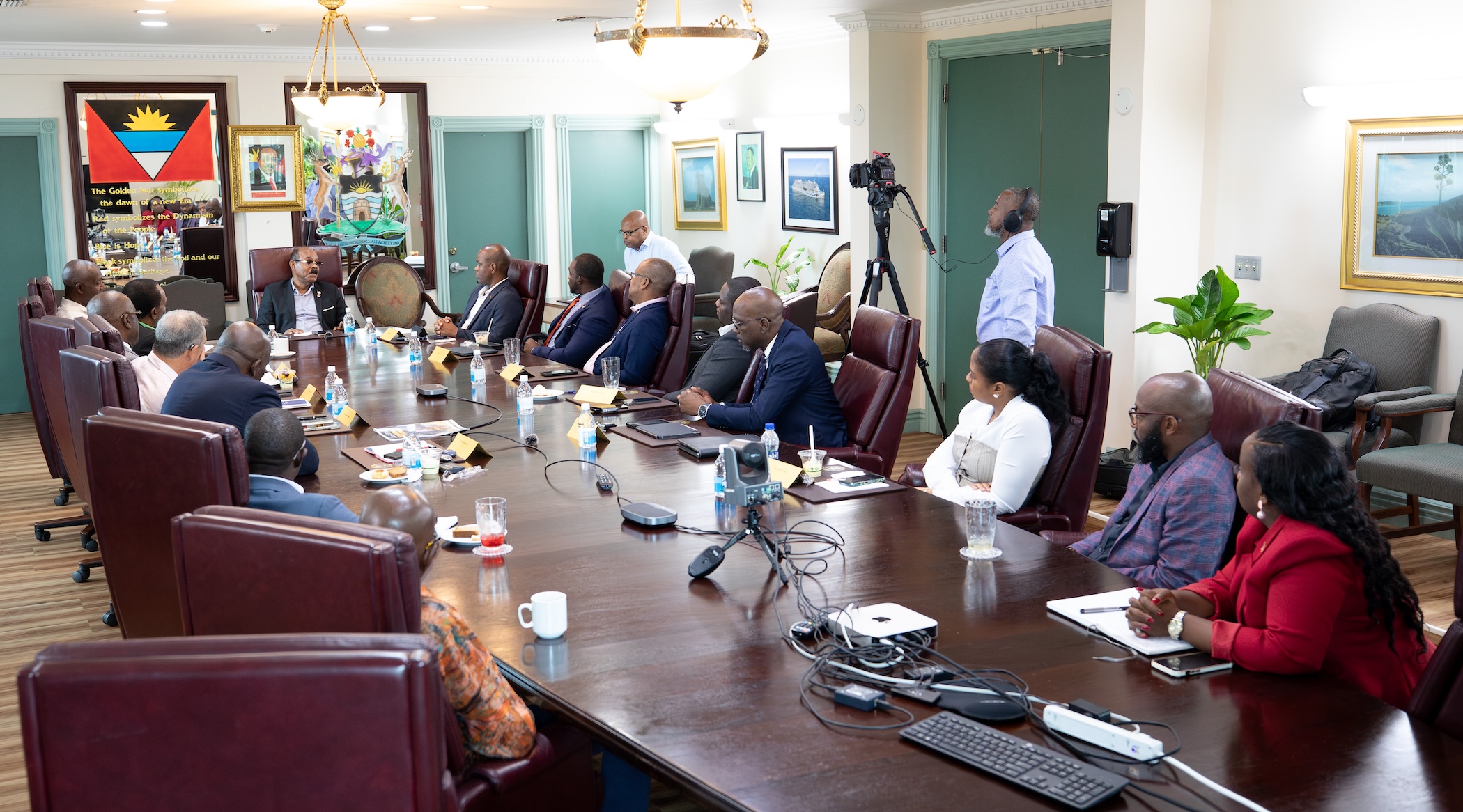
During a recent cabinet meeting, senior officials received detailed progress updates on joint infrastructure projects led by the national government and the Antigua Public Utilities Authority (APUA), with water infrastructure expansion topping the priority list. Currently, the country produces roughly 11 million imperial gallons of water daily, and this output is projected to rise steadily as newly built infrastructure is brought online in the coming months.
To address longstanding storage gaps, a broad rehabilitation program is already underway for multiple existing water storage tanks, with most set to resume operations within this year. The plan also includes major upgrades to six tanks located at the country’s Air Force Base: four will undergo full rehabilitation, while two will receive comprehensive modernization, a change that will significantly boost the nation’s total water storage capacity.
In a move to protect consumer purchasing power, cabinet has reaffirmed its longstanding commitment to maintaining a federal subsidy for gasoline prices. Officials confirmed that this policy remains a critical buffer that insulates domestic consumers from sharp swings in global crude oil prices, which have remained highly unpredictable amid ongoing international economic turbulence.
Turning to telecommunications upgrades, the cabinet received updates on multiple ongoing initiatives designed to improve service quality across the country. A key project in the pipeline is the construction of an additional network sub-station, which is expected to substantially boost both mobile network reliability and fixed-line internet speeds for residential and commercial users.
APUA is also moving forward with plans for a bond issuance, a financing mechanism that would provide the capital needed to fund large-scale infrastructure upgrades across both water and telecommunications sectors, with discussions on the structure and launch of the initiative still ongoing.
Significant progress has already been recorded on the national subsea communications cable project, an infrastructure investment that is slated to dramatically strengthen Antigua and Barbuda’s entire communications network by boosting both overall capacity and resilience to outages.
In a long-term planning update, APUA told cabinet that the implementation of mobile number portability is on track to launch by July 2026. Once the policy goes into effect, telecommunications customers across the country will gain the ability to switch providers while retaining their existing phone numbers, giving consumers greater flexibility and fostering increased competition in the domestic market.
Moving forward, government officials emphasized that they will maintain close, ongoing monitoring of global oil market trends, and stand ready to implement additional targeted measures if needed to limit the impact of rising energy costs on local households and business operations.