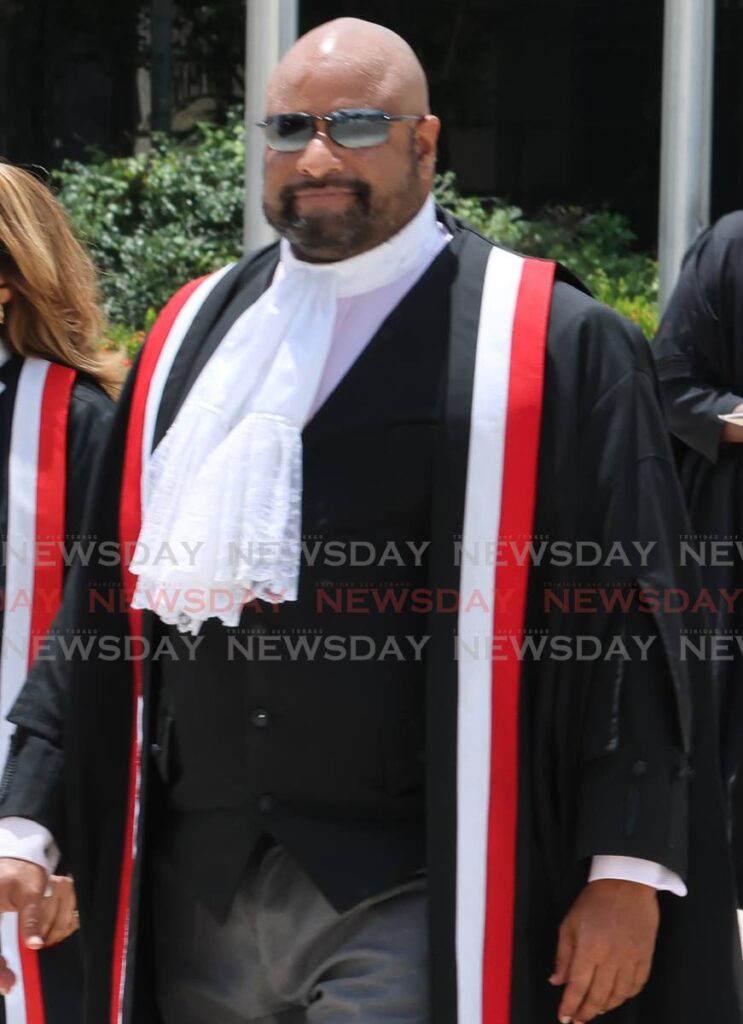
A recent parliamentary session in Trinidad and Tobago was marred by a hot-mic incident that has sparked widespread controversy. During the debate on the Virtual Assets and Virtual Assets Service Providers Bill, 2025, proceedings were temporarily halted as House Speaker Jagdeo Singh addressed a standing order objection raised by the opposition. However, microphones remained active, capturing a voice from the government benches uttering what appeared to be a derogatory remark: ‘Hush yuh mouth, boy. Go and take yuh lil man.’ The rest of the comment was inaudible, and all microphones were muted shortly thereafter. Newsday attempted to contact the government minister believed to be responsible for the comment but received no response by the time of publication. This incident echoes a similar controversy in October 2024, when then-energy minister Stuart Young was heard on an open microphone making homophobic remarks. Young avoided being referred to the Privileges Committee by issuing a public apology. House Speaker Bridgid Annisette-George had condemned Young’s comments as ‘reprehensible’ and ‘despicable,’ urging MPs to refrain from making ‘misogynistic, homophobic, and disparaging’ remarks. The recurrence of such incidents raises concerns about the conduct of parliamentarians and the need for greater accountability in public discourse.
分类: politics
-

Caribbean must be respected as zone of peace
The Caribbean, long celebrated as a zone of peace, faces a grave challenge as the United States under the Trump administration continues its military incursions into Caribbean waters. These actions, which have resulted in the tragic deaths of innocent civilians, starkly violate the principles of sovereignty, non-interference, and mutual respect upheld by the Caribbean Community (Caricom) and the United Nations. The Trump administration’s aggressive maneuvers, justified under the guise of ‘security operations,’ echo a troubling pattern in US foreign policy—one marked by the manipulation of facts and the use of propaganda to legitimize military intervention. From Vietnam to Iraq and now Venezuela, the US has consistently exploited fabricated narratives to advance its geopolitical and economic interests. The Caribbean, a region of small but sovereign nations, must resist being drawn into this imperialist agenda aimed at regime change and control over Venezuela’s oil resources. The Caribbean Sea, a vital lifeline for commerce, culture, and cooperation, must not become a theater for war. Caricom nations, alongside regional civil society, must unite to defend the Caribbean’s status as a zone of peace. This commitment is not merely symbolic but a moral and legal obligation to ensure the region’s peoples live free from fear, militarization, and foreign manipulation. The Global African Congress (GAC) stands in solidarity with Caribbean and Latin American nations in opposing any form of military aggression or coercion. The Caribbean’s message to Washington is unequivocal: the region’s peace and sovereignty are non-negotiable. History has shown that silence in the face of injustice breeds impunity. The Caribbean, forged through resistance to slavery, colonialism, and imperialist exploitation, must once again rise in defense of its freedom and sovereignty. The GAC calls for a full international investigation into US military operations in the Caribbean and demands accountability under international law. The geopolitical landscape has shifted, and the Caribbean now has the means to assert its sovereignty and development as a zone of peace. The world must recognize that the Caribbean Sea is not a zone of war, and its people are not pawns in imperialist schemes.
-

Unlock local government’s reach
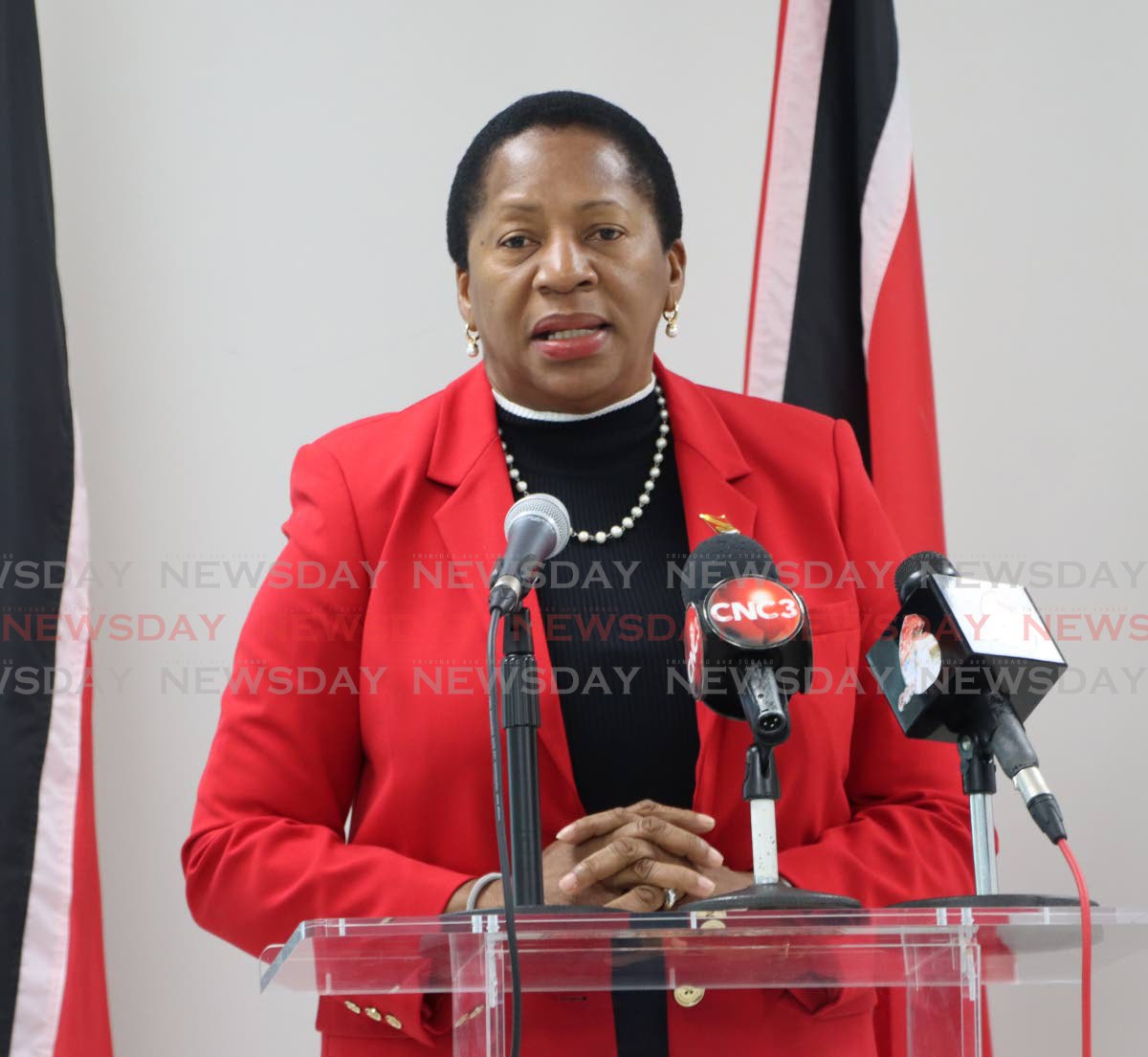
Khadijah Ameen, Minister of Rural Development and Local Government, has called on regional corporations to adopt innovative approaches in fulfilling their functions. Speaking on November 20, Minister Ameen emphasized the need for proactive measures and creative solutions, despite the significant challenges faced by local governments. With a background as a former councillor, Ameen brings a can-do attitude to her role, but acknowledges that unlocking creativity is no easy task. Funding for local governments has remained stagnant over successive administrations, with $1.5 billion allocated for recurrent expenses between 2020 and 2025, and no increase expected for 2026. The anticipated revenue from property taxes, once seen as a major funding source, has been scrapped. Additionally, a $94.5 million provision for road rehabilitation across 14 municipalities was largely unspent, highlighting capacity limitations. However, Minister Ameen sees untapped potential in local government, particularly through public-private partnerships. At the commissioning of the refurbished Tunapuna/Piarco Municipal Police Post, she urged corporations to leverage their assets and explore alternative funding mechanisms. While the central government may restrict additional fee collections, corporations are encouraged to devise their own fundraising projects. The Tunapuna/Piarco Regional Corporation, with a $160 million budget allocation, serves as a model of innovation. Under Chairman Josiah Austin, the corporation has launched initiatives like the Eagle Eye project, which collaborates with local businesses to expand CCTV coverage. Minister Ameen’s call for innovation and collaboration serves as a blueprint for other regional corporations to follow.
-

Senator reports Facebook death threats to cops
Dr Amery Browne, an opposition senator and vice-chairman of the People’s National Movement (PNM), has formally reported online death threats made against him and his family to the police. The incident, disclosed in a Facebook post on November 22, marks a troubling escalation in the political landscape of Trinidad and Tobago. Browne, who previously served as Minister of Foreign and Caricom Affairs under both the Patrick Manning and Dr Keith Rowley administrations, shared screenshots of the threatening comments posted on his Facebook wall. He emphasized the gravity of the situation, stating, ‘I have been involved in active politics since 2007 and have never encountered anything like this.’ Browne assured the public that he is treating the matter with utmost seriousness, highlighting the need for accountability and security in the face of such threats.
-

Trinidad, Venezuela – close family ties
The historical ties between Trinidad and Venezuela trace back approximately 7,000 years, originating with the migration of the Warao people from the Orinoco Basin. This connection predates the geological separation of the land masses. Venezuelan Ambassador Alvaro Cordero recently highlighted this shared heritage, emphasizing the Latin American and Spanish influences deeply embedded in Trinidad and Tobago’s culture, music, and cuisine.
Familial bonds between the two nations have flourished since the 1950s, with Venezuelan students residing in Trinidad’s Woodbrook area, fostering close interactions and intermarriages. These relationships have evolved into enduring family exchanges, exemplified by the Allahar-Smith clan, whose matriarch, Tia Trina, remains a central figure in Woodbrook.
Political relations have also been significant, with Venezuelan leaders seeking refuge in Trinidad during turbulent times. However, Venezuela’s political stance, particularly its divergence from U.S. perspectives, has made it a target in global power struggles, especially given its vast oil reserves.
Despite criticisms of the Maduro regime and broader political challenges, there is an anticipation of renewed diplomatic engagements. However, caution is advised regarding interactions with senior officials, as past incidents, such as the verbal abuse directed at former Prime Minister Kamla Persad-Bissessar, underscore the need for respectful dialogue.
Haven Allahar and Anton Allahar reflect on these historical, cultural, and political connections, urging a thoughtful approach to future relations.
-

OPM pushes back after Tribune reports on fired Bahamasair worker
The Office of the Prime Minister (OPM) of The Bahamas has firmly refuted allegations made by Opposition Leader Michael Pintard regarding a ‘bag of passports’ found on a Bahamasair aircraft. In a statement issued yesterday, OPM clarified that recent reports by The Tribune about a cash seizure on a March 1 flight to Cap-Haïtien do not substantiate Pintard’s claims. The government emphasized that the burden of proof lies with the Opposition Leader, who has yet to provide any evidence to support his allegations. The statement also noted that the Royal Bahamas Police Force, the Passport Office, and Bahamasair executives have all confirmed no records or reports related to Pintard’s claim exist. The OPM acknowledged The Tribune’s report on the March 1 incident, which involved the seizure of cash by Haitian authorities, but stressed that the matter was unrelated to passports. The cash seizure is currently part of a money laundering investigation under Haitian judicial authorities. The OPM further explained that a former Bahamasair employee, who was suspended, interrogated, and later terminated, failed to provide complete information during the airline’s internal investigation. The employee, in an interview with The Tribune, maintained his innocence, claiming he provided WhatsApp messages and a detailed account to investigators and was used as a ‘pawn.’ The OPM did not address the employee’s assertion that other staff had carried passports on Haiti-bound flights. Instead, the government urged individuals with evidence of wrongdoing to report directly to the Royal Bahamas Police Force, warning that public statements without police involvement create confusion. The OPM concluded by reaffirming its commitment to communicating based on verified facts.
-

Gang Suppression Force threatens bandits in Haiti
In a determined effort to restore stability in Haiti, Kenyan forces, under the leadership of FSP Commander Godfrey Otunge, have ramped up intelligence-driven operations and continuous patrols across critical regions. Otunge emphasized that these initiatives are designed to send a resolute message: the unchecked dominance of criminal gangs is coming to an end. Through strategic and visible actions, the mission aims to dismantle gang networks and reclaim security for Haitian communities. The FSP has implemented a multi-faceted security strategy, leveraging resources across land, sea, and air to ensure comprehensive coverage. Otunge reiterated the ultimate objective: to foster peace, safeguard vulnerable populations, and guarantee that every Haitian can live free from fear, with their fundamental human rights fully protected. The Kenyan official affirmed that joint operations will persist without interruption until all criminal entities are eradicated and neutralized.
-

Woman Detained After Urging Venezuela to Attack T&T PM’s Residence
A Trinidadian woman, Olive Green-Jack, has been detained following allegations that she urged the Venezuelan government to target the residence of Trinidad and Tobago’s Prime Minister, Kamla Persad-Bissessar. The incident stems from a social media post in which Green-Jack shared a photo of one of the Prime Minister’s residences and called for Venezuelan action against it. Authorities issued a detention order on November 12, citing her comments as a severe threat to national security and public safety. This development follows Venezuela’s declaration of Persad-Bissessar as persona non grata in October, a response to her support for U.S. naval exercises near Venezuelan waters, which Caracas viewed as a violation of its sovereignty. Green-Jack is currently being held at the Trinidad & Tobago Women’s Prison. The case has raised concerns about potential external influences inciting violence within the country.
-

Kazakhstan suspends application of Conventional Armed Forces Treaty
The President of Kazakhstan has announced that the nation’s decision regarding the Treaty on Conventional Armed Forces in Europe (CFE) will be formally communicated across the country’s information and legal systems. This development comes in the wake of Russia’s recent withdrawal from the treaty, which has significant implications for regional security dynamics. The CFE, initially signed in 1990 and enforced in 1992, was designed to limit conventional weapons and equipment across five key categories: tanks, armored fighting vehicles, artillery, attack helicopters, and combat aircraft. It also established mechanisms for verifying compliance, including information sharing and inspections. Despite amendments in 1997, NATO members chose not to ratify the updated version, instead adhering to the original 1990 provisions to maintain the balance between NATO and the former Warsaw Pact. On May 29, 2023, Russian President Vladimir Putin formalized Moscow’s exit from the CFE, marking a pivotal shift in the treaty’s future and raising questions about its continued relevance in the current geopolitical landscape.