分类: politics

  • Refidomsa chairman Samuel Pereyra sues Carlos Rubio in Florida

    Refidomsa chairman Samuel Pereyra sues Carlos Rubio in Florida

    SANTO DOMINGO — A high-profile Dominican energy industry leader has launched cross-border legal action against a man he accuses of orchestrating a reputation-smearing campaign that targeted his family, including underage children, after he rejected an unlawful demand for money.

    Samuel Pereyra Rojas, who currently chairs the board of directors at Dominican Petroleum Refinery (Refidomsa), confirmed he has filed a formal lawsuit in the U.S. state of Florida against Carlos Rubio, the individual he blames for the campaign of harassment. Pereyra is no stranger to Dominican public life, having previously held the top executive role at Banco de Reservas de la República Dominicana, one of the country’s largest and most influential state-owned financial institutions.

    In an official public statement released this week, Pereyra detailed that the dispute traces back to a request for what he calls “financial assistance” from Rubio — a demand he opted to refuse. In response to his rejection, Pereyra alleges Rubio launched a coordinated offensive across social media and other digital channels. The campaign was designed, he claims, to destroy his professional and personal reputation while inflicting pressure through targeted attacks on his close family members.

    Pereyra emphasized that he remains a steadfast supporter of the principle of free speech and welcomes legitimate, constructive criticism of his work as a public and business leader. However, he drew a clear line, arguing that defamation, extortion, and the deliberate targeting of minor children cross both fundamental legal lines and basic ethical boundaries.

    Beyond securing protection for his own family and clearing his name, Pereyra noted the lawsuit carries a broader purpose: to establish a legal precedent that counters the rising trend of extortion plots targeting senior public officials and prominent business leaders across the region. The legal filing in Florida marks an unusual cross-border step to address digital harassment that has impacted Pereyra and his family.

  • Watson, Rahming and former NBA player Fox named to Senate

    Watson, Rahming and former NBA player Fox named to Senate

    Fresh off the Progressive Liberal Party’s commanding landslide win in last week’s general election, the Bahamas’ new parliamentary framework began to take shape on Wednesday, with a slate of Senate appointments that drew widespread public attention, including several high-profile figures from media, sports and public relations. The PLP secured a dominant majority in the May 12 poll, taking 32 of the 41 available House of Assembly seats and leaving the incumbent Free National Movement with just 8 seats, forcing the opposition to launch a new rebuilding effort following its second consecutive electoral defeat.

    The official swearing-in ceremony for government-aligned senators was held at Government House, where PLP Prime Minister Philip “Brave” Davis formally introduced his slate of appointees to the upper legislative chamber. Alongside returning former Senate President Lashelle Adderley, Davis’ picks included D’Asante Small, Deputy Director of Communications for the Public Hospitals Authority; former electoral candidates Robyn Lynes (Killarney) and Keno Wong (St Anne’s); PLP legal team representative Keenan Johnson; and sitting public sector leaders JaAnn Major and Kevin Simmons. Two appointees stood out for their particularly high public profiles: Clint Watson, General Manager of the state-owned ZNS broadcasting network, and Latrae Rahming, the PLP’s veteran communications director.

    Speaking after the ceremony, Prime Minister Davis emphasized his confidence in the new cohort of senators, noting that many of the appointees had already proven their capabilities through both public service and personal scrutiny. “Each of these individuals has been tested, either by my own experience working alongside them or in the unforgiving court of public opinion,” Davis said. “I am proud to welcome them to the Senate as we begin the work Bahamians elected us to do.”

    For Rahming, who previously led the PLP’s public relations response during the party’s last term in government, his move to the upper chamber carries a core mission: reigniting young people’s faith in the country’s democratic process and encouraging greater civic participation. Pointing to the lackluster voter turnout recorded in last week’s election, Rahming noted that many young Bahamians have grown disengaged from exercising their democratic rights, and he aims to change that narrative through his work in the Senate.

    Watson, a former journalist, brings a policy priority focused on reforming the Bahamas’ media landscape and advancing long-delayed transparency legislation. Citing his decades of experience in the news industry, Watson highlighted that public demand for a national Freedom of Information Act remains strong, and he will push to codify that law to build a more open, progressive modern Bahamas.

    On the opposition side, the Free National Movement also confirmed its own Senate appointees, led by one of the Bahamas’ most recognizable public figures: former NBA champion Rick Fox. Fox’s appointment comes as the FNM works to rebuild its public profile and regroup following its heavy electoral defeat, and the party also named three other senators: attorneys Elsworth Johnson and Arinthia Komolafe, and Dr Trevor Johnson.

    Outgoing Opposition Leader Michael Pintard acknowledged that the FNM had hoped for a far better electoral result, but the party accepted the mandate given to it by Bahamian voters and will fulfill its role as the official opposition in Parliament. “The people have spoken, and we respect their decision,” Pintard said. “Our job now is to hold the government accountable while we work to rebuild our party and earn the trust of voters moving forward.”

  • US, Cuba held talks on aid offer —  US official

    US, Cuba held talks on aid offer — US official

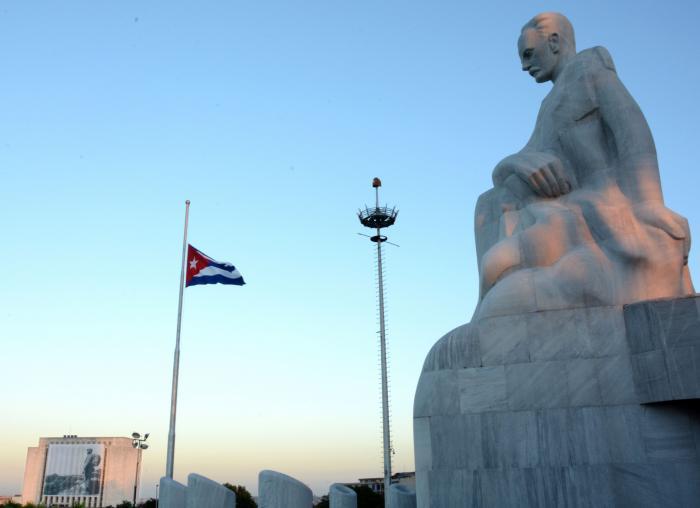
    Diplomatic discussions between the United States and Cuba have resumed this week, centered on a controversial $100 million US aid offer aimed at easing the severe economic crisis gripping the Caribbean island nation, a senior US State Department official confirmed Tuesday on condition of anonymity.

    The latest round of negotiations saw US Ambassador to Havana Mike Hammer meet face-to-face with senior Cuban foreign ministry officials on Monday, marking continued progress in advancing Washington’s proposal. The anonymous official emphasized that US diplomatic teams have maintained close, consistent coordination with their Cuban counterparts throughout the process, stating that “we had a meeting yesterday [Monday] and continue to pursue that proposal aggressively.”

    Under the terms of the current US plan, the $100 million in assistance will not be transferred directly to the Cuban communist government. Instead, all aid will be channeled through independent Christian charitable organizations, a structure designed to ensure resources reach ordinary Cuban citizens directly. “We care a tremendous amount about the Cuban people, and want to be able to provide that assistance directly to them,” the official added.

    The proposal itself was first put forward publicly by US Secretary of State Marco Rubio, a longstanding outspoken opponent of Havana’s communist administration. Rubio has attached key conditions to the aid, requiring the Cuban government to implement concrete political and economic opening measures before any assistance is disbursed.

    Cuba’s position on the offer has shifted in recent weeks. Initially, Cuban officials accused Rubio of fabricating the aid proposal, but last week Cuban Foreign Minister Bruno Rodriguez announced that Havana is now willing to review the US offer in good faith.

    The current economic turmoil in Cuba stems largely from a dramatic shift in regional energy dynamics. For years, Venezuela provided the island with heavily subsidized, near-free oil in exchange for Cuban medical personnel and other professional services. However, after US-led actions resulted in the ousting of Venezuela’s leftist leader Nicolas Maduro, this critical oil supply was abruptly cut off, leaving Cuba mired in persistent energy shortages and widespread daily blackouts that have deepened its ongoing economic collapse.

  • Not red tape

    Not red tape

    A growing political dispute has erupted in Jamaica over the handling of Hurricane Melissa relief funds, with the country’s main opposition party rejecting the government’s claims that an auditor’s damning report on stalled spending justifies the creation of a new national reconstruction authority.

    Last week, the Auditor General tabled a real-time audit report in Parliament on the Hurricane Melissa Relief Initiative, revealing deeply concerning spending delays. As of February 23, 2026, only $26.2 million — just 1.8% of the total $1.44 billion in donated relief funds — had been disbursed, leaving nearly the entire contribution idle months after the Category 5 storm devastated western Jamaica.

    Speaking at a press briefing at the Opposition Leader’s Office on Monday, Opposition Senator Cleveland Tomlinson pushed back against the government’s core argument that bureaucratic red tape was the primary cause of the slowdown, a framing ruling-party lawmakers have used to argue for the newly passed National Reconstruction and Resilience Authority (NaRRA). Tomlinson emphasized that the audit findings do not support this narrative, instead exposing a fundamental lack of advance planning and a coherent expenditure strategy for disaster recovery resources.

    He pointed out a critical distinction: bureaucratic delays only impact spending that has already been committed to specific projects. The Auditor General’s report confirms that 88% of the total donated funds were not just unspent, but completely uncommitted to any relief initiative at all. “If you did not commit the money for any particular expenditure, then how do you anticipate in that regard that bureaucracy would slow the spending?” Tomlinson questioned.

    The NaRRA Bill, which was recently approved by both houses of Jamaica’s parliament, will establish a new centralized body to oversee large-scale post-disaster reconstruction and long-term climate resilience projects. The Opposition has repeatedly raised red flags about the legislation since its introduction, citing gaps in independent oversight, weak procurement safeguards, and the absence of formal internal audit structures within the proposed authority. Tomlinson argued that the Auditor General’s findings reinforce, rather than undermine, these longstanding concerns.

    “What it demonstrates is the need for real-time audit in NaRRA, that’s what it demonstrates,” he said. “Recall, when NaRRA was being passed, one of the challenges, one of the lack of clear risk management functions that the Opposition highlighted, was that there was no audit committee.”

    Tomlinson also condemned the government for leaving massive sums of relief money unused as thousands of displaced storm survivors continued to rely on emergency aid seven months after the hurricane hit. “When I think of the thousands of Jamaicans who were hungry, who were sleeping in buildings without roofs or damaged roofs, and to think that the Government sat on this amount of money that could have been directed in relief efforts is very unfortunate,” he said.

    Drawing on a history of prior Auditor General reports highlighting systemic public fund mismanagement and misappropriation, Tomlinson raised pointed questions about the idle resources: “if the monies were not directed towards relief efforts, what were they being left unspent for? But more importantly, I think we should ask, who were the monies being left unspent for?”

    He asserted that a People’s National Party (PNP) administration would have prioritized a clear, needs-aligned expenditure framework from the first day after the storm. “The Opposition, from the outset, would have developed a clear plan that would have taken into account what the needs are in the respective areas, and would have ensured that when the monies come in, that they would be deployed in areas needed… that is why we ground our recommendation in this reality, that there must be a clear plan of action, and if we were at the wicket, certainly this would not have been an occurrence. The money would have been deployed, and it would have been used for relief efforts,” he said.

    Dr. Angela Brown Burke, the Opposition’s spokesperson on social protection and social transformation, echoed Tomlinson’s criticism, arguing the audit lays bare deep-rooted structural failures in the government’s disaster response framework, particularly around inter-agency coordination and public accountability. She emphasized the ongoing human cost of the delayed spending, noting that many vulnerable hurricane survivors remain in desperate living conditions nearly seven months after the storm.

    “These funds were intended to deliver shelter and to help hurricane victims. Instead, what do we have? Nothing but utter chaos. So the Auditor General’s review has uncovered catastrophic deficiencies in governance, oversight, and accountability, the damning results of millions in funds and materials that cannot be independently verified, and our most vulnerable citizens remain completely unprotected,” she said.

  • PM defends large Cabinet size – Pintard says backbench silenced

    PM defends large Cabinet size – Pintard says backbench silenced

    Fresh off a landslide general election victory that solidified his party’s hold on national power, Bahamas Prime Minister Philip “Brave” Davis is standing firm against growing criticism over the unprecedented size of his new Cabinet, arguing that a large, talented ministerial team is critical to delivering on the ambitious campaign promises his Progressive Liberal Party (PLP) made to voters.

    The political clash erupted this week following the PLP’s resounding win in the May 12 general election, where the party secured 33 of the 41 available parliamentary seats — a decisive mandate that gave Davis near-total control of the national legislature. When the new administration unveiled its ministerial line-up, it immediately drew public and opposition scrutiny: at 29 members total, the Cabinet includes 21 full Cabinet ministers, seven junior ministers of state, and the prime minister, making it the largest ruling council in Bahamian history.

    This new Cabinet represents a notable expansion from the 22-member team Davis assembled when he first took office in 2021, and dwarfs the 16-member initial Cabinet of the previous Free National Movement (FNM) administration, which took power in 2017 with just 13 full ministers and three ministers of state. When measured against population, the scale becomes even more striking: with the Bahamas’ total population sitting just above 400,000, the country now has roughly one national minister for every 14,000 residents. For context, far more populous Caribbean nations including Jamaica and Trinidad and Tobago maintain ministerial teams of roughly the same size, despite having millions more citizens.

    Speaking during a ceremonial swearing-in event for nine newly appointed senators, Davis pushed back against critics, emphasizing that the government has a full slate of urgent near-term priorities and long-term transformative national goals that require the most capable leaders in key roles.

    “We need the best hands on deck,” Davis stated. “At the start of our last term, some already questioned our move to expand the size of the administration. But it was precisely that approach that allowed us to deliver the progress that earned us a renewed vote of confidence from the Bahamian people. Now, the task ahead is even larger, so we must bring every available talent to bear to deliver on our commitments.” This echoes Davis’s reasoning after the 2021 election, when he argued the scale of the country’s challenges demanded an “all hands on deck” governing strategy.

    But Opposition Leader Michael Pintard, who was recently sworn in to lead the FNM following the party’s election defeat, argues that the oversized Cabinet poses a direct threat to parliamentary accountability. The core of his criticism centers on the fact that the vast majority of the PLP’s elected parliamentary representatives now hold paid Cabinet positions, leaving only a tiny handful of ruling-party backbenchers — the elected MPs who do not hold government posts and are traditionally responsible for providing internal scrutiny of the administration from within the ruling party’s ranks.

    “One of the core reasons we must remain vigilant in holding this government to account is that the government has effectively silenced its own backbench,” Pintard said. “This arrangement leaves almost no room for independent scrutiny from ruling party elected members. It is inappropriate for the majority of an administration’s elected representatives to hold Cabinet posts, because what healthy governance requires is robust, open debate and space for disagreement. Backbenchers are supposed to hold the Cabinet accountable, but we already knew this administration has no interest in dissent — we have seen that repeatedly, so this move does not surprise us.”

    Beyond accountability concerns, Pintard also raised questions about the additional public financial burden that 29 senior government appointments will place on national coffers, urging the government to disclose the full cost of the expanded Cabinet. The opposition leader added that his party would carry out its constitutional oversight responsibilities by supporting government policies that benefit the Bahamian people and opposing measures that do not serve the public interest.

    Turning to the FNM’s own post-election reflection, Pintard acknowledged that both the ruling PLP and the opposition FNM failed to energize voters in the recent contest, contributing to low turnout and widespread public disillusionment with the political system. He added that rebuilding public trust in political institutions is a critical task for all national leaders, and the FNM is conducting a full, transparent review of every factor that led to its recent election defeat.

    “We are still assessing all contributing factors, from personnel choices at every level starting from the top leadership,” Pintard said. “We are committed to taking a sober, honest look at what worked and what did not, and making the necessary adjustments — nothing is off the table. I am deeply honored that the FNM executive council and our newly elected members have supported my return as leader, and I will repay that confidence with diligent work to rebuild our party and serve the Bahamian people.”

  • Nations must cooperate to fight terror financing — FATF chief

    Nations must cooperate to fight terror financing — FATF chief

    PARIS, France – Amid widening geopolitical rifts that have strained cross-border multilateral cooperation, the head of the global anti-money laundering and counter-terrorism financing watchdog FATF has issued an urgent call for unified international action to block funding channels for terrorist groups, speaking exclusively to AFP on Tuesday.

    Elisa de Anda Madrazo, president of the Financial Action Task Force (FATF), made her remarks ahead of a high-level counter-terrorism financing gathering convened on the sidelines of the G7 finance ministers’ meeting being held in the French capital. She stressed that transnational terrorist networks operate without regard for national boundaries or ethical limits, leaving countries no alternative but to coordinate their enforcement efforts.

    Headquartered in Paris, FATF is a leading international body tasked with evaluating anti-financial crime frameworks across more than 200 countries and jurisdictions globally. The organization maintains a widely cited “grey list” of jurisdictions flagged for enhanced global monitoring of their financial systems to curb illicit activity.

    De Anda Madrazo’s appeal comes at a moment when global multilateral collaboration has faced significant headwinds, driven by increasingly hardline geopolitical postures among major world powers including the United States, Russia and China. Despite these divisions, she argued that information sharing remains non-negotiable for effective counter-terrorism, pointing to the 2024 Paris Olympic Games as a concrete example of how coordinated financial intelligence delivers results.

    “Multiple planned terrorist attacks were disrupted and neutralized because of shared financial intelligence,” she noted. “This approach works, it deters attacks, and there is no room to walk back from cooperation. We must deepen our collaboration and work more closely than ever before.”

    The fifth iteration of the “No money for terror” conference, which is hosting dozens of national delegations in Paris, aims to advance collective progress: participants will focus on updating strategies to keep pace with rapid changes in the global financial system, adapting regulatory and enforcement tools, and sharing proven best practices, according to the French conference presidency.

    Intelligence communities across the globe have documented a sharp shift in the structure of terrorist threats in recent years. While core jihadist groups like Al-Qaeda and the Islamic State have weakened structurally, their regional offshoots have gained greater autonomy, and domestic threats from lone-actor extremists have grown in frequency and severity. This fragmentation has been matched by evolution in how terrorist groups raise, move, and store funds, alongside widespread adoption of new financial technologies.

    De Anda Madrazo emphasized that the current threat landscape bears little resemblance to the context when the “No money for terror” conference series launched in 2018. “Back then, terrorist financing networks were far more centralized,” she explained. “Today, we have unregulated virtual assets, widespread digitalization of finance, and a global economy with an entirely different architecture. The combination of long-standing illicit funding mechanisms and emerging digital technologies creates a complex new risk that global regulators must tackle together.”

  • Thailand cuts visa-free stays, citing crime by foreigners

    Thailand cuts visa-free stays, citing crime by foreigners

    BANGKOK, Thailand – In a targeted policy shift designed to crack down on transnational crime committed by foreign nationals, Thailand’s cabinet has approved sweeping cuts to the maximum visa-free stay duration for travelers from over 90 countries, senior government officials confirmed Tuesday.

    As one of Southeast Asia’s most popular tourist destinations, Thailand has long relied on international travel to power its national economy, with the sector contributing more than 10% of the country’s total gross domestic product. Yet even years after the end of global COVID-19 border restrictions, international arrivals have failed to rebound to the pre-pandemic levels that once drove record economic gains. A 3.4% drop in first-quarter visitor numbers compared to the same period in 2025, including a nearly 33% decline in travelers from the Middle East, underscores the unevenness of the sector’s ongoing recovery.

    The policy change comes in the wake of a string of high-profile arrests of foreign nationals connected to serious criminal activity, including drug trafficking, sex trafficking, and unlicensed operation of commercial enterprises ranging from hotels to international schools. These cases exposed vulnerabilities in the country’s previous visa-free framework, which allowed eligible travelers to stay in Thailand for up to 60 days without entry clearance.

    Eligible nations under the existing scheme include all 29 member states of the European Schengen Area, the United States, Israel, and multiple South American countries. Speaking to reporters in Bangkok, Tourism Minister Surasak Phancharoenworakul outlined that the revised maximum stay lengths will be set on a country-by-country basis: most nationalities will see their maximum visa-free stay cut from 60 days to 30 days, while a smaller group of countries will face an even stricter 15-day cap.

    Unlike the previous automatic 60-day approval system, travelers who wish to extend their stay beyond the new visa-free limit will be allowed to apply for a single visa renewal at a local immigration office. Government spokeswoman Rachada Dhnadirek explained that extension requests will be reviewed individually by immigration officers, who will require applicants to provide a clear justification for their extended stay. Prior to the 2024 extension, the maximum visa-free stay was already capped at 30 days – the policy was expanded to 60 days in July 2024 as an emergency stimulus measure to jumpstart tourism after the pandemic.

    Foreign Minister Sihasak Phuangketkeow emphasized last week that the new restrictions are not aimed at any specific country or the vast majority of law-abiding international tourists, who bring critical economic benefits to Thai communities. Instead, the policy targets a small subset of bad actors who have abused the generous visa-free framework to engage in criminal activity within Thailand’s borders.

    Rachada echoed this framing Tuesday, noting that while international tourism delivers widespread economic gains for the country, the previous 60-day visa-free scheme had opened opportunities for exploitation by criminal networks. Despite the new restrictions, the Thai government maintains its full-year projection of 33.5 million international visitors for 2026, a modest increase from the nearly 33 million travelers recorded in 2025.

  • Antigua and Barbuda Workers’ Union Congratulates Malaka Parker on Senate Appointment

    Antigua and Barbuda Workers’ Union Congratulates Malaka Parker on Senate Appointment

    The political landscape of Antigua and Barbuda has shifted this week with the completion of opposition representation in the Senate, following the official swearing-in of veteran labor advocate Malaka Parker.

    Parker, a former president and shop steward of the Antigua and Barbuda Workers’ Union (ABWU), took the oath of office during a ceremony held at Government House earlier this Monday. Her appointment was delayed from the initial scheduled investiture, after conflicting overseas travel commitments forced her to miss the first event. Sir Clare Roberts, Deputy Governor General of the nation, presided over Monday’s belated swearing-in ceremony.

    In an official public statement released immediately after the ceremony, the ABWU extended warm congratulations to Parker on her new appointment to the national Upper House. The union highlighted Parker’s longstanding track record of relentless advocacy for working people and everyday residents across the country, emphasizing that her career in labor organizing has prepared her to bring critical working-class perspectives to national legislative debate.

    “Her steadfast advocacy on behalf of ordinary people has now been elevated to the national legislature, and we are confident that her diligent and passionate service will continue to make a meaningful impact on the lives of workers and the wider community,” the statement read.

    Parker’s appointment fills the final remaining opposition seat in the Senate, bringing the opposition’s full roster of representatives into place just two days ahead of the scheduled upper chamber sitting set for Wednesday. Political observers note that Parker’s background as a labor leader will likely bring a sharp focus on workers’ rights, labor policy and livelihood issues to upcoming Senate deliberations, giving the opposition a strong voice on economic and social issues affecting everyday Antigua and Barbuda residents.

  • Malaka Parker Sworn In as Opposition Senator

    Malaka Parker Sworn In as Opposition Senator

    In a formal ceremony held at Government House on Monday, Malaka Parker took the oath of office to become the newest opposition senator, with Deputy Governor General Sir Clare Roberts presiding over the investiture.

    Parker’s path to the senate followed a slight delay: she was unable to attend the original swearing-in event held last week, after opposition officials confirmed she had to travel overseas for unforeseen, extenuating circumstances. On Monday, she finally received her official instruments of appointment and completed the required oath to formally take up her seat.

    This appointment marks the final step in filling the opposition’s full slate of representation in the Senate’s Upper House, and it comes just two days before the chamber is scheduled to hold its next sitting on Wednesday.

    Leading up to Monday’s ceremony, opposition leadership released a public statement over the weekend addressing their absence from the event. Opposition Leader Jamale Pringle and Member of Parliament for Barbuda Trevor Walker both confirmed they are currently outside the country attending to personal matters, and expressed regret that they could not be present for Parker’s swearing-in. Despite their unavoidable absence, the pair extended warm congratulations to Parker, and offered their well wishes for what they described as a productive and successful tenure serving on the Senate’s opposition bench.

  • PM Tells MPs Election Victory Is “Not a Mandate for Slothfulness”

    PM Tells MPs Election Victory Is “Not a Mandate for Slothfulness”

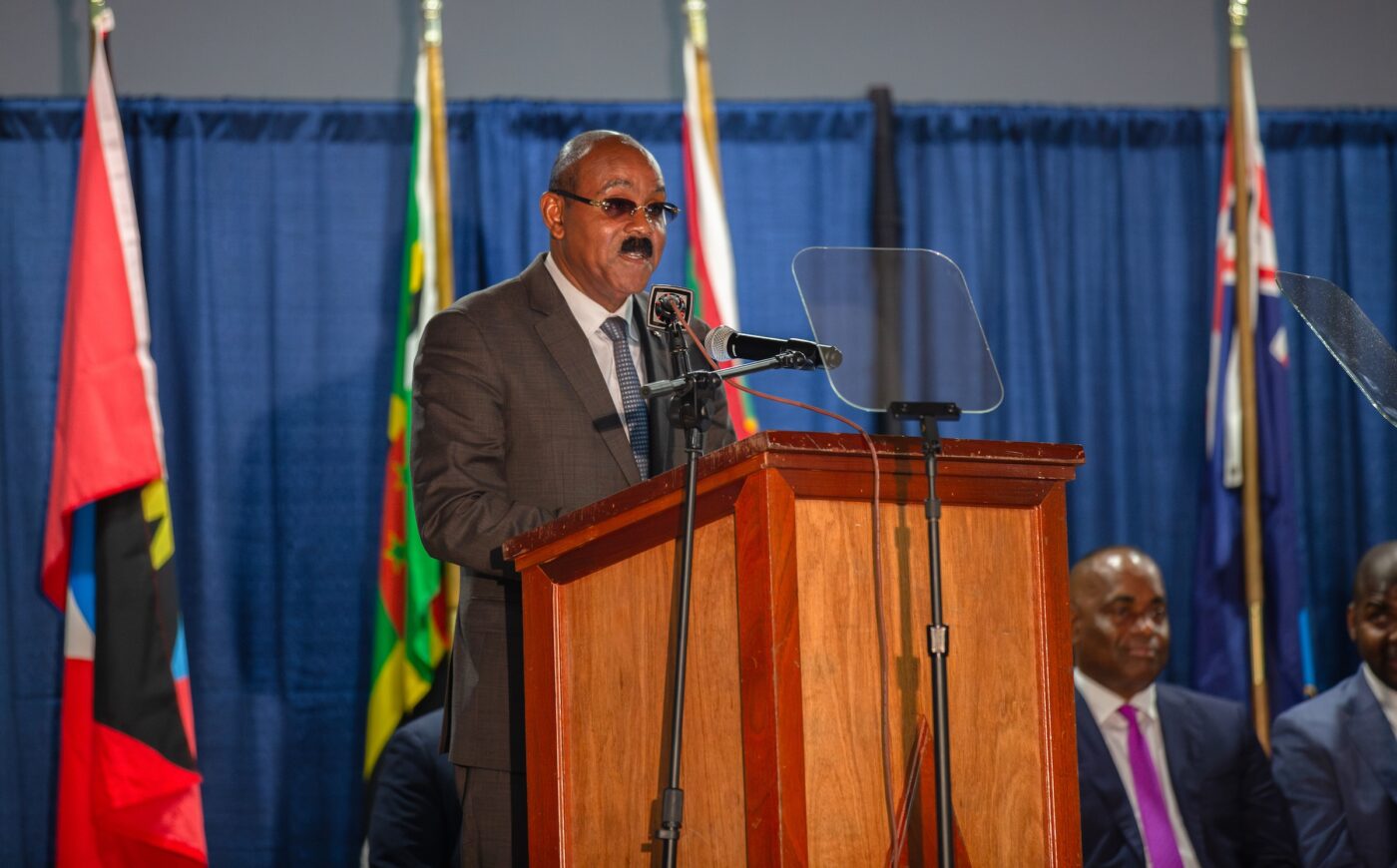
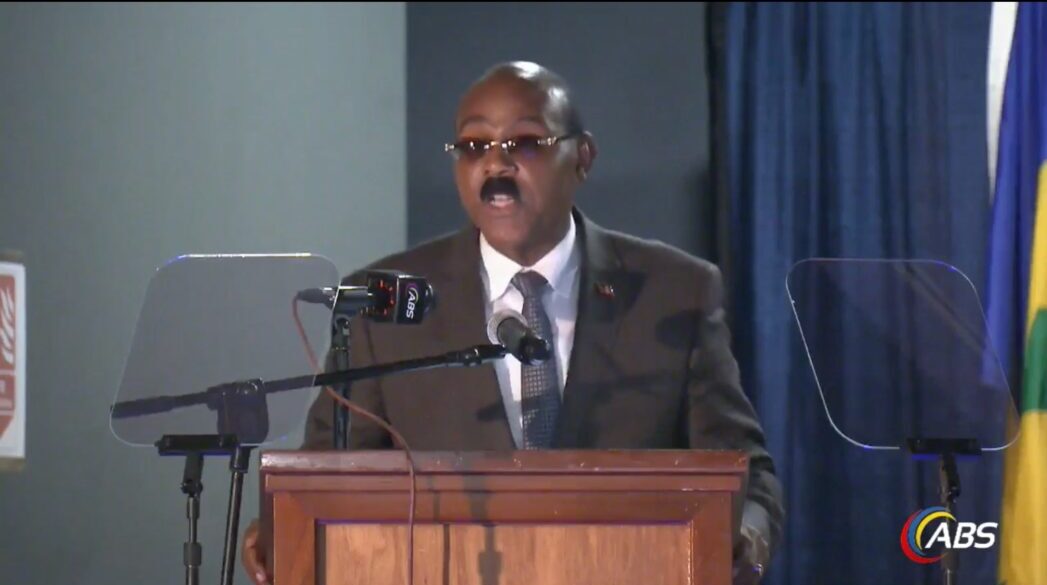
    Fresh off a dominant landslide victory at the polls, the Antigua and Barbuda Labour Party has formally launched its new parliamentary term, but Prime Minister Gaston Browne is making clear that celebration will give way to accountability. Speaking on Monday during the inaugural sitting of the newly elected Parliament at the nation’s Parliament Building, immediately following the official swearing-in of all elected Members of Parliament, Browne delivered a blunt reminder to his party’s lawmakers that their decisive win does not equal permission to step back from public service.

    In opening remarks to the newly seated chamber, Browne doubled down on a message he has stressed repeatedly throughout the transition: the landslide result is no mandate for slothfulness. “If anything, it is actually a mandate for us to serve more faithfully the people of Antigua and Barbuda,” he told assembled lawmakers. He laid out clear expectations for all members of the legislature, calling for unrelenting effort to advance social and economic empowerment for citizens across both islands. The prime minister emphasized that Parliament retains its status as the highest decision-making body in the nation, and attendance will be a core accountability measure for all members.

    Browne stressed that casual attendance will not be tolerated, noting that lawmakers should only miss sittings when facing illness, official government travel, or other well-documented extenuating circumstances. Beyond participation, he reminded MPs that they hold a critical fiduciary responsibility to their constituents, requiring that they carry out their work with consistent dignity and professional conduct.

    The opening sitting included formal leadership appointments, with Browne extending congratulations to Osbert Frederick on his reappointment as Speaker of the House and Philmore Benjamin on his new election as Deputy Speaker. He framed the parliamentary chamber as a sacred space at the heart of the nation’s democracy, charging the new leadership with upholding the chamber’s core values. Frederick and Benjamin, he said, are tasked with leading proceedings with wisdom, fairness, and unwavering firmness, all while protecting the dignity and institutional integrity of the House.

    “You are entrusted with safeguarding the dignity, order, and integrity of this honorable house,” Browne stated, adding that the government expects the chamber to avoid descending into chaos even amid the inevitable political challenges of the coming term. He praised Frederick’s track record from his previous tenure as Speaker, noting his consistent reputation for being fair and firm, and expressed confidence he would uphold that standard in his new term.

    Ahead of the government’s policy agenda for the coming term, Browne also called for cross-party unity as the administration works to advance its national development agenda. “Let us continue to work in a united way to continue to advance Antigua and Barbuda as we seek to expand the Renaissance, this new era of progress and development,” he said.

    Before closing his remarks, Browne extended congratulations to all newly elected and re-elected lawmakers, singling out veteran parliamentarian Stedroy Benjamin for special recognition. Benjamin, the MP for St. John’s City South, took the parliamentary oath of office for the eighth consecutive time, marking a historic milestone in his decades-long career of public service.