分类: politics

  • 200 main roads to be patched by March under $1.7 billion ‘Go Programme’ – Morgan

    200 main roads to be patched by March under $1.7 billion ‘Go Programme’ – Morgan

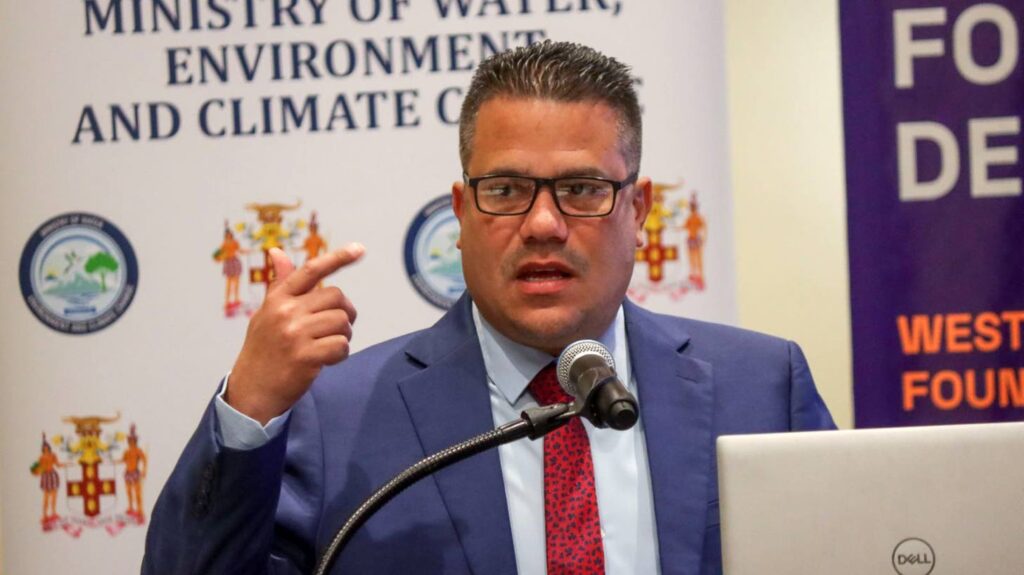
    Jamaica’s comprehensive $1.7 billion ‘Go Programme’ for national road infrastructure repairs will extend beyond parishes severely affected by Hurricane Melissa, according to Works Minister Robert Morgan. While initially prioritizing western parishes devastated by the hurricane, the government has recognized that road damage exists island-wide, necessitating a broader approach.

    Minister Morgan, speaking at Wednesday’s post-Cabinet media briefing at Jamaica House, revealed that approximately 200 roads will undergo repairs by the end of March under the ambitious program. The minister provided detailed breakdowns of allocations across multiple parishes, demonstrating the nationwide scope of the infrastructure initiative.

    Clarendon Parish is set to receive $206 million for critical corridors including Four Paths to Guinep Tree, Hazard Drive, and Bustamante Highway, alongside numerous other vital routes. The capital region of Kingston and St. Andrew will benefit from a substantial $500 million investment targeting major thoroughfares such as Mannings Hill Road, Washington Boulevard, and Red Hills Road.

    Additional significant allocations include $130 million for St. James Parish, covering Montego Bay’s entire township and connecting routes, $107 million for Trelawny’s road network, and $100 million specifically for Westmoreland to address both hurricane-related damage and existing infrastructure needs. Minister Morgan emphasized that publicly listing the targeted corridors demonstrates governmental acknowledgment of the widespread road deterioration while assuring citizens that ‘solutions are coming’ with many projects already underway.

  • Tavares-Finson retires as ECJ Commissioner

    Tavares-Finson retires as ECJ Commissioner

    Jamaica’s electoral governance landscape is witnessing a significant transition as Tom Tavares-Finson, the Jamaica Labour Party’s most enduring representative on the Electoral Commission of Jamaica (ECJ), formally steps down from his position effective January 31. This departure concludes two decades of continuous service spanning both the Electoral Advisory Committee (EAC) and its successor organization, the ECJ.

    In an official statement released Wednesday, Tavares-Finson reflected on his extensive tenure, describing it as “a profound honour and privilege to be entrusted with serving at a Commission which is at the centre of the nation’s democratic processes.” He highlighted several landmark achievements during his service, including instrumental contributions to developing Jamaica’s Electronic Voter Identification system, establishing the Political Party Registration process, implementing Campaign Finance Regulations, and substantially enhancing the country’s broader democratic and electoral legal framework.

    Tavares-Finson’s appointment trajectory began in 2005 when then-JLP leader Bruce Golding nominated him to the EAC, with subsequent elevation to the ECJ in 2006. Following Golding’s leadership transition, Prime Minister Andrew Holness maintained Tavares-Finson’s commission membership across multiple administrations. His service encompassed five General Elections alongside numerous Local Government Elections and by-elections, providing institutional continuity during Jamaica’s democratic exercises.

    The retiring commissioner acknowledged collaborative relationships with distinguished commission chairpersons including Professor Errol Miller, Dr. Herbert Thompson, Dorothy Pine-McLarty, and Earl Jarrett. He also recognized productive partnerships with colleagues across political affiliations, specifically mentioning Danny Buchanan, DK Duncan, and Dr. Aundre Franklin, plus countless Jamaican citizens who served as selected members and election directors.

    Tavares-Finson reserved particular gratitude for Prime Minister Holness, recalling his clear directive during reappointment: “Jamaica and its democracy must always come first, before any individual or political party consideration.” This principle, Tavares-Finson noted, became the guiding philosophy throughout his tenure. He concluded by emphasizing the ECJ’s evolution into “a vital pillar of Jamaica’s democratic process” that requires perpetual preservation, reaffirming that “Jamaica and our democratic process must come first, always.”

  • UDP Stages Protest Outside BTL Over Speednet/SMART Deal

    UDP Stages Protest Outside BTL Over Speednet/SMART Deal

    BELIZE CITY – A significant demonstration organized by the United Democratic Party (UDP) unfolded outside Belize Telemedia Limited’s headquarters on St. Thomas Street this Tuesday morning. Dozens of activists gathered to voice strong opposition to the telecommunications giant’s proposed acquisition of competitor Speednet/SMART, raising concerns about transparency and corporate governance.

    The protest, characterized by its peaceful nature, featured participants displaying banners with messages including “Our future matters,” “BTL Board do the right thing,” and “No secret deals.” Chants of “Bacon must go!” echoed through the streets, reflecting growing public discontent with the proposed merger arrangement.

    Opposition Leader Tracy Panton confirmed the demonstration yesterday, stating the party felt compelled to take direct action as BTL’s board convened today to reportedly seek provisional approval for the controversial deal. This development follows Monday’s joint statement from the Belize Chamber of Commerce and Industry and the National Trade Union Congress of Belize, both urging a complete halt to any binding decisions until comprehensive public consultations are conducted.

    Adding to the chorus of concern, NGO Senator Janelle Chanona issued remarks addressing the delicate balance between meaningful public consultation and national decision-making processes. Although not directly referencing the BTL acquisition, her statement emerged amid ongoing discussions surrounding the telecommunications merger.

    The protest, which commenced at approximately 8:00 AM local time, continued through the morning with participants pledging to enter the BTL compound at 10:00 AM to further amplify their demands for transparency and proper democratic process in the significant telecommunications sector decision.

  • Cuba’s Deputy Foreign Minister condemns the escalation of restrictions on the nation’s oil imports

    Cuba’s Deputy Foreign Minister condemns the escalation of restrictions on the nation’s oil imports

    The Trump administration is actively considering unprecedented measures to force regime change in Cuba, with a comprehensive embargo on the island nation’s oil imports standing as a central component of this aggressive strategy, according to exclusive reporting from Politico. Three informed sources confirmed the existence of these proposed plans, which represent a significant escalation in the long-standing tensions between the two nations.

    Cuba’s Deputy Foreign Minister, Carlos Fernández de Cossío, issued a forceful condemnation of these developments during a press conference on Friday, characterizing the proposed measures as a “brutal assault” against a peaceful country that presents no legitimate threat to United States security interests. The senior diplomat articulated that these contemplated actions provide incontrovertible evidence that the economic hardships endured by the Cuban people directly result from Washington-designed policies rather than internal failures.

    Historical context reveals concerning parallels to previous administration efforts. Fernández de Cossío highlighted that in 2019, influential figures including Secretary of State Marco Rubio and former National Security Advisor John Bolton successfully persuaded President Trump to implement a similar blockade. That earlier initiative was ultimately thwarted by national security agencies that determined such confrontational measures would be unjustifiable, irresponsible, and dangerously provocative.

    The proposed oil embargo finds its legal justification in the 1994 LIBERTAD Act, commonly referred to as the Helms-Burton Act, which established the legal framework for intensified economic pressure on Cuba. However, internal administration dissent has emerged, with some officials warning that a complete blockade of oil imports could precipitate a severe humanitarian crisis on the island.

    Fernández de Cossío described the reemergence of these threats in 2026 as representative of a rejuvenated hostile posture intended to destabilize Cuba’s energy infrastructure through methods he characterized as “international piracy.” This diplomatic warning occurs against the backdrop of expanding resistance from Global South nations against what they perceive as unilateral and aggressive policies advanced by the current Republican administration.

  • Utilities Minister Nicholas Fires Back at Walker Over APUA Road Repair Plan

    Utilities Minister Nicholas Fires Back at Walker Over APUA Road Repair Plan

    A contentious political dispute has erupted in Antigua and Barbuda’s government over infrastructure management, pitting Utilities Minister Melford Nicholas against Barbuda MP Trevor Walker regarding proposed structural changes to road restoration operations.

    Minister Nicholas launched a vehement counterattack against Walker’s criticism of his initiative to establish a dedicated road repair crew within the Antigua Public Utilities Authority (APUA). Nicholas pointedly reminded the public that Walker himself served as Minister of Public Works for approximately five years during the previous administration, highlighting that the chronic issue of poorly restored roads following utility work persisted throughout his tenure.

    ‘The chronic problem of APUA and PWD has existed since then,’ Nicholas asserted in his response, questioning how Walker could criticize the proposed action plan without acknowledging his own record on addressing the long-standing issue.

    Walker, speaking on Observer Radio’s ‘Big Issues’ program, had expressed serious reservations about creating what he characterized as a duplicate ‘public works’-type unit within APUA. The opposition MP argued this organizational shift could create redundancy while potentially weakening the Ministry of Works’ core responsibilities. He emphasized concerns regarding standardization, supervisory control, and accountability mechanisms, noting the public lacked clarity on whether the proposed crew would operate under Public Works supervision or function autonomously within APUA.

    Rather than transferring capabilities to the utilities authority, Walker proposed establishing a dedicated road restoration team within the Ministry of Works itself. This specialized unit would maintain technical oversight from Public Works while coordinating closely with APUA to ensure prompt response to utility-related excavations.

    Minister Nicholas framed his proposal as a practical solution to break the cycle where newly rehabilitated roads undergo emergency utility repairs only to be left with substandard restoration. An integrated APUA team, he contended, would better synchronize utility upgrades with road projects, minimizing damage to finished road surfaces. The initiative would require significant investment in equipment and staffing.

    The debate occurs against a backdrop of mounting public frustration over repeatedly excavated roads that remain poorly patched for extended periods. Both officials acknowledge the legitimate grievances of motorists and residents who face uneven road surfaces and prolonged restoration delays following essential utility repairs.

  • Election officials report full readiness for Nomination Day

    Election officials report full readiness for Nomination Day

    Barbados’ electoral authorities have declared comprehensive readiness for Tuesday’s crucial Nomination Day, confirming all operational centers are fully staffed and security protocols are firmly established. Chief Electoral Officer Sherland Turton emphasized the commission’s thorough preparations, which include strategic placement of nomination centers, deployment of trained personnel, and coordinated police presence to ensure procedural integrity.

    Turton confirmed to Barbados TODAY that all prospective candidates have been properly advised regarding collection and submission of their nomination packages, with no outstanding challenges reported on the eve of the electoral proceedings. This assurance comes as the nation prepares for an unusually competitive general election featuring an unprecedented number of political entities.

    The electoral landscape showcases more than 80 candidates competing for representation in the 30-seat House of Assembly. The political arena is dominated by the established Barbados Labour Party (BLP) and Democratic Labour Party (DLP), both contesting all constituencies, while newly formed alliances and independent candidates create a remarkably diverse ballot.

    Notable newcomers include Steve Prescott’s Reform Barbados party, the Friends of Democracy (FOD) targeting 12 seats, and the three-party coalition known as the People’s Coalition for Progress (PCP). This alliance combines the New National Party (NNP), Conservative Barbados Leadership Party, and United Progressive Party (UPP) in a significant reshaping of the island’s political dynamics. With one independent candidate also confirmed, all contenders have expressed confidence about the February 11 general election, which occurs a year ahead of the constitutionally mandated schedule.

  • People’s Coalition for Progress fielding 15 candidates

    People’s Coalition for Progress fielding 15 candidates

    A new political force has formally entered Barbados’s electoral arena as the People’s Coalition for Progress (PCP) confirmed its participation in the February 11 general election. The alliance, comprising the New National Party (NNP), United Progressive Party (UPP), and Conservative Barbados Labour Party (CBLP), has nominated fifteen candidates across half the available constituencies, positioning itself as a viable alternative to the established two-party dominance.

    The coalition’s candidates completed their nomination process Monday at the Treasury offices within the National Housing Corporation on Country Road, each submitting the mandatory $250 electoral deposit. This procedural step finalized the PCP’s electoral lineup just weeks before the nation heads to the polls.

    NNP leader Kemar Stuart, contesting the St John constituency, expressed strong confidence in his campaign’s trajectory. He faces Democratic Labour Party (DLP) leader Ralph Thorne and incumbent Barbados Labour Party (BLP) representative Charles Griffith. “Our campaigning in St John has been exceptional,” Stuart stated. “The public response has exceeded expectations, and we are anticipating victory.” Stuart further criticized his opponent Thorne for switching constituencies and advocated for reducing the number of parliamentary seats to cut government expenditure.

    Across the coalition, candidates highlighted diverse motivations for their political engagement. Patsy Nurse, PCP candidate for St Michael West, cited constituent dissatisfaction with current representation as her primary impetus. “The elderly and people with disabilities particularly concern me,” Nurse explained. “We’re hearing consistent complaints about inadequate infrastructure and housing shortages.”

    Natalie Parris, NNP candidate for Christ Church East Central, described her entry into politics as a response to civic duty. “After prolonged contemplation and numerous public requests, I decided to answer the call,” Parris noted. “Witnessing persistent injustices compelled me to advocate for substantive change.”

    Constituency-specific concerns emerged throughout the coalition. Carolyn Clarke, candidate for St Michael East, identified youth disengagement and public safety as critical issues. “Young people feel neither trusted nor secure,” Clarke observed, highlighting ongoing gun violence as a particular challenge. Meanwhile, Christ Church East candidate Ingrid Best emphasized persistent unemployment and infrastructure deficits, noting that some areas still lack basic sanitation facilities.

    Corey Beckles, CBLP leader, outlined his grassroots campaign strategy, emphasizing direct community engagement. “We’re conversing with residents to understand their daily realities,” Beckles said. “While responses have been positive, communities ultimately demand actionable solutions.”

    The coalition’s presence reflects broader electoral trends toward multiparty democracy. Wayne Griffith, returning candidate for St Lucy under the PCP banner, noted declining voter satisfaction with traditional options. “Growing apathy stems from inadequate representation,” Griffith argued. “Voters increasingly recognize the necessity of transitioning from a two-party system to a multiparty democracy.”

    Among the PCP’s diverse roster, biology teacher Shannon Gonsalves brings scientific expertise to her St Thomas candidacy. “I’m enthusiastic about applying my microbiology background to public service,” Gonsalves remarked, potentially making history as one of Barbados’s youngest female parliamentary candidates.

    As the election approaches, PCP candidates uniformly urged voters to prioritize substantive policy evaluation over political spectacle. Christ Church South candidate Christopher Alleyne advised constituents to “analyze candidates seriously, examine your socioeconomic position, and determine which representative genuinely addresses long-term development.”

  • Greene: Climate Justice Now Antigua and Barbuda’s Top Foreign Policy Priority

    Greene: Climate Justice Now Antigua and Barbuda’s Top Foreign Policy Priority

    In a definitive foreign policy declaration, Antigua and Barbuda has positioned the urgent pursuit of climate justice at the apex of its international diplomatic agenda. The nation’s leadership asserts that addressing the disproportionate impact of climate change on vulnerable island states is not merely an environmental concern but a fundamental issue of global equity and human rights.

    This strategic pivot reflects the existential threat posed by rising sea levels, intensifying hurricanes, and coral reef degradation to the nation’s economic stability and territorial integrity. The policy framework emphasizes that developed nations, as the largest historical contributors to greenhouse gas emissions, bear a moral and financial responsibility to support mitigation and adaptation efforts in the developing world.

    Consequently, Antigua and Barbuda’s diplomatic corps will prioritize advocating for accessible climate financing, technology transfer agreements, and legally binding international commitments to loss and damage compensation within forums such as the United Nations and the Commonwealth. This reorientation signifies a broader shift among small island developing states (SIDS) from climate vulnerability to proactive, vocal leadership in global environmental negotiations, demanding accountability and urgent action from the international community.

  • Senator Lamin Newton Says He Is Ready as Election Speculation Grows

    Senator Lamin Newton Says He Is Ready as Election Speculation Grows

    Amid mounting speculation about imminent general elections, Senator Lamin Newton, the Antigua and Barbuda Labour Party’s designated representative for All Saints East and St. Luke, has declared his state of permanent preparedness for electoral contestation. During a recent appearance on The Morning Point program, Newton articulated his philosophy of constant campaign readiness, emphasizing that he has structured his political operations around this core principle.

    Newton revealed that his approach stems from crucial advice received from a political colleague who counseled him to ‘stay ready so you don’t have to get ready’—a maxim he has since embraced wholeheartedly. ‘I can guarantee you that I am prepared if the Prime Minister decides to make that announcement today,’ Newton asserted, indicating his capacity to immediately activate campaign mechanisms upon any election declaration.

    Beyond personal preparedness, the senator issued urgent appeals for electoral participation, expressing concern about significant voter registration deficiencies throughout Antigua and Barbuda. Newton reported encountering numerous unregistered citizens who mistakenly believe they can wait until election dates are formally announced. He warned against this potentially costly delay, noting that a compressed 21-day campaign period could disenfranchise those who postpone registration.

    ‘Go out now, get yourself registered… Don’t wait until the Prime Minister announces the date,’ Newton implored constituents, highlighting the risks of exclusion from the democratic process.

    Regarding constituency development, Newton pointed to tangible improvements already underway, including road rehabilitation projects, clinic upgrades, sports facility enhancements, and community cleanliness initiatives. He positioned these efforts as evidence of his commitment to effective representation regardless of electoral timelines. The senator promised significant amplification of these development projects should he secure election as parliamentary representative, assuring constituents that current visible progress represents merely a precursor to expanded future initiatives.

  • BLP defends poster placements amid safety concerns

    BLP defends poster placements amid safety concerns

    The Barbados Labour Party has publicly justified its campaign strategy of utilizing utility poles for political advertisements, asserting full compliance with established safety protocols despite rising concerns from the national power provider. Jerome Walcott, the party’s General Secretary and Campaign Manager, articulated this position during a media briefing at BLP headquarters on Roebuck Street, emphasizing that public safety remains paramount in their electoral operations.

    Walcott detailed the party’s concerted efforts to adhere to Barbados Light & Power Company’s guidelines, specifically regarding the application of appropriate taping materials for affixing posters. He acknowledged logistical challenges, including shortages of transparent tape that have forced some branches to resort to less optimal brown alternatives. The secretary contextualized this practice within Barbados’ broader political culture, noting that utility poles have historically served as communal bulletin boards for various events and announcements.

    Addressing the electric utility’s safety warnings about campaign materials creating hazards for linemen and the public—including risks of equipment damage, workplace injuries, and delayed emergency response—Walcott maintained that the BLP prioritizes regulatory compliance. He further commented on viral social media discussions regarding poster vandalism, characterizing such incidents as inherent to electoral contests while contrasting Barbados’ relatively civil campaign environment with more aggressive practices observed in other Caribbean nations like Jamaica.