分类: politics

  • Monorath erkent nevenwerk politie, maar waarschuwt voor misbruik tijdens diensttijd

    Monorath erkent nevenwerk politie, maar waarschuwt voor misbruik tijdens diensttijd

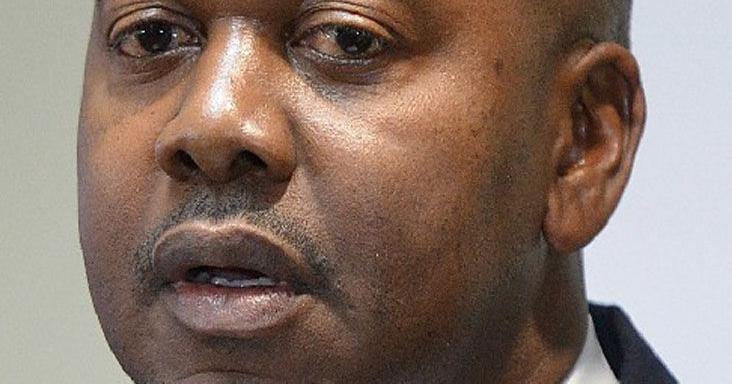
    In a press briefing held earlier this week, Suriname’s Minister of Justice and Police Harish Monorath has laid out the stark challenges facing the country’s national police force, including a persistent staffing shortage and widespread exodus of experienced personnel to higher-paying roles abroad, while revealing that authorities quietly tolerate banned side work for officers to help them make ends meet. The comments came during a promotion ceremony Monday at the National Police Training Center, where 205 new recruits were formally elevated to the rank of Extraordinary Police Officer (BAVP).

    Minister Monorath told reporters that for the police force to operate at full effectiveness across the country, its ideal total strength would sit at around 5,000 active officers. As of the latest count, however, the entire corps only numbers just over 2,700 personnel – less than 55% of the workforce needed to fulfill all core public safety mandates. Compounding this gap is a steady brain drain that the department has been unable to reverse: every year, more than 300 trained officers leave the force to take up positions elsewhere, most commonly in neighboring countries or other overseas locations where compensation packages are far more competitive than domestic salaries. Currently, the force can only recruit and train roughly 300 new officers annually to replace departing staff, while around 20 more personnel leave each month in search of better working conditions and higher pay, almost always outside Suriname’s borders. Monorath even noted that a common early warning sign of an officer planning to exit the force is a request for personal leave without objection, as officers prepare to transition to their new roles.

    Addressing longstanding public debates over off-duty work for police and military personnel, Monorath clarified that while formal Dutch Caribbean law explicitly prohibits civil servants from holding secondary employment, the government has maintained a de facto tolerance policy to allow low-paid officers to supplement their incomes. “What people choose to do during their own free time is not something I can comment on or control,” the minister stated. He added that most police officers work rotating shift schedules, and the vast majority hold multiple jobs to cover basic living costs. Many officers take on private security work for gold mining companies, for example, while others travel to the country’s interior to earn extra income. He also refuted recent media reports claiming that Jean ‘Saya’ Mixon, one of his four appointed advisors, received or will receive police security protection, calling the claims completely untrue.

    Public criticism of off-duty security work has grown in recent years, with critics arguing that when police or military personnel work for private third parties – particularly in Suriname’s resource-rich interior, where conflict over gold mining concessions is common – it creates major potential conflicts of interest that undermine public trust in state security institutions. Monorath acknowledged that the line between official duties and personal free time is not always clear cut when it comes to secondary work. However, he stressed that the department will take strict disciplinary action against any civil servant found to be carrying out unauthorized secondary work during their official paid working hours.

  • Column: De adviseurs aan de knoppen

    Column: De adviseurs aan de knoppen

    When we talk about national governance, our attention automatically goes to the president, vice president, and cabinet ministers. These are the public faces of power: they announce policy, sign official documents, and deliver public accountability. But anyone seeking to understand how power actually operates in practice has to look far past the familiar names and faces that dominate daily news cycles. Behind every elected official lies an extensive network of unelected actors, and it is within these behind-the-scenes circles that much of the real decision-making takes place.

    This pattern repeats itself every time a new government takes office. Hundreds of political operatives shift into new positions, as party loyalists who provided unwavering support during election campaigns are rewarded for their service after victory at the polls. Roles are carved up, new positions are created, and influence is locked in for key insiders. This is the very system that current ruling coalition promised to reform, campaigning under the slogan *Tra fas’ de en nyun pasi* (New path, clean path) that pledged full transparency and open governance. Yet time and again, it is not the elected cabinet ministers who shape this network of influence — it is unelected advisors and close confidants. These actors, whether they hold a formal title or not, wield enormous tangible power. They control the placement of candidates for key government positions, regardless of whether those candidates are qualified for the roles they are given. It should come as no surprise, then, that persistent administrative problems continue to fester across the country, such as the ongoing anomaly in Nickerie, where two district commissioners are on the public payroll but only one can actually carry out official duties.

    Those who believe all government policy is developed in formal meeting rooms are only getting half the story. The most influential actors in the President’s Office are widely recognized to be Faisel Abdoelgafoer and Sergio Akiemboto, operating through a tangled web of formal and informal channels that guide decision-making. Too often, unqualified candidates are placed on the boards of state-owned enterprises, a pattern that has led to a string of high-profile blunders in recent years. One of the most recent missteps involved Minister Harish Monorath and the Saya project, yet the minister faced no consequences for the incident. He escaped unscathed largely because he enjoys the unwavering backing of coalition leader and ABOP party chief Ronnie Brunswijk. Brunswijk not only maintains firm control over his own party but also holds the entire governing coalition in a chokehold, blocking action to address longstanding issues at state-owned firms Grassalco and EBS.

    In many cases, key decisions are drafted, adjusted, and finalized long before they ever appear on the agenda for an official government vote. Just as banks are required to know not just their customers but the full network of connections around them, the public deserves to examine the full network of people that surround the nation’s top elected leaders. That is where private interests intersect with public policy, that is where backroom deals are struck, and that is where the overall direction of the country is ultimately set. Across every administration, there are advisors and holders of key positions who prioritize advancing their own personal agendas over the public good. Candidates are placed in roles not to challenge bad decisions or offer independent perspective, but simply to carry out the orders handed down from insiders. This creates a system where formal responsibility is visible to the public, but actual influence remains diffuse and hidden from view.

    To date, the current administration has yet to present a clear, unified policy agenda for the country, thanks in large part to bitter infighting over competing interests within the coalition — disputes that are particularly intense in the housing development sector. The ongoing conflict over the country’s Fisheries Inspection Institute remains unresolved, while state-owned water utility Canawaima has been mired in quiet dysfunction for months.

    It is long past time for the public to stop only looking at the “display window” of formal government, while blunders and mismanagement pile up behind closed doors. The real work of governance happens far from the public eye: in rooms with no press cameras, in unrecorded phone calls, in informal agreements that are never written down but still shape policy and outcomes. As long as we pretend that only elected officials set the direction of government, we are only fooling ourselves. Power does not only reside in formal job titles. It lives in access, in access, in personal connections, in who you can call and who calls you back. The critical question for Suriname is not who holds the top formal offices — it is who is really pulling the strings.

  • GVO tegen daders na strafklacht tegen ex-minister Ramadhin om verdwenen goederen

    GVO tegen daders na strafklacht tegen ex-minister Ramadhin om verdwenen goederen

    A new judicial probe has been opened into allegations of financial and administrative misconduct surrounding the former administration of Suriname’s Ministry of Public Health, centering on millions of dollars in missing equipment and rule-breaking procurement practices ahead of this year’s general elections.

    The Public Prosecution Service confirmed in an official letter to current Health Minister André Misiekaba that a Gerechtelijk Vooronderzoek (GVO, or judicial preliminary investigation) has been launched, following a criminal complaint submitted by the ministry itself. The investigation initially names “unknown perpetrators” but targets Amar Ramadhin, who led the health portfolio from 2020 through 2025 before the recent election cycle. Misiekaba has publicly verified the launch of the probe to local outlet Starnieuws.

    At the core of the investigation are two key issues: hundreds of pieces of medical and office equipment purchased with grant funding from the Inter-American Development Bank (IDB) that cannot be located, and 900,000 Surinamese dollars worth of late-term procurement that violated all mandatory public financial regulations.

    Ministry officials say internal reviews and a third-party audit uncovered massive gaps in record-keeping for the IDB-funded equipment, which was earmarked for public health system upgrades. Complete distribution logs do not exist: key records were lost when ministry computers crashed, and only a small fraction of the equipment can be traced through installation records held by the department’s IT division. The IDB, which provided the grant to support the country’s public health modernization, has formally requested clarification from the Surinamese government following its own audit queries into the whereabouts of the donated assets.

    The second set of irregularities centers on SRD 900,000 in procurement completed in late April 2025, just weeks before Suriname’s national elections. According to Minister Misiekaba, these purchases bypassed all required public procurement protocols: mandatory steps including soliciting multiple competitive bids and sign-off from the ministry’s internal audit division were entirely skipped.

    Even more concerning, ministry leadership says the supplier has sent a formal demand for payment of the outstanding invoice for these goods, but a large share of the purchased items cannot be found anywhere within the ministry’s inventory. Shockingly, the ministry’s own director has stated he had no advance knowledge of these transactions, raising questions about unauthorized off-the-books spending.

    Misiekaba defended the ministry’s decision to file the criminal complaint that triggered the GVO, saying there was no other viable path forward to address the irregularities. “There was no other choice than to file a criminal complaint,” he told Starnieuws. The ministry has already taken internal disciplinary action in response to the findings: the acting director of administrative services has been replaced and placed on paid administrative leave pending the outcome of the investigation, while multiple other officials connected to the procurement have been reassigned to other roles. The ministry’s internal audit division has formally stated it was never consulted on the questionable purchases, as would be required under national public finance rules.

  • ONA partners with Haitian influencer Ariana Milagro Lafond

    ONA partners with Haitian influencer Ariana Milagro Lafond

    In a landmark ceremony held on May 2, 2026, Haiti’s National Old Age Insurance Office (ONA) formally launched a transformative partnership with one of Haiti’s most prominent digital creators, Ariana Milagro Lafond, who boasts over 16 million followers on TikTok. The announcement was made official by ONA Director General Lovely François, marking a pivotal shift in how the state social security institution engages with the Haitian public.

    This collaboration kicks off a new chapter for ONA’s institutional work, merging the agency’s core social security mandate with modern digital communication strategies tailored to connect with young Haitians. The event was filled with moments that underscored the institution’s commitment to systemic change: updating its public image, forging stronger, more relatable bonds with the population, and reaffirming its foundational mission of ensuring all Haitian workers can access a dignified, financially stable retirement.

    Through this partnership, ONA is explicitly acknowledging the power, talent and widespread impact of Haiti’s engaged, creative generation of change-makers. Lafond will serve as a critical bridge between the state institution and the country’s large, digitally active youth demographic. The collaboration carries a clear underlying principle, however: with great influence comes the responsibility to guide, lift up, and serve the public good.

    Under the leadership of François, the partnership is rooted in a broader, long-term vision for ONA: building a more modern, accessible institution that meets citizens where they are, while expanding public social education across the country. The ceremony also doubled as a celebration of Haitian youth excellence, delivering a unifying message to the next generation: “We see you, we recognize your talent, and we encourage you to continue excelling in what you do best.”

    Beyond the new collaboration, ONA used the event to reaffirm its three core commitments: building sustained connections between the institution and young Haitians, growing a national culture of proactive social security planning, and encouraging every working Haitian to take active steps toward building a dignified, secure future. In closing, the agency delivered a resonant re framing of youth’s role in Haiti: “Haitian youth are not a challenge to be contained, but a force to be supported, a resource to be valued, and a future to be built together.”

  • UDP Loses Key Cayo Figure Figueroa at Critical Moment

    UDP Loses Key Cayo Figure Figueroa at Critical Moment

    Belize’s main opposition United Democratic Party (UDP) is grappling with a damaging setback just months ahead of critical municipal elections, after one of its most high-profile and effective representatives in the key Cayo North constituency announced his immediate departure. Dr. Omar Figueroa, a former area representative for Cayo North and the UDP’s appointed caretaker for the district, confirmed his exit in a statement that blamed unrelenting internal party attacks on his personal reputation as the core reason for stepping down.

    The timing of Figueroa’s resignation could hardly be worse for the UDP, with municipal contests across the country scheduled to take place in less than a year, and the official voter transfer period for the election opening just two months from now. For the UDP, Cayo North has long stood as one of its most reliable and strategically important voting blocs in the hotly contested San Ignacio–Santa Elena municipal race. It is also the only municipality the party has managed to hold onto since 2021, making the stability of its local organization make-or-break for the party’s electoral prospects.

    Figueroa was far more than a recognizable local name for the UDP. Over his tenure, he built a reputation as a vocal, unflinching watchdog for electoral integrity in the district. In recent months, he took bold action over persistent allegations of voter registration irregularities across Cayo, bringing a formal legal challenge to what he described as coordinated efforts by political operatives to register ineligible voters who do not actually reside within the district boundaries. While improper cross-district voter registration is a longstanding issue across Belize’s political landscape, political observers note that Figueroa’s willingness to confront the practice head-on had already led to measurable reductions in irregular registrations locally.

    His sudden exit creates a significant leadership gap in the UDP’s most critical remaining electoral stronghold. Party strategists now face the steep challenge of rebuilding local organizational capacity and voter outreach just as the election season gets underway, all while addressing the underlying internal divisions that led to Figueroa’s departure. The resignation has also sparked renewed public scrutiny of the UDP’s internal unity, a key asset that political analysts say will be essential for the party to mount a competitive challenge to the ruling party across the country next year. With cohesion already a point of tension in recent years, Figueroa’s departure leaves the UDP facing a much steeper uphill battle to hold onto its last remaining municipal seat.

  • Almost Half a Year Later, No Ombudsman

    Almost Half a Year Later, No Ombudsman

    Nearly half a year has passed since the term of Belize’s last Ombudsman expired, and the critical government office tasked with protecting ordinary citizens from official misconduct remains unstaffed, leaving residents without a dedicated channel to pursue grievances against abuses of power.

    Created as an independent accountability body, Belize’s Office of the Ombudsman serves a core public function: it offers free, confidential support to any citizen seeking to file complaints against government officials and power holders for corruption, abusive treatment, and unfair treatment. For many Belizeans, the office acts as a last line of defense when they face injustice at the hands of state institutions.

    The most recent person to hold the post was retired Major Gilbert Swaso, who began his three-year tenure in January 2023. His contract officially came to an end in December 2025, with little public notice surrounding its expiration. In the five months that have followed, the Ombudsman position has sat completely vacant, with no permanent appointee named to fill the role.

    In March 2026, Belize’s Prime Minister addressed questions from reporters about the delayed appointment process, confirming that a parliamentary House committee had been tasked with drafting updated terms of reference for the role. Once that work was completed, the Prime Minister said, the vacancy would be publicly advertised to begin the search for a new Ombudsman.

    More than one month has passed since that update, however, and no public posting for the position has been released. As the vacancy drags on, local observers and residents are growing increasingly concerned: when a Belizean citizen experiences corruption, abuse of power, or injustice at the hands of people in positions of authority, there is now no dedicated independent official they can turn to for help.

    This report is a transcript of an evening television newscast published online on May 4, 2026.

  • FLASH : 46% increase in the minimum wage for subcontracting in Haiti

    FLASH : 46% increase in the minimum wage for subcontracting in Haiti

    In a major policy announcement aimed at addressing longstanding worker grievances and easing cost-of-living pressures, Haiti’s Ministry of Economy and Finance has unveiled a sweeping set of economic measures, headlined by a near-46% increase to the daily minimum wage for workers in the country’s critical subcontracting sector. The announcement was made public by Minister Serge Gabriel Collin during a May 4, 2026 press conference hosted at the headquarters of Haiti’s Economic and Social Assistance Fund (FAES).

    Prior to this adjustment, the daily minimum wage for Segment F subcontracting workers — a category that includes the country’s large textile manufacturing workforce — has remained frozen at 685 gourdes per day since 2022. Under the new ruling, that baseline will rise to 1,000 gourdes per day, a jump of just under 46%. The adjustment comes after months of advocacy from textile workers, who had originally called for a far steeper increase, pushing for a daily minimum wage set between 2,500 and 3,000 gourdes.

    Minister Collin emphasized that the wage hike for subcontracting workers is only the first step in a broader, phased strategy to update minimum wage standards across all Haitian economic sectors. The government’s approach prioritizes a gradual rollout to avoid destabilizing Haiti’s fragile macroeconomic balance, he explained, balancing the urgent need to improve working people’s quality of life with the need to sustain overall economic stability.

    Beyond minimum wage reform, the administration has moved to address another major pain point for domestic businesses: high energy costs. Recognizing the private sector’s central role in driving job creation and national wealth generation, Haitian officials have opened negotiations to bring down energy prices, with a specific focus on expanding access to affordable renewable energy. As a first concrete step, electricity rates for industrial operators in the Caracol Industrial Park will drop from 30 cents per kilowatt-hour to 21 cents per kilowatt-hour starting in January 2027.

    To further bolster household purchasing power and strengthen the country’s social safety net, Minister Collin also announced direct targeted financial assistance for eligible workers. A total fund of 625 million gourdes will be distributed over the final five months of the 2025-2026 Haitian fiscal year, with resources earmarked for expanded social protection programs and direct support to offset rising consumer costs.

  • Monorath: kwestie rond Mixon volgens mij afgehandeld

    Monorath: kwestie rond Mixon volgens mij afgehandeld

    Public and parliamentary criticism has mounted sharply in Suriname over the role of Jean “Saya” Mixon, who served as an advisor to Harish Monorath, the country’s Minister of Justice and Police. The backlash has grown so intense that some lawmakers have even called for Monorath’s resignation from his cabinet post.

    In a blunt response to the demands, Monorath pushed back against critics, noting that the only authority that can remove him from office is the country’s president. “People can say whatever they want,” Monorath stated. “The day the president has had enough, I will leave office. It is that simple.”

    The minister addressed the ongoing controversy shortly after presiding over a promotion ceremony for 205 new police recruits at the national Police Training Center, where he was pressed by reporters to clarify whether Mixon still retains any formal or informal connection to his ministry. When pressed for a concrete answer on Mixon’s current status, Monorath declined to provide explicit details, instead claiming the entire matter is already closed.

    “Parliament requested me to confirm that the individual in question no longer holds an advisor position as defined by law,” Monorath explained. “I have done that. That’s it.”

    When reporters asked whether Monorath had formally thanked Mixon for his past service, the minister denied any formal recognition took place. “Nothing was ever formalized, there was never an official appointment, so there was nothing to thank him for,” he added.

    Monorath further pushed back against widespread claims that Mixon had been performing official work at the ministry, or accessing resources and facilities belonging to the Suriname Police Corps (KPS). “None of those claims are true,” he said. “He never came to the ministry office, and he never received security protection from the KPS.”

    He also refuted allegations that Mixon has been receiving security detail from special reserve police officers. Monorath did acknowledge that it is common practice for regular police officers to take on private security work during their personal time off, including traveling into the country’s interior regions for private assignments when they have multiple consecutive days of leave.

  • COMMENTARY: World Press Freedom Day

    COMMENTARY: World Press Freedom Day

    As the world marks World Press Freedom Day 2026 on May 3, the latest annual assessment from Reporters Without Borders (RSF) delivers a stark warning: global press freedom has declined to its lowest point in two and a half decades, with more than half of all nations now categorized as having either “difficult” or “very serious” conditions for independent journalism.

    The iconic American journalist Walter Cronkite once summarized the inseparable link between a free press and democratic governance: “Freedom of the press is not just important to democracy, it is democracy.” Decades later, that statement carries new urgency as the global retreat of press freedom accelerates. Journalists across every region face growing rates of imprisonment, targeted harassment, and heightened scrutiny of their work, while heavy-handed state regulation of media activity signals deepening democratic erosion. When press rights are curtailed, it is always the general public that bears the greatest cost, as independent oversight of power and access to unbiased information are eroded.

    First introduced decades ago, RSF’s World Press Freedom Index evaluates the state of press freedom across 180 countries and territories. The framework defines press freedom as the ability of journalists to carry out their work independently, free from political, economic, legal, or social interference and without threats to personal safety. It scores countries based on five core indicators: the surrounding political context for media, the legal framework governing journalism, economic conditions for media workers, the broader socio-cultural environment, and on-the-ground safety for reporters.

    Observed annually on May 3 and formally established by the United Nations General Assembly in 1993, World Press Freedom Day serves two core purposes: it is a day to stand in solidarity with media outlets facing censorship or attempts to shut down independent reporting, and a moment of remembrance for journalists who have lost their lives while pursuing the truth. The day also acts as a global checkpoint to celebrate the foundational principles of press freedom, assess global conditions for independent journalism, defend media independence from targeted attacks, and honor reporters killed while practicing their profession.

    This year’s theme, “Shaping a Future at Peace,” aligns with the UN’s stance that independent, free media and press freedom underpin global peace, equitable economic recovery, sustainable development, and the protection of human rights by enabling access to reliable information, strengthening accountability, fostering constructive public dialogue, and building public trust. Today, that work is facing unprecedented new threats: malicious actors are leveraging artificial intelligence to spread disinformation and manipulate public discourse, eroding public trust in media and undermining national security. At the same time, independent media outlets face growing economic instability that threatens their survival. The RSF report notes that self-censorship among journalists has risen by more than 60% globally, driven by fear of retaliation, coordinated online harassment, judicial intimidation, and crippling economic pressure. Against this backdrop, World Press Freedom Day 2026 provides a critical opportunity to reaffirm global commitments to freedom of expression, and to align actors across journalism, technology (including the AI sector), and human rights groups around actionable solutions to strengthen resilient, independent information ecosystems for the future.

    One of the most alarming trends highlighted in the 2026 index is the accelerating criminalization of journalism across the globe. Anne Bocande, a representative from RSF, emphasized that existing international protection mechanisms for journalists are no longer adequate, as international law is increasingly undermined and cases of violence against journalists go unpunished with widespread impunity. The erosion of journalistic independence and increasing suppression of core press principles are the central findings of the 2026 index.

    Regional performance varies widely across the Americas and beyond. Jamaica ranked 26th out of 180 countries, holding a relatively strong regional standing but continuing a years-long downward slide: it fell from 24th place in both 2024 and 2025, and from a top-10 ranking in 2020, with growing concerns over journalist safety and declining government transparency driving the drop. Trinidad and Tobago fell 13 places to rank 32nd; while the country still holds an overall “good” rating for press freedom, worsening economic and political conditions have eroded its media environment. Canada placed 20th, while the United States ranked 64th. At the lower end of the index, Russia ranked 172nd, China 178th, North Korea 179th, and Eritrea ranked last at 180th. In the Caribbean, Guyana slipped three spots to 76th, with an overall score of 59.58 (down from 60.12 in 2025), placing its media environment in the “problematic” category. Haiti ranked 107th, with a global score of 50.32, landing it in the “Difficult” category, reflecting a ongoing, severe crisis for independent journalism in the country. Burkina Faso ranked 110th overall. For the tenth consecutive year, Norway held the top spot on the index, with the Netherlands and Estonia rising to second and third place respectively, leading a top tier dominated by Nordic and Baltic nations with strong protections for press freedom.

    As the global community gathers to mark World Press Freedom Day 2026, the occasion serves as a urgent reminder to governments worldwide to uphold their formal commitments to protecting press freedom. It is also a moment for media professionals to reflect on the challenges facing press freedom and core ethical standards of their work. In the words of former U.S. President Barack Obama: “we have to uphold a free press and freedom of speech because, in the end, lies and misinformation are no match for the truth.”

    This commentary is from Wayne Campbell, an educator and social commentator focused on how development policies shape culture and gender equity, and does not represent the views of Duravision Inc., Dominica News Online, or any of its affiliated brands.

  • GDF soldier shot on border with Venezuela

    GDF soldier shot on border with Venezuela

    On Monday morning, May 4 2026, a shooting incident on the disputed Guyana-Venezuela border left a member of the Guyana Defence Force (GDF) wounded, adding new tension to a long-running territorial dispute that is currently being reviewed by the International Court of Justice (ICJ).

    According to an official statement released by the GDF, the attack took place at approximately 11:30 a.m. local time in the Black Water area, where a GDF boat patrol was conducting an escort mission for three civilian vessels carrying personnel and cargo traveling from Makapa to Eteringbang. Unidentified attackers opened fire on the convoy, striking the deployed soldier twice in the right leg. Military medics quickly stabilized the injured service member, who is now being evacuated to the capital city of Georgetown to receive advanced medical care.

    After the ambush, the GDF patrol engaged the attackers in return fire and successfully maneuvered the entire civilian convoy out of the high-risk zone to safety. To date, the GDF has not confirmed whether the individuals who opened fire were Venezuelan security forces or armed civilians operating from the Venezuelan side of the border. However, a senior unnamed GDF officer noted in an off-the-record comment that Venezuelan authorities must be aware of the armed groups operating in the area, which uses the dense jungle along the Cuyuni River as cover to launch attacks against Guyanese personnel. “We are being attacked from the Venezuelan side of the Cuyuni by a group who uses the jungle as cover from sight and fire. The Venezuelan authorities can not be unaware of this situation,” the senior officer stated.

    This shooting is not an isolated event: the GDF confirmed that prior attacks targeting Guyanese soldiers have occurred in the same border region in previous months and years. The timing of Monday’s incident coincides with the opening of public hearings at the ICJ focused on the substantive merits of the territorial dispute between the two South American nations. At the core of the dispute is the legal validity of the 1899 Arbitral Tribunal Award, which originally established the current land boundary between Guyana and Venezuela.

    In the aftermath of the attack, the GDF reaffirmed its commitment to securing the country’s western border. “The Force remains fully committed to the protection of its personnel and the safeguarding of Guyana’s territorial integrity,” the statement read, adding that the military will maintain a robust, active operational presence across the entire border region moving forward.