分类: politics

  • Caribbean think-tank to brainstorm major regional, global issues

    Caribbean think-tank to brainstorm major regional, global issues

    As the global order continues to shift rapidly, bringing overlapping challenges to small and medium-sized states across the Americas, a leading Guyanese research institution is preparing to bring together cross-border experts to unpack pressing regional and international concerns.

    The Centre for International and Border Studies (CIBS), a Georgetown-headquartered think tank focused on cross-border and global policy issues, will host its flagship two-day conference on May 14 and 15 this year, held at the Herdmanston Lodge in the nation’s capital. Designed to accommodate a wide range of attendees regardless of geographic barriers, the gathering will operate as a hybrid event, welcoming both in-person guests and remote participants joining via digital platforms.

    Organized under the overarching theme “Navigating The Future: Guyana, the Caribbean and Latin America in a Changing Global Environment”, the conference will create space for rigorous critical discussion of four core priority areas: deepening regional integration progress, advancing inclusive sustainable development across the hemisphere, unpacking the evolving geopolitical landscape of the Americas, and addressing other emergent pressing international issues shaping the region’s trajectory.

    The lineup of presenters and panelists draws top expertise from across the Americas and beyond. Attendees will hear from U.S. academic Dr. Scott McDonald, former United Nations official Dr. Bertrand Ramcharan who also serves as Chancellor of the University of Guyana, and multiple lecturers from the University of the West Indies: Dr. Kai-Ann Skeete, Dr. Marlon Anatol, and Dr. Jacqueline LaGuardia Martinez. Two prominent Brazilian scholars, Paulo Correa of the Federal University of Amapa and Ambere Freitas of Brazil’s Roraima Federal Institute, will also contribute analysis, alongside a roster of seasoned regional experts including Carl Greenidge, Dr. Ulric Trotz, Dr. Clement Henry, Neville Bissember, and CIBS’ current director Dr. Mark Kirton.

    Founded as a collaborative transnational network, CIBS counts a diverse global membership of academics, policy professionals, and practitioners hailing from across Latin America and the Caribbean, as well as the United States, Asia, and Africa. The upcoming conference marks a key effort to bridge cross-regional expertise and generate actionable insight for navigating the uncertain global shifts facing the Western Hemisphere in the coming years.

  • Leegstaande gebouwen en brandgevaar: tijd voor structureel beleid

    Leegstaande gebouwen en brandgevaar: tijd voor structureel beleid

    On Wednesday, a large blaze broke out once again in central Paramaribo, consuming the long-vacant former headquarters of insurance provider Clico on Klipstenenstraat. For years, this derelict structure has been informally occupied by vulnerable people, and local residents have raised repeated concerns about safety risks in the area – yet no action has ever been taken to address the issue. This is not an isolated event: just months earlier, a similarly devastating fire broke out at an abandoned property on the corner of Henck Arronstraat and Jessurunstraat, putting the entire historic inner city at risk of explosions and widespread destruction.

    What we are seeing now is not a string of random accidents, but a dangerous, repeating pattern that threatens lives, destroys private and public property, and erodes the character of Suriname’s capital city, says Danielle van Windt, Deputy Minister of Social Affairs and Housing of Suriname, in a policy opinion piece calling for urgent systemic change. Anyone walking through greater Paramaribo can see the scale of the problem: dozens of properties lie empty, left to decay after decades of economic decline that has left owners unable or unwilling to maintain their buildings. But vacant, unmaintained property is never a neutral issue: it attracts unhoused people and people struggling with addiction, and creates fire hazards that put the entire surrounding community at imminent risk.

    The Clico building is just one high-profile example of a widespread crisis. How many other unmonitored, unmaintained properties across the city are owned by absentee owners who refuse to take responsibility for their assets?

    Van Windt emphasizes that the societal costs of this crisis go far beyond the immediate risk of fire. When unregulated occupation of derelict buildings becomes common, it creates a toxic mix of dangers: fire hazards, explosion risks, increased criminal activity, and a degraded urban landscape that directly contradicts Suriname’s national ambition to build a prosperous, attractive capital. Paramaribo aims to position itself as a modern, welcoming city that draws foreign investment and provides safe, livable communities for local families. But that goal is impossible to achieve as long as the inner city is allowed to decay into a zone of neglect and danger.

    To address this systemic crisis, Van Windt has proposed the creation of a national registry of “high-risk” neglected buildings. Every vacant, abandoned property would need to be formally registered, and owners would be legally required to complete mandatory maintenance to bring structures up to safety standards. If owners fail to meet this obligation, the government would take over maintenance responsibilities, and gain the legal authority to repurpose the property for public use. Options include converting the buildings into affordable housing for people waiting on social housing waitlists, or renovating them through public works programs to provide market-aligned social rental housing.

    This is not an unnecessary, luxury policy – it is an urgent necessity given Suriname’s ongoing severe housing shortage, Van Windt argues. While thousands of Surinamese families are desperately seeking stable, safe housing, dozens of viable buildings sit empty, derelict and dangerous across Paramaribo. Allowing this pattern of vacancy and neglect to continue is indefensible in the face of a national housing crisis. Every abandoned property should be repurposed for public good: it can be used for social rental housing, temporary shelter for unhoused people, or community-led projects. The status quo, where property owners evade their responsibilities and the broader public pays the price for their neglect, can no longer stand.

    What strikes me most about this crisis is that local residents have been sounding the alarm for years, Van Windt says. Neighbors see the risks every day, live with constant fear of disaster, and have long dealt with the smoke, debris and uncertainty that come with nearby derelict buildings. For far too long, their voices have been ignored by policymakers. We acknowledge this failure, and we are now ready to take the first step toward systemic, structural change to fix this crisis. This is not about shifting blame – it is about taking responsibility and changing course to build a safer capital.

    Suriname is ready to move forward. We want to be a nation that can be proud of its capital city. But that cannot happen as long as we allow the inner city to burn, both literally and metaphorically.

    Addressing the crisis of homelessness must also be a core part of this new policy framework, Van Windt notes. We need targeted social policy to support this vulnerable group, going beyond purely punitive measures to provide shelter, supportive care, and pathways to stable long-term housing. At the same time, we must take a firm stance on neglected vacancy, because unregulated vacancy is not a private issue for owners – it is a public crisis that affects the entire community.

    It is past time for policymakers to step up and take responsibility. It is time for the government to show it can learn from past mistakes. It is time to stop putting out individual fires and start building the structural policy we need to prevent disasters from happening in the first place. A registry of high-risk buildings, mandatory maintenance requirements for owners, and a formal repurposing framework for neglected properties – these are not radical ideas. They are common-sense steps for a city that takes the safety and well-being of its residents seriously.

    The latest fire on Klipstenenstraat is a clear wake-up call, just as the fire on Henck Arronstraat was before it. How many more warnings do we need before we act? Paramaribo deserves better. Suriname deserves better. And the residents who live every day with the fear of the next major blaze deserve better. It is time for action. It is time for meaningful policy change. It is time to repurpose vacant buildings and return our capital city to the people who call it home.

  • DFP condolence statement on the passing of DASPA CEO, Ian Pinard

    DFP condolence statement on the passing of DASPA CEO, Ian Pinard

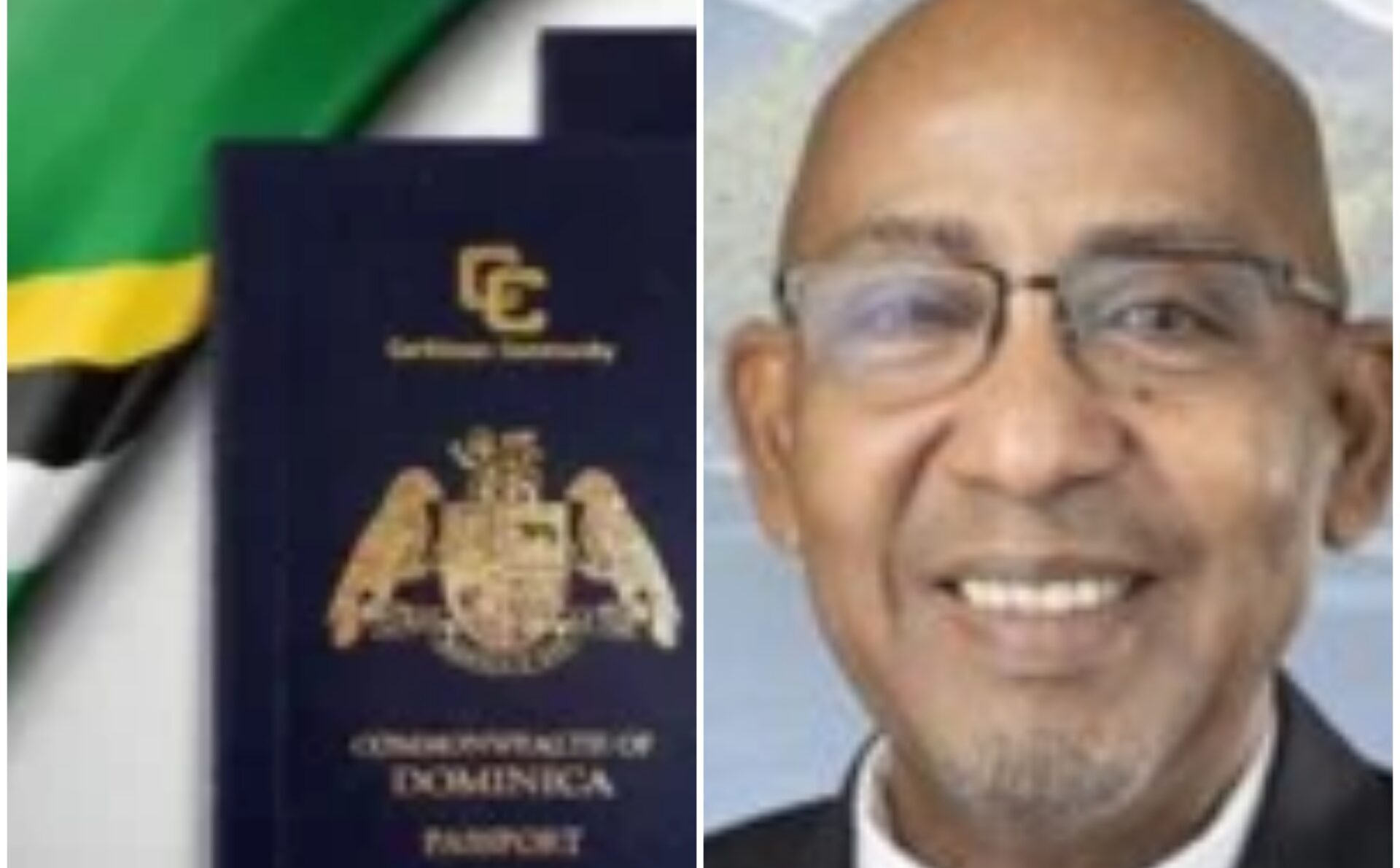
    The Dominican political landscape is this week grappling with the sudden loss of one of its most notable public figures, Ian Pinard, whose career spanned senior political roles and critical infrastructure leadership. The Dominica Freedom Party (DFP) has officially joined the entire nation in mourning his passing, releasing a public statement confirming the news of his death.

    Pinard wore many hats across his decades of public service to Dominica. At the time of his death, he served as Chief Executive Officer of the Dominica Air and Sea Port Authority, the government body that oversees the island nation’s critical transportation and trade hubs. Prior to this senior infrastructure leadership role, Pinard built a long legacy in electoral politics, holding a seat as a government minister and serving as the parliamentary representative for the Soufriere Constituency.

    His unexpected death has sent ripples of shock across the country, with members of the public, political colleagues, and constituents expressing surprise at the news of his passing. In its official statement, the DFP extended its deepest and most sincere condolences to Pinard’s immediate family, extended relatives, close friends, colleagues, and all staff at the Dominica Air and Sea Port Authority. The party also made a special point of acknowledging the loss to the residents and community of the Soufriere Constituency, which Pinard represented for years.

    Closing its statement, the Dominica Freedom Party offered a final tribute, wishing Pinard’s soul eternal rest.

  • Freeland Condemns Vandalism After Campaign Banner Torn Down in Potters

    Freeland Condemns Vandalism After Campaign Banner Torn Down in Potters

    A recent act of political vandalism has sparked condemnation from senior Canadian officials after a campaign banner belonging to Deputy Prime Minister Chrystia Freeland was intentionally torn down in the Potters area. The incident, which unfolded over the past days, has drawn attention to rising tensions surrounding political discourse in local constituencies ahead of an expected political cycle.

  • Labadie krijgt commando leger uit handen van president Simons

    Labadie krijgt commando leger uit handen van president Simons

    On April 24, a historic leadership transition ceremony took place at Suriname’s Memre Buku Barracks, where President Jennifer Simons, the nation’s supreme commander, formally installed Mitchell Labadie as the new commander of the Surinamese National Army. Simons also announced Labadie’s promotion to the rank of brigadier general, marking the start of a new chapter for the country’s top military leadership.

    The handover event carries far more weight than a simple change in command, Simons emphasized during her keynote address at the ceremony. She framed the appointment as a critical milestone in advancing Suriname’s national security development, aligning the military with the country’s shifting domestic and international priorities. The Surinamese government has expressed full confidence in Labadie’s ability to lead the armed forces with expertise, unwavering integrity, and clear strategic focus.

    In her remarks, President Simons underlined that the National Army serves not only as a core state institution but also as a key societal actor deeply tied to Suriname’s broader national progress. She outlined a clear set of core priorities for the new commander, spearheading a comprehensive modernization drive for the military. Top on the agenda is boosting operational capacity, strengthening institutional preparedness to tackle emerging future challenges, and reinforcing disciplinary standards across all ranks.

    Labadie will also oversee efforts to expand and improve the military’s personnel foundation, build out new and existing international military cooperation partnerships, support domestic stability and public security initiatives, and integrate more advanced modern technologies into military operations.

    Beyond welcoming the new leadership, President Simons publicly extended her sincere appreciation to outgoing commander Brigadier General Werner Kioe A Sen, recognizing his years of dedicated service to the nation and the armed forces.

    This leadership transition comes as Suriname enters a period of preparation to address a growing set of interconnected economic and security challenges. According to the Surinamese government, a professional, modern, and adaptable national army is an indispensable foundation for safeguarding national interests and advancing the country’s development goals through this shifting landscape.

  • National ID Consultations Begin, Belize City Up Next

    National ID Consultations Begin, Belize City Up Next

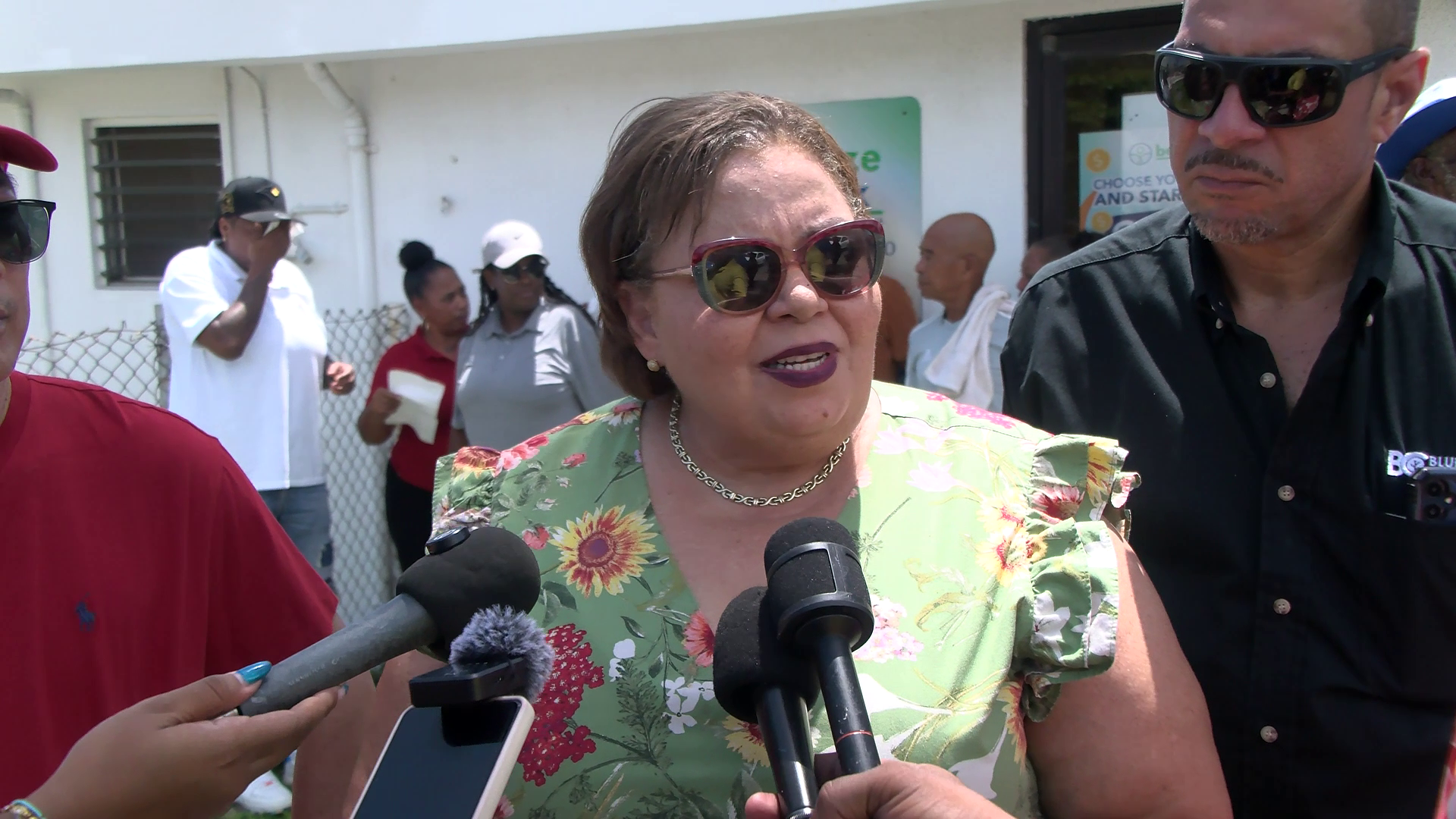
    In a major step forward for the Caribbean nation’s digital transformation agenda, the Government of Belize has officially launched a series of nationwide public consultations for its proposed National Identification System, kicking off the engagement process with an inaugural session in Orange Walk Town on Thursday evening. The initiative is framed as a core government project to bring Belize’s identity infrastructure into the digital age, with organizers emphasizing that public input will be central to refining the final design of the system before it is codified into legislation.

    At its core, the National ID plan outlines a streamlined, secure unified identity framework that aims to simplify access to both government and private digital services across the country. The Ministry of E-Governance, which is leading the project, says the enabling legislation for the system will not only standardize identity verification across sectors but also put in place stronger data protection safeguards than currently exist for personal information.

    A key feature of the proposed ID is the integration of biometric data for verification purposes. Government officials have moved quickly to address public confusion on this point, noting that biometric technology is already a commonplace part of daily life in Belize. From routine identity checks at border crossings to access control systems for workplaces and critical infrastructure, the technology is already widely deployed across multiple sectors of the economy.

    Even with this context, concerns around individual privacy and the scope of personal data collection have emerged as the central point of public debate around the project. Misinformation and unsubstantiated rumors circulating online and in local communities have fueled anxiety among many Belizeans about how their data will be stored, used, and shared by government agencies.

    During a live broadcast of the first consultation, Jose Urbina, Chief Executive Officer of the Ministry of E-Governance, directly addressed these growing concerns. “We’ve heard so many rumours and misinformation out there as it relates to the National ID, and it creates fear, and I am hopeful that those same individuals are watching this live,” he stated during the session.

    Urbina stressed that the shift to a unified digital National ID is an unavoidable necessity as more of Belize’s public and commercial services move online. “While it might not be all of us that are fearful for change, and there are some of us that want to adapt, we need to realise that we need something like the National ID to be able to do online transactions,” he explained, adding that the system is designed to support the country’s continued digital economic development.

    Officials leading the project have repeatedly pushed back against privacy concerns, emphasizing that the new system will actually give individual Belizeans greater control over how their personal identity information is accessed and used by third parties, compared to the fragmented identity systems currently in place.

    Following the successful first session in Orange Walk Town, the public consultation tour is set to continue this Friday with a stop in Belize City, scheduled to begin at 5:30 p.m. local time. The government says it will hold sessions across all major districts of the country to ensure that voices from every region are included in the feedback process before the draft bill is finalized for parliamentary consideration.

  • Trump evacuated as shooter opens fire at Washington gala event

    Trump evacuated as shooter opens fire at Washington gala event

    On a Saturday evening at one of Washington D.C.’s most high-profile annual gatherings, a sudden burst of gunfire triggered chaotic evacuations and turned a glamorous media gala into a major national security incident, forcing U.S. Secret Service agents to rush former president Donald Trump offstage mid-event. The incident unfolded at the Washington Hilton’s ballroom, where hundreds of black-tie guests including First Lady Melania Trump, top Trump administration officials, and leading national journalists had gathered for the first White House Correspondents’ Dinner (WHCA) that Trump would attend during his current second term in office.

    According to official accounts from Trump shortly after he was safely evacuated to the White House, an armed suspect pushed through external security checkpoints just outside the event space, carrying multiple weapons with him before Secret Service personnel intervened. “A man charged a security checkpoint armed with multiple weapons, and he was taken down by some very brave members of the Secret Service,” Trump told reporters at a hastily assembled press briefing. Initial investigations point to the suspect acting alone, a conclusion Trump endorsed: “They seem to think he was a lone wolf, and I feel that too.” The suspect was taken into custody at the scene, and Trump confirmed that one responding Secret Service officer sustained a close-range gunshot wound, though the injury was not believed to be life-threatening.

    Witnesses described scenes of widespread panic as guests scrambled for cover, diving under banquet tables while tactical teams swarmed the venue. Armed police locked down the entire Washington Hilton complex, with law enforcement helicopters circling overhead amid the emergency response. The incident occurred after opening welcome remarks, during the dinner service, just moments before Trump was scheduled to deliver his keynote address. Administration officials were prioritized for evacuation as confusion spread through the crowd; Cabinet member Mehmet Oz confirmed to reporters on his way out that shots had been fired on the upper level of the venue.

    This latest security scare marks the third documented assassination attempt against Trump in less than a year. In July 2024, a shooting at a campaign rally in Butler, Pennsylvania left one attendee dead and Trump with a minor gunshot wound to the ear. Just months later, a second man was arrested after a Secret Service agent spotted a rifle barrel protruding from brush along the perimeter of Trump’s West Palm Beach golf course, where the former president was playing a round. Adding an extra layer of historical gravity to the incident, the Washington Hilton itself carries a dark legacy of presidential assassination attempts: it was the same location where 40th U.S. President Ronald Reagan was shot and seriously wounded by a would-be assassin just two months after taking office in 1981.

    In the wake of the breach, Trump acknowledged longstanding concerns about security at the venue, admitting that the facility was “not a particularly secure” space – a comment that is sure to reignite scrutiny of the Secret Service following a string of recent high-profile security lapses surrounding the president. Despite the scare, Trump confirmed his commitment to holding the rescheduled event, saying he planned to postpone the gala no more than a month out.

    Event organizers initially attempted to calm guests by indicating the dinner would proceed, before reversing course and formally announcing a postponement. This year’s WHCA dinner carried extra symbolic weight: after decades of tradition that sees sitting U.S. presidents attend the annual gathering, Trump refused to participate in the event throughout his first term in office, marking a break from 100 years of precedent. Even amid Trump’s repeated public attacks on the mainstream media, the WHCA extended an invitation to him this year, drawing widespread attention from political and media circles across the capital.

    Colloquially nicknamed the “Nerd Prom” by attendees, the annual dinner brings together hundreds of Washington-based journalists, media executives, and political figures to raise funds for journalism scholarships and recognize excellence in political reporting. Unlike most years, which feature a stand-up comedian delivering sharp, often satirical jokes about the sitting president (who traditionally delivers his own comedic set in response), no comedian was booked for the 2025 event.

  • Caricom observers arrive in Antigua, schedule talks with stakeholders ahead of polls

    Caricom observers arrive in Antigua, schedule talks with stakeholders ahead of polls

    Less than one week before Antigua and Barbuda holds its upcoming general elections, a nine-person election observation mission assembled by the Caribbean Community (Caricom) has launched a series of key stakeholder meetings across the twin-island nation, as regional authorities work to evaluate the integrity and fairness of the country’s electoral landscape ahead of voting day.

    Invited to the country by sitting Prime Minister Gaston Browne, the full observer delegation touched down in Antigua and Barbuda on Thursday, and has planned a full schedule of consultations with all major actors involved in the electoral process ahead of the April 30 poll.

    Over the coming days, the mission will hold closed and open discussions with representatives from both the governing party and the parliamentary opposition, leadership from Antigua and Barbuda’s independent Electoral Commission, the national supervisor of elections, and a broad cross-section of civil society groups. These include youth advocacy organizations, private sector business leaders, national religious bodies, and local independent and commercial media outlets.

    In a public statement ahead of the mission’s deployment, Caricom noted that these pre-election engagements are a core component of the delegation’s broader work to assess the pre-poll climate. This evaluation will cover everything from the operational readiness of national electoral systems to the overall tone and conduct of political campaigning across the country.

    On polling day itself, observation teams will be spread across all constituencies of Antigua and Barbuda to monitor every stage of the voting process. Observers will track activities from the opening of polling stations in the morning, through the casting of ballots by voters, to the final counting and tabulation of votes at the end of the day. Beyond process monitoring, the delegation will also collect first-hand data to support independent verification of official results, and assess the conduct of both polling officials and political party representatives working at polling sites.

    Shortly after voting concludes, the mission is scheduled to release an initial public preliminary statement that outlines its core early findings on how the election was administered. After that, the delegation will prepare a comprehensive, detailed final report to submit to the Caricom Secretary-General for regional review.

    The full observer team is scheduled to wrap up its assessment work and depart Antigua and Barbuda on May 3, three days after polling day.

    Heading the mission is Maxine McClean, a sitting commissioner with Barbados’ Electoral and Boundaries Commission. The delegation’s deputy leader is Herman St Helen, the chief elections officer of Saint Lucia. The remaining mission members bring decades of combined electoral experience from across the Caribbean: Ambassador Felix Gregoire, chairman of the Public Service Commission in Dominica; Rohan Porter, acting assistant director of elections for field operations with Jamaica’s Electoral Office; Stephanie Bram, a staff member of Suriname’s Electoral Bureau; and Karla Dayton Edwards, a commissioner with Trinidad and Tobago’s Election and Boundaries Commission. The entire observer team is backed by a three-person support team from the Caricom Secretariat based in the region’s headquarters.

  • Niagara Falls to shine in Jamaican colours for SAWP 60th anniversary

    Niagara Falls to shine in Jamaican colours for SAWP 60th anniversary

    On a milestone marking six decades of cross-border labor collaboration between Canada and Jamaica, one of North America’s most iconic natural landmarks will take on a special symbolic meaning this Saturday. Niagara Falls will be bathed in the bold black, green, and gold of Jamaica’s national flag to honor the 60th anniversary of the Canada-Jamaica Seasonal Agricultural Worker Program (SAWP), an initiative that has shaped economic and diplomatic ties between the two nations since its launch in 1966.

    According to an official statement released by the Jamaican government, the celebratory illumination is scheduled to begin at 9:30 p.m. Jamaica local time, which translates to 10:30 p.m. in Canada. This visual tribute is designed to draw public attention to the six decades of mutually beneficial partnership that the program has fostered. For those unable to travel to the Ontario landmark to view the display in person, the event will be accessible globally via continuous live webcams. Both the official Niagara Falls live feed and the Clifton Hill live cam, which captures the falls’ evening lighting and surrounding public activity, will stream the illumination. This setup ensures that Jamaican citizens on the island and members of the extensive Jamaican diaspora around the world can watch the historic tribute unfold in real time.

    The flag-colored lighting is just one component of a broad slate of commemorative activities organized to celebrate the program’s legacy. When SAWP first launched 60 years ago, it brought just 264 Jamaican agricultural workers to Canada to fill seasonal labor gaps. Today, the program has expanded dramatically, providing annual seasonal employment opportunities to more than 9,000 Jamaican workers, making it one of the most enduring cross-border labor initiatives in the Americas.
    Jamaica’s Minister of Labour and Social Security, Pearnel Charles Jr., who is leading an official Jamaican delegation to Canada for the anniversary events, spoke to the deep value of the longstanding bilateral relationship. “The Government and people of Jamaica extend sincere appreciation to the Government and people of Canada for a partnership that has stood the test of time,” Charles said. “For 60 years, this relationship has nurtured opportunities, sustained livelihoods and strengthened the bonds between our nations.”
    He emphasized that the program’s impact extends far beyond formal diplomatic or economic statistics, writing it directly into the daily lives of Jamaican communities. “The impact of this programme is not distant or abstract. It is felt in homes across Jamaica. It is seen in children who are better provided for, in families that have found stability and in communities that have been built and sustained through hard work and sacrifice,” he added.
    Colette Roberts Risden, Permanent Secretary with oversight for Jamaica’s Overseas Employment Programme, outlined the structured operational framework that has allowed the program to thrive for six decades. “The strength of this programme lies in disciplined execution,” she explained. “We manage a full system, from recruitment and vetting to deployment and on-site oversight. Standards are enforced, performance is monitored and support structures are active in the field. That is how we protect our workers, maintain employer confidence and secure Jamaica’s position in a competitive global labour market.”
    Additional commemorative events are scheduled across Canada in the coming days. A celebratory church service will be held on April 26, 2026 at 10:00 a.m. Canada local time at Cornerstone Community Church in Niagara-on-the-Lake. The full anniversary program, jointly led by Jamaica’s Ministry of Labour and Social Security and the Jamaican Liaison Service based in Canada, also includes a new scholarship fund for descendants of program participants, a feature-length documentary chronicling the SAWP’s 60-year history, a national day of recognition honoring agricultural workers, and community-focused events hosted in both Canada and Jamaica.
    During their visit, the Jamaican delegation — which includes Minister Charles and Permanent Secretary Roberts Risden — will take part in a series of industry meetings and commemorative engagements. The delegation is scheduled to meet with Canadian government officials, Canadian agricultural employers, and key sector stakeholders to discuss the future of the program and ongoing bilateral collaboration.

  • Jamaica looks to US to secure more ambulances

    Jamaica looks to US to secure more ambulances

    Jamaica’s Ministry of Local Government and Community Development is actively advancing talks with the United States Embassy to secure a donation of new ambulances, a move aimed at closing critical gaps in the Caribbean nation’s emergency medical response infrastructure. The high-level discussion, held Thursday at the ministry’s Kingston headquarters, brought together Portfolio Minister Desmond McKenzie, US Embassy representatives, officials from the Jamaica Fire Brigade (JFB), and members of the Board of Supervision to outline the scope of the proposed collaboration.

    McKenzie revealed that initial outreach to the US mission for ambulance support first began roughly two years ago, rooted in a long-recognized systemic gap in Jamaica’s emergency services. As the country’s lead first responder agency, the JFB currently lacks consistent access to ambulance services across all its emergency medical services (EMS) outposts, leaving many communities underserved during urgent medical events. The proposed US donation is designed to directly resolve this gap, ensuring that every response location can deliver seamless pre-hospital care to patients.

    Beyond the ambulance donation initiative, the conversation also covered plans to expand ambulance access through Jamaica’s national network of infirmaries. McKenzie noted that follow-up discussions will explore how the US Embassy can support efforts to upgrade equipment and expand operational capacity at infirmaries across the island, extending the reach of emergency care to more rural and underserved areas.

    Beyond infrastructure improvements, McKenzie emphasized that the ongoing dialogue underscores the deep, enduring bilateral ties between the two nations. He called the working partnership between the governments and peoples of Jamaica and the United States a highly valued friendship that continues to deliver tangible benefits to Jamaican communities.