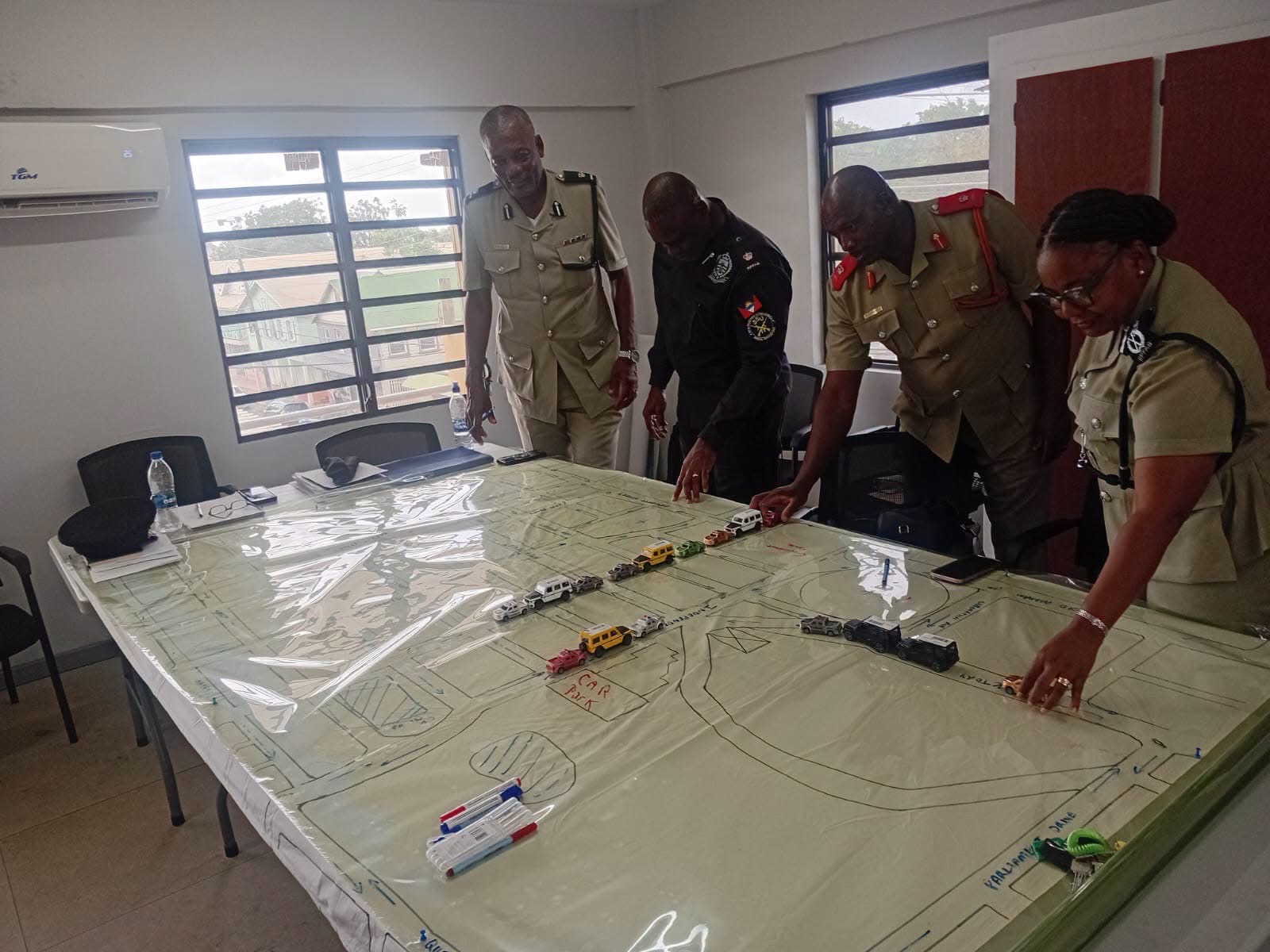
As the Caribbean nation of Antigua and Barbuda moves steadily toward hosting the high-profile Commonwealth Heads of Government Meeting (CHOGM) this coming November, security officials have entered the final phase of preparedness with a major coordinated simulation exercise codenamed Operation STRONGHOLD. Scheduled to run from July 8 to 10, 2026, the three-day drill is being organized and overseen by the CHOGM National Security Planning Committee, which is currently putting the finishing touches on operational plans ahead of the exercise kickoff. The core goal of Operation STRONGHOLD is to rigorously test and permanently strengthen the country’s national security posture, emergency response protocols, cross-agency communication and coordination frameworks, and overall operational effectiveness ahead of welcoming heads of state and international delegations from across the Commonwealth bloc. Over the course of the three-day exercise, active-duty members of Antigua and Barbuda’s national security forces and emergency response agencies will carry out large-scale convoy movements and full operational drills across multiple major thoroughfares and key strategic locations spread across the main island. As a result of these activities, temporary travel disruptions including short-notice road closures, traffic diversions, and controlled restricted access zones will be implemented in a number of areas across the country. The locations set to be affected by these temporary measures include main access roads leading to the American University of Antigua (AUA) and all major resort properties on the island’s northern coast, the Sir George Walter Highway, the Sir Sydney Walling Highway, Old Parham Road, Friars Hill Road, and all streets and commercial areas surrounding the Antigua and Barbuda National Performing Arts Centre – previously known as the Deluxe Cinema. In addition to these roadway disruptions, vehicle access will be fully restricted across several blocks in downtown St. John’s, the nation’s capital. The designated security simulation zone in the city stretches from Newgate Street in the northern end down to New Street in the south, and spans from Parliament Drive on the eastern edge westward to Corn Alley. Pedestrian movement through all active exercise zones will also be carefully regulated by on-site personnel to maintain public safety during the drill. To minimize disruption and support safe movement, uniformed police officers and additional security staff will be deployed at key intervals along all affected routes, where they will assist motorists, direct traffic flow, and ensure that both vehicle and pedestrian movement remains orderly and safe throughout the exercise period. National security officials are strongly urging all local residents and visitors to plan their travel itineraries well in advance of the exercise dates, and to build extra time into their daily commutes to account for unexpected delays that may occur during the three-day drill. Motorists have been asked to follow all posted diversion signage, adhere to official traffic directions, and comply fully with instructions issued by on-duty police and other authorized security personnel throughout the exercise. All residents are also advised to follow updates shared through official government media channels for the latest advisories and changes to the exercise plan both in the lead-up to and during the simulation period. In a public statement issued ahead of the drill, the CHOGM National Security Planning Committee offered its sincere apology for any disruptions or inconveniences that these temporary security measures may cause for local communities, businesses, and visitors. The committee also expressed its gratitude for the ongoing patience, understanding, and full cooperation of the Antigua and Barbuda public as the country works to finalize all preparations to successfully host this landmark international gathering later this year.
分类: politics
-

President, opposition should hold fresh “good faith” consultations to “agree” on substantive chancellor, chief justice- UWI law professor
After nearly three decades without permanently filling Guyana’s two top judicial posts, a leading University of the West Indies constitutional law expert is calling on President Irfaan Ali and new Opposition Leader Azruddin Mohamed to launch fresh, constitutionally mandated consultations to finalize substantive appointments for Chancellor of the Judiciary and Chief Justice.
In an interview with Demerara Waves Online News, Professor Tracy Robinson — who teaches law at UWI’s Mona campus in Jamaica — argued that prior consultation efforts have lapsed, so the process must start over with the current officeholders, not the outgoing opposition leadership that was originally approached in 2024. Last October, roughly one month after the September 2024 general and regional elections, President Ali sent a formal proposal to then-outgoing Opposition Leader Aubrey Norton to confirm the already-serving interim leaders: Acting Chancellor Roxane George-Wiltshire and Acting Chief Justice Navindra Singh. That proposal never moved forward, making new talks with Mohamed a constitutional necessity, Robinson said.
Robinson emphasized that the permanent appointment of Guyana’s top judicial leaders, mandated under Article 127(1) of the nation’s constitution, is foundational to protecting judicial independence and upholding the rule of law. That constitutional requirement imposes a binding obligation on the sitting president and current opposition leader to reach a shared agreement through good-faith negotiation, she explained. “Given that earlier efforts have fallen into desuetude or become defunct, it is crucial that both political leaders restart consultations afresh, or begin anew, and in good faith,” she said.
She noted that negotiations can sometimes stretch over long periods, fail to produce consensus, or become obsolete when the officials originally involved leave office — a reality that reinforces the need for the current leaders to take up the process now. To support her argument, Robinson referenced a 1999 Belizean judicial ruling from Justice George Meerabux, which addressed a problematic chief justice appointment made the day before an election, before opposition leaders were consulted. In that case, Meerabux stressed that good faith and appropriate timing are non-negotiable, and that caretaker governments should avoid making major, long-impact decisions that undermine parliamentary democracy.
Robinson went on to draw on rulings from the Caribbean Court of Justice (CCJ) to lay out the legal framework for the required consultations. She cited CCJ Justice Peter Jamadar’s 2021 judgment in *Air Services v Attorney General*, which defined the core principles of what Jamadar termed “Guyanese consultation.” Per that ruling, any legitimate negotiation process must be rooted in transparency, openness, clarity, inclusivity, accountability and timeliness for all stakeholders involved.
While Article 127(2) does allow the president to appoint interim officeholders when positions are vacant or other exceptional circumstances arise, following meaningful consultation with the opposition leader, Robinson stressed that the constitutional mandate for a permanent, substantive appointment remains binding. She argued that the shift from unilateral presidential appointment to shared, consensual decision-making outlined in the constitution means both leaders have a mutual duty to engage in good faith when the roles are held on an acting basis.
Robinson also referenced the 2019 CCJ ruling in *Zulfikar Mustapha v The Attorney General and The Chairman of The Guyana Elections Commission*, in which the court invalidated the appointment of a Guyana Elections Commission chair made by former president David Granger. In that case, CCJ President Justice Adrian Saunders wrote that the Guyanese Constitution expects both the president and opposition leader to act reasonably and responsibly, set partisan interests aside, and prioritize the welfare of the Guyanese public.
The current interim appointments were made in August 2025, when George-Wiltshire — previously serving as acting chief justice — was elevated to acting chancellor, and Singh was named acting chief justice. The last substantive appointments to these roles came decades ago: Desiree Bernard was confirmed as substantive chief justice in 1996, and later as substantive chancellor in 2001. Ever since, repeated failures by successive presidents and opposition leaders to reach consensus have left the top two judicial posts permanently filled by interim officials, creating an unprecedented gap in Guyana’s judicial governance.
“In consultative and consensual decision-making processes involving the President and the Leader of the Opposition, good faith, fair and enabling processes, appropriate timing and timeliness, and political maturity matter enormously,” Robinson said. The leading constitutional scholar summed up the urgency of restarting talks with a memorable analogy: “Consultation is one dish that cannot be served cold.”
-
No vacancy at GECOM for president to act on opposition leader’s request
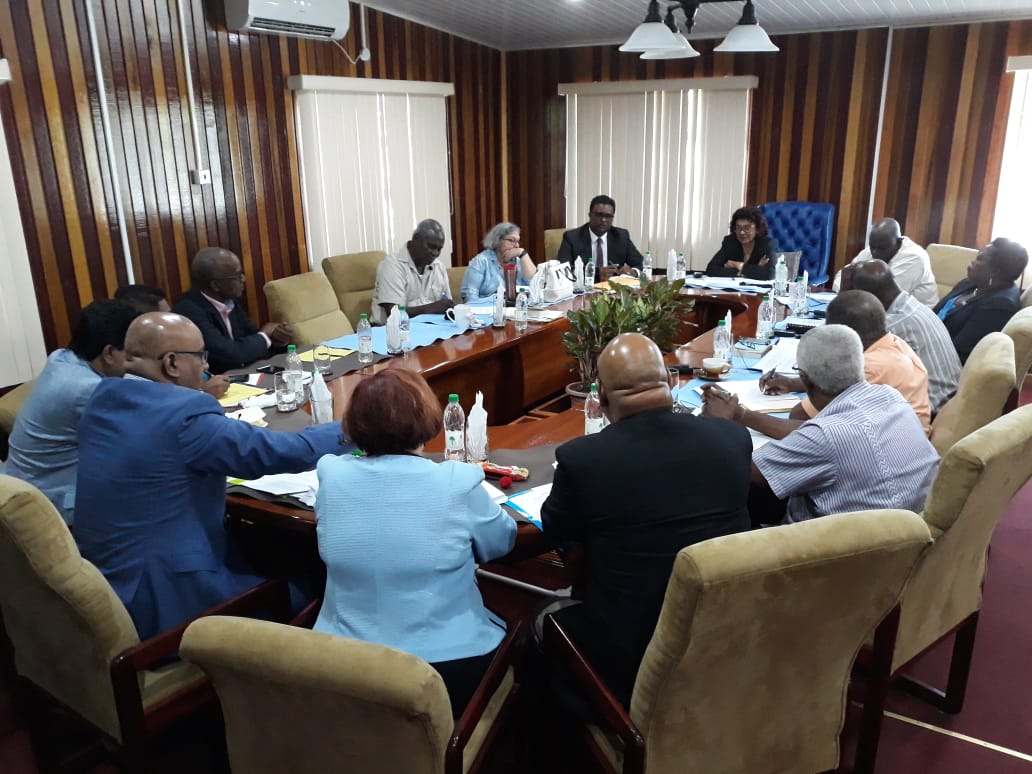
A months-long constitutional standoff over appointments to Guyana’s key elections oversight body has intensified after a senior ruling-party affiliated legal expert has confirmed that President Irfaan Ali lacks the authority to install three new opposition-nominated election commissioners, citing a critical lack of existing vacancies on the commission.
Speaking to Demerara Waves Online News on condition of anonymity, the legal expert, who has publicly aligned with the governing People’s Progressive Party Civic (PPPC), framed the restriction as a clear requirement of Guyana’s governing law. “Once there is no vacancy, how can the President appoint? The President cannot unless somebody is removed – in other words, a vacancy must exist first. Even if the President wanted to move forward with the appointments, the Constitution does not allow it,” the expert explained.
The dispute traces back to June 30, when current Opposition Leader Azruddin Mohamed submitted his three nominees – attorneys Roysdale Forde, Siand Dhurjon and Damien Da Silva – to President Ali for appointment. Citing Article 161(3)(b) of Guyana’s Constitution, Mohamed claimed he had completed required consultations with all opposition parties represented in the 65-seat National Assembly to finalize the selections.
But the landscape of Guyana’s parliament shifted dramatically following the September 1, 2025 general and regional elections, which upended decades of political convention for the Guyana Elections Commission (GECOM). Since the return of democratic elections in 1992, the two largest political blocs – the PPPC and the People’s National Congress Reform (PNCR) and its coalition APNU – held a shared grip on National Assembly representation, a balance that was reflected in GECOM’s structure, with each side holding three commissioner seats.
Last year’s election result broke this long-standing arrangement. The PNCR-led APNU, which previously held the position of main opposition, lost its status after securing only 12 seats. It was replaced by the We Invest in Nationhood party, which won 16 seats to become the new main opposition, with the Forward Guyana Movement claiming an additional single seat. Despite this seismic shift in parliamentary representation, the three incumbent PNCR/APNU-appointed GECOM commissioners have refused to step down, arguing that they can only be removed through resignation, a formal court order, or an amendment to Guyana’s constitution and electoral law.
Strikingly, the ruling PPPC-affiliated legal expert’s interpretation of the constitution aligns fully with the position of the incumbent PNCR commissioners: Vincent Alexander, Charles Corbin and Desmond Trotman. “They are lawfully appointed commissioners who have not tendered their resignation,” the source confirmed. The legal expert added that the only viable path to resolving the deadlock is through judicial intervention, noting that the existing constitutional framework does not provide an alternative mechanism to adjust GECOM’s composition following the change in parliamentary opposition leadership.
-

Alexander denies passport stock running low
Trinidad and Tobago is set to roll out a nationwide shift from traditional machine-readable passports to modern electronic passports (e-passports), according to Homeland Security Minister Roger Alexander, who also vowed to crack down on exploitative vendor practices that have crippled the country’s immigration system for years.
In a frank address outlining the government’s reform agenda, Alexander made clear that no third-party contractor would be permitted to hold the ministry hostage to unfair pricing or anti-competitive practices. Moving forward, he emphasized, all public procurement of goods and services will be structured to deliver maximum value for public funds and drive greater operational efficiency.
Alexander slammed the previous People’s National Movement (PNM) administration for allowing select immigration service providers to gain monopolistic control over the department’s core operations, creating a system where vendors dictated the pace and functionality of government services.
“Under the PNM, certain providers tied the immigration department and its systems in a noose, letting them call the shots on when the department could operate effectively,” Alexander said. “They charged rates far out of line with what other suppliers offered, delivering no benefit to this country or its people. This new government will not allow anyone to hold Trinidad and Tobago ransom, and we have already activated fully developed backup plans to keep services running.”
The minister pushed back against recent public claims that ongoing passport processing delays were intentionally engineered by the current administration to cover low stockpiles of machine-readable passports. He explained that when he took office, he inherited an immigration system mired in disorganization and mismanagement. Active investigations are still ongoing into widespread allegations of corruption across multiple core immigration services, including corrupt allocation of passport appointments, and irregularities in work permit and residency applications, he confirmed.
Pushing forward with the planned e-passport rollout in strict compliance with formal procurement rules, Alexander revealed that three qualified vendors have already submitted formal expressions of interest in response to the government’s public call for candidates. Back in May, the Ministry of Homeland Security published an open Expression of Interest (EOI) on its official website, inviting bids to upgrade the Immigration Division’s legacy machine-readable passport (MRP) infrastructure to a fully integrated e-passport system. The submission deadline closed on June 19.
The EOI specifically seeks public and private sector entities capable of upgrading the entire passport issuance and control framework from the outdated MRP model to a modern e-passport system. The winning bidder will be required to design, build, and launch a fully operational end-to-end online e-passport application platform, including integrated secure online payment processing for applicants.
Alexander argued that the transition to digital passports is a critical step to both strengthen Trinidad and Tobago’s national security framework and improve cross-border data coordination with regional and international partners. He noted that continuing to expand the use of obsolete machine-readable passports makes no practical sense at a time when the entire world is moving to digital travel documentation, and Trinidad and Tobago cannot afford to fall behind global digital standards.
“The world is transitioning to e-passports, so it makes very little logical sense to order more machine-readable passports now,” he said. “Trinidad and Tobago is keeping pace with the digital age, and we intend to launch this new travel document system in the near future.”
The minister also highlighted the current government’s broader commitment to digital public sector transformation, pointing to Prime Minister Kamla Persad-Bissessar’s decision to establish a dedicated Ministry of Public Administration and Artificial Intelligence to drive focused, coordinated progress on digital reform. Under the current administration, he noted, Trinidad and Tobago has already moved away from the “dinosaur age” of paper-based immigration forms to fully digital electronic processing. These sweeping changes, he added, did not require overly complex technical expertise—what they did require was political will and decisive action to break from past failed practices.
-
PM TO LEADERS: refer TO CCJ
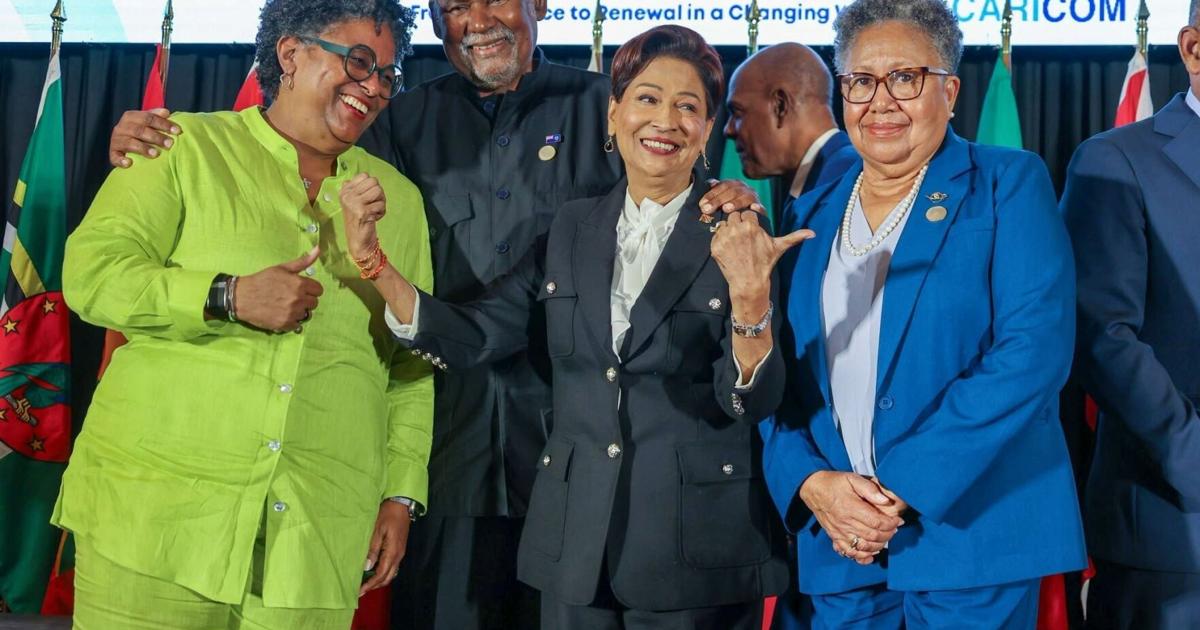
As diplomatic cordialities played out on the sidelines of the 51st Caricom Heads of Government Conference in St. Lucia, a significant constitutional dispute has moved to the center of regional discussions, with Trinidad and Tobago Prime Minister Kamla Persad-Bissessar refusing to back down from her demand that Carla Barnett’s reappointment as Caricom Secretary-General be reviewed by the Caribbean Court of Justice (CCJ).
Persad-Bissessar touched down in St. Lucia on Sunday to join the gathering of regional leaders, though logistical complications kept her from attending Barnett’s opening address to the conference. Footage from the event confirmed she participated in the official group photograph and held informal, polite discussions with both Barnett and fellow heads of government, including Mia Mottley, Prime Minister of Barbados. According to reporting from the Express, Persad-Bissessar planned to formally table her constitutional concerns during the closed-door leaders’ retreat held the following day.
Weeks ahead of the summit, the Trinidad and Tobago Prime Minister circulated a 22-page formal letter dated July 3 to Caricom Chairman and St. Lucia Prime Minister Philip J Pierre, as well as every sitting head of government and head of state across the bloc. In the document, she laid out detailed claims of severe procedural and constitutional violations surrounding the process that led to Barnett’s purported second term, and put forward a slate of interim measures to govern the bloc while the CCJ evaluates the dispute.
Central to Persad-Bissessar’s argument is that her objection is not a personal attack on Barnett, but a defense of foundational principles: the rule of law, constitutional governance, and the institutional integrity of the 15-member regional integration body. She reaffirmed Trinidad and Tobago’s unwavering commitment to Caricom and the broader project of regional unity, but stressed that unity cannot be built on “expediency and irregular practices masquerading as precedent.” Instead, she argued, all Caricom business must be rooted in strict adherence to the Revised Treaty of Chaguaramas, the bloc’s founding legal document.
As a result of the procedural failures, Persad-Bissessar confirmed that Trinidad and Tobago does not recognize the legality of the process that led to Barnett’s reappointment, and cannot accept the validity of her second term. “This matter is advanced not in a spirit of disagreement, but in a spirit of constitutional responsibility,” she wrote in the letter, repeating that the dispute centers on process, not Barnett’s personal suitability for the role.
Persad-Bissessar’s core proposal is that Caricom activate Article 212 of the Revised Treaty to formally request an authoritative advisory opinion from the CCJ. She argued that the regional supreme court is the only body with the mandate to deliver a binding, legitimate interpretation of the treaty clauses that govern the appointment and reappointment of the Secretary-General. She called on the Conference of Heads of Government to fast-track the referral to the CCJ, request an expedited hearing, and commit in advance to abiding by whatever ruling the court issues.
Seeking judicial intervention, she added, is not an act of confrontation, but a demonstration of trust in Caricom’s own established legal institutions. “The framers of the Revised Treaty wisely recognised that disagreements concerning the interpretation of our constitutional instruments should be resolved by law, rather than by competing political interpretations,” the letter read.
The letter also laid out a full chronological breakdown of the process that led to Barnett’s reappointment at a February 2026 retreat in Nevis, highlighting multiple alleged violations. Persad-Bissessar noted that the reappointment was never listed as an official agenda item in any provisional agenda, work program, or working paper circulated to member states ahead of the conference. She also claimed that three member states – Trinidad and Tobago, Antigua and Barbuda, and The Bahamas – were blocked from exercising their treaty-guaranteed right to participate through their properly designated representatives. Most notably, she argued that the Heads’ Retreat itself lacks any constitutional authority to appoint or reappoint a Secretary-General, a power reserved for the full plenary conference.
Per Persad-Bissessar’s accounting, only 10 of Caricom’s 15 member states were able to participate in the vote: the three blocked states were shut out, while Haiti and Montserrat were absent from the gathering. She stated that this participation level falls far short of the minimum voting threshold required by the founding treaty. Even if preliminary discussions were held during the retreat, she added, no formal confirmation vote was held during the conference’s plenary session, and without plenary approval, the decision can never gain legal force.
Persad-Bissessar also raised a conflict of interest concern, noting that Barnett, as the sitting Secretary-General, took part in administrative arrangements for her own reappointment process. While she acknowledged Barnett was not in the room during the actual deliberations on her term, she pointed out that Barnett issued the decision restricting attendance at the retreat to only sitting heads of government – the policy that blocked the designated representatives of three member states from participating. This, Persad-Bissessar argued, creates at minimum the appearance of improper conflict of interest, as Barnett was directly involved in setting the terms of a process that determined her own continued tenure.
Pending a final ruling from the CCJ, Persad-Bissessar has called for both Barnett and Caricom’s General Counsel to recuse themselves from all aspects of the advisory opinion proceedings. She also proposed that independent officials appointed directly by the Conference of Heads of Government manage all logistics related to the CCJ referral. Additional temporary measures have been put forward to ensure administrative continuity within the Caricom Secretariat while protecting the legal standing of all parties involved in the dispute.
The challenge has gained at least partial support from another major regional leader: Jamaica Prime Minister Andrew Holness submitted his own letter to the Caricom Chairman, noting that while Jamaica is not seeking to overturn the regional leaders’ decision to reappoint Barnett, it shares concerns that the current process has failed to resolve the dispute or uphold the core principles and goals of the Revised Treaty of Chaguaramas. “It has become clear that we were not all on the same page. Therefore, it is important that any concerns be addressed in a meaningful manner to restore cohesion, if not unity, which is indispensable to the effective functioning of Caricom,” Holness wrote.
As of reporting, the leaders’ retreat continued late into the evening, with discussions on the constitutional dispute expected to dominate closed-door talks among regional heads.
-
Premier Brantley: NIA monitoring fuel prices with a view to lowering electricity bills
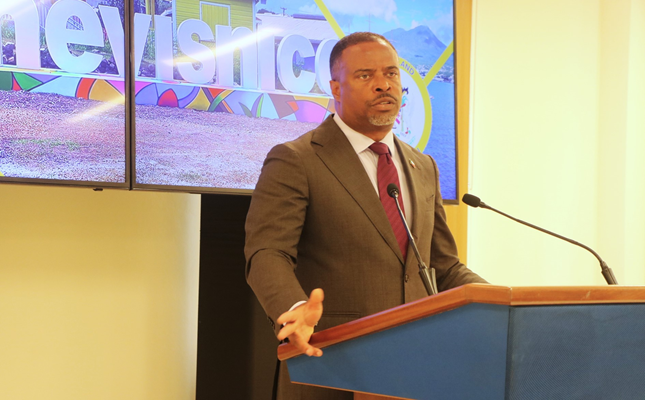
CHARLESTOWN, Nevis – July 6, 2026 – Mark Brantley, Premier of Nevis and the island’s Minister of Energy and Finance, has given a public assurance to electricity customers that any long-term drop in global crude oil prices will be directly passed to consumers through reduced monthly electricity bills. The commitment comes as the Nevis Island Administration (NIA) works to soften the blow of volatile global energy markets on local residents.
-
Give working class more money before uncapping former presidents benefits- Buxton-Foulis NDC Chairman
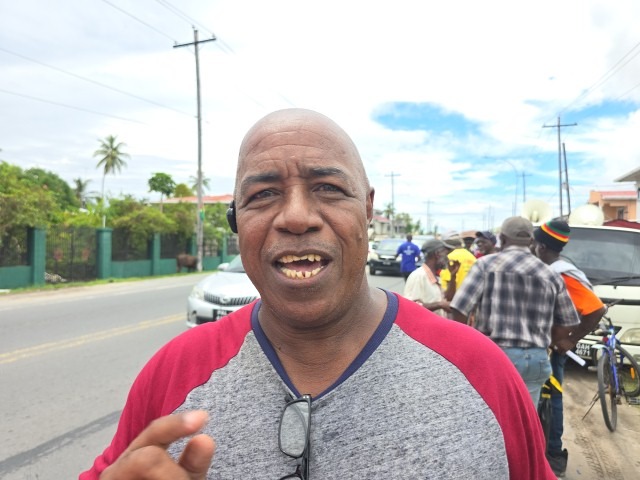
On a sunny Sunday along Guyana’s Buxton Public Road, a small but vocal group of demonstrators gathered to push back against a highly controversial proposed bill that would grant former heads of state uncapped lifetime benefits and full tax exemptions. The demonstration has brought long-simmering public frustration over unequal public resource allocation to the forefront of national political debate.
Walston Martins, Chairman of the Buxton-Foulis Neighbourhood Council and one of the protest leaders, laid out a conditional compromise for the government: he will not oppose the bill only if lawmakers first approve sweeping, substantial increases to public benefits for ordinary Guyanese. Martins’ demands include a $400,000 Guyanese dollar (GYD) after-tax minimum salary for public servants, a GYD$120,000 cash grant for school-aged children, a GYD$100,000 monthly old-age pension, free land plots for all adult citizens, and high-quality upgrades to the nation’s deteriorating road and bridge infrastructure.
“If you want this legislation to pass, I have no personal objection – but you must deliver every benefit I have outlined to the Guyanese people before you move forward with the bill,” Martins told reporters from Demerara Waves Online News. “Outside of that, we will never back this bill, because it is entirely unreasonable and unfair to everyday citizens.” Despite pushback from economic observers who warn such large increases could stoke inflation and exacerbate the country’s already high cost of living, Martins – who stressed he is not a professional economist – said he does not share those concerns.
The 2026 Former Presidents Benefits Bill, if approved, will replace the 2015 legislation enacted by the previous APNU+AFC coalition government. The current 2015 law places strict caps on benefits for former presidents: it limits combined monthly utility allowances for water, electricity and telephone services to GYD$25,000 per service, restricts the number of assigned vehicles, security personnel and support staff, caps annual medical expense coverage, and bars former presidents from receiving these benefits if they engage in profitable private business or trade.
The new proposal effectively reinstates the 2009 law passed during former President Bharrat Jagdeo’s administration, which was repealed when the 2015 legislation went into effect. Unlike the current law, the 2026 bill sets no upper limits on any benefits for former presidents, and removes the ban on benefits for former leaders engaged in gainful private employment. These uncapped benefits come on top of the already generous monthly pension of more than GYD$2 million that all former presidents currently receive. Four living former presidents – Jagdeo, Samuel Hinds, Donald Ramotar and David Granger – would immediately qualify for these expanded benefits if the bill passes.
While Martins offered a conditional compromise, other opposition figures are calling for the bill to be scrapped entirely. Kidackie Amsterdam, an executive member of the Working People’s Alliance, estimates the uncapped benefits could drain between GYD$100 million and GYD$200 million from the national treasury every year – money he says would be far better directed to easing the cost-of-living crisis for current low-income pensioners, who receive just GYD$46,000 per month in old-age benefits.
Amsterdam announced that Sunday’s protest is just the first step in a broader public mobilization campaign. He is set to organize a public panel discussion in the coming weeks to build widespread public opposition, with the goal of staging large-scale national protests to force the government to abandon the legislation. “Today’s small turnout doesn’t reflect the level of public anger – we’re just starting the conversation to raise awareness,” Amsterdam explained. “Someone has to get this movement off the ground, and that’s exactly what we’ve done today.”
Amsterdam also raised alarms over potential personal benefits for incumbent President Irfaan Ali, arguing Ali could exploit the bill’s tax exemption provisions to avoid paying taxes on his private 150-acre farm located off the Linden-Soesdyke Highway. “This farm is projected to generate multi-million-dollar profits, but not a single cent in taxes would go to the Guyanese people, while billions in public funds are drained from our treasury to pay for former and sitting presidents’ benefits,” he said.
Annette Ferguson, a senior member of the People’s National Congress Reform, echoed Amsterdam’s opposition, saying the government’s ability to pass the bill with its simple parliamentary majority ultimately depends on how aware ordinary Guyanese are of the legislation’s fiscal impact. “Once more Guyanese understand how much this will cost our country at the expense of working people and retirees, they will push back,” Ferguson said. “When that public pressure builds, I don’t see the government being able to move forward with this unfair proposal.” She added that revelations about the incumbent president’s private tax-exempt farm have already galvanized additional public anger against the legislation.
-

Haitian leaders anticipate digital upheaval
Across the globe, rapid digital evolution is reshaping how governments operate, how professionals deliver public services, and how key policy decisions are made. In this shifting landscape, investing in the capacity of current leaders is synonymous with building resilient, future-ready institutions that can adapt to changing public needs. It is this guiding principle that led the United Nations Development Programme (UNDP) Haiti to facilitate the participation of two senior Haitian public sector leaders in a landmark regional training event focused on women’s leadership in the digital era.
The two delegates are Magistrate Maguy Florestal, a sitting judge at Haiti’s highest court, the Court of Cassation, who also serves as Director of the National School of Magistrates (EMA), and Erna Royal, Divisional Commissioner of the Haitian National Police (PNH) and special advisor to the PNH Director General. Hosted in Panama by the global UNDP body, with financial and operational support from the Spanish Agency for International Development Cooperation (AECID), the event marked the first iteration of the Regional Academy for Women’s Leadership in the Digital Age.
Held from June 30 to July 2, 2026, the academy gathered more than 40 women in senior leadership roles across public office, political institutions, and civil society organizations, representing 24 nations across Latin America and the Caribbean. Over three days, participants centered their discussions on the most pressing challenges currently redefining public governance: widespread digital transformation, the rising influence of artificial intelligence in public administration, driving innovation in public services, inclusive governance frameworks, and women’s equitable representation in leadership shaping digital policy.
Far more than a conventional training workshop, the academy functioned as a collaborative think tank, where leaders could exchange on-the-ground experiences from their respective national contexts, build collective solutions to shared challenges, and formally establish a regional network of women leaders dedicated to reforming and modernizing public institutions across the region.
For Haiti, the participation of Florestal and Royal carries particular significance, as the two leaders hold senior roles in two institutions that are foundational to advancing the rule of law and sustaining public safety across the country—two priorities that remain central to Haiti’s long-term stability and development. Investing in the capacity of these two leaders, UNDP officials note, is equivalent to strengthening the ability of the institutions they lead to anticipate coming digital shifts, integrate innovative, data-driven approaches to governance, and meet the evolving expectations of Haitian citizens.
Florestal already partners with UNDP Haiti through the Canada-funded Justice Support and Anti-Impunity Program (PAJSLI), while Royal serves as the official PNH liaison to UNDP, which manages the ongoing PNH Institutional Support Program. The regional academy extends the long-standing targeted support UNDP has provided to Haitian public institutions, helping them evolve into more effective, inclusive bodies better prepared to navigate the digital and structural transformations reshaping the Caribbean region.
-

Who Profited During the BDF Ration Crisis?
The 2023-2024 Belize Defense Force (BDF) ration shortage controversy, a story once thought to be resolved, has reignited in 2026 after a cache of leaked procurement documents obtained by local outlet News Five revealed troubling ties between senior government officials’ inner circles and lucrative military supply contracts.
Back in late 2023, widespread reports emerged that BDF soldiers were receiving insufficient food rations, sparking public outrage and allegations of mismanagement and graft within the Ministry of National Defense. At the time, top government leaders pushed back hard against the claims, framing any reported cuts as intentional shifts to a more nutritionally balanced menu. “What they have done now is that they have come up with a more wholesome food, a healthier food for the BDF. So, it’s not a matter of volume. But it is a matter of eating healthily,” Prime Minister John Briceño told reporters in December 2023.
When public questioning persisted into January 2024, then Minister of State Oscar Mira dismissed all accounts of reduced rations as deliberate misinformation. “I think that is just mischief. The rations have not been cut from the Belize Defense Force soldiers. In fact if we check the records, the Belize Defense Force is getting more and better quality that what they were receiving in the last thirteen years,” Mira asserted, implying he had fully reviewed procurement records to confirm sufficient supplies were reaching military bases.
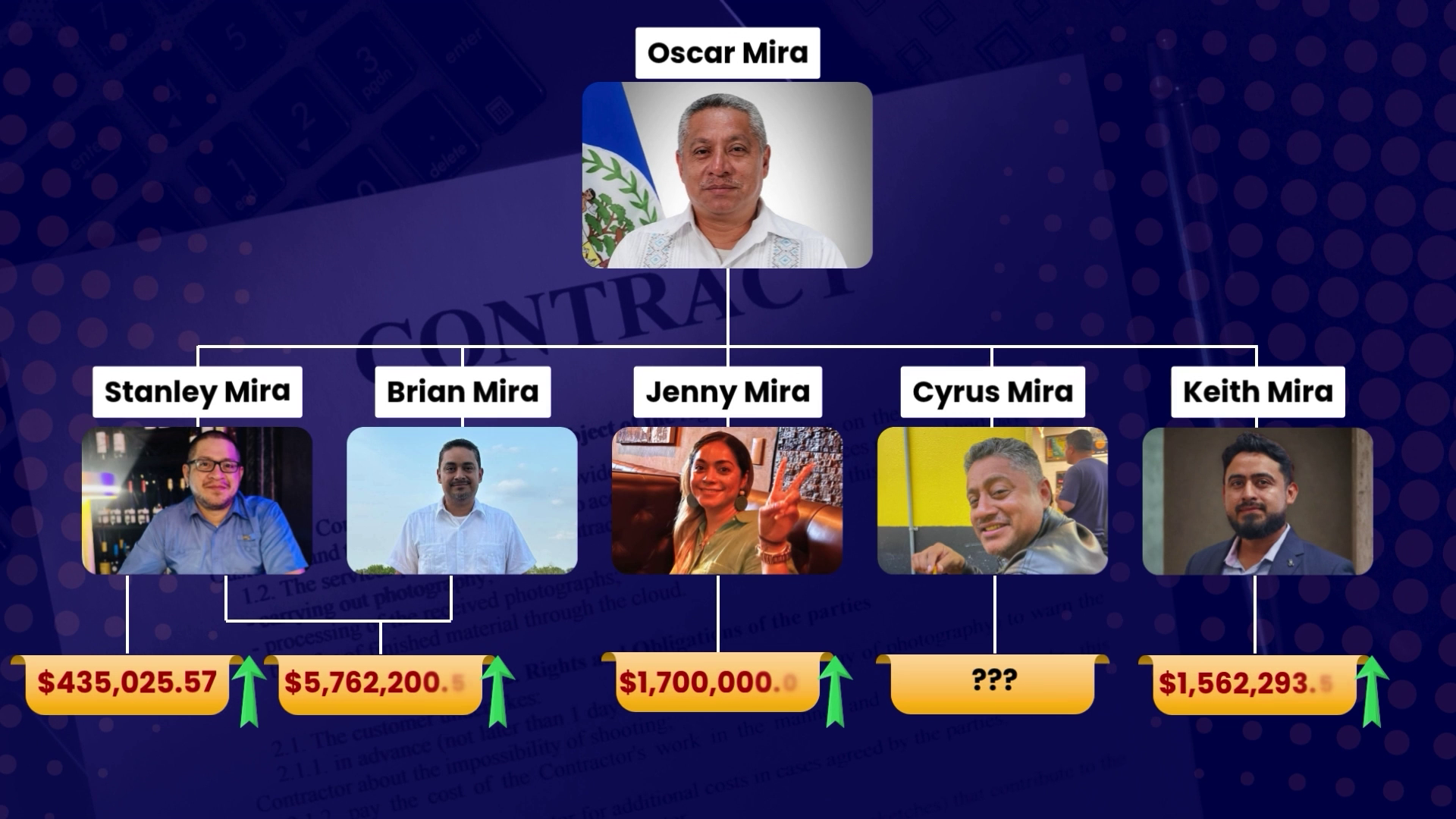
The newly leaked invoices tell a different story. The documents show that between late 2023 and early 2024, Jenny Mira – Oscar Mira’s own sister – was awarded BDF supply contracts worth tens of thousands of dollars. This connection was never disclosed to the public while officials were defending the ministry’s management of the ration program.
Former Minister of Defense Florencio Marin Jr. also dismissed public concerns in December 2023, telling reporters “It is nothing out of the ordinary, no? We’re not trying to starve the soldiers. I think even you guys know that under the leadership of Minister Mira and I, we’re not here to play games with our soldiers. We have been there. I know that every year what the military has requested, we have provided.” What Marin did not mention at the time was that one of the approved suppliers, Kukulcan, is alleged to hold direct ties to Marin himself. A second firm, J&J Imports, is linked to the family of Ramon “Monchi” Cervantes, a ruling People’s United Party (PUP) Area Representative.
Just one day after News Five questioned Oscar Mira about the allegations, reporters pressed Cabinet Minister Henry Charles Usher on claims of insider profiteering in the ration procurement process. Usher responded that while Cabinet had discussed ensuring the BDF received sufficient resources, including food, no formal corruption allegations had been brought forward to the body. “I don’t know about the aspect of hustling happening, but I certainly, you asked me whether this has come up at Cabinet. It has, in terms of making sure that the BDF is properly resourced, meaning all the resources that they need to carry out their work, including, of course food and rationing. But I can’t say that there have been any allegations of corruption coming forward on this issue. But we continue to monitor it,” Usher said at the time.
Procuring rations for Belize’s national military is a multi-million dollar annual industry: each soldier is allocated $13 per day for meals, adding up to substantial public spending each year. The newly surfaced documents have reopened long-simmering questions about whether senior officials tasked with overseeing the BDF’s supply chain exploited their positions to direct lucrative contracts to relatives and close associates, even as soldiers faced reported food shortages. As public scrutiny of the Ministry of Defense intensifies, investigators and the public are now demanding full transparency into the full scope of these connections and how public funds were allocated during the crisis. Reporting from News Five’s Paul Lopez.
-
As Audit Deepens, PM Insists Government Has Nothing to Hide
BELIZE CITY – July 6, 2026 – As a high-stakes corruption probe dubbed the ‘Mira Millions’ investigation gains growing public scrutiny and two senior cabinet ministers step aside from their duties, Prime Minister John Briceño has publicly pushed back against growing allegations of graft within his administration, defending his government’s proactive response to the unfolding audit.
Speaking at the People’s United Party (PUP) National Party Council meeting held in Dangriga, Briceño framed the recent leave of absence granted to two top officials as a deliberate measure to enable unobstructed investigation. Defense Minister Florencio Marin Jr. has agreed to step down from his post for a 90-day period, clearing the way for the Auditor General to conduct a full review of the Ministry of Defense’s activities without political interference. Former Home Affairs Minister Oscar Mira remains on administrative leave as the audit of his former portfolio proceeds.
Briceño used the address to double down on his administration’s stated commitment to a zero-tolerance policy for corruption, pushing back against criticism from opposition figure John Saldivar, who has levied sharp accusations against the current government. The prime minister announced that the Auditor General’s probe will extend as far back as 2015, a period when Saldivar held office, to uncover any potential wrongdoing during that tenure.
“Over the past weeks, we have witnessed and heard multiple claims that run counter to the core values our administration was elected to uphold,” Briceño told attendees. “Irregularities uncovered in procurement processes within the Belize Defence Force directly contradict our pledge to deliver transparent, accountable governance. Because we stand firm in our promise of zero tolerance for corruption, we have not hesitated to act.”
Acknowledging that his administration is not immune to error, Briceño emphasized that the government’s approach to mismanagement stands in stark contrast to opaque practices of previous governments. “We do not claim to be perfect – mistakes are a natural part of human work,” he said. “But what we will not do is sweep those mistakes under the rug or hide them from public view. When problems are identified, we address them head-on and fix them. That is the promise we made to the Belizean people, who are our ultimate employers.”
Both Marin and Mira have issued formal statements denying any involvement in illegal activity connected to the ongoing investigation, maintaining their innocence as the audit proceeds.
This report is adapted from a televised evening news transcript, with original Kriol language remarks transcribed using a standardized spelling system for clarity.