分类: politics

  • Bondsvoorzitter BBS Biswan ontslagen na manipulatie examencijfers rekruten

    Bondsvoorzitter BBS Biswan ontslagen na manipulatie examencijfers rekruten

    In a disciplinary action announced this Tuesday, Suriname’s Minister of Justice and Police Harish Monorath has immediately removed Elio N. Biswan, chair of the Security and Assistance Service Suriname (BBS) union, from his post. The termination, categorized as a severe disciplinary penalty, was issued in full compliance with Suriname’s current civil service legislation.

    An internal probe conducted by the BBS Interim Management Team (IMT) uncovered serious professional misconduct on Biswan’s part during his 2024 tenure as secretary of the examination committee for the BBS 2023 basic training program. Investigations confirm that Biswan independently and intentionally altered failing grades of multiple trainee recruits to passing marks. This manipulation allowed the candidates to bypass required requirements for exemptions or retests, and incorrectly marked their training as successfully completed.

    Beyond altering existing scores, the investigation found Biswan had pre-promised recruits he would adjust their results, and even went so far as to fabricate official grade transcripts that did not match the original assessments submitted by training instructors. IMT investigators have classified these actions as a grave breach of institutional integrity and a clear case of abuse of public office.

    In response to the uncovered irregularities, the IMT has moved to correct the process, granting all affected recruits the opportunity to take official re-examinations so they can properly and legitimately complete their mandatory training.

    Minister Monorath determined the proven violations were severe enough to warrant the harshest possible disciplinary outcome, with the termination executed under Article 61 Paragraph 1 Subsection j and Article 69 Paragraph 2 Subsection e of Suriname’s Personnel Act.

    As of Wednesday morning, it remains unclear whether additional criminal proceedings will be launched against Biswan following the conclusion of internal disciplinary handling.

    Shortly after receiving his termination notice at approximately 11:00 PM Tuesday, Biswan called an urgent emergency general membership meeting for Wednesday morning. In his announcement, Biswan claimed the dismissal was an attempt to silence him, arguing the action was retaliation for his public criticism of current BBS leadership.

  • EZOTI en districtscommissarissen bundelen krachten voor strengere marktcontroles

    EZOTI en districtscommissarissen bundelen krachten voor strengere marktcontroles

    In a strategic move to strengthen nationwide economic regulation and market governance, Suriname’s Ministry of Economic Affairs, Entrepreneurship and Technological Innovation (EZOTI) has announced plans to sharpen economic activity oversight by forging deeper formalized partnerships with district commissioners across the country. The initiative, aimed at building a more coordinated, holistic approach to regulatory monitoring and enforcement, was finalized during a recent working meeting attended by senior ministry officials and district representatives.

  • Police Engage as Indian Creek Dispute Escalates

    Police Engage as Indian Creek Dispute Escalates

    A years-long dispute over land tenure and community leadership in Belize’s Indian Creek has boiled over into open confrontation, pushing government officials to deploy police to the area to de-escalate rising unrest marked by property damage and targeted intimidation. The conflict has split the tight-knit community into two deeply divided camps: one faction backs the traditional local alcalde system, which advocates for Maya customary land rights aligned with longstanding Indigenous tenure practices, while the other supports the elected village council, which pushes for individual, nationally recognized land titles identical to those held by landowners across the rest of the country.

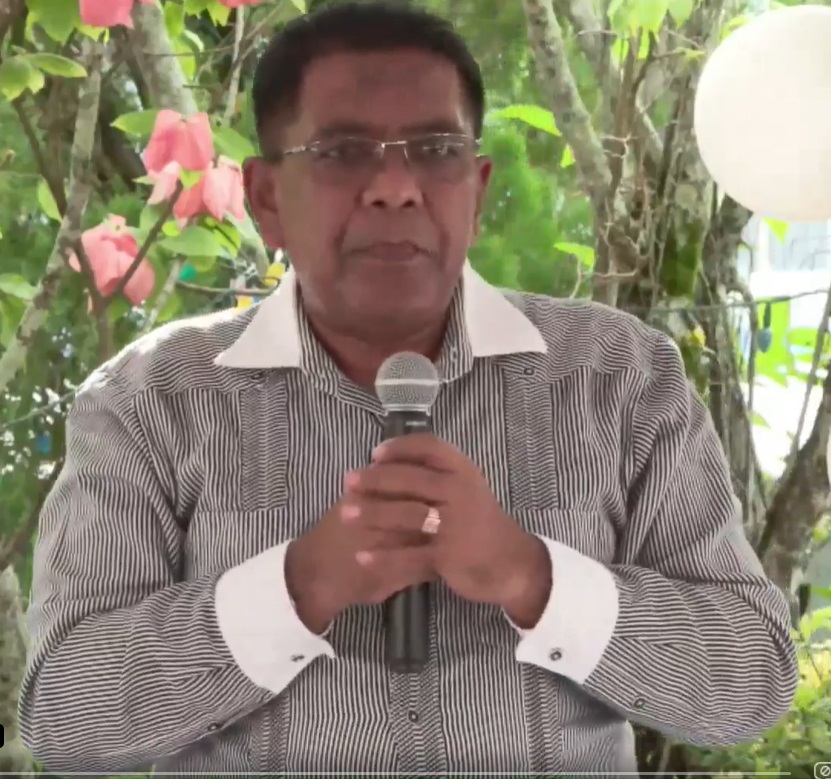
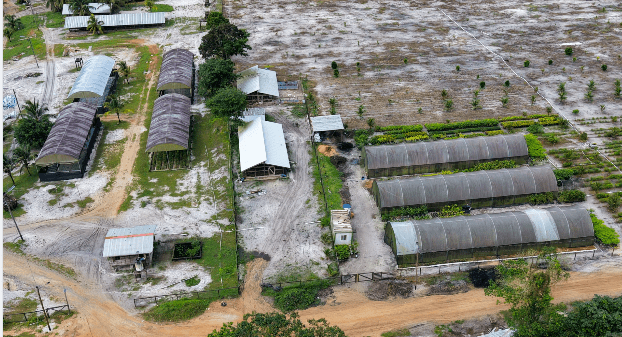
    Dr. Louis Zabaneh, Belize’s Minister of Indigenous Peoples’ Affairs, confirmed that law enforcement has been on the ground responding to the unrest since tensions first flared into violence. Recent incidents have included trespassing and vandalism at the private property of the village council chairman, as well as tampering with a field station operated by the Ya’axché Conservation Trust, a leading local environmental and land rights organization. The conflict has been simmering for decades, but recent escalations have raised alarms across national and regional stakeholders.

    Minister Zabaneh emphasized that community leaders from both factions had committed to peaceful negotiation just weeks before the outbreak of violence. Just two months prior, he had held a productive meeting with representatives from both sides, and just two weeks before the confrontation, another senior cabinet minister had brokered a second agreement to resolve differences through dialogue rather than confrontation. He has now issued an urgent appeal to all residents to honor these earlier commitments, warning that years of structured negotiation could be undermined by violent retaliation that would only deepen divides and harm community members.

    Zabaneh also stressed that a formal institutional process already exists to address the core land rights dispute, tied to a consent order from the Caribbean Court of Justice (CCJ) that outlines a path to formalize Indigenous land claims across Belize.

    Beyond the community’s internal divisions, new controversy has emerged over the unauthorized issuance of hundreds of land certificates, a move that has thrown national efforts to formalize Maya land rights into chaos. According to analysis from the Ya’axché Conservation Trust, local alcalde leadership has already issued 280 individual land certificates to community members, far more than the number initially reported to government officials.

    Christina Garcia, executive director of Ya’axché Conservation Trust, explained that the issuance of these certificates directly clashes with ongoing national negotiations between the Government of Belize and the Maya Leaders Alliance over a formal Maya Land Tenure Policy and accompanying land rights legislation. While these policy and legal frameworks, which outline a structured, agreed-upon process for recognizing and registering collective and individual Maya land rights, have not yet been finalized or approved by all parties, the unilateral action by the alcalde has pre-empted this national process.

    Garcia noted that the lack of clear, agreed-upon procedural guidance has sparked widespread confusion and frustration, extending beyond Indian Creek to affect private landowners and leaseholders across the Toledo District. Despite the escalation, she reaffirmed her organization’s commitment to dialogue, stating that Ya’axché stands ready to resume joint negotiations with Indian Creek community leaders, government representatives, and other stakeholders to craft a lasting solution that aligns with national policy and legislation and benefits all parties involved.

    The situation has drawn urgent criticism from regional landowner associations, who are calling for additional security deployment to stem rising violence. Toledo Private and Lease Landowners Limited has sent an official letter to Minister Zabaneh demanding the immediate deployment of additional security forces to the area. The association’s letter documents escalating volatile activity, including organized mob action, targeted attacks on private homes, and direct threats against both community leaders and Ya’axché field station staff. Tensions have been further amplified in recent days following the unexplained disappearance of the alcalde who led the certificate issuance effort.

    This report is a transcript of an evening television newscast, with all Kriol-language remarks transcribed using a standard spelling system for accessibility.

  • Minister Defends Disciplinary Action Against Immigration Officers

    Minister Defends Disciplinary Action Against Immigration Officers

    More than a week after a coordinated mass sickout disrupted critical border operations along Belize’s western boundary with Guatemala, the fallout from the industrial action continues to escalate, with the conversation now centering squarely on questions of institutional accountability and proper labor procedure.

    In the wake of the widespread absence that threw immigration processing at the border into chaos, multiple participating officers have been placed on administrative leave pending an internal review, a move that has left simmering tensions running high across the entire Immigration Department. The Belizean Prime Minister has already formally labeled the coordinated sickout an illegal work stoppage, prompting a swift pushback from the Belize Public Service Union (PSU), which has threatened to launch legal action against the government, claiming immigration officials overstepped their authority in issuing the administrative leaves.

    But in a recent press briefing, Public Service Minister Henry Charles Usher pushed back against the union’s claims, asserting that the government’s disciplinary actions are fully grounded in established public service regulations. Usher emphasized that while public sector employees retain the right to voice workplace concerns, all grievances must follow the formal, legislated process laid out for public sector disputes.

    Addressing the PSU’s premature claims that conclusions of wrongdoing have already been reached against the officers, Usher noted that no final findings have emerged from the ongoing internal investigation led by the Ministry of Immigration. He explained that some officers did submit required medical documentation for their absences, consistent with existing regulations, but the department remains obligated to review the circumstances of the coordinated mass absence to determine if rules were broken.

    Usher outlined the formal grievance process that applies to all public sector disputes: any workplace complaint must first be raised and resolved at the parent ministry level, before being elevated to the Ministry of Public Service if a resolution cannot be reached, and finally sent to the independent Public Service Commission if upper levels also fail to broker an agreement. The minister clarified that the administrative leave assignments currently in place are not punitive in themselves, but a standard procedural step required to allow investigators to conduct a full, impartial review without interference.

    “I don’t see any laws being broken in our current actions,” Usher stated. Echoing the union’s call for due process, he confirmed that the government fully intends to grant all implicated officers the right to present their side of the story once the investigation’s preliminary findings are complete, consistent with regulatory requirements. Any unresolved disputes will follow the established escalation process, moving from the Ministry of Immigration to the Ministry of Public Service and beyond if necessary, he added.

  • Government Seeks Funds for National Fire Service Headquarters

    Government Seeks Funds for National Fire Service Headquarters

    For decades, one critical infrastructure gap has undermined the operational effectiveness of Belize’s National Fire Service: the service has never had a purpose-built, centralized national headquarters to coordinate its activities across the country. This longstanding absence has created cascading challenges, from fragmented inter-station coordination and subpar standardized training to limited capacity for vehicle and equipment maintenance, all of which have dragged down departmental morale over the years.

    Successive national governments have publicly recognized the urgent need for a centralized headquarters facility, and numerous blueprints and political pledges have been put forward over time. However, the initiative has remained stalled at the planning stage, never moving to actual construction. Today, while the project has not been completely abandoned, funding remains the single largest barrier to breaking ground, even with a suitable plot of land already secured.

    The allocated site sits along Lake Independence Boulevard, adjacent to the Eleanor Hall Building in a readily accessible area. Disaster Risk Management Minister Henry Charles Usher confirmed that the administration still views the headquarters as a key priority under its national development initiative Plan Belize, but domestic budget allocations for the upcoming cycle do not include the funds required for construction. To move the project forward, the government is now reaching out to international partners for financial and logistical support.

    In a public statement confirming the government’s approach, Minister Usher emphasized that the facility will serve as a permanent operational home for the National Fire Service, addressing critical unmet needs. “We don’t have the domestic funds to undertake this project right now,” Usher explained. “We already have the land set aside right next to the Eleanor Hall Building, so we are actively seeking external funding. Our hope is to form a partnership with the U.S. Embassy in Belize to secure the resources needed to build the headquarters.”

    He went on to outline the core functions the new facility will fulfill, noting that it will provide dedicated space for national-level training programs, a centralized mechanical unit for fire truck maintenance and repair, and a coordination hub for emergency response across Belize. “The National Fire Headquarters is an essential investment to ensure our fire service has all the resources it needs, and a permanent base to operate from,” Usher said. “It is a key part of Plan Belize, and we are committed to getting it built. It just isn’t included in this year’s budget. Rest assured that once we secure the funding and set a construction timeline, the public will be the first to receive that update.”

    This report is a transcribed excerpt from an evening television newscast, with all non-English remarks formatted using a standardized spelling system for accessibility.

  • Henry Charles Unaware of Fire Department’s Media Dodge

    Henry Charles Unaware of Fire Department’s Media Dodge

    As Belize enters the hottest, driest phase of its annual dry season, the threat of destructive wildfires and residential blazes has spiked once again — creating an urgent need for clear public communication and transparent updates from emergency responders. But over recent months, a puzzling pattern has emerged: frontline firefighters have repeatedly turned down requests for media interviews, even in the aftermath of large-scale fire incidents. This consistent silence has sparked growing public debate over whether the lack of outreach is a deliberate institutional policy, leaving communities underserved with critical safety information at a high-risk time.

    Local journalists recently pressed Henry Charles Usher, Belize’s Minister of Disaster Risk Management, directly on these growing public concerns, asking explicitly whether a formal ban on media engagement for fire department personnel was in place. Usher told reporters he had no prior knowledge of any such directive, and flatly denied that any official policy prohibiting firefighters from speaking with press outlets exists.

    Amid the rising danger, Usher acknowledged that the country is already facing a sharp uptick in fire activity. “We are seeing a lot of bush fires, certain forest fires. We’re seeing a lot of residential fires as well, so it’s still an ongoing effort to make sure that we are able to respond to those as best as we can,” he said.

    When pressed again to confirm whether a no-comment policy was active, Usher reaffirmed that he was hearing the allegation of a formal media ban for the first time during the interview, and pledged to launch an internal inquiry to get to the bottom of the consistent refusals. He did, however, offer a potential explanation for the trend, noting that existing investigative protocols may be driving the silence.

    Under Belize’s current procedures, when a fire is suspected to be arson or another criminal act, the fire department conducts an initial scene investigation before passing all findings to the police service, which takes over as the lead investigating agency. In these cases, Usher explained, frontline firefighters at the scene are not in a position to share formal conclusions about the cause of the blaze, as that responsibility falls to police lead investigators.

    “So maybe that’s the case, but certainly it’s not a policy for them not to speak to the media,” Usher emphasized.

    This report is adapted from a transcribed evening television newscast, with transcribed Kriol language comments standardized to consistent spelling for published distribution.

  • Communication Breakdown Clouds Caye Caulker Police Station Plans

    Communication Breakdown Clouds Caye Caulker Police Station Plans

    A planned new police station for the small Belizean island of Caye Caulker has escalated from a local community disagreement to a growing political controversy, after recent electoral redistricting shifted the island into the Fort George parliamentary constituency, drawing regional political attention to the conflict. While local residents do not oppose the construction of a new police facility itself, widespread frustration has emerged over the lack of transparent engagement and early consultation from central authorities, turning procedural disagreements into a test of local governance. Henry Charles Usher, the elected Area Representative for the newly reconfigured Fort George constituency, has confirmed he is closely tracking the evolving situation as community concerns continue to mount. In comments carried on local broadcast news, Usher acknowledged that critical missteps from the start of the planning process created the current rift. “I certainly agree that there was a lack of communication in the beginning,” Usher stated. “I do believe that the duly elected village council should have been consulted. There should have been a meeting to discuss the plans.” Usher emphasized that the core project itself enjoys broad support, noting that a modern, upgraded police presence is a needed addition for the island community. “I don’t necessarily think that it’s a bad idea what is happening. I think that the police station will be built. Whether it is built there or built somewhere else, the island will be getting a modern police station,” he explained. The representative also noted that local residents have raised separate requests for additional public amenities, including a new visitor welcome center, and that these priorities will require separate, dedicated discussion with community leaders. “Now, if you want to look at other amenities at the island that the residents of Caye Caulker are looking at, ’cause I’ve heard that they’re speaking about a welcome center or something to that effect then certainly that discussion has to happen,” Usher said. “But where the police station is built is less important than the fact that it’s going to be built. And I think that is important. But in the beginning, that information should have been communicated and there should have been a proper dialogue with the relevant authorities out there.” This report is adapted from a transcribed evening television news broadcast, with all quoted content retained in its original context for accuracy.

  • Government meets today with Leonel Fernández to address global crisis

    Government meets today with Leonel Fernández to address global crisis

    In the Dominican capital of Santo Domingo, a high-stakes cross-party gathering is set to take place Thursday evening, bringing top government officials together with former head of state Leonel Fernández and senior leadership of the opposition People’s Force party. The core purpose of the closed-door meeting, hosted at the Global Democracy and Development Foundation starting at 6:00 p.m., is to outline the full parameters of President Luis Abinader’s national preparedness initiative, which has been developed to shield the country from fallout linked to escalating international tensions between the United States, Israel, and Iran.

    The official government delegation will be led by José Ignacio Paliza, Minister of the Presidency, and will include two senior advisors, Magín Díaz and Eduardo Sanz Lovatón. Details of the planned consultation were officially verified by Omar Fernández, spokesman for former president Leonel Fernández, confirming that both government technical experts and opposition policy specialists will participate in the discussion.

    This cross-sector dialogue forms a central pillar of the Abinader administration’s broader strategy to build unified national consensus around risk mitigation. The government is working to shore up domestic resilience ahead of any potential economic and social shocks that could ripple out from the worsening geopolitical standoff in the Middle East. Prior to this meeting, administration officials already held an identical consultation session with another former Dominican president, Danilo Medina, and key representatives from the Dominican Liberation Party, one of the country’s largest opposition blocs. The ongoing series of conversations reflects a deliberate push to include all major political, economic, and social stakeholder groups in national preparedness planning, rather than advancing policy unilaterally.

  • House passes changes to antiterrorism laws

    House passes changes to antiterrorism laws

    In a unanimous vote held on Tuesday, Saint Lucia’s House of Assembly has thrown its full weight behind sweeping amendments to the island nation’s existing anti-terrorism legislation, a move designed to shore up the country’s legal framework countering extremism and bring domestic regulations in line with global best practices.

    The package of reforms was tabled before parliament by Attorney General Leslie Mondesir, who laid out that the changes target long-standing gaps in the current legal structure and will boost domestic authorities’ capacity to tackle both terrorist activity and its financial networks.

    Addressing legislative members, Mondesir stressed that the updated rules are a critical step to ensure Saint Lucia meets its binding international commitments, most notably the requirements set by the Financial Action Task Force (FATF) — the global standard-setting body that assesses nations’ efforts to crack down on money laundering and terrorist financing.

    “This piece of legislation will meaningfully bolster Saint Lucia’s capacity to respond to acts of terrorism and the financing that enables these activities, while guaranteeing we align with established international standards,” Mondesir told the chamber.

    He further outlined that previous international assessments had pinpointed critical shortcomings across three core areas: inter-agency coordination, enforcement capabilities, and the speed of responses to suspected threats. The new amendments directly resolve these issues by outlining far clearer operational procedures and codifying more defined institutional responsibilities for all involved government bodies.

    Among the most notable changes is a new mandate for timelier action in investigations into suspected terrorist activity. Specifically, the reforms introduce a provision that requires the Attorney General to advance proposals related to international sanctions regimes within a strict 48-hour window. The legislation also expands the powers of the Royal Saint Lucia Police Force, granting the service explicit authority to freeze suspected terrorist-linked assets when urgent action is required.

    Alva Baptiste, Parliamentary Representative for Laborie, added his voice to cross-party support for the bill, noting that the reforms extend far beyond basic national security. He cautioned that jurisdictions that fail to meet global counter-terrorism and anti-money laundering standards face heightened international scrutiny and far-reaching negative economic consequences.

    “Regions that are labeled as non-compliant have repeatedly faced higher costs for cross-border business activity, as well as lasting reputational damage that hits foreign investment, the tourism sector, and international trade,” Baptiste explained. He also echoed the need for stronger inter-agency collaboration, underlining that improved information sharing and clearly demarcated institutional roles will be foundational to successfully rolling out and enforcing the new measures.

  • Crime crisis demands urgent action, Dems warn

    Crime crisis demands urgent action, Dems warn

    On Tuesday, Barbados’ main opposition Democratic Labour Party (DLP) ramped up pressure on the ruling government, calling for immediate, accelerated intervention to tackle what the party has labeled a full-blown national crime crisis that has upended public safety across the island nation.

    Corey Greenidge, the DLP’s shadow legal affairs minister, told reporters that incremental policy moves and empty promises have failed to curb the rapid escalation of criminal activity, leaving communities across the country exposed to growing danger. He emphasized that Barbados is now confronting an unavoidable, transformed security reality that cannot be downplayed through vague political rhetoric.

    “What we are witnessing is not just a numerical rise in crime — it is a fundamental shift in the nature of illegal activity, particularly gun-related violence, that has become more targeted, better organized, and increasingly embedded in the everyday spaces where Barbadians live, work, and gather for community events,” Greenidge said.

    To illustrate the scope of the crisis, Greenidge pointed to three high-profile shooting incidents that unfolded across the country in just one week: a fatal shooting in St Lucy, another violent attack in Christ Church that followed the popular Oistins Fish Festival, and a third gun-related incident at a downtown public housing complex that houses between 300 and 400 residents. He warned that once-rare acts of gun violence have now become normalized across Barbadian communities, with annual gun-related homicides now climbing past 50, a threshold that would have been unthinkable in previous years.

    While Greenidge acknowledged that the incumbent government has identified high-crime hotspots and outlined a series of policy proposals — including the creation of a specialized gun court, the reopening of community police outposts, and expanded investment in forensic capabilities — he argued that the government’s overall response remains fragmented, slow-moving, and lacking the urgency the crisis demands. Many of the measures currently being promoted by the administration are not new solutions, he noted: the need for a dedicated gun court, strengthened forensic capacity, and expanded community policing have all been recognized as critical priorities for decades.

    “The question is not whether these are the right policy ideas,” Greenidge said. “The question is why they are still being discussed as future plans, rather than functioning core components of a robust national crime strategy that is already protecting Barbadians.”

    Greenidge stressed that ongoing delays in rolling out these promised measures are directly costing lives. For example, the years-long delay in opening a fully operational national forensic laboratory has undermined the speed and effectiveness of criminal investigations and prosecutions, leaving repeat violent offenders on the streets. He added that identifying a location for the long-promised gun court is only the first step; what Barbadian residents need to see immediately is concrete progress: enabling legislation passed, court systems activated, and urgent hearings held for gun-related cases.

    At its core, Greenidge said the crisis stems from a lack of clear policy direction, inter-agency coordination, and accountability from the ruling government. Drawing on the DLP’s own official Commission on Crime report, he explained that the current crisis cannot be addressed through law enforcement action alone. The report identifies deep systemic weaknesses across the entire national justice system, from persistent court backlogs to chronically under-resourced institutions, all of which have contributed to the growing normalization of gun-fueled crime.

    An effective, long-term response must be coordinated and sustained across all levels of government, Greenidge argued. It should start with intelligence-led policing that specifically targets organized criminal networks and repeat violent offenders, backed by swift legislative reform that delivers on the promised gun court and updates outdated gun control laws. The government must also crack down on the illicit flow of illegal firearms into the country and dramatically strengthen national investigative capacity. Most importantly, lasting change requires long-term prevention strategies that address the root causes of crime: youth vulnerability, widespread substance abuse, unmet mental health needs, community breakdown, and comprehensive education reform, he added.

    Greenidge noted that Barbadians understand crime is a deeply complex social issue that will not be solved overnight. But despite that understanding, he said, residents are fully entitled to demand clear policy direction, urgent action, and visible progress from their leaders. “They are entitled to know that what politicians promise is actually being delivered,” Greenidge said. “And above all, they are entitled to feel safe in their own homes and communities.”