分类: politics

  • Cabinet waives birth certificate fees during voter confirmation process

    Cabinet waives birth certificate fees during voter confirmation process

    In a move aimed at removing barriers to democratic participation, Dominica’s Cabinet has greenlit a temporary elimination of fees for birth certificate issuance, timed to coincide with the island nation’s ongoing voter confirmation process. The policy was formally approved during a Cabinet gathering held on Tuesday, April 14, 2026, according to an official statement released by the Cabinet Secretariat.

    The fee waiver went into effect immediately following the announcement, and will stay in place through October 14, 2026 — matching the scheduled end date of the voter confirmation period. Officials explained that the policy was crafted to address one of the most common logistical barriers for citizens seeking to update or confirm their voting eligibility: access to required foundational identification documents.

    “The entire goal of this initiative is to ensure that every eligible citizen can secure the documentation they need without financial barriers, so they can participate fully in the democratic process,” the statement noted. The Dominican government is actively encouraging all qualifying residents to take advantage of the six-month waiver to secure or replace their birth certificates and solidify their standing on voter rolls.

    For convenience, the government has offered two accessible pathways for citizens to request their birth certificates. Eligible individuals can submit applications via the country’s official government online portal, for contactless processing from anywhere in the country. Alternatively, applicants can choose to visit the in-person Registry Division, housed on Dame Eugenia Charles Boulevard in the capital city of Roseau, to submit their request directly to staff.

    This policy comes as part of broader efforts by the Dominican administration to expand access to voting and streamline voter list maintenance ahead of upcoming electoral processes, removing unnecessary financial hurdles that have historically discouraged low-income and marginalized citizens from completing their voter confirmation.

  • Proposed change to law will not affect election cases – senator

    Proposed change to law will not affect election cases – senator

    A looming constitutional debate in St. Vincent and the Grenadines has sparked political friction between the ruling New Democratic Party (NDP) and the opposition Unity Labour Party (ULP), with a sitting government senator pushing back against opposition claims that the proposed clarification of the nation’s constitution is an underhanded, last-minute power grab.

    The core of the political dispute centers on two pending election petitions filed by the ULP, which challenge the eligibility of sitting Prime Minister Godwin Friday and Foreign Minister Dwight Fitzgerald Bramble to retain their seats won in the November 2025 general election. The ULP has argued that the pair violated constitutional requirements for parliamentary candidates by holding citizenship of a foreign power, a charge that stems from longstanding ambiguity around how the constitution defines the term “foreign power”.

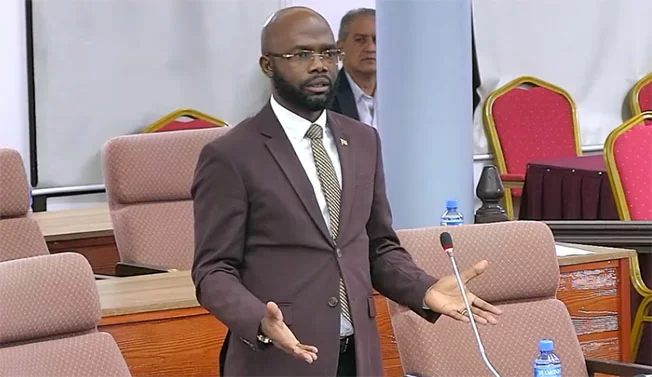
    Government Senator Jemalie John, a practicing lawyer, laid out the administration’s position during an interview with Hot 97 FM on Wednesday, emphasizing that the planned parliamentary action to clarify the constitutional language will have no impact on the pending court proceedings. John stressed that the two petitions remain fully active before the judiciary, and even if the amendment includes a retroactivity clause, it will ultimately fall to the courts to decide whether the new language applies to the ongoing case, leaving the opposition fully free to pursue their legal challenge.

    John rejected opposition claims that the NDP rushed the amendment through without public transparency, noting that the plan became public through standard parliamentary procedure: the official Order Paper for the upcoming April 21 parliamentary sitting was circulated to all legislators one week in advance, as required by law, making the planned debate a matter of public record from that point.

    He framed the ULP’s objections as a political power play, noting that the NDP secured a landslide 14-1 victory over the ULP in the November election, ending 25 years of ULP rule. The opposition’s end goal, John argued, is to overturn the results of two constituencies where voters overwhelmingly reelected Friday (to a sixth consecutive term) and Bramble (to a second five-year term) and install the defeated ULP candidates in their place. “Their mission is to have our prime minister and our foreign minister replaced with Carlos Williams and Luke Browne,” John stated, pointing out that the ULP has never won either of the two seats in its entire political history. “They essentially want to impose someone on the people that the people never voted for. Ethically and morally, they are wrong.”

    Addressing claims that the amendment is a self-serving measure, John countered that the move is designed to protect St. Vincent and the Grenadines’ democratic process. “If the people went out in an election and voted for a particular candidate, how could it be ethically, morally or legally right that the votes of thousands of Vincentians should be disregarded, thrown away, and there’s somebody then sitting in Parliament represent them who they never voted for in the first place?” he asked. “Ensuring that that democratic right is protected, it could never be appropriately described as self-serving. If anything, it protects the right of the Vincentian people and protects a democratic franchise.”

    On the substance of the amendment, John clarified that the proposal does not rewrite the constitution entirely, but only resolves existing ambiguity that directly led to the court case being filed. The key point of contention is how to define a “foreign power”: some interpretations hold that any dual citizenship, even with another Commonwealth nation, disqualifies a candidate, while others argue that Commonwealth countries do not count as foreign powers under the constitution. John noted that proponents of the latter interpretation often cite a landmark case from St. Kitts and Nevis, but St. Kitts’ constitution is explicitly different from St. Vincent and the Grenadines’ charter, making a direct application of that ruling inappropriate.

    John also reaffirmed the separation of powers between the legislative and judicial branches, arguing that when constitutional ambiguity exists, it is the role of parliament – not the courts – to clarify the law. “The court is not there to make laws. The court is not there to change laws or to repeal laws. That rests with the parliament. The court is there to interpret the laws that parliament passes,” he explained. “If the role and function of the Parliament is to make, change and repeal laws, then we should not say, ‘Oh, well, let the judges do it.’ Parliament is the law-making body of St. Vincent and the Grenadines, and it will continue to act on that responsibility to clarify policy that serves the public good.”

    John added that the core policy question at hand is whether native-born Vincentians who acquire a second citizenship, including through marriage, should be barred from serving in parliament, a question he said will be fully debated during the April 21 parliamentary session.

    The pending election petitions have already gone through a case management hearing in early March, with the next procedural hearing scheduled for May 19. The trial for the two challenges is set to begin on July 28, with three days allocated for proceedings.

  • UPP highlights concerns over IMF report on Dominica’s economic outlook

    UPP highlights concerns over IMF report on Dominica’s economic outlook

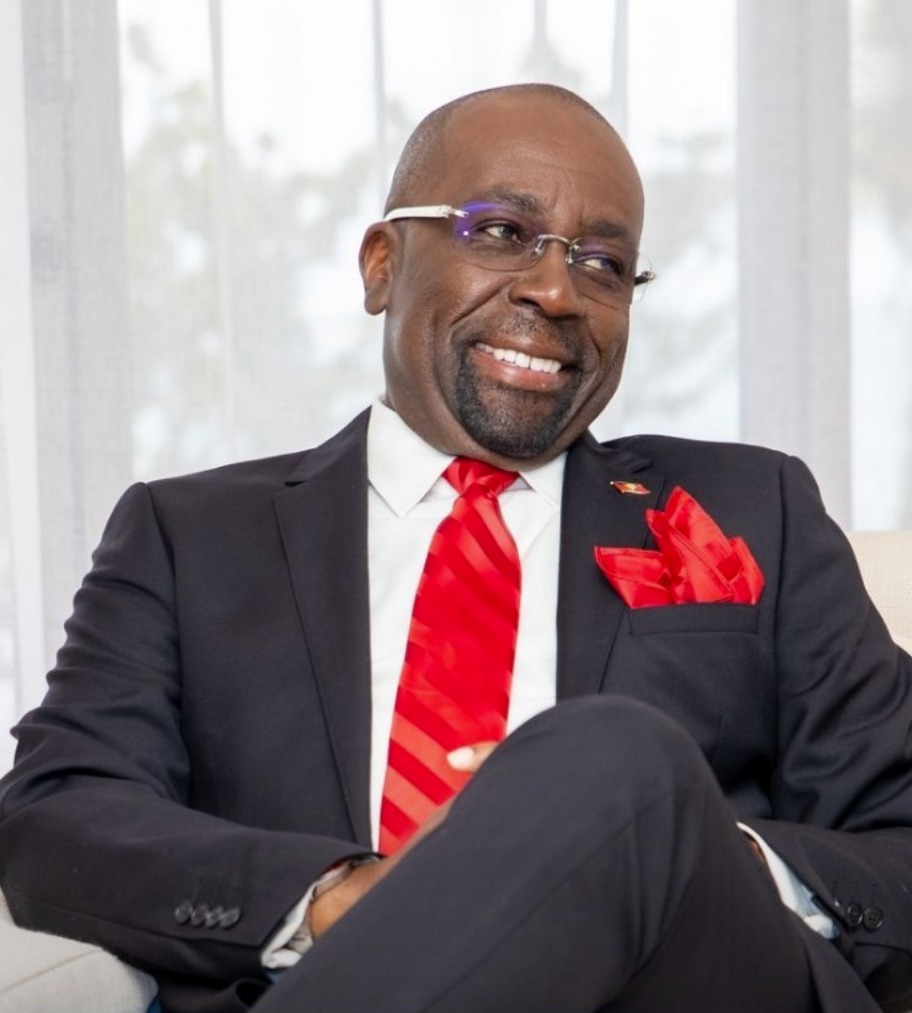
    The International Monetary Fund’s 2026 Article IV Mission Report on the Commonwealth of Dominica has sparked intense political scrutiny from the island nation’s main opposition bloc, the United Progressive Party (UPP), led by attorney Joshua Francis. The UPP has raised sharp alarms over the report’s findings, which paint a mixed picture of Dominica’s economic trajectory and highlight deep structural vulnerabilities that the party argues have been left unaddressed by the long-ruling Dominica Labour Party.

    According to the IMF’s analysis, Dominica delivered a solid 4.5% GDP growth rate in 2025, a figure that reflects short-term expansion following recent global and regional economic disruptions. But the fund’s medium-term outlook is far from encouraging: projections show growth will slow to a range of 2% to 3% in coming years, with overall economic risks explicitly “tilted to the downside.”

    One of the most pressing issues flagged in the report is Dominica’s extreme current account deficit, which the IMF estimates has reached 38% of total GDP. This gap underscores the country’s persistent heavy dependence on imported goods and services, a structural imbalance the UPP says the current administration has failed to correct. Even more concerning for the opposition is Dominica’s public debt load, which sits at roughly 103% of GDP — far higher than standard regional benchmarks, placing the island at high risk of sovereign debt distress. The IMF’s recommendation of an additional EC$60 million in fiscal consolidation further confirms the ongoing fiscal pressure squeezing the national budget, the UPP notes.

    The report also draws attention to weaknesses in Dominica’s financial sector. Non-performing loans remain at elevated levels, and regulatory oversight has not kept pace with the rapid growth of the country’s credit union industry, which now holds more than 50% of all private sector credit in the economy. Additionally, the IMF echoes longstanding questions about Dominica’s heavy reliance on revenue from its Citizenship by Investment (CBI) program, raising concerns about both transparency and long-term fiscal sustainability. For the UPP, this overreliance is clear proof that the ruling Labour Party has neglected to build a diversified, shock-resilient national economy.

    Institutional weaknesses round out the list of risk factors: the IMF highlights gaps in public financial management systems and limited fiscal transparency, both of which the UPP says contribute to the country’s overall economic fragility. In a formal statement following the report’s release, UPP leader Joshua Francis emphasized that the IMF’s findings validate the opposition’s longstanding warnings. “The IMF report confirms that Dominica’s economy remains fragile and exposed,” Francis said. “We need responsible leadership, stronger governance, and a clear path toward sustainable economic growth.”

    The UPP has laid out its policy vision, calling for urgent nationwide reforms to cut public debt, generate new private sector jobs, expand economic diversification, tighten financial sector oversight, and improve government transparency. The party warns that without bold, immediate policy intervention, Dominica will remain trapped in a cycle of slow growth, limiting opportunity for citizens and blocking progress toward long-term economic resilience.

    For its part, the ruling administration has acknowledged the IMF’s conclusions. Prime Minister Roosevelt Skerrit recently addressed the report’s findings during a parliamentary session, noting that the government respects the fund’s conclusions and has outlined its own official position on the issues raised to provide contextual perspective for lawmakers and the public.

  • Greene Tells St. Paul’s Constituents to ‘Judge Me by the Work’ as He Seeks Re-Election

    Greene Tells St. Paul’s Constituents to ‘Judge Me by the Work’ as He Seeks Re-Election

    As campaign season kicks into high gear for congressional seats across the United States, incumbent Representative Greene is making his case to voters in St. Paul, urging constituents to base their November voting decisions on his tangible policy achievements over his current term rather than outside noise or partisan rhetoric.

    In a series of recent community meetings and public addresses hosted across the district’s diverse neighborhoods, from downtown St. Paul business districts to suburban residential blocks, Greene directly addressed questions about his record and encouraged voters to hold him accountable for the work he has delivered since taking office.

    “I don’t ask anyone to support me based on party labels or empty campaign promises,” Greene told a packed gathering of local residents last week. “What I ask is simple: judge me by the work I have done for this community, the progress we have delivered together, and the plans I have to move St. Paul forward over the next term.”

    Over his current tenure, Greene has prioritized legislation focused on expanding access to affordable healthcare for low-income constituents, securing federal funding for local infrastructure upgrades—including road repairs and public transit improvements—and pushing for stronger funding for St. Paul’s public K-12 school systems. He has also positioned himself as a key advocate for small businesses in the district, backing tax relief packages and grant programs designed to help local establishments recover from recent economic headwinds.

    His re-election bid comes as control of Congress hangs in the balance, with competitive races across the country expected to determine which party sets the legislative agenda in Washington for the next two years. The St. Paul district has long been viewed as a competitive seat, with national party committees already pouring resources into both the Greene campaign and that of his challenger. For his part, Greene has centered his campaign on local issues rather than national partisan fights, a strategy designed to resonate with independent voters who make up a sizable share of the district’s electorate.

    Local voter reaction has been mixed so far: long-time supporters have praised Greene’s focus on constituent services and his consistent presence in the district, while some undecided voters note they are still weighing his record against the policy proposals put forward by his opponent. Regardless, Greene’s call for performance-based evaluation represents a common tactic for incumbents seeking to turn their time in office into a key electoral advantage, framing the race as a choice between proven results and untested opposition.

  • Skerrit backs IMF findings despite minor disagreements

    Skerrit backs IMF findings despite minor disagreements

    In a recent address to Dominica’s Parliament, Prime Minister Roosevelt Skerrit has publicly endorsed the methodological rigor of the International Monetary Fund’s January 2026 update to the World Economic Outlook, affirming the report was compiled diligently and properly even as he acknowledged points of disagreement with its findings.

    The latest iteration of the IMF’s flagship economic analysis revises the fund’s earlier October 2025 global growth projections upward, forecasting a 3.3% global expansion in 2026 followed by a 3.2% rise in 2027. The modest upgrade is attributed to four key drivers: growing capital allocation to technology, widespread productivity gains unlocked by artificial intelligence adoption, accommodative fiscal and monetary policy frameworks across major economies, and unexpectedly resilient activity in the global private sector.

    The report also highlights the uneven nature of the post-pandemic global recovery, noting that advanced and major emerging economies including the United States and India are on track to outperform slower-growing regions such as the eurozone and China, a gap rooted in divergent structural conditions and recovery trajectories. Domestically, the IMF’s assessment paints a largely positive picture of Dominica’s 2025 economic performance: real GDP growth accelerated to 4.5% up from 3.5% in 2024, fueled by a booming tourism sector that now sits 36% above pre-COVID-19 pandemic levels, alongside targeted public development investments across key infrastructure sectors. Skerrit outlined these investments to parliamentary representatives, noting major ongoing projects include a new airport, a cable car tourism development, a marina, expanded affordable housing, road network upgrades, support for the local hotel industry and private sector growth, and ongoing reforms to improve Dominica’s business climate and agricultural sector.

    On price stability, the report notes Dominica has successfully tamed inflation, with annual average inflation reaching 2.5% in 2025, an outcome that aligns with the broader global trend of moderating price growth. Globally, the IMF observes that while aggregate inflation is cooling, many emerging market economies still face persistent upward price pressures that demand careful, targeted monetary policy management. The fund also projects that U.S. inflation will return to the central bank’s 2% target at a more gradual pace than initially expected.

    Skerrit pushed back against domestic critics who have framed the IMF’s findings as critical to his administration, telling lawmakers “They believe that some of the things that the IMF said is a negative to the government, but I tell them no. I love the IMF report, I do not agree with some of the things they say, the kind of language they use sometimes, but I respect the report.”

    Quoting the report’s core policy recommendations, Skerrit noted the IMF emphasizes that sustained long-term growth momentum depends on fiscal consolidation, targeted structural economic reforms, and expanded multilateral cooperation. The fund advises global policymakers to rebuild depleted fiscal buffers, preserve price and financial sector stability, reduce policy uncertainty that drags on investment, and roll out focused industrial policies to boost long-term productivity.

    On one key observation — an elevated current account deficit driven largely by high volumes of construction-related imports — Skerrit offered a counterinterpretation, framing the gap as a positive indicator of ongoing economic activity. “It means Mr. Speaker, in essence, some things are happening,” he told parliament, signaling that the import surge is a byproduct of the large-scale infrastructure investments driving Dominica’s current growth phase.

  • UPP Saying ‘Duty-Free’ vehicles on Political Platform but ‘50% Cut’ on website

    UPP Saying ‘Duty-Free’ vehicles on Political Platform but ‘50% Cut’ on website

    A prominent political party, the United People’s Party (UPP), has found itself in the center of growing public attention after a notable discrepancy emerged between its official election campaign platform and the policy details posted on its public website. According to the full political platform presented to voters during campaign rallies, the party has made a bold promise to introduce full duty-free exemptions for imported private vehicles if it secures victory in upcoming elections. This policy was framed as a key measure to reduce living costs for ordinary citizens and expand access to personal transportation across the country.

    However, when members of the public and political observers checked the party’s official website to confirm the details of this high-profile pledge, they discovered a drastically different policy outlined: instead of a total elimination of import duties, the document posted online only promises a 50 percent reduction in vehicle import tariffs. This inconsistency between the two official communications from the party has sparked debate among political commentators, citizens, and opposition groups, who are questioning the clarity and reliability of the UPP’s policy agenda ahead of the vote.

    Political analysts note that this mismatch has raised concerns about internal communication within the party, as well as the accuracy of campaign promises being presented to electorate. Voters have taken to social media to express mixed reactions, with some arguing that the discrepancy is an unintentional administrative error, while others claim it represents a misleading attempt to attract support from car owners and prospective vehicle buyers. As of this reporting, the UPP has not yet issued an official statement clarifying the discrepancy or confirming which version of the policy represents the party’s official position.

  • Pringle Proposes ‘Win-Win’ Social Security Investment Plan to Boost Pensions and Growth

    Pringle Proposes ‘Win-Win’ Social Security Investment Plan to Boost Pensions and Growth

    As the political campaign in Antigua and Barbuda gains momentum, Jamale Pringle, the leader of the United Progressive Party (UPP), has put forward an ambitious “win-win” Social Security investment proposal that seeks to kill two birds with one stone: boosting earnings for scheme contributors and unlocking capital for critical domestic development projects.

    Speaking to a crowd of enthusiastic supporters at a recent campaign rally, Pringle laid out the core logic of his plan: a shift from the current investment strategy to a more strategically aligned approach that delivers stronger long-term financial returns. This, he argues, will not only translate to higher pension payments for retirees but also shore up the long-term viability of the entire Social Security system, which has faced growing questions about the adequacy of current benefits.

    A central pillar of the proposal is a explicit priority on domestic investments within Antigua and Barbuda. By directing a larger share of Social Security funds to local projects, the plan would inject much-needed capital into the national economy, creating a mutually reinforcing cycle: targeted investments drive job creation and broad economic expansion, which in turn grows the Social Security fund’s value, creating more resources to support beneficiaries down the line. Pringle emphasized that too much of the country’s Social Security resources currently sit underutilized, arguing that public funds should be put to work directly for the Antiguan and Barbudan people who contribute to the system over their working lives.

    Under the framework, investments will be concentrated in productive domestic sectors that have the demonstrated capacity to create new jobs and expand overall economic output. Though Pringle stopped short of naming specific projects that would qualify for investment, he made clear that all investment decisions would be structured to carefully balance risk exposure and return potential, with protecting contributors’ hard-earned savings as the top priority alongside maximizing long-term benefits.

    The Social Security plan is a key plank in the UPP’s broader 202X campaign platform, which centers heavily on delivering economic relief to struggling households, shoring up income security for all workers, and raising overall living standards for both working-age residents and retired pensioners. Pringle closed his remarks by framing the initiative as a transformative shift that would turn Social Security from a passive benefit scheme into an active engine of inclusive national growth, delivering tangible, meaningful gains for every contributor who relies on the system for retirement security.

  • Pringle Says UPP Will Implement Four-Day Work Week by 2027

    Pringle Says UPP Will Implement Four-Day Work Week by 2027

    As Antigua and Barbuda prepares for its upcoming general election, United Progressive Party (UPP) leader Jamale Pringle has made a bold, worker-focused policy pledge: if his party secures power, a UPP administration will roll out a permanent four-day work week for the public sector by 2027. This policy sits at the heart of a sweeping public service reform package crafted specifically to address long-running grievances among government employees.

  • Greene Says New Eye and Dental Clinics Coming for St. Paul’s Constituents

    Greene Says New Eye and Dental Clinics Coming for St. Paul’s Constituents

    During a recent community meet-and-greet with voters in his St. Paul’s constituency, Foreign Affairs Minister E. P. Chet Greene has announced targeted infrastructure plans to expand local access to critical healthcare services, anchored by the construction of two new specialized clinics focused on eye care and dental treatment.

    The development project is already in its early phases, with a core expanded primary care facility currently under construction. Greene laid out the phased roadmap for the initiative, noting that after the completion of the expanded base clinic, the next stage of work will deliver the long-awaited specialized care facilities that residents have repeatedly called for.

    “We have an expanding new clinic that comes to us,” Greene shared with local residents, highlighting ongoing work to reinforce the constituency’s overall healthcare delivery network. Outlining the next steps, he emphasized that the new specialized services are designed to cut down on the need for local residents to travel outside the St. Paul area to receive routine and specialized care.

    “ We will build an eye-care clinic,” Greene confirmed. He added that all necessary medical equipment for the facility has already been secured, with the goal of opening a first-class, world-standard facility that meets the full eye health needs of the local community.

    To round out the expanded healthcare hub, Greene also officially confirmed separate plans for a full-service dental clinic. When completed, the two new specialized facilities, paired with the expanded primary care clinic, will form a centralized, comprehensive medical hub that serves the entire St. Paul region.

    “We also intend [to build] a dental clinic. So when you have the dental clinic, what we have is a compact medical [hub], which will serve all of the people here in the St. Paul area,” he explained.

    The Foreign Minister emphasized that the entire project is rooted in a core goal: making essential healthcare more accessible for local residents and strengthening community-centered care at a time when demand for local services continues to climb steadily. These new clinics are part of the governing administration’s post-election development agenda, with healthcare policy remaining a top priority for the government, according to Greene.

    The announcement comes after months of ongoing resident feedback and concerns about gaps in local healthcare access. Once operational, the new facilities are projected to reduce strain on the area’s existing overstretched healthcare infrastructure and ultimately improve health outcomes for thousands of residents living in the St. Paul constituency.

  • Voter ID replacement drive passes halfway mark in Antigua and Barbuda

    Voter ID replacement drive passes halfway mark in Antigua and Barbuda

    As Antigua and Barbuda’s nationwide voter identification card replacement initiative accelerates, the country’s Electoral Commission has confirmed that more than half of all eligible voters have already finalized the process, according to the latest official data for April 2026. The overall national completion rate now stands at just over 55%, with significant variation in uptake across different constituencies, the commission’s updated report reveals. Several constituencies have already posted participation rates well above the national average, emerging as standouts in the ongoing program. Leading the pack is the St Peter constituency, where an impressive 87% of registered voters have successfully swapped out their old identification cards for new ones. Close behind, St Philip North and the island of Barbuda also outpace the national average, clocking completion rates of 75% and 76% respectively. However, the data also highlights uneven progress across the country, with some constituencies falling significantly behind the midpoint mark. St Mary’s North and St John’s Rural West are among the areas with completion rates still below the 55% national threshold, pointing to slower adoption in these regions. Since the voter ID replacement program launched, the commission has processed a cumulative total of 28,926 applications, with 5,575 of those applications coming in April alone, as of the latest data cut-off. Looking at recent weekly trends, the program saw a notable surge in activity earlier this month, with 2,894 applications processed between April 5 and 11. A further 1,604 applications were finalized in the following week spanning April 12 to 18. That said, the latest report shows daily application processing totals dropped to zero after April 14, a gap that officials have not explicitly explained, leaving open two potential explanations: a temporary pause in processing operations, or delayed entry of the most recent data into the commission’s tracking system. By constituency, the highest weekly application volume between April 12 and 18 was recorded in St John’s Rural West, which notched 177 new applications. St George followed close behind with 173 applications, and All Saints West came in third with 157 submissions. With critical upcoming electoral deadlines drawing near, the Antigua and Barbuda Electoral Commission is stepping up appeals to all registered voters across the twin-island nation to complete their ID replacement as soon as possible. The commission has issued a clear warning: voters who fail to finalize the replacement process before the deadline could lose their ability to cast a ballot in upcoming elections. To address the existing gaps in participation, officials confirmed that outreach and access efforts will be expanded moving forward, with a particular focus on the constituencies that have lagged behind the national average to help boost uptake and ensure all eligible voters can exercise their voting rights. These targeted efforts are expected to close the regional gap and push the overall completion rate higher in the coming weeks, the commission added.