分类: politics

  • Tancoo: Government respects collective bargaining, fair wages

    Tancoo: Government respects collective bargaining, fair wages

    Finance Minister Davendranath Tancoo has issued a formal response to Regional Health Authority (RHA) workers threatening industrial action over unmet wage increase promises. The workers are demanding the ten percent salary hike pledged by the United National Congress (UNC) during this year’s general election campaign.

    In a December 12th official statement, Minister Tancoo emphasized the government’s commitment to lawful collective bargaining processes while maintaining fiscal responsibility. The minister called upon recognized majority unions representing RHA employees to submit formal wage proposals directly to their respective RHAs to initiate transparent negotiations.

    Tancoo clarified the distinct legal status of RHAs as public sector entities operating under their own legislative framework, separate from the core public service governed by the Civil Service Act. The minister acknowledged that while transferred staff received initial employment term protections, this did not constitute a perpetual guarantee that all future Civil Service wage increases would automatically apply to RHA personnel.

    The ministry highlighted recent developments in labor representation, noting the Trinidad and Tobago Nursing Association’s January 13th certification as the recognized majority union for specific nursing positions at the Eastern RHA. This designation grants the association collective bargaining rights under the Industrial Relations Act.

    Tancoo stressed that wage settlements for RHA employees must be negotiated directly between each RHA and its recognized unions, rather than extending the recent agreement between the Chief Personnel Officer and the Public Services Association. The minister reiterated that only officers remaining under the Civil Service Act jurisdiction would receive the terms negotiated in the December 2nd memorandum of agreement, which includes a ten percent increase with retroactive provisions dating to 2014.

    The government expressed hope that essential health services would remain uninterrupted during any potential labor demonstrations, respecting workers’ rights to protest while emphasizing the importance of maintaining patient care standards.

  • Alexander, Griffith in war of words over radar comments

    Alexander, Griffith in war of words over radar comments

    A significant diplomatic development has triggered an unexpected confrontation between current and former national security officials in Trinidad and Tobago. The installation of a controversial US military radar system in Tobago has ignited a fierce public dispute between Homeland Security Minister Roger Alexander and former Police Commissioner Gary Griffith.

    The conflict emerged following Minister Alexander’s remarks regarding the radar’s purported role in resolving the kidnapping case involving Derek Tardieu and his wife Clarabelle. Griffith, who served as both police commissioner and national security minister, condemned these statements as “irresponsible” in a December 11 Facebook post, expressing concern that such disclosures could alert criminal elements to state surveillance capabilities.

    Minister Alexander mounted a vigorous defense through a December 12 interview with the Guardian newspaper, asserting his comments were taken out of context. He questioned the expertise of critics who “never was in a war” but positioned themselves as security authorities through academic knowledge alone.

    The exchange escalated dramatically when Griffith, highlighting his military background spanning from 1988 to 1999, released a nine-minute video recounting his operational experience in conflict zones including the UK, Haiti, and during Trinidad and Tobago’s 1990 attempted coup. He delivered a particularly cutting remark suggesting Minister Alexander’s only known conflict was “against a dictionary.”

    In an unconventional response, Minister Alexander produced an ankle monitor during an office video recording, claiming he purchased it specifically for Griffith. “It’s really an ankle bracelet for your mouth,” Alexander stated while brandishing the device. “Cause that’s all you does do – talk, talk, talk, talk, talk. Your name should be Gary the parrot.”

    The extraordinary public feud between these security officials has drawn attention to the increasingly contentious debate surrounding the US military presence in Tobago, raising questions about professional conduct within the highest levels of national security leadership.

  • Colombian guerrillas place communities in lockdown citing Trump ‘intervention’ threats

    Colombian guerrillas place communities in lockdown citing Trump ‘intervention’ threats

    BOGOTA, Colombia – Colombia’s National Liberation Army (ELN), the continent’s longest-standing active guerrilla organization, has mandated a 72-hour civilian lockdown across its territorial strongholds in response to perceived interventionist threats from the United States. The directive, effective Sunday at 6:00 AM local time, instructs residents to remain indoors and avoid primary transportation routes while the group conducts military exercises.

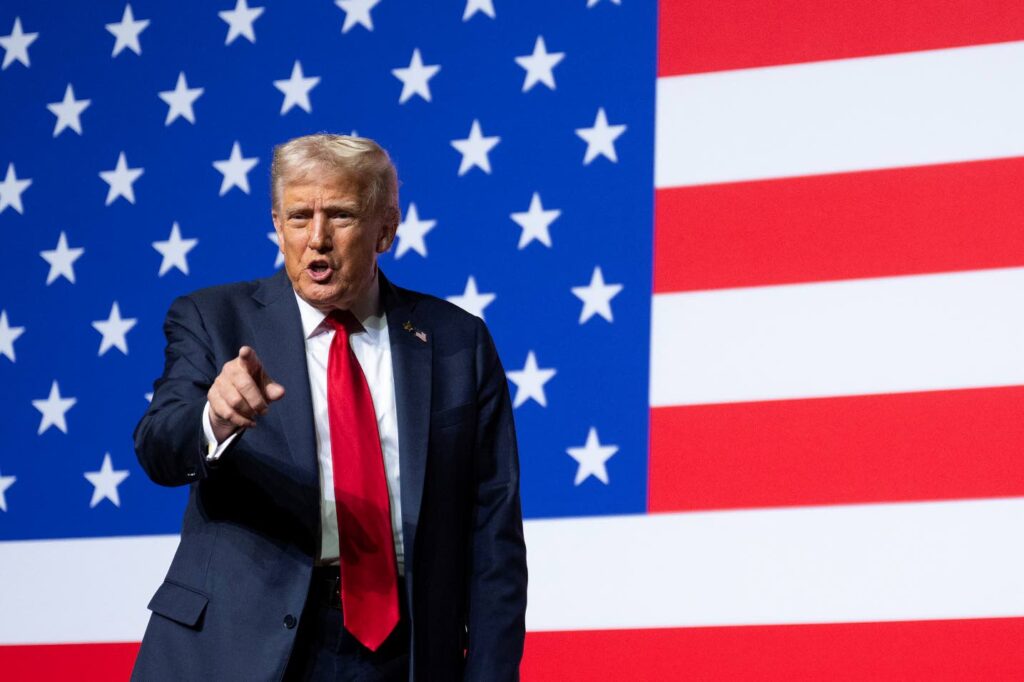
    The ELN’s statement characterized these maneuvers as defensive preparations against what it termed ‘imperialist intervention threats’ from U.S. leadership. This development follows recent remarks by former President Donald Trump suggesting Colombian President Gustavo Petro could ‘be next’ in American pressure campaigns due to the nation’s significant cocaine production.

    President Petro swiftly condemned the ELN’s actions through social media platform X, asserting that ‘one doesn’t protest against anyone by killing peasants and taking away their freedom.’ He directly accused the guerrilla group of supporting drug trafficking interests rather than genuinely opposing U.S. policies.

    Colombian Defense Minister Pedro Sánchez dismissed the armed strike as ‘criminal coercion’ and pledged comprehensive military deployment to counter the threat. According to Insight Crime research data, the ELN maintains approximately 5,800 combatants and exerts influence across more than 20% of Colombia’s municipalities.

    The group, which has participated in unsuccessful peace negotiations with five consecutive Colombian administrations, operates primarily in strategic drug-producing regions. Despite its professed leftist ideological foundations, the ELN has evolved into one of Latin America’s most potent criminal organizations, controlling substantial coca cultivation territories and trafficking corridors—particularly in the Catatumbo border region with Venezuela.

    This escalation occurs against the backdrop of Colombia’s status as the world’s leading cocaine producer, as confirmed by United Nations reports, and ongoing regional tensions regarding U.S. foreign policy approaches to Venezuela’s political situation.

  • Padarath knocks Young over Xmas party expenses claims

    Padarath knocks Young over Xmas party expenses claims

    A political dispute has emerged in Trinidad and Tobago regarding government Christmas celebrations, with Minister in the Office of the Prime Minister Barry Padarath revealing that cabinet ministers are personally subsidizing year-end staff functions. This disclosure comes in response to criticism from opposition MP Stuart Young, who accused the ruling UNC government of extravagance while implementing austerity measures.

    Young, the former energy minister and prime minister, had condemned what he characterized as ‘vulgar and expensive’ government parties in a social media post on December 13th. He asserted that the administration had terminated approximately 11,000 vulnerable workers from various public service programs while simultaneously authorizing lavish celebrations.

    The controversy specifically references Christmas events hosted by the Office of the Prime Minister and the Ministry of Public Utilities. Photographs from these gatherings circulated online, showing Prime Minister Kamla Persad-Bissessar socializing with guests including musical performer Yung Bredda (Akhenaton Lewis).

    In his rebuttal, Padarath clarified that performing artists at these functions were previously contracted brand ambassadors for state-owned telecommunications provider TSTT, arranged under the previous PNM administration. No government funds were allocated for their performances, with artists participating voluntarily. More significantly, Padarath revealed that ministers contributed personal finances to cover food and beverage costs for both events.

    This situation unfolds against the backdrop of significant workforce reductions within public service programs following the UNC’s electoral victory on April 28th. The government has simultaneously instructed ministries and state companies to reduce expenditures, resulting in canceled year-end activities at numerous organizations, including profitable state enterprises.

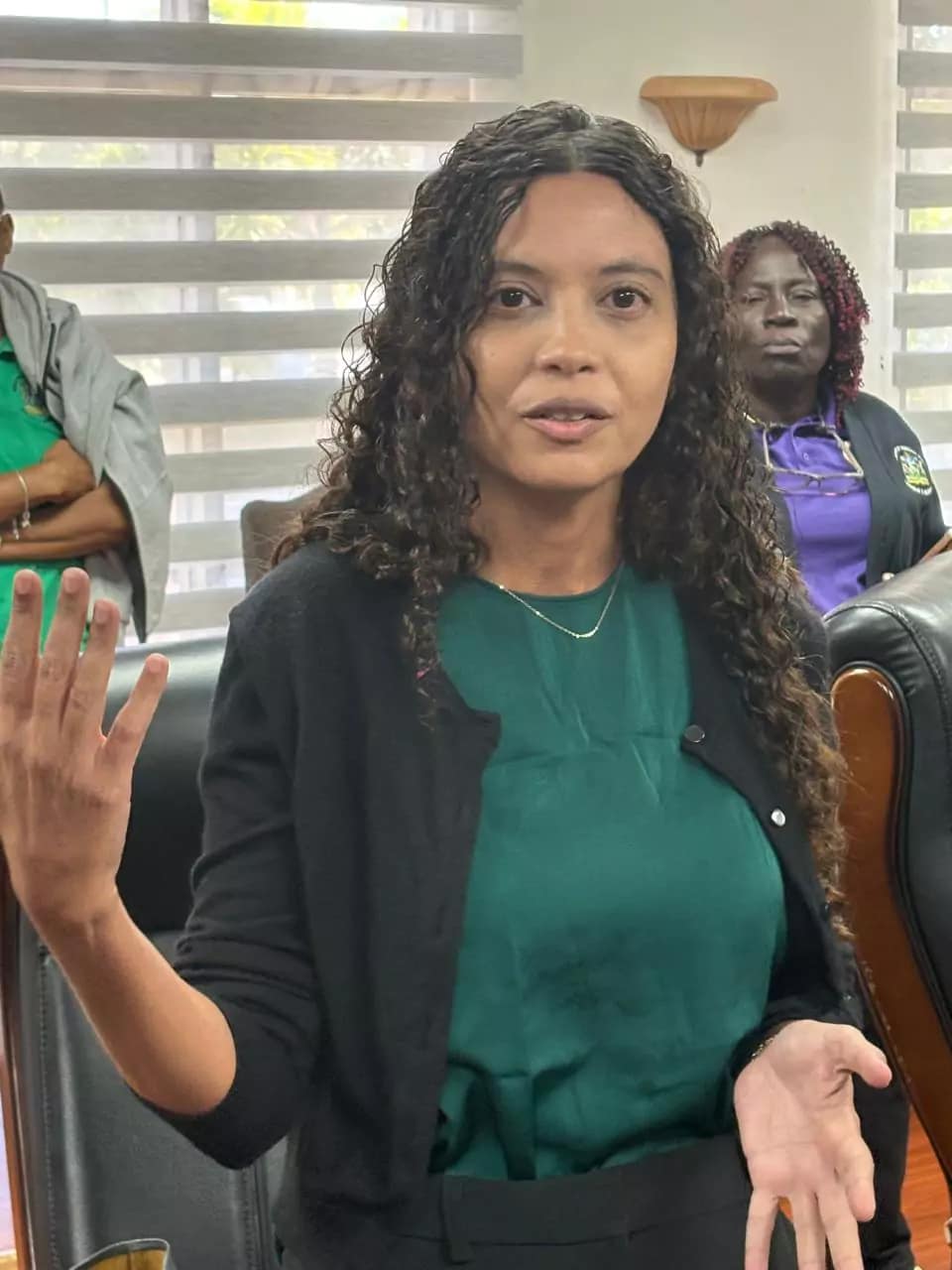
    The Minister of Rural Development and Local Government, Khadijah Ameen, has addressed reports of a new pilot program for public space maintenance running from December 2025 through March 2026, emphasizing that it does not represent a rebranding of the terminated CEPEP initiative.

  • Coalitie wil College van Procureurs-Generaal

    Coalitie wil College van Procureurs-Generaal

    The Dutch governing coalition has introduced groundbreaking legislation to fundamentally restructure the nation’s prosecutorial system. The proposed initiative law would replace the current single Prosecutor General position with a College of Prosecutors General comprising between two to four members.

    This reform represents a significant institutional strengthening of the prosecutorial function within the Dutch judicial system. Where the Prosecutor General was previously exclusively attached to the Court of Justice, the new framework expands this role to include the Supreme Court (Hoge Raad), which is also being introduced into the judicial structure.

    The College will be formally designated as the head of the Public Prosecution Service, representing the state in legal matters and overseeing judicial police operations. The legislation additionally proposes lowering the mandatory retirement age for prosecutors from 70 to 65 years.

    This reorganization addresses what coalition members describe as decades of organizational fragmentation within the Public Prosecution Service and its previous dependence on ministerial directives. The new framework establishes clear, centralized authority intended to create a more robust institutional foundation.

    The explanatory memorandum accompanying the sweeping proposal indicates that the current structure provides insufficient opportunities for the Public Prosecution Service to develop institutionally. By explicitly linking the Prosecutor General to both the Supreme Court and strengthening the College, the system aims to better prepare for:

    – Increasingly complex criminal cases involving political and economic dimensions
    – Cassation procedures requiring superior legal quality
    – More independent operations, particularly in sensitive cases

    The proposed constitutional amendment would fundamentally alter the Prosecutor General’s position within the judicial organization. The modification of Articles 141 and 142 would replace the phrase ‘the Prosecutor General at the Court of Justice’ with ‘the Prosecutor General at the Supreme Court and at the Court of Justice’ throughout legal texts.

    This dual anchoring positions the Prosecutor General at a crucial junction between the highest factual instance (Court of Justice) and the future highest judicial authority in law (Supreme Court). The reform makes clear that the Public Prosecution Service will no longer merely play a supporting role within the Court but will become an integral component of the new cassation hierarchy, effectively creating the only functionary institutionally connected to both top levels of the judiciary.

  • US slaps sanctions on Maduro relatives as Venezuela war fears build

    US slaps sanctions on Maduro relatives as Venezuela war fears build

    The United States government has significantly intensified its campaign against the Venezuelan administration of Nicolás Maduro through a dual strategy of economic sanctions and military action. On Thursday, the U.S. Treasury Department imposed sanctions targeting three nephews of Maduro’s wife, Cilia Flores, alongside six international companies involved in shipping Venezuelan oil. Concurrently, the White House confirmed it would bring an oil tanker, seized in a dramatic naval operation off the Venezuelan coast, to a U.S. port, a move Caracas has decried as ‘international piracy.’

    The Treasury’s sanctions specifically label two of the targeted relatives as ‘narco-traffickers operating in Venezuela.’ Treasury Secretary Scott Bessent asserted that ‘Nicolas Maduro and his criminal associates are flooding the United States with drugs that are poisoning the American people,’ framing the measures as a direct strike against the regime’s financial underpinnings. The sanctioned shipping companies are accused of facilitating the transport of sanctioned oil, the proceeds of which Washington claims fund global narco-terrorism.

    The military dimension of the escalation was highlighted by a video release from U.S. authorities showing special forces rappelling from a helicopter onto the deck of the tanker. Homeland Security Secretary Kristi Noem characterized the seizure as part of a broader effort to push back against a regime ‘systematically flooding our country with deadly drugs.’ White House Press Secretary Karoline Leavitt stated the seized oil would be confiscated, signaling a new, more aggressive phase in enforcing sanctions.

    International reactions have underscored the geopolitical ramifications. Russian leader Vladimir Putin expressed support for his ally Maduro, though Russia’s capacity to provide substantial aid is constrained by its ongoing conflict in Ukraine. At the United Nations, Secretary-General Antonio Guterres voiced concern over the escalating tensions, urging all parties to exercise restraint to avoid further destabilizing Venezuela and the region. Reports from U.S. media suggest further similar interdictions of tankers may be imminent, indicating a sustained campaign of pressure.

  • Dr Fontaine faces 24th adjournment in ongoing legal matters

    Dr Fontaine faces 24th adjournment in ongoing legal matters

    In a striking development within Dominica’s judicial landscape, the protracted legal battle involving United Workers Party (UWP) leader Dr. Thomson Fontaine has encountered yet another postponement—marking the 24th adjournment in an eight-year judicial process. The case, originating from political demonstrations on February 7, 2017, saw opposition members charged with inciting violence and obstructing justice following vandalism incidents during anti-government protests demanding Prime Minister Roosevelt Skerrit’s resignation.

    Dr. Fontaine expressed frustration outside the magistrate’s court Thursday, stating, ‘My matter has been adjourned until April of next year. Another delay of several months. I showed up this morning in the rain, but that’s it, that’s the system.’

    The case’s complex trajectory reveals significant judicial intricacies. Initially facing dual charges, Dr. Fontaine experienced extraordinary procedural developments: after being arrested at Douglas Charles airport on April 23, 2022, via a bench warrant issued in 2018, the matter underwent preliminary inquiry in April 2023. Through paper committal procedures, Magistrate Laudat determined sufficient evidence existed to advance the riotous behavior charge to the High Court while retaining the obstruction charge in magistrate’s court.

    In a pivotal turn, the High Court delivered a decisive victory for Dr. Fontaine, accepting his no-case submission and dismissing all charges. The ruling explicitly prohibited the Dominican government from pursuing any further legal action related to the 2017 events. However, the magistrate’s court has controversially continued proceedings on the obstruction charge, claiming the High Court’s dismissal didn’t technically apply to its specific case number.

    This has prompted defense lawyers to seek judicial intervention compelling the lower court to adhere to the higher court’s ruling—a process that remains ongoing while the magistrate’s court continues its proceedings. Dr. Fontaine, who serves as Policy Advisor to the South Sudanese government, must now return to court in April 2025, extending what he describes as an ‘eight-year ordeal’ that continues despite a superior court’s exoneration.

  • ICAO biedt steun voor modernisering luchtvaartsector

    ICAO biedt steun voor modernisering luchtvaartsector

    Suriname’s aviation sector has secured committed international backing for comprehensive regulatory modernization and technical capacity building. Fabio Rabbani, Regional Director of the International Civil Aviation Organization (ICAO), confirmed this strategic support following high-level consultations with President Jennifer Simons on Thursday.

    The pivotal meeting addressed critical challenges facing the nation’s aviation infrastructure and outlined necessary measures to ensure safety standards, sustainable development, and sectoral growth. ICAO has pledged to guide Suriname through enhancing regulatory frameworks, safety protocols, and operational capabilities.

    Rabbani emphasized that his mission specifically aimed to assess governmental commitment at the highest levels. ‘I came to Suriname to hear and understand the leadership’s vision and level of commitment regarding safety and capacity within Surinamese airport management,’ Rabbani stated. He expressed confidence in the sector’s prospects for stable expansion, noting that ICAO’s technical assistance remains ‘structurally available,’ according to Suriname’s Communication Service.

    Central to the agreements reached was Suriname’s commitment to establishing both formal and informal collaborative channels with ICAO. Priority areas include updating the Civil Aviation Safety Act, reinforcing oversight mechanisms, and implementing sustainable aviation solutions.

    The high-profile meeting included Minister Raymond Landveld of Transport, Communication and Tourism, NV Airport Management Director Vijay Chotkan, CASAS Director Brian De Souza, Aviation Department Head Cindy Toemin, and Presidential Advisor Faizel Baarn.

    Baarn highlighted the sector’s strategic significance: ‘Aviation serves as the national gateway. With oil and gas development progressing, increasingly more processes will depend on aviation infrastructure.’

    Despite acknowledging structural challenges including financing constraints, acquisition of modern equipment, and training qualified personnel—processes requiring multi-year development—Baarn expressed optimism due to governmental dedication and President Simons’ persistent advocacy.

    Tangible outcomes are anticipated within six months, including parliamentary consideration of the new aviation legislation in the National Assembly.

  • The new pirates of the Caribbean

    The new pirates of the Caribbean

    The recent apprehension of a Venezuelan oil tanker by the United States government, accompanied by threats of potential ground operations, has raised alarming concerns about the resurgence of 19th-century imperial tactics in Latin American relations. This aggressive maneuver represents a dramatic escalation in hemispheric tensions and evokes historical patterns of military interventionism that many believed were consigned to history.

    Analysts note striking parallels between current events and early 20th-century Caribbean interventions, when United States Marines routinely landed in Haiti, Nicaragua, and the Dominican Republic under the pretext of protecting American interests. Contemporary justifications emphasizing national security and combating so-called ‘rogue states’ appear to mask more pragmatic objectives centered on controlling strategic trade routes and accessing the world’s largest hydrocarbon reserves.

    The legal foundation for these actions remains highly questionable under international law. The destruction and seizure of vessels allegedly linked to narcotics trafficking—conducted without verified interdictions or proper judicial oversight—stretches the boundaries of unilateral policing into outright maritime aggression. Particularly troubling is the violation of the United Nations Convention on the Law of the Sea (UNCLOS), which establishes clear protocols for maritime enforcement that have been systematically ignored.

    This approach reflects a broader strategic doctrine that prioritizes coercive power over diplomatic engagement, substituting sanctions and military posturing for multilateral cooperation. The abandonment of democratic principles and human rights rhetoric in favor of overt force represents a significant departure from established diplomatic norms, threatening the sovereignty of smaller nations throughout the hemisphere.

    Regional bodies like CARICOM now face critical tests of their collective resolve to resist this regression toward imperial practices. The precedent established by Venezuela’s de facto blockade could potentially extend to any Caribbean nation pursuing policies independent of Washington’s preferences, undermining decades of progress toward regional autonomy and self-determination.

    The fundamental challenge to international order lies not merely in specific actions but in the underlying philosophy that powerful nations possess inherent rights to dictate terms to their neighbors. This worldview, reminiscent of 19th-century Manifest Destiny ideology, contradicts contemporary aspirations for equitable partnerships and rules-based governance among nations.

  • Zonder Constitutioneel Hof staan mensenrechten op losse schroeven

    Zonder Constitutioneel Hof staan mensenrechten op losse schroeven

    In a stark warning issued on International Human Rights Day, prominent human rights attorney Milton Castelen has declared that Suriname’s fundamental rights protection system faces severe jeopardy due to the continued inactivity of the nation’s Constitutional Court. The court has remained non-operational since May 7, 2025, after both the government and National Assembly failed to appoint new members in a timely manner.

    Castelen emphasized that this year’s UN theme, “Human Rights, Our Every Day Essentials,” precisely highlights what is currently failing in Suriname. While human rights should form the foundation of daily life, they are often treated as abstract legal concepts rather than practical necessities affecting education, healthcare, equal treatment, and legal protection.

    The human rights advocate detailed how Suriname continues to struggle with inclusivity, with persistent exclusion occurring across society based on disability, gender, gender identity, sexual orientation, political affiliation, origin, residence, or ethnicity. These systemic issues regularly result in violations of rights to equal treatment, education, healthcare, and personal freedom through legislation, policy, or daily practice.

    “When these rights are compromised, lives are directly impacted,” Castelen stated. “Human rights are not luxury topics; they determine the quality of our existence.”

    The absence of a functioning Constitutional Court has created a critical gap in Suriname’s legal system, as the institution plays a vital role in reviewing laws and decisions against constitutional provisions and international human rights treaties. Citizens currently have no recourse to challenge legislation or administrative decisions, representing a direct erosion of the rule of law.

    While human rights protection constitutes a shared responsibility among government, parliament, judiciary, civil organizations, media, and citizens, Castelen noted that the court’s prolonged inactivity has shifted this balance. With state institutions failing their fundamental duties, NGOs, human rights organizations, and the press now carry an increasingly heavy burden to raise awareness and pressure the government into action.

    Castelen characterized International Human Rights Day as “a serious wake-up call” for Suriname, urgently calling upon the government and National Assembly to immediately complete the appointment process for the Constitutional Court. “Human rights constitute our daily living conditions,” he concluded. “Every day that the Constitutional Court remains inactive, the foundation of our society is further undermined.”