分类: politics

  • Minister Soeropawiro belooft doorbraak in slepende grondkwestie Mariënburg

    Minister Soeropawiro belooft doorbraak in slepende grondkwestie Mariënburg

    On April 23, a landmark public gathering between senior Surinamese government officials and residents of Mariënburg brought long-simmering land rights issues in the region to the forefront of national policy action, with top leaders announcing an end to delayed talks and the launch of a targeted, case-by-case resolution process.

    Thousands of local residents packed the venue of the meeting, held by the Ministry of Land and Forest Management, after years of waiting for formal clarification on their legal land ownership claims. For decades, Mariënburg residents have navigated systemic uncertainty around land tenure, with repeated unfulfilled promises from previous administrations leaving deep public distrust.

    Opening the meeting, Minister of Land and Forest Management Stanley Soeropawiro delivered a clear, uncompromising message to attendees: the phase of rhetorical commitment is over, and tangible, on-the-ground action is set to begin immediately. “Let me be perfectly clear,” Soeropawiro stated. “If our government can successfully resolve complex challenges like illegal land occupation, there is no credible reason why the decades-long issues in Mariënburg cannot be fixed.”

    Bronto Somohardjo, chair of the Standing Committee on Land Affairs in the National Assembly, echoed the minister’s commitment, drawing a clear distinction between the current administration’s approach and pre-election political performativity criticized by local residents. “We are not here today to play politics,” Somohardjo emphasized. “If that were our goal, we would have followed the same playbook as the VHP: call you in right before an election, hand you a meaningless piece of paper with no legal standing, and disappear. That is not what the people of Mariënburg deserve.”

    Instead of empty promises, the ministry has rolled out a new, community-centered resolution strategy: direct documentation collection and individual case assessment. Local residents have been formally called on to submit all relevant paperwork supporting their claims, including land allocation letters, payment receipts, and formal plot boundary information. Officials will review each dossier individually to develop targeted, long-term structural solutions that resolve tenure uncertainty permanently.

    Soeropawiro framed the public gathering as an official turning point for the region, saying, “The era of waiting and uncertainty must come to an end. We will now work step by step to deliver clarity, justice, and solutions that last.” The ministry’s core priority throughout this process is to rebuild fractured public trust: rather than relying solely on communication, officials have committed to delivering visible, measurable results that address the community’s decades-old grievances.

  • Migration Director calls for stronger security and professionalism at entry points

    Migration Director calls for stronger security and professionalism at entry points

    In a recent gathering of immigration control personnel in Santo Domingo, the top leader of the Dominican Republic’s General Directorate of Migration has laid out clear new expectations for officers working across the country’s ports, airports, and land border crossings. Luis Rafael Lee Ballester, the agency’s head, used the meeting to underscore that every member of the immigration workforce must anchor their daily work in three core principles: unwavering professionalism, strict ethical standards, and a profound commitment to protecting the Dominican Republic’s national security.

    Beyond security imperatives, Lee Ballester highlighted the dual role immigration officers play as both gatekeepers of the nation and ambassadors of Dominican hospitality. With the Dominican Republic welcoming roughly 26 million international visitors annually, he noted that the efficiency and warmth of immigration procedures shape how the entire world perceives the country. He pressed frontline inspectors and their supervisory teams to strike a careful balance: maintaining rigorous security checks without creating unnecessary delays, and delivering consistent, respectful treatment to every traveler, regardless of their origin or background.

    Lee Ballester further reminded attendees that their positions carry unique public responsibility. As the very first point of contact for people entering the Dominican Republic and the last interaction for those departing, immigration staff collectively shape the country’s global reputation. In addition to customer service standards, he emphasized the urgent need to strengthen internal oversight protocols, aimed at stopping transnational criminal networks from using the Dominican Republic as a transit hub or safe haven for illicit activities.

    The meeting drew senior representatives from the agency’s immigration intelligence and border security divisions, who aligned with Lee Ballester’s priorities. Together, authorities reaffirmed their commitment to rolling out standardized operating procedures, sustaining constant security vigilance across all entry and exit points, and safeguarding the positive international standing the Dominican Republic has built as a leading travel and trade destination in the Caribbean.

  • Taiwan’s President’s visit to Eswatini blocked by mainland China

    Taiwan’s President’s visit to Eswatini blocked by mainland China

    A planned official visit by Lai Ching-te, leader of the Taiwan region, to the Kingdom of Eswatini has been forced into postponement after multiple countries along the proposed travel route withdrew overflight clearances under pressure from mainland China, Taiwan’s representative office in Haiti announced this week. The trip, originally scheduled to run from April 22 to 27, was meant to mark national celebrations in Eswatini, one of the few countries that still formally recognizes Taiwan.

    In an official statement released Wednesday, the representative office said the abrupt cancellation of overflight authorizations eliminated the necessary security conditions for Lai, his accompanying delegation and the presidential aircraft to complete the journey safely. In response to the change of plans, Lai has appointed a special envoy to attend Eswatini’s national events in his place.

    The statement pinned the blame for the canceled permits directly on Beijing, claiming the affected countries made their decisions after facing economic coercion and political pressure from Chinese authorities. It argued that these actions violate the sovereignty of the countries that withdrew the permits, threaten the safety of global civil aviation travel, and run counter to long-standing international norms and standard practices for cross-border air travel.

    The Taiwan region’s government issued a formal condemnation of the move, reaffirming its claim that Taiwan is a sovereign entity and that its 23 million residents are entitled to unimpeded, un-intimidated participation in international affairs.

  • A signature for peace, and for the sacred duty to defend the Homeland

    A signature for peace, and for the sacred duty to defend the Homeland

    On Wednesday morning, Cuba’s highest political leader, Miguel Díaz-Canel Bermúdez — who holds dual roles as First Secretary of the Central Committee of the Communist Party of Cuba and President of the Republic of Cuba — took part in a solidarity gathering at the Communist Party Central Committee Headquarters to publicly back the growing ‘My Signature for the Homeland’ movement.

    The grassroots initiative has emerged as a nationwide call to action, inviting every Cuban to stand together in defense of the country’s revolutionary project and national sovereignty in the face of what Cuban officials frame as external imperial aggression. During Wednesday’s event, both senior party officials and administrative staff based at the headquarters added their signatures to the initiative, which is already circulating through communities, workplaces and public institutions across the entire island.

    Díaz-Canel first outlined the movement’s broader ambitions during an April 16 commemoration of the 65th anniversary of the proclamation of the Cuban Revolution’s socialist character. At that event, he stressed that the signature drive should grow beyond Cuba’s borders to become a global solidarity movement, tasked with sharing the unfiltered truth of Cuba’s situation with audiences across the world. This includes raising international awareness of the widespread harm inflicted on the Cuban people by the long-standing U.S. economic blockade, a measure that has been escalated into a multidimensional economic war further tightened by an energy embargo. Díaz-Canel has described this campaign as genocidal, pointing to the severe, widespread deprivation it has imposed on all sectors of Cuban society.

    Wednesday’s gathering, which also included attendance from Roberto Morales Ojeda, a member of the Communist Party Political Bureau and Organization Secretary of the Central Committee, is just one of hundreds of similar events rolling out across the country. It follows an initial high-profile signing held April 19 at the Bay of Pigs, a historic site of Cuban resistance to foreign intervention, where Díaz-Canel and other senior leaders of the revolution first put their names to the initiative.

    That opening signing ceremony reaffirmed the Cuban nation’s long-standing, unwavering commitment to peace, a core value rooted in the national identity forged through decades of resistance. It also reiterated a principle enshrined in Cuba’s constitution: that standing in defense of the nation is not merely a fundamental right for Cuban citizens, but the highest honor and most fundamental supreme duty of every person on the island.

  • How is the National Electric System being recovered?

    How is the National Electric System being recovered?

    Against a backdrop of intensified U.S. economic pressure, Cuba has logged notable progress in restoring its National Electric System while laying out a clear, long-term roadmap to achieve full energy sovereignty, according to the nation’s top energy official. In an extensive interview aired on the *Round Table* public affairs program, Vicente de la O Levy, Cuba’s Minister of Energy and Mines, detailed the challenges imposed by the ongoing U.S. blockade, the gains secured by the 2025 national recovery strategy, and the government’s priorities for stabilizing the power grid in 2026.

    When the recovery program launched in early 2025, Cuba’s energy sector faced a catastrophic starting point. Of nearly 3,000 megawatts (MW) of installed distributed generation capacity, only around 350 MW were operational at the end of 2024, hamstrung by chronic shortages of spare parts and limited access to international financing. Through targeted, system-wide repairs and strategic resource allocation, the country expanded available distributed generation capacity to more than 1,000 MW by the close of 2025. This gain proved life-saving late in the year when major hurricanes swept through Cuba’s eastern provinces of Granma, Guantánamo, Holguín, and Las Tunas, cutting those regions off from the central national grid. Local distributed generation allowed communities to maintain critical services through the emergency.

    In addition to distributed generation, the government prioritized repairing core thermal power infrastructure, bringing Units 3 and 4 at the Céspedes thermoelectric plant and Unit 5 at Santiago de Cuba’s Renté facility back online. Though the return of Céspedes Unit 4 was delayed by planning missteps and substandard maintenance work, it is now fully operational.

    One of the most striking shifts over the past year has been the rapid expansion of domestic fuel production and renewable energy integration. New drilling operations have boosted domestic associated gas output, bringing the nation’s gas-fired generation capacity to 370 MW, with a consistent average output of 340 MW running entirely on domestically produced fuel. For renewables, penetration jumped from just 3% at the start of 2025 to 10% by year’s end – a seven percentage point increase in 12 months. When accounting for smaller-scale renewable projects deployed by the private sector, state enterprises, and public agencies, total renewable penetration already reaches 15% across the system, with combined installed capacity and energy savings from renewables hitting roughly 1,700 MW.

    Despite these gains, de la O Levy emphasized that the intensified U.S. blockade, ramped up in January 2026, has created crippling, ongoing disruptions to Cuba’s fuel supply. After the U.S. seized a Cuban-chartered vessel carrying one million barrels of fuel in December 2025, no new fuel shipments arrived until a Russian cargo vessel delivered 100,000 tons of crude in early 2026. Since the January 2026 expansion of U.S. sanctions, which include secondary penalties against third countries that trade fuel with Cuba, most international suppliers have been deterred from doing business with Havana, effectively cutting off most regular import channels. This has left Cuba reliant almost entirely on domestic production and existing stockpiles for months, creating a persistent 600 MW generation shortfall across the national grid. As of mid-April 2026, Cuba is only able to distribute 800 tons of fuel daily, half of the 1,600 tons needed to eliminate widespread rolling blackouts.

    To minimize harm to the national economy amid persistent power shortages, the Cuban government adopted a deliberate prioritization framework that reserves available power for critical economic and social sectors. A total of 631 electrical circuits serving key industries, agricultural production, and export-oriented businesses are protected, requiring more than 800 MW of dedicated capacity that is only cut during extreme grid emergencies. This policy has allowed irrigation for major staple crops including tobacco, corn, and soybeans to continue, and keeps export-generating industries operational, even as it means longer and more frequent rolling blackouts for residential consumers.

    For 2026, the government’s 62-point action plan – tracked weekly with monthly milestones – focuses on consolidating the gains of 2025 rather than pursuing rapid new expansion, while rolling out key new infrastructure to stabilize the grid. As of April 2026, available distributed generation capacity stands at 1,114 MW, and domestic oil and gas production has reversed years of decline to begin growing again. The most notable new initiative is the deployment of utility-scale energy storage systems, with all necessary equipment already in Cuba and installation underway. The government has also restarted the manufactured cooking gas expansion program for Havana, which was paused due to gas shortages, with a goal of adding 25,000 new residential customers to reduce residential electricity demand.

    Cuba’s strategy prioritizes importing crude oil rather than finished refined petroleum products, a choice de la O Levy said is driven by economic efficiency: processing crude domestically produces gasoline, fuel oil, diesel, and liquefied petroleum gas (LPG) all in one facility, cutting the high freight and third-party refining costs that come from importing each finished product separately. Priority for available refined fuel is given to critical social services, including hospitals, public transportation, and medical facilities, while crude oil is reserved for running the nation’s core thermoelectric plants – a necessity to avoid a total national blackout. The recent 100,000-ton Russian crude shipment was unloaded in just 90 hours at an alternate port after draft restrictions prevented it from docking at Cienfuegos, with coastal barges used to transfer the cargo to smaller vessels for refining.

    De la O Levy acknowledged that unequal blackout impacts across provinces and unplanned disruptions remain persistent challenges, rooted in structural differences between regional grids and unforeseen events. Provinces with higher concentrations of essential services have fewer non-critical circuits that can be taken offline to reduce demand, meaning local residents face more frequent outages even when allocation formulas are designed to be equitable. Unplanned events, from unexpected thermoelectric plant breakdowns to sargassum blooms blocking cooling water intakes at coastal power facilities, require constant last-minute adjustments to blackout schedules that cannot be fully anticipated.

    To address the inherent intermittency of solar and wind power, the government is rolling out large-scale battery storage systems across four major sites totaling 200 MW, with all equipment already delivered to Cuba. The first 50 MW storage facility will allow the country to push total renewable capacity over 900 MW. Even with limited financing, the government has rolled out targeted small-scale renewable solutions to protect vulnerable communities: 15,000 modified solar-only portable power units have been distributed to teachers, medical workers, and households dependent on electricity for life-sustaining medical equipment, while 5,000 fixed solar systems have been installed at critical public facilities including polyclinics, maternity homes, nursing homes, and telecommunications infrastructure.

    Looking ahead, Cuba has laid out a three-phase roadmap to achieve full energy sovereignty by 2050. The first phase targets 24% renewable penetration by 2030, rising to 40% by 2035 – a threshold that would allow Cuba to eliminate all fuel imports, saving more than one million tons of fuel purchases annually. The final phase, targeted for 2050, will deliver 100% renewable energy across the entire national system, leveraging Cuba’s abundant natural resources including forest biomass, hydroelectric potential, onshore and offshore wind, and tidal power. Installation of turbine towers has already begun this year at the Herradura 1 wind farm, marking the first step in the next phase of the nation’s energy transition.

  • Cuba has been willing to engage in dialogue with the U.S. government, provided that this is done with respect for our sovereignty and independence

    Cuba has been willing to engage in dialogue with the U.S. government, provided that this is done with respect for our sovereignty and independence

    In an exclusive interview hosted by Brazilian journalist and author Breno Altman on his popular current affairs program *20 Minutos* (published by Opera Mundi), Cuban President and First Secretary of the Central Committee of the Communist Party of Cuba Miguel Díaz-Canel Bermúdez has laid out Cuba’s long-standing position on diplomatic engagement with the United States. The discussion, the second recorded meeting between Altman and Díaz-Canel, was held at the Palace of the Revolution and covered a sweeping range of pressing topics facing the Caribbean nation, from the ongoing economic damage caused by the decades-long U.S. blockade and the more recent tightening of oil sanctions to Cuba’s domestic structural transformations, global solidarity movements, and the early history of bilateral negotiations between Havana and Washington. Cuba’s state-owned newspaper Granma has made the full unedited video of the conversation available to the public on its official website, following the original broadcast via the Cuban Presidency’s YouTube channel. Opening his remarks on bilateral relations, Díaz-Canel emphasized that Cuba has maintained a consistent willingness to enter into constructive dialogue with the U.S. government throughout modern history, but any such talks must be premised on full respect for Cuba’s core national sovereignty and independent political system. The interview comes at a time of sustained economic pressure on Cuba from U.S. trade restrictions, making the country’s stance on diplomatic engagement a key point of international interest for global observers and regional policymakers.

  • Overheid geïnformeerd over impact Nieuw Burgerlijk Wetboek

    Overheid geïnformeerd over impact Nieuw Burgerlijk Wetboek

    On April 22, the Cabinet of the President of Suriname launched an inaugural information session hosted at the country’s Congress Hall, aimed at clarifying sweeping changes introduced by the long-awaited New Civil Code (NBW) for representatives from government ministries and civil society organizations. The session was led by experienced notary Aniel Autar, who walked attendees through the code’s most impactful amendments and their far-reaching implications for everyday life and legal practice across the nation.

    The NBW officially entered into force on May 1, 2025, bringing with it transformative changes that touch nearly every corner of Suriname’s society. Given the full legal text is extensive and time-consuming to study in full for most stakeholders, the Cabinet organized this introductory session to distill the code’s core changes into accessible, actionable information for key decision-makers.

    Sergio Akiemboto, the Cabinet’s Chief of Staff, emphasized in his remarks that deep familiarity with the new legislative framework is non-negotiable for policy leaders across government. As the Suriname Communication Service reported, he underlined that national law is a continuously evolving framework, and this briefing is just the starting point for identifying areas that may require additional clarification or fine-tuning moving forward.

    This initial session marks only the first step in a broader nationwide outreach initiative. Future briefings are already scheduled for a wide range of targeted groups, including neighborhood community organizations, practicing notaries, and legal professionals. Media organizations will also play a central role in the strategy, tasked with translating the technical legal content into clear, accessible language for the general public.

    Autar explained that the push for a completely updated civil code stemmed from the reality that Suriname’s decades-old previous legal framework had fallen out of step with modern social and commercial practice. To address this gap, the NBW includes a host of sweeping reforms: it establishes the first formal legal basis for trusts in Suriname, updates the country’s marital property regulations, eliminates the fixed legal portion of an estate previously required for direct heirs, and expands legal protections for surviving spouses.

    Beyond personal and family law reforms, Akiemboto drew particular attention to new regulations establishing personal liability for members of supervisory boards, stressing that leaders and oversight officials at state-owned enterprises must fully understand these new obligations to remain compliant.

    Autar noted that the NBW has faced remarkably little substantive criticism from legal and political stakeholders since its enactment, but public discussion has centered on the relatively rapid timeline of its rollout. For Autar and other organizers, the single largest ongoing challenge remains ensuring that legal practitioners, public officials, and other affected parties not only fully comprehend the new code’s provisions but can also apply them consistently and effectively in daily practice.

  • Faber Accuses Government of Crime Complacency

    Faber Accuses Government of Crime Complacency

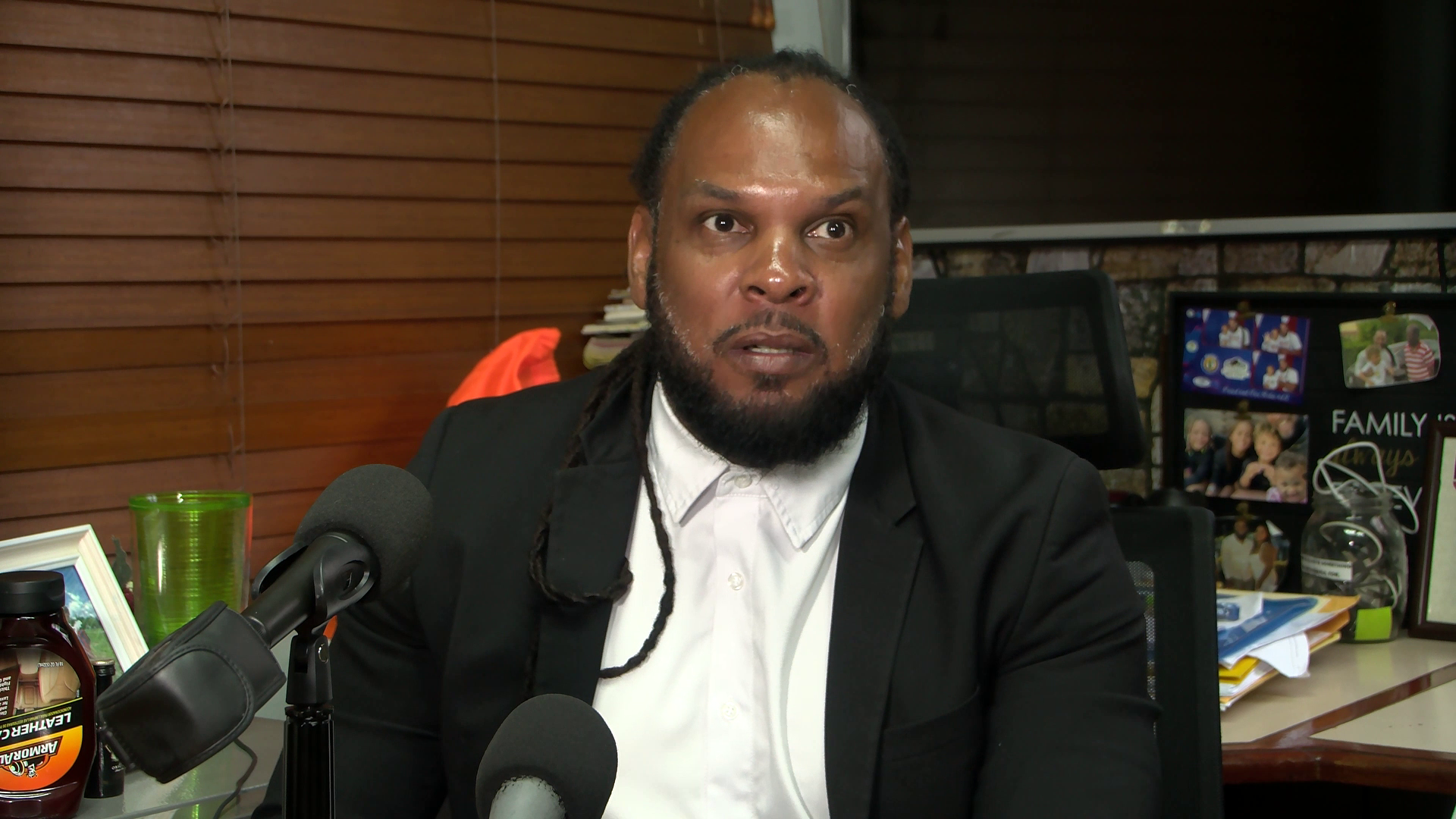
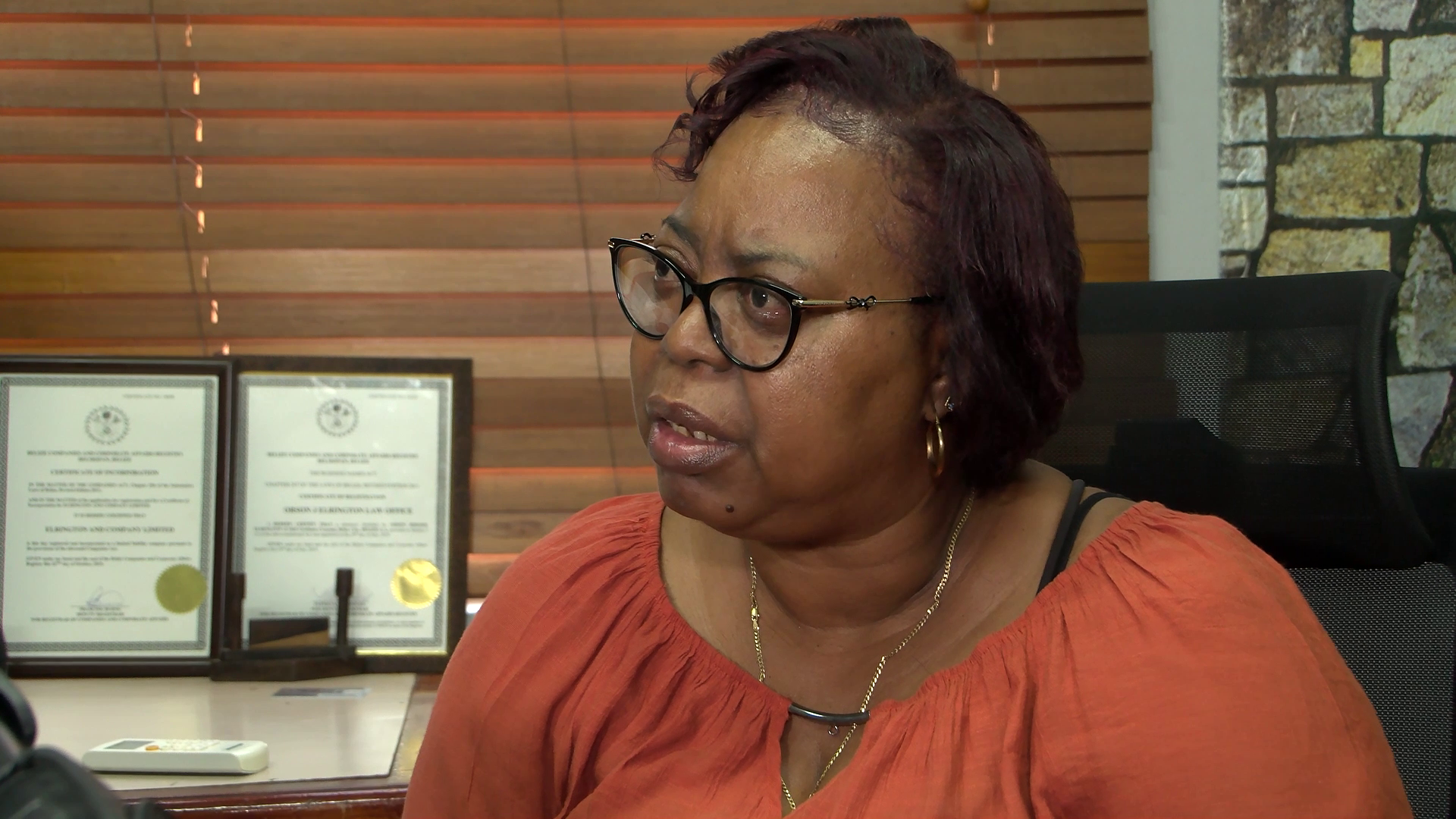
    In Belize City on April 22, 2026, Opposition Leader Patrick Faber launched a scathing attack on the ruling Briceño administration amid a fresh wave of high-profile violent incidents that have dominated local headlines. Speaking at a press briefing hosted by his United Democratic Party (UDP), Faber accused the current government of allowing a national public safety crisis to spiral unchecked, citing a string of recent homicides, unexplained disappearances and kidnappings as evidence of the administration’s failure to maintain control over crime rates.

    Faber pointed to the most recent killing to underscore his critique: the discovery of a young man identified as Cambranes dead along Boom Road earlier the same morning. He went on to note that over the preceding 10 days, the country has been shaken by a pattern of disturbing violence, including missing persons, bodies recovered from remote swamplands, and multiple abduction cases.

    To draw a contrast with the previous UDP government led by former Prime Minister Dean Barrow, Faber recalled that even small clusters of two to three murders over a single weekend would trigger immediate public outcry and swift, coordinated action from the former administration. Under Barrow’s leadership, he claimed, top law enforcement officials from the national police and coast guard would have been summoned immediately for an emergency summit on Queen Street to develop urgent, targeted interventions to curb violence. Today, he argued, no such response is forthcoming.

    Faber did not limit his criticism to the government, also calling out the current Minister of Police as an ineffective leader, saying “I can’t even tell you who is the minister right now, he is a waste of time.” He further argued that the Belizean public has become complacent in the face of weak governance, claiming that citizens have softened their stance toward the ruling People’s United Party (PUP) even as the security situation deteriorates. He alleged that even seemingly positive policy moves from the PUP ultimately hide self-serving political or economic motives for the party. “every single thing that the PUP does, even if appears to be good, there is a hustle,” Faber said.

    Looking ahead, Faber confirmed that if the UDP returns to power, the party would make substantial new investments in national and citizen security a top legislative and budgetary priority to reverse the current trend of rising violence.

  • Opposition Says Bus Fare Increase Hits Commuters Hard

    Opposition Says Bus Fare Increase Hits Commuters Hard

    Scheduled to take effect this Friday, a newly approved increase in public bus fares across Belize has ignited sharp political backlash, with the country’s opposition party warning that the change will disproportionately squeeze working-class households already grappling with broader cost-of-living pressures.

    Godwin Haylock, the Opposition People’s United Democratic Party (UDP) representative for Queen Square, used a Wednesday press conference to publicly condemn the policy, arguing that the fare hike piles additional financial strain on thousands of low- and middle-income Belizeans who rely on public transit for their daily commutes to and from work.

    Haylock criticized the ruling People’s United Party (PUP) Briceño administration for a lack of empathy toward commuters, saying the government has failed to deliver any meaningful solutions to the ongoing fuel price crisis that has driven up operating costs for bus providers. “Brace yourself my fellow Belizeans, because first it was the increase in the price of fuel, but by Friday there will be increase in bus fares, leaving your pockets empty,” Haylock told reporters. “This PUP government, it is obvious, they have no solution to the fuel crisis. More than that, they have no mercy on the working class people who have to get up on that bus every single day and go back and forth to work.”

    According to projections shared by Haylock, the popular intercity route between Belize City and Belmopan will see a $2 increase in fares — a jump that he says creates an unsustainable burden for entry-level workers. As an example, he highlighted entry-level public servants based in Belmopan who earn less than $1,500 per month, translating to roughly $300 in weekly take-home pay. Under the new fare structure, Haylock calculated that these workers would face $100 in weekly round-trip bus costs alone, eating up a full third of their weekly income.

    While Haylock acknowledged that rising global and domestic fuel prices have cut into the profit margins of bus operators, he emphasized that working commuters will ultimately bear the brunt of the fare increase. To address the root of the issue, he is calling on the Briceño administration to immediately cut fuel taxes as a targeted measure to ease the financial burden on both transit providers and daily commuters.

  • Panton Accuses Government of Failing Belizean Families

    Panton Accuses Government of Failing Belizean Families

    Belize is facing a growing cost of living crisis that is squeezing household budgets across the nation, and opposition leader Tracy Panton is holding the sitting Briceño government directly accountable for the lack of relief for struggling families. Speaking at a press briefing hosted by the United Democratic Party (UDP) on April 22, 2026, Panton made it clear that skyrocketing fuel and energy costs are the core driver of the financial pressure pushing ordinary Belizean households into uncertainty.

    Panton drew a striking parallel between the current economic strain and the public uncertainty that gripped the nation during the 2020 peak of the COVID-19 pandemic, framing the current crisis as a form of “COVID 2.0” for household finances. She argued that when the UDP held national power in 2020, the party centered the needs of Belizean people in its policy response – a priority she says the current administration has failed to maintain.

    Across every region of Belize, Panton says, ordinary residents are growing frustrated, overburdened by rising prices and increasingly feel their concerns are falling on deaf ears in government. With the cost of basic necessities growing less affordable by the month, families have yet to see any substantive policy action from the administration to ease their financial strain, she added.

    As an immediate first step to deliver relief, Panton is calling on the Briceño administration to cut the existing taxes levied on fuel prices, a change that would immediately bring down everyday transportation and energy costs for households across the country.

    This report is adapted from a transcript of a televised evening news broadcast.