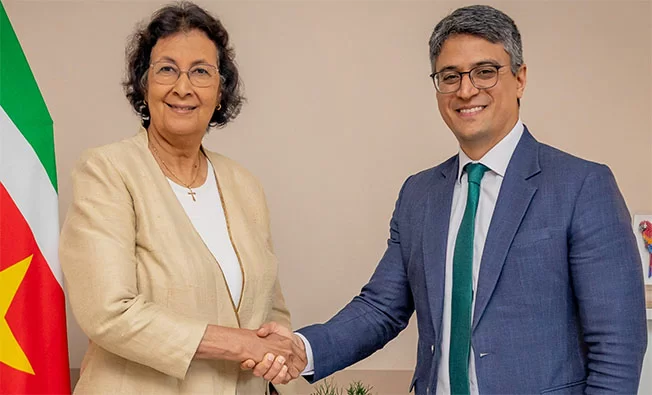
Suriname’s aviation sector has secured committed international backing for comprehensive regulatory modernization and technical capacity building. Fabio Rabbani, Regional Director of the International Civil Aviation Organization (ICAO), confirmed this strategic support following high-level consultations with President Jennifer Simons on Thursday.
The pivotal meeting addressed critical challenges facing the nation’s aviation infrastructure and outlined necessary measures to ensure safety standards, sustainable development, and sectoral growth. ICAO has pledged to guide Suriname through enhancing regulatory frameworks, safety protocols, and operational capabilities.
Rabbani emphasized that his mission specifically aimed to assess governmental commitment at the highest levels. ‘I came to Suriname to hear and understand the leadership’s vision and level of commitment regarding safety and capacity within Surinamese airport management,’ Rabbani stated. He expressed confidence in the sector’s prospects for stable expansion, noting that ICAO’s technical assistance remains ‘structurally available,’ according to Suriname’s Communication Service.
Central to the agreements reached was Suriname’s commitment to establishing both formal and informal collaborative channels with ICAO. Priority areas include updating the Civil Aviation Safety Act, reinforcing oversight mechanisms, and implementing sustainable aviation solutions.
The high-profile meeting included Minister Raymond Landveld of Transport, Communication and Tourism, NV Airport Management Director Vijay Chotkan, CASAS Director Brian De Souza, Aviation Department Head Cindy Toemin, and Presidential Advisor Faizel Baarn.
Baarn highlighted the sector’s strategic significance: ‘Aviation serves as the national gateway. With oil and gas development progressing, increasingly more processes will depend on aviation infrastructure.’
Despite acknowledging structural challenges including financing constraints, acquisition of modern equipment, and training qualified personnel—processes requiring multi-year development—Baarn expressed optimism due to governmental dedication and President Simons’ persistent advocacy.
Tangible outcomes are anticipated within six months, including parliamentary consideration of the new aviation legislation in the National Assembly.