分类: politics

  • Communists in Chile call for unity to defend social gains

    Communists in Chile call for unity to defend social gains

    Following a decisive electoral outcome that saw far-right candidate José Antonio Kast secure a substantial victory over progressive contender Jeannette Jara, the Communist Party of Chile (PCCh) has issued a stark warning about the future of the nation’s social safety net. In an official communiqué released after Sunday’s polls, the party emphasized that fundamental achievements including the Universal Guaranteed Pension, the 40-hour workweek, free public healthcare, women’s rights, and broader social protections face imminent risk in a politically fragmented society.

    The PCCh framed national unity not merely as a strategic electoral choice but as an essential obligation to the citizenry. While acknowledging and respecting the democratic will expressed through the ballot box, a customary practice for the party at every historical juncture, it simultaneously issued a call to action for its members and the general populace to embark on a process of rebuilding collective trust.

    Central to its message was a directive for deeper listening and a renewed focus on engaging the entire country in conversations about core issues. The party leadership stressed that ensuring a dignified and just life for all citizens remains an achievable goal. Furthermore, the statement formally recognized the extensive efforts of candidate Jeannette Jara and her campaign team. Looking forward, the PCCh underscored the critical importance of returning to grassroots mobilization within local communities and identified forging a stronger, more inclusive unity among the Chilean people as the paramount task ahead.

  • Attorney General Suggests The Need for A Senate Should Be Reviewed in Constitutional Reform Push

    Attorney General Suggests The Need for A Senate Should Be Reviewed in Constitutional Reform Push

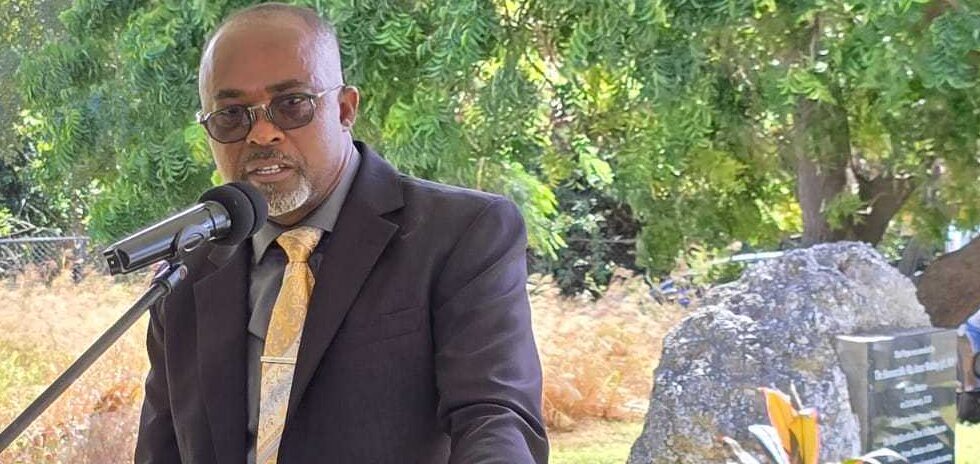
    Antigua and Barbuda’s Attorney General Sir Steadroy “Cutie” Benjamin has ignited a constitutional debate by questioning whether the nation’s Senate remains necessary for effective governance. During parliamentary proceedings on Tuesday, Benjamin challenged longstanding political structures, suggesting the country should consider transitioning to a single-chamber parliamentary system.

    The senior legal official contrasted the theoretical role of upper chambers with Caribbean realities, noting that while senates in systems like Britain’s serve to review legislation and provide corrective guidance, this ideal has not materialized in the regional context. “In the Caribbean, it is not exactly the case,” Benjamin observed, referencing regional discussions about eliminating senates entirely, as occurred in Dominica.

    Benjamin’s remarks form part of a comprehensive push for constitutional modernization that has been delayed for decades. He emphasized that no institution should be immune from scrutiny in serious constitutional reviews, framing the issue as one of national maturity rather than partisan politics. While not explicitly calling for immediate abolition, the Attorney General made clear that the Senate’s relevance and functionality warrant thorough examination.

    This Senate debate occurs alongside other proposed constitutional changes, including transitioning to a republic status, modifying oaths of allegiance, and acceding to the Caribbean Court of Justice. Benjamin urged Parliament to initiate formal discussions under constitutional reform provisions, asserting that the time has come for proper review of the nation’s foundational document.

  • Attorney General Says Time Has Come for Antigua and Barbuda to Become a Republic

    Attorney General Says Time Has Come for Antigua and Barbuda to Become a Republic

    In a landmark parliamentary address, Antigua and Barbuda’s Attorney General Sir Steadroy “Cutie” Benjamin has formally advocated for initiating national discourse on transitioning to a republican form of government. The senior legal official asserted that the nation’s developmental progress and historical context necessitate completing its separation from the British monarchy.

    Benjamin presented a compelling historical narrative, detailing how the Caribbean nation endured over three centuries of colonial administration before attaining independence in 1981. “From the mid-17th century until 1967, we existed under colonial governance,” he reminded legislators, emphasizing that while independence represented crucial progress, true sovereignty remains incomplete while pledging allegiance to a foreign monarch.

    The Attorney General challenged parliamentary members to examine regional attitudes toward sovereignty, posing the provocative question: “Have we in this region grown complacent regarding our independence?” He vigorously countered assertions that the nation lacks preparedness for such constitutional evolution, highlighting the substantial legal expertise within the Ministry of Legal Affairs and enumerating the advanced qualifications of senior judicial officials.

    Benjamin directed his appeal specifically to Prime Minister Gaston Browne, urging immediate action rather than continued postponement. “At minimum, we must initiate these conversations,” he insisted, advocating for comprehensive discussions about national self-determination.

    The push for republican status forms part of broader constitutional reform initiatives, with Benjamin emphasizing that this transition should coincide with addressing other longstanding constitutional matters. “Our Constitution requires substantial revision,” he concluded, framing the republican movement as both a natural evolution and professional obligation in his capacity as the nation’s chief legal officer.

  • Attorney General Says Bill Coming to Change Oath of Allegiance Pledge To British Monarch

    Attorney General Says Bill Coming to Change Oath of Allegiance Pledge To British Monarch

    In a landmark parliamentary address, Attorney General Sir Steadroy “Cutie” Benjamin declared that Antigua and Barbuda will introduce legislation to eliminate its constitutional oath of allegiance to the British monarchy, marking a significant step toward full republican status. The proposed bill, scheduled for presentation later in the parliamentary session, seeks to replace the pledge to the monarch with a commitment to national sovereignty.

    Benjamin passionately argued that maintaining loyalty to a foreign sovereign fundamentally contradicts the nation’s independent status, achieved in 1981 after three centuries of colonial rule. “How long are we going to swear allegiance to His Majesty? How long are we going to do that?” the Attorney General challenged lawmakers during his Tuesday presentation.

    The constitutional reform initiative represents part of a broader movement toward redefining national identity in the post-colonial era. Benjamin emphasized that true independence must extend beyond governance to encompass national symbols and pledges, questioning whether the Caribbean region has become “unconcerned about our independence.”

    As the government’s chief legal officer, Benjamin framed the proposed legislation as both his constitutional duty and a necessary evolution in the nation’s journey toward complete self-determination. He explicitly called for initiating formal discussions on transitioning to a republic, urging the Prime Minister and administration to “at least invite the talk. Have discussions on those matters.”

    The Attorney General’s announcement signals a growing momentum toward constitutional revision across Caribbean Commonwealth realms, with several nations reconsidering their historical ties to the British monarchy in contemporary geopolitical contexts.

  • Pringle Credits Late Speaker Sir Gerald Watt With Shaping His Early Years in Parliament

    Pringle Credits Late Speaker Sir Gerald Watt With Shaping His Early Years in Parliament

    In a heartfelt parliamentary tribute, Opposition Leader Jamale Pringle revealed how the rigorous mentorship of former Speaker Sir Gerald Watt KC fundamentally shaped his political career. During Tuesday’s special session honoring the late jurist who passed away last week at 86, Pringle recounted his challenging entry into Parliament as the sole representative of the United Progressive Party, describing himself as a political “rookie” facing steep learning curves.

    Pringle emphasized how Sir Gerald’s uncompromising adherence to parliamentary protocols accelerated his development as a legislator. The former Speaker demanded exact citations from Standing Orders during points of order and required evidence-based substantiation for all claims made in the chamber. This disciplined approach, Pringle noted, left him no alternative but to rapidly master parliamentary procedures and refine his debate skills.

    Despite frequent heated exchanges across the political aisle, Pringle highlighted that Sir Gerald maintained impeccable professional boundaries, never allowing disagreements to become personal. The Speaker consistently separated his constitutional duties from interpersonal relationships, even during moments of intense political contention.

    Pringle shared a revealing private conversation following one particularly vigorous debate, where Sir Gerald acknowledged the opposition leader’s passion while counseling that accepting guidance would elevate him to exceptional statesmanship. This interaction exemplified the late Speaker’s commitment to nurturing political talent beyond partisan affiliations.

    The opposition leader characterized Sir Gerald as embodying legal precision through his insistence on disciplined, evidence-based discourse, reflecting his distinguished background in law and unwavering dedication to parliamentary integrity. Pringle ultimately portrayed the former Speaker as a true patriot who consistently prioritized national interests above political considerations.

    Concluding his tribute, Pringle extended formal condolences to Sir Gerald’s family on behalf of parliamentary colleagues, assuring them of the legislature’s collective support during their period of loss.

  • Europe hopes to sign agreement with Mercosur

    Europe hopes to sign agreement with Mercosur

    In a significant diplomatic development, France has formally called for the postponement of a high-stakes meeting between the European Union and the Mercosur trade bloc, originally scheduled for December. The French government contends that the necessary conditions for finalizing the long-anticipated EU-Mercosur trade agreement remain unfulfilled.

    This proposed pact represents a matter of profound importance for the European Union, impacting economic, diplomatic, and geopolitical spheres while also shaping the bloc’s global responsibilities, as articulated by EU Spokesperson Olof Gill.

    The Southern Common Market (Mercosur), established in 1991, originally comprised Argentina, Brazil, Paraguay, and Uruguay. The economic union expanded to include Venezuela in 2012, with Bolivia’s full membership recently ratified by the Brazilian Senate on November 28, 2023. Mercosur functions as an open and dynamic process designed to create a unified economic space that enhances trade and investment opportunities through competitive integration.

    Negotiations are managed by the European Commission, the EU’s executive arm headquartered in Brussels. Founded in 1958, the Commission represents the collective interest of the 27-member European Union, a political and economic partnership established in 1993 where member states delegate portions of their sovereignty to common institutions for democratic decision-making on issues of mutual concern.

    The French intervention introduces a substantial hurdle for one of the world’s most ambitious trade agreements, reflecting ongoing concerns about alignment on environmental, agricultural, and regulatory standards between the two major economic blocs.

  • Chile shifts to far right

    Chile shifts to far right

    Chilean voters have delivered a decisive victory to far-right candidate José Antonio Kast in Sunday’s presidential election, with near-complete results showing a commanding 58.16% majority. His progressive opponent Gabriel Boric, representing a coalition of left-wing and social democratic parties, captured 41.84% of the national vote.

    In his inaugural national address, President-elect Kast immediately emphasized his signature campaign theme: national security. He pledged to restore “peace and order” throughout Chile and reinforced his hardline stance on immigration policy. “Do not ask us, irregular migrants, to spend resources on you,” Kast declared. “Anyone who breaks the law has to leave.”

    The electoral outcome has triggered significant introspection within Chile’s political left. The eight-party coalition that supported Boric’s candidacy now faces mounting pressure to analyze the root causes behind their substantial defeat. Political analysts across the hemisphere are examining the factors that propelled far-right politics to unprecedented prominence in a nation traditionally known for its political moderation.

    Kast’s Republican Party secured this victory through an alliance with the extremist National Libertarian Party, which espouses ideologies aligned with Argentine President Javier Milei, alongside traditional conservative factions. This coalition successfully capitalized on widespread public concerns regarding crime rates and immigration challenges.

    The presidential transition is now underway, with Kast scheduled to assume office on March 11, marking a significant rightward shift in Chilean governance and potentially influencing regional political dynamics.

  • Venezuela condemned the attack against civilians in Bondi Beach

    Venezuela condemned the attack against civilians in Bondi Beach

    The Bolivarian Republic of Venezuela has issued a formal diplomatic condemnation through its Ministry of Foreign Affairs regarding a recent violent attack targeting Jewish civilians during a religious observance. In an official statement, the government expressed profound condolences and solidarity with the Jewish community, characterizing the assault as a ‘horrendous attack’ that violated fundamental humanitarian principles.

    The declaration emphasized that violence against civilian populations remains unjustifiable under any circumstances, irrespective of motivations, origins, or contextual circumstances. The South American nation explicitly categorized acts of hatred, intolerance, and terrorism as severe breaches of established international legal frameworks and essential human values.

    Reiterating its diplomatic stance, Venezuela renewed its dedication to fostering global peace, intercultural coexistence, and mutual respect among diverse religious traditions. The statement concluded with an urgent appeal for the universal rejection of all manifestations of violence and discrimination, positioning the nation as an advocate for dialogue and understanding in international affairs.

  • Panamanian government congratulates president-elect in Chile

    Panamanian government congratulates president-elect in Chile

    The Republic of Panama has formally extended diplomatic congratulations to Chile’s newly elected leadership following the conclusive presidential runoff. In an official statement disseminated through multiple channels, including a presidential message on social media platform X and a communiqué from the Ministry of Foreign Affairs, Panamanian President José Raúl Mulino conveyed his wishes for success to the incoming administration.

    The government’s message emphasized aspirations for the ‘well-being, stability, and development of the Chilean people’ under the new leadership. Officials further lauded the Chilean populace for their ‘exemplary civic and democratic conduct’ throughout the electoral process, characterizing it as a testament to the robustness of the nation’s institutions and its profound commitment to democratic principles.

    Reaffirming their dedication to international partnership, the Panamanian government explicitly reiterated its intent to ‘continue strengthening the historic bonds of friendship, cooperation, and mutual respect’ that exist between the two nations.

    This diplomatic exchange follows the decisive victory of right-wing candidate José Antonio Kast in the second round of the Chilean presidential election. Kast, who campaigned on a platform featuring stringent policies on crime and immigration, secured a commanding 58.16 percent of the vote. His opponent, Jeannette Jara, representing a coalition of leftist, progressive, and social democratic factions, garnered 41.84 percent. These results were confirmed with nearly all polling stations fully reporting.

  • Moscow confirms meeting between Russian and Iranian foreign ministers

    Moscow confirms meeting between Russian and Iranian foreign ministers

    Iranian Deputy Foreign Minister Abbas Araghchi is embarking on a significant diplomatic tour to Eastern Europe, with high-level meetings scheduled in both Belarus and Russia. The itinerary, confirmed by Iranian Foreign Ministry spokesman Ismail Baghaei, includes a stop in Minsk on December 15th, followed by a working visit to Moscow on December 16th and 17th.

    In the Russian capital, Minister Araghchi’s agenda is packed with strategic dialogues. On December 16th, he is scheduled to engage with representatives from the State Duma, the lower chamber of the Russian Parliament. This will be followed by a pivotal bilateral meeting on December 17th with his Russian counterpart, Foreign Minister Sergey Lavrov.

    The Russian Foreign Ministry has outlined an ambitious agenda for the Lavrov-Araghchi talks. Central to their discussions will be a thorough analysis of pressing international concerns, with particular emphasis on the evolving situation surrounding the Joint Comprehensive Plan of Action (JCPOA), commonly known as the Iranian nuclear deal. The diplomats are also expected to exchange detailed perspectives on critical regional matters of mutual interest.

    A key focal point will be the advancement of Russian-Iranian bilateral relations, which have been elevated to a new tier following the enactment of a landmark interstate treaty. This agreement, which entered into force on October 2, 2025, formally established a comprehensive strategic partnership between the two nations, marking a significant deepening of their political and economic ties. The talks in Moscow are anticipated to build upon this foundation, addressing current priorities within this intensified cooperative framework.