分类: politics

  • Young Leaders Must Help Shape Future, Says St. John’s Rural West Candidate Michael Joseph

    Young Leaders Must Help Shape Future, Says St. John’s Rural West Candidate Michael Joseph

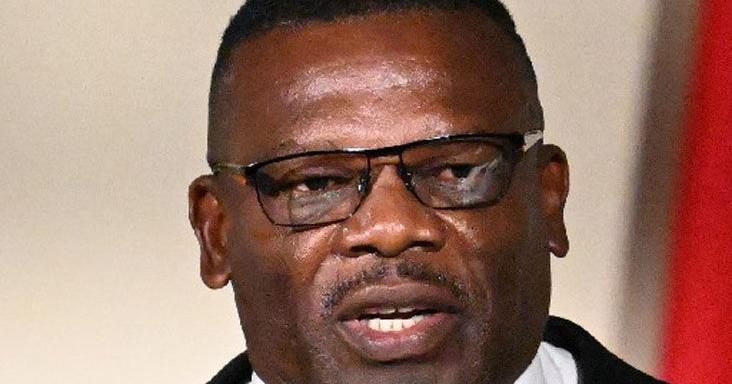
    At the official launch of the Antigua and Barbuda Labour Party (ABLP)’s flagship “Renaissance” policy manifesto, held at the American University of Antigua Conference Centre, St. John’s Rural West candidate and sitting Minister of State in the Ministry of Health, Wellness and the Environment Michael Joseph delivered a keynote address centered on three core pillars of the administration’s agenda: intergenerational governance renewal, transformative healthcare reform, and urgent climate action.

    Opening his remarks to a crowd of party supporters, Joseph pushed back against implicit questions over his appointment to public office as a young leader, framing his inclusion in the cabinet as a deliberate, values-driven choice by the ABLP administration. “Why Michael Joseph? Why a young minister? The answer is simple — because our government understands something fundamental: the future cannot be built without the youth of this nation at the table,” he stated. Positioning his tenure as an example of the party’s commitment to balanced leadership, Joseph noted that the ABLP’s approach intentionally blends decades of institutional experience with fresh perspectives and innovative thinking from emerging generations. “We believe in leadership that reflects the people… leadership that combines experience with innovation and tradition with transformation,” he explained. “I stand here as part of a generation that is not waiting for change — we are participating in it.”

    Turning to his portfolio priorities, Joseph outlined a fundamental shift in the island nation’s healthcare strategy, moving beyond a system focused solely on treating existing illness to one that prioritizes preventive care, universal access, and systemic resilience. The administration, he said, is actively strengthening primary care infrastructure to eliminate gaps in access that leave rural and low-income residents behind. “In health, we are not simply managing illness — we are transforming it,” Joseph said. “We are strengthening primary healthcare so that no citizen is left behind because of geography or circumstance.”

    He added that ongoing upgrades to hospital and clinic services are designed to equip the system to handle both routine patient needs and unexpected public health crises, while expanding focus on long-unaddressed priorities including non-communicable disease management and mental health support. Rejecting the framing of healthcare as a limited privilege, Joseph emphasized that the ABLP enshrines universal access to care as a non-negotiable fundamental right for all Antigua and Barbuda citizens. “A healthy nation is not built on hospitals alone. It is built in our homes, in our schools and in our communities,” he said. “This government believes that healthcare is not a privilege for a few, but a right for every citizen.”

    Addressing environmental policy, Joseph framed climate change as an immediate, lived reality for the small island nation, rather than an abstract debate. Antigua and Barbuda already faces growing threats from rising sea levels, shifting rainfall patterns, and increased frequency of extreme weather events that disproportionately endanger low-lying coastal communities. Unlike many global powers that delay action, Joseph said, the ABLP administration has moved forward with a practical, action-oriented climate agenda focused on boosting national climate resilience, protecting the island’s critical marine ecosystems — a core pillar of its tourism and fishing economies — and upgrading national waste management infrastructure. “We do not debate whether climate change is real. We live its reality,” he said. “We are building not just infrastructure, but resilient infrastructure… not just policies, but sustainable progress.” Even as a small island developing state, Joseph emphasized, Antigua and Barbuda is not waiting for global powers to act: the nation is taking proactive steps to cut its own emissions and build resilience, and is leading by example in regional climate advocacy. “We are not waiting on the world — we are doing our part and we are leading where we can,” he said.

    Wrapping up his address, Joseph tied these three policy priorities — youth empowerment, healthcare transformation, and climate action — together into the ABLP’s overarching “Renaissance” vision for sustained national progress. He argued that the three pillars are interconnected: investing in public health reflects a commitment to valuing every citizen’s life, protecting the environment demonstrates responsibility to coming generations, and elevating young leaders ensures long-term continuity, stability, and adaptive renewal for the nation. Joseph urged party supporters to take pride in the progress the country has made under the ABLP, while remaining focused on the work ahead to deliver shared prosperity. Positioning the newly launched manifesto as a clear roadmap for the next term of government, Joseph called on all citizens to move beyond passive observation and play an active role in building the nation’s future. “Do not underestimate what a united people, guided by purpose and driven by vision, can achieve,” he said. “Dreams are not fulfilled by spectators — they are fulfilled by believers, by builders, by those willing to serve. The path forward leads to a new era of progress and prosperity for all Antigua and Barbuda.”

  • U.S. Military Seizes Iranian Ship

    U.S. Military Seizes Iranian Ship

    On a Sunday morning in the Gulf of Oman, a tense six-hour standoff between U.S. naval forces and the crew of an Iranian cargo ship ended with the vessel being seized by U.S. Marines after Navy gunfire disabled its propulsion system, according to statements from U.S. military and political leaders. The incident, which unfolded on April 20, 2026, has already drawn fierce condemnation from Iran, which has pledged immediate retaliation and accused the United States of violating an existing ceasefire and committing open piracy in one of the world’s busiest commercial waterways.

    The operation was carried out by the guided-missile destroyer USS Spruance, operating under the command of U.S. Central Command (CENTCOM). Per CENTCOM’s official account of the incident, the Touska – the 500-foot cargo vessel targeted in the raid – repeatedly ignored multiple radio and visual warnings over six hours to turn back from a U.S.-imposed naval blockade on commercial traffic bound for Iranian ports. After the vessel continued its course toward Iranian territorial waters, military commanders ordered the Touska’s crew to evacuate the engine room before Navy personnel fired several warning rounds into the ship’s engine compartment, disabling all propulsion and steering capabilities. Once the vessel was dead in the water, a team of U.S. Marines boarded the ship and took full control of the vessel and its crew without further resistance.

    Shortly after the seizure was completed, former U.S. President Donald Trump confirmed the operation in a post on his Truth Social platform, framing the action as a decisive enforcement of U.S. sanctions policy. “The Navy stopped them right in their tracks by blowing a hole in the engine room,” Trump wrote in the post, adding that U.S. boarding parties were currently conducting a search of the vessel’s cargo holds to document what the ship was carrying. He further noted that the Touska and its operators were already subject to U.S. Treasury Department sanctions over a documented history of violating international trade restrictions on Iranian goods, justifying the use of force to intercept the vessel.

    Iran’s leadership has rejected the U.S. justification for the raid and issued a harsh formal warning of impending retaliation. In an official statement carried by state-run Islamic Republic of Iran Broadcasting (IRIB), Iran’s military command denounced the operation as “maritime highway robbery” that violates the terms of a recent ceasefire agreement between the two nations. The Iranian statement confirmed the seizure, adding that U.S. forces also damaged critical navigational equipment on the Touska during the forced boarding, endangering the crew and the vessel.

    “We warn that the Armed Forces of the Islamic Republic of Iran will soon respond to and retaliate against this U.S. armed piracy,” the statement concluded, leaving open the scope and timing of any Iranian counteraction.

    The interception of the Touska is not an isolated incident, CENTCOM confirmed in its briefing on the operation. Since the U.S. naval blockade on traffic bound for Iranian ports was implemented, U.S. forces have successfully turned away 25 other commercial vessels that attempted to break through the restriction to reach Iranian ports, marking the first time that U.S. forces have actually seized a vessel rather than forcing it to turn around. The escalation comes at a moment of already heightened tension between Washington and Tehran, raising fears of further escalation in the Persian Gulf region, a critical chokepoint for 20% of the world’s daily oil supplies.

  • First Drawdown of $100M Road Loan Expected Within Weeks, Browne Says at Manifesto Launch

    First Drawdown of $100M Road Loan Expected Within Weeks, Browne Says at Manifesto Launch

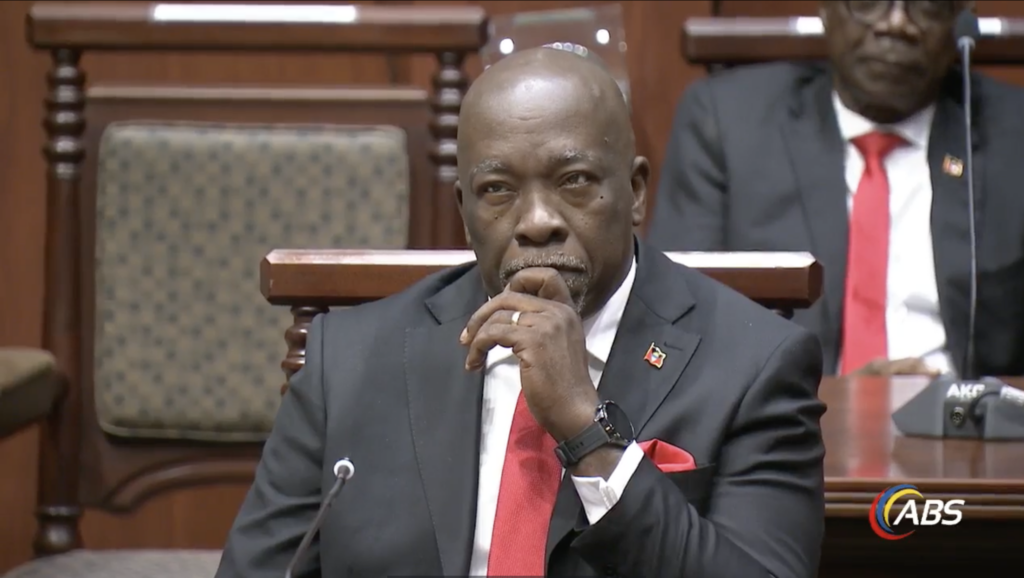
    Antigua and Barbuda is set to access the first installment of a $100 million infrastructure loan dedicated to national road rehabilitation projects within the next several weeks, Works and Housing Minister Maria Browne confirmed in a recent public announcement. The funding will accelerate the government’s long-running push to modernize the country’s aging transportation network, she confirmed.

    Browne made the announcement during the official launch of the Antigua and Barbuda Labour Party (ABLP)’s election manifesto, held at the American University of Antigua Conference Centre. She outlined that the secured financing will not only continue the long-delayed redevelopment of All Saints Road, one of the country’s high-priority infrastructure projects, but also support a broad range of drainage and road improvement works across both main islands of the nation.

    “ A $100 million loan is already finalized to keep moving forward with All Saints Road’s redevelopment and rehabilitate roads and drainage systems across the country, and we will access the first drawdown within a matter of weeks,” Browne told assembled party supporters. She positioned the multi-million dollar infrastructure investment as a core component of the ABLP’s sweeping national “Renaissance” agenda, emphasizing that upgraded transportation infrastructure is an indispensable foundation for broad-based economic growth and long-term national development.

    Browne went on to highlight the progress the current administration has already made in upgrading the country’s roads, noting that visible construction work is already ongoing across multiple districts. She listed a host of major thoroughfares that have already received upgrades through prior government investment, including Sir George Walter Highway, Friars Hill Road, Anchorage Road, Valley Road, and Factory Road. To date, she said, the ongoing infrastructure program has reached communities across the country, delivering tangible improvements to both road safety and overall mobility for residents and commercial operators.

    “Our extensive road works program has already reached communities across this nation, bringing relief to drivers who have navigated poorly maintained roads for years, improving safety for all travelers, and restoring pride in our public infrastructure,” Browne said.

    While acknowledging the gains the government has already delivered, the minister stressed that considerable work remains to bring the entire road network up to modern standards. The newly secured $100 million financing, she explained, will allow the government to expand both the pace and the geographic scope of repair and upgrade works across the country.

    “We know much has been achieved, but we are mindful that much is to be done,” she said.

    Browne also linked strategic infrastructure investment to the everyday economic experiences of Antigua and Barbuda’s residents, explaining that reliable, well-maintained roads are critical to reducing transportation costs for households and businesses, while opening new economic opportunities for communities across the country. She added that the current government’s approach prioritizes proven, results-driven infrastructure investment rather than untested policy experimentation, noting that the ongoing road program has already demonstrated clear success.

    “We’re not experimenting, we are expanding a system that is already working. The proof is in the pudding,” she said.

    The national road rehabilitation program stands as one of the central pillars of the ABLP’s re-election platform, alongside other key policy pledges focused on expanding affordable housing access and advancing community development initiatives across the country.

  • Paulwell demands answers on Petrojam price cap

    Paulwell demands answers on Petrojam price cap

    KINGSTON, Jamaica — In a pointed address during the 2026/27 Sectoral Debate in Jamaica’s House of Representatives on Tuesday, opposition energy spokesperson Phillip Paulwell has publicly challenged the ruling government to deliver clear, time-bound details about the fuel price cap imposed on state-owned oil refinery Petrojam, a policy Paulwell argues has accelerated the facility’s financial decline and fostered unaccountable government interference.

    Paulwell, drawing attention to the refinery’s once-solid track record of consistent annual profits, noted that Petrojam is now staring down its third straight year of steep financial contraction, a downturn that has coincided with the implementation of the controversial price cap. Energy Minister Daryl Vaz first confirmed the policy’s existence in an April 14 post-Cabinet media briefing, where he disclosed that a $4.50 per unit cap has been placed on fuel sold by Petrojam. The measure was introduced to shield Jamaican consumers from the full brunt of global oil price spikes triggered by heightened Middle East conflict that broke out on February 28, preventing the entire cost increase from being passed on to everyday motorists and households.

    However, Vaz has already acknowledged that the cap is financially unsustainable. He warned that if the policy remains in place through the end of June, Petrojam will accumulate a staggering $11.8 billion in losses. For Paulwell, the sudden disclosure of the cap after years of declining profits raises urgent unanswered questions: When exactly was the price cap formally implemented? How does the policy align with the previously transparent weekly petroleum pricing framework that once governed the sector?

    The opposition spokesperson argued that arbitrary tampering with Petrojam’s pricing mechanism has deepened public distrust over disproportionate government meddling in the state-owned refinery’s core operations. Rather than forcing the facility to absorb unplanned cost hikes to protect consumers, Paulwell said the government should instead adjust its tax rates on fuel — a policy change that would relieve consumer pressure without putting Petrojam’s long-term solvency at risk.

    Paulwell also pushed for full parliamentary disclosure of Petrojam’s current operational standing, demanding Minister Vaz present a detailed, credible, costed strategy to return the 40-year-old refinery to sustained profitability. The facility, which has already lost billions of dollars over the past three financial years, relies on outdated technology that drags down operational efficiency and pushes up running costs. Paulwell emphasized that the previous administration had already mapped out a clear path forward, including a targeted expansion and modernization program that has since been sidelined. He rejected calls for new consultant-led assessments of alternative operating models, arguing that solutions have already been identified.

    Without full transparency and a clear recovery plan, Paulwell warned, Jamaican taxpayers will continue to be on the hook for mounting losses at a failing enterprise with no clear path to recovery. He compared the current approach of forcing Petrojam to operate under the unsustainable price cap to “carrying water in a basket” — a futile exercise that will only deliver years of continued red ink and public financial burden.

  • Paulwell wants consumers to be compensated for dropped calls and data failure

    Paulwell wants consumers to be compensated for dropped calls and data failure

    KINGSTON, Jamaica — During his Tuesday address to the House of Representatives contributing to the 2026/27 Sectoral Debate, opposition telecommunications spokesperson Phillip Paulwell has thrown down the gauntlet to Jamaica’s telecom regulators, demanding an immediate investigation into widespread consumer complaints of constant dropped calls and chronic data service disruptions plaguing mobile users across the island. Paulwell characterized the daily service failures that Jamaican consumers contend with as a damning indictment of the country’s flawed telecom regulatory framework, labeling the ongoing crisis an unacceptable breakdown of oversight that has left paying customers shortchanged. The opposition spokesman emphasized that telecommunications users across the country are being charged premium, market-rate prices for services that consistently fail to meet the minimum quality standards outlined in formal service contracts. In a formal call to action directed at the Office of Utilities Regulation (OUR), Paulwell pushed the independent regulator to treat the issue as a top priority, publicly disclose what remedial steps the agency plans to roll out to fix service quality, and explore the feasibility of implementing a formal consumer compensation scheme. This framework would provide financial restitution to customers who have lost paid service credits as a direct result of ongoing network outages and service failures, he said. Beyond the immediate service quality crisis, Paulwell also pressed the government for a full, transparent update on a long-promised new entrant to Jamaica’s competitive cellular market. Four years ago, current Telecommunications Minister Daryl Vaz publicly announced that a new provider had already secured all necessary telecommunications operating licenses and spectrum allocations to launch operations. But four years on, the new provider has yet to enter the market, leaving Jamaican consumers waiting for the promised benefits of increased competition that would lower prices and improve service quality. Paulwell demanded that Parliament receive a clear public update, pressing for answers on where the new provider stands in its launch timeline, and when consumers will finally see the tangible benefits of expanded market competition. The opposition spokesman also called for formal confirmation that the country’s legislated telecommunications infrastructure sharing policy is actually being implemented in practice, rather than just existing as a written policy. Parliament previously mandated a comprehensive national co-location framework designed to make it easier for new providers to access existing network infrastructure, lowering the barrier to entry for new market players. Paulwell stressed that this policy framework must be genuinely accessible to incoming competitors, not just a written commitment that never translates to real-world change for consumers and new entrants.

  • ‘You can’t instruct the police’, Chang tells civil society groups

    ‘You can’t instruct the police’, Chang tells civil society groups

    KINGSTON, Jamaica — Tensions between Jamaica’s top security leadership and local civil society organizations have flared once again, as National Security Minister and Deputy Prime Minister Dr. Horace Chang reiterated that no independent advocacy group has the authority to dictate operational decisions to the country’s national police force.

    Chang delivered the sharp rebuke Tuesday afternoon during his opening address for the 2026/27 Sectoral Debate held at Gordon House, Jamaica’s parliamentary building. The comment comes as the latest chapter of a long-running, combative dispute between Chang and civil society groups — most prominently Jamaicans For Justice (JFJ) — over a key policing reform demand: mandatory body-worn camera use for officers during planned operations.

    The push for expanded body camera deployment gained traction last year, when JFJ stepped up its calls amid a significant spike in fatal police shootings across the island. That period coincided with an unexpected nationwide drop in homicide rates, a trend the government has highlighted as a sign of progress in its anti-crime strategy.

    Addressing lawmakers, Chang pushed back against civil society pressure while confirming that the government has followed through on its commitment to acquire body cameras for the Jamaica Constabulary Force (JCF), with all purchased units already delivered to the service. But he emphasized that operational deployment decisions rest exclusively with the country’s top police leadership.

    “Body-worn cameras are part of modern police equipment, and the only person who has the authority and the professional capacity to instruct where they should go is the commissioner of police and his team,” Chang told the legislative chamber. “No civil society organisation can tell us where to put them. That was what was damaging the police for years. Everybody [acts like] cowboy policing and ‘donmanship’ and tell police where to go police.”

    Despite pushing back on external demands for deployment timelines and scope, Chang acknowledged that body cameras serve a critical purpose in strengthening police transparency and accountability. He added that the government is continuing its investment in the technology, with another 1,000 units already on order to expand access across the force.

    Chang also outlined his government’s broader surveillance infrastructure investment plans during the address. The Jamaica Eye Programme, the country’s national public closed-circuit television network, is on track to expand its footprint, with a target of 3,000 active cameras operational by the 2028 budget year, he confirmed.

    Closing his remarks on police governance, Chang reaffirmed the division of responsibilities between political leadership and law enforcement command. “My job is oversight and providing equipment,” he said. “[The] society holds them accountable, they do policing, and we have an excellent commissioner of police.”

    Reporting by Lynford Simpson

  • FNM promises Abaco upgrades and a larger share of revenue

    FNM promises Abaco upgrades and a larger share of revenue

    On Friday, the Free National Movement (FNM), one of The Bahamas’ major opposition political parties, launched its first campaign rally on the island of Abaco, where it revealed an extensive series of policy pledges tailored to local priorities and launched sharp criticism of the incumbent Davis administration led by the Progressive Liberal Party (PLP).

    Speaking to a gathering of more than 200 FNM supporters in Cooper’s Town, FNM leader Michael Pintard opened his address by arguing that the current national government has systematically neglected Abaco’s needs for years. He pointed to a long list of unaddressed local grievances: crumbling road infrastructure with unfilled potholes and unpaved stretches that have remained unrepaired more than four years after contracts were awarded for projects on other Bahamian islands, strained and underresourced local health systems, and outdated, inadequate recreational sports facilities. Pintard leveraged these gaps to attack the PLP’s spending priorities, contrasting large government outlays for official travel and high-profile party events with the lack of investment in basic Abaco services. “Millions for a trip, but pennies for the port here in Abaco. Millions for a rally, but only promises for your roads. Millions flowing through their slush funds while Abaco waits on a working X-ray machine,” Pintard told the crowd.

    Beyond infrastructure and public resourcing, Pintard also accused the ruling administration of failing to enforce strong protections for Abaco’s critical marine sector, which forms the backbone of much of the island’s tourism and fishing economy. He pledged that if the FNM wins the upcoming election, the party will revise the national Fisheries Act to preserve the country’s fish stocks for future generations of Bahamians.

    One key lingering issue that Pintard addressed head-on during the rally was the FNM’s past response to Hurricane Dorian, a devastating storm that hit Abaco hard and remains a source of widespread community frustration. Acknowledging past missteps, Pintard offered a public apology for the party’s flawed response, noting that the FNM is now under new leadership that has learned from past mistakes.

    The rally featured remarks from multiple FNM candidates vying for seats representing Abaco and surrounding districts. Jeremy Sweeting, the party’s candidate for Central and South Abaco, laid out the most detailed set of local pledges. Among Sweeting’s promises are the creation of a unified digital maritime platform that would cut red tape and speed up processing for boating and commercial fishing permits and licensing, a policy designed to restore The Bahamas’ status as a top global yachting destination. He also pledged to address chronic power outages by upgrading local electricity infrastructure, resurface the entire highway connecting northern and southern Abaco, construct a new public high school in South Abaco, fully reconstruct the damaged Marsh Harbour port, and reactivate Sandy Point as an official port of entry for international vessels. Additional commitments from Sweeting include expanding affordable housing subdivisions across the island, cutting wait times for Crown Land processing, increasing funding and equipment for local fire departments, and upgrading community sporting facilities.

    Terrece Bootle, the FNM’s candidate for North Abaco, emphasized her deep community roots in her address, highlighting the FNM’s past record of delivering progress to Abaco during the previous Ingraham administration. In an impassioned address to attendees, she pushed back against the ruling party’s claims of progress, telling the crowd, “Don’t talk to Abaconions about progress. We know what progress looks like.” Other FNM candidates for regional seats, including Rick Fox running for Garden Hills and Brian Brown vying for Golden Isles, also delivered pledges and fiery campaign messaging to the gathered supporters.

    Closing out the event, Pintard reiterated the party’s core economic pledges for Abaco, promising that an FNM government would roll back the controversial boating fees implemented by the Davis administration and streamline bureaucratic processes to make it easier to start and run a local business. A key policy priority he highlighted is redirecting more locally generated revenue back to Abaco, rather than sending the majority of funds to the national treasury in Nassau. “We’ll make sure that the funds that are earned in Abaco, a larger percentage of those funds remain in Abaco rather than go to the Treasury in Nassau,” Pintard said. He also confirmed that the party would double funding for small and medium-sized enterprise grants and loans from the current $50 million to $100 million to support local business growth.

    Pintard closed his remarks by appealing to undecided voters, framing the FNM as a clear alternative to the long-standing political establishment that has dominated national governance. “You should know all of these fellas are just alike, but we ain’t like them. We are asking you to support a change,” he said.

  • Florida investigating ChatGPT role in mass shooting

    Florida investigating ChatGPT role in mass shooting

    MIAMI, United States – State officials in Florida have opened a formal criminal investigation to determine if the popular AI chatbot ChatGPT contributed to a deadly 2023 mass shooting on the campus of Florida State University, state Attorney General James Uthmeier announced Tuesday.

    The investigation was authorized after prosecutors completed an initial review of digital conversations between the suspected shooter, Phoenix Ikner, and OpenAI’s ChatGPT platform, Uthmeier confirmed in an official statement. Drawing a parallel to human accomplice liability, Uthmeier asserted: “If ChatGPT were a person, it would be facing charges for murder.”

    Under existing Florida state law, any individual or entity that aids, abets, or provides counsel to a person during the commission of a criminal act can be classified as an accomplice, holding the same legal liability for the outcome as the primary perpetrator. Uthmeier’s announcement did not disclose any specific details about the content of the exchanges between Ikner and the chatbot, leaving key questions about the nature of the interactions unanswered.

    Developers OpenAI pushed back immediately against the investigation, rejecting any suggestion that the AI platform bears responsibility for the tragic attack. “Last year’s mass shooting at Florida State University was a tragedy, but ChatGPT is not responsible for this terrible crime,” a company spokesperson told Agence France-Presse in response to questions about the probe.

    The spokesperson clarified that ChatGPT only provided factual responses to queries that drew on information publicly available across the open internet, and that the platform at no point encouraged or endorsed the suspect’s plan to carry out violence or illegal activity. They also confirmed that OpenAI fully cooperated with law enforcement from the earliest stages of the investigation: after learning of the shooting, the company quickly identified the ChatGPT account linked to Ikner and turned over all relevant records to investigating officers.

    According to official law enforcement accounts of the November 2023 attack, Ikner – a student at Florida State University and the son of a veteran local deputy sheriff – carried out the shooting using his mother’s retired service weapon. Two students were killed in the rampage, and six additional people sustained injuries. Ikner was shot by responding law enforcement officers after opening fire on students across the campus, and was subsequently hospitalized with serious injuries that were not deemed life-threatening.

    Leon County Sheriff Walt McNeil told reporters shortly after the attack that Ikner’s mother was an 18-year veteran member of his department described as an exceptional employee. Ikner had participated in training programs run by the sheriff’s office, McNeil added, meaning his access to firearms was not an unexpected detail for investigators.

    Bystander video of the attack, later aired by cable news network CNN, captured footage of the suspect walking across a campus green and opening fire on students fleeing the area.

    The case shines a new spotlight on two overlapping crises facing the United States: the growing regulatory and legal uncertainty around unregulated generative AI, and the persistent epidemic of mass gun violence that has become a uniquely common occurrence in the country. The U.S. Constitution’s Second Amendment protects an individual right to keep and bear arms, a legal protection that has repeatedly blocked legislative efforts to enact stricter gun safety regulations at the federal level, even though broad majorities of the American public consistently support tighter restrictions on firearms sales, including limits on high-capacity ammunition magazines.

  • Family island leaders decry lack of power and delayed pay

    Family island leaders decry lack of power and delayed pay

    When The Bahamas’ Progressive Liberal Party (PLP) took office under the Davis administration, it laid out an ambitious “Blueprint for Change” centered on revamping local governance and unlocking long-delayed development across the country’s smaller Family Islands. Three years into the current term, senior local government leaders say the initiative has delivered uneven results at best, with many core pledges still unmet despite legislative progress and scattered infrastructure wins.

    A cornerstone of the administration’s reform agenda was the 2024 Local Government Bill, designed to devolve greater power over community projects, planning, and revenue generation from the national capital in Nassau to locally elected island councils. Government officials argue the legislation successfully expanded councils’ financial autonomy and created new avenues for public participation, marking a meaningful step toward the PLP’s campaign goals. But top local councillors across multiple islands told The Tribune that central control remains entrenched, leaving elected local leaders with too little authority to address pressing community needs.

    Marvin Campbell, chief councillor for Acklins, pointed to outdated approval rules that require all municipal contracts worth $5,000 or more to be signed off by national officials in Nassau. “We know the contractors on this island. We know what projects our community needs,” Campbell argued. “If the people elected us to serve, we should be competent enough to manage a $5,000 contract. If we can’t do that, there’s no reason for us to hold these positions.”

    Clay Sweeting, the national Minister of Local Government, defended the central approval requirement, noting that both national and local bodies are bound by the Public Procurement Act to uphold mandatory standards of accountability and transparency for public spending.

    Concerns over limited local autonomy are not isolated to Acklins. In Central Abaco, councillor Roscoe Thompson said local leaders are often expected to respond to urgent community emergencies—including wildfires—yet lack the independent authority to take immediate action. “When there’s a fire, we have to call the Disaster Risk Management authority or our members of parliament just to get help clearing fire breaks,” Thompson explained. “As for the empowerment this new act was supposed to bring local government? To us, it’s just hogwash.”

    Beyond decision-making authority, the PLP also failed to deliver on a key fiscal promise: a planned 10% annual increase in local government budgets phased in over five years. To date, only one incremental increase has been implemented since the administration took office—a fact that has left many local councils struggling to cover basic operational costs.

    In Mayaguana, Deputy Chief Councillor Cleveland Brown says local elected officials and community workers are still waiting for back pay owed since January, with payments consistently delayed. “They haven’t been here since December, and when they do come to pay, they only cover one month. They owe a lot of people a lot of money,” Brown said, describing the ongoing fiscal situation as “terrible.” Minister Sweeting attributed the delays to a recent break-in at a Mayaguana government facility that required security upgrades, including the installation of a new safe. He also noted that the single budget increase already implemented marks the first raise for local government budgets in more than 20 years.

    Broader structural reforms also remain unfinished. The administration’s plan to establish a formal local government system for New Providence, the country’s most populous island, has yet to be realized. Infrastructure investment across the Family Islands has also progressed unevenly: while key clinic upgrades in Abaco and drainage improvement projects in Acklins broke ground, many projects have stalled mid-construction, and critical needs from road repair to healthcare access remain unaddressed across multiple districts.

    Campbell confirmed that work on two critical clinics in Acklins’ Salina Point and Spring Point started but has been idle for months. “I can’t say for sure why it stopped—whether it’s a funding shortfall, a dispute with the contractor, or something else entirely,” he said. “All I know for sure is that money was spent, and work was underway before it stopped.”

    The administration also pledged to improve air and ferry connectivity to the Family Islands to boost tourism and local business. While increased airline capacity has been rolled out for popular destinations including Eleuthera, Exuma, and Abaco, smaller less tourist-heavy islands have seen no improvement. Inagua still only receives twice-weekly service from national carrier Bahamasair, a limitation Campbell says has devastated local businesses. “A lot of businesses are losing money. Lodges are losing money. Ordinary people are losing money all because of this terrible airlift service,” he added.

    Brown went further in his criticism of the administration, accusing it of outright neglecting Mayaguana and calling for the island to be designated an official port of entry to unlock new tourism opportunities and job growth for local residents.

    For its part, the Davis administration maintains that its Family Island development program represents the largest investment in local island infrastructure in decades, with hundreds of millions of dollars already allocated and spent. The government’s own public “Blueprint for Change” progress tracker lists most local government commitments as fulfilled, with only the full series of budget increases and the New Providence local government system still marked as outstanding. Healthcare, transport, and public service upgrades across the Family Islands are noted as ongoing works in progress.

  • US official says gas prices have peaked despite Iran war

    US official says gas prices have peaked despite Iran war

    Less than 24 hours after President Donald Trump publicly called out his top energy official for a more muted assessment of volatile fuel costs, US Energy Secretary Chris Wright has offered a sunnier outlook, telling a Senate committee Tuesday that national gasoline prices appear to have already hit their highest point following a jump tied to escalating tensions around the Iran conflict.

    Speaking before the Senate Energy and Natural Resources Committee, Wright acknowledged that long-term forecasts for energy markets remain uncertain, but pointed to early market indicators that suggest the recent upward price spike has already run its course. “I don’t know the future of energy prices — often I will speculate or look at those things. I would say, gasoline prices, it looks like they peaked about a week or so ago,” Wright told the panel during the oversight hearing.

    Wright also drew a direct comparison between current price levels and the record peaks recorded under the prior administration of Joe Biden, noting that this year’s highest per-gallon price remains one full dollar lower than the all-time record set during Biden’s tenure. He framed the current price trajectory as a notable win for the administration even amid ongoing geopolitical upheaval in one of the world’s most critical energy-producing regions. “Yet we’re in the midst of ending a 47-year conflict in the Middle East, a major energy-producing region,” he added, positioning the administration’s handling of energy markets as a strong point amid widespread public concern over household fuel costs.