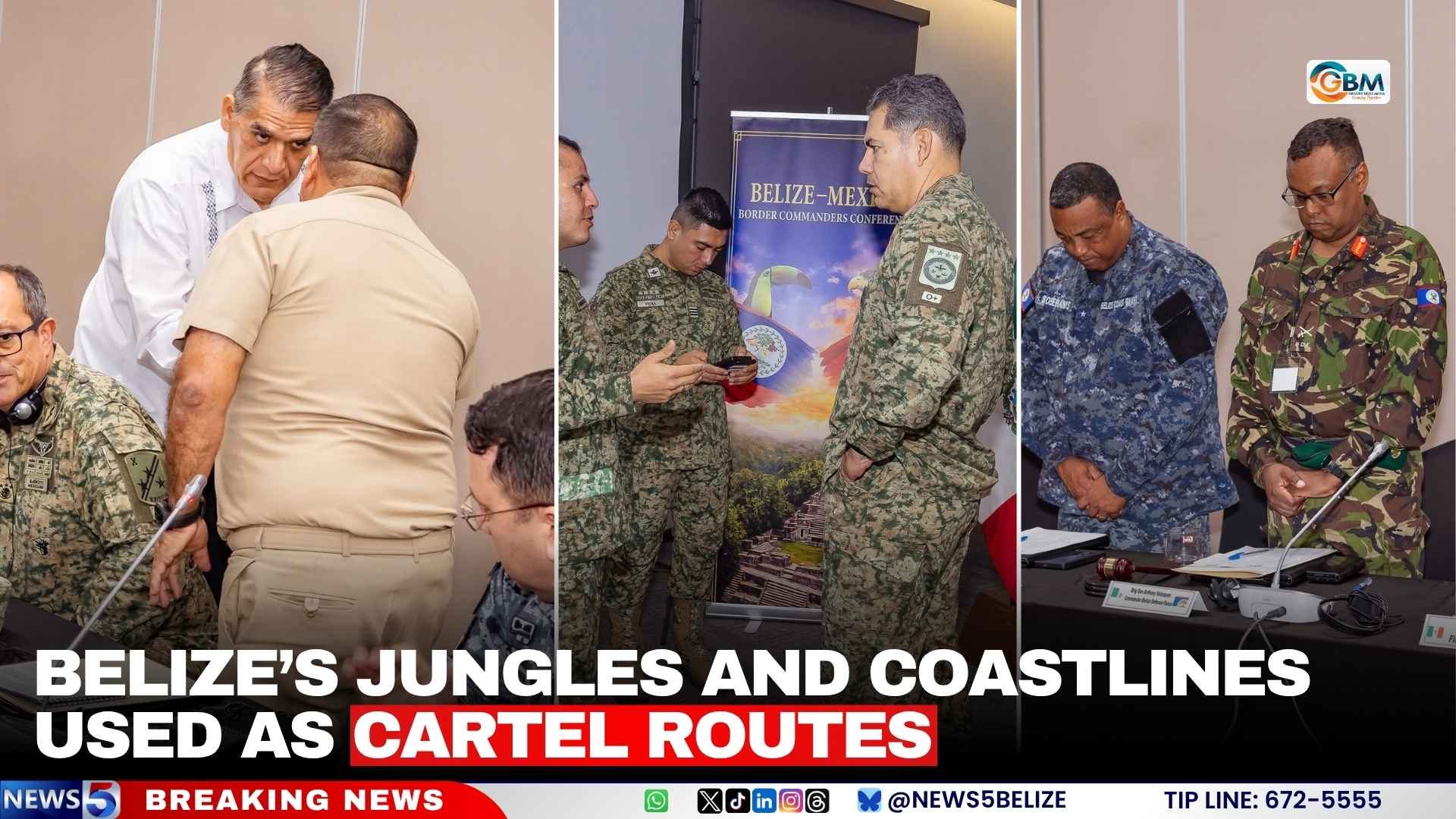
On June 12, 2026, senior military leaders from Belize and Mexico gathered in Belize City for the 21st iteration of the bilateral Border Commanders Conference, where the two nations formally recommitted to deepening cross-border security collaboration to dismantle drug trafficking operations that have exploited Belize’s remote jungles, unmonitored river systems, and extensive coastlines for decades.
The high-level meeting opened with a keynote address from Florencio Marin Jr., Belize’s Minister of National Defence, who opened his remarks by acknowledging a long-standing diplomatic tie: Mexico was the first sovereign nation to formally recognize Belize’s independence back in 1981. Marin emphasized that transnational criminal networks have systematically taken advantage of the rugged, sparsely populated shared terrain between the two countries to move illicit drug shipments, presenting a growing threat to the security and stability of both nations. He stressed that unilateral action cannot address this networked threat, stating, “Standing isolated against such a threat is not an option. To defeat a networked adversary, we must operate as an interconnected, seamless network.”
The conference brought together top security officials from both sides: senior commanders from the Belize Defence Force and Belize Coast Guard met with their counterparts from Mexico’s national army and navy to align strategies for countering organized criminal activity across all domains. Attendees discussed plans to expand coordinated patrols on land, at sea, and in the air, as well as to strengthen real-time intelligence sharing that allows security forces to disrupt trafficking operations before shipments move across the border.
By the close of the conference, delegations from both countries signed formal, bilingual agreements — drafted in both English and Spanish — that codify the new framework for closer coordination. The updated partnership creates a more unified front against cartel activity, closing critical gaps that criminal networks have long exploited to move illicit goods through Central America’s transit corridors.