分类: politics

  • As Gun Rules Ease, Where Are the Bullets Going?

    As Gun Rules Ease, Where Are the Bullets Going?

    In a policy shift set for April 23, 2026, Belize’s Firearms Control Board has moved to roll back regulations on select gun accessories and end a long-standing ban on .223 caliber rifles, reopening a long-simmering public debate: with looser gun rules in place, will illegally diverted ammunition end up in the hands of criminal groups?

    For decades, residents of Belize have raised persistent alarms that legally purchased ammunition is flowing through a covert pipeline from licensed gun owners to the black market, fueling violent crime across the country. Now, as the country expands civilian access to firearms and ammunition, communities and policymakers are questioning whether existing regulatory frameworks can stop this diversion from growing into a larger public safety threat.

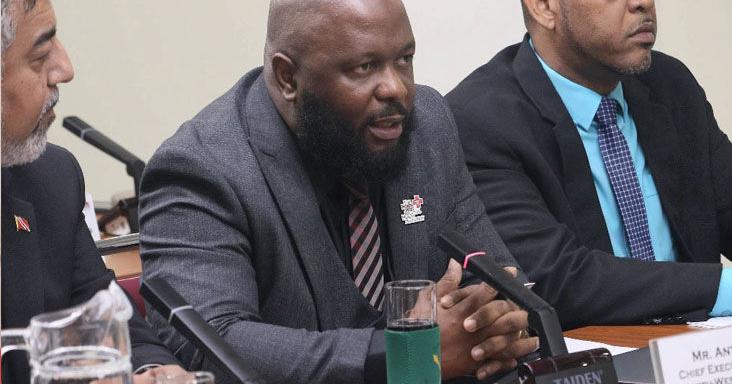
    Francis Usher, CEO of Belize’s Ministry of National Defense and sitting member of the Firearms Control Board, laid out the government’s strategy to address the risk in an interview with local media. The core of the regulator’s approach is a major modernization of tracking and oversight, moving away from outdated paper-based systems to a fully digital ammunition monitoring infrastructure.

    Under the new framework being rolled out, every round of ammunition sold to a licensed holder will be logged in a centralized digital system immediately after purchase. The platform will record key details: the number of rounds bought, the date of transaction, and the manufacturing batch number of the product. To enforce accountability, regulators will implement unannounced random spot checks, cross-referencing a license holder’s purchase records with their reported use.

    For example, if a gun owner purchased 200 rounds of ammunition but reports no recent trips to an authorized shooting range, regulators will follow up to confirm the location and quantity of the unspent rounds, closing loopholes that previously allowed unaccounted-for ammunition to be diverted to criminal networks. Usher emphasized that while the new system is still under development and will never be completely flaw-proof, the Firearms Control Board is continuously refining the framework to improve public safety for all Belizeans.

    “It’s not a perfect system yet. It probably never will be a perfect system but every day that the board is there, we try to develop it so that it gets safer for Belizean,” Usher said, adding that regulators are prioritizing closing regulatory gaps before they can be exploited by criminal actors, with the ultimate goal of ensuring every round of legally sold ammunition can be traced and accounted for.

  • Construction of Caye Caulker Police Station to Resume

    Construction of Caye Caulker Police Station to Resume

    Community pressure has forced a major policy reversal from the Belizean government, clearing the way for the long-awaited construction of the Caye Caulker Police Station to restart on the originally earmarked public parcel. The controversy ignited after a private offer was made for Parcel 815 – the plot of land reserved years ago for the new police facility – sparking widespread panic among island residents that the critical public safety project would be scrapped, and the valuable coastal property would be transferred to private ownership.

    For weeks, Caye Caulker residents organized to oppose the proposal, staging public protests, gathering signatures for a formal petition led by the local Village Council, and escalating demands for the government to honor its original commitment to build the police station on the designated site. Following the sustained public backlash, Belize Rural South Area Representative Andre Perez announced on April 23, 2026 that the government would reject the unsolicited private offer and immediately restart construction on Parcel 815.

    Perez clarified that the proposal to redevelop the parcel was never a finalized deal, emphasizing that the offer had only been under preliminary review when the Easter contractor break created a natural pause in the project. “We are listening to the concerns of the Caye Caulker community, and they have made clear they want the police station built on Parcel 815, where it was originally planned,” Perez stated in an interview. “As a result, we have agreed to move forward as planned, and contractor mobilization will get underway next week. I respect the will of the people of Caye Caulker, and there was never any confirmed sale, signed paperwork, or finalized negotiation for the property. It was just an unsolicited offer, and we have chosen to set it aside.”

    But while the government’s reversal has been hailed as a win for community organizing, the controversy has exposed deep-rooted concerns over transparency in public land decision-making on the island. Caye Caulker Village Council Chairlady Seleny Villanueva-Pott, who led the community’s pushback, said residents remain cautious, noting that the government’s public announcement lacks clarity and the core issue of land ownership remains unresolved.

    The parcel was originally donated to the Caye Caulker community by a private owner, and the Village Council is now moving forward with formal efforts to secure full legal ownership of Parcel 815 for the local government. “The community has shown incredible unity over the past two weeks, and we have made it clear we will accept nothing less than full control of Parcel 815 for the people of Caye Caulker,” Villanueva-Pott explained. “We have launched a formal petition and are still gathering signatures, and we are already in consultation with two legal teams to explore our options. If we need to pursue legal action to secure ownership, the full community stands behind this effort. We are hopeful that this announcement means Parcel 815 will be returned to the community, but we will continue our fight until that is formally finalized.”

  • Guyana recalls High Commissioner to Canada

    Guyana recalls High Commissioner to Canada

    On April 23, 2026, Guyana’s Minister of Foreign Affairs Hugh Todd confirmed in an interview with local outlet Demerara Waves Online News that the country has recalled its High Commissioner to Canada, Keith George, who will now take up a new role as a senior advisor to Todd directly. While declining repeated questions about whether unstated personal factors contributed to the diplomat’s recall, Todd framed the move as a strategic adjustment tied to the rapidly expanding scope of Guyana’s diplomatic work, most notably the ongoing border dispute case the country has brought before the International Court of Justice (ICJ) against Venezuela.

    According to unidentified sources, George left his Ottawa diplomatic posting back in September 2025 to travel home for the funeral of Elisabeth Harper, the former Permanent Secretary of Guyana’s Ministry of Foreign Affairs who passed away after a battle with cancer. He never resumed his post in Canada following that trip, the sources added. When pressed repeatedly on whether personal issues prompted his recall, Todd repeatedly declined to comment, eventually cutting short the phone interview before ending further discussion of the topic.

    Instead of addressing speculation, Todd highlighted George’s decades of diplomatic experience and professional standing, describing the long-serving diplomat as an exceptional public servant with an unblemished, outstanding record of service to Guyana. “He served us well. There is nothing wrong with his record of service. I think he has done exemplary in terms of his diplomacy and in terms of his experience,” Todd told reporters.

    Prior to his appointment as High Commissioner to Canada, George held the position of Director of Frontiers at Guyana’s Ministry of Foreign Affairs, giving him deep specialized expertise in the long-running border dispute with Venezuela that is currently before the ICJ. That case centers on legal challenges to the validity of the 1899 Arbitral Tribunal Award that established the current border between the two South American nations. It is this specific background that makes George a critical addition to the country’s legal and diplomatic team for the ICJ proceedings, Todd explained.

    In recent months, Guyana’s ICJ legal team has lost two key figures: co-agents Elisabeth Harper and Sir Shridath Ramphal, both of whom have passed away. To fill these vacancies, the government has appointed Sharon Roopchand-Edwards, current Permanent Secretary of the Ministry of Foreign Affairs, and George as the new co-agents for the case. Carl Greenidge, a former minister under previous PNC and APNU+AFC administrations, will remain as Guyana’s lead agent for the proceedings.

    Todd added that even while George was stationed in Canada, he remained an active member of the ICJ case working group. However, coordinating the complex work of the case remotely created significant logistical and operational challenges. Given George’s unparalleled institutional knowledge of the border dispute, bringing him back to headquarters to work on the case full-time was the most pragmatic decision for the country, the minister concluded.

  • Full probe into wiped consulate computer, London trust fund row — Bramble

    Full probe into wiped consulate computer, London trust fund row — Bramble

    In the wake of the November general election that brought the New Democratic Party to power, St. Vincent and the Grenadines’ foreign affairs chief has launched a thorough public investigation into two unusual administrative irregularities at key overseas diplomatic missions.

    Foreign Minister Dwight Fitzgerald Bramble first outlined the troubling findings to lawmakers during a Tuesday parliamentary session, then expanded on the details during an appearance on Hot97 FM the following day, emphasizing his commitment to full transparency and public accountability for the new administration.

    Shortly after taking up his appointment as Consul General to New York in March, Roland “Patel” Matthews reported a shocking discovery to Bramble: every piece of data stored on the consulate’s primary computer system had been completely erased. According to Bramble, no records of previous consular operations, administrative work, or diplomatic activities were left on the device when Matthews arrived. Access to the consulate’s computer system is restricted to the sitting Consul General via personal password protection, similar to how the foreign minister controls access to his own ministerial devices, Bramble explained.

    Matthews succeeded Rondy “Luta” McIntosh, a nominee of the previous Unity Labour Party administration who took up the post in August 2022. Bramble confirmed that he has not yet spoken directly to McIntosh about the data wipe, but made clear that the former consul general will be questioned as part of the probe. The foreign minister declined to speculate on whether criminal charges will be filed against any individual, noting he is not a legal official and the investigation remains in its early stages. At present, the government is assembling a team of competent experts including specialized IT professionals to conduct a forensic review of the system and map out a full timeline of events.

    Beyond the New York consulate data issue, Bramble also revealed that the country’s new High Commissioner in London has been blocked from taking control of a charitable trust fund created to support children across the nation. The fund, which receives ongoing financial support from European benefactors, is formally managed through the London High Commission and requires two authorized signatories for all transactions: one being the sitting High Commissioner, and a second who was an advisor to the previous Unity Labour Party government.

    Bramble voiced public confusion over why the former government advisor was added as a co-signatory to the charitable account in the first place. Now, when current High Commissioner Brereton Horne and the new administration attempt to update the signatory list and bring the fund fully under official diplomatic control, they have faced stiff resistance from both the former High Commissioner and the ex-government advisor. Bramble said the deliberate obstruction creates the unsettling impression that the outgoing officials view the charitable fund as personal property, rather than a public resource for vulnerable children. “These things must stop,” he declared.

    Bramble framed the decision to publicly disclose both incidents as a core fulfillment of the new Godwin Friday government’s campaign promise of open governance and accountability to voters. “The people voted me to work for them,” he said. “As long as I am there, I am going to do what I have to do to make sure that I serve the people.” He added that he welcomes fair, objective criticism of the administration’s work, noting that no government is perfect and there is always room to improve. Uncovering administrative irregularities inherited from the previous government, he argued, is a necessary first step to building meaningful progress for the nation moving forward.

  • Private Landowners Caught in Maya Land Dispute Down South

    Private Landowners Caught in Maya Land Dispute Down South

    In the remote Toledo District of southern Belize, a long-simmering conflict over Maya customary land rights has escalated from a theoretical policy debate to an on-the-ground standoff that has split communities apart, leaving private landowners trapped between legal title and escalating communal claims. As the Belizean government struggles to deliver on years of promised legislation to formalize Indigenous land rights, all sides report feeling disenfranchised, raising the prospect of new court battles that could delay a resolution for even longer.\n\nAt the heart of the clash is a fundamental collision of two deeply held claims to land: Indigenous Maya communities argue that communal land tenure is a core part of their cultural heritage and survival, tying their identity, food sovereignty and spiritual practices to collective stewardship of the territory they have occupied for centuries. On the other side, more than 8,000 private landholders in the district hold government-issued legal titles to their properties, protected under Belize’s constitution, and say they face growing pressure from neighboring Maya villages that have laid claim to their land. The Toledo Private and Lease Landowners Limited, which represents these landholders, has warned that competing demands and misaligned expectations are eroding trust and stoking social friction across every village touched by the dispute.\n\nTasked with navigating this delicate divide is the Office of Indigenous Peoples’ Affairs, whose director Gustavo Requena has emerged as a key mediator working to keep open lines of communication between rival stakeholders. In an interview, Requena acknowledged the legitimacy of both sides’ positions, emphasizing the complexity of striking a fair balance.\n\n“As a Maya person it is easy to understand why the Maya people want communal land. It is a part of our heritage. That is how we work, our dependency on the land for our very existence, whether that be our food, our spiritual needs, all of these things that make us Maya people,” Requena said. “At the same time, we can understand that we have over eight thousand private land owners within this district and the constitution protects their rights to private property. So it is about trying to create this balance and that is what the Office of Indigenous People’s Affairs does, try to be the neutral voice in all of these conversations – and that is not easy.”\n\nDespite ongoing mediation efforts, progress on national legislation to codify Maya land rights has stalled for years, leaving frustration at a boiling point. All major stakeholders – private landowners, Maya communities, and the Toledo Alcaldes Association – report that their concerns have been ignored by policymakers, and the standoff shows no signs of de-escalation.\n\nChester Williams, CEO of the Ministry of Indigenous Peoples’ Affairs, admitted that the deadlock will almost certainly lead to new litigation, as both factions believe their interests are not being adequately represented in the draft legislation. Still, Williams pushed back against widespread criticism that the current administration has dragged its feet on the issue, saying the prime minister has issued a direct order to pass the law before the government’s current term ends.\n\nWilliams noted that the issue’s extraordinary complexity has thwarted progress for previous leaders, pointing to his predecessor Liselle Alamilla, who served as commissioner of Indigenous Peoples’ Affairs for five years without delivering a final resolution. “I don’t think it is because she did not want to, but rather because of the complexity of the issue. If it was easy, she would have gotten it done within the five-year time,” Williams said, adding that Alamilla has since shared valuable insight from her tenure that is guiding the current government’s work. “We have to ensure we look after the interest of every person who are going to be affected. This is not something the government can just wake up and say we are going to do this.”\n\nFor now, deep divisions remain between all parties involved, as the government forges ahead with a legislative process that officials acknowledge is fraught with complexity, but necessary to resolve one of Belize’s longest-running Indigenous rights disputes.

  • Gonsalves opposes motion on national dev’t bank

    Gonsalves opposes motion on national dev’t bank

    A heated parliamentary debate has emerged in St. Vincent and the Grenadines over the New Democratic Party-led government’s plan to establish a new national development bank, a proposal that is drawing sharp pushback from the country’s newly ousted former prime minister. Opposition leader Ralph Gonsalves, whose Unity Labour Party exited power last November after holding office for 25 years, has publicly rejected the motion introduced by government senator Chelsea Alexander, calling for a full rethink of the initiative on the floor of parliament.

    In introducing the proposal, Alexander framed the new national development bank as a core pillar of the NDP government’s agenda to restructure national economic institutions to remove long-standing barriers to inclusive growth. She emphasized that the bank would address a critical gap in the country’s financial ecosystem: young entrepreneurs and innovators operating in emerging industries are frequently locked out of traditional commercial lending, leaving promising small businesses unable to get off the ground. By offering specialized, flexible financing tailored to these groups, the new bank would bridge this capital gap, Alexander argued. Beyond funding, she positioned the institution as an open invitation for young Vincentians to challenge conventional economic thinking, embrace innovation and entrepreneurship, and reimagine the country’s traditional industries for the modern era.

    But Gonsalves, who served as finance minister for 16 years during his administration, drew on decades of institutional history in SVG to argue that the current proposal is unnecessary and poorly conceived. He outlined a long history of failed development banking attempts in the country, dating back to a 2000 initiative launched by the then-NDP administration. That effort saw all assets — including a large portfolio of non-performing loans — from the 1960s-era Development Corporation transferred to a new development bank capitalized at just EC$5 million. Gonsalves noted that the bad loans far outstripped the new bank’s capital base, leaving the institution insolvent from its launch, a stillborn project that never delivered on its promises.

    When Gonsalves’ Unity Labour Party took office in 2001, the government inherited two insolvent state financial institutions: the failed development bank and the National Commercial Bank (NCB). To resolve the crisis, the ULP restructured the sector: viable development bank loans were transferred to NCB, a special entity was created to manage non-performing assets, and a network of targeted, sector-specific financing institutions was built to replace the failed single development bank model. When the majority stake in NCB was later sold to the Bank of Saint Lucia, the new ownership phased out the micro-enterprise lending program, prompting the ULP to expand the targeted network instead of reestablishing a central development bank.

    Today, that existing ecosystem includes the Student Loan Company, the Farmer Support Company launched in 2014 with EC$5 million in seed capital, and PRYME — the Promoting Youth Micro-Enterprises initiative that offers grants up to EC$40,000 to young founders. It also includes the ULP’s widely accessed 100% mortgage program for public servants. Gonsalves argued that this distributed, fit-for-purpose network already serves all the functions the proposed national development bank claims to fill, across every key sector from agriculture and education to housing and creative industries.

    He further warned that creating a new, standalone national development bank would carry unnecessary administrative costs, and could even force the government to shutter the successful existing targeted institutions to fund the new bank. Gonsalves also raised critical questions about capitalization, pointing out that a development bank cannot operate without secure, low-cost source of capital to offer concessional lending while covering operating costs and expected non-performing loans. He noted that Alexander has not outlined a clear plan for securing this low-cost funding, calling a bank without sufficient capital a logical contradiction.

    Responding to the government’s reference to successful development banks in other regional Organization of Eastern Caribbean States (OECS) nations, Gonsalves argued that SVG’s existing institutional landscape already meets the country’s needs, and that existing commercial banks already actively seek bankable projects across all the sectors the proposal names. He also pushed back on the NDP’s framing of the bank as a key campaign promise, noting that campaign pledges are often framed broadly, but governing requires practical, grounded policy that works within the country’s actual economic context. Gonsalves clarified that he supports the government’s broad goals of inclusive economic development and supporting small and medium enterprises, but cannot endorse the proposal in its current form.

    The parliamentary debate on the motion was not completed before the statutory 5 p.m. deadline for private members’ business, and will resume at a future sitting of parliament.

  • PM rejects claim his MPs embarrassing him in Parliament (+video)

    PM rejects claim his MPs embarrassing him in Parliament (+video)

    A sharp political exchange has unfolded in St. Vincent and the Grenadines’ House of Assembly, where Prime Minister Godwin Friday has forcefully pushed back against allegations from Opposition Leader Ralph Gonsalves that unruly conduct by ruling party lawmakers is undermining his authority. The clash erupted during Tuesday’s debate on a private member motion — tabled by Government Senator Chelsea Alexander — that calls for the establishment of a new national development bank.

    During his opening remarks on the motion, Gonsalves centered a portion of his argument on the disruptive behavior of government backbenchers. He claimed that frequent unscheduled interjections and constant cross-talk from the ruling party benches not only prevented Friday from speaking on his own behalf but also weakened the prime minister’s public standing, embarrassing him before the legislative body and the public.

    The debate was ultimately suspended before a vote could take place, as the allocated time for private member motions expired before deliberations concluded. It was during this adjournment that Friday issued his sharp rebuttal to Gonsalves’ claims, turning the criticism back on the opposition leader.

    “The Honourable Leader of the Opposition talks about members embarrassing me. On November 27, the members on this side of the House embarrassed him. And let them continue,” Friday stated publicly, dismissing Gonsalves’ characterization outright. The prime minister went on to accuse Gonsalves of underestimating the competence and impact of ruling party lawmakers, noting that volume of speech does not equate to quality of argument. “It’s not who talk loud is who talk best,” he added, teasing that more unexpected political developments are on the horizon that Gonsalves has not anticipated. “And… what we have seen is that he got a surprise that he didn’t know was coming, and there’s more to come.”

    Observers widely interpret Friday’s reference to an unexpected surprise as tied to the ruling administration’s last-minute decision to postpone debate on a proposed constitutional amendment. The amendment had been listed on the House’s official Order Paper, prompting Gonsalves to launch a public campaign against the change just one week prior, immediately after the Order Paper was published.

    Gonsalves has alleged that the government’s push to amend the Constitution and national election law is a self-serving “insurance policy” designed to protect the prime minister and Foreign Minister Dwight Fitzgerald Bramble. The opposition leader’s Unity Labour Party has filed legal petitions challenging the eligibility of both Friday and Bramble to contest the November 2024 general election, a legal dispute that remains unresolved.

    Tuesday’s debate was marked by repeated disruptions from both sides of the aisle, with House Speaker Ronnia Durham Balcombe repeatedly issuing appeals for lawmakers to curb cross-talk and allow speakers to deliver their remarks without interruption. Gonsalves doubled down on his claim during his contribution, arguing that when government lawmakers interjected over his speech to respond on Friday’s behalf, it only reinforced his view that the conduct was embarrassing the prime minister.

    Beyond rejecting the embarrassment claim, Friday expanded his critique to Gonsalves’ broader approach to policy and governance, particularly in the context of the national development bank proposal. The prime minister framed the exchange as a reflection of deep ideological and policy divides between the ruling and opposition blocs, accusing Gonsalves of being stuck in outdated thinking.

    “Everything that I heard from the Honourable Leader of the Opposition displays a stunning lack of imagination,” Friday said. “You can’t govern based on simply everything that you saw in the past; you have to plan for the future. And that is what we bring to the table… a fresh approach, a new way of looking at things, more creativity, more diligence, hard work and putting the people of this country first.”

    Debate on the national development bank motion will resume at a later date, which will be finalized after Speaker Balcombe consults with Prime Minister Friday, the Clerk of the House, and motion sponsor Senator Alexander.

  • Guyanese cargo vessels again using Corentyne River free of cost

    Guyanese cargo vessels again using Corentyne River free of cost

    Last Updated: Thursday, 23 April 2026, 19:54
    By Denis Chabrol

    A simmering cross-border waterway fee dispute between Caribbean neighbors Guyana and Suriname has entered a new, uncertain phase, after a high-level government source confirmed Suriname has temporarily halted collection of controversial steep charges that previously reached over $5,000 USD per passage for Guyanese cargo vessels transiting the shared Corentyne River.

    The suspended fees included a $5,000 USD pilotage charge per trip, plus an additional $1.50 USD per tonne levy on bulk quarry exports including stone and timber produced at Guyanese concessions on the river’s western bank. The sudden pause in collection has Guyana holding out hope for a permanent, mutually agreeable resolution that restores low-cost access for its commercial shipping, but key negotiating gaps remain wide as of this week.

    Speaking exclusively to Demerara Waves Online News, Guyana’s Minister of Foreign Affairs Hugh Todd confirmed that Georgetown has yet to receive a formal response from the Suriname government to its core proposal: a return to the pre-2025 status quo, where Guyanese vessels paid a modest flat rate of just $75 USD per river crossing. Todd noted that this historic rate has long been viewed as fair and reasonable by the Guyanese government, and is the outcome the administration of President Irfaan Ali is pushing to reinstate.

    As of Thursday, however, Todd confirmed that Suriname has not agreed to roll back its new, sharply higher fee structure. “What they’re implying is that the fees that they are charging now are going to remain,” the foreign minister explained.

    The dispute escalated earlier this year after President Ali issued a warning that Guyana could implement reciprocal measures that would negatively impact Surinamese commercial operations based in Guyana. In response to that warning, authorities in Paramaribo, Suriname’s capital, offered a partial compromise: they asked Georgetown to submit a list of Guyanese vessels that it wanted exempted from the steep new fees.

    But Todd said Guyana has rejected that partial workaround, and has not moved forward to prepare the requested exemption list. “That is not an agenda item for us so far,” he said. Government agencies across Guyana are still holding internal consultations to align on a unified negotiating position and potential long-term administrative frameworks for river access, he added.

    Todd emphasized that Guyana remains committed to resolving the standoff through diplomatic channels, saying: “We’ll have to have continuous dialogue with our counterparts in Suriname because it is a matter that requires dialogue and a solution that is mutually acceptable.” The foreign minister added he remains optimistic that a bilateral resolution can be reached, despite the current impasse.

    When asked if Guyana had shared a list of Guyanese firms affected by Suriname’s new fees with Suriname’s government, Todd said disclosing specific company names “is not necessary for us.” Demerara Waves has independently confirmed that the Guyanese government has raised specific concerns about the impact of the fees on at least one major Guyanese quarry operating along the river.

  • Treasury Names Former Government Employees, Calls on Them to Make Contact Over Outstanding Matters

    Treasury Names Former Government Employees, Calls on Them to Make Contact Over Outstanding Matters

    ST. JOHN’S, Antigua and Barbuda – April 23, 2026 – The Treasury Department under Antigua and Barbuda’s Ministry of Finance and Corporate Governance has issued a formal public service announcement reaching out to hundreds of former government employees who have unresolved administrative matters requiring immediate attention.

    In line with the department’s mandate to uphold transparent, efficient management of public funds, the notice urges all individuals named on the published list to connect with the Treasury Department Helpdesk as quickly as possible. The announcement also requests members of the public who have information about the current location or contact details of any listed person to share that information with the helpdesk to speed up the resolution process.

    To complete the required outreach, individuals must submit specific documentation when contacting the helpdesk: a clear, legible copy of a valid government-issued photo ID – which may include a national identification card, passport, or driver’s license – along with full name, updated active contact number, and official confirmation of the government ministry or agency where they held their last public sector position.

    The published roster of individuals requiring follow-up spans more than 300 names, ranging from Aaliyah Martin and Aarion Ryner to Zachrias Fritz and Zamicha O’Garro, covering every letter of the alphabet. The Treasury Department has not released specific details about the nature of the outstanding matters for each individual, citing standard administrative privacy protocols, but emphasized that prompt response from all listed people is critical to ensuring proper stewardship of government finances and closing out legacy personnel and financial records.

    “This public notice aligns with our core responsibility to maintain full accountability for public resources,” a department spokesperson noted in a preamble to the announcement. “We encourage any person on this list, or anyone who can help connect us to them, to cooperate as soon as possible to resolve these outstanding items without delay.”

    The announcement was formally issued by the Treasury Department on April 23, 2026, and distributed through official government communication channels to reach as many affected individuals and their connections as possible.

  • Directeur VKI  stapt op na conflict met Raad van Toezicht

    Directeur VKI stapt op na conflict met Raad van Toezicht

    In a sudden development breaking on April 23, Juliette Colli-Wongsoredjo, the founding and long-serving director of Suriname’s Fisheries Inspection Institute (Viskeuringsinstituut, VKI), has stepped down from her role with immediate effect. The decision, outlined in an official letter addressed to Suriname’s Minister of Agriculture, Livestock and Fisheries Mike Noersalim, stems from what Colli-Wongsoredjo describes as an unworkable dynamic with the VKI’s Supervisory Council.

    At the core of the conflict is a fundamental disagreement over institutional policy direction and the legal division of responsibilities between the institute’s executive management and the Supervisory Council. According to Colli-Wongsoredjo, these divergent perspectives have eroded working relations between the two bodies, creating a dysfunctional environment that prevents effective leadership.

    Tensions escalated dramatically after the secretary of the Supervisory Council made what Colli-Wongsoredjo calls unsubstantiated and unjust claims about VKI’s policy operations. These unvetted allegations were distributed to high-level stakeholders including the President of Suriname, Minister Noersalim, and multiple sector-wide industry organizations. Critically, Colli-Wongsoredjo notes that neither the Supervisory Council nor the minister has publicly disavowed these damaging statements. In her letter, she emphasizes that the unchallenged claims have harmed her personal reputation and professional integrity, making it impossible for her to continue fulfilling her leadership duties in a responsible manner.

    Colli-Wongsoredjo has led the VKI since its establishment in 2007, and in her resignation letter she highlights key institutional achievements under her tenure. She notes that throughout her leadership, Suriname has retained full international recognition for its fisheries regulation and management systems. Most notably, she confirms that the country has repeatedly passed European Union audits, avoiding placement on the EU’s blacklist for unregulated fisheries products — a critical outcome for Suriname’s fisheries export sector.

    Following her announcement, Colli-Wongsoredjo has formally requested Minister Noersalim issue formal instructions to facilitate an orderly handover of her institutional responsibilities to a successor.