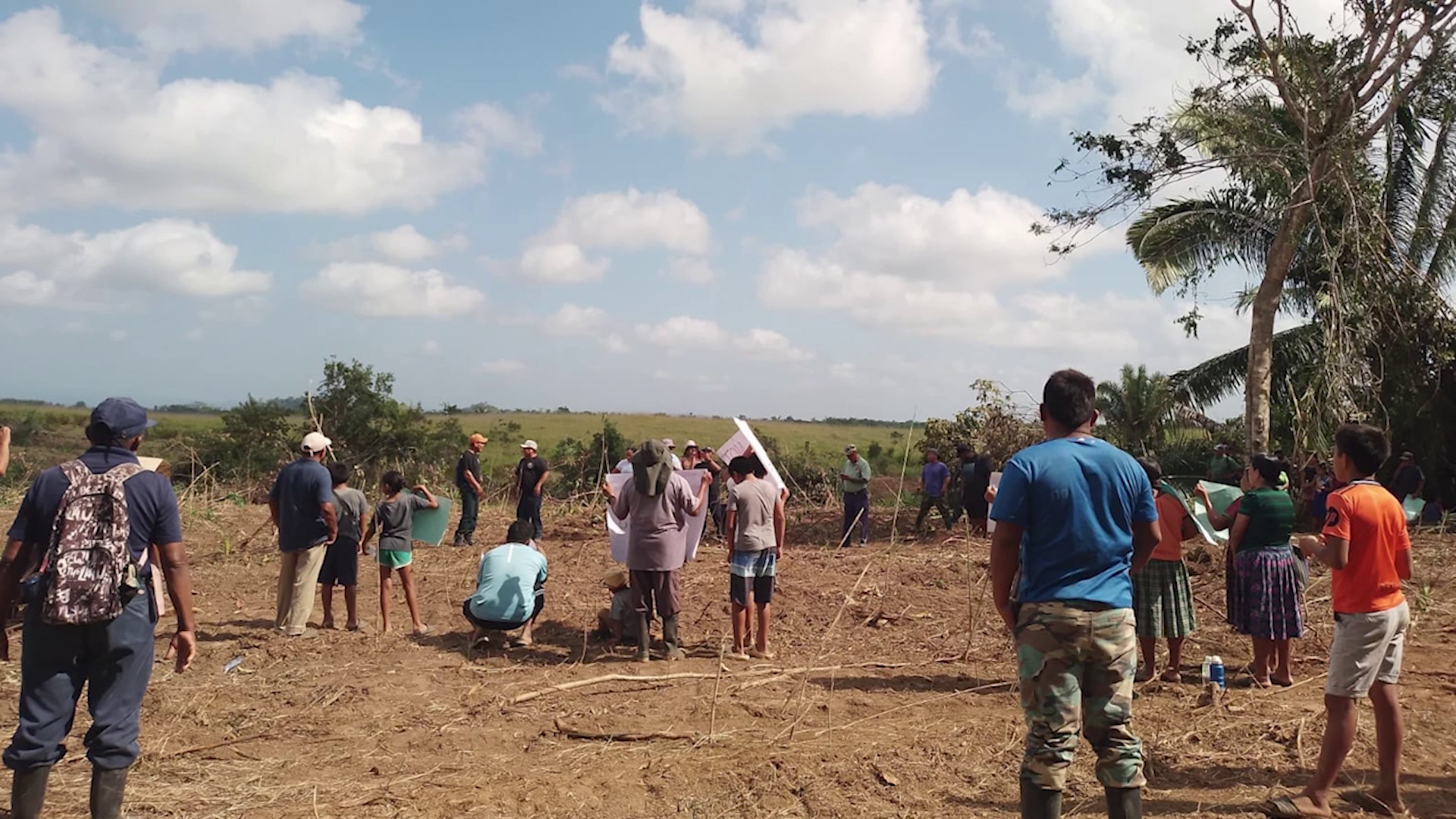
In the remote Toledo District of southern Belize, a long-simmering conflict over Maya customary land rights has escalated from a theoretical policy debate to an on-the-ground standoff that has split communities apart, leaving private landowners trapped between legal title and escalating communal claims. As the Belizean government struggles to deliver on years of promised legislation to formalize Indigenous land rights, all sides report feeling disenfranchised, raising the prospect of new court battles that could delay a resolution for even longer.\n\nAt the heart of the clash is a fundamental collision of two deeply held claims to land: Indigenous Maya communities argue that communal land tenure is a core part of their cultural heritage and survival, tying their identity, food sovereignty and spiritual practices to collective stewardship of the territory they have occupied for centuries. On the other side, more than 8,000 private landholders in the district hold government-issued legal titles to their properties, protected under Belize’s constitution, and say they face growing pressure from neighboring Maya villages that have laid claim to their land. The Toledo Private and Lease Landowners Limited, which represents these landholders, has warned that competing demands and misaligned expectations are eroding trust and stoking social friction across every village touched by the dispute.\n\nTasked with navigating this delicate divide is the Office of Indigenous Peoples’ Affairs, whose director Gustavo Requena has emerged as a key mediator working to keep open lines of communication between rival stakeholders. In an interview, Requena acknowledged the legitimacy of both sides’ positions, emphasizing the complexity of striking a fair balance.\n\n“As a Maya person it is easy to understand why the Maya people want communal land. It is a part of our heritage. That is how we work, our dependency on the land for our very existence, whether that be our food, our spiritual needs, all of these things that make us Maya people,” Requena said. “At the same time, we can understand that we have over eight thousand private land owners within this district and the constitution protects their rights to private property. So it is about trying to create this balance and that is what the Office of Indigenous People’s Affairs does, try to be the neutral voice in all of these conversations – and that is not easy.”\n\nDespite ongoing mediation efforts, progress on national legislation to codify Maya land rights has stalled for years, leaving frustration at a boiling point. All major stakeholders – private landowners, Maya communities, and the Toledo Alcaldes Association – report that their concerns have been ignored by policymakers, and the standoff shows no signs of de-escalation.\n\nChester Williams, CEO of the Ministry of Indigenous Peoples’ Affairs, admitted that the deadlock will almost certainly lead to new litigation, as both factions believe their interests are not being adequately represented in the draft legislation. Still, Williams pushed back against widespread criticism that the current administration has dragged its feet on the issue, saying the prime minister has issued a direct order to pass the law before the government’s current term ends.\n\nWilliams noted that the issue’s extraordinary complexity has thwarted progress for previous leaders, pointing to his predecessor Liselle Alamilla, who served as commissioner of Indigenous Peoples’ Affairs for five years without delivering a final resolution. “I don’t think it is because she did not want to, but rather because of the complexity of the issue. If it was easy, she would have gotten it done within the five-year time,” Williams said, adding that Alamilla has since shared valuable insight from her tenure that is guiding the current government’s work. “We have to ensure we look after the interest of every person who are going to be affected. This is not something the government can just wake up and say we are going to do this.”\n\nFor now, deep divisions remain between all parties involved, as the government forges ahead with a legislative process that officials acknowledge is fraught with complexity, but necessary to resolve one of Belize’s longest-running Indigenous rights disputes.