分类: politics

  • Column: Wanneer loyaliteit boven bekwaamheid gaat…

    Column: Wanneer loyaliteit boven bekwaamheid gaat…

    Across nations, a deeply entrenched, destructive pattern continues to plague public governance: key leadership and senior positions are consistently awarded not to the most qualified, experienced candidates, but to partisan loyalists rewarded first and foremost for their unwavering allegiance to ruling political power. This long-standing, stubborn practice inflicts lasting damage on public institutions and imposes steep, widespread costs on society as a whole.

    What often begins as a seemingly harmless gesture of gratitude—a senior role or lucrative position handed out to a faithful party supporter—quickly snowballs into systemic dysfunction when the appointee lacks the necessary professional expertise and hands-on experience for the role. The ripple effects of these unqualified appointments stretch far beyond individual government departments: widespread administrative inefficiency, stalled public projects, and all too often, overt corruption and widespread mismanagement become the new norm.

    The recent scandal at Canawaima Management Company, where the entire board of commissioners was replaced after just a few months of chaotic leadership, followed by revelations of excessive negotiation payments to the union chair, is far from an isolated incident. In fact, conflicts of interest have become the rule rather than the exception in political patronage appointments, when loyalty is prioritized over proven competence.

    When unqualified individuals hold critical decision-making positions, policy choices are shaped not by evidence and public need, but by narrow political interests. Public projects fall behind schedule, public funds are misallocated or wasted, and the quality of services delivered to ordinary citizens declines sharply. This pattern breeds widespread public frustration and erodes trust in government: how can citizens be expected to trust a system that hands power to politically compliant individuals instead of the most capable candidates?

    Real-world outcomes repeatedly confirm this damaging trend. Whether the roles in question are senior leadership in government agencies, regulatory oversight positions, or board seats at state-owned public organizations, proven expertise is too often traded away for partisan loyalty. Even at the national civil aviation authority, a core agency responsible for the safety of air travel, unqualified leadership has undermined both service quality and public safety. This is not merely an internal administrative issue—it carries severe, tangible consequences for all of society. Unqualified leaders are far more vulnerable to external manipulation and far more likely to make costly, harmful decisions that put the public at risk.

    It is long past time to break this toxic political culture. All public sector appointments must be rooted in the principles of meritocracy: professional knowledge, proven experience, and unwavering integrity should be the only criteria for selection. Only through this shift can nations build strong, accountable public institutions that prioritize the public good and earn back the trust of citizens. Unfortunately, the same damaging pattern of patronage reappears with every change of government, perpetuating the cycle of dysfunction.

    Society deserves public leaders who are selected not just for their partisan alignment, but for their proven professional competence. At the end of the day, every member of society pays the price for unqualified governance: through higher costs, compromised public safety, and the permanent erosion of trust in democratic institutions.

    Reversing this decades-long trend requires bold political courage and a deep commitment to public accountability, to build a fairer, more effective system where competence is the deciding factor in all public appointments. Only then can nations build a future where the public good is truly placed at the center of governance.

  • More than 1,000 attend debate on Islam in the Dominican Republic

    More than 1,000 attend debate on Islam in the Dominican Republic

    A controversial public forum hosted by a local Christian movement in the Dominican Republic has drawn over 1,000 attendees to Santo Domingo, centering discussion on the expansion of Islam in the country and neighboring Haiti, alongside calls for new state oversight of Islamic religious practice. The event, titled “Islam: A Threat to the Church and to the Dominican Republic?”, was held at Mahanaim Miraflores Church and organized by the Trinitarios movement, a group that frames its public advocacy around Christian and nationalist perspectives.

    The gathering brought together a cross-section of prominent Christian leaders and a sitting national legislator to unpack the topic. Heading the event were organizers Isaac B. Colón, Víctor Medina, and Robert Martínez, with a featured panel that included senior and junior pastors Ezequiel Molina Rosario, Ezequiel Molina Jr., and Junior Ponciano. Sitting Congressman Elías Wessin Chávez also joined the panel, alongside guest speaker Daniel Blanco, a former Muslim who converted to Christianity and shared his personal conversion story with attendees.

    Over the course of the forum, speakers outlined their concerns about the rising footprint of Islam in both the Dominican Republic and Haiti, warning that this growth could create unaddressed cultural and religious challenges for the Dominican national identity and the country’s majority Christian establishment. Attendees unanimously expressed public support for a draft legislative proposal put forward by Wessin Chávez that would introduce new government regulations on the practice of Islam across the nation.

    This event is not an isolated initiative, but rather part of a broader campaign by the Trinitarios movement to foster public debate on key national issues through the lens of Christian faith and Dominican patriotism, organizers confirmed. The forum’s provocative framing, which explicitly questions whether Islam poses a threat to national and religious institutions, has brought heightened attention to growing religious tension in the Caribbean nation.

  • AEI welcomes approval of real estate intermediation law

    AEI welcomes approval of real estate intermediation law

    In Santo Domingo, the Dominican Republic’s real estate sector has reached a key legislative milestone, after the national Senate gave first-reading approval to a long-awaited bill that would formalize and regulate real estate intermediation services across the country.

    The Association of Real Estate Agents and Companies of the Dominican Republic (AEI), the nation’s leading industry body for real estate professionals, has hailed the approval as a transformative step forward for the local property market. Industry leaders say the new regulatory framework will address longstanding gaps in oversight, boosting transparency, formalizing legal standards, and building greater public confidence in real estate transactions.

    Alberto Bogaert, president of AEI, extended public gratitude to the Dominican Senate for advancing the collaborative proposal. He emphasized that the core mission of the legislation is consumer protection: it will create clear safeguards for both international investors and domestic families investing in property, a demographic that makes up the large majority of participants in the local market.

    Bogaert also noted that the bill moving forward is the product of years of coordinated work between AEI members and other sector stakeholders, built on broad consensus across the organized real estate community. The legislation reflects input from agents, brokerage firms, and consumer advocates to address unregulated practices that have put buyers and sellers at risk in the past.

    Now that the bill has cleared its first reading hurdle, it proceeds to the remaining steps of the Dominican legislative process, including a mandatory second reading and review, before a vote on final approval can be held. AEI has reaffirmed its ongoing commitment to partnering with national legislative authorities, executive branch regulators, and cross-sector stakeholders to refine the bill into a balanced legal framework. The ultimate goal of the framework is to elevate industry-wide professionalism, enforce clear ethical standards for intermediaries, and establish stronger institutional oversight of the real estate brokerage sector, supporting long-term sustainable growth for Dominican real estate.

  • Abinader inaugurates Bajo Yuna Road Circuit connecting Duarte and María Trinidad Sánchez

    Abinader inaugurates Bajo Yuna Road Circuit connecting Duarte and María Trinidad Sánchez

    Dominican Republic President Luis Abinader has formally opened the transformative Bajo Yuna Road Circuit, a 49-plus kilometer infrastructure project that bridges Duarte Province and María Trinidad Sánchez Province in a long-awaited upgrade for the underserved Lower Yuna region.

    Delivered by the nation’s Ministry of Public Works and Communications, the project comprises 42.8 kilometers of primary highway and an additional 6.2 kilometers of feeder roads connecting local settlements. It links a string of previously disconnected communities—including La Reforma, Las Coles, La Jagua, El Jobo, and La Garza—to critical national transport routes, namely the Juan Pablo Segundo Highway and the Nagua–Samaná road. For more than 20,000 people living in these areas, the new connection cuts travel times and removes long-standing barriers to accessing essential public services, from hospital care to primary and secondary schooling, as well as regional commercial markets.

    Beyond connecting people, the roadway is designed to revolutionize the movement of the region’s key agricultural exports, most notably rice and cocoa. Speaking at the inauguration ceremony, Public Works Minister Eduardo Estrella emphasized that streamlined logistics will directly strengthen the sector’s competitiveness, with rice producers set to see the most significant gains from reduced transit costs and faster delivery times.

    Project planners also prioritized climate resilience in response to the Lower Yuna region’s history of frequent flooding. Custom drainage systems were integrated into the circuit’s design to ensure the route remains passable through heavy rain and flood events, delivering reliable connectivity year-round rather than just during dry seasons.

    Local community leaders have welcomed the infrastructure as a game-changer for the region. They note that the elimination of transport bottlenecks will lift local agricultural productivity, open new economic opportunities for smallholder producers, and lay the foundation for broad-based, sustainable development across the entire Bajo Yuna catchment area.

  • GTUC president calls for cost of living subsidies

    GTUC president calls for cost of living subsidies

    As Guyana kicked off its annual Labour Week celebrations on Sunday, April 26, 2026, the country’s leading trade union chief has amplified pressure on the ruling administration to roll out broad new consumer subsidies, blaming cascading global conflicts for driving up everyday costs for working Guyanese.

    Norris Witter, president of the Guyana Trades Union Congress (GTUC), made the appeal immediately after he joined fellow union representatives in laying a ceremonial wreath at the Hubert Nathaniel Critchlow monument, located on the grounds of Georgetown’s Parliament Building. The annual tribute opens the country’s Labour Week, which honors the legacy of Critchlow, widely recognized as the founding father of Guyana’s trade union movement.

    Speaking to reporters after the ceremony, Witter traced the current cost-of-living crisis in Guyana back to two overlapping global conflicts: the ongoing war between Russia and Ukraine, and the escalating tensions in the Persian Gulf. According to Witter, these dual crises have severely disrupted global supply chains, exacerbated fossil fuel shortages, and driven up prices for a wide range of essential goods nationwide.

    To counteract these inflationary pressures, Witter argued that targeted government subsidies — what he called the “invisible hand of the State” — are the most effective immediate tool to stabilize prices for basic commodities. The call comes as transportation providers across the country have already implemented fare hikes: public buses, private taxis, and domestic airlines have all raised ticket prices in response to sharp spikes in global fuel costs.

    Witter criticized the incumbent People’s Progressive Party Civic (PPPC) administration, arguing that the broad subsidy package the GTUC demands would require political will that the current government has so far failed to demonstrate. He accused the PPPC of overly aligning with Western geopolitical interests instead of prioritizing the economic needs of Guyanese workers, and called on the government to adopt a more inclusive approach that accommodates diverse perspectives from across Guyanese society.

    Currently, the government already implements limited energy-related subsidies: it covers extra fuel costs for the state-owned Guyana Power and Light utility and Guyana Water Incorporated to prevent them from passing higher fuel expenses on to residential and commercial customers. The administration has also eliminated all taxes on gasoline and diesel, and state-owned petroleum firm Guyana Oil Company (GUYOIL) sells fuel at below-market rates to act as a price anchor for private fuel importers and distributors.

    Witter acknowledged that many union members expect private and public sector employers to raise wages and salaries to help workers keep up with rising costs. However, he emphasized that the ultimate responsibility for taming inflation falls on national policymakers. “Even though the unions will have a right to engage the employers for meaningful increases, we must not lose sight of the fact that it is political managers who manage the national economy, who have that foremost responsibility to ensure that the kinds of policies and programmes are put in place to arrest the increase in the cost of living,” Witter said.

    Witter’s comments echo recent criticism from former Guyanese Finance Minister Winston Jordan, who has also called on the PPPC government to take stronger action to address the cost of living. Jordan recently recommended that the government distribute an interim salary increase to public workers using funds already allocated in the 2026 national budget, then revise the entire budget to cut non-essential spending on low-priority infrastructure projects. He has also faulted the administration for failing to roll out a public fuel conservation education campaign and implement formal policies to crack down on predatory price gouging by retailers and suppliers.

  • Abinader inaugurates RD$281 million highway project in Las Gordas, Nagua

    Abinader inaugurates RD$281 million highway project in Las Gordas, Nagua

    After more than half a century of unmet community demands, Dominican Republic President Luis Abinader has officially opened the 13.8-kilometer Mata Bonita–Los Memisos highway in Nagua’s Las Gordas district, delivering a transformative infrastructure upgrade to María Trinidad Sánchez Province.

    The new highway, constructed by the Dominican Hydroelectric Generation Company (EGEHID) with a total investment of over 281 million Dominican pesos (approximately US$5 million), delivers connectedness gains to four key rural communities: Los Memisos, Mata Bonita, Los Guayabitos, and Las Catalinas. Beyond improving daily travel for local residents, the route also cuts travel time to the Rosa Julia de la Cruz, commonly known as Boba, hydroelectric power plant, streamlining access for facility operations and maintenance.

    Engineers and construction crews outfitted the highway with a full suite of safety and accessibility features, including full asphalt paving, reinforced drainage networks, culverts for water runoff management, concrete curbs, clear road signage, strategically placed speed bumps, and reinforced slope protection to prevent erosion and landslide risks. These upgrades are designed to reduce accident rates and support smoother, more reliable traffic flow year-round, even during extreme weather events common to the region.

    Speaking at the inauguration ceremony, EGEHID administrator Rafael Salazar emphasized that the project is fully aligned with the administration’s core priorities to uplift underserved vulnerable communities across the country. Salazar noted that improved road infrastructure will strengthen emergency response capabilities for medical and disaster events, cut commute times for students traveling to local schools, and reduce transportation costs for small-scale agricultural producers looking to get their crops to regional markets.

    Local community leaders and residents have praised the initiative, noting that the new highway ends decades of geographic isolation for the area’s rural populations. Stakeholders highlighted that enhanced connectivity will unlock new economic opportunities, attract small business investment, and lay the groundwork for long-term sustainable development across rural María Trinidad Sánchez Province. The completion of the project marks a key campaign promise fulfilled by the Abinader administration, demonstrating its commitment to delivering public infrastructure improvements to underserved regions outside the country’s major urban centers.

  • Voorstel wetswijziging moet uitvaartsector strenger reguleren

    Voorstel wetswijziging moet uitvaartsector strenger reguleren

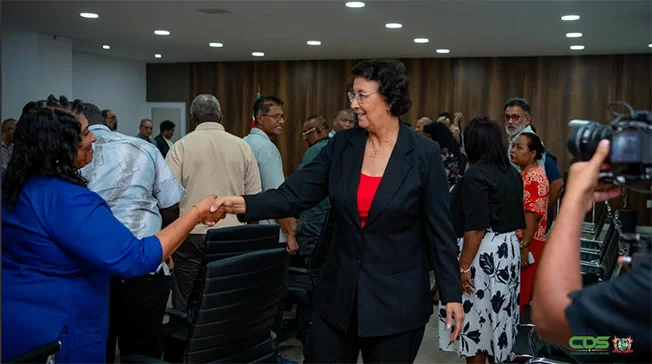
    On Friday, a working committee of Suriname’s parliament led by Iona Rogers-Edwards held an in-depth discussion on a proposed update to the country’s Burial Act, a legislative change aimed at bringing much-needed reform to the nation’s fragmented funeral services industry.

    The core goals of the proposed amendments are threefold: to expand government oversight of funeral operations, improve public health standards for body handling and burial site management, and standardize professional practices across the entire sector. The bill also seeks to introduce stricter legal requirements for the administration of public and private cemeteries, as well as formalize protocols for the respectful treatment of deceased persons, addressing longstanding gaps in current regulation.

    During the session of the Committee of Rapporteurs, stakeholders including the newly formed Collective of Funeral Undertakers, the main industry umbrella group, requested additional time to submit formal written comments on the draft legislation, a request the committee granted. Members also turned their attention to outdated fee structures for legal corpse transportation, noting that the current fixed levy of 250 Surinamese dollars (SRD) no longer aligns with current operational costs. A proposal to double the levy to SRD 500 is currently under active consideration.

    Committee members also highlighted a series of pressing systemic challenges plaguing the sector, including widespread lack of adequate safety protocols for post-mortem care, and weak enforcement of rules governing private funeral service providers. These gaps have created risks for both funeral workers and public health, the committee confirmed.

    The committee reaffirmed that stronger, more consistent regulation is a critical public priority, and all input from industry stakeholders, community groups and other relevant parties will be integrated into the next stages of the legislative process. Attendees at the Friday session, in addition to chair Rogers-Edwards, included committee members Le-Roy Doorson, Dorothy Hoever and Dinotha Vorswijk. All submitted insights and proposals will be incorporated into the draft final report for the full legislative body before a final vote on the amendments.

  • DLP marks 71 years with call for renewal

    DLP marks 71 years with call for renewal

    On the 71st anniversary of its founding, Barbados’ historic Democratic Labour Party (DLP) has used its annual Founders Day observance to invite members to celebrate its seven-decade legacy of public service while issuing a rallying cry for organizational renewal and community reconnection. The commemoration, outlined in an official media statement published Sunday, opened with reflections from acting DLP President Stephen Lashley, who walked through the party’s origins rooted in the vision of a more equal, justice-centered Barbados when it was first established on April 27, 1955.

    From its earliest days, Lashley emphasized, the DLP has never been just a political organization — it emerged as a grassroots movement driven by courage and a deep commitment to building a fair, inclusive society anchored in the principles of social justice. Over its 71 years of existence, the party has played an unparalleled role in shaping the modern Barbadian nation, delivering a series of transformative, long-lasting achievements that continue to shape daily life for Barbadians today.

    Among the most foundational contributions Lashley highlighted is the 1972 establishment of the Central Bank of Barbados, an institution created to protect the country’s monetary stability and insulate the national economy from external shocks. Beyond financial governance, the DLP spearheaded far-reaching public investments in accessible education that have unlocked opportunity for multiple generations of Barbadians, built robust social protection systems that guarantee basic dignity for citizens facing hardship, and strengthened core public institutions to embed greater accountability and effective governance across the state.

    These milestones were not random policy wins, Lashley argued: they were deliberate, interconnected steps in a coordinated nation-building project designed to construct a modern Barbadian social democracy centered on equal opportunity, shared fairness, and collective national pride. Crucially, he added, the DLP’s most lasting contribution goes beyond individual policy achievements — the party led Barbados to full independence, then built the entire institutional framework required to sustain sovereign self-governance, laying the groundwork for decades of national stability, resilience, and long-term growth.

    Decades after those foundational structures were put in place, they have stood the test of time, Lashley noted. “It was this party that laid that foundation, establishing the structures that have enabled Barbados to endure, adapt, and thrive,” he said.

    Shifting focus from the party’s historic legacy to its current path, Lashley stressed that commemoration must go hand in hand with renewal and recommitment to the DLP’s core mission. “We are called not only to remember, but to renew. Our history is a source of strength, but it is also a responsibility. It reminds us that we are heirs to a proud legacy and the custodians of a future yet to be fully realised,” he said.

    To advance that future, Lashley urged DLP members to rebuild direct ties with local communities, repair public trust, and reposition the party as the leading political voice for ordinary Barbadians. “The call now is for unity, for recommitment, and for action, guided by the clear wishes of our people. Let us reconnect with each other. Let us re-engage with our communities. Let us bring forward the full measure of our talent, our ideas, and our energy in service of Barbados. The task before us is not simply to rebuild, but to reimagine, to rekindle trust and confidence in who we are as a people, to once again position this great party as the voice of the people and a voice for national progress,” he said.

    Acknowledging openly that the DLP has faced significant setbacks and challenges in recent years, Lashley insisted that the party’s founding spirit remains unbroken. “Though we have faced recent challenges, the spirit of the Democratic Labour Party remains unbroken. Our mission endures with you, the people of Barbados, as our anchor; our purpose is clear,” he said.

    Expressing firm confidence that the DLP can achieve a full revival through intentional hard work, humble service to citizens, and abiding faith in the Barbadian people, Lashley closed by noting that the celebration of past founders must also lift up the next generation of party leaders who will carry the movement forward. The party’s future, he emphasized, will be built collectively through shared service and unwavering commitment to the DLP’s core mission.

  • Mottley calls for renewed commitment amid global challenges

    Mottley calls for renewed commitment amid global challenges

    On Sunday, during a commemorative Founder’s Day service held at Bethel Methodist Church on Bay Street, Mia Mottley – Prime Minister of Barbados and leader of the Barbados Labour Party – issued a heartfelt call for a renewed collective commitment to national progress, emphasizing that the work of building a stronger nation extends far beyond the responsibilities of elected officeholders.

    Mottley opened her remarks by framing the gathering as both a moment to seek spiritual guidance and a public appeal for widespread recommitment to the country’s development. “The work will not be done by members of parliament or ministers alone,” she told attendees, underlining that every Barbadian has a role to play in driving national growth.

    The Prime Minister highlighted three core pillars that remain critical to advancing the party’s founding mission: political education, grassroots mobilization, and unwavering dedication to public service. She argued that these values are non-negotiable for stabilizing Barbados’ long-term growth trajectory and upholding the original purpose that guided the party’s establishment. “If ever there was a time for this political institution to redouble its efforts in political education, in political mobilisation and in political commitment, in order to stabilise this nation’s growth and to stabilise our commitment to the renewal of the purpose for which we were established,” she stated.

    Acknowledging the widespread fatigue many Barbadians feel amid ongoing global and domestic challenges, Mottley noted that periods of difficulty are the ultimate test of a nation’s collective resolve. “It may seem like some to be a call to those who are already weary, and yes, I acknowledge that the distance sometimes can be long and it can carry but it is when you are tired, more often than not, that we see through history that you are tested the greatest,” she explained.

    Mottley also stressed the importance of cross-community unity, bridging both religious and political divides to pursue shared national goals. She pointed out that the gathering brought together people of all faith backgrounds, united by the understanding that political work does not override individual spiritual missions. Looking ahead to the coming year, she warned that Barbados will likely face continued headwinds, but expressed confidence in the country’s ability to navigate these challenges – a success that she says depends entirely on collective action, not just top-down leadership.

    Drawing a powerful historical parallel, Mottley connected today’s climate of global uncertainty to the era in which the Barbados Labour Party was founded, on the eve of World War II. That period, like today, was defined by widespread instability and systemic inequality: “We were founded at a time when fascism was raising its head. We were founded at a time when people were not seen and people were not heard, and the majority of the people of this country had to do as they were told, not as they wished to do.”

    She emphasized that the party’s founding mission – advancing economic enfranchisement and social justice for all Barbadians – remains just as urgent today as it was nearly a century ago. Amid rising global unpredictability, she warned that vulnerable communities are once again at risk of being left behind: “The transformation needed to resist the winds of change that allow the mighty to dominate is urgent. The least, the last and the lost are once again fighting to be protected.”

    Mottley also referenced recent conversations with progressive political leaders across the globe, where participants shared growing concern that long-held core values of equity and justice are no longer universally upheld. She urged supporters to persevere, reminding them that the fight for social progress has always demanded sacrifice. “We will not be the first to be asked to carry a heavy burden to fight injustice, nor the first to be asked to complete the journey of transformation,” she said.

    Closing her remarks, Mottley paid tribute to a deceased member of the host church before repeating her call for both individual and collective recommitment to national progress. She acknowledged that the Barbados Labour Party and the country as a whole have achieved significant gains over the years, but stressed that sustained, collaborative work remains essential to secure a prosperous future for all Barbadians.

  • Trump places statue of Christopher Columbus near the White House

    Trump places statue of Christopher Columbus near the White House

    Over the weekend, a 13-foot replica statue of Christopher Columbus — cast using fragments recovered from the original monument torn down and thrown into Baltimore’s Inner Harbor during 2020’s national racial justice protests — was installed on the White House campus, outside the historic Eisenhower Executive Office Building. The placement marks the latest step in the Trump administration’s sweeping initiative to restore controversial historical monuments removed across the United States in the wake of widespread demonstrations following George Floyd’s murder.

    The project was completed in partnership with the Conference of Presidents of Major Italian American Organizations, which coordinated the transfer of the replica to Washington to coincide with the United States’ upcoming 250th anniversary of independence and to celebrate Italian American cultural heritage. In a published letter to the organization, President Donald Trump lauded the group for its “incredible generosity” in bringing the monument to the nation’s capital, describing the original Baltimore statue as having been “torn down by anti-American rioters.”

    White House spokesperson Davis Ingle reiterated the administration’s position in a Monday statement to CNN, affirming that “as we celebrate our Nation’s 250th anniversary of independence, the White House is proud to honor Christopher Columbus’s legendary life and legacy with a well-deserved statue on the White House grounds.” Echoing the president’s framing, Ingle added that “in this White House, Christopher Columbus is a hero, and President Trump will ensure he’s honored as such for generations to come.”

    Basil Russo, president of the Conference of Presidents of Major Italian American Organizations, noted that for the more than 18 million Italian Americans living in the U.S., monuments to Columbus have long served as critical symbols of communal pride and cultural identity. “For over a century, Columbus’s legacy helped Italian immigrants navigate prejudice and hardship, serving as a source of unity and belonging as they built new lives in this country,” Russo said in the organization’s official release.

    In his own remarks on the statue, Trump expanded on this framing, calling Columbus “the original American hero, a giant of Western civilization, and one of the most gallant and visionary men to ever walk the face of the earth.” He added that Columbus’ 1492 voyage “carried thousands of years of wisdom, philosophy, reason, and culture across the Atlantic into the Americas.”

    The statue, which stands across from the Smithsonian’s Renwick Gallery and steps from the White House residence, is currently cordoned off by multiple rows of fencing and closed to close public viewing. Its installation comes as part of a broader nationwide reckoning over historical commemoration that unfolded after the 2020 racial justice protests, during which hundreds of controversial monuments — including hundreds of Confederate memorials and dozens of Columbus statues — were removed by local governments or pulled down by protesters.

    Columbus has remained a deeply divisive figure in U.S. historical memory for centuries: while long popularized as the explorer who “discovered America,” a widely repeated myth that overlooks millennia of Indigenous habitation of the continent and earlier transatlantic contact by Norse explorers, he is widely criticized by scholars and activists for his brutal exploitation of Indigenous communities in the Caribbean and his role in opening the era of European colonization that led to the mass displacement and death of Indigenous populations across the Americas.

    This installation is not the first controversial monument restoration carried out by the Trump administration in Washington, D.C. The administration has already reinstalled a statue of Confederate officer Albert Pike in the district, and has announced formal plans to return a Confederate memorial to Arlington National Cemetery in Virginia.