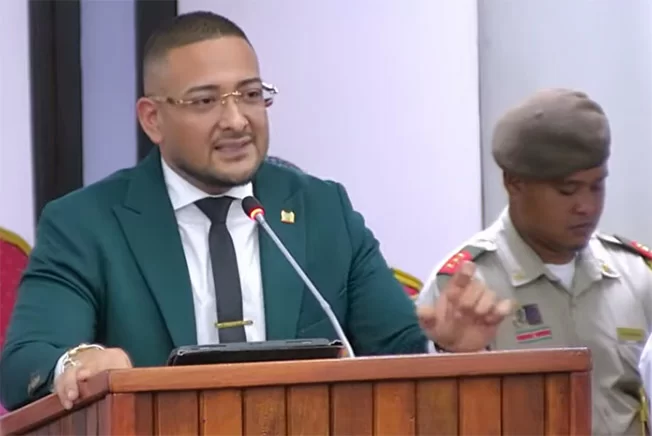
Suriname’s Minister of Defense Uraiqit Ramsaran has identified the steady outflow of military personnel as a critical threat to the operational readiness of the country’s National Army, and is advancing a comprehensive strategy to boost personnel retention and recruitment while keeping the option of reinstating mandatory conscription under careful consideration. During recent parliamentary budget debates, Ramsaran acknowledged that the armed forces have faced a steady decline in total personnel strength over a period of multiple years, noting that the crisis did not emerge suddenly but developed gradually as a result of long-standing policy gaps. The minister pointed to years of insufficient new recruitment intakes as one of the core drivers of the shortfall, which left the military unable to replace departing service members in a timely manner.
To address the growing personnel gap, the Ministry of Defense has already launched preparations for a new round of the military’s Elementary General Training (EAO). The ministry is also actively exploring a proposal put forward by members of the National Assembly to hold two separate recruitment intakes per year, a shift that would double the frequency of new personnel entry into the force. Beyond bringing in new recruits, the ministry is prioritizing retaining experienced currently serving personnel, who are increasingly choosing to leave the force for more attractive opportunities. Ramsaran outlined a suite of retention-focused changes: improved overall employment terms, higher salary allowances, expanded pathways for career advancement, and increased institutional focus on staff motivation and recognition of service members’ contributions.
Ramsaran explained that many departing service members leave the military for better working conditions offered by other employers, both within Suriname’s domestic labor market and abroad. In addition to voluntary departures for external opportunities, the minister noted that natural retirements, voluntary resignations, and desertion also contribute to the ongoing reduction in the military’s total personnel roster. While Ramsaran stressed that the accumulated shortfall cannot be resolved overnight, he reaffirmed that strengthening the National Army is a top priority for his ministry. “We will not fix backlogs with empty rhetoric, we will solve them through implementation, discipline, and a phased, structured approach,” the minister stated during the debate.
On the topic of reinstating mandatory national conscription, a policy that has been suspended since 1992, Ramsaran said the Surinamese government does not rule out the option permanently, but any final decision would require two critical preconditions: broad public support from across Surinamese society, and sufficient allocated government funding to implement the policy successfully. The minister responded to questions from National Assembly members about the prospect of bringing back conscription during the budget proceedings, noting that the Conscription Act has not been enforced since its suspension three decades ago. Previous attempts to revive conscription, including efforts in 2014 and 2015, ultimately failed due to a lack of sustained political support, Ramsaran recalled.
He emphasized that any potential reinstatement of mandatory service goes far beyond a routine policy change, calling it a transformative decision that carries substantial organizational and financial consequences. To implement a well-functioning, responsible conscription system, the government would need to make major investments in training infrastructure, barracks facilities, overall institutional capacity, and additional staffing to run the program, Ramsaran explained. While the Ministry of Defense remains open to a broad public discussion on the future of conscription, Ramsaran clarified that the government is currently prioritizing other policy measures to grow the National Army’s personnel strength. These ongoing initiatives include expanded annual recruitment intakes and the recently announced Defense Crafts and Training Program targeted at Surinamese young people.