分类: politics

  • BlackOutBTL: Trade Unions Begin Fight Against Acquisition

    BlackOutBTL: Trade Unions Begin Fight Against Acquisition

    In a coordinated pushback against a major proposed telecommunications industry consolidation, Belize’s largest trade union umbrella organization has launched the first phase of a public opposition campaign that will kick off this Friday. The National Trade Union Congress of Belize (NTUCB) has issued a public call for workers, union affiliates, and all concerned citizens across the country to wear black clothing this Friday as a peaceful, visible protest against Belize Telemedia Limited’s (BTL) planned acquisition of rival telecommunications provider Speednet.

    Branded under the campaign slogan “Wear Black. Stand Together. Let Our Voices Be Heard,” the action encourages participants to document their participation by posting photos to social media platforms with the hashtag #BlackOutBTL, amplifying the movement’s reach beyond in-person gatherings. NTUCB President Ella Waight confirmed that Friday’s public demonstration is only the opening step in a sustained campaign against the proposed deal, with further actions planned depending on public response and developments in the acquisition process.

    Union leaders emphasize that their opposition extends far beyond a simple business transaction between two private telecom firms. The NTUCB has raised a broad set of concerns that the merger will have far-reaching negative ripple effects across multiple sectors of Belize’s economy and society. Most pressing among these worries is the potential for significant job losses among communication sector workers, as consolidated companies often implement cost-cutting restructuring that eliminates duplicate roles. Beyond employment impacts, the union warns that reducing competition in the country’s telecom market could lead to higher service prices for consumers, discourage future foreign and domestic investment in the sector, and limit innovation in digital and communication services for Belizean households and businesses.

    This news report is adapted from a transcript of an evening television broadcast originally published online, with original Kriol language content transcribed using standardized spelling conventions.

  • Can the Ombudsman Really Hold Government Accountable?

    Can the Ombudsman Really Hold Government Accountable?

    Eight months after a contentious split between the Belizean government and former Ombudsman Gilbert Swaso, the position that is meant to serve as a check on state overreach remains empty. The public fallout of that separation has thrown long-simmering, structural flaws in the country’s 32-year-old Ombudsman institution into sharp relief, sparking urgent discussions across political circles about sweeping reforms designed to give the office real power to hold government accountable.

    Belize first established the legal framework for the Ombudsman Office back in April 1994 during the second administration of Prime Minister Sir Manuel Esquivel. However, the office did not begin operations for more than five years, with Paul Rodriguez sworn in as the nation’s first Ombudsman in August 1999. Widely nicknamed “the poor man’s attorney”, the role is tasked with investigating public complaints of maladministration, corruption, abuse of power, injustice and harm committed by any state authority.

    For ordinary Belizeans like cattle farmer Richard Cal, the office is the last resort when government actors inflict harm. Cal was resting on his own property in Pomona when three armed plainclothes men approached and ordered him to surrender. Fearing for his safety, Cal fled, only to be shot in the leg by the men — who only identified themselves as police after opening fire. To date, authorities have offered no public explanation for why the officers were on Cal’s farm. Left with a crippling hospital bill, months of required physical rehabilitation, and no ability to return to work, Cal’s case is exactly the kind of injustice the Ombudsman was created to address — but the office currently lacks the power to deliver meaningful resolution.

    Cynthia Pitts, who served as Belize’s Ombudsman from 2009 to 2012, told reporters that complaints against police were the most common cases her office received. But from her first days in the role, she encountered the crippling limitations that have hamstrung the institution for decades. “The limitations are from the offices that you seek to really address the complaints: you wouldn’t get answers and responses,” Pitts explained.

    The core flaw of the current system is that the Ombudsman’s investigative findings and policy recommendations carry no legal weight. Under existing law, the maximum penalty for a state authority that refuses to comply with the office’s requests is a $1,000 fine, a penalty too minor to force cooperation. Former Ombudsman Swaso noted that current law does not allow the office to compel testimony or hold uncooperative officials in contempt, even when there is clear evidence of willful neglect of requests.

    Proposed reforms would change that, giving the Ombudsman enforceable legal authority by making its recommendations binding under law. Under the draft plan, non-compliance would carry a penalty of up to $5,000 in fines and a maximum two-year prison sentence. The reforms would also expand the office’s scope: currently, the Ombudsman can only open investigations after receiving a formal, specific complaint from an affected citizen. The changes would allow the office to launch proactive investigations into systemic corruption and widespread public concerns, such as the long-standing issues plaguing Belize’s Lands Department — a agency widely criticized for years of delays, missing documents, and alleged corruption.

    Pitts recalled the dozens of complaints her office received from Belizeans traveling from southern districts like Toledo to file land claims, only to be turned away repeatedly after spending time and money on overnight trips to the capital. “I’ve been there eight times. I travel. I can’t see who I should see. I have to spend the night because I can’t go back and come back,” Pitts recounted of common complaints from members of the public. Hundreds of such unaddressed grievances are logged every year, but the office currently lacks the authority and capacity to resolve systemic issues.

    Beyond enforcement power, the proposed reforms address another major structural flaw: the office’s lack of independence from the very government it is supposed to oversee. Currently, the Ombudsman has no guaranteed budget, no authority to set its own staffing levels, and cannot secure independent legal counsel without government approval. Pitts described the resource shortfall as debilitating during her tenure: “The office was not resourced as it should. We were a very small office, [with] no staff, and those were the limitations.”

    Under the reform plan, the Ombudsman would gain full control over its own budget and hiring decisions, requiring lawmakers to publicly justify any cuts to the office’s funding in writing. Opposition Leader Tracy Panton has thrown her support behind the changes, arguing that all state oversight bodies — including the Ombudsman, Integrity Commission, Contractor General, and Auditor General’s office — must be granted autonomy and sufficient resources to carry out their mandates. “We have to find ways to ensure that these entities can function with autonomy and with having the appropriate resources to do the job that they’re expected to do,” Panton said.

    The proposed reforms draw on best practices from other CARICOM member states, including adding a non-renewable seven-year term limit for the Ombudsman to insulate the office from political retaliation, granting explicit authority to lead asset recovery efforts for ill-gotten public funds, and enshrining the Ombudsman’s constitutional status to protect it from political interference. Even with these sweeping changes, however, stakeholders note that the reform package will be meaningless until Belize fills the currently vacant Ombudsman position with a leader of proven independence and integrity.

  • Belize’s Only Female Ombudsman Reflects on Watchdog Role

    Belize’s Only Female Ombudsman Reflects on Watchdog Role

    As Belize enters its eighth month without a serving national ombudsman, the country’s only woman to ever hold the accountability-focused role is speaking out about the critical responsibilities of the position and the non-negotiable traits any successful occupant must bring to the job.

    Cynthia Pitts made history as Belize’s first and only female ombudsman, serving a three-year term from 2009 to 2012. Far from the sedentary bureaucratic role some might assume, she describes the post as a hands-on position that demands constant engagement with marginalized communities across the country, persistent scrutiny of public officials, and a willingness to challenge powerful government departments when citizens’ rights are violated. In her three years in office, Pitts handled hundreds of public complaints, many of which put her in direct opposition to sitting political leaders. She now says that for the ombudsman’s office to fulfill its core purpose as a check on state power, it must remain independent, unflinching in the face of pressure, and rooted in unwavering personal integrity.

    Pitts shared one early example of her hands-on approach while advocating for citizens caught up in bureaucratic land disputes, recalling how she pushed land management agencies to cover living and travel costs for displaced residents forced to repeatedly travel across the country to resolve their claims. “You really have to be strong and independent if you really want to serve your citizens,” she emphasized in a recent interview.

    Contrary to common assumptions, Pitts notes that complaints against law enforcement, not land disputes, made up the bulk of the cases she handled during her tenure – and these cases often required extraordinary flexibility and commitment outside standard working hours. “My friends used to say, ‘Why you have these people coming to your house at two in the morning?’” she recalled. “Some grandmother would call and say, ‘They have my grandson locked up,’ and so on and so on. And then you go. The police don’t think you will go, you know? And that’s the kind of job. When you took on the job, you knew what you were getting into.” On multiple occasions, she even used her personal vehicle to transport detained individuals who needed medical care when police had no available transport.

    Pitts stressed that unwavering integrity and independence are non-negotiable for the role, regardless of political pressure. During her term, she frequently faced pushback from politicians who objected to her impartial investigations. “I have experienced politicians telling me, ‘That is the thing with you. You, this and you that.’ And I would say, ‘But I am not a politician. You are the politician, but I am not.’ And so I deal with anybody who comes. I don’t care which party you are from,” she said.

    Pitts’ reflections come at a time when Belize has been left without an ombudsman for nearly eight months. The vacancy opened in late 2025, when former ombudsman Major Gilbert Swaso was notified on Christmas Eve that his contract would not be renewed. To date, the government has not named a permanent replacement, leaving the country without its key independent accountability institution for citizens seeking redress against state misconduct.

    This report is adapted from a transcribed broadcast evening newscast, with original Kriol language renderings preserved in their standard spelling form.

  • US State Department Establishes Task Force to End Birth Tourism

    US State Department Establishes Task Force to End Birth Tourism

    Under the leadership of former President Donald Trump and then-Secretary of State Marco Rubio, the U.S. Department of State has mobilized every resource at its disposal to guard the legitimacy of American citizenship, enforce that nonimmigrant visas are utilized exclusively for their stated legal purposes, and root out the exploitative practice of birth tourism. As Trump has repeatedly emphasized, U.S. citizenship is not a commercial product to be obtained through deliberate manipulation of the nation’s immigration regulations.

    To advance this coordinated crackdown, the State Department has partnered closely with the Department of Homeland Security (DHS) to disrupt birth tourism operations and preserve the integrity of the U.S. immigration system. At the core of this new initiative is the recently established Birth Tourism Prevention Task Force, a specialized body created to amplify the effectiveness of the administration’s enforcement efforts.

    The interagency task force’s core mandate is to audit the activities of nonimmigrant visa holders across the world, pinpoint confirmed cases of birth tourism, revoke visas for both individuals who participate in the practice and third parties that facilitate it, and dismantle the criminal networks that generate massive profits from this immigration abuse. To achieve these goals, the task force aggregates and cross-references data held across multiple bureaus within the State Department as well as other federal agencies, including DHS, to connect scattered cases and identify broad patterns of fraud.

    This coordinated information-sharing approach has allowed the State Department to confront birth tourism as a global challenge, rather than isolated incidents, by reviewing the travel histories of applicants from every region of the world to cut off exploitation at its source. To date, the task force has already taken concrete enforcement action, revoking more than 600 visas held by foreign nationals linked to birth tourism abuse. Under U.S. immigration rules, visas are typically revoked when there is credible evidence that a holder is ineligible for entry or continued use of their visa, and the Secretary of State holds broad discretionary authority to revoke visas when public interest demands it. The Trump administration made clear it would fully exercise this authority to protect American communities and uphold the rule of law in the immigration system.

    In recent years, bad actors have transformed birth tourism from an ad-hoc practice into a thriving, for-profit criminal industry. Many facilitators market their services under legitimate-sounding guises, posing as doulas, midwives, or wellness coaches while openly advertising “U.S. birth packages” that include visa application coaching, pre-birth accommodation, and hospital arrangements for expecting foreign mothers. State Department investigations have confirmed that birth tourism is a widespread, global practice, with participants originating from every region of the world.

    The work of the task force, alongside consular officers posted at U.S. embassies and consulates globally, has uncovered widespread, systemic patterns of deception by visa applicants seeking to game the system. Under U.S. law, foreign nationals who intentionally misrepresent the purpose of their travel to the U.S. can face permanent ineligibility for future visas and entry to the country. Investigations have revealed the extreme lengths some applicants will go to evade immigration rules to secure birthright U.S. citizenship for their children, a status that can eventually facilitate immigration benefits for the parents as well.

    Public case examples highlight the breadth of this fraud. In one instance, a couple applied for visas claiming they would attend a conference and take a shopping vacation, but instead traveled to the U.S. to give birth to two children in separate trips. On their second application, they concealed the birth of their first child during their prior trip; both of their visas were subsequently revoked. In another high-profile case, a foreign government official applied for a one-week official government trip, but stayed in the U.S. for three months to give birth before leaving the country, resulting in an immediate visa revocation. A third applicant claimed they would vacation in Orlando, Florida, but flew directly to Los Angeles and gave birth just five days after arriving in the U.S., also resulting in a revoked visa.

    The State Department reaffirmed its core position that U.S. citizenship cannot be obtained through deliberate exploitation and circumvention of American immigration law. Foreign nationals who abuse the nonimmigrant visa system, as well as the facilitators who help them cheat the system, will face consequences including visa revocation, lost access to the U.S., and bars to future immigration benefits. Administration officials emphasized that this initial wave of enforcement action is only the start of a broader, ongoing crackdown on birth tourism abuse.

  • PM Browne Writes Chief Justice Seeking Independent Review of Firearm Sentencing and Repeat Offending

    PM Browne Writes Chief Justice Seeking Independent Review of Firearm Sentencing and Repeat Offending

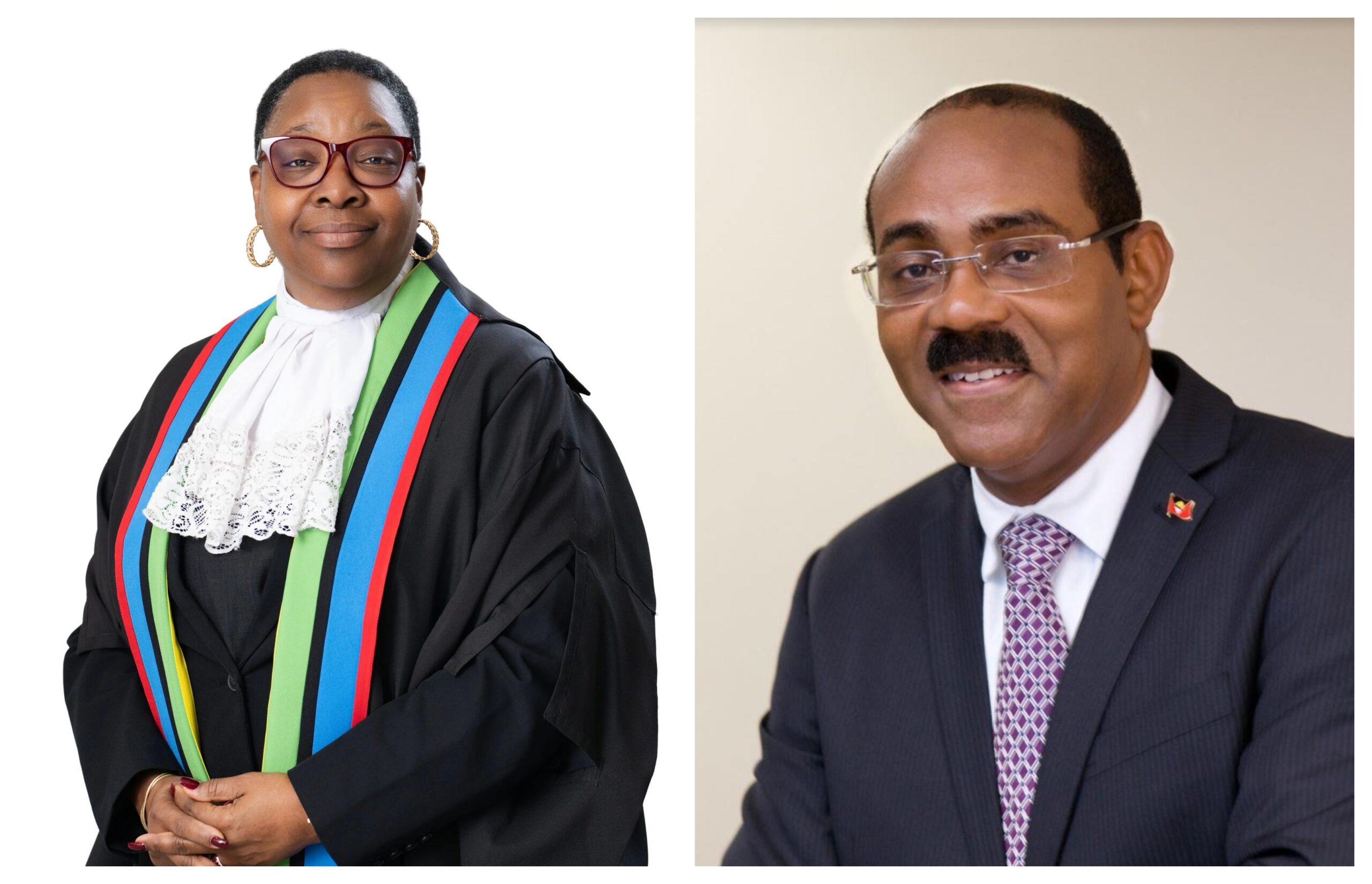
    In an official letter dated August 13, 2026, Gaston Browne, Prime Minister of Antigua and Barbuda, formally requested Chief Justice Margaret Price Findlay of the Eastern Caribbean Supreme Court to establish an independent committee to conduct a comprehensive review of the nation’s criminal justice system, with a specific focus on firearm sentencing and repeat offending. The proposal comes after a high-level meeting of the National Security Council alongside top security and law enforcement leaders, addressing what Browne describes as a grave and urgent threat to national public safety.

    Regional data compiled by leading Caribbean and global institutions underscores the severity of the growing crisis. A December 2025 joint research report titled *Pathway to Policy: Firearms Trafficking and Public Health in the Caribbean*, published by the Small Arms Survey, CARICOM IMPACS, the Caribbean Public Health Agency, and the George Alleyne Chronic Disease Research Centre at the University of the West Indies, reveals that the combined homicide rate across CARICOM member and associate states more than doubled between 2023 and 2024 when compared to the 2016–2019 pre-pandemic baseline. The same study estimates that 86% of all homicides committed in the region during this period involved firearms.

    Local data from Antigua and Barbuda mirrors this troubling regional trend. The nation’s homicide rate rose from 2.4 per 100,000 people in 2019 to 10.8 in 2022, 10.7 in 2023, and 12.8 in 2024. While the increase has not been perfectly linear, the rate has stayed consistently far higher than pre-2020 levels, and security briefings confirm that firearm-related violence remains at unacceptably high levels. Compounding this issue is the growing problem of repeat offending: official data shows that roughly 250 people with prior criminal convictions have been arrested and charged with additional serious offenses. Browne emphasized that while these charges do not equal a finding of guilt for the new alleged crimes, the figure makes clear that repeat offending is a systemic issue that must be examined across every stage of the criminal justice process. This problem places unnecessary strain on law enforcement, erodes public trust in public safety institutions, and demands a coordinated cross-agency response, he added.

    Browne noted that his administration has already taken legislative and operational steps to address violent crime. Parliament has passed new laws that set maximum custodial penalties of up to 15 years for certain firearm offenses, and the government has increased investment in policing, border security, intelligence gathering, prosecution capacity, and offender rehabilitation programs. However, the public has growing concerns that many actual sentences handed down for firearm and serious violent offenses are far lower than the statutory maximum, inconsistent with the severity of the crimes committed.

    Browne acknowledged that legal process requires nuance: maximum sentences are not mandatory, and judges must properly consider the Eastern Caribbean Supreme Court Sentencing Guidelines, sentence reductions for guilty pleas, aggravating and mitigating circumstances, prior criminal history, credit for time spent in remand, the totality principle, and relevant appellate rulings. Rather than relying on unsubstantiated generalizations about sentencing outcomes, Browne argued that the only appropriate path forward is to conduct rigorous, independent scrutiny of current practices to determine if legislative policy, sentencing norms, and criminal justice administration are functioning in a coherent, effective manner.

    The Prime Minister was clear to clarify that the proposal upholds constitutional principles of judicial independence and separation of powers. He stressed that an elected government with a popular mandate has a duty to speak out when public safety is at risk, just as all branches of state are accountable for fulfilling their core responsibilities. At the same time, he committed to addressing concerns through constitutional and legal channels, noting that any matters involving judicial tenure, assignment, or conduct will be handled through constitutionally mandated processes. This proposed independent review, he said, is not a retreat from stated concerns, but a constitutionally appropriate path to turn those concerns into evidence-based reform.

    Under Browne’s proposal, the Chief Justice would appoint a three-member committee of independent, qualified individuals to lead the review, focused first on Antigua and Barbuda, with the option to expand the scope to the broader Eastern Caribbean Supreme Court jurisdiction by mutual agreement. Browne has already consulted former CARICOM High-Level Representative on Law and Criminal Justice Sir Dennis Byron and current representative Justice Godfrey Smith, who have agreed to share their existing body of work including strategic plans, model legislation, policy papers, and outcomes from recent dialogues between CARICOM heads of government and judiciary, to avoid unnecessary duplication of effort.

    Browne has suggested inviting former Caribbean Court of Justice President Adrian Saunders, who previously served as acting Chief Justice of the Eastern Caribbean Supreme Court and co-facilitated a 2025 regional dialogue on criminal justice, to chair the committee, pending his willingness to serve. The proposed terms of reference for the panel outline six core tasks: collect and analyze anonymized, aggregated sentencing data for firearm and serious violent offenses over a five-year period; assess outcomes against governing legislation, sentencing guidelines, and appellate rulings; identify any significant gaps between legislative policy and actual sentencing outcomes, along with the legal, evidentiary, or administrative causes of those gaps; review the full criminal justice chain from charging and prosecution to access to criminal history information, bail and remand processes, prison release, post-release supervision, and rehabilitation; quantify the scale of repeat offending using available reliable data and assess whether current frameworks adequately reduce reoffending risk; and recommend legislative, procedural, guideline, data, and inter-agency reforms that protect public safety while preserving judicial independence and separation of powers.

    Reflecting the urgent nature of the public safety crisis, Browne has set an aggressive timetable for the process. He has requested an initial response from the Chief Justice by August 20, 2026, with finalization of committee membership and terms of reference by August 31, 2026. The committee would be expected to release interim observations within 30 days of its appointment and submit a final public report within 90 days. The Antigua and Barbuda government has committed to providing a senior focal point, full access to required data, logistical support, and access to all relevant government agencies to enable the committee to complete its work.

    In closing, Browne emphasized that the people of Antigua and Barbuda have a right to expect the elected government, judiciary, and law enforcement agencies to address this growing crisis with urgency, discipline, and shared purpose. The government will continue to uphold judicial independence, just as it will continue to fulfill its democratic mandate to protect public safety, he said, and he urged the Chief Justice to give the proposal urgent consideration.


  • Investigating, removing CCJ President not so easy- Lawyer Nigel Hughes

    Investigating, removing CCJ President not so easy- Lawyer Nigel Hughes

    On August 12, 2026, prominent Guyanese attorney Nigel Hughes issued a public clarification on the legal requirements for investigating and potentially removing the President of the Caribbean Court of Justice (CCJ), emphasizing that the process cannot be advanced through a routine internal review and requires formal action from at least three CARICOM leaders to proceed.

    In a public statement shared via Facebook, Hughes stressed that the recently surfaced “grave” allegations against the sitting CCJ President strike at the core of the regional court’s institutional integrity, and demand a full, legally compliant inquiry to protect the court’s independence and public trust. Under the text of the agreement that established the CCJ, the formal process for removing the court’s President can only be triggered when three or more CARICOM Heads of Government jointly present a formal request to the full body of regional leaders to open an investigation. Once this threshold is met, CARICOM’s Heads of Government are required to convene an independent tribunal to review the claims.

    Hughes argued that Caribbean citizens have a clear right to a thorough inquiry led by senior, impartial judges, rather than empty political maneuvering or institutional inaction. “The CCJ belongs to the people of the Caribbean. Its credibility depends on the rule of law being applied to its leaders with the same rigour it is applied to everyone else,” Hughes wrote.

    The legal framework for removing CCJ officials differs sharply between the President and other sitting judges: ordinary judges fall under the oversight of the Regional Judicial and Legal Services Commission (RJLSC), which has the authority to initiate removal proceedings. The President, by contrast, can only be appointed or removed via a three-quarters qualified majority vote of the CCJ’s contracting parties, acting on a formal recommendation from a specially convened commission. Hughes emphasized that the RJLSC lacks the legal jurisdiction to launch a full investigation into the CCJ President, only holding that authority over other court judges.

    The RJLSC has previously announced it would conduct a “transparent and independent review” of the allegations against the President, a move Hughes noted aligns with the body’s response to a similar complaint filed in 2025. Under the CCJ’s founding agreement, the path to removal requires a tribunal to first conclude that the President is unfit for office due to misbehavior or incapacity, after which the RJLSC forwards the tribunal’s recommendation to CARICOM leaders for a final vote. The agreement also allows for the President to be suspended from duties during the tribunal’s investigation, with suspension lifted if the tribunal finds removal is not warranted.

    Hughes also flagged a critical unaddressed conflict of interest in the current framework: the sitting CCJ President serves concurrently as chair of the RJLSC, the body tasked with forwarding the tribunal’s removal recommendation to CARICOM leaders. The founding treaty does not include explicit guidance for this scenario, where the subject of a removal probe also leads the body that must act on the tribunal’s findings. “Basic principles of fairness — the right not to be a judge in one’s own cause — clearly require the President to step aside from those deliberations,” Hughes said, adding that while the treaty’s provision for a Deputy Chairman to preside in the chair’s absence supports this interpretation, the gap in explicit text leaves room for dispute.

    Hughes emphasized that the deliberately complex design of the removal process is intended to protect judicial independence, preventing any single national government, political faction, or dissatisfied litigant from arbitrarily removing the head of the Caribbean’s highest regional court. At the same time, he noted, the framework establishes a clear, legitimate accountability pathway for cases where credible claims of misbehavior or incapacity meet the required threshold.

    Headquartered in Trinidad and Tobago, the CCJ serves a key role across the Caribbean bloc: it is responsible for adjudicating single market and economy disputes for 14 full CARICOM member states (The Bahamas is not part of the single market), and acts as the final court of appeal for both criminal and civil cases in five regional nations: Barbados, Belize, Dominica, Guyana and St Lucia.

  • Unions Set Two Dates: “Wear Black” Friday, Then a National Rally

    Unions Set Two Dates: “Wear Black” Friday, Then a National Rally

    As the Belizean Cabinet continues to weigh stakeholder input on the controversial proposed BTL-Speednet acquisition, the country’s organized labor movement has ramped up its resistance, scheduling two high-profile, coordinated public actions to push back against the deal within the same week.

    The National Trade Union Congress of Belize (NTUCB), the umbrella body leading the opposition campaign, has launched a nationwide call for all workers and ordinary Belizeans to participate in a visible, social media-powered demonstration of dissent this coming Friday. The organizing body is urging participants to wear black clothing in all settings — whether heading to workplaces, classrooms, or commercial activities — then share photos of their participation online using the dedicated campaign hashtag #BlackOutBTL. The NTUCB’s official messaging frames the action as a collective show of solidarity: “Wear black. Stand together. Let our voices be heard.”

    The Friday visible protest is only the opening phase of the escalated campaign. Dated August 12, a formal notice from the Belize National Teachers’ Union (BNTU) to school administrators across the country confirmed that unionized teachers will join a larger national rally organized by the NTUCB on August 18, the following Tuesday. Beyond their opposition to the Speednet acquisition, the BNTU notes that the demonstration also addresses a range of growing unresolved concerns affecting workers across Belize. In its correspondence to school leaders, the union emphasized its unwavering position, writing: “We sincerely hope that we have your support and co-operation. We shall NOT be moved.”

    These two back-to-back actions mark the most significant escalation of union resistance to date, moving beyond routine press statements and isolated small protests to a unified, coordinated mobilization that brings together multiple union affiliates under a single opposition banner. The timing of the mobilization comes as the country’s Cabinet holds ongoing stakeholder hearings, with presentations from both proponents and opponents of the proposed corporate transaction. In a separate related development, independent senators have reaffirmed that they have not received any formal invitation for engagement or briefing from BTL amid the ongoing debate over the deal.

  • CCVC: We Weren’t Consulted on Split Access Changes

    CCVC: We Weren’t Consulted on Split Access Changes

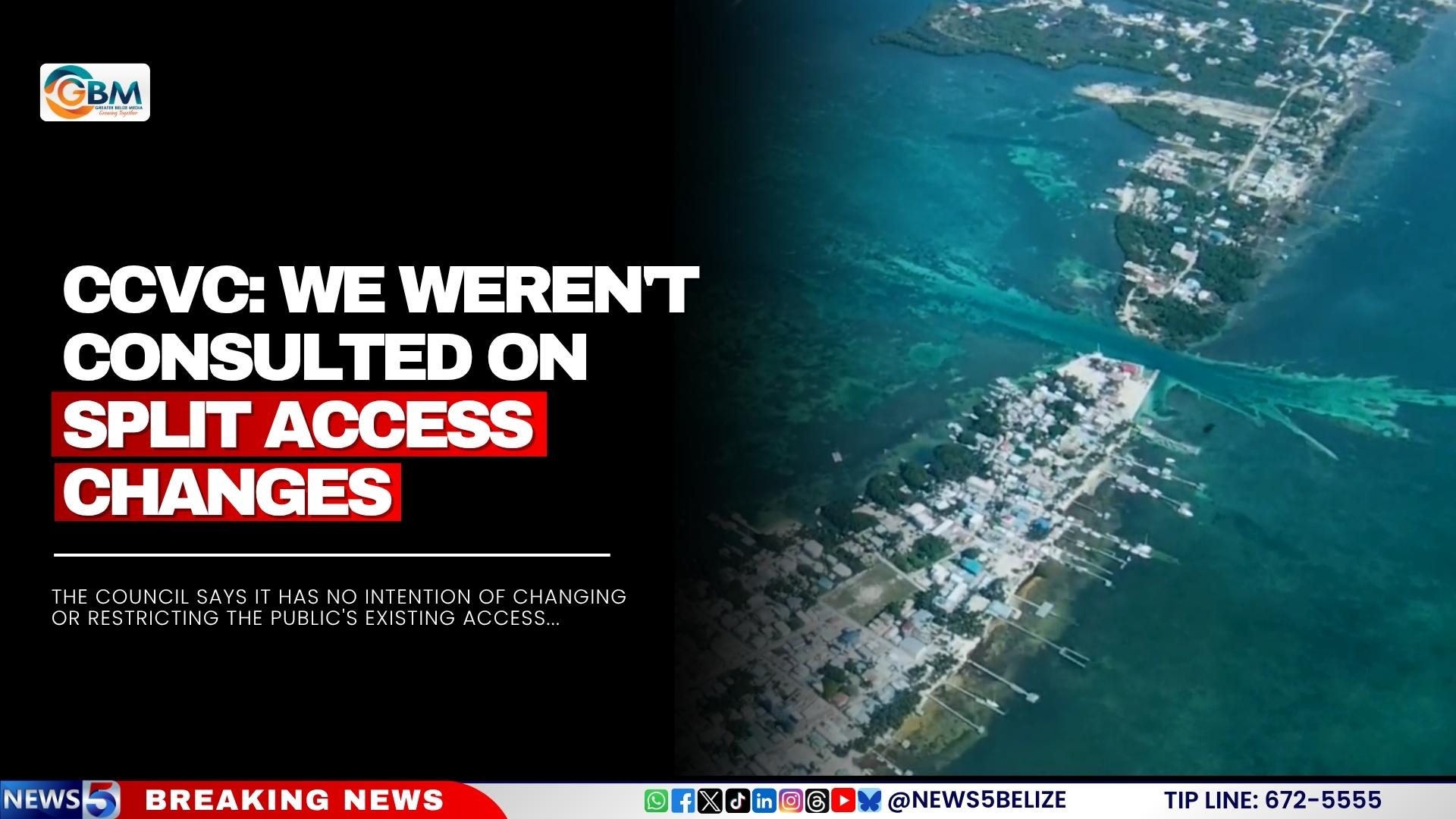
    A governance dispute has emerged on the island of Caye Caulker, after the local village council confirmed it was excluded from preliminary talks about potential changes to public access at one of the area’s most popular recreational spots, The Split.

    The Caye Caulker Village Council (CCVC) confirmed this week that it has made resolving the access issue a top priority, following revelations that the site’s new management had already initiated discussions with local ferry service operators about access rules without first seeking input or approval from the elected local governing body.

    CCVC representatives say they have already opened lines of communication with leaders of the Lazy Lizard establishment and other stakeholders connected to the property, and are currently coordinating a formal sit-down meeting to discuss the misstep and clarify roles moving forward. In initial conversations with management, the council made its position clear: any adjustments to public access at The Split require prior consultation with the local governing body before talks are held with third-party operators.

    As of the latest update, the council notes that no access fees have been formally implemented, and no ferry operators have agreed to pay any proposed charges, even after being approached by the new management. The council itself was completely sidelined from these early conversations, leaving officials working to untangle miscommunication and clarify jurisdiction over the public access areas.

    In a statement outlining its core stance, the CCVC emphasized that it has no plans to alter or limit the public’s longstanding access to two key zones: the western public street and access corridor, and the eastern beach area. Moving forward, the council says it will balance two core priorities: upholding the legal rights of local property owners, and maintaining open, collaborative dialogue between the governing body and private stakeholders to resolve the dispute amicably.

  • Cuba opens international colloquium marking Fidel Castro centennial

    Cuba opens international colloquium marking Fidel Castro centennial

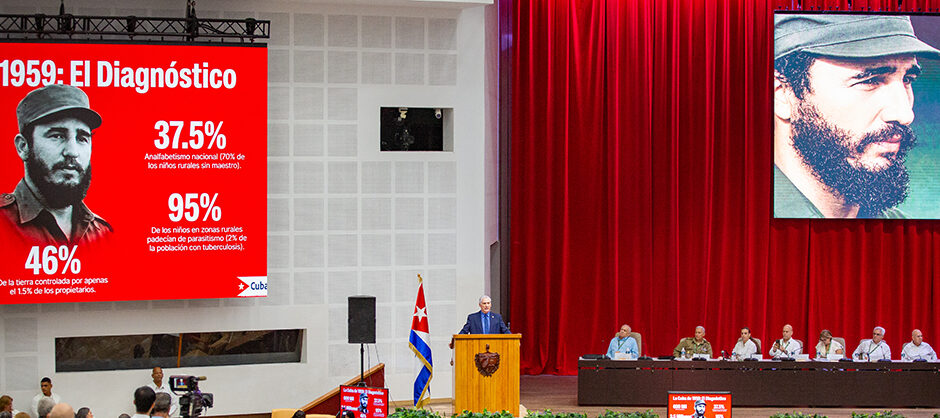
    Havana, Cuba – This week marks the official kickoff of the first International Colloquium “Fidel: Legacy and Future”, a landmark global gathering convened to celebrate the centennial of the birth of iconic Cuban revolutionary leader Fidel Castro Ruz. Drawing more than 1,500 attendees from across the globe, including over 900 international delegates hailing from 63 nations, the event forms a core component of Cuba’s broader national calendar of commemorations honoring Castro’s life and decades-long influence on the island and global politics.

    Opening the colloquium, Miguel Díaz-Canel Bermúdez, First Secretary of the Central Committee of the Communist Party of Cuba and President of the Republic, delivered a wide-ranging keynote address that contextualized Castro’s legacy against the dramatic transformation Cuba has undergone since the 1959 Cuban Revolution. To ground his remarks, Díaz-Canel contrasted the deep systemic inequities of pre-revolutionary Cuba with the far-reaching social gains the country has secured in the decades since the revolution.

    Citing stark historical data, Díaz-Canel outlined the conditions that shaped pre-1959 Cuba: roughly 600,000 people were out of work, three million citizens lived without access to electricity, the national illiteracy rate hit 37.5%, 60% of rural children lacked access to qualified teachers, 85% of small-scale farmers were forced to pay rent to work their land, and a single elite landowner controlled more than one-third of the country’s productive territory.

    Against that backdrop, Díaz-Canel emphasized that even with the persistent strain of the decades-long U.S. economic, financial, and commercial blockade, Cuba has maintained among the strongest social indicators in the region. Today, the country counts more than nine doctors per 1,000 residents, boasts a national life expectancy of 77.7 years, and has sent more than 600,000 healthcare professionals to provide care in 165 countries around the world, embodying Castro’s longstanding commitment to internationalist solidarity.

    In reflecting on Castro’s enduring political and ideological legacy, Díaz-Canel highlighted three core principles Castro passed to the Cuban people: the certainty that transformative goals can only be achieved through unwavering defense of core beliefs, the conviction that international solidarity must be a defining value of the Cuban revolution, and the unshakable belief that socialism represents the only viable path to lifting all of humanity out of systemic poverty.

    He further detailed Castro’s enduring positions on pressing global issues, including his critiques of unregulated globalization, early advocacy for environmental protection, support for scientific advancement, commitment to revolutionary unity across the Global South, and unwavering backing for national liberation movements across Africa and Palestine. Díaz-Canel stressed that Castro’s leadership was defined by radical personal integrity and sacrifice, noting “He led by example. He did not accumulate wealth, he did not betray his principles, he lived as he thought, and he died as he lived.”

    Among the revolution’s signature achievements credited to Castro’s vision, Díaz-Canel named the nationwide literacy campaign that mobilized more than 150,000 Cubans to bring universal reading and writing skills to the population, the establishment of free universal healthcare, tuition-free education from primary school through university, and robust public investment in national cultural and athletic development programs.

    Turning to the challenges facing Cuba and the wider world today, the president acknowledged that the global order is grappling with overlapping interconnected crises: accelerating climate change, systemic financial instability, growing resource scarcity, deepening social inequality, mass forced displacement, and eroding multilateral institutions. He reiterated longstanding Cuban criticism of U.S. policy toward the island, calling out the ongoing economic blockade, Cuba’s unjust inclusion on the U.S. list of state sponsors of terrorism, and persistent U.S. efforts to foment regime change on the island.

    Díaz-Canel did not shy away from acknowledging the immediate economic and social difficulties facing ordinary Cuban citizens, including periodic power outages, potable water shortages, eroded purchasing power, fuel supply disruptions that have strained transportation and broader economic activity, and ongoing challenges accessing basic food staples. But he emphasized that the Cuban government’s priority is proactive problem-solving rather than fatalism, noting “We are not here to lament these hardships, but to change the things that cause us pain.”

    Outlining ongoing policy efforts to address these challenges, he pointed to Cuba’s successful homegrown response to the COVID-19 pandemic, targeted investments to expand urban and suburban agricultural production to reduce food import dependence, and a suite of other policy adjustments designed to turn current economic constraints into long-term opportunities. He also highlighted the recent graduation of more than 30,000 new professionals from Cuban universities, including 705 students from other countries, demonstrating the island’s ongoing commitment to educational access.

    Speaking to ongoing domestic economic restructuring, Díaz-Canel clarified that Cuba’s reform efforts are focused on boosting domestic production and growing national wealth while protecting the core social safety net that has defined the revolution for decades. “The restructuring process is intended to revitalize the economy, not to restore capitalism. There will be no privatization of enterprises; key sectors of production will remain under the control of the people, and the country’s sovereignty and independence will be fully preserved,” he said.

    The president called on colloquium participants, both Cuban and international, to engage in open, rigorous debate about Cuba’s path forward and the shared challenges facing the Americas region. Closing his address, he emphasized that the future of Cuba rests in the hands of the Cuban people, noting “The future of our children, the dreams we must achieve, are in our hands.” He closed by echoing Castro’s own defiant commitment to Cuban sovereignty: “We are prepared to resist the imperialist blockade with dignity and on a grand scale for as many years as necessary. Cuba will remain true to the example of a Revolution that does not surrender.”

  • PM Browne Tells Bar Association to ‘Piss Off’ Over Demand for Apology

    PM Browne Tells Bar Association to ‘Piss Off’ Over Demand for Apology

    A sharp political conflict has erupted in Antigua and Barbuda, after Prime Minister Gaston Browne delivered an aggressive rebuke to the country’s national Bar Association, which had publicly condemned his threat to deport a sitting High Court justice and demanded he retract his incendiary remarks.

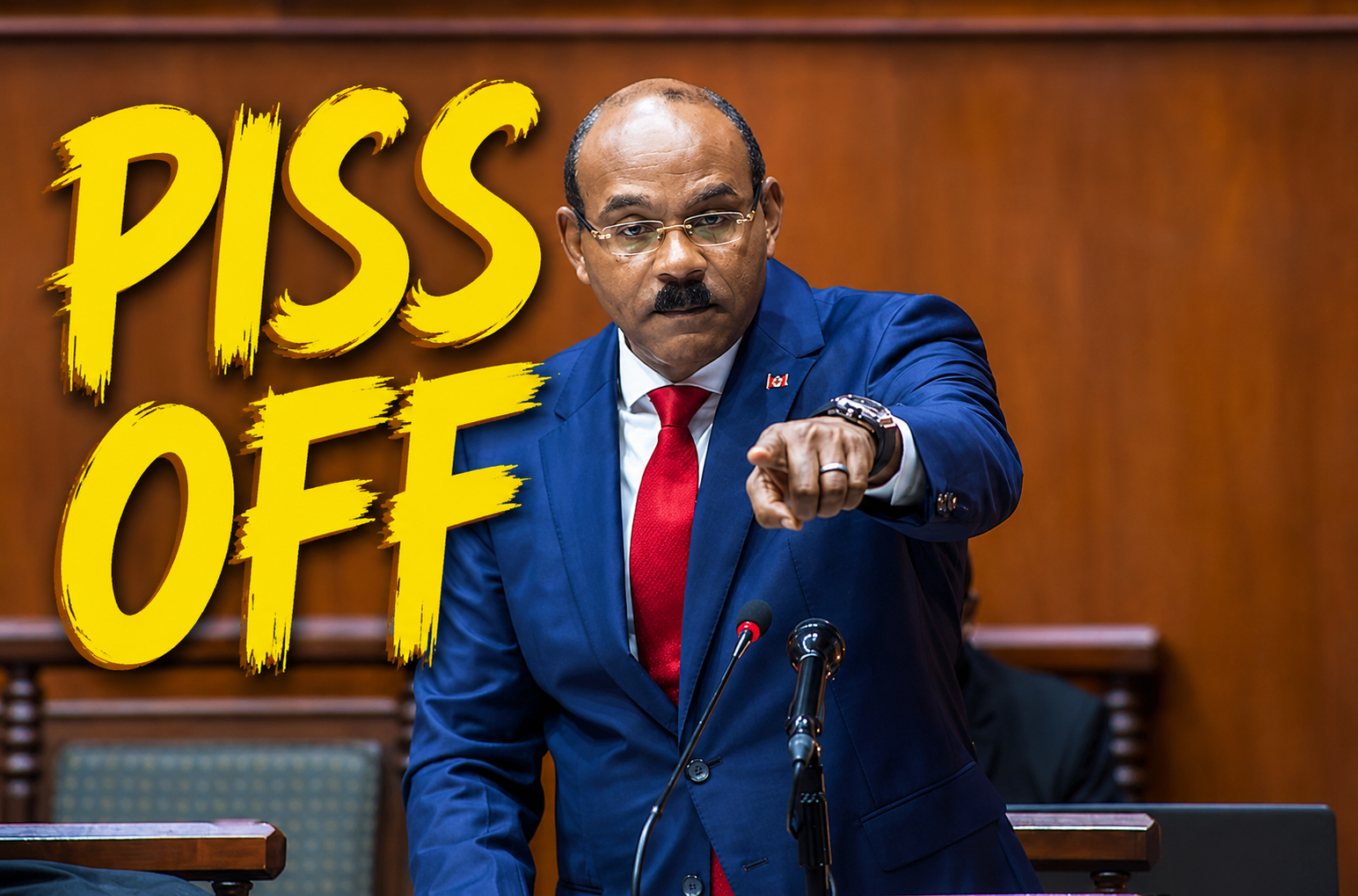
    In an unapologetic public statement, Browne dismissed the body he labeled “Defunct ABBA” with a vulgar brush-off: “Here is my response to your request for an apology: Piss off.”

    The confrontation traces back to comments Browne made during a televised national security briefing this past Sunday, where the leader was addressing the persistent public crisis of gun violence across the twin-island nation. During the discussion, Browne launched a direct attack on an unnamed sitting High Court judge, criticizing what he views as excessively lenient sentencing for gun crime offenders. He declared that if the judge refused to “follow the lead of parliament to give longer sentences,” the justice would be forced to leave the country—either through voluntary departure or via deportation, which would see the judge declared persona non grata.

    By Tuesday, the Antigua and Barbuda Bar Association moved to formally reject the prime minister’s words, releasing a strongly worded statement that accused Browne of open hostility to judicial independence and a direct attack on the constitutional principle of separation of powers between the executive, legislative, and judicial branches of government. The association made two formal demands: first, that Browne withdraw his deportation threat entirely, and second, that he issue a public guarantee that executive powers—including immigration authority—would never be misused to influence, intimidate, punish, or remove a judicial officer for rulings made in the lawful exercise of their judicial duties. The legal body emphasized that even if no actual attempt to remove the judge is ever carried out, Browne’s comments already stand as a “grave threat” to the rule of law and an unacceptable act of executive coercion over the independent judiciary.

    Browne’s caustic latest response makes clear that the prime minister has no intention of meeting the association’s demands, and will not backtrack on his original comments or issue the requested apology. The escalation of the dispute has thrown a spotlight on mounting tensions between the Antigua and Barbuda’s executive branch and its independent judiciary, raising widespread concerns about the future of constitutional checks and balances in the country.