分类: politics

  • RJLSC to hold transparent and independent review of allegations against CCJ President

    RJLSC to hold transparent and independent review of allegations against CCJ President

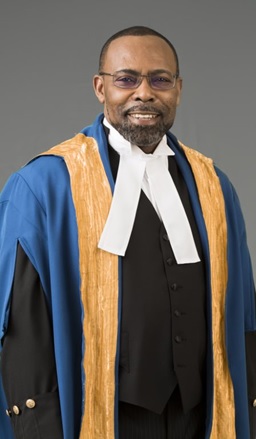
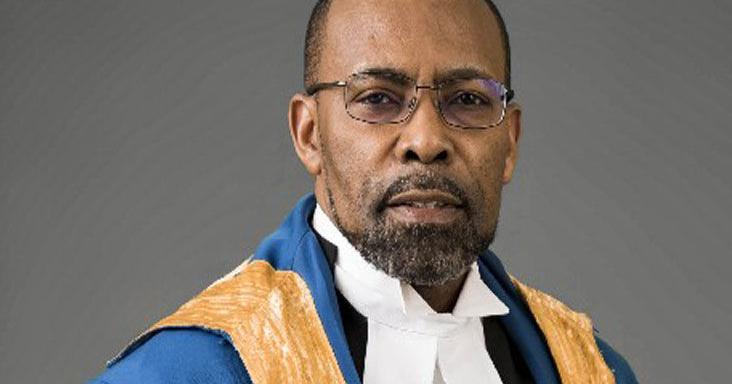
    On Wednesday, 12 August 2026, the Regional Judicial and Legal Services Commission (RJLSC) confirmed it will launch a transparent, independent review into a series of serious misconduct allegations leveled against Caribbean Court of Justice (CCJ) President Justice Winston Anderson, a development that has sparked public debate over judicial governance in the Caribbean regional court system.

    The allegations first came to light in an exclusive report published by the *Sunday Express* earlier this week, pulled from internal email exchanges between sitting CCJ judges between June and July 2026. Beyond claims that Anderson imposed an uneven judicial dress code, the accusations include far more serious charges of so-called “panel fixing,” improper attempts to sway case outcomes, and a pattern of authoritarian, dictatorial leadership that has been endorsed by a majority of the court’s sitting judges.

    Established under the founding agreement of the CCJ, the RJLSC is a specialized oversight body composed of legal practitioners, public sector leaders, and civil society representatives. Per its official mandate, the commission holds authority over disciplinary action, appointment regulation, and employment terms for all CCJ judges (with the exception of the court president) and all court staff. It also plays a key role in shielding the regional court from political interference while overseeing judicial appointments and operational governance.

    In an official statement released to media outlet CCN, the RJLSC acknowledged the gravity of the claims, noting, “The Commission recognises the seriousness of these matters and the importance of addressing them in a manner that protects public trust and confidence in the Court and the broader administration of justice throughout the Caribbean.”

    The commission confirmed it would pursue the review through its established internal governance frameworks, adding, “these concerns are best addressed through… a transparent and independent review undertaken in the best interest of the Region.” The body also noted it maintains an open-door policy for all CCJ judges and staff to raise concerns, and highlighted its 23-year track record of independent operation free from influence from both court leadership and outside political actors.

    Stressing its history of autonomous governance under past and present CCJ presidents who serve as commission chairs, the RJLSC urged against premature judgment, adding “no conclusions should be drawn about the allegations until they have been examined fairly and objectively.” The commission did not, however, confirm whether Anderson himself would recuse himself from any part of the review process.

    The RJLSC’s announcement drew immediate comment from Martin Daly, a former commission member and senior counsel, who argued that a full formal investigation is non-negotiable given the severity of the claims.

    “The matters alleged in the Express reports have the potential to seriously undermine the independence and effectiveness of the court. The commission should therefore have no difficulty in getting on with an investigation of the allegations,” Daly said, criticizing the commission’s statement as vague and meandering.

    Daly also questioned the RJLSC’s reference to its open-door policy for raising internal concerns, asking, “Is it a veiled invitation to the aggrieved judges to hasten to lodge formal complaints? I ask how helpful is such a statement? How does that posture advance the public interest?”

    Noting that the allegations center on administrative decisions tied to the court’s core functioning, Daly clarified that the RJLSC has clear authority to investigate these claims, but must draw a firm line between administrative conduct and the exercise of judicial power, which falls outside the commission’s oversight remit.

    Most critically, Daly emphasized that Anderson—who serves as chair of the RJLSC by virtue of his role as CCJ president—must step aside from any involvement in the probe. “The president of the court is chairman of the RJLSC, but he must, of course, recuse himself from participating in an investigation of administrative decisions made by him,” Daly said, adding that the discontinuation of a formal deputy chair position was unfortunate, but that multiple sitting commissioners have the experience and independence to lead an impartial probe. Daly also noted that the matter does not require involvement from Caribbean heads of government at this stage.

  • Dominicans among nationalities exempt from English test for UK citizenship applications in 2026

    Dominicans among nationalities exempt from English test for UK citizenship applications in 2026

    New official guidance issued by the United Kingdom government has updated the roster of nationalities eligible for automatic exemption from the separate English language proficiency requirement for applicants seeking permanent settlement or British citizenship, and Dominica has been formally included on the approved list.

    The UK Home Office’s updated framework outlines that citizens from any qualifying nationality on the published list are immediately recognized as satisfying the English language mandate, eliminating the need to submit additional standardized test scores or language qualifications to prove proficiency. Dominica joins a broader group of majority English-speaking jurisdictions across the Caribbean, North America, Europe and the Pacific that already hold the exemption status. The full list of approved nationalities and territories currently includes Antigua and Barbuda, Australia, The Bahamas, Barbados, Belize, all British Overseas Territories, Canada, Dominica, Grenada, Guyana, Jamaica, Ireland (for citizenship application purposes), Malta, New Zealand, St Kitts and Nevis, St Lucia, St Vincent and the Grenadines, Trinidad and Tobago, and the United States.

    Under UK immigration rules, the exemption for Dominican nationals stems from the official classification of Dominica as a majority English-speaking nation. This classification directly removes the obligation to provide separate proof of English language skills for eligible applications. Crucially, the guidance clarifies a key distinction that many prospective applicants often misunderstand: recognition as an English official language in an applicant’s home country does not automatically grant an exemption. Only nations formally listed as majority English-speaking by the UK government qualify for this waiver, meaning even applicants from countries where English holds official status or is widely used in daily life are required to prove their language proficiency if their nationality is not included on the approved list. This distinction impacts numerous citizens from African and Asian nations where English is integrated into government, education and public life, but have not been added to the UK’s exemption roster.

    For citizenship applicants specifically, the exemption only applies to the English language segment of the mandatory Knowledge of Language and Life in the UK (KoLL) requirement. All other eligibility criteria remain in force: applicants from exempt nationalities must still pass the Life in the UK test to demonstrate their understanding of British society and governance, unless they qualify for an additional separate exemption.

    The UK government has announced upcoming changes to English language requirements for select permanent settlement routes, with higher mandated proficiency standards set to take effect for relevant applications starting March 26, 2027. These changes do not alter Dominica’s exempt status under the current classification framework, which will remain in place for the foreseeable future.

    For Dominican nationals currently residing in the UK and preparing to submit settlement or citizenship applications in 2026, the updated guidance provides much-needed formal clarification of their eligibility. While they are not required to submit a separate English language qualification to meet the language component of their application, officials still encourage all applicants to review the specific requirements for their chosen immigration or citizenship pathway carefully before submitting materials to the Home Office. The full updated guidelines are publicly available for reference on the UK government’s official website, GOV.UK.

  • Lawmakers: ‘Domestic terror’ bill will help restore sense of safety

    Lawmakers: ‘Domestic terror’ bill will help restore sense of safety

    As Barbados grapples with a surge in violent crime that has left widespread fear in its communities, government lawmakers have advanced a sweeping new Domestic Terrorism Bill during parliamentary debate, framing the legislation as a critical step to rebuild public trust and guarantee safety for all Barbadians in their daily lives.

    During Tuesday’s sitting of the country’s House of Assembly, both St Michael Central Member of Parliament Tyra Trotman and Home Affairs Minister Gregory Nicholls, who also serves as St Thomas MP, publicly threw their support behind the proposed legislation, which introduces harsh penalties for violent acts designed to spread mass fear among local populations.

    Trotman opened her remarks by emphasizing that the bill comes as a direct response to growing anxiety that has upended daily life for ordinary Barbadians, as violent shootings and random attacks continue to disrupt communities across the island. She noted that it is a troubling reality that many residents now question their own safety just going about routine activities like commuting to work, pointing to high-profile cases of innocent bystanders caught in the crossfire of gang-related and community violence.

    Among the examples she cited were a gas station worker who suffered permanent, life-altering injury after a bullet became lodged in his spine during a shooting, and a teenager shot while playing at a public park in Silver Hill. “These are instances that we cannot continue to allow to happen as a government in Barbados,” she stated.

    She argued that the strict penalties outlined in the proposed legislation are a fitting reflection of the severity of crimes that terrorize entire communities, noting that all citizens are entitled to feel secure in every part of daily life. “Women have to feel comfortable walking around by themselves. The elderly have to feel comfortable. Children have to know if I go outside and I play and I am just being a child, they have to feel comfortable, not fearful that someone’s going to drive by with the AK and shoot up the place,” Trotman said.

    Trotman added that many Barbadians now live with long-term psychological trauma resulting from persistent community violence, sharing the story of one woman who has not left her home after 6 p.m. following a nearby shooting. The woman, she said, now locks all entry points to her home and even turns off her lights to avoid alerting potential attackers to her presence.

    While Trotman expressed clear support for the bill, she also stressed that legislative action alone cannot resolve Barbados’ deep-rooted crime crisis. “We cannot legislate morale. We cannot legislate good conscience,” she said. In her view, complementary action to address untreated mental health challenges, widespread substance abuse, and strengthen core family values is equally critical to reversing rising violence. She argued that foundational values education starting in primary school is key to teaching children to distinguish right from wrong, returning to a basic ethical standard: “Do unto others as you would have them do unto you.”

    For his part, Nicholls framed the bill as a targeted measure to tackle the most dangerous forms of violence while pushing back against criticism that the legislation’s scope is overly broad. He reassured the public and fellow lawmakers that the bill is designed specifically to protect Barbadians from harm, fulfilling one of the most fundamental duties of any elected government.

    Unlike general criminal offenses, Nicholls explained, the Domestic Terrorism Bill targets a specific category of harmful conduct rather than targeting individuals, and sets clear legal thresholds that must be met before an act can be classified as domestic terrorism. He rejected calls for inaction, arguing that the government cannot “like the proverbial ostrich, bury our heads in the sand. We must confront the reality” of widespread fear caused by violent attacks in public spaces.

    “Every citizen of the country has a right to go about their business without having to look around their shoulder,” he said. Nicholls added that pervasive fear has even impacted elected officials carrying out their public duties, sharing that fellow MP Adrian Forde of Christ Church West Central had told him he fears entering certain neighborhoods within his own constituency.

    Nicholls also moved to address concerns about civil liberties, emphasizing that the legislation preserves full legal protections for anyone accused of an offense under the law. Accused individuals will still face prosecution for underlying offenses, he noted, and juries will review all evidence before a court makes a final determination on whether the threshold for a domestic terrorism classification has been met.

    Defending the bill’s strict penalties as a proportionate response to crimes that seek to spread terror across entire communities, Nicholls concluded that “those who deliberately seek to terrorise the communities in the country and endanger your life on a larger scale must face the consequences of their action.”

  • RJLSC to hold transparent and independent review

    RJLSC to hold transparent and independent review

    A growing scandal has shaken the Caribbean Court of Justice (CCJ) after multiple sitting judges brought explosive allegations against the court’s sitting president, Justice Winston Anderson, pushing the regional body tasked with court governance to launch a long-awaited transparent and independent review into the claims. The allegations, which first came to light in an exclusive scoop by the *Sunday Express* earlier this week, are far-reaching: they range from minor administrative overreach like imposing an unapproved judicial dress code to far more serious accusations of case panel manipulation and intentional efforts to sway the final outcomes of active court matters. Most notably, a majority of the CCJ’s own sitting judges have accused Anderson of running the regional tribunal in an overtly authoritarian, dictatorial style, according to internal email correspondence exchanged between the court’s presiding judges in June and July of this year that was obtained by the *Express*.

    Overseeing the upcoming review is the Regional Judicial and Legal Services Commission (RJLSC), the statutory body created by the founding agreement of the CCJ to manage court appointments, employment terms, and disciplinary processes for all CCJ judges (excluding the president) and court staff. By statute, the RJLSC is structured to bring together experienced legal professionals, senior public service leaders, and civil society representatives to uphold institutional independence of the regional court. A quirk of the commission’s governance structure, however, places Justice Anderson himself as the formal chairman of the RJLSC – a detail that has sparked immediate calls for his recusal from the review process.

    In an official statement issued to Caribbean media outlet CCN, the RJLSC acknowledged the grave nature of the allegations and committed to addressing the claims in a manner that upholds public trust in the CCJ and the broader Caribbean justice system. “The Commission recognises the seriousness of these matters and the importance of addressing them in a manner that protects public trust and confidence in the Court and the broader administration of justice throughout the Caribbean,” the statement read. The commission confirmed it would use its established internal governance frameworks to conduct a fully transparent and independent review, aligned with the best interests of the Caribbean region. The commission also reaffirmed its longstanding institutional autonomy, noting that in its 23 years of operation, it has never faced improper influence from either court leadership or external political actors, and has maintained a productive working relationship with the CCJ. “No conclusions should be drawn about the allegations until they have been examined fairly and objectively,” the statement added. Notably, the RJLSC declined to confirm whether Anderson would participate in the upcoming review, leaving that critical question unanswered.

    Martin Daly, a former RJLSC member and prominent senior counsel, has become the most high-profile figure to weigh in on the unfolding controversy, saying that a full formal investigation is non-negotiable and that Anderson must step aside entirely from the process. Daly characterized the RJLSC’s initial statement as overly verbose and vague, but acknowledged that the commission had reaffirmed its autonomy and responsibility to oversee the CCJ’s effective, independent administration. He warned that the allegations, if left unaddressed, pose a severe threat to the CCJ’s legitimacy and effectiveness. “The matters alleged in the Express reports have the potential to seriously undermine the independence and effectiveness of the court. The commission should therefore have no difficulty in getting on with an investigation of the allegations,” Daly said.

    Daly also questioned the RJLSC’s reference to its longstanding “open door policy” for judges and staff to raise internal concerns, asking if the statement amounted to a veiled push for complaining judges to file formal complaints, and arguing that the vague language does little to advance public interest in accountability. He emphasized that the RJLSC has clear jurisdiction to investigate the claims, as they center on administrative decisions that impact the court’s core functioning, noting that the commission must draw a clear line between administrative actions – which fall within its remit – and judicial decision-making, which it cannot interfere with.

    Most critically, Daly insisted that Anderson, as the subject of the allegations and the RJLSC’s chairman, must recuse himself completely from any part of the investigation. “The president of the court is chairman of the RJLSC, but he must, of course, recuse himself from participating in an investigation of administrative decisions made by him,” Daly explained, adding that it was unfortunate the commission abandoned the past practice of appointing a formal deputy chairman. Even so, he noted that multiple sitting RJLSC commissioners have the experience and credibility to lead an impartial, competent investigation, and argued that the matter should remain within the commission’s purview rather than being passed to regional heads of government at this stage.

  • T&T ‘hot’ as global ties grow

    T&T ‘hot’ as global ties grow

    Trinidad and Tobago is currently experiencing an unparalleled period of international diplomatic activity, delivering tangible economic and energy progress through deepened partnerships with global allies including the United States, according to the nation’s Minister of Foreign and Caricom Affairs Sean Sobers. In an interview with local outlet the Express, Sobers emphasized that the current level of global engagement with the twin-island nation has not been matched in the past 10 years, marking the emergence of a dynamic, results-driven new model of diplomacy that the administration is actively expanding.

  • St. Kitts and Nevis Calls for Greater Recognition of Indigenous Peoples’ Rights

    St. Kitts and Nevis Calls for Greater Recognition of Indigenous Peoples’ Rights

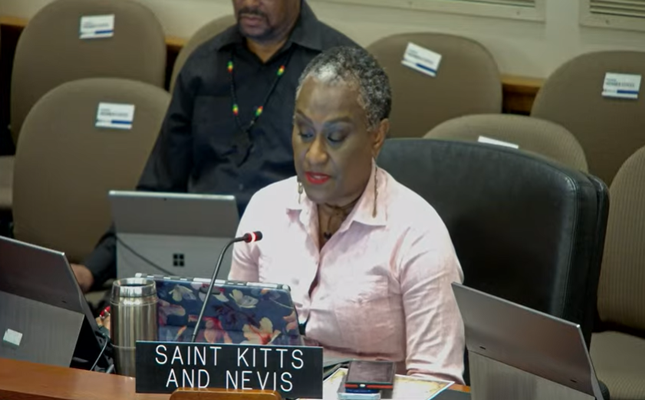
    On August 12, 2026, ahead of the International Day of the World’s Indigenous Peoples, delegates from across the Western Hemisphere gathered in Washington, D.C. for a special convening of the Organization of American States (OAS) Permanent Council. Among the speakers, St. Kitts and Nevis made a forceful call for regional governments to move beyond symbolic recognition and deliver tangible, systemic protection for the inherent rights and enduring contributions of Indigenous peoples across the Americas.

    Addressing the assembled council, Ambassador Jacinth Henry-Martin, St. Kitts and Nevis’ permanent representative to the OAS, pushed back against the common narrative that frames Indigenous communities as a relic of regional history. She emphasized that the knowledge, cultural traditions, and core values of Indigenous peoples remain deeply embedded in the present of the Americas, and are irreplaceable to building a just and sustainable future for the region.

    While the large-scale Indigenous population that once inhabited St. Kitts and Nevis belongs to the islands’ ancestral history, Henry-Martin noted that the call for Indigenous rights carries profound meaning for the federation. Long before colonial powers renamed and claimed the islands, the Indigenous Kalinago people named St. Kitts *Liamuiga* – meaning “fertile land” – and Nevis *Oualie*, translating to “land of beautiful waters.”

    Today, these original names continue to be used in St. Kitts and Nevis as a deliberate act of acknowledgment: the nation’s story does not begin with colonization, but with the Indigenous communities that first stewarded the land. Henry-Martin explained that these historic names act as a living bridge connecting past, present, and future generations to the islands’ natural heritage. They stand as proof that Indigenous language, culture, and collective memory can persist even through the upheaval and displacement of colonial rule.

    The OAS special meeting was convened under the overarching theme “Roots that Sustain, Knowledge that Transforms, Rights, Water, Health, Culture and Innovation for a Shared Future.” Henry-Martin highlighted that this framing aligns perfectly with the symbolism of the Kalinago place names, which center the inherent connection between land, water, public health, cultural survival, and long-term sustainable innovation. She went on to celebrate the wide-ranging contributions of Indigenous peoples across the entire hemisphere, from preserving endangered languages and safeguarding global biodiversity to developing sustainable agricultural practices, passing down traditional health knowledge, and maintaining centuries-old systems of environmental stewardship.

    Beyond recognition and celebration, however, the ambassador stressed that rhetorical commitment to Indigenous rights is insufficient. St. Kitts and Nevis formally backs expanded, enforceable protections for both individual and collective Indigenous rights across the Americas. These protections include the right to preserve cultural identity and heritage, meaningful participation in policy decisions that impact Indigenous communities, full freedom from systemic and social discrimination, and the self-determination to shape the future of Indigenous territories.

    As the Western Hemisphere grapples with escalating crises including climate change, widespread water insecurity, and accelerating biodiversity loss, Henry-Martin argued that the generations of ecological and place-based knowledge held by Indigenous communities must be centered rather than sidelined or exploited without consent. She pointed to the American Declaration on the Rights of Indigenous Peoples as a critical foundational framework for the region, but added that governments must translate the declaration’s principles from formal policy statements into tangible improvements in the daily lives of Indigenous communities.

    Closing her address, Henry-Martin issued a clear call to action for all OAS member states: to honor Indigenous peoples by upholding their inherent rights, centering their perspectives, and amplifying their voices in every decision that affects their communities and the future of the hemisphere.

  • CCJ leaks won’t sway Jamaica’s opposition PNP

    CCJ leaks won’t sway Jamaica’s opposition PNP

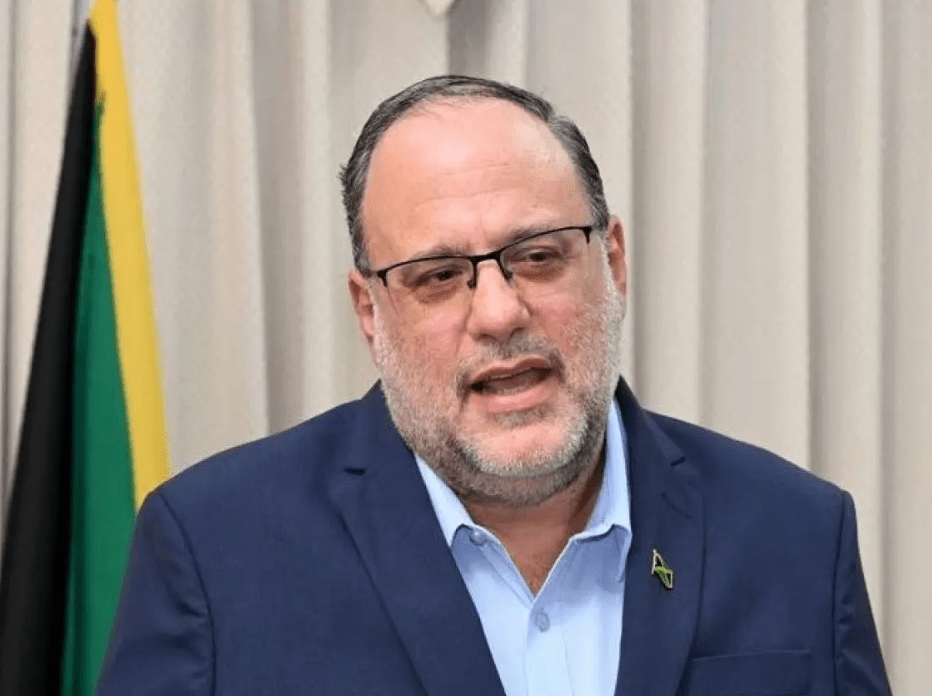
    Amid newly emerged public allegations over internal operations at the Caribbean Court of Justice (CCJ), Jamaica’s main opposition People’s National Party (PNP) has reaffirmed its longstanding commitment to replacing the UK-based Privy Council with the regional body as the country’s final court of appeal, party leader Mark Golding has confirmed.

    The controversy stems from a series of leaked internal emails obtained and published by Trinidad and Tobago’s *Sunday Express*, which claimed to expose deep-seated friction among CCJ judges, strained interpersonal dynamics, and what one message described as a growing ‘toxic’ internal working environment at the regional appellate court. To date, Jamaica’s *The Gleaner*, the original outlet of this reporting, has not independently obtained or verified the content of the alleged leaked messages.

    In an interview with *The Gleaner*, Golding pushed back against framing the leaks as evidence of institutional failure at the CCJ. He argued that the released correspondence instead demonstrates that CCJ judges feel comfortable voicing dissenting and independent perspectives directly to the court’s president, a level of open debate he calls a foundational strength for any robust judicial body.

    “We remain convinced that Jamaica would derive substantial benefits from designating the CCJ as our final court of appeal,” Golding stated. “The court is geographically and procedurally accessible to Jamaican citizens, and it has built a robust global reputation for excellent, rigorous adjudication of the cases brought before it.” The PNP has long tied its support for broad national constitutional reform to Jamaica’s formal adoption of the CCJ as its highest appellate body, a position Golding confirmed remains unchanged by the current controversy.

    Golding did note that the unauthorized public release of private judicial discussions is deeply regrettable, emphasizing that there is no indication any of the judges involved expected or agreed to have their internal communications disclosed.

    Other prominent Jamaican legal and political figures have offered more critical perspectives on the leak. Marlene Malahoo Forte, former co-chair of Jamaica’s Constitutional Reform Committee, called the decision to leak internal correspondence a major failure of judgment. “It is deeply troubling that individuals who should understand the importance of confidentiality in institutional deliberations chose to disclose internal matters to the public,” she said. “I have to question what would lead someone to be so dissatisfied that they could not allow internal processes to run their course to resolve disagreements.”

    Forte added that the controversy has already damaged public trust in the CCJ, a setback that comes at a particularly sensitive moment, as Jamaica and other CARICOM member states that have not yet adopted the CCJ as their final court actively debate the change. “This public airing of internal disputes does nothing to advance support for the court,” she noted. “When voters and policymakers weigh in on this issue, they will scrutinize every detail, and this leak only creates unnecessary uncertainty.”

    Constitutional scholar and CCJ proponent Dr. Lloyd Barnett, who previously served as deputy chairman of the Regional Judicial and Legal Services Commission (RJLSC) — the independent body that oversees CCJ judge appointments and disciplinary processes — offered a measured take on the allegations. Barnett acknowledged that the claims will provide political ammunition to opponents of the CCJ, who he says will seize on the controversy while ignoring similar internal disputes that have long been part of other leading appellate courts, including the UK’s Privy Council.

    Even so, Barnett characterized the allegations outlined in the leaked emails as much ado about nothing, describing the claims as ‘a lot of air, a lot of smoke without any true fire.’ He explained that many of the disputed issues raised in the messages are normal procedural realities for a small appellate body like the CCJ, which currently counts just seven judges including its president. For example, the court’s president is tasked with selecting judges for hearing panels, and the small size of the court means the same judges will frequently sit together on multiple cases. Changes to institutional rules such as judicial dress codes also require full consensus among judges, he added.

    Barnett emphasized that differences of opinion are an inherent, healthy part of the appellate judicial process. ‘Judges will hold divergent views, they will advocate for their positions, and each stands firm on what they believe is right — that is how the system works,’ he said. He also noted that existing governance guardrails prevent institutional deadlock: while the CCJ president chairs the RJLSC, the president will recuse themselves from any proceedings involving a conflict of interest, leaving the deputy chairman to preside.

    A lifelong supporter of the CCJ’s role as CARICOM’s leading appellate body, Barnett said he remains confident the regional court will resolve its internal differences through established internal processes. He pointed to a long history of resolved disputes within other leading global courts, noting that serious internal disagreements have long been recorded in the Privy Council and the UK Supreme Court, yet those disputes rarely draw the same level of public condemnation that the CCJ is currently facing. ‘We have inherited a colonial mindset where we tend to condemn our own regional institutions while excusing the same issues in older foreign bodies,’ he said. ‘In reality, internal disagreement is a normal part of any independent judiciary.’

    In a statement carried by the *Sunday Express*, the CCJ has defended its track record, reaffirming its commitment to upholding independence, impartiality, and integrity in all its duties to maintain public confidence in its work.

  • US to help Guyana monitor airspace with high-tech system to tackle drug trafficking, strengthen border security

    US to help Guyana monitor airspace with high-tech system to tackle drug trafficking, strengthen border security

    During a high-profile diplomatic visit to Guyana this week, senior U.S. and Guyanese officials have formalized an expansion of bilateral security cooperation, with Washington set to deliver $2 million in funding to help the South American nation build out advanced capabilities to monitor its sovereign airspace. The announcement, made public Tuesday by the U.S. Embassy in Georgetown, frames the new support as a targeted measure to crack down on transnational drug trafficking and shore up Guyana’s border protection frameworks, building on a broader security partnership first codified in a 2025 memorandum of understanding (MoU).

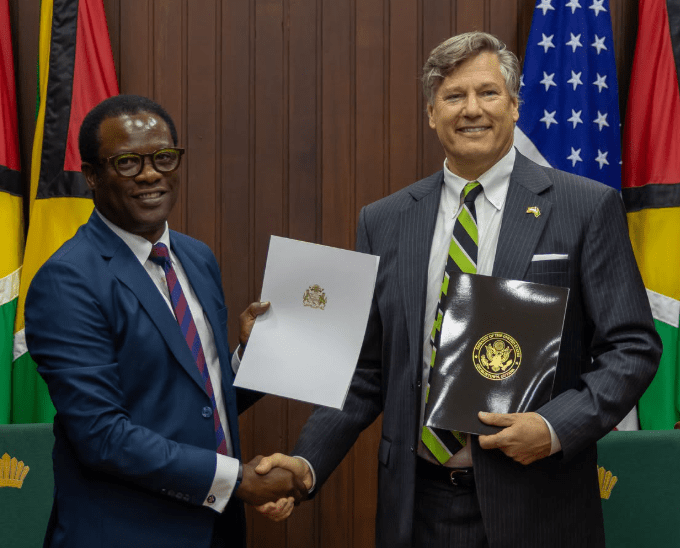
    The commitment was unveiled during Deputy Secretary of State Christopher Landau’s official trip to the country, where he joined Guyana’s Foreign Affairs Minister Hugh Todd for a formal MoU signing ceremony that updates and expands the existing 2025 security cooperation agreement. President Irfaan Ali was in attendance for the signing, alongside other senior Guyanese cabinet members including Finance Minister Ashni Singh, Natural Resources Minister Vickram Bharrat, and senior foreign affairs officials. U.S. Ambassador to Guyana Nicole Theriot also participated in the event.

    Per the embassy’s official statement, the $2 million investment will fund a new initiative focused on developing Guyana’s air domain awareness infrastructure and expand the country’s unmanned aerial system (UAS) capabilities. U.S. Department of Homeland Security guidance identifies air domain awareness as a foundational capability for a full spectrum of national security and defense operations, particularly critical for detecting and responding to unauthorized incursions and other illegal activity at a country’s points of entry.

    The new security assistance directly addresses longstanding concerns raised by President Ali and his administration over unregulated illicit air traffic linked to the global drug trade. For years, drug trafficking organizations have used Guyana’s airspace and remote territory as a transit route for narcotics shipments, with multiple drug-carrying aircraft seized in Guyana and neighboring Suriname in recent years.

    Beyond counternarcotics work, the upgraded air monitoring capabilities also come against a backdrop of persistent low-level tensions along Guyana’s western border with Venezuela. The two countries have maintained a decades-long territorial dispute over the resource-rich Essequibo Region, with sporadic armed incursions targeting Guyanese military personnel reported in recent months.

    During Landau’s visit, the two sides also addressed priorities beyond security cooperation, holding discussions on expanding bilateral economic ties and attracting new foreign investment to key strategic sectors of Guyana’s economy, including offshore energy and critical mineral development. The U.S. Embassy emphasized that Landau’s trip reaffirms Washington’s commitment to deepening partnerships across the Western Hemisphere, advancing shared goals ranging from regional security and energy resilience to broad-based economic prosperity for the region.

    In a social media post following the signing ceremony, President Ali noted that the updated MoU strengthens and deepens the long-standing bilateral security partnership between the two nations, building on years of existing collaboration in counternarcotics and cross-cutting security work. While he did not share additional details of the new funding package in the post, the announcement confirms the two countries’ shared commitment to tackling shared security threats in the region.

  • Three key lessons from Fidel on Foreign Policy

    Three key lessons from Fidel on Foreign Policy

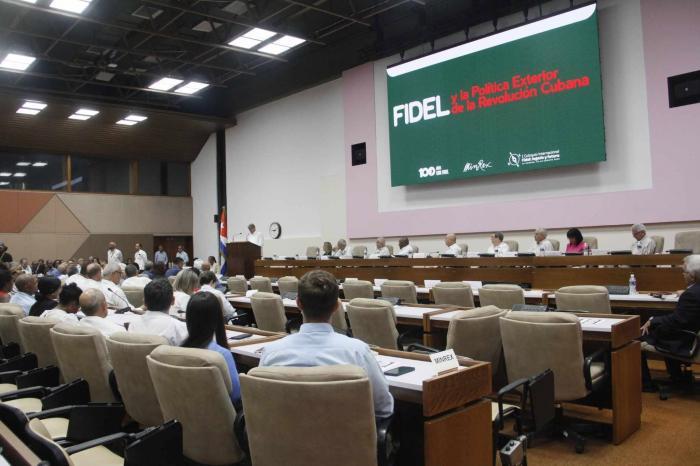
    In a public address delivered on the morning of Tuesday, August 12, 2026, Carlos Fernández de Cossío, Deputy Minister of Foreign Affairs of the Republic of Cuba, laid out the lasting influence of Fidel Castro’s ideological framework on Cuba’s foreign policy, affirming that the revolutionary leader’s core principles have shaped—and continue to steer—the island nation’s actions across global diplomatic platforms.

    Fernández de Cossío structured his remarks around three foundational lessons drawn from Castro’s thinking, each rooted in decades of Cuban revolutionary history. The first and most fundamental pillar, he emphasized, is the uncompromising defense of Cuba’s sovereign rights, even when facing extreme external threats. He pointed to the 1962 Cuban Missile Crisis, widely known in Cuba as the October Crisis, as a defining example of this steadfast commitment to national self-determination.

    The second core principle outlined by the deputy minister is Cuba’s refusal to compromise its solidarity and internationalist commitments to marginalized movements and peoples across the globe, regardless of pressure from opposing governments. Fernández de Cossío highlighted longstanding U.S. efforts to force Cuba to abandon its open support for the Puerto Rican independence movement and its internationalist interventions in Africa as evidence of this unwavering stance.

    As a concrete illustration of this commitment, he recalled a 1970s prisoner exchange agreement: when Cuba negotiated the release of four U.S. citizens detained on the island for crimes aligned with U.S. government interests, the Cuban government did not demand bilateral concessions or economic benefits for itself. Instead, it secured the freedom of four Puerto Rican independence activists: Lolita Lebrón, Rafael Cancel Miranda, Irvin Flores, and Andrés Figueroa.

    Fernández de Cossío also quoted veteran Cuban revolutionary Carlos Rafael Rodríguez to underscore the reliability of Cuba’s internationalist promises: “There is no obligation we have assumed with any country, group, or government that we have not been able to honor. This should be clear to the United States.”

    The third key lesson from Castro’s thinking, Fernández de Cossío argued, is the imperative of denouncing the existing global economic order. He stressed that this critique is not an abstract academic exercise, but a core component of Cuba’s ongoing revolutionary struggle to advance global justice for all marginalized nations and peoples.

    The deputy minister highlighted Castro’s decolonial vision and his call for a more equitable redistribution of global wealth, pointing to a longstanding paradox the revolutionary leader repeatedly identified: that humanity has never held greater scientific, technological, and productive capacity to generate widespread prosperity, yet the world has never been marked by such deep, systemic inequality.

    Fernández de Cossío confirmed that Castro’s teachings continue to guide Cuban diplomacy in every multilateral forum the nation participates in, including the United Nations, the Non-Aligned Movement, the Group of 77 and China, and regional integration bodies across Latin America and the Caribbean. Wherever struggles for global justice and a more equitable world order are underway, he said, Cuba contributes in line with Castro’s legacy.

    Beyond these three core pillars, Fernández de Cossío noted that Castro’s foreign policy work and teachings have educated the entire Cuban people on complex global issues, embedding international solidarity in popular culture and national identity. He cataloged a series of landmark people-centered internationalist actions rooted in Castro’s vision: mass popular assemblies in Havana’s Revolution Square where hundreds of thousands of Cubans endorsed the First and Second Declarations of Havana; widespread national solidarity with the Vietnamese people during the Vietnam War; the deployment of the first Cuban medical brigade to Algeria; national blood donation drives for communities hit by disasters; the founding of the Henry Reeve International Medical Contingent, which has led critical public health responses to the Ebola epidemic in West Africa and COVID-19 in more than 40 countries and territories worldwide.

    He also highlighted the impact of Cuba’s educational internationalism, noting that tens of thousands of students from low-income communities across the globe have received free training in Cuban schools and universities. In addition, he recalled Cuba’s mass voluntary internationalist mission in Africa, which saw more than 350,000 Cuban combatants deploy to support anti-colonial and anti-apartheid struggles across the continent.

    In closing, Fernández de Cossío summarized Castro’s core foreign policy ambition: to defend Cuba’s unquestionable right to full and absolute sovereignty, and alongside the Cuban people, to contribute to advancing justice and ending systemic injustice in every corner of the globe.

  • Díaz-Canel attends youth forum

    Díaz-Canel attends youth forum

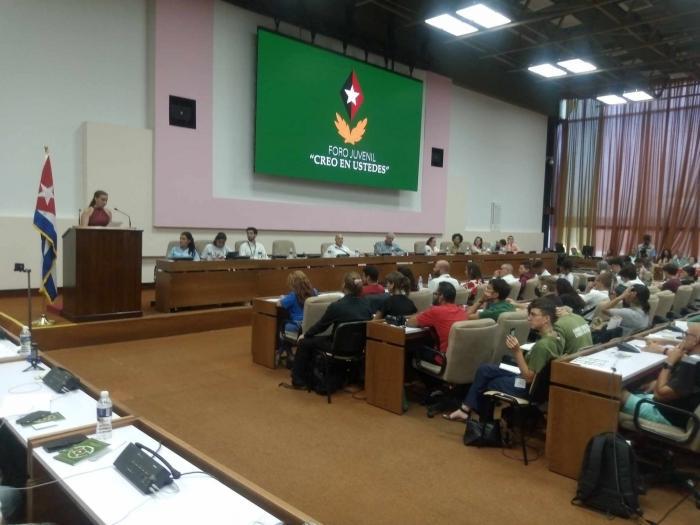
    HAVANA – Top Cuban leadership and youth delegates from communist and progressive movements across the globe gathered this week for the youth forum “I Believe in You”, a core event held as part of the inaugural International Colloquium focused on Fidel Castro: Legacy and Future, marking the centenary of the iconic revolutionary leader’s birth.

    Cuba’s highest-ranking official, Miguel Díaz-Canel Bermúdez – who serves as both First Secretary of the Central Committee of the Communist Party of Cuba and President of the Republic – headlined the forum, joined by Roberto Morales Ojeda, Political Bureau member and Organization Secretary of the party. Organized by the Union of Young Communists of Cuba (UJC), the gathering created an open space for transnational dialogue and collective reflection, where young attendees reaffirmed their shared commitment to leading global efforts to address pressing 21st-century challenges.

    Opening the discussions, Meyvis Estévez Echeverría, general secretary of the UJC National Committee, delivered a sharp condemnation of the long-running U.S. blockade of Cuba, which has been intensified to unprecedented levels in recent years. She framed the embargo as a genocidal policy that inflicts direct harm on ordinary Cuban families, outlining devastating public health consequences: 12,000 Cuban children are currently waiting for life-impacting surgical procedures due to critical medical supply shortages, 67,000 infants have been unable to access updated immunization schedules, and 34,000 pregnant people lack access to sufficient prenatal ultrasound services.

    Estévez Echeverría emphasized that young Cubans carry forward the revolutionary audacity embodied by Fidel Castro, the former Commander-in-Chief, and issued a firm rebuke to the U.S. government: “We tell them loud and clear that there is absolutely no possibility that we will surrender the homeland that Fidel bequeathed to us.” She also extended gratitude to the global community for acts of international solidarity, particularly noting the support from youth movements that have shipped essential medicine and humanitarian aid to the island. Young Cubans, she added, remain focused on tireless collective work, building equitable prosperity and protecting the hard-won social gains of Cuban socialism.
    ### Global Youth Leaders Condemn Imperialist Aggression Across Regions
    Gonzalo López, president of the World Federation of Democratic Youth (WFDY), told the forum that global imperialism, alongside its allies in the European Union and NATO, increasingly relies on blockades, unilateral sanctions, militarism, and open war to enforce global dominance and crush popular movements fighting for freedom, national sovereignty, human rights, peace, collaborative development and social progress.

    López stressed that these coercive policies leave tangible, harmful impacts, pushing large segments of the global population – especially young people – into poverty, while creating widespread barriers to accessing basic needs including clean drinking water, sanitation, food, energy, education, healthcare, housing, cultural access and athletic opportunity. “To crush the struggle of the people, imperialism resorts to everything, including its most aggressive expression: fascism,” he said.

    He highlighted ongoing crises driven by imperialist intervention across the globe, starting with the Middle East, where he denounced the occupation, colonization, and ongoing genocide of the Palestinian people at the hands of Israel, a key U.S. ally. “We cannot accept the images of children dying of hunger, nor of young people and women being killed in lines to get bread,” López stated. He also condemned the more than 100 unilateral sanctions imposed on Venezuela, as well as repeated U.S. interference and military aggression, including what he called the “brutal kidnapping” of the Venezuelan president. Turning back to Cuba, López rejected the decades-long criminal blockade of the island and the unfair designation of Cuba as a state sponsor of terrorism – a label that contradicts Cuba’s actual global legacy of advancing public health, universal education, and solidarity with marginalized nations around the world.

    “This heroic people, this heroic youth of Cuba, can always count on the solidarity of the peoples of the world in their struggle to defend their sovereignty and on the path to building a new society,” he affirmed, adding that “Cuba can always count on the solidarity and active work of the World Federation of Democratic Youth to ensure the continued sustainability of the Cuban Revolution.” López also recalled the World Festivals of Youth and Students hosted in Havana in 1978 and 1997, both driven forward by Fidel Castro’s vision, noting that for the revolutionary leader, “believing in youth was more than a conviction, it was an attitude, a way of thinking.”

    For his part, José Alejandro Alonso Cáceres, a representative of the Latin American and Caribbean Continental Organization of Students (OCLAE), recalled that Fidel Castro was the first recipient of OCLAE’s Order of Solidarity, honoring his lifelong struggle against imperialism and advocacy for peace, national sovereignty, and self-determination for Global South nations. “Fidel is an example of dignity and resistance; he bequeathed to us an unwavering faith in victory,” Alonso Cáceres said, reaffirming the Latin American student movement’s commitment to “the rebel Island and to Fidel” and its pledge to uphold the banners of solidarity, internationalism, and socialism. “Because if the present is one of struggle, the future is ours,” he concluded.
    ### Chilean Student Leader Links Local Struggles to Fidel’s Revolutionary Legacy
    Marking the centenary of Fidel Castro Ruz’s birth, Ivania Garrido, president of the Federation of Students of the University of Chile and a representative of Chilean communist youth, used her address to critique the dominant neoliberal ideology that frames systemic economic precarity as an individual failure. Garrido outlined the acute challenges facing Chile under its new far-right administration, which took office in March 2025: the government has cut public education funding, undermined long-fought collective bargaining rights for educators, and pushed to impose strict security and control regimes within schools.

    Garrido reported that Chilean students have already mobilized in response, returning to the streets in recent months under the clear slogan: “public education must be defended.” She said Fidel’s legacy holds critical lessons for Chilean young people today: “He taught us that a student movement closed in on itself has a low ceiling, and that its true strength emerges when it stops speaking only on behalf of students and joins forces with workers and the people.”

    Garrido argued that the task of her generation goes beyond defending past gains: it requires challenging the root of systemic inequality, the market-led model that has turned fundamental human rights into profit-generating commodities. “The student who isolates himself becomes exhausted; the one who builds the people, transforms,” she said. She warned that the greatest risk facing young people globally today is the loss of historical memory, as powerful forces push societies toward “a present without memory and without a future.” Echoing Fidel Castro’s own definition that “revolution is a sense of historical moment,” Garrido called on young people to reclaim a long-term vision in an era that erases both collective past and collective future. “Fidel believed in us, the youth of this America. We respond that we also believe. We believe in his project and we know that believing is not about savoring, but about continuing. Let this centennial not be a farewell, but a rebellion,” she said.
    ### Díaz-Canel Outlines Three Core Mandates for Young Global Revolutionaries
    Addressing the assembled Cuban youth and international progressive delegates, President Díaz-Canel emphasized that Fidel Castro’s enduring revolutionary legacy can only survive if it is carried forward by the generation that will build the future. “Young people must defend Fidel’s humanist and revolutionary legacy, because they are the ones called to build the future, to create a better world,” Díaz-Canel declared.

    The president opened his speech by praising the political maturity of young people across the globe, who he said have grown enormously in their political consciousness through their direct confrontation with the failures of capitalist societies. He highlighted Cuban young people as a particularly powerful example, who have adapted and persisted amid the deep hardship created by the intensification of the U.S. blockade and what he called the “economic genocide” imposed by Cuba’s adversaries.

    Díaz-Canel walked attendees through the historical context of Cuba’s revolutionary movement, recalling 1953 – the centenary of Cuban independence hero José Martí’s birth – when Cuba was ruled by a brutal tyrannical regime aligned with U.S. corporate monopolies. Fidel Castro, a dedicated student of Martí’s work, brought this injustice to global attention, Díaz-Canel said, recalling Fidel’s landmark, record-setting speech to the United Nations that laid bare the scale of Cuban oppression under U.S.-backed rule. It was that generation of the Martí Centennial, Díaz-Canel explained, that embraced the socialist ideal and launched the armed struggle that would ultimately lead to the 1959 triumph of the Cuban Revolution, walking through the iconic foundational events that shaped modern Cuba: the annual torchlight march that remains a Cuban youth tradition today, the July 26 attacks on the Moncada and Carlos Manuel de Céspedes barracks, Fidel’s imprisonment and exile in Mexico, the Granma yacht landing, the years of guerrilla struggle in the Sierra Maestra, and finally the victory that established the revolutionary government.

    Against this history, Díaz-Canel framed today’s young people as the “generation of the centennial of Commander-in-Chief Fidel” – and the generation called to carry forward his legacy. He outlined the current global context facing this generation: a sweeping imperialist offensive targeting the Global South, driven by a period of systemic crisis in global capitalism that has fueled the rise of extreme ultra-conservative ideology. This crisis, he explained, is the root cause of the growing influence of fascism and fascist politics across the world today.

    Díaz-Canel warned that the global left now faces three interconnected fronts of conflict: an ideological war to impose capitalist and imperialist logic on Global South nations; a cultural war that seeks to erase collective historical memory and impose cultural colonization to control narratives; and a media war defined by aggressive mass misinformation campaigns that violate basic human values and enable “reputation assassination” and the “invisibilizing of the perpetrator” to build false pretexts for war.

    Closing his address, the president laid out three core mandates for young people, drawn directly from Fidel Castro’s revolutionary thought: prioritize humanism over the profit-driven logic of algorithmic systems; defend cultural identity against the threat of cultural colonization; and center solidarity over individual selfishness, as Fidel always demanded. “And thus we will have a better world. We believe in you to build that better world,” Díaz-Canel concluded.